


Building Blocks
This section contains fundamental products for the synthesis of organic and biological compounds. Building blocks are the essential starting materials used to construct complex molecules through various chemical reactions. They play a critical role in drug discovery, material science, and chemical research. At CymitQuimica, we offer a diverse range of high-quality building blocks to support your innovative research and industrial projects, ensuring you have the essential components for successful synthesis.
Subcategories of "Building Blocks"
- Boronic Acids & Boronic Acid Derivatives(5,778 products)
- Chiral Building Blocks(1,243 products)
- Hydrocarbon Building Blocks(6,098 products)
- Organic Building Blocks(61,057 products)
Found 200710 products of "Building Blocks"
Sort by
Purity (%)
0
100
|
0
|
50
|
90
|
95
|
100
1-[3-(Methylthio)phenyl]-5-oxopyrrolidine-3-carboxylic acid
CAS:Versatile small molecule scaffoldFormula:C12H13NO3SPurity:Min. 95%Molecular weight:251.3 g/mol1-(3-Ethylphenyl)-5-oxopyrrolidine-3-carboxylic acid
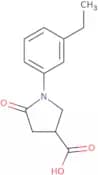
CAS:Versatile small molecule scaffoldFormula:C13H15NO3Purity:Min. 95%Molecular weight:233.26 g/mol5-Oxo-1-(3-sulfamoylphenyl)pyrrolidine-3-carboxylic acid
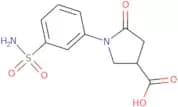
CAS:Versatile small molecule scaffoldFormula:C11H12N2O5SPurity:Min. 95%Molecular weight:284.29 g/mol1-(4-Fluoro-3-methylphenyl)-5-oxopyrrolidine-3-carboxylic acid
CAS:<p>Versatile small molecule scaffold</p>Formula:C12H12FNO3Purity:Min. 95%Molecular weight:237.23 g/mol5-Oxo-1-(2,4,6-trimethyl-phenyl)-pyrrolidine-3-carboxylic acid
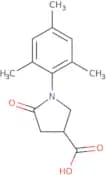
CAS:Versatile small molecule scaffoldFormula:C14H17NO3Purity:Min. 95%Molecular weight:247.3 g/mol2,2,6-Trimethyl-2,3-dihydro-4H-chromen-4-one
CAS:<p>Versatile small molecule scaffold</p>Formula:C12H14O2Purity:Min. 95%Molecular weight:190.24 g/molN,N'-Diethyl(dodecylsulfanyl)methanimidamide hydrobromide
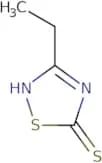
CAS:Versatile small molecule scaffoldFormula:C17H37BrN2SPurity:Min. 95%Molecular weight:381.5 g/mol3-Ethyl-1,2,4-thiadiazole-5-thiol
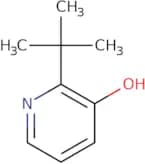
CAS:Versatile small molecule scaffoldFormula:C4H6N2S2Purity:Min. 95%Molecular weight:146.2 g/mol2-tert-butylpyridin-3-ol
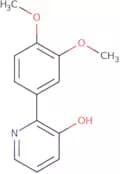
CAS:<p>Versatile small molecule scaffold</p>Formula:C9H13NOPurity:Min. 95%Molecular weight:151.2 g/mol2-(3,4-Dimethoxyphenyl)pyridin-3-ol
CAS:<p>Versatile small molecule scaffold</p>Formula:C13H13NO3Purity:Min. 95%Molecular weight:231.25 g/mol3-(2-Hydroxyethyl)imidazolidine-2,4-dione
CAS:Versatile small molecule scaffoldFormula:C5H8N2O3Purity:Min. 95%Molecular weight:144.13 g/molMethyl 2-(2-hydroxyphenyl)-2-methoxyacetate
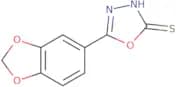
CAS:<p>Versatile small molecule scaffold</p>Formula:C10H12O4Purity:Min. 95%Molecular weight:196.2 g/mol5-(1,3-Dioxaindan-5-yl)-1,3,4-oxadiazole-2-thiol
CAS:<p>Versatile small molecule scaffold</p>Formula:C9H6N2O3SPurity:Min. 95%Molecular weight:222.22 g/molR(+)-Baclofen.Hydrochloride
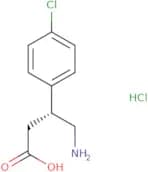
CAS:Controlled Product<p>R(+)-Baclofen.Hydrochloride is a GABA analogue that stimulates the GABA-benzodiazepine receptor complex and produces antinociception. It has been shown to be effective against diabetic neuropathy in rats, with no observed side effects. R(+)-Baclofen.Hydrochloride is used for the treatment of trigeminal neuralgia, butyric acid induced hyperalgesia and chronic constriction injury in rats. The main mechanism of action of R(+)-Baclofen.Hydrochloride is its ability to activate the benzodiazepine receptor by binding to it, which leads to mitochondrial membrane potential depolarization and an increase in the release of gamma-aminobutyric acid (GABA) from neurons.</p>Formula:C10H13Cl2NO2Purity:Min. 95%Molecular weight:250.12 g/mol2,2-Dimethoxycyclobutan-1-one
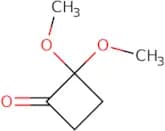
CAS:<p>Versatile small molecule scaffold</p>Formula:C6H10O3Purity:Min. 95%Molecular weight:130.14 g/mol4-amino-5H,6H,7H-cyclopenta[b]pyridin-2-ol
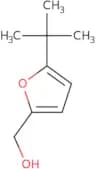
CAS:Versatile small molecule scaffoldFormula:C8H10N2OPurity:Min. 95%Molecular weight:150.17 g/mol(5-(tert-Butyl)furan-2-yl)methanol
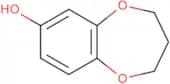
CAS:<p>Versatile small molecule scaffold</p>Formula:C9H14O2Purity:Min. 95%Molecular weight:154.21 g/mol3,4-Dihydro-2H-1,5-benzodioxepin-7-ol
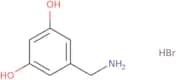
CAS:<p>Versatile small molecule scaffold</p>Formula:C9H10O3Purity:Min. 95%Molecular weight:166.17 g/mol5-(Aminomethyl)benzene-1,3-diol hydrobromide
CAS:Versatile small molecule scaffoldFormula:C7H10BrNO2Purity:Min. 95%Molecular weight:220.06 g/mol6-Amino-1H-pyrazolo[3,4-b]pyridine
CAS:6-Amino-1H-pyrazolo[3,4-b]pyridine is a cholesterol inhibitor that belongs to the pyridine derivative class. It has been shown to decrease the level of total cholesterol and low density lipoprotein (LDL) cholesterol in rats with atherosclerosis. This drug inhibits protein synthesis by binding to the active site of HMG-CoA reductase and preventing it from forming an enzyme-substrate complex with cholesteryl ester. 6-Amino-1H-pyrazolo[3,4-b]pyridine is an enantiomeric mixture of two stereoisomers, R and S. The R isomer has been shown to be more potent than the S isomer in inhibiting HMG CoA reductase activity.Formula:C6H6N4Purity:Min. 95%Molecular weight:134.14 g/mol
![1-[3-(Methylthio)phenyl]-5-oxopyrrolidine-3-carboxylic acid](/_next/image/?url=https%3A%2Fstatic.cymitquimica.com%2Fproducts%2F3D%2Fthumb-webp%2FNCA67452.webp&w=3840&q=75)






![4-amino-5H,6H,7H-cyclopenta[b]pyridin-2-ol](/_next/image/?url=https%3A%2Fstatic.cymitquimica.com%2Fproducts%2F3D%2Fthumb-webp%2FNCA70454.webp&w=3840&q=75)
![6-Amino-1H-pyrazolo[3,4-b]pyridine](/_next/image/?url=https%3A%2Fstatic.cymitquimica.com%2Fproducts%2F3D%2Fthumb-webp%2FNCA72549.webp&w=3840&q=75)