Building Blocks
This section contains fundamental products for the synthesis of organic and biological compounds. Building blocks are the essential starting materials used to construct complex molecules through various chemical reactions. They play a critical role in drug discovery, material science, and chemical research. At CymitQuimica, we offer a diverse range of high-quality building blocks to support your innovative research and industrial projects, ensuring you have the essential components for successful synthesis.
Subcategories of "Building Blocks"
- Boronic Acids & Boronic Acid Derivatives(5,781 products)
- Chiral Building Blocks(1,242 products)
- Hydrocarbon Building Blocks(6,101 products)
- Organic Building Blocks(61,033 products)
Found 205320 products of "Building Blocks"
Sort by
Purity (%)
0
100
|
0
|
50
|
90
|
95
|
100
3-Phenylbicyclo[2.2.1]hept-5-ene-2-carboxylic acid
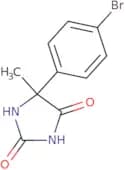
CAS:Versatile small molecule scaffoldFormula:C14H14O2Purity:Min. 95%Molecular weight:214.26 g/mol5-(4-Bromophenyl)-5-methylimidazolidine-2,4-dione
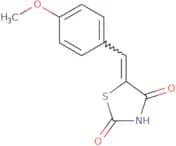
CAS:Versatile small molecule scaffoldFormula:C10H9BrN2O2Purity:Min. 95%Molecular weight:269.1 g/mol5-(4-Methoxy-benzylidene)-thiazolidine-2,4-dione
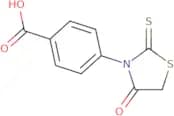
CAS:5-(4-Methoxy-benzylidene)-thiazolidine-2,4-dione is a drug that binds to the transcription factor NF-κB and prevents its translocation into the nucleus. It is used in the treatment of inflammatory diseases such as rheumatoid arthritis, psoriasis, and Crohn's disease. 5-(4-Methoxy-benzylidene)-thiazolidine-2,4-dione also has hepatoprotective effects by inhibiting oxidative stress and proinflammatory cytokines. This drug can be administered orally or intravenously.Formula:C11H9NO3SPurity:Min. 95%Molecular weight:235.26 g/mol4-(4-Oxo-2-sulfanylidene-1,3-thiazolidin-3-yl)benzoic acid
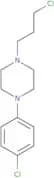
CAS:4-(4-Oxo-2-sulfanylidene-1,3-thiazolidin-3-yl)benzoic acid (L-OTSA) is a potent inhibitor of the uptake of potassium ions into cells. It binds to the extracellular surface of the cell membrane and prevents potassium from entering the cell. This results in hyperpolarization of the membrane potential and an increase in spontaneous activity. L-OTSA also induces electrophysiological effects such as increased spontaneous activity, decreased action potential duration, and increased threshold for excitation. L-OTSA has been found to inhibit cellular uptake of potassium ions.Formula:C10H7NO3S2Purity:Min. 95%Molecular weight:253.3 g/mol1-(4-Chlorophenyl)-4-(3-chloropropyl)piperazine
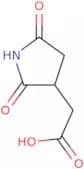
CAS:Controlled Product4-Chlorophenyl-1-(3-chloropropyl)piperazine dihydrochloride (PCPP) is a drug that is used in the treatment of Parkinson's disease. It has been shown to be an effective replacement for levodopa, which is the most common treatment for Parkinson's disease and other dopamine-related disorders. PCPP does not have any effect on the levels of dopamine or other neurotransmitters in the brain, but it does inhibit the enzymes that break down dopamine and other neurotransmitters. As a result, PCPP prevents or reduces symptoms of Parkinson's disease and other dopamine-related disorders.Formula:C13H18Cl2N2Purity:Min. 95%Molecular weight:273.2 g/mol2-(2,5-Dioxopyrrolidin-3-yl)acetic acid
CAS:Versatile small molecule scaffoldFormula:C6H7NO4Purity:Min. 95%Molecular weight:157.12 g/mol2,2-Dimethylbenzo[d][1,3]dioxol-5-amine
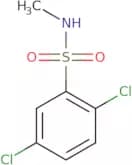
CAS:Versatile small molecule scaffoldFormula:C9H11NO2Purity:Min. 95%Molecular weight:165.19 g/mol2,5-Dichloro-N-methylbenzene-1-sulfonamide
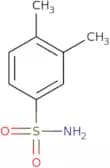
CAS:Versatile small molecule scaffoldFormula:C7H7Cl2NO2SPurity:Min. 95%Molecular weight:240.11 g/mol3,4-Dimethylbenzene-1-sulfonamide
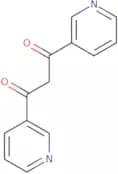
CAS:Versatile small molecule scaffoldFormula:C8H11NO2SPurity:Min. 95%Molecular weight:185.25 g/mol1,3-Bis(pyridin-3-yl)propane-1,3-dione
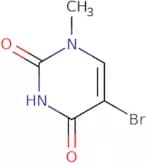
CAS:Versatile small molecule scaffoldFormula:C13H10N2O2Purity:Min. 95%Molecular weight:226.23 g/mol5-Bromo-1-methylpyrimidine-2,4(1H,3H)-dione
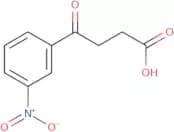
CAS:5-Bromo-1-methylpyrimidine-2,4(1H,3H)-dione is a group p2 enhancement agent that can be used to enhance radiation damage. It has been shown to interact with radiation under 13c-nmr spectroscopy and x-ray diffraction studies. 5-Bromo-1-methylpyrimidine-2,4(1H,3H)-dione can also act as a radical chain or radical in the presence of reactive oxygen species. The ph profile of 5-Bromo-1-methylpyrimidine-2,4(1H,3H)-dione has been studied and it was found that this compound was stable in acidic conditions but unstable in basic conditions. The nmr spectra of 5-Bromo-1-methylpyrimidine 2,4(1H,3H)-dione have been studied and proton signals were observed at 1.Formula:C5H5BrN2O2Purity:Min. 95%Molecular weight:205.01 g/mol4-(3-Nitrophenyl)-4-oxobutanoic acid
CAS:Versatile small molecule scaffoldFormula:C10H9NO5Purity:Min. 95%Molecular weight:223.18 g/mol5-Amino-2,n,n-trimethyl-benzenesulfonamide
CAS:Versatile small molecule scaffoldFormula:C914N2O2SPurity:Min. 95%Molecular weight:214.29 g/mol3-Amino-4,N,N-trimethyl-benzenesulfonamide
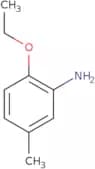
CAS:Versatile small molecule scaffoldFormula:C9H14N2O2SPurity:Min. 95%Molecular weight:214.29 g/mol2-Ethoxy-5-methylaniline
CAS:Versatile small molecule scaffold
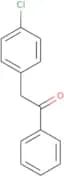
Formula:C9H13NOPurity:Min. 95%Molecular weight:151.21 g/mol2-(4-Chlorophenyl)acetophenone
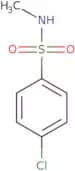
CAS:2-(4-Chlorophenyl)acetophenone is a synthetic compound that has been used in the synthesis of other compounds. It has been shown to have affinity for chloride ions and can be used as a substitute for hydrochloric acid. 2-(4-Chlorophenyl)acetophenone has been shown to react with sodium hydroxide in a stepwise manner, forming sodium chloride as an intermediate product. This reaction is believed to be due to the high nucleophilicity of chlorine ions. The molecular descriptors of this compound include four bonds, one ring, two heteroatoms, and two double bonds. This chemical also displays functional theory characteristics such as elimination and leishmania inhibition.Formula:C14H11ClOPurity:Min. 95%Molecular weight:230.69 g/mol4-Chloro-N-methylbenzenesulfonamide
CAS:Versatile small molecule scaffold
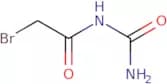
Formula:C7H8ClNO2SPurity:Min. 95%Molecular weight:205.66 g/mol2-Bromo-N-carbamoylacetamide
CAS:Versatile small molecule scaffoldFormula:C3H5BrN2O2Purity:Min. 95%Molecular weight:180.99 g/mol9-Phenyl-6,9-dihydro-1H-purin-6-one
CAS:Versatile small molecule scaffoldFormula:C11H8N4OPurity:Min. 95%Molecular weight:212.21 g/molBis(2-chlorophenyl)methanol
CAS:Versatile small molecule scaffoldFormula:C13H10Cl2OPurity:Min. 95%Molecular weight:253.12 g/mol
![3-Phenylbicyclo[2.2.1]hept-5-ene-2-carboxylic acid](/_next/image/?url=https%3A%2Fstatic.cymitquimica.com%2Fproducts%2F3D%2Fthumb-webp%2FGAA31919.webp&w=3840&q=75)

![2,2-Dimethylbenzo[d][1,3]dioxol-5-amine](/_next/image/?url=https%3A%2Fstatic.cymitquimica.com%2Fproducts%2F3D%2Fthumb-webp%2FGAA32489.webp&w=3840&q=75)