Building Blocks
Subcategories of "Building Blocks"
- Boronic Acids & Boronic Acid Derivatives(5,786 products)
- Chiral Building Blocks(1,246 products)
- Hydrocarbon Building Blocks(6,107 products)
- Organic Building Blocks(61,080 products)
Found 205478 products of "Building Blocks"
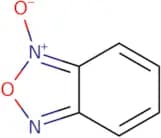
Benzofuroxan
CAS:Benzofuroxan is a nitrogen-containing heterocyclic compound that has been shown to have minimal toxicity in animal studies. It has been used as a pharmacological treatment for cardiac diseases, and as an ester hydrochloride, it can be applied topically or taken orally. Benzofuroxan reacts with water vapor to form oxalic acid and hydrogen fluoride, which is the major cause of its toxic effects. The chemical structure of benzofuroxan has been analyzed by X-ray crystallography and NMR spectroscopy. In addition, skin cancer in mice was induced by topical application of benzofuroxan in the form of a solution in trifluoroacetic acid (TFA), which may be due to its antimicrobial properties.
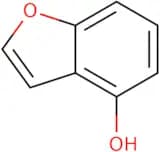
Formula:C6H4N2O2Purity:Min. 95%Molecular weight:136.11 g/molBenzofuran-4-ol
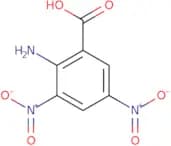
CAS:Benzofuran-4-ol is a decarboxylated, branched-chain, synthetic compound that has been shown to have anti-inflammatory properties. It was obtained by the ring opening of bromoacetic acid with benzene in the presence of hydrogen chloride and amines. In addition, it has been shown to inhibit leukocyte migration, suggesting that it could be used as an anti-inflammatory agent. Benzofuran derivatives are reactive and readily form hydrogen bonds with amines. This property makes them useful for chemical modification of proteins and nucleic acids.Formula:C8H6O2Purity:Min. 95%Molecular weight:134.13 g/mol2-Amino-3,5-dinitrobenzoic acid
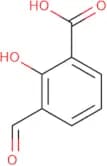
CAS:2-Amino-3,5-dinitrobenzoic acid is an organic compound that contains a nitro group in the 2 position and a carboxylic acid group in the 3 position. It is a white crystalline solid with a melting point of 168°C and a boiling point of 572°C. It has a molecular weight of 171.07 g/mol and it has an empirical formula of C6H4N2O4. The crystal structure of this compound was determined by X-ray diffraction to have a space group P622 with intermolecular hydrogen bonds.Formula:C7H5N3O6Purity:Min. 95%Molecular weight:227.13 g/mol3-Formyl-2-hydroxybenzoic acid
CAS:3-Formyl-2-hydroxybenzoic acid is a compound that belongs to the class of 5-nitrosalicylic acid derivatives. It is used as an intermediate in organic synthesis. 3-Formyl-2-hydroxybenzoic acid can be synthesized by reacting ethylene diamine with sodium carbonate and hydrochloric acid. The product can be purified by precipitating it from solution with excess sodium carbonate and then filtering off any insoluble impurities. 3-Formyl-2-hydroxybenzoic acid has been shown to have a matrix effect on the hydrogen bonding interactions between nitrogen atoms and other molecules, which may be due to its ability to act as a hydrogen bond donor or acceptor. This chemical's surface methodology has also been studied using gravimetric analysis, which is useful for determining the amount of 3-formyl-2-hydroxybenzoic acid present in a sample.Formula:C8H6O4Purity:Min. 95%Molecular weight:166.1 g/mol2-(Carbamoylamino)benzoic acid
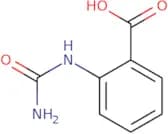
CAS:2-Carbamoylamino-benzoic acid is an organic compound that is used in the synthesis of a number of drugs. It is a strong nucleophile and its conjugate base, 2-carboxybenzamide, can react with an electron pair from an aromatic ring to form dihydroorotic acid. 2-Carbamoylamino-benzoic acid has been shown to be effective at inhibiting serine proteases and amide proteases. It has also been shown to inhibit the growth of bacteria by binding to DNA gyrase and topoisomerase IV enzyme.Formula:C8H8N2O3Purity:Min. 95%Molecular weight:180.16 g/mol4-Chloro-3-nitrophenol
CAS:4-Chloro-3-nitrophenol is a chemical compound that has been used as a dye and as an intermediate in the synthesis of other chemicals. 4-Chloro-3-nitrophenol is not found in nature, but it is produced by the reaction of nitric acid with phenols. The functional theory of 4-chloro-3-nitrophenol suggests that this chemical may be toxic to aquatic life because it can inhibit photosynthesis by blocking the light reactions of photosystem II. This chemical also has been shown to have endpoints for chlorine and chloride, which are essential for aerobic respiration.Formula:C6H4ClNO3Purity:Min. 95%Molecular weight:173.55 g/molN-Methyl-o-toluidine
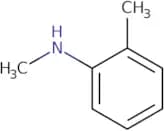
CAS:N-Methyl-o-toluidine is an alkylating agent that can be used in the synthesis of a variety of organic compounds. It is a carboxylate compound with a C=O group and an amine group, which makes it susceptible to autoprotolysis. N-Methyl-o-toluidine is used as a precursor for other compounds, such as dyes and pharmaceuticals. The exciplex formed between N-methyl-o-toluidine and nitrogen dioxide can be detected using ultraviolet absorption spectroscopy. This compound has been shown to have activation energy of 23 kcal/mol at temperatures above 100°C and below 300°C. Techniques used to measure the activation energy include butyllithium and supercritical fluid techniques.
Formula:C8H11NPurity:Min. 95%Molecular weight:121.18 g/mol2-(Hydroxymethyl)benzoic acid
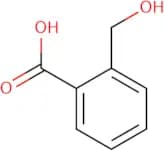
CAS:2-(Hydroxymethyl)benzoic acid is a molecule that can be found in the human liver. It is a metabolite of the drug 2-hydroxybenzoic acid, which inhibits bacterial growth by binding to DNA-dependent RNA polymerase, thereby preventing transcription and replication. The high frequency of human activity has been shown using a patch-clamp technique on human erythrocytes. This active form is metabolized through a number of metabolic transformations, including hydrolysis by esterases or glucuronidases, oxidation by cytochrome P450 enzymes, reduction by glutathione reductase, or conjugation with glucuronic acid. 2-(Hydroxymethyl)benzoic acid also specifically binds to markers expressed at high levels in Mycobacterium tuberculosis strains (e.g., ESX-1 secretion system protein) and inhibits cell growth in culture.
Formula:C8H8O3Purity:Min. 95%Molecular weight:152.15 g/mol2-(2-Aminobenzamido)benzoic acid
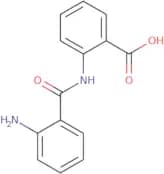
CAS:2-(2-Aminobenzamido)benzoic acid is a synthetic chemical that is used in the treatment of wastewater. It is a nitrogenous organic compound that is soluble in water and has a pH of 2. The aminophenols are converted to the corresponding diazonium salt by reaction with sodium carbonate and an acidic medium, which may be surface methodology or intermediates. The monoclonal antibodies are specific for skin cells, which are typically used to measure the concentration of this compound in urine samples.Formula:C14H12N2O3Purity:Min. 95%Molecular weight:256.26 g/mol±-Phenyl-o-toluic acid
CAS:±-Phenyl-o-toluic acid is a chemical compound that can be prepared by dehydration of sodium hydrogen benzoylbenzoate with malonic acid or from benzoic acid and amide. ±-Phenyl-o-toluic acid is used in the detection of 2-benzoylbenzoic acid. It has been shown to be an efficient method for detecting this chemical and it has a detection sensitivity of 0.5 ppm. ±-Phenyl-o-toluic acid is acidic, due to its carboxylic group, which makes it suitable as a reactant in organic synthesis reactions such as esterification, amide formation, and dehydroabietic acid formation. This compound also has functional groups such as the carbonyl group and hydroxyl group.Formula:C6H5CH2C6H4CO2HPurity:Min. 95%Molecular weight:212.24 g/mol7-hydroxy-2-naphthoic acid
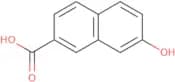
CAS:7-hydroxy-2-naphthoic acid is a homologue of malonic acid and is synthesized by the reaction of chlorine atom with mesomorphic 7-hydroxy-2-naphthoic acid. It has been used as a precursor in the preparation of polymers, such as poly(7-hydroxy-2-naphthoic acid), that have potential applications in drug delivery systems. The molecule has two hydroxyl groups on the benzene ring and one chlorine atom on each side chain. 7HNA has been found to be an efficient radical scavenger, which may be due to the presence of hydroxyl groups on the benzene ring and chlorine atoms that can form hydrogen bonds with radicals.Formula:C11H8O3Purity:Min. 95%Molecular weight:188.18 g/mol2-Methylquinolin-3-ol
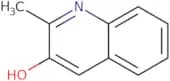
CAS:2-Methylquinolin-3-ol is a peroxide with the chemical formula C9H7O2. It has been shown to have antibacterial activity against Gram-positive and Gram-negative bacteria, although it is less potent than sodium hypochlorite. 2-Methylquinolin-3-ol is most effective when in stoichiometric amounts of hydrogen peroxide. It has been shown to be more efficient in the presence of glycols such as ethylene glycol and propylene glycol, which increase its rate of reaction. The mechanism for 2-methylquinolin-3-ol's antibacterial activity is thought to be due to oxidation of bacterial cell membranes. This chemical compound reacts with the cell membrane and causes lipid peroxidation, leading to the death of the bacteria by leakage of cellular contents. 2Mqo also absorbs ultraviolet radiation from sunlight, forming an excited state that can undergo photochemical reactions with oxygen or other molecules in its environment,Formula:C10H9NOPurity:Min. 95%Molecular weight:159.18 g/mol2-Methylquinolin-6-ol
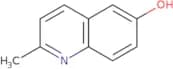
CAS:2-Methylquinolin-6-ol is an electron-rich aromatic compound that can be used as a fluorescent probe for bioactive molecules. It has been used in the study of infectious diseases, such as malaria and tuberculosis, and in the identification of indolenium and quinolinium molecular ions. 2-Methylquinolin-6-ol can be synthesized by reacting benzothiazole with crotonic acid using an acid catalyst. 2-Methylquinolin-6-ol is also a fluorescent molecule that produces blue light when excited by radiation.Formula:C10H9NOPurity:Min. 95%Molecular weight:159.18 g/mol2-Methyl-6-nitroquinoline
CAS:2-Methyl-6-nitroquinoline is a hydrogen bond donor that is an acidic quinoline derivative. It is used in the synthesis of other compounds, such as dyes and pharmaceuticals. 2-Methyl-6-nitroquinoline reacts with water vapor to form acid, which is stabilized by the formation of intramolecular hydrogen bonds. This reaction mechanism also leads to an enhancement in the reaction yield due to a dipole effect. The reaction time can be increased or decreased by changing the concentration of reactants or by adding a catalyst. The nitro group on 2-Methyl-6-nitroquinoline can undergo an acidic hydrolysis reaction when heated, forming nitrous acid and hydroquinone.Formula:C10H8N2O2Purity:Min. 95%Molecular weight:188.19 g/mol2-Bromo-2²-acetonaphthone
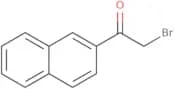
CAS:2-Bromo-2²-acetonaphthone (2BA) is a chemical compound belonging to the group of naphthalene derivatives. It has significant inhibitory activities against bacteria, fungi, and protozoans. The 2BA molecule is an antimicrobial agent that binds to fatty acids in the cell membrane and inhibits the synthesis of fatty acids in the mitochondria. This leads to cell death by inhibiting protein synthesis and cell division. 2BA has also been shown to have anti-inflammatory properties, which may be due to its inhibition of prostaglandin synthesis. The chemical structure of 2BA can be found below:
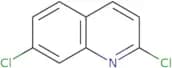
Formula:C10H7COCH2BrPurity:Min. 95%Molecular weight:249.1 g/mol2,7-Dichloroquinoline
CAS:2,7-Dichloroquinoline is a quinoline derivative that has been synthesized to be a potential drug. The molecule is structurally similar to the natural bioactive molecule called adenosine, which is involved in many cellular processes. The 2,7-dichloroquinoline has been shown to have anti-inflammatory properties and may also have anticancer activity. It was identified as an inhibitor of protein kinase C and as a potent inhibitor of angiogenesis. This drug has also been shown to inhibit the growth of bacteria and fungi, which may be due to its ability to form covalent bonds with nucleophiles such as anions or azides.
Formula:C9H5Cl2NPurity:Min. 95%Molecular weight:198.05 g/molN-Methylbenzamide
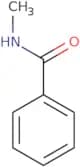
CAS:N-Methylbenzamide is a hydrogen bond donor that participates in the transfer of a proton. It contains an amine group, which is highly reactive and can form hydrogen bonds with other molecules. The thermodynamic stability of N-methylbenzamide is due to the dihedral angle between the amine group and carbonyl group. This molecule has been shown to undergo asymmetric synthesis, which allows for the creation of enantiomers. N-Methylbenzamide has been used as a chiral auxiliary in chromatographic science to separate amino acids by using different solvents. N-Methylbenzamide has also been shown to react with sodium carbonate and water molecules, leading to the formation of an amide bond.
Formula:C6H5CONHCH3Purity:Min. 95%Molecular weight:135.16 g/mol4-(2-Methylphenyl)-3-thiosemicarbazide
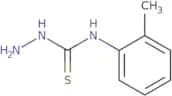
CAS:4-(2-Methylphenyl)-3-thiosemicarbazide is a crystalline solid that belongs to the group of benzoic acid derivatives. It has an orthorhombic crystal structure, with a yellow color. The crystals are measured at room temperature, and it has an atomic weight of 197.11 g/mol. 4-(2-Methylphenyl)-3-thiosemicarbazide is stable in air and in solution, but decomposes at temperatures above 250°C. This compound has been studied by using X-ray diffraction measurements and Bruker parameters. Its isotropic radiation is recorded at the following wavelength: 1.5418 Å (1).
Formula:C8H11N3SPurity:Min. 95%Molecular weight:181.26 g/mol1,2-Diphenylethan-1-ol
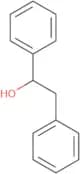
CAS:Styrene is an organic compound that has a wide range of applications, including in the manufacture of plastics and polystyrene. Styrene is used as a solvent for paints, coatings, sealants, and adhesives. This chemical is also used to make other chemicals. Styrene can be found in many products we use every day, such as baby bottles, food containers, and plastic utensils. Styrene is released into the air from car exhausts and cigarette smoke. It can also be found in drinking water at low levels. Even though styrene may not seem harmful to us on its own, it does have serious health effects when exposed to humans over time or in large quantities. Styrene can cause depression in women and infants if they are exposed to high levels of styrene over a long period of time. It can also cause death by interfering with the central nervous system. Styrenes are known to have anti-inflammatory activity in animals and pain control properties in humans.Formula:C14H14OPurity:Min. 95%Molecular weight:198.26 g/molo-Tolyl Isothiocyanate
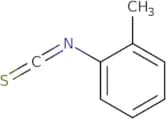
CAS:O-Tolyl isothiocyanate (OTIC) is a chemical compound that has anti-cancer properties. OTIC inhibits the growth of cancer cells by causing apoptosis, or programmed cell death. OTIC also blocks the production of prostaglandins, which are proinflammatory molecules that mediate pain and inflammation. OTIC has been shown to inhibit cox-2, an enzyme involved in inflammatory processes. The inhibition of cox-2 by OTIC may be responsible for its anticancer activity. O-Tolyl isothiocyanate also inhibits pancreatic lipase, which plays a key role in fat digestion and may have implications for weight loss and diabetes treatment. OTIC has also been used as a natural preservative because it inhibits the growth of bacteria such as Pseudomonas aeruginosa and Staphylococcus aureus. In addition, OTIC is an inhibitor of size-exclusion chromatography on proteins, which
Formula:C8H7NSPurity:Min. 95%Molecular weight:149.21 g/mol