Building Blocks
Subcategories of "Building Blocks"
- Boronic Acids & Boronic Acid Derivatives(5,805 products)
- Chiral Building Blocks(1,248 products)
- Hydrocarbon Building Blocks(6,118 products)
- Organic Building Blocks(61,447 products)
Found 208423 products of "Building Blocks"
2-Acetamido-4-chlorobenzoic acid
CAS:2-Acetamido-4-chlorobenzoic acid is a synthetic drug that is used as an ester in pharmaceuticals. It was first synthesized in 1958 and has been shown to have tuberculostatic activity, but it does not bind to DNA or RNA. 2-Acetamido-4-chlorobenzoic acid inhibits protein synthesis by binding to the 30S ribosomal subunit, inhibiting peptidyl transferase. It also inhibits bacterial growth by binding to the 50S ribosomal subunit and competes with aminobenzoic acid for binding sites on the enzyme alcohol dehydrogenase. 2-Acetamido-4-chlorobenzoic acid is used in veterinary medicine as a treatment for Mycobacterium avium complex (MAC), which causes chronic respiratory disease in cats. The drug has also been shown to inhibit cancer cells by interfering with cell division at the G2/MFormula:C9H8ClNO3Purity:Min. 95%Molecular weight:213.62 g/molTerbacil
CAS:Terbacil is a herbicide that is used to control perennial ryegrass in agricultural fields. It inhibits the growth of perennial ryegrass by binding to the cytochrome P450 in the mitochondria and preventing fatty acid synthesis. Terbacil also inhibits bacterial growth by binding to metal hydroxide ions and prevents bacterial uptake of nutrients. Terbacil may also be toxic to plant cells, as it has been shown to inhibit root development in cell cultures with solanum tuberosum. Terbacil has a hydroxy derivative, which is likely responsible for its herbicidal properties.
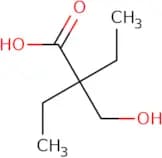
Formula:C9H13ClN2O2Purity:Min. 95%Molecular weight:216.66 g/mol2-Ethyl-2-(hydroxymethyl)butanoic acid
CAS:Versatile small molecule scaffoldFormula:C7H14O3Purity:Min. 95%Molecular weight:146.18 g/mol2-[4-(2,4,4-Trimethylpentan-2-yl)phenoxymethyl]oxirane
CAS:Versatile small molecule scaffoldFormula:C17H26O2Purity:Min. 95%Molecular weight:262.4 g/mol2-[2-(Propan-2-yl)phenoxymethyl]oxirane
CAS:Versatile small molecule scaffold
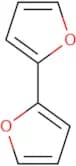
Formula:C12H16O2Purity:Min. 95%Molecular weight:192.25 g/mol2,2'-Bifuran
CAS:2,2'-Bifuran is a synthetic compound with a carbonyl group and fluoro substituents. The carbonyl group of 2,2'-bifuran participates in reversible oxidation reactions with the cationic polymerization initiator, which leads to the formation of polymers. The presence of fluoro substituents on the bifuran ring is important for these reactions because they allow for steric interactions with neighboring groups during polymerization. This reaction is highly scalable due to the simple synthesis and inexpensive reagents needed to produce it. 2,2'-Bifuran has been used as an initiator in diagnostic tests and as a structural formula for other compounds.
Formula:C8H6O2Purity:Min. 95%Molecular weight:134.13 g/molPiperazine-1-sulfonamide
CAS:Piperazine-1-sulfonamide is a protein inhibitor that belongs to the group of regulatory agents. It is used to regulate the growth of various types of cells, including immune cells and smooth muscle cells. Piperazine-1-sulfonamide has been shown to inhibit chemokine receptor activity in inflammatory bowel disease, which may be due to its ability to inhibit CXCR4 and CCR5 receptors. This drug also inhibits dpp-iv, an enzyme involved in protein degradation. The pharmacokinetic properties of this agent are not well studied, but it does show toxicity studies in rats at higher doses. Piperazine-1-sulfonamide can cause congestive heart failure and liver damage at high doses, so it should not be used for prolonged periods of time.
Formula:C4H11N3O2SPurity:Min. 95%Molecular weight:165.21 g/mol4-Acetylpiperazine-1-sulfonamide
CAS:Versatile small molecule scaffoldFormula:C6H13N3O3SPurity:Min. 95%Molecular weight:207.25 g/mol2-Nitrobenzene-1-sulfonohydrazide
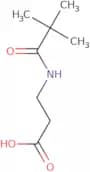
CAS:2-Nitrobenzene-1-sulfonohydrazide is a drug that is used for the treatment of certain types of microbial infections. It is a reaction product of allyl carbonate and 2-nitrobenzenesulfonyl hydrazide, which are converted to the active form by hydrolysis. The active form inhibits the activity of adrenergic receptors, specifically alpha-adrenergic receptors, which are involved in the inflammatory response. 2-Nitrobenzene-1-sulfonohydrazide also inhibits cortistatin, which is an endogenous peptide with potent antiinflammatory properties. This drug has been shown to be effective in treating animals with inflammatory diseases and may be useful in treating humans with similar conditions.Formula:C6H7N3O4SPurity:Min. 95%Molecular weight:217.21 g/mol3-(2,2-Dimethylpropanamido)propanoic acid
CAS:Versatile small molecule scaffoldFormula:C8H15NO3Purity:Min. 95%Molecular weight:173.21 g/mol4,6-Dichloro-1H,2H,3H-pyrrolo[2,3-b]pyridine
CAS:Versatile small molecule scaffold
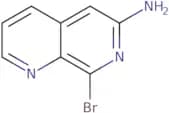
Formula:C7H6Cl2N2Purity:Min. 95%Molecular weight:189.04 g/mol6-Amino-8-bromo-1,7-naphthyridine
CAS:Versatile small molecule scaffold
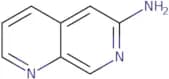
Formula:C8H6BrN3Purity:Min. 95%Molecular weight:224.06 g/mol1,7-Naphthyridin-6-amine
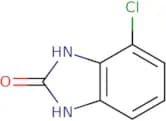
CAS:Versatile small molecule scaffoldFormula:C8H7N3Purity:Min. 95%Molecular weight:145.16 g/mol4-Chloro-1H-1,3-benzodiazol-2-ol
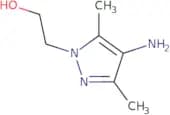
CAS:Versatile small molecule scaffoldFormula:C7H5ClN2OPurity:Min. 95%Molecular weight:168.58 g/mol2-(4-Amino-3,5-dimethyl-1H-pyrazol-1-yl)ethan-1-ol
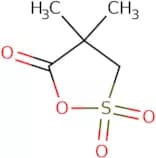
CAS:Versatile small molecule scaffoldFormula:C7H13N3OPurity:Min. 95%Molecular weight:155.2 g/mol4,4-Dimethyl-1,2λ⁶-oxathiolane-2,2,5-trione
CAS:Versatile small molecule scaffold
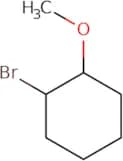
Formula:C5H8O4SPurity:Min. 95%Molecular weight:164.18 g/molrac-(1R,2R)-1-Bromo-2-methoxycyclohexane
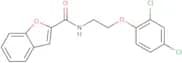
CAS:Racemic 1-bromo-2-methoxycyclohexane is a cyclic molecule with two stereogenic centers. It has one chiral center at the carbon atom adjacent to the bromine atom, and one chiral center at the carbon atom adjacent to the methoxy group. The two enantiomers of racemic 1-bromo-2-methoxycyclohexane have different conformations and labeling patterns, which can be determined by NMR. Racemic 1-bromo-2-methoxycyclohexane is a halide that is not stable in acidic conditions. It undergoes elimination reactions, such as nucleophilic substitution and electrophilic addition, to form substituted derivatives.Formula:C7H13BrOPurity:Min. 95%Molecular weight:193.08 g/molrac-(1R,2R)-2-Bromo-1-methoxy-2,3-dihydro-1H-indene
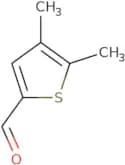
CAS:Versatile small molecule scaffoldFormula:C17H13Cl2NO3Purity:Min. 95%Molecular weight:350.2 g/mol4,5-Dimethylthiophene-2-carboxaldehyde
CAS:4,5-Dimethylthiophene-2-carboxaldehyde is a colorless liquid with an unpleasant odor. It is used in the synthesis of amines, azomethines, and heterocycles. This product can be tuned to have a reversible colour change between blue and yellow by changing the pH. 4,5-Dimethylthiophene-2-carboxaldehyde is oxidized to its conjugated form under acidic conditions. The conjugated form has a red color that becomes yellow as it oxidizes further. 4,5-Dimethylthiophene-2-carboxaldehyde is neutral in terms of charge and has no aromatic or heterocyclic properties.Formula:C7H8OSPurity:Min. 95%Molecular weight:140.2 g/mol4-Nitro-1H-pyrrole-2-carboxylic acid
CAS:4-Nitro-1H-pyrrole-2-carboxylic acid is an amide derivative. It has acaricidal activity against ticks and insects, as well as a patent for use as a virus inhibitor. 4-Nitro-1H-pyrrole-2-carboxylic acid has been shown to be effective in treating vaginalis in insects and is also used to protect crops from insect infestation. 4-Nitro-1H-pyrrole-2-carboxylic acid is an amidino compound that contains a nitro group on the nitrogen atom of the amidino group. This nitro group is responsible for its antiacaridal activity against ticks and insects.Formula:C5H4N2O4Purity:Min. 95%Molecular weight:156.1 g/mol


![2-[4-(2,4,4-Trimethylpentan-2-yl)phenoxymethyl]oxirane](/_next/image/?url=https%3A%2Fstatic.cymitquimica.com%2Fproducts%2F3D%2Fthumb-webp%2FFAA90485.webp&w=3840&q=75)
![2-[2-(Propan-2-yl)phenoxymethyl]oxirane](/_next/image/?url=https%3A%2Fstatic.cymitquimica.com%2Fproducts%2F3D%2Fthumb-webp%2FFAA90489.webp&w=3840&q=75)


![4,6-Dichloro-1H,2H,3H-pyrrolo[2,3-b]pyridine](/_next/image/?url=https%3A%2Fstatic.cymitquimica.com%2Fproducts%2F3D%2Fthumb-webp%2FFAA91215.webp&w=3840&q=75)