Building Blocks
Subcategories of "Building Blocks"
- Boronic Acids & Boronic Acid Derivatives(5,781 products)
- Chiral Building Blocks(1,242 products)
- Hydrocarbon Building Blocks(6,101 products)
- Organic Building Blocks(61,033 products)
Found 205320 products of "Building Blocks"
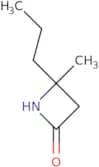
4-Methyl-4-propylazetidin-2-one
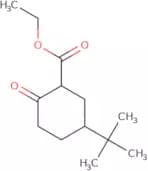
CAS:Versatile small molecule scaffoldFormula:C7H13NOPurity:Min. 95%Molecular weight:127.2 g/molEthyl 5-tert-butyl-2-oxocyclohexane-1-carboxylate
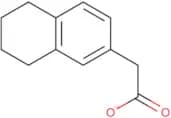
CAS:Versatile small molecule scaffoldFormula:C13H22O3Purity:Min. 95%Molecular weight:226.31 g/mol(5,6,7,8-Tetrahydro-naphthalen-2-yl)-acetic acid
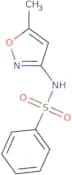
CAS:Versatile small molecule scaffoldFormula:C12H14O2Purity:Min. 95%Molecular weight:190.24 g/molN-(5-Methyl-3-isoxazolyl)benzenesulfonamide
CAS:Versatile small molecule scaffold
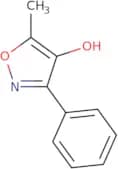
Formula:C10H10N2O3SPurity:Min. 95%Molecular weight:238.27 g/mol5-Methyl-3-phenyl-1,2-oxazol-4-ol
CAS:Versatile small molecule scaffold
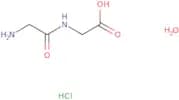
Formula:C10H9NO2Purity:Min. 95%Molecular weight:175.18 g/molGlycylglycine Hydrochloride Monohydrate
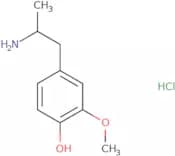
CAS:Glycylglycine hydrochloride monohydrate is a glycine salt that can be used as a metal chelator. It has been shown to be an experimental model for the study of metal-binding proteins, and it can also be used as a model system for the study of benzalkonium chloride. Glycylglycine hydrochloride monohydrate has been shown to have thermodynamic data and biological studies. In vitro assays have been used to show its transfer reactions with other molecules, such as intermolecular hydrogen bonding and coordination geometry. Synchronous fluorescence has also been used to investigate the energy metabolism of glycylglycine hydrochloride monohydrate in solution.Formula:C4H8N2O3·HCl·H2OPurity:Min. 95%Molecular weight:186.6 g/mol4-Hydroxy-3-methoxyamphetamine hydrochloride
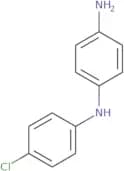
CAS:Controlled ProductVersatile small molecule scaffoldFormula:C10H16ClNO2Purity:Min. 95%Molecular weight:217.69 g/molN1-(4-Chlorophenyl)benzene-1,4-diamine
CAS:Rhodella is a type of fungus that has a unique mode of growth. It is autotrophic and can grow in the absence of oxygen. Rhodella has been shown to take up galactose through a carrier-mediated facilitated transport system, which provides evidence for the existence of such a transport mechanism in unicellular organisms. The uptake process was found to be inhibited by xylose, suggesting that rhodella may use an active transport system to move galactose across the cell membrane. Autoradiography revealed that rhodella cells contain high levels of uronic acid, a type of sugar found in many plants, which supports the idea that rhodella may be closely related to plants.Formula:C12H11ClN2Purity:Min. 95%Molecular weight:218.68 g/mol2,6-Diethylpyrazine
CAS:Versatile small molecule scaffoldFormula:C8H12N2Purity:Min. 95%Molecular weight:136.19 g/molN-[Bis(methylsulfanyl)methylidene]methanesulfonamide
CAS:Versatile small molecule scaffoldFormula:C4H9NO2S3Purity:Min. 95%Molecular weight:199.3 g/mol2-Aminoadamantane
CAS:2-Aminoadamantane is a fluorescent derivative that can be used for the preparation of samples. It has an acyl chain with a hydroxyl group at the 2 position. 2-Aminoadamantane can inhibit bacterial growth by binding to lipopolysaccharides, which are cell wall components of Gram-negative bacteria. This drug also inhibits the production of nitric oxide and prostaglandins, which are important in inflammatory and immunological responses. 2-Aminoadamantane has been shown to have locomotor activity in mice and to decrease the number of seizures in rats. Synthetic cannabinoids such as WIN 55,212-2 and CP 55,940 have been shown to bind to cannabinoid receptors and inhibit neurotransmitter release in rat hippocampal neurons in vitro.
Formula:C10H17NPurity:Min. 95%Molecular weight:151.25 g/mol1,2-Dibromo-3,4,5,6-tetrachlorobenzene
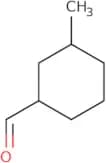
CAS:Versatile small molecule scaffoldFormula:C6Br2Cl4Purity:Min. 95%Molecular weight:373.7 g/mol3-Methylcyclohexane-1-carbaldehyde
CAS:Versatile small molecule scaffoldFormula:C8H14OPurity:Min. 95%Molecular weight:126.2 g/mol5-Anilino-1,2,3,4-thiatriazole
CAS:5-Anilino-1,2,3,4-thiatriazole is a compound that is used in the study of microbial cultures. It has been shown to be effective against Actinomycetes and Basidiomycetes. 5-Anilino-1,2,3,4-thiatriazole is used in the microbiology lab to kill bacteria and fungi. 5-Anilino-1,2,3,4-thiatriazole can also be used to inhibit the growth of Aspergillus species by blocking the hydroxylation of tyrosine derivatives.Formula:C7H6N4SPurity:Min. 95%Molecular weight:178.22 g/molHPi1
CAS:HPi1 is a recombinant virus that inhibits the growth of mouse tumor cells by inhibiting basic proteins. This protein has been shown to inhibit the growth of tumor cells in vitro, which may be due to its ability to inhibit basic proteins that are involved in cell proliferation. HPi1 also binds to the pancreas and causes optical properties, which have been shown to be used for cancer diagnosis. The sequences for HPi1 can be found on NCBI Entrez Gene.Formula:C8H8N4SPurity:Min. 95%Molecular weight:192.24 g/mol4-Chloro-2-cyclohexylphenol
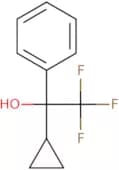
CAS:4-Chloro-2-cyclohexylphenol is a chemical compound that is used in the production of surfactant. It is also found as an impurity in some batches of chlorinated phenols. Irradiation of 4-chloro-2-cyclohexylphenol with UV light produces a reactive radical species, which can alkylate other compounds. The hydrophobic effect and the hydrophilic effect are both important to the solubility of this product. The hydrophobic effect leads to micellar solubilization, while the hydrophilic effect leads to dissolution in water. 4-Chloro-2-cyclohexylphenol has been shown to be a potent mutagen and carcinogen in mouse skin cells, and has been associated with an increased risk for developing cancer in humans.Formula:C12H15ClOPurity:Min. 95%Molecular weight:210.7 g/mol1-Cyclopropyl-2,2,2-trifluoro-1-phenylethan-1-ol
CAS:Versatile small molecule scaffold
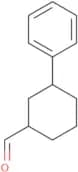
Formula:C11H11F3OPurity:Min. 95%Molecular weight:216.2 g/mol3-Phenylcyclohexanecarbaldehyde
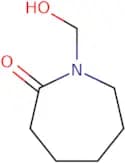
CAS:Versatile small molecule scaffoldFormula:C13H16OPurity:Min. 95%Molecular weight:188.26 g/mol1-(Hydroxymethyl)azepan-2-one
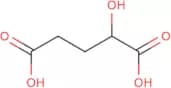
CAS:1-(Hydroxymethyl)azepan-2-one is a lactam. It is a monomer that can be used in the production of polymers such as polystyrene and polyvinyl chloride. 1-(Hydroxymethyl)azepan-2-one is soluble in organic solvents and has a high viscosity, which makes it useful for its interaction with other chemicals. 1-(Hydroxymethyl)azepan-2-one reacts with ethylene to form styrene, which is a condensation product. It can also react with hydrochloric acid to form an acid catalyst. The reaction products of this chemical are styrene, phenolic compounds, and ammonium salts.Formula:C7H13NO2Purity:Min. 95%Molecular weight:143.18 g/mol(2R)-2-Hydroxypentanedioic acid
CAS:(2R)-2-Hydroxypentanedioic acid is a metabolite of 2-hydroxyglutarate that is produced in the metabolism of glucose. This compound has been shown to be elevated in gliomas and may serve as a diagnostic marker for this type of cancer. A mutation in isocitrate dehydrogenase, an enzyme that catalyzes the conversion of isocitrate to alpha-ketoglurate, has been shown to be associated with gliomas. This mutation leads to accumulation of (2R)-2-hydroxypentanedioic acid and increases the risk for this type of cancer. The elevated levels of (2R)-2-hydroxypentanedioic acid can be used as a biomarker for disease activity and diagnosis.Formula:C5H8O5Purity:Min. 95%Molecular weight:148.11 g/mol

![N-[Bis(methylsulfanyl)methylidene]methanesulfonamide](/_next/image/?url=https%3A%2Fstatic.cymitquimica.com%2Fproducts%2F3D%2Fthumb-webp%2FNAA06810.webp&w=3840&q=75)