


Building Blocks
Subcategories of "Building Blocks"
- Boronic Acids & Boronic Acid Derivatives(5,783 products)
- Chiral Building Blocks(1,242 products)
- Hydrocarbon Building Blocks(6,105 products)
- Organic Building Blocks(61,055 products)
Found 205383 products of "Building Blocks"
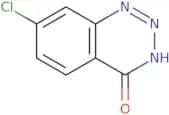
7-Chloro-3,4-dihydro-1,2,3-benzotriazin-4-one
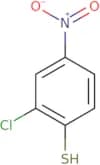
CAS:Versatile small molecule scaffoldFormula:C7H4ClN3OPurity:Min. 95%Molecular weight:181.58 g/mol2-Chloro-4-nitrobenzene-1-thiol
CAS:2-Chloro-4-nitrobenzene-1-thiol is a chemical compound that is used in the detection of viruses. It has been shown to bind to viral capsids and can be detected by techniques such as surface-enhanced Raman spectroscopy. 2-Chloro-4-nitrobenzene-1 thiol has an interaction with the amino acid composition of the virus, which may lead to its detection. The compound enhances the fluorescence of some viruses, allowing microscopy techniques to be used for detection. This chemical substance has also been shown to inhibit viral infectivity and can be used as a drug candidate for antiviral treatments.
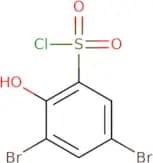
Formula:C6H4ClNO2SPurity:Min. 95%Molecular weight:189.62 g/mol3,5-Dibromo-2-hydroxybenzene-1-sulfonyl chloride
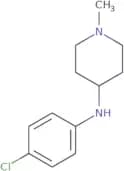
CAS:Versatile small molecule scaffoldFormula:C6H3Br2ClO3SPurity:Min. 95%Molecular weight:350.41 g/molN-(4-Chlorophenyl)-1-methylpiperidin-4-amine
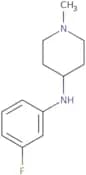
CAS:Versatile small molecule scaffoldFormula:C12H17ClN2Purity:Min. 95%Molecular weight:224.73 g/molN-(3-Fluorophenyl)-1-methylpiperidin-4-amine
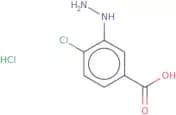
CAS:Versatile small molecule scaffoldFormula:C12H17FN2Purity:Min. 95%Molecular weight:208.27 g/mol4-Chloro-3-hydrazinylbenzoic acid hydrochloride
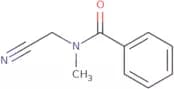
CAS:Versatile small molecule scaffoldFormula:C7H8Cl2N2O2Purity:Min. 95%Molecular weight:223.1 g/molN-(Cyanomethyl)-N-methylbenzamide
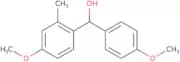
CAS:Versatile small molecule scaffoldFormula:C10H10N2OPurity:Min. 95%Molecular weight:174.2 g/mol(4-Methoxy-2-methylphenyl)(4-methoxyphenyl)methanol
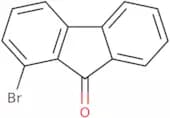
CAS:Versatile small molecule scaffoldFormula:C16H18O3Purity:Min. 95%Molecular weight:258.31 g/mol1-Bromo-9H-fluoren-9-one
CAS:1-Bromo-9H-fluoren-9-one is a chiral compound that contains an x-ray crystal structure. The molecule consists of a nine member ring with three double bonds. It is a hydrocarbon with the molecular formula C9H10BrO2, which has been shown to have imidoyl radical intermediates, cyclic five membered rings, and alcohols. This chemical has been studied experimentally and has been found to be regiospecifically expanded and hydrolyzed.
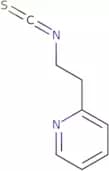
Formula:C13H7BrOPurity:Min. 95%Molecular weight:259.1 g/mol2-(2-Isothiocyanatoethyl)pyridine
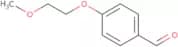
CAS:2-(2-Isothiocyanatoethyl)pyridine (IPEC) is a powerful inhibitor of the p21 protein, which is a cyclin-dependent kinase that regulates cell cycle progression. It has been shown to inhibit the proliferation of prostate cancer cells and induce apoptotic cell death in these cells. The compound has also been shown to inhibit tumor growth in vivo models. IPEC was found to be nontoxic at concentrations up to 10 mM when tested in mice and human prostate cancer cells. IPEC induces cell death through a mechanism involving histone H3 phosphorylation and the activation of caspases 3, 8, 9, and PARP. Clinical data on the toxicity of IPEC are not available; however, animal studies show no adverse effects at high doses.Formula:C8H8N2SPurity:Min. 95%Molecular weight:164.23 g/mol4-(2-Methoxy-ethoxy)-benzaldehyde
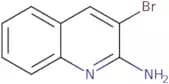
CAS:4-(2-Methoxy-ethoxy)-benzaldehyde is an organic molecule that can be synthesized by a reductive amination of ethyl benzoylacetate and 2-methoxyethanol. This molecule has been shown to inhibit the growth of tumor cells in vitro and in vivo. 4-(2-Methoxy-ethoxy)-benzaldehyde is also capable of binding to DNA, inhibiting the activity of enzymes involved in DNA replication, transcription, and repair. Additionally, this molecule can be used as a fluorescent probe for detecting the presence of nucleic acids due to its fluorescence properties.Formula:C10H12O3Purity:Min. 95%Molecular weight:180.21 g/mol3-Bromoquinolin-2-amine
CAS:3-Bromoquinolin-2-amine is an organic compound that has been synthesized by a palladium-catalyzed intramolecular cyclization. The yields are high and the reaction is efficient. This compound has been shown to be a promising synthetic intermediate for the synthesis of other biologically active molecules.
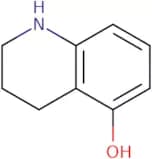
Formula:C9H7BrN2Purity:Min. 95%Molecular weight:223.07 g/mol1,2,3,4-Tetrahydroquinolin-5-ol
CAS:1,2,3,4-Tetrahydroquinolin-5-ol is a heterobicyclic compound that has been shown to be an efficient and selective pharmacophore. It can be used as a skeleton in the optimization of drug discovery. The physicochemical properties of 1,2,3,4-tetrahydroquinolin-5-ol have been studied by vectors such as solubility and melting point. This chemical has also been used in research on the synthesis of bicyclic compounds.
Formula:C9H11NOPurity:Min. 95%Molecular weight:149.19 g/mol4-[(Methoxyimino)methyl]benzoic acid
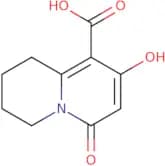
CAS:Versatile small molecule scaffoldFormula:C9H9NO3Purity:Min. 95%Molecular weight:179.17 g/mol2-Hydroxy-4-oxo-6,7,8,9-tetrahydro-4H-quinolizine-1-carboxylic acid
CAS:Versatile small molecule scaffold
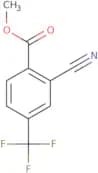
Formula:C10H11NO4Purity:Min. 95%Molecular weight:209.2 g/molMethyl 2-cyano-4-(trifluoromethyl)benzoate
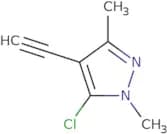
CAS:Versatile small molecule scaffoldFormula:C10H6F3NO2Purity:Min. 95%Molecular weight:229.15 g/mol5-Chloro-4-ethynyl-1,3-dimethyl-1H-pyrazole
CAS:Versatile small molecule scaffoldFormula:C7H7ClN2Purity:Min. 95%Molecular weight:154.6 g/mol2-[(2-Ethyl-6-methylphenyl)amino]propan-1-ol
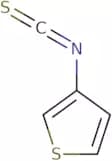
CAS:Versatile small molecule scaffoldFormula:C12H19NOPurity:Min. 95%Molecular weight:193.28 g/mol3-Isothiocyanatothiophene
CAS:Versatile small molecule scaffoldFormula:C5H3NS2Purity:Min. 95%Molecular weight:141.2 g/mol1-Phenyl-1H-imidazo[4,5-c]pyridine
CAS:Merocyanine is a polymethine dye that has been shown to have antimicrobial activity. It binds to DNA by intercalating between the base pairs, and it has been reported to inhibit the growth of Gram-positive bacteria. Merocyanine may be used for the treatment of Gram-positive bacterial infections such as staphylococcus aureus, streptococcus pyogenes, and enterobacteriaceae. This molecule also exhibits quaternary salt properties and can be used as an antiseptic.Formula:C12H9N3Purity:Min. 95%Molecular weight:195.22 g/mol

![4-[(Methoxyimino)methyl]benzoic acid](/_next/image/?url=https%3A%2Fstatic.cymitquimica.com%2Fproducts%2F3D%2Fthumb-webp%2FLCA47143.webp&w=3840&q=75)
![2-[(2-Ethyl-6-methylphenyl)amino]propan-1-ol](/_next/image/?url=https%3A%2Fstatic.cymitquimica.com%2Fproducts%2F3D%2Fthumb-webp%2FLCA52053.webp&w=3840&q=75)
![1-Phenyl-1H-imidazo[4,5-c]pyridine](/_next/image/?url=https%3A%2Fstatic.cymitquimica.com%2Fproducts%2F3D%2Fthumb-webp%2FLCA53235.webp&w=3840&q=75)