Building Blocks
This section contains fundamental products for the synthesis of organic and biological compounds. Building blocks are the essential starting materials used to construct complex molecules through various chemical reactions. They play a critical role in drug discovery, material science, and chemical research. At CymitQuimica, we offer a diverse range of high-quality building blocks to support your innovative research and industrial projects, ensuring you have the essential components for successful synthesis.
Subcategories of "Building Blocks"
- Boronic Acids & Boronic Acid Derivatives(5,778 products)
- Chiral Building Blocks(1,242 products)
- Hydrocarbon Building Blocks(6,098 products)
- Organic Building Blocks(61,084 products)
Found 198714 products of "Building Blocks"
Sort by
Purity (%)
0
100
|
0
|
50
|
90
|
95
|
100
1-(2,4-Dimethyl-4H-pyrazolo[1,5-a]benzimidazol-3-yl)ethanone
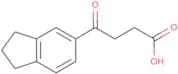
CAS:Versatile small molecule scaffoldFormula:C13H13N3OPurity:Min. 95%Molecular weight:227.27 g/mol4-(2,3-Dihydro-1H-inden-5-yl)-4-oxobutanoic acid
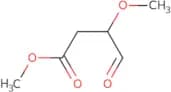
CAS:<p>Versatile small molecule scaffold</p>Formula:C13H14O3Purity:Min. 95%Molecular weight:218.25 g/molMethyl 3-methoxy-4-oxobutanoate
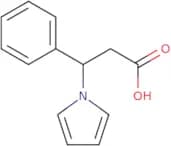
CAS:<p>Versatile small molecule scaffold</p>Formula:C6H10O4Purity:Min. 95%Molecular weight:146.14 g/mol3-Phenyl-3-(1H-pyrrol-1-yl)propanoic acid
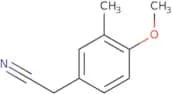
CAS:<p>Versatile small molecule scaffold</p>Formula:C13H13NO2Purity:Min. 95%Molecular weight:215.25 g/mol4-Methoxy-3-methylphenylacetonitrile
CAS:<p>Versatile small molecule scaffold</p>Formula:C10H11NOPurity:Min. 95%Molecular weight:161.2 g/mol4-(2-Ethyl-1H-imidazol-1-yl)aniline
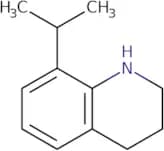
CAS:<p>Versatile small molecule scaffold</p>Formula:C11H13N3Purity:Min. 95%Molecular weight:187.24 g/mol8-(Propan-2-yl)-1,2,3,4-tetrahydroquinoline
CAS:Versatile small molecule scaffoldFormula:C12H17NPurity:Min. 95%Molecular weight:175.27 g/mol2-({1-Azabicyclo[2.2.2]octan-3-yl}amino)ethan-1-ol dihydrochloride
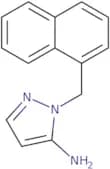
CAS:Versatile small molecule scaffoldFormula:C9H20Cl2N2OPurity:Min. 95%Molecular weight:243.2 g/mol1-(Naphthalen-1-ylmethyl)-1H-pyrazol-5-amine
CAS:Versatile small molecule scaffoldFormula:C14H13N3Purity:Min. 95%Molecular weight:223.27 g/mol5-Nitrothiophene-3-carbaldehyde
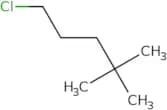
CAS:<p>5-Nitrothiophene-3-carbaldehyde (NTAC) is a tripodal that has been shown to be able to form aggregations with other molecules. It has been used in solar cells as a semiconductor material and can be used as a ligand for optical or x-ray sensors. NTAC also has the ability to absorb light and can be used as a dye in dye-sensitized solar cells. The electron affinity of NTAC is low, making it an effective electron acceptor for photocatalytic reactions. This compound is also useful for particle size measurements using microscopy techniques.</p>Formula:C5H3NO3SPurity:Min. 95%Molecular weight:157.15 g/mol1-Chloro-4,4-dimethylpentane
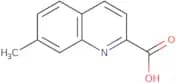
CAS:<p>Versatile small molecule scaffold</p>Formula:C7H15ClPurity:Min. 95%Molecular weight:134.65 g/mol7-Methyl-2-Quinolinecarboxylic Acid
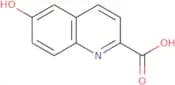
CAS:<p>Versatile small molecule scaffold</p>Formula:C11H9NO2Purity:Min. 95%Molecular weight:187.2 g/mol6-hydroxyquinoline-2-carboxylic acid
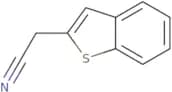
CAS:6-Hydroxyquinoline-2-carboxylic acid is a drug that has been shown to inhibit phospholipidosis, which is the accumulation of phospholipids in cells. It also inhibits naphthalene-induced hyperphosphorylation and histamine release from mast cells. 6-Hydroxyquinoline-2-carboxylic acid is an acceptor for the pharmacophore model and has been validated by molecular properties. The optimization process for this compound was monitored and validated. This lead compound is being considered as a potential therapeutic agent for the treatment of autoimmune diseases such as multiple sclerosis, rheumatoid arthritis, and lupus erythematosus.Formula:C10H7NO3Purity:Min. 95%Molecular weight:189.17 g/mol2-(1-Benzothiophen-2-yl)acetonitrile
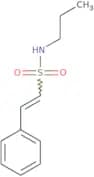
CAS:<p>Versatile small molecule scaffold</p>Formula:C10H7NSPurity:Min. 95%Molecular weight:173.24 g/mol2-Phenyl-N-propylethene-1-sulfonamide
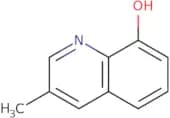
CAS:Versatile small molecule scaffoldFormula:C11H15NO2SPurity:Min. 95%Molecular weight:225.31 g/mol3-Methyl-8-hydroxyquinoline
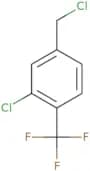
CAS:<p>3-Methyl-8-hydroxyquinoline (3MQ) is a chemical compound that has been shown to be an inhibitor of the enzyme cyclen. 3MQ binds to the active site of cyclen and blocks the binding of calcium ions, preventing the formation of calcium complexes with cyclen. This inhibition leads to a decrease in cyclen activity and an increase in the synthesis of protein. 3MQ has also been shown to be potent inhibitor against chloride ion currents through voltammetry experiments. It was found that its redox potential is very low, which suggests that it can be used as a probe for electron transfer reactions in cells. The photophysical properties of 3MQ have also been studied and it was found that this molecule absorbs light at wavelengths between 400–600 nm, which may lead to its use as a photosensitizer or photoantagonist for photodynamic therapy.</p>Formula:C10H9NOPurity:Min. 95%Molecular weight:159.18 g/mol2-Chloro-4-(chloromethyl)-1-(trifluoromethyl)benzene
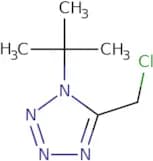
CAS:<p>Versatile small molecule scaffold</p>Formula:C8H5Cl2F3Purity:Min. 95%Molecular weight:229.02 g/mol1-tert-Butyl-5-(chloromethyl)-1H-1,2,3,4-tetrazole
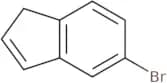
CAS:Versatile small molecule scaffoldFormula:C6H11ClN4Purity:Min. 95%Molecular weight:174.63 g/mol5-Bromo-1H-indene
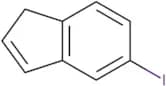
CAS:<p>5-Bromo-1H-indene is the structural modification of naphthalene. This compound is a benzannulation product that can be systematically obtained through the addition of methoxy groups to the naphthalene ring. 5-Bromo-1H-indene has been shown to have a role in solar cells, as it can act as an electron donor and acceptor. This molecule also has a mechanistic role in transport, as it can bind to metal carbene complexes and form a stable complex with them. 5-Bromo-1H-indene has been used in the synthesis of biomolecules such as arene and fluorine, which are important for the treatment of cancer.</p>Formula:C9H7BrPurity:Min. 95%Molecular weight:195.06 g/mol5-Iodo-1H-indene
CAS:<p>Versatile small molecule scaffold</p>Formula:C9H7IPurity:Min. 95%Molecular weight:242.06 g/mol
![1-(2,4-Dimethyl-4H-pyrazolo[1,5-a]benzimidazol-3-yl)ethanone](/_next/image/?url=https%3A%2Fstatic.cymitquimica.com%2Fproducts%2F3D%2Fthumb-webp%2FADA38054.webp&w=3840&q=75)


![2-({1-Azabicyclo[2.2.2]octan-3-yl}amino)ethan-1-ol dihydrochloride](/_next/image/?url=https%3A%2Fstatic.cymitquimica.com%2Fproducts%2F3D%2Fthumb-webp%2FADA42674.webp&w=3840&q=75)