Building Blocks
Subcategories of "Building Blocks"
- Boronic Acids & Boronic Acid Derivatives(5,783 products)
- Chiral Building Blocks(1,242 products)
- Hydrocarbon Building Blocks(6,105 products)
- Organic Building Blocks(61,055 products)
Found 205383 products of "Building Blocks"
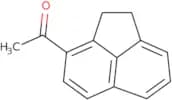
1-(1,2-Dihydroacenaphthylen-3-yl)ethan-1-one
CAS:Versatile small molecule scaffold
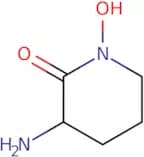
Formula:C14H12OPurity:Min. 95%Molecular weight:196.24 g/mol3-Amino-1-hydroxypiperidin-2-one
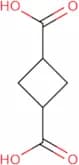
CAS:Versatile small molecule scaffoldFormula:C5H10N2O2Purity:Min. 95%Molecular weight:130.15 g/moltrans-Cyclobutane-1,3-dicarboxylic acid
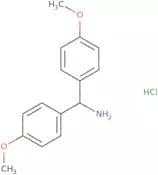
CAS:Trans-cyclobutane-1,3-dicarboxylic acid (trans-CBA) is a cycloalkane that is used as a reagent in organic synthesis. It has been shown to react with malonic acid to form a 1:1 adduct, which can be used for the synthesis of other cycloalkanes. Trans-CBA can also react with sodium salt of furfural to form the corresponding trans-CBA sodium salt. This reaction system has been optimized and is suitable for laboratory use. The molecular formula for trans-CBA is C4H4O4. The molecular weight of trans-CBA is 104.12 g/mol. Pharmacokinetic studies have been done on rats and dogs, showing that this molecule can be absorbed orally and distributed throughout the body quickly. Trans-CBA has a half life of 3 hours when administered orally, with an elimination half life of 6 hours when given intravenously.Formula:C6H8O4Purity:Min. 95%Molecular weight:144.13 g/molBis(4-methoxyphenyl)methanamine hydrochloride
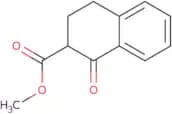
CAS:Versatile small molecule scaffoldFormula:C15H18ClNO2Purity:Min. 95%Molecular weight:279.76 g/molMethyl 1-Oxo-1,2,3,4-tetrahydronaphthalene-2-carboxylate
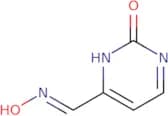
CAS:Methyl 1-oxo-1,2,3,4-tetrahydronaphthalene-2-carboxylate is a reactive intermediate that can be used in the synthesis of aldehydes. It is prepared by reacting benzaldehyde with formaldehyde and methanol in a three-step process. Methyl 1-oxo-1,2,3,4-tetrahydronaphthalene-2-carboxylate is stable at room temperature and has been shown to form stable complexes with racemic or optically pure alcohols. The product can react with aniline under acid catalysis to form imines.Formula:C12H12O3Purity:Min. 95%Molecular weight:204.23 g/mol2-Oxo-1,2-dihydro-4-pyrimidinecarbaldehyde oxime
CAS:Versatile small molecule scaffoldFormula:C5H5N3O2Purity:Min. 95%Molecular weight:139.11 g/molN-Octylacetamide
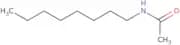
CAS:N-Octylacetamide is an organic solvent that is used in the acetylation of fatty acids and amines. The extraction yield is increased by adding hydrochloric acid to the aqueous phase. It is also used as a cationic surfactant in coatings. N-Octylacetamide can be used for analytical methods, such as element analysis and vitro assays. This compound has been shown to react with technetium, forming a stable technetium-N-octylacetamide complex.
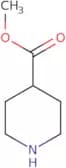
Formula:C10H21NOPurity:Min. 95%Molecular weight:171.28 g/molMethyl piperidine-4-carboxylate hydrochloride
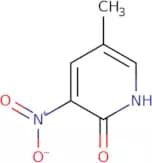
CAS:Methyl piperidine-4-carboxylate hydrochloride is a peptidomimetic drug that is designed to inhibit the δ-opioid receptor. It has been shown to have anticancer properties, including the ability to inhibit fibrinogen synthesis and suppress tumor growth. Methyl piperidine-4-carboxylate hydrochloride also has analgesic effects and may be used to treat chronic pain. This drug is an analog of the endogenous peptide dynorphin A (1–13) with a pharmacophore derived from the sequence of this endogenous peptide. Methyl piperidine-4-carboxylate hydrochloride has two tautomers, which are distinguished by the position of the hydrogen atom on carbon 4: as a protonated amine or as an unprotonated amine. The functionalities of these tautomers are different, and they are stereoisomers because they can rotate polarized lightFormula:C7H14ClNO2Purity:Min. 95%Molecular weight:179.64 g/mol2-Hydroxy-5-methyl-3-nitropyridine
CAS:2-Hydroxy-5-methyl-3-nitropyridine (HMPN) is a synthetic compound that is used as a reagent for the synthesis of other compounds. It has been shown to be reactive with molybdenum and chloride, boosting the reaction yield and reaction time. The functional theory of HMPN has been used to explain its reactivity with xylene. 2-Hydroxy-5-methyl-3-nitropyridine can be described as a compound that is capable of undergoing dehydration reactions, which are characterized by the removal of water molecules from the molecule to form a new product. This process can be achieved through the addition of phenylacetonitrile or azobenzene to HMPN.
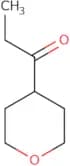
Formula:C6H6N2O3Purity:Min. 95%Molecular weight:154.12 g/mol1-(Tetrahydro-pyran-4-yl)-propan-1-one
CAS:Versatile small molecule scaffold
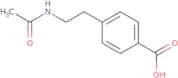
Formula:C8H14O2Purity:Min. 95%Molecular weight:142.2 g/mol4-(2-Acetamidoethyl)benzoic acid
CAS:Versatile small molecule scaffold
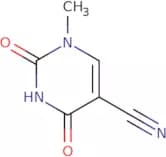
Formula:C11H13NO3Purity:Min. 95%Molecular weight:207.23 g/mol1-Methyl-2,4-dioxo-1,2,3,4-tetrahydro-5-pyrimidinecarbonitrile
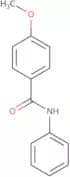
CAS:Versatile small molecule scaffoldFormula:C6H5N3O2Purity:Min. 95%Molecular weight:151.13 g/mol4-Methoxy-N-phenyl-benzamide
CAS:4-Methoxy-N-phenyl-benzamide is a biomolecule that belongs to the class of amides. It is synthesized from anilines and amines by coupling with diazo compounds. The reaction mechanism involves the formation of a carbon-nitrogen bond in an electrophilic aromatic substitution reaction. The Langmuir adsorption isotherm technique was used to study the adsorption of 4-methoxybenzamide on copper salt, which has been shown to have high adsorption capacity. This compound also has acidic properties, as it reacts with nitric acid to form a nitro group.
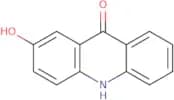
Formula:C14H13NO2Purity:Min. 95%Molecular weight:227.26 g/mol2-Hydroxy-9,10-dihydroacridin-9-one
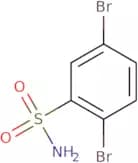
CAS:Versatile small molecule scaffoldFormula:C13H9NO2Purity:Min. 95%Molecular weight:211.22 g/mol2,5-Dibromobenzenesulfonamide
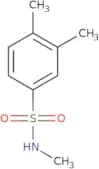
CAS:Versatile small molecule scaffoldFormula:C6H5Br2NO2SPurity:Min. 95%Molecular weight:314.99 g/molN,3,4-Trimethylbenzene-1-sulfonamide
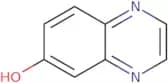
CAS:Versatile small molecule scaffoldFormula:C9H13NO2SPurity:Min. 95%Molecular weight:199.27 g/molQuinoxalin-6-ol
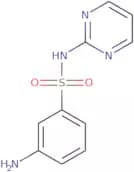
CAS:Quinoxalin-6-ol is an antibacterial agent that has shown to be effective against gram-negative bacteria such as Escherichia coli, Salmonella enteritidis, and Pseudomonas aeruginosa. It also has antifungal activity against Candida albicans and Saccharomyces cerevisiae. Quinoxalin-6-ol is a quinone that can be synthesized from crotonic acid or ethyl acetoacetate. This compound can be found in the form of two isomers (E and Z) which are distinguished by their physical properties.Formula:C8H6N2OPurity:Min. 95%Molecular weight:146.15 g/mol3-Amino-N-(pyrimidin-2-yl)benzene-1-sulfonamide
CAS:Versatile small molecule scaffoldFormula:C10H10N4O2SPurity:Min. 95%Molecular weight:250.28 g/mol4-(2-Methylbut-3-yn-2-yl)morpholine
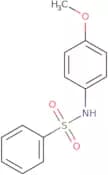
CAS:Versatile small molecule scaffoldFormula:C9H15NOPurity:Min. 95%Molecular weight:153.22 g/molN-(4-Methoxyphenyl)benzenesulfonamide
CAS:N-(4-Methoxyphenyl)benzenesulfonamide is a pyridinium salt that can be used as a heterogeneous catalyst. It is soluble in organic solvents, such as acetonitrile and amines, and forms micelles at higher concentrations. The pyridinium salt has been shown to be effective in the reduction of indian boronic acids by electrolysis and homogeneous catalysts. It can also be used for the synthesis of conjugates through the reaction with polyvinylpyrrolidone (PVP) or hydrotalcite (HT). This drug was encapsulated into nanoparticles for oral administration.Formula:C13H13NO3SPurity:Min. 95%Molecular weight:263.31 g/mol