


Building Blocks
This section contains fundamental products for the synthesis of organic and biological compounds. Building blocks are the essential starting materials used to construct complex molecules through various chemical reactions. They play a critical role in drug discovery, material science, and chemical research. At CymitQuimica, we offer a diverse range of high-quality building blocks to support your innovative research and industrial projects, ensuring you have the essential components for successful synthesis.
Subcategories of "Building Blocks"
- Boronic Acids & Boronic Acid Derivatives(5,756 products)
- Chiral Building Blocks(1,242 products)
- Hydrocarbon Building Blocks(6,095 products)
- Organic Building Blocks(61,055 products)
Found 199650 products of "Building Blocks"
Sort by
Purity (%)
0
100
|
0
|
50
|
90
|
95
|
100
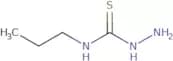
3-Amino-1-propylthiourea
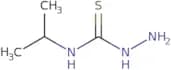
CAS:<p>Versatile small molecule scaffold</p>Formula:C4H11N3SPurity:Min. 95%Molecular weight:133.22 g/mol4-Isopropyl-3-thiosemicarbazide
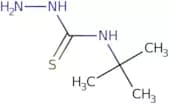
CAS:<p>Versatile small molecule scaffold</p>Formula:C4H11N3SPurity:Min. 95%Molecular weight:133.22 g/mol4-tert-Butyl-3-thiosemicarbazide
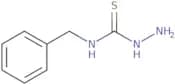
CAS:<p>4-tert-Butyl-3-thiosemicarbazide is an imine that binds to cisplatin, a platinum-based anti-cancer drug. It has been shown to be selective for the bladder cancer cells in vitro and in vivo. 4BTTSC has been validated by high performance liquid chromatography (HPLC) and nuclear magnetic resonance (NMR) spectra. The binding of 4BTTSC to cisplatin results in the formation of cisplatin chloride, which can be detected by autofluorescence spectrometry.</p>Formula:C5H13N3SPurity:Min. 95%Molecular weight:147.24 g/mol4-Benzyl-3-thiosemicarbazide
CAS:<p>4-Benzyl-3-thiosemicarbazide is a postulated compound that has been shown to inhibit topoisomerase I and II. The inhibition of these enzymes leads to the prevention of DNA replication, repair, and transcription. 4-Benzyl-3-thiosemicarbazide has also been shown to be an anti-cancer agent by inhibiting the growth of tumor cells in vitro. It is thought that this drug may work by binding to the bidentate ligand on topoisomerase I and II, preventing them from cleaving dsDNA. Alternatively, it may work through an intramolecular hydrogen bond or an intermolecular hydrogen bond with the thiol group on the sulfur atom. <br>4-Benzyl-3-thiosemicarbazide is soluble in water and ethanol but insoluble in ether. It has been shown to have a melting point between 108°C and 111°C, with</p>Formula:C8H11N3SPurity:Min. 95%Molecular weight:181.26 g/molN,N,N',N'-Tetraethylguanidine
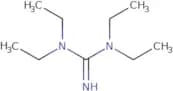
CAS:<p>Base employed in the preparation of alkyl nitriles.</p>Formula:C9H21N3Purity:Min. 95%Molecular weight:171.28 g/mol4-Formyl-1-methylpyridin-1-ium iodide
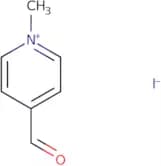
CAS:<p>Versatile small molecule scaffold</p>Formula:C7H8INOPurity:Min. 95%Molecular weight:249.05 g/mol4-Chloro-3-(methylsulfanyl)aniline
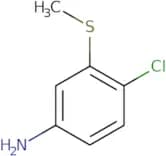
CAS:<p>Versatile small molecule scaffold</p>Formula:C7H8ClNSPurity:Min. 95%Molecular weight:173.66 g/mol(2-Methoxy-benzoylamino)-acetic acid
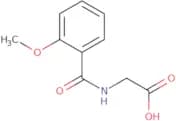
CAS:<p>(2-Methoxy-benzoylamino)-acetic acid is an endogenous metabolite of the drug 2-methoxybenzoic acid. This metabolite is formed in the human liver by oxidation of the benzoic acid moiety at the 2-position, and is found in human urine samples. (2-Methoxy-benzoylamino)-acetic acid has been shown to be a major urinary metabolite of 2-methoxybenzoic acid in humans. The metabolism of this substance has been studied using incubations with rat and human liver microsomes. The metabolites formed were identified by liquid chromatography, and those that could not be identified were characterized by mass spectrometry or nuclear magnetic resonance spectroscopy. The structures of these metabolites were determined using chemical degradation methods, such as gas chromatography/mass spectrometry (GC/MS) or high performance liquid chromatography/mass spectrometry (HPLC/</p>Formula:C10H11NO4Purity:Min. 95%Molecular weight:209.2 g/mol1-Ethyl-3-hydroxypiperidine
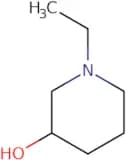
CAS:<p>1-Ethyl-3-hydroxypiperidine (1EHPP) is an alkanolamine that is a product of the metabolic pathway of ring-opening. It was synthesized in high yield by reacting 1,2-diaminobenzene with morpholine and benzyl chloride. The conjugates of 1EHPP were then hydrolyzed to form piperidine, the desired product. 1EHPP can be used for research purposes as it can be injected into animals and then isolated from their homogenates. This molecule has been shown to have gaseous properties due to its linear structure.</p>Formula:C7H15NOPurity:Min. 95%Molecular weight:129.2 g/mol3-Bromo-2,6-dimethoxypyridine
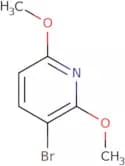
CAS:<p>Versatile small molecule scaffold</p>Formula:C7H8BrNO2Purity:Min. 95%Molecular weight:218.05 g/mol4-Chlorohippuric acid
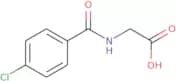
CAS:<p>4-Chlorohippuric acid is an active analogue of hippuric acid and is metabolized by cytochrome P450. It has a high chemical stability, which makes it a useful substrate for kinetic studies. The metabolism of 4-chlorohippuric acid to the corresponding sulfoxide (4-chloro-3'-sulfoxyhippurate) was found to be dependent on the concentration of rat liver microsomes in vitro and plasma concentrations in vivo. 4-Chlorohippuric acid is excreted mainly as hippuric acid in urine samples from humans and animals. Hippuric acid may also be formed by denaturation of 4-chlorohippurate or by hydrolysis of the amide bond between the two chloro groups.</p>Formula:C9H8ClNO3Purity:Min. 95%Molecular weight:213.62 g/mol2-(2-Methyl-1,3-thiazol-4-yl)acetonitrile
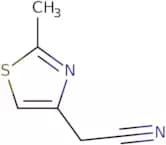
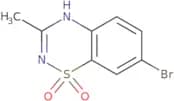
CAS:<p>Versatile small molecule scaffold</p>Formula:C6H6N2SPurity:Min. 95%Molecular weight:138.19 g/mol7-Bromo-3-methyl-4H-1,2,4-benzothiadiazine-1,1-dione
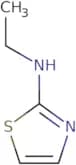
CAS:<p>Versatile small molecule scaffold</p>Formula:C8H7BrN2O2SPurity:Min. 95%Molecular weight:275.12 g/molEthyl-thiazol-2-yl-amine
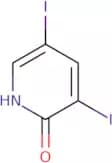
CAS:<p>Ethyl-thiazol-2-yl-amine is an organic compound that has the chemical formula CHN. It is a colorless liquid with a strong, unpleasant odor. This compound is used in the synthesis of urea derivatives and as a reagent for analyses of carbonyl compounds. Ethyl-thiazol-2-yl-amine can be synthesized by reacting ethylamine with trifluoroacetic acid and then adding ethoxycarbonyl isothiocyanate. The reaction mixture is heated to reflux, cyclizing the product into ethyl-thiazol-2-yl-amine.</p>Formula:C5H8N2SPurity:Min. 95%Molecular weight:128.2 g/mol3,5-Diiodopyridin-2-ol
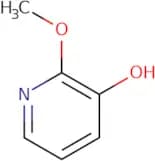
CAS:<p>Versatile small molecule scaffold</p>Formula:C5H3I2NOPurity:Min. 95%Molecular weight:346.89 g/mol2-Methoxypyridin-3-ol
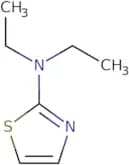
CAS:<p>2-Methoxypyridin-3-ol is a nitro compound that can be used as a lead compound to produce an inhibitor of oxime reductase. It can also be used as a pyridine ring, which is an important functional group in many organic compounds. 2-Methoxypyridin-3-ol has the ability to inhibit the enzyme oxime reductase, which catalyzes the formation of hydroxyl radicals from nitrosating agents and hydroxylamine, leading to their detoxification. This substance has been shown to be efficient in the orientation of nitro groups and ethers.</p>Formula:C6H7NO2Purity:Min. 95%Molecular weight:125.13 g/molN,N-Diethyl-1,3-thiazol-2-amine
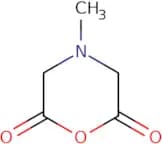
CAS:<p>Versatile small molecule scaffold</p>Formula:C7H12N2SPurity:Min. 95%Molecular weight:156.25 g/mol4-Methylmorpholine-2,6-dione
CAS:<p>4-Methylmorpholine-2,6-dione is a ligand that has been used in the synthesis of boronic acid derivatives. It has also been used to activate boronic acids. 4-Methylmorpholine-2,6-dione can be synthesised by reacting aryl boronic acids with dimethylformamide and acetonitrile in the presence of dehydrogenase and a metal catalyst. The resulting product is then cross-coupled with an amine to form the desired conjugate. 4-Methylmorpholine-2,6-dione is unreactive towards dehydration or morpholine.</p>Formula:C5H7NO3Purity:Min. 95%Molecular weight:129.11 g/mol5H,6H,7H,8H-Pyrazino[2,3-d]pyridazine-5,8-dione
CAS:<p>Versatile small molecule scaffold</p>Formula:C6H4N4O2Purity:Min. 95%Molecular weight:164.12 g/mol2-[(2-Methoxyethoxy)methyl]oxirane
CAS:<p>2-[(2-Methoxyethoxy)methyl]oxirane is a colorless liquid with a high boiling point and viscosity. It has a wide range of industrial applications, such as in metal extraction and purification, organic synthesis, and the production of ethylene oxide and other chemicals. 2-[(2-Methoxyethoxy)methyl]oxirane is used as a solvent for metal salts or other insoluble substances, such as lithium chloride. It can also be used to extract hydrocarbons from oil sands.</p>Formula:C6H12O3Purity:Min. 95%Molecular weight:132.16 g/mol

![5H,6H,7H,8H-Pyrazino[2,3-d]pyridazine-5,8-dione](/_next/image/?url=https%3A%2Fstatic.cymitquimica.com%2Fproducts%2F3D%2Fthumb-webp%2FNAA48040.webp&w=3840&q=75)
![2-[(2-Methoxyethoxy)methyl]oxirane](/_next/image/?url=https%3A%2Fstatic.cymitquimica.com%2Fproducts%2F3D%2Fthumb-webp%2FNAA48349.webp&w=3840&q=75)