Building Blocks
Subcategories of "Building Blocks"
- Boronic Acids & Boronic Acid Derivatives(5,783 products)
- Chiral Building Blocks(1,242 products)
- Hydrocarbon Building Blocks(6,105 products)
- Organic Building Blocks(61,055 products)
Found 205383 products of "Building Blocks"
[(1-Ethyl-3,5-dimethyl-1H-pyrazol-4-yl)methyl][2-(3-methoxyphenyl)ethyl]amine
CAS:Versatile small molecule scaffold
Formula:C17H25N3OPurity:Min. 95%Molecular weight:287.4 g/mol[(1-Ethyl-1H-pyrazol-4-yl)methyl][2-(3-methoxyphenyl)ethyl]amine
CAS:Versatile small molecule scaffoldFormula:C15H21N3OPurity:Min. 95%Molecular weight:259.35 g/mol1-Ethyl-3-{5H,6H,7H,8H-[1,2,4]triazolo[4,3-a]pyridin-3-yl}-1H-pyrazol-4-amine
CAS:Versatile small molecule scaffold
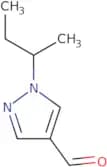
Formula:C11H16N6Purity:Min. 95%Molecular weight:232.29 g/mol1-(Butan-2-yl)-1H-pyrazole-4-carbaldehyde
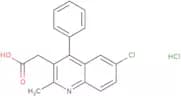
CAS:Versatile small molecule scaffoldFormula:C8H12N2OPurity:Min. 95%Molecular weight:152.19 g/mol2-(6-Chloro-2-methyl-4-phenylquinolin-3-yl)acetic acid hydrochloride
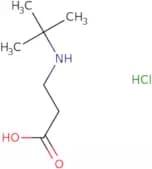
CAS:Versatile small molecule scaffoldFormula:C18H15Cl2NO2Purity:Min. 95%Molecular weight:348.2 g/mol3-(tert-Butylamino)propanoic acid hydrochloride
CAS:Versatile small molecule scaffoldFormula:C7H16ClNO2Purity:Min. 95%Molecular weight:181.66 g/mol2-[(Methylamino)methyl]-4(3H)-quinazolinone hydrochloride
CAS:Versatile small molecule scaffoldFormula:C10H12ClN3OPurity:Min. 95%Molecular weight:225.67 g/mol5-Bromo-3-methylbenzo[D]oxazol-2(3H)-one
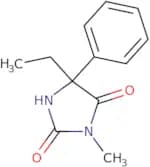
CAS:Versatile small molecule scaffoldFormula:C8H6BrNO2Purity:Min. 95%Molecular weight:228.04 g/molMephenytoin
CAS:Mephenytoin is a drug that inhibits the activity of CYP2C19, which is an enzyme in the cytochrome P450 system. It has been shown to be effective in treating chronic viral hepatitis and autoimmune diseases such as psoriasis. The minimal toxicity of mephenytoin makes it a desirable candidate for use in chronic oral therapy. This drug also interacts with many other drugs, including nonsteroidal anti-inflammatory drugs, which may cause an increase or decrease in their effectiveness. Mephenytoin has been shown to inhibit the activities of the polymerase chain reaction (PCR) and reverse transcriptase in humans, making it useful for analytical purposes.
Formula:C12H14N2O2Purity:Min. 95%Molecular weight:218.25 g/mol4-Amino-N-[2-(pyrrolidin-1-yl)ethyl]benzamide
CAS:Versatile small molecule scaffoldFormula:C13H19N3OPurity:Min. 95%Molecular weight:233.31 g/mol4-Amino-N-[2-(morpholin-4-yl)ethyl]benzamide
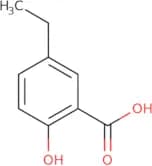
CAS:Versatile small molecule scaffoldFormula:C13H19N3O2Purity:Min. 95%Molecular weight:249.31 g/mol5-Ethyl-2-hydroxybenzoic acid
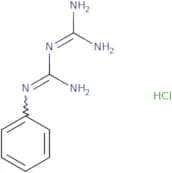
CAS:5-Ethyl-2-hydroxybenzoic acid has the chemical nature of a phenol and is also known as salicylic acid. It is a monosubstituted aromatic carboxylic acid with a methoxy group. The hydroxyl group on this molecule interacts with the hydroxyl group on adjacent molecules to form hydrogen bonds, which gives it stability. Salicylic acid reacts with 4-methoxybenzoic acid to produce 2,4-dihydroxybenzoic acid and salicylic acid. Salicylic acid can also react with ascorbic acid to produce 2,5-dihydroxybenzoic acid and salicylic acid. Salicylic acid can also react with benzoic acids to produce 4-hydroxybenzoic and 2,4,6-trihydroxybenzoic acids.Formula:C9H10O3Purity:Min. 95%Molecular weight:166.18 g/mol1-Phenylbiguanide hydrochloride
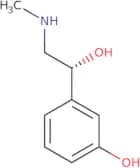
CAS:1-Phenylbiguanide hydrochloride (1PBGH) is a potent inhibitor of the enzyme tyrosinase, which is involved in the synthesis of melanin. It inhibits the production of melanin, resulting in lightening skin coloration. 1PBGH has been shown to inhibit the growth of cancer cells by inhibiting energy metabolism and adenosine triphosphate (ATP) production. 1PBGH also reduces intracellular calcium levels in neuroblastoma cells and inhibits the proliferation of these cancer cells. This drug has been tested for its effectiveness against skin cancers.Formula:C8H11N5·HClPurity:Min. 95%Molecular weight:213.67 g/molPhenylephrine
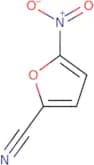
CAS:Phenylephrine is a sympathomimetic drug that stimulates α-adrenergic receptors. It is used to relieve the symptoms of chronic cough and to reduce blood pressure in patients with high blood pressure. Phenylephrine has been shown to inhibit the activity of toll-like receptor 4 on human cells, leading to a reduction in proinflammatory cytokines. In addition, phenylephrine has been shown to inhibit the activity of TLR2 on human cells, which leads to an increase in intracellular calcium levels. The effects of phenylephrine are mediated by activation of non-selective cation channels and inhibition of phosphodiesterases. This drug is also used as a mydriatic and cycloplegic agent for eye disorders such as glaucoma or ocular hypertension.Formula:C9H13NO2Purity:Min. 95%Molecular weight:167.21 g/mol5-Nitro-2-furonitrile
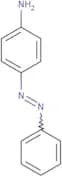
CAS:5-Nitro-2-furonitrile is a nitro compound that is used in the synthesis of other organic compounds. 5-Nitro-2-furonitrile reacts with chloride ions, hydrogen chloride and acid to form nitro radicals, which have a kinetic energy of 5 kcal/mole. The resulting nitro radical can then react with an olefinic or alkoxy radical to form 3-chloroperoxybenzoic acid. This reaction releases the chloride ion and generates hydrochloric acid. 5-Nitro-2-furonitrile is also capable of reacting with azides such as phosphorus oxychloride, forming an azide radical that can be oxidized by 3-chloroperoxybenzoic acid to form a nitric oxide radical. Nitric oxide radicals react with oxygen molecules to produce ozone, thereby releasing the chloride ion and generating hydrochloric acid. 5-Nitro-2-furonitrile is usedFormula:C5H2N2O3Purity:Min. 95%Molecular weight:138.08 g/mol4-Aminoazobenzene
CAS:4-Aminoazobenzene is an azole compound that is structurally similar to diazonium salts. It is an enzyme inducer, which means that it induces the activity of other enzymes. 4-Aminoazobenzene has been shown to increase the activity of DNA polymerase and RNA polymerase in vitro and also inhibits the growth of cultured human cancer cells. This drug has shown genotoxic effects in mice and rats, which may be due to its ability to bind to DNA or form cross-links with DNA. 4-Aminoazobenzene has been used as a chemical intermediate for dyes, photographic chemicals, and pharmaceuticals. It is chemically stable in aqueous solutions at low pH levels but decomposes at higher pH levels or under alkaline conditions. The nitrogen atoms in this compound are not essential for its chemical stability, but are important for binding with monoclonal antibodies such as anti-IgG antibody.
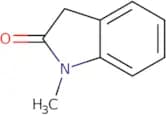
Formula:C6H5NNC6H4NH2Purity:Min. 95%Molecular weight:197.24 g/mol1-Methylindolin-2-one
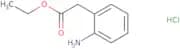
CAS:1-Methylindolin-2-one is an enolate that is synthetically prepared from a methoxymethyl group. 1-Methylindolin-2-one has the ability to inhibit bacterial growth by inhibiting the synthesis of proteins and nucleic acids. It binds to the carbonyl group on the bacteria surface, which prevents the formation of reactive compounds which are necessary for cell division. The reactive form of 1-methylindolin-2-one also has antibacterial activity against a variety of bacteria such as Pseudomonas aeruginosa, Staphylococcus aureus, and Escherichia coli.Formula:C9H9NOPurity:Min. 95%Molecular weight:147.18 g/molethyl 2-(2-aminophenyl)acetate hydrochloride
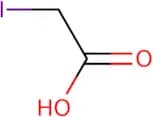
CAS:Versatile small molecule scaffoldFormula:C10H13NO2·HClPurity:Min. 95%Molecular weight:215.67 g/molIodoaceticacid
CAS:Iodoacetic acid is a non-steroidal anti-inflammatory drug that is used to relieve pain and reduce inflammation. It reduces the production of prostaglandin E2, which is a chemical mediator of inflammation. Iodoacetic acid has been shown to have no significant effects on energy metabolism or response element activity in human polymorphonuclear leukocytes. Iodoacetic acid has shown to be an effective inhibitor of the enzyme form that converts dinucleotide phosphate (NAD) into NADH (NADase). This compound is stable in sephadex g-100, which allows for easy separation by high-performance liquid chromatography (HPLC). The analytical method for iodoacetic acid involves adding the compound to a buffer solution containing sephadex g-100 and measuring the decrease in light transmission at 236 nm over time.Formula:C2H3IO2Purity:Min. 95%Molecular weight:185.95 g/molAcridine orange hydrochloride hydrate
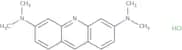
CAS:Acridine orange hydrochloride hydrate is a fluorescent dye that is used as a nucleic acid stain. It can be used to detect the presence of dna in cells. Acridine orange hydrochloride hydrate binds to DNA, intercalates into the double helix, and changes its fluorescence properties. This dye was first synthesized in 1927 by German chemists, but it was not until 1953 that the biological applications became clear. Acridine orange hydrochloride hydrate has been shown to bind to the nuclear DNA of human HL-60 cells and inhibit the polymerase chain reaction (PCR). Acridine orange hydrochloride hydrate is also capable of inhibiting enzyme activities and reactions involving transfer reactions.Formula:C17H20ClN3Purity:Min. 95%Molecular weight:301.8 g/mol
![[(1-Ethyl-3,5-dimethyl-1H-pyrazol-4-yl)methyl][2-(3-methoxyphenyl)ethyl]amine](/_next/image/?url=https%3A%2Fstatic.cymitquimica.com%2Fproducts%2F3D%2Fthumb-webp%2FVWB13660.webp&w=3840&q=75)

![[(1-Ethyl-1H-pyrazol-4-yl)methyl][2-(3-methoxyphenyl)ethyl]amine](/_next/image/?url=https%3A%2Fstatic.cymitquimica.com%2Fproducts%2F3D%2Fthumb-webp%2FVWB15051.webp&w=3840&q=75)
![1-Ethyl-3-{5H,6H,7H,8H-[1,2,4]triazolo[4,3-a]pyridin-3-yl}-1H-pyrazol-4-amine](/_next/image/?url=https%3A%2Fstatic.cymitquimica.com%2Fproducts%2F3D%2Fthumb-webp%2FVWB15520.webp&w=3840&q=75)
![2-[(Methylamino)methyl]-4(3H)-quinazolinone hydrochloride](/_next/image/?url=https%3A%2Fstatic.cymitquimica.com%2Fproducts%2F3D%2Fthumb-webp%2FVWB18760.webp&w=3840&q=75)
![5-Bromo-3-methylbenzo[D]oxazol-2(3H)-one](/_next/image/?url=https%3A%2Fstatic.cymitquimica.com%2Fproducts%2F3D%2Fthumb-webp%2FVCA67282.webp&w=3840&q=75)
![4-Amino-N-[2-(pyrrolidin-1-yl)ethyl]benzamide](/_next/image/?url=https%3A%2Fstatic.cymitquimica.com%2Fproducts%2F3D%2Fthumb-webp%2FAAA05107.webp&w=3840&q=75)
![4-Amino-N-[2-(morpholin-4-yl)ethyl]benzamide](/_next/image/?url=https%3A%2Fstatic.cymitquimica.com%2Fproducts%2F3D%2Fthumb-webp%2FAAA05109.webp&w=3840&q=75)