Building Blocks
This section contains fundamental products for the synthesis of organic and biological compounds. Building blocks are the essential starting materials used to construct complex molecules through various chemical reactions. They play a critical role in drug discovery, material science, and chemical research. At CymitQuimica, we offer a diverse range of high-quality building blocks to support your innovative research and industrial projects, ensuring you have the essential components for successful synthesis.
Subcategories of "Building Blocks"
- Boronic Acids & Boronic Acid Derivatives(5,756 products)
- Chiral Building Blocks(1,242 products)
- Hydrocarbon Building Blocks(6,095 products)
- Organic Building Blocks(61,038 products)
Found 196817 products of "Building Blocks"
Sort by
Purity (%)
0
100
|
0
|
50
|
90
|
95
|
100
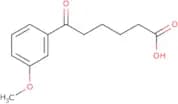
6-(3-Methoxyphenyl)-6-oxohexanoic acid
CAS:<p>Versatile small molecule scaffold</p>Formula:C13H16O4Purity:Min. 95%Molecular weight:236.26 g/mol2-Bromopropanedinitrile
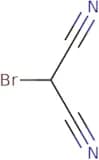
CAS:<p>2-Bromopropanedinitrile is an organic solvent that is used as a reactant in the production of polyurethane. It has been shown to have antibacterial activity against a number of bacteria, including Escherichia coli, Staphylococcus aureus, Bacillus subtilis, and Proteus vulgaris. 2-Bromopropanedinitrile exhibits its antimicrobial effect by reacting with the chloride ion and nucleophilic attack on the carbonyl group. This reaction causes the chemical to polymerize and form cross-links between molecules of DNA. The compound also has antifungal properties, which may be due to its hydroxyl groups or hydrogenated side chains.</p>Formula:C3HBrN2Purity:Min. 95%Molecular weight:144.96 g/mol2-Amino-6-methylbenzamide
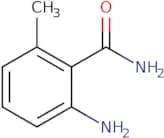
CAS:<p>2-Amino-6-methylbenzamide (2AMB) is a potent anticancer drug that binds to the cytoplasmic protein tubulin and inhibits the assembly of microtubules. This binding prevents cells from dividing and leads to cancer cell death. 2AMB has been shown to be effective against a number of human cancer cells, including colorectal, breast, and prostate cancer cells. It is also used as a fluorescent probe in biological research. The chiral nature of 2AMB means that it has two different forms, which are mirror images of one another. One form is active and the other inactive.</p>Formula:C8H10N2OPurity:Min. 95%Molecular weight:150.18 g/mol2-Amino-3-methylbenzamide
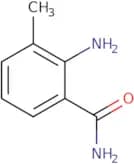
CAS:<p>Chlorantraniliprole is a fungicide that inhibits the function of the ryanodine receptor and blocks the release of calcium from intracellular stores. It has been shown to be effective against bacteria such as E. coli, Klebsiella pneumoniae and Salmonella typhimurium in vitro. Chlorantraniliprole was also shown to inhibit bacterial growth in vivo in a mouse model. This drug has demonstrated statistically significant antibacterial activity against gram-positive bacteria such as Staphylococcus aureus, Bacillus subtilis, and Streptococcus pyogenes. Chlorantraniliprole is an amide with a trifluoromethyl group attached to the nitrogen atom on the pyrazole ring. The chlorantraniliprole molecule contains an anthranilic linker between the chlorantranilic acid and 2-amino-3-methylbenzamide rings.</p>Formula:C8H10N2OPurity:Min. 95%Molecular weight:150.18 g/mol1-Chloro-4-isocyanobenzene
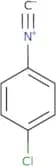
CAS:<p>1-Chloro-4-isocyanobenzene (1CI) is an organic compound that has been used as a chemical probe for the detection of amines and other molecules on metal surfaces. The frequency shift in Raman spectra, which is observed after the addition of 1CI to the metal surface, is used to detect amines. 1CI has also been shown to be a potent inhibitor of mitochondrial function. This molecule binds to nucleophilic sites on metal surfaces and forms covalent bonds with them, leading to a high degree of inhibition.<br>1CI can be synthesized in three steps from commercially available starting materials and is relatively easy to purify.</p>Formula:C7H4ClNPurity:Min. 95%Molecular weight:137.56 g/mol(2-Ethyl-4-imino-1,4-dihydropyrimidin-5-yl)methanamine
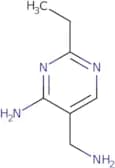
CAS:<p>Versatile small molecule scaffold</p>Formula:C7H12N4Purity:Min. 95%Molecular weight:152.2 g/mol3-Ethyl-2-methylquinolin-4-ol
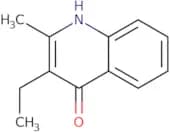
CAS:<p>Versatile small molecule scaffold</p>Formula:C12H13NOPurity:Min. 95%Molecular weight:187.24 g/mol4-Chloro-3-ethyl-2-methylquinoline
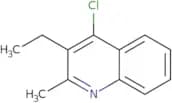
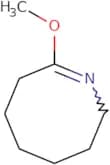
CAS:<p>Versatile small molecule scaffold</p>Formula:C12H12ClNPurity:Min. 95%Molecular weight:205.68 g/mol8-Methoxy-2,3,4,5,6,7-hexahydroazocine
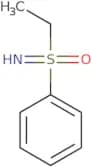
CAS:<p>Versatile small molecule scaffold</p>Formula:C8H15NOPurity:Min. 95%Molecular weight:141.21 g/molS-Ethyl-S-phenyl sulfoximine
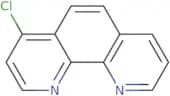
CAS:<p>Versatile small molecule scaffold</p>Formula:C8H11NOSPurity:Min. 95%Molecular weight:169.25 g/mol4-Chloro-1,10-phenanthroline
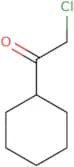
CAS:<p>Versatile small molecule scaffold</p>Formula:C12H7ClN2Purity:Min. 95%Molecular weight:214.65 g/mol2-Chloro-1-cyclohexylethan-1-one
CAS:<p>2-Chloro-1-cyclohexylethan-1-one is an enantiopure epoxide that can be synthesized from chloroketones and amines. It is used in the synthesis of chlorinating agents, such as chloramines and chlorocarbons, as well as in the preparation of carbamates. 2-Chloro-1-cyclohexylethan-1-one also has a kinetic effect on dehalogenase enzymes, which are involved in halogen metabolism. The chemical's chlorine atom can react with hydrogen chloride to form hydrogen chloride gas and hydrochloric acid. 2-Chloro-1-cyclohexylethan-1-one has been shown to be effective against nematodes, limiting their growth by inhibiting the synthesis of essential proteins needed for cell division. This chemical also reacts with chloride ions to form polymers that act as a protective barrier against insects.<br>2CCHE is a</p>Formula:C8H13ClOPurity:Min. 95%Molecular weight:160.64 g/mol(E)-α-Methylcinnamic acid
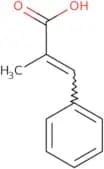
CAS:<p>The compound (E)-α-methylcinnamic acid is a methyl ketone that reacts with deionized water to form the ionic compound. This reaction is an example of Friedel-Crafts alkylation. The compound has been shown to be carcinogenic in animal studies, but not in human studies. It can also be used as a pressor and chloride channel blocker, and has been shown to have ferroelectric properties. The compound has been shown to react with fatty acids at high temperatures, yielding a reaction yield of 82%.</p>Formula:C10H10O2Purity:Min. 95%Molecular weight:162.18 g/mol6-Ethyl-2-hydrazinyl-3,4-dihydropyrimidin-4-one
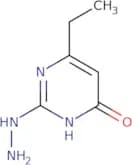
CAS:<p>Versatile small molecule scaffold</p>Formula:C6H10N4OPurity:Min. 95%Molecular weight:154.17 g/mol3-methylbenzenesulfonamide
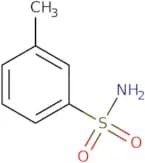
CAS:<p>3-methylbenzenesulfonamide is a dispersive, amide chemical structure that has antibacterial and antineoplastic properties. 3-methylbenzenesulfonamide is soluble in water and has a molecular weight of 198.33 g/mol. It is an experimental solubility data for this compound that it is less soluble than other compounds with the same molecular weight. 3-methylbenzenesulfonamide is a ligand and a coordination complex that has pharmacological agents, strategies, and experimental solubility data for the compound. The drug pharmacokinetics for this chemical are not well understood because it does not have an FDA classification and there are no pharmacokinetic studies available to date.</p>Formula:C7H9NO2SPurity:Min. 95%Molecular weight:171.22 g/molN,N'-Bis(4-nitrophenyl)propanediamide
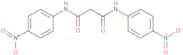
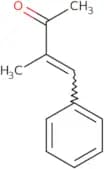
CAS:<p>Versatile small molecule scaffold</p>Formula:C15H12N4O6Purity:Min. 95%Molecular weight:344.28 g/mol3-Methyl-4-phenylbut-3-en-2-one
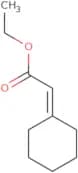
CAS:<p>Versatile small molecule scaffold</p>Formula:C11H12OPurity:Min. 95%Molecular weight:160.21 g/molCycloheptylidene-acetic acid ethyl ester
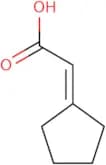
CAS:<p>Versatile small molecule scaffold</p>Formula:C11H18O2Purity:Min. 95%Molecular weight:182.26 g/mol2-Cyclopentylideneacetic acid
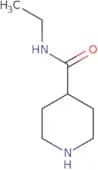
CAS:<p>2-Cyclopentylideneacetic acid is a growth factor that is structurally similar to epidermal growth factor (EGF) and has been shown to have an inhibitory effect on the EGF receptor. It is used in the manufacture of pharmaceuticals, such as antidiabetic agents, and cosmetics. 2-Cyclopentylideneacetic acid is also used as a synthetic intermediate in the manufacture of other drugs, such as peptide hormones. The two possible tautomers of 2-cyclopentylideneacetic acid are alpha-cyclohexenylacetic acid and beta-cyclohexenylacetic acid. The most stable form of these tautomers is alpha-cyclohexenylacetic acid. 2-Cyclopentylideneacetic acid can be used in the synthesis of epinephrine, norepinephrine, and dopamine.<br>2-cyclopentylideneac</p>Formula:C7H10O2Purity:Min. 95%Molecular weight:126.15 g/molN-Ethylpiperidine-4-carboxamide
CAS:<p>Versatile small molecule scaffold</p>Formula:C8H16N2OPurity:Min. 95%Molecular weight:156.23 g/mol