Building Blocks
This section contains fundamental products for the synthesis of organic and biological compounds. Building blocks are the essential starting materials used to construct complex molecules through various chemical reactions. They play a critical role in drug discovery, material science, and chemical research. At CymitQuimica, we offer a diverse range of high-quality building blocks to support your innovative research and industrial projects, ensuring you have the essential components for successful synthesis.
Subcategories of "Building Blocks"
- Boronic Acids & Boronic Acid Derivatives(5,778 products)
- Chiral Building Blocks(1,242 products)
- Hydrocarbon Building Blocks(6,098 products)
- Organic Building Blocks(61,084 products)
Found 198714 products of "Building Blocks"
Sort by
Purity (%)
0
100
|
0
|
50
|
90
|
95
|
100
1-N-[(2-Methylphenyl)methyl]benzene-1,2-diamine
CAS:<p>Versatile small molecule scaffold</p>Formula:C14H16N2Purity:Min. 95%Molecular weight:212.29 g/mol5-chloro-2-hydroxy-3-nitrobenzoic acid
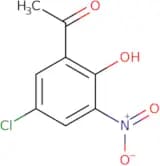
CAS:<p>5-Chloro-2-hydroxy-3-nitrobenzoic acid (5CHNBA) is a potent inhibitor of the HIV integrase. 5CHNBA inhibits the activity of integrase by binding to the enzyme and preventing it from adding new DNA sequences to the viral genome. It has been shown to be effective against HIV integrase in vitro and in vivo, with inhibitory activities against both wild type and drug resistant HIV integrases. 5CHNBA is not an amide or saponified compound, but it does contain a nitrobenzoic group that reacts with chlorine atoms to form chlorination products, such as dichloro 5-chloro-2-hydroxy-3-nitrobenzoic acid.</p>Formula:C7H4ClNO5Purity:Min. 95%Molecular weight:217.6 g/mol2,3-Cycloheptenopyridine
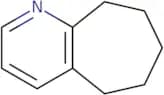
CAS:<p>2,3-Cycloheptenopyridine is a molybdenum metal complex with chloroform. It belongs to the class of nucleophilic complexes. The reaction product of cycloheptenopyridine n-oxide and formaldehyde, it has a spectrum that shows peaks at 521 nm and 609 nm. This complex can be prepared by reacting 2,3-cycloheptenopyridine with hydrogen peroxide in dimethylformamide as a reagent.<br>2,3-Cycloheptenopyridine is an example of an n-oxide because it contains both oxygen atoms in the same molecule. The two isomers are cis and trans, but only the cis form is known to exist naturally on Earth. The trans isomer can be synthesized through the use of peroxides or trioxides; however, this synthetic form is only stable at temperatures above 300°C.</p>Formula:C10H13NPurity:Min. 95%Molecular weight:147.22 g/mol1,2-Dihydrospiro[indole-3,3'-pyrrolidine]
CAS:<p>Versatile small molecule scaffold</p>Formula:C11H14N2Purity:Min. 95%Molecular weight:174.24 g/mol1-tert-Butyl-2-thiourea
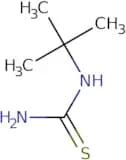
CAS:<p>1-tert-Butyl-2-thiourea is an organosulfur compound that belongs to the group of organic solvents. It can be used in reactions with hydrochloric acid and heat energy, and has a reaction yield of 98%. 1-tert-Butyl-2-thiourea is also used as a mitochondrial inhibitor. It inhibits proton transport through the mitochondrial membrane by reacting with amino groups on the enzyme complex. This prevents the transport of protons across the membrane, which inhibits ATP production, leading to cell death.</p>Formula:C5H12N2SPurity:Min. 95%Molecular weight:132.23 g/mol1-Chloro-4-(propane-2-sulfonyl)benzene
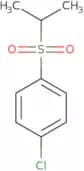
CAS:<p>Versatile small molecule scaffold</p>Formula:C9H11ClO2SPurity:Min. 95%Molecular weight:218.7 g/mol1-[(Chloromethyl)sulfanyl]-4-methoxybenzene
CAS:<p>Versatile small molecule scaffold</p>Formula:C8H9ClOSPurity:Min. 95%Molecular weight:188.67 g/molEthyl 4-Methyl-1,3-thiazole-2-carboxylate
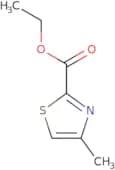
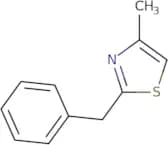
CAS:Versatile small molecule scaffoldFormula:C7H9NO2SPurity:Min. 95%Molecular weight:171.21 g/mol2-Benzyl-4-methyl-1,3-thiazole
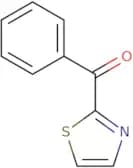
CAS:<p>2-Benzyl-4-methyl-1,3-thiazole is a hydroxamic acid that has been shown to have antibacterial and antimicrobial properties. It is a selective inhibitor of the enzyme leishmanase, which is an enzyme that catalyzes the conversion of L-2,4-diaminobutanoate to L-2,4-diaminobutanoic acid. 2MBTT has been shown to have antiproliferative activity in cancer cells and also has antiviral activity against human immunodeficiency virus type 1 (HIV) and herpes simplex virus type 1 (HSV). This compound has shown antifungal activity against Candida albicans and Aspergillus fumigatus in vitro. Molecular modeling studies suggest that this compound binds to a site on the enzyme leishmanase that is not accessible by other inhibitors such as pyridoxal phosphate or EDTA. The maximal response</p>Formula:C11H11NSPurity:Min. 95%Molecular weight:189.28 g/mol2-Benzoyl-1,3-thiazole
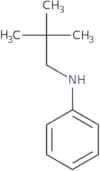
CAS:Versatile small molecule scaffoldFormula:C10H7NOSPurity:Min. 95%Molecular weight:189.24 g/molN-(2,2-Dimethylpropyl)aniline
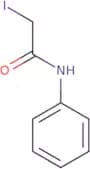
CAS:<p>N-(2,2-Dimethylpropyl)aniline is a heterocyclic compound that belongs to the class of amines. It is used in the synthesis of polymers and copolymers, such as polycarbonate plastics, polyurethane elastomers, and polyester fibers. N-(2,2-Dimethylpropyl)aniline can be used as a catalyst for cross-coupling reactions and also has been shown to catalyze x-ray crystallography studies. This product has also been shown to have carbamate and amide properties.<br>N-(2,2-Dimethylpropyl)aniline is an intermediate in the production of anilines from benzene derivatives with dimethylformamide or carbonyldiimidazole. It has also been shown to react with alcohols or phosphites to form esters or phosphoramides, respectively.</p>Formula:C11H17NPurity:Min. 95%Molecular weight:163.26 g/mol2-Iodo-N-phenylacetamide
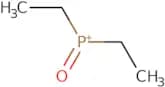
CAS:2-Iodo-N-phenylacetamide (2IA) is a chemical that binds to the substrate binding site of the enzyme. It has been shown to have pro-inflammatory cytokine activity in vitro and in vivo. 2IA is a member of a class of compounds that are able to inhibit chronic viral infections by inhibiting the production of pro-inflammatory cytokines. The chemical diversity of 2IA is due to its functional groups, which include an electrospray ionization quadrupole, a phosphate group, and a disulfide bond. 2IA also has been shown to inhibit phosphorylation reactions in biochemical pathways.Formula:C8H8INOPurity:Min. 95%Molecular weight:261.06 g/molDiethylphosphine oxide
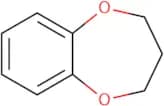
CAS:Versatile small molecule scaffoldFormula:C4H10OPPurity:Min. 95%Molecular weight:105.1 g/mol3,4-dihydro-2H-1,5-benzodioxepine
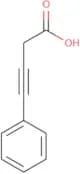
CAS:3,4-Dihydro-2H-1,5-benzodioxepine is a chalcone that has been shown to have organic and inorganic acid properties. It is a natural product that has been shown to inhibit the growth of bacteria. The ultraviolet absorption properties of 3,4-dihydro-2H-1,5-benzodioxepine are due to its conjugated double bond system. This compound is an amide and contains a hydroxyl group and a chloride ion. 3,4-Dihydro-2H-1,5-benzodioxepine also has the ability to bind with amino groups on proteins. 3,4-Dihydro-2H-1,5 benzodioxepine can be found in plants such as "Achillea millefolium" (Yarrow).Formula:C9H10O2Purity:Min. 95%Molecular weight:150.18 g/mol4-Phenylbut-3-ynoic acid
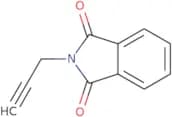
CAS:<p>4-Phenylbut-3-ynoic acid is a mixture of two stereoisomers that are obtained by the reaction of but-3-yne with phenylhalide. The mixture is used as a ligand in asymmetric synthesis and catalytic reactions. 4-Phenylbut-3-ynoic acid is also used as a reagent in organic syntheses, such as alkenylations, to produce an optically pure alkene product. 4-Phenylbut-3-ynoic acid has been shown to be selective for the desired stereoisomer.</p>Formula:C10H8O2Purity:Min. 95%Molecular weight:160.17 g/molN-Propargylphthalimide
CAS:<p>N-Propargylphthalimide is a supramolecular compound that has been shown to have antiinflammatory properties. It inhibits the production of prostaglandin E2 (PGE2) in human neutrophils, which can be caused by inhibiting the activity of acetylsalicylic acid (ASA). N-Propargylphthalimide has also been observed to inhibit tyrosinase and amine oxidase, which may be due to its ability to form hydrogen bonds with the enzyme's active site. N-Propargylphthalimide has not yet been tested on animals or humans.</p>Formula:C11H7NO2Purity:Min. 95%Molecular weight:185.18 g/mol9-Methyl-3-oxa-9-azabicyclo[3.3.1]nonan-7-one
CAS:<p>Versatile small molecule scaffold</p>Formula:C8H13NO2Purity:Min. 95%Molecular weight:155.2 g/mol1-Chloro-3,4-methylenedioxybenzene
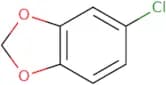
CAS:Controlled Product<p>1-Chloro-3,4-methylenedioxybenzene is an organic solvent used in the treatment of various inorganic compounds. The solvent is used to dissolve inorganic compounds that are insoluble in water and other solvents. 1-Chloro-3,4-methylenedioxybenzene can be used as a dehydrating agent or additive to remove water from organic substances such as coal tar or oils. It is also used as a catalyst for alkylation reactions and has been shown to inhibit the growth of bacteria by binding to DNA. This product has been demonstrated to have anti-inflammatory properties.</p>Formula:C7H5ClO2Purity:Min. 95%Molecular weight:156.57 g/mol1-(1,3-Dioxaindan-4-yl)ethan-1-ol
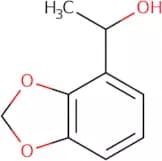
CAS:<p>Versatile small molecule scaffold</p>Formula:C9H10O3Purity:Min. 95%Molecular weight:166.2 g/mol1-(2,3-Dihydro-1-benzofuran-5-yl)ethanol
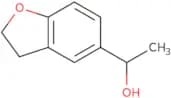
CAS:Versatile small molecule scaffoldFormula:C10H12O2Purity:Min. 95%Molecular weight:164.2 g/mol
![1-N-[(2-Methylphenyl)methyl]benzene-1,2-diamine](/_next/image/?url=https%3A%2Fstatic.cymitquimica.com%2Fproducts%2F3D%2Fthumb-webp%2FHAA19192.webp&w=3840&q=75)

![1,2-Dihydrospiro[indole-3,3'-pyrrolidine]](/_next/image/?url=https%3A%2Fstatic.cymitquimica.com%2Fproducts%2F3D%2Fthumb-webp%2FHAA19872.webp&w=3840&q=75)
![1-[(Chloromethyl)sulfanyl]-4-methoxybenzene](/_next/image/?url=https%3A%2Fstatic.cymitquimica.com%2Fproducts%2F3D%2Fthumb-webp%2FHAA20589.webp&w=3840&q=75)
![9-Methyl-3-oxa-9-azabicyclo[3.3.1]nonan-7-one](/_next/image/?url=https%3A%2Fstatic.cymitquimica.com%2Fproducts%2F3D%2Fthumb-webp%2FHAA22481.webp&w=3840&q=75)