Building Blocks
This section contains fundamental products for the synthesis of organic and biological compounds. Building blocks are the essential starting materials used to construct complex molecules through various chemical reactions. They play a critical role in drug discovery, material science, and chemical research. At CymitQuimica, we offer a diverse range of high-quality building blocks to support your innovative research and industrial projects, ensuring you have the essential components for successful synthesis.
Subcategories of "Building Blocks"
- Boronic Acids & Boronic Acid Derivatives(5,778 products)
- Chiral Building Blocks(1,242 products)
- Hydrocarbon Building Blocks(6,098 products)
- Organic Building Blocks(61,084 products)
Found 198714 products of "Building Blocks"
Sort by
Purity (%)
0
100
|
0
|
50
|
90
|
95
|
100
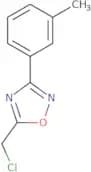
5-(Chloromethyl)-3-(3-methylphenyl)-1,2,4-oxadiazole
CAS:Versatile small molecule scaffoldFormula:C10H9ClN2OPurity:Min. 95%Molecular weight:208.64 g/mol5-Chloromethyl-3-(2-chloro-phenyl)-[1,2,4]oxadiazole
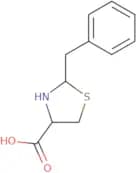
CAS:Versatile small molecule scaffoldFormula:C9H6Cl2N2OPurity:Min. 95%Molecular weight:229.06 g/mol2-Benzyl-1,3-thiazolidine-4-carboxylic acid
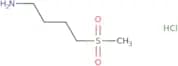
CAS:2-Benzyl-1,3-thiazolidine-4-carboxylic acid is a sulfur containing compound that is an ionizable, crystallographic, and spectroscopic compound. It has the ability to react with amino acids in the presence of heat. The vibrational spectrum of 2-benzyl-1,3-thiazolidine-4 carboxylic acid displays peaks at 1240 cm and 1450 cm. The x-ray crystallography data for 2BZTAC is available in the supplementary information.Formula:C11H13NO2SPurity:Min. 95%Molecular weight:223.29 g/mol4-Methanesulfonylbutan-1-amine hydrochloride
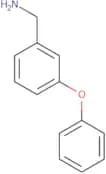
CAS:<p>4-Methanesulfonylbutan-1-amine hydrochloride is a heterocyclic compound that belongs to the group of carbamothioates. It is a white solid with low solubility in water. 4-Methanesulfonylbutan-1-amine hydrochloride has been used as an intermediate in the synthesis of other compounds and has also been shown to have dermatological properties. This compound can react with alcohols, thiols, and isothiocyanates to form sulfones, sulfonates, and isothiocyanato compounds respectively.</p>Formula:C5H14ClNO2SPurity:Min. 95%Molecular weight:187.69 g/mol3-Phenoxy-benzylamine
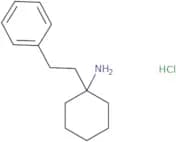
CAS:<p>3-phenoxybenzylamine is a regulatory agent that has been shown to inhibit the activity of some drugs. The toxicities of 3-phenoxybenzylamine are similar to those of other inhibitor drugs and include acute toxicity, which may be due to inhibition of intracellular ATP, and chronic effects that may be due to protein–protein interaction or competition with chloride for the cell membrane. It has been shown to be an excellent validation agent for acrylonitrile production by reacting with acetonitrile in the presence of alkali metal compounds. 3-Phenoxybenzylamine also inhibits cancer cells, which is related to its ability to bind proteins in the cancer cell membranes.</p>Formula:C13H13NOPurity:Min. 95%Molecular weight:199.25 g/mol1-(2-Phenylethyl)cyclohexan-1-amine hydrochloride
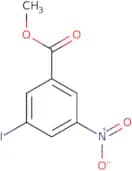
CAS:Versatile small molecule scaffoldFormula:C14H22ClNPurity:Min. 95%Molecular weight:239.8 g/molMethyl 3-iodo-5-nitrobenzoate
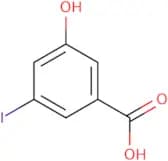
CAS:<p>Versatile small molecule scaffold</p>Formula:C8H6INO4Purity:Min. 95%Molecular weight:307.04 g/mol3-Hydroxy-5-iodobenzoic acid
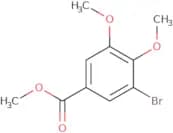
CAS:<p>Versatile small molecule scaffold</p>Formula:C7H5IO3Purity:Min. 95%Molecular weight:264.02 g/molMethyl 3-bromo-4,5-dimethoxybenzoate
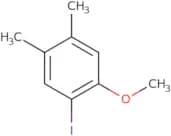
CAS:<p>Versatile small molecule scaffold</p>Formula:C10H11BrO4Purity:Min. 95%Molecular weight:275.1 g/mol1-Iodo-2-methoxy-4,5-dimethylbenzene
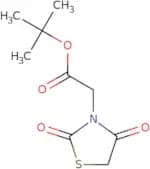
CAS:<p>Versatile small molecule scaffold</p>Formula:C9H11IOPurity:Min. 95%Molecular weight:262.09 g/moltert-Butyl 2-(2,4-dioxo-1,3-thiazolidin-3-yl)acetate
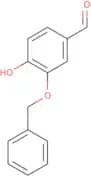
CAS:Versatile small molecule scaffoldFormula:C9H13NO4SPurity:Min. 95%Molecular weight:231.27 g/mol3-Benzyloxy-4-hydroxybenzaldehyde
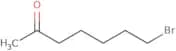
CAS:<p>3-Benzyloxy-4-hydroxybenzaldehyde (3BOHB) is an aromatic compound that is used in the synthesis of aporphines. It can be synthesized by using a Wittig reaction with phenylmagnesium bromide and 3-benzyloxybenzoic acid. This product has been shown to have anticancer activity against breast cancer cells, as well as other cancer cells, in mice and rats. 3BOHB is also biosynthesized by clivia plants, and it is commercially available as a starting material for drug synthesis.</p>Formula:C14H12O3Purity:Min. 95%Molecular weight:228.24 g/mol7-Bromoheptan-2-one
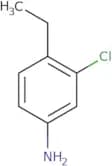
CAS:<p>7-Bromoheptan-2-one is a hydrogen bond donor that can act as a proton receptor. It has been shown to be able to reversibly bind chloride ions in the cavity of an anion, which has been modified with a 2,3-diaminopyridine moiety. This compound has been synthesized by reacting acetonitrile with 7-bromoheptanoic acid and the amine in a 1:1 ratio at room temperature for 3 hours. The supramolecular chemistry of this compound is based on its ability to form hydrogen bonds with other molecules. 7-Bromoheptan-2-one also has peptidomimetic properties because it can form tetrapyrrolic structures. 7-Bromoheptan-2-one has been used in titration calorimetry experiments to study the binding affinity of the molecule for various metal cations.</p>Formula:C7H13BrOPurity:Min. 95%Molecular weight:193.08 g/mol3-Chloro-4-ethylbenzenamine
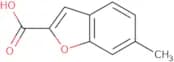
CAS:<p>3-Chloro-4-ethylbenzenamine is a chlorinating agent that reacts with amines to produce chloroamines. It is used as a catalyst in the production of tetramethylurea, anisole, chloro xylene, naphthylamine, and nitrobenzene. 3-Chloro-4-ethylbenzenamine also participates in the synthesis of 3,4-dichlorophenyl isocyanate and benzene. It can be used as a chemical intermediate for the production of polycarbonates or polyurethanes.</p>Formula:C8H10ClNPurity:Min. 95%Molecular weight:155.62 g/mol6-Methyl-benzofuran-2-carboxylic acid
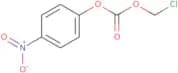
CAS:<p>6-Methyl-benzofuran-2-carboxylic acid is a hydroxamic acid that has been shown to have pharmacological properties. It is a potent histone deacetylase inhibitor and blocks the activity of diuretic, ligand, benzofurans, and inhibitors of deacetylase. 6-Methyl-benzofuran-2-carboxylic acid also has minimal effects on the cardiovascular system.</p>Formula:C10H8O3Purity:Min. 95%Molecular weight:176.17 g/molChloromethyl (4-nitrophenyl) carbonate
CAS:<p>Versatile small molecule scaffold</p>Formula:C8H6NO5ClPurity:Min. 95%Molecular weight:231.58 g/mol2-(2,3-Dihydro-1H-indol-1-yl)acetonitrile
CAS:<p>2-(2,3-Dihydro-1H-indol-1-yl)acetonitrile is a chemical with the molecular formula of C9H7N. It has a cyano group and stabilized carbanions. The compound is used in organic synthesis as a reagent to make various products, such as spiropyrans and perchlorate. It can also be transformed into indoline derivatives through condensation reactions with aromatic aldehydes.</p>Formula:C10H10N2Purity:Min. 95%Molecular weight:158.2 g/molSpiro[3.4]oct-7-en-6-one
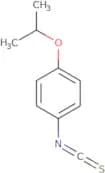
CAS:<p>Versatile small molecule scaffold</p>Formula:C8H10OPurity:Min. 95%Molecular weight:122.2 g/mol1-Isothiocyanato-4-(propan-2-yloxy)benzene
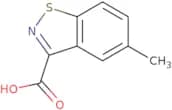
CAS:Versatile small molecule scaffoldFormula:C10H11NOSPurity:Min. 95%Molecular weight:193.27 g/mol5-Methyl-1,2-benzothiazole-3-carboxylic acid
CAS:Versatile small molecule scaffoldFormula:C9H7NO2SPurity:Min. 95%Molecular weight:193.22 g/mol

![5-Chloromethyl-3-(2-chloro-phenyl)-[1,2,4]oxadiazole](/_next/image/?url=https%3A%2Fstatic.cymitquimica.com%2Fproducts%2F3D%2Fthumb-webp%2FACA73732.webp&w=3840&q=75)

![Spiro[3.4]oct-7-en-6-one](/_next/image/?url=https%3A%2Fstatic.cymitquimica.com%2Fproducts%2F3D%2Fthumb-webp%2FACA78204.webp&w=3840&q=75)