Building Blocks
This section contains fundamental products for the synthesis of organic and biological compounds. Building blocks are the essential starting materials used to construct complex molecules through various chemical reactions. They play a critical role in drug discovery, material science, and chemical research. At CymitQuimica, we offer a diverse range of high-quality building blocks to support your innovative research and industrial projects, ensuring you have the essential components for successful synthesis.
Subcategories of "Building Blocks"
- Boronic Acids & Boronic Acid Derivatives(5,756 products)
- Chiral Building Blocks(1,242 products)
- Hydrocarbon Building Blocks(6,095 products)
- Organic Building Blocks(61,051 products)
Found 199813 products of "Building Blocks"
Sort by
Purity (%)
0
100
|
0
|
50
|
90
|
95
|
100
2-[3-(4-Chlorophenyl)-1-phenyl-1H-pyrazol-4-yl]acetonitrile
CAS:<p>Versatile small molecule scaffold</p>Formula:C17H12ClN3Purity:Min. 95%Molecular weight:293.7 g/molN-Cyclopropyl-2-nitroaniline
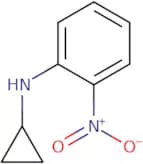
CAS:<p>Versatile small molecule scaffold</p>Formula:C9H10N2O2Purity:Min. 95%Molecular weight:178.19 g/mol(2-Cyanophenyl)urea
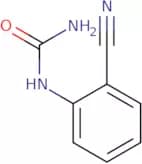
CAS:<p>Versatile small molecule scaffold</p>Formula:C8H7N3OPurity:Min. 95%Molecular weight:161.16 g/mol1-(1-Methyl-1H-1,2,3,4-tetrazol-5-yl)methanamine hydrochloride
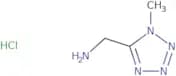
CAS:<p>Versatile small molecule scaffold</p>Formula:C3H8ClN5Purity:Min. 95%Molecular weight:149.6 g/molEthyl 2-[4-(2-aminoethyl)phenoxy]acetate hydrochloride
CAS:<p>Versatile small molecule scaffold</p>Formula:C12H18ClNO3Purity:Min. 95%Molecular weight:259.73 g/mol5-(2,3-Dichlorophenyl)furan-2-carboxylic acid
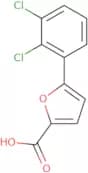
CAS:<p>Versatile small molecule scaffold</p>Formula:C11H6Cl2O3Purity:Min. 95%Molecular weight:257.07 g/mol2-[(2-Methylpropyl)amino]-1-phenylethan-1-ol
CAS:<p>Versatile small molecule scaffold</p>Formula:C12H19NOPurity:Min. 95%Molecular weight:193.28 g/mol2-{[(tert-Butoxy)carbonyl]amino}-2-(2-hydroxyphenyl)acetic acid
CAS:<p>Versatile small molecule scaffold</p>Formula:C13H17NO5Purity:Min. 95%Molecular weight:267.28 g/molN-Ethyl-8-hydroxyquinoline-7-carboxamide
CAS:<p>Versatile small molecule scaffold</p>Formula:C12H12N2O2Purity:Min. 95%Molecular weight:216.24 g/mol5-Bromo-[1,2,4]triazolo[1,5-a]pyrazine
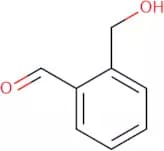
CAS:<p>Versatile small molecule scaffold</p>Formula:C5H3BrN4Purity:Min. 95%Molecular weight:199.01 g/mol2-(Hydroxymethyl)benzaldehyde
CAS:<p>2-(Hydroxymethyl)benzaldehyde (2HB) is a reactive aldehyde that is used as a cancer drug. It binds to the receptor in the cell membrane and inhibits fatty acid synthesis, which prevents cell division. 2HB has been shown to inhibit tumor growth by inhibiting chemokines, proteins that act as chemoattractants for immune cells. 2HB also inhibits the growth of cultured leukemia cells through crosslinking of DNA. This reaction can be enhanced by UV light, resulting in covalent bonds between adjacent nucleotides. The reaction mechanism for this process is called metathesis reactions.</p>Formula:C8H8O2Purity:Min. 95%Molecular weight:136.15 g/mol4-(Furan-2-yl)pyridine
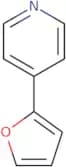
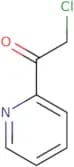
CAS:<p>4-(Furan-2-yl)pyridine is a heterocyclic organic compound that belongs to the group of pyridines. It has been shown to have strong cleavage reactions, which are enhanced by factors such as structural factors and the presence of a pyridine ring. The most common fragmentation reaction is the ionization of the furan ring, followed by dissociation of electron pairs from the furyl rings. This causes alkyl groups to be formed with n-propyl and alkyl groups. 4-(Furan-2-yl)pyridine can also undergo rearrangement reactions involving these groups, leading to formation of a new molecule with an additional carbon atom at one end.</p>Formula:C9H7NOPurity:Min. 95%Molecular weight:145.16 g/mol2-Chloro-1-(pyridin-2-yl)ethan-1-one
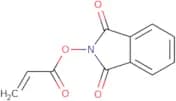
CAS:<p>Versatile small molecule scaffold</p>Formula:C7H6ClNOPurity:Min. 95%Molecular weight:155.58 g/mol1,3-Dioxo-2,3-dihydro-1H-isoindol-2-yl prop-2-enoate
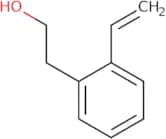
CAS:<p>Versatile small molecule scaffold</p>Formula:C11H7NO4Purity:Min. 95%Molecular weight:217.18 g/mol2-(2-Ethenylphenyl)ethan-1-ol
CAS:<p>Versatile small molecule scaffold</p>Formula:C10H12OPurity:Min. 95%Molecular weight:148.2 g/molPropyl[2-(pyridin-2-yl)ethyl]amine
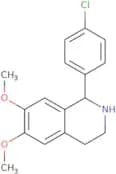
CAS:<p>Versatile small molecule scaffold</p>Formula:C10H16N2Purity:Min. 95%Molecular weight:164.25 g/mol1-(4-Chlorophenyl)-6,7-dimethoxy-1,2,3,4-tetrahydroisoquinoline
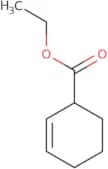
CAS:<p>Versatile small molecule scaffold</p>Formula:C17H18ClNO2Purity:Min. 95%Molecular weight:303.8 g/molEthyl cyclohex-2-ene-1-carboxylate
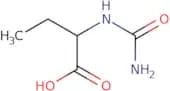
CAS:<p>Ethyl cyclohex-2-ene-1-carboxylate is an organic compound that is used as an analgesic, antiarrhythmic, and neuroleptic. It belongs to the group of esters and has a nitrogen atom in its structure. Ethyl cyclohex-2-ene-1-carboxylate was first synthesized by the reaction of ethyl bromide with 2-cyclohexenone. The molecule has two hydroxyalkyl groups, which are esters of alcohols. The two alkenyl groups are arranged cis to each other, which gives it a planar shape. Ethyl cyclohex-2-ene-1-carboxylate contains a heterocyclic system composed of a six membered ring containing three carbon atoms and three oxygen atoms.</p>Formula:C9H14O2Purity:Min. 95%Molecular weight:154.21 g/molN-Carbamyl-DL-α-amino-N-butyric acid
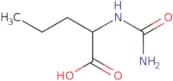
CAS:<p>N-Carbamyl-DL-α-amino-N-butyric acid is a reactive monocarboxylic acid that is found in fatty acids. It can be converted into an enantiomer, which has the same chemical formula but a different arrangement of atoms. This conversion can be achieved by reacting it with an alcohol and a base or an acid. N-Carbamyl-DL-α-amino-N-butyric acid reacts with glufosinate ammonium to form reaction products that are toxic to plants.</p>Formula:C5H10N2O3Purity:Min. 95%Molecular weight:146.14 g/mol2-(Carbamoylamino)pentanoic acid
CAS:<p>2-(Carbamoylamino)pentanoic acid is a monoclonal antibody that can be used as a diagnostic agent. It inhibits the proliferation of cancer cells by binding to the malic acid receptor, which is overexpressed on prostate cancer cells. This antibody has been shown to have an inhibitory effect on cell proliferation in vivo, but does not interfere with the function of other cells. 2-(Carbamoylamino)pentanoic acid also binds to antibodies and has shown a detection time of 4 hours in vivo. 2-(Carbamoylamino)pentanoic acid has been shown to bind to malic acid in vitro and can be used for the diagnosis of prostate cancer.</p>Formula:C6H12N2O3Purity:Min. 95%Molecular weight:160.17 g/mol
![2-[3-(4-Chlorophenyl)-1-phenyl-1H-pyrazol-4-yl]acetonitrile](/_next/image/?url=https%3A%2Fstatic.cymitquimica.com%2Fproducts%2F3D%2Fthumb-webp%2FFCA43207.webp&w=3840&q=75)

![Ethyl 2-[4-(2-aminoethyl)phenoxy]acetate hydrochloride](/_next/image/?url=https%3A%2Fstatic.cymitquimica.com%2Fproducts%2F3D%2Fthumb-webp%2FFCA45881.webp&w=3840&q=75)
![2-[(2-Methylpropyl)amino]-1-phenylethan-1-ol](/_next/image/?url=https%3A%2Fstatic.cymitquimica.com%2Fproducts%2F3D%2Fthumb-webp%2FFCA47491.webp&w=3840&q=75)
![2-{[(tert-Butoxy)carbonyl]amino}-2-(2-hydroxyphenyl)acetic acid](/_next/image/?url=https%3A%2Fstatic.cymitquimica.com%2Fproducts%2F3D%2Fthumb-webp%2FFCA47747.webp&w=3840&q=75)

![5-Bromo-[1,2,4]triazolo[1,5-a]pyrazine](/_next/image/?url=https%3A%2Fstatic.cymitquimica.com%2Fproducts%2F3D%2Fthumb-webp%2FFCA47878.webp&w=3840&q=75)
![Propyl[2-(pyridin-2-yl)ethyl]amine](/_next/image/?url=https%3A%2Fstatic.cymitquimica.com%2Fproducts%2F3D%2Fthumb-webp%2FFCA49657.webp&w=3840&q=75)