Building Blocks
This section contains fundamental products for the synthesis of organic and biological compounds. Building blocks are the essential starting materials used to construct complex molecules through various chemical reactions. They play a critical role in drug discovery, material science, and chemical research. At CymitQuimica, we offer a diverse range of high-quality building blocks to support your innovative research and industrial projects, ensuring you have the essential components for successful synthesis.
Subcategories of "Building Blocks"
- Boronic Acids & Boronic Acid Derivatives(5,756 products)
- Chiral Building Blocks(1,242 products)
- Hydrocarbon Building Blocks(6,095 products)
- Organic Building Blocks(61,055 products)
Found 199650 products of "Building Blocks"
Sort by
Purity (%)
0
100
|
0
|
50
|
90
|
95
|
100
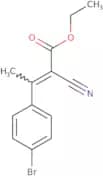
Ethyl 3-(4-bromophenyl)-2-cyanobut-2-enoate
CAS:<p>Versatile small molecule scaffold</p>Formula:C13H12BrNO2Purity:Min. 95%Molecular weight:294.14 g/mol[2-Amino-3-(trifluoromethyl)phenyl]methanol
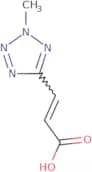
CAS:<p>Versatile small molecule scaffold</p>Formula:C8H8F3NOPurity:Min. 95%Molecular weight:191.15 g/mol(2E)-3-(2-Methyl-2H-1,2,3,4-tetrazol-5-yl)prop-2-enoic acid
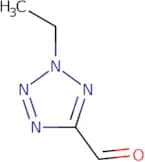
CAS:<p>Versatile small molecule scaffold</p>Formula:C5H6N4O2Purity:Min. 95%Molecular weight:154.13 g/mol2-Ethyl-2H-1,2,3,4-tetrazole-5-carbaldehyde
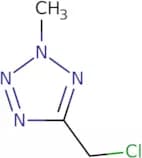
CAS:Versatile small molecule scaffoldFormula:C4H6N4OPurity:Min. 95%Molecular weight:126.12 g/mol5-(Chloromethyl)-2-methyl-2H-1,2,3,4-tetrazole
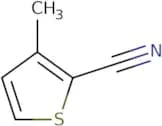
CAS:<p>5-(Chloromethyl)-2-methyl-2H-1,2,3,4-tetrazole is a fine chemical that is used as a versatile building block for research and industrial purposes. It is an intermediate in the synthesis of other compounds and is also used as a reaction component. The quality of this compound is high and it has been shown to be useful in the synthesis of various complex compounds. 5-(Chloromethyl)-2-methyl-2H-1,2,3,4-tetrazole can be used as a reagent for research or manufacturing purposes due to its versatility.</p>Formula:C3H5ClN4Purity:Min. 95%Color and Shape:PowderMolecular weight:132.55 g/mol3-Methylthiophene-2-carbonitrile
CAS:<p>3-Methylthiophene-2-carbonitrile is a crystalline solid that is soluble in water and has a boiling point of 115°C. This compound can be found as a gas or liquid at room temperature. 3-Methylthiophene-2-carbonitrile has been shown to undergo vaporization at high temperatures, with an enthalpy of vaporization of -5.5 kJ/mol. The structural formula for this compound is CH3CSCH3, which is made up of two methyl groups and one thiophene ring. 3-Methylthiophene-2-carbonitrile has been shown to have an energy of -4.6 kJ/mol when heated to 100°C, making it a very stable molecule.</p>Formula:C6H5NSPurity:Min. 95%Molecular weight:123.18 g/mol3,6-Dibromopyrazolo[1,5-a]pyrimidine
CAS:<p>Versatile small molecule scaffold</p>Formula:C6H3Br2N3Purity:Min. 95%Molecular weight:276.92 g/mol1-(2-Chloro-4-nitrophenyl)pyrrolidine
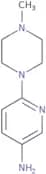
CAS:<p>Versatile small molecule scaffold</p>Formula:C10H11ClN2O2Purity:Min. 95%Molecular weight:226.66 g/mol3-Amino-6-(4-methylpiperazin-1-yl)pyridine
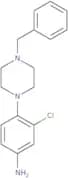
CAS:Versatile small molecule scaffoldFormula:C10H16N4Purity:Min. 95%Molecular weight:192.26 g/mol4-(4-Benzyl-1-piperazinyl)-3-chlorophenylamine
CAS:<p>Versatile small molecule scaffold</p>Formula:C17H20ClN3Purity:Min. 95%Molecular weight:301.82 g/mol6-(1-Piperidinyl)-3-pyridinamine
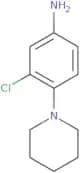
CAS:<p>Versatile small molecule scaffold</p>Formula:C10H15N3Purity:Min. 95%Molecular weight:177.25 g/mol3-Chloro-4-piperidin-1-yl-phenylamine
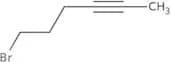
CAS:<p>Versatile small molecule scaffold</p>Formula:C11H15ClN2Purity:Min. 95%Molecular weight:210.71 g/mol6-Bromohex-2-yne
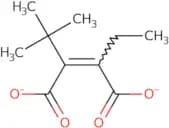
CAS:<p>Versatile small molecule scaffold</p>Formula:C6H9BrPurity:Min. 95%Molecular weight:161.04 g/mol1-tert-Butyl 4-ethyl (2E)-but-2-enedioate
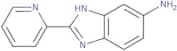
CAS:Versatile small molecule scaffoldFormula:C10H14O4Purity:Min. 95%Molecular weight:198.22 g/mol2-(Pyridin-2-yl)-1H-1,3-benzodiazol-5-amine
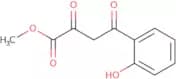
CAS:<p>Versatile small molecule scaffold</p>Formula:C12H10N4Purity:Min. 95%Molecular weight:210.23 g/molMethyl 4-(2-hydroxyphenyl)-2,4-dioxobutanoate
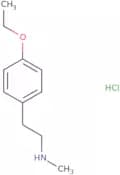
CAS:Methyl 4-(2-hydroxyphenyl)-2,4-dioxobutanoate is an organic compound that belongs to the class of pyrrole derivatives. It is a precursor for the synthesis of a number of pharmaceuticals and other organic compounds. Methyl 4-(2-hydroxyphenyl)-2,4-dioxobutanoate can be prepared by condensation of formaldehyde with 2,4-dihydroxyphenylacetic acid in acidic media. This reaction gives a mixture of methyl 4-(2-hydroxyphenyl)-2,4-dioxobutanoate and methyl 3-(2-hydroxyphenyl)-3,5-dioxopentanoate. The major product can be purified by recrystallization from methanol or ethanol.Formula:C11H10O5Purity:Min. 95%Molecular weight:222.19 g/mol2-(4-Ethoxyphenyl)-N-methylethanamine hydrochloride
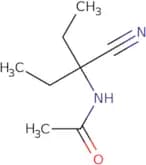
CAS:Controlled Product<p>Versatile small molecule scaffold</p>Formula:C11H18ClNOPurity:Min. 95%Molecular weight:215.72 g/molN-(1-Cyano-1-ethylpropyl)acetamide
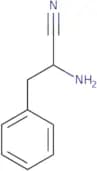
CAS:<p>Versatile small molecule scaffold</p>Formula:C8H14N2OPurity:Min. 95%Molecular weight:154.2 g/mol2-Amino-3-phenylpropanenitrile
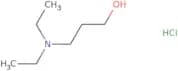
CAS:<p>2-Amino-3-phenylpropanenitrile is an active form of a sulfoxide that has been shown to be effective in the treatment of brain tumors. It is chiral, with two enantiomers, and can be used as a diagnostic tool for the detection of brain tumors. The mechanism of action of 2-amino-3-phenylpropanenitrile is not fully understood, but it has been shown to have therapeutic effects on brain tumors in animal models. The stereoselective properties of this drug make it an attractive candidate for optimization and cancer treatment. Optimization studies have focused on the use of potassium t-butoxide in asymmetric synthesis, which may lead to improved therapeutic efficacy and reduced toxicity.</p>Formula:C9H10N2Purity:Min. 95%Molecular weight:146.19 g/mol3-(Diethylao)propan-1-ol hydrochloride
CAS:<p>Versatile small molecule scaffold</p>Formula:C7H18ClNOPurity:Min. 95%Molecular weight:167.68 g/mol

![[2-Amino-3-(trifluoromethyl)phenyl]methanol](/_next/image/?url=https%3A%2Fstatic.cymitquimica.com%2Fproducts%2F3D%2Fthumb-webp%2FFCA41460.webp&w=3840&q=75)
![3,6-Dibromopyrazolo[1,5-a]pyrimidine](/_next/image/?url=https%3A%2Fstatic.cymitquimica.com%2Fproducts%2F3D%2Fthumb-webp%2FFCA40568.webp&w=3840&q=75)