Building Blocks
This section contains fundamental products for the synthesis of organic and biological compounds. Building blocks are the essential starting materials used to construct complex molecules through various chemical reactions. They play a critical role in drug discovery, material science, and chemical research. At CymitQuimica, we offer a diverse range of high-quality building blocks to support your innovative research and industrial projects, ensuring you have the essential components for successful synthesis.
Subcategories of "Building Blocks"
- Boronic Acids & Boronic Acid Derivatives(5,756 products)
- Chiral Building Blocks(1,242 products)
- Hydrocarbon Building Blocks(6,095 products)
- Organic Building Blocks(61,038 products)
Found 196817 products of "Building Blocks"
Sort by
Purity (%)
0
100
|
0
|
50
|
90
|
95
|
100
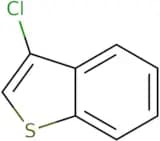
3-Chloro-1-benzothiophene
CAS:<p>3-Chloro-1-benzothiophene is a molecule that is used to treat bowel disease. It has been shown to inhibit the proliferation of colon cancer cells in vitro and in vivo, as well as to induce apoptosis. 3-Chloro-1-benzothiophene also inhibits inflammation by blocking chloride channels, which are found on the surface of inflammatory cells in the digestive tract. This drug may have regenerative effects because it has been shown to stimulate the growth of new nerve and muscle cells in mice. 3-Chloro-1-benzothiophene binds to receptor cells and blocks chloride channels, inhibiting the release of inflammatory mediators from these cells.</p>Formula:C8H5ClSPurity:Min. 95%Molecular weight:168.64 g/mol3,5-Diethyl-1H-1,2,4-triazole
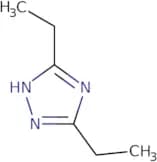
CAS:<p>3,5-Diethyl-1H-1,2,4-triazole is a ligand that has been used for the preparation of coordination compounds. It is a triazole with a 3,5-diethyl substituent. This ligand can be prepared by reacting acetonitrile with anions in the presence of hydrochloric acid. The ligand can be characterized by its diffraction properties and its ability to bind metal ions. 3,5-Diethyl-1H-1,2,4-triazole forms complexes with metals that are hydrophobic in nature and this property can be exploited to prepare synthetic materials. The complex that features this ligand is kinetically stable and crystallographically well defined.</p>Formula:C6H11N3Purity:Min. 95%Molecular weight:125.17 g/moltrans-2,3-Dimethoxycinnamic Acid
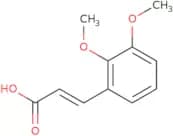
CAS:<p>Trans-2,3-dimethoxycinnamic acid is a dicarboxylic acid that is formed through the condensation of phenylacetic acid and methanol. This compound has been used in the synthesis of pharmaceuticals, such as antihistamines. Trans-2,3-dimethoxycinnamic acid has also been shown to have antioxidant properties by scavenging free radicals produced during lipid peroxidation.</p>Formula:C11H12O4Purity:Min. 95%Molecular weight:208.21 g/molSodium cyclohexyl(ethyl)carbamodithioate
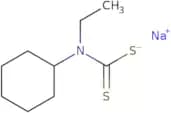
CAS:<p>Versatile small molecule scaffold</p>Formula:C9H16NNaS2Purity:Min. 95%Molecular weight:225.4 g/mol2-(1-Phenylcyclopropyl)acetic acid
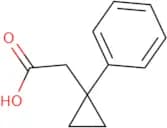
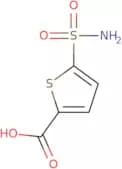
CAS:<p>Versatile small molecule scaffold</p>Formula:C11H12O2Purity:Min. 95%Molecular weight:176.21 g/mol5-Sulfamoylthiophene-2-carboxylic acid
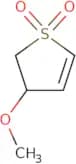
CAS:<p>Versatile small molecule scaffold</p>Formula:C5H5NO4S2Purity:Min. 95%Molecular weight:207.2 g/mol3-methoxy-2,3-dihydrothiophene 1,1-dioxide
CAS:<p>Versatile small molecule scaffold</p>Formula:C5H8O3SPurity:Min. 95%Molecular weight:148.18 g/moltrans-Sinapic acid
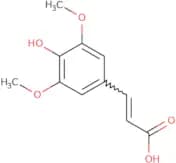
CAS:<p>Trans-Sinapic acid is an organic compound with the formula HOCHC(OH)CHCOH. It is a white solid that is soluble in water and ethanol. Trans-Sinapic acid is found in plants, such as the leaves of Vitexin, and has been shown to have various pharmacological activities including anti-inflammatory and anticholinesterase properties. Trans-Sinapic acid also has been shown to be a potent inhibitor of acetylcholinesterase (AChE) activity. AChE inhibitors are used clinically as treatments for Alzheimer's disease and other conditions involving memory loss and cognitive decline. Trans-Sinapic acid binds to AChE with high affinity and inhibits its ability to break down acetylcholine, thereby increasing its concentration at nerve junctions. This may lead to improvement in symptoms associated with Alzheimer's disease, such as memory loss and cognitive decline.</p>Formula:C11H12O5Purity:Min. 95%Color and Shape:PowderMolecular weight:224.21 g/molMethyl 1-methylcycloheptane-1-carboxylate
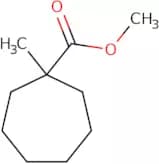
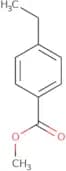
CAS:<p>Versatile small molecule scaffold</p>Formula:C10H18O2Purity:Min. 95%Molecular weight:170.25 g/molMethyl 4-ethylbenzoate
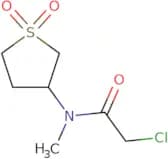
CAS:<p>Methyl 4-ethylbenzoate is an activated sensitizer that is used in the production of polyvinyl chloride. It is isolated from a reaction mixture by distillation and has been shown to be an efficient method for activation of ethylbenzene. The organoleptic properties of methyl 4-ethylbenzoate are dependent on the temperature, with higher temperatures producing a more unpleasant odor. Methyl 4-ethylbenzoate can also be used as a catalyst for electrocatalysis reactions that involve c–h bond activation. This chemical has been found to be useful in the production of polyethylene terephthalate and its derivatives, which are used in many products such as packaging materials, plastic bottles, fibers, and clothing.</p>Formula:C10H12O2Purity:Min. 95%Molecular weight:164.2 g/mol2-Chloro-N-(1,1-dioxo-tetrahydro-1λ(6)-thiophen-3-yl)-N-methyl-acetamide
CAS:<p>Versatile small molecule scaffold</p>Formula:C7H12ClNO3SPurity:Min. 95%Molecular weight:225.69 g/mol4-[(E)-2-(2-Methylphenyl)ethenyl]pyridine
CAS:<p>Versatile small molecule scaffold</p>Formula:C14H13NPurity:Min. 95%Molecular weight:195.26 g/mol2-[4-(Bromomethyl)phenyl]acetonitrile
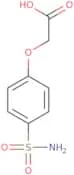
CAS:<p>Versatile small molecule scaffold</p>Formula:C9H8BrNPurity:Min. 95%Molecular weight:210.07 g/mol2-(4-Sulfamoylphenoxy)acetic acid
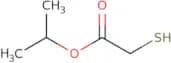
CAS:<p>2-(4-Sulfamoylphenoxy)acetic acid is a chemical compound with the formula CHOSO2H. It is a colorless liquid that is soluble in water and polar organic solvents. It can be prepared by treating 4-hydroxybenzoic acid with sulfuryl chloride to produce the ethyl ester, which hydrolyses to give 2-(4-sulfamoylphenoxy)acetic acid. The compound has been used as a model for kinetic studies of reactions involving protonated amines and hydroxyl groups. A microencapsulation technique was developed for preparing stable dispersions of the drug in water with an average particle size of 1.5 micrometres.</p>Formula:C8H9NO5SPurity:Min. 95%Molecular weight:231.23 g/molPropan-2-yl 2-sulfanylacetate
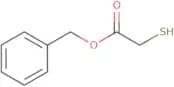
CAS:<p>Propan-2-yl 2-sulfanylacetate is a chloride that is the magnesium salt of propan-2-yl 2-sulfanylacetic acid. It has been shown to be a film forming polymer with a number of functional groups and has been used as a fixative agent for acrylonitrile. Propan-2-yl 2-sulfanylacetate has also been shown to have anti psychotic effects in patients with chronic schizophrenia, and may be due to its primary amino group.</p>Formula:C5H10O2SPurity:Min. 95%Molecular weight:134.2 g/molBenzyl 2-sulfanylacetate
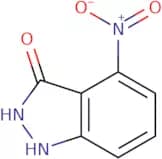
CAS:<p>Benzyl 2-sulfanylacetate is a liquid crystal compound that belongs to the group of aromatic hydrocarbons and fatty acids. It has a high resistance to chloride and an alkylthio group. Benzyl 2-sulfanylacetate can be used as a film-forming polymer, which is used in the stabilizing of pyrimidine compounds and phosphites. Benzyl 2-sulfanylacetate also has neurotrophic effects and can be used for dry extract enzymatic reactions.</p>Formula:C9H10O2SPurity:Min. 95%Molecular weight:182.24 g/mol4-Nitro-1H-indazol-3-ol
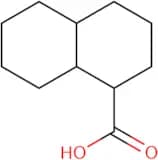
CAS:<p>Versatile small molecule scaffold</p>Formula:C7H5N3O3Purity:Min. 95%Molecular weight:179.13 g/moldecahydronaphthalene-1-carboxylic acid
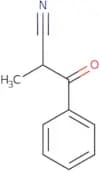
CAS:<p>Decahydronaphthalene-1-carboxylic acid is a polyester that is synthesized from a primary alcohol and the carboxylic acid. It is an efficient method to produce naphthalene by oxidation of decahydronaphthalene-1-carboxylic acid with manganese dioxide in the presence of peroxide. The reaction rate can be increased by using a suitable catalyst such as copper, iron, or nickel. Decahydronaphthalene-1-carboxylic acid has been used to synthesize cycloalkanes with high yields. The toxicity of decahydronaphthalene-1-carboxylic acid depends on its metal content.</p>Formula:C11H18O2Purity:Min. 95%Molecular weight:182.26 g/mol2-Methyl-3-oxo-3-phenylpropanenitrile
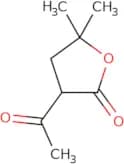
CAS:<p>2-Methyl-3-oxo-3-phenylpropanenitrile is an activated form of acetonitrile. It is a colorless liquid with a strong ammonia odor. 2-Methyl-3-oxo-3-phenylpropanenitrile is used as a reagent in organic synthesis and can be used to catalyze the elimination of hydroxyl groups, activating groups, and carbonyl groups. 2-Methyl-3-oxo-3-phenylpropanenitrile has been shown to be capable of hydrogenating unsaturated bonds during the course of nucleophilic substitution reactions. The compound can also be used to synthesize isoxazoles, which are used as pharmaceuticals or pesticides.</p>Formula:C10H9NOPurity:Min. 95%Molecular weight:159.18 g/mol3-Acetyl-5,5-dimethyloxolan-2-one
CAS:<p>Versatile small molecule scaffold</p>Formula:C8H12O3Purity:Min. 95%Molecular weight:156.18 g/mol

![4-[(E)-2-(2-Methylphenyl)ethenyl]pyridine](/_next/image/?url=https%3A%2Fstatic.cymitquimica.com%2Fproducts%2F3D%2Fthumb-webp%2FHAA37031.webp&w=3840&q=75)
![2-[4-(Bromomethyl)phenyl]acetonitrile](/_next/image/?url=https%3A%2Fstatic.cymitquimica.com%2Fproducts%2F3D%2Fthumb-webp%2FHAA37194.webp&w=3840&q=75)