Building Blocks
This section contains fundamental products for the synthesis of organic and biological compounds. Building blocks are the essential starting materials used to construct complex molecules through various chemical reactions. They play a critical role in drug discovery, material science, and chemical research. At CymitQuimica, we offer a diverse range of high-quality building blocks to support your innovative research and industrial projects, ensuring you have the essential components for successful synthesis.
Subcategories of "Building Blocks"
- Boronic Acids & Boronic Acid Derivatives(5,756 products)
- Chiral Building Blocks(1,242 products)
- Hydrocarbon Building Blocks(6,095 products)
- Organic Building Blocks(61,038 products)
Found 196817 products of "Building Blocks"
Sort by
Purity (%)
0
100
|
0
|
50
|
90
|
95
|
100
4-Chlorobenzene-1-diazonium, tetrafluoroboranuide
CAS:<p>4-Chlorobenzene-1,4-diazonium tetrafluoroborate is a carbocyclic nucleoside that has been synthesized and characterized by Raman spectroscopy. The systematic study of this molecule reveals that it has a crystalline structure and quantum theory. It also has low detection in the range of 0.03 ppm and can be used for the detection of guanine in DNA. 4-Chlorobenzene-1,4-diazonium tetrafluoroborate was immobilized on nanotubes with ammonolysis to form an exfoliated surface for use in surface-enhanced Raman spectroscopy.</p>Formula:C6H4BClF4N2Purity:Min. 95%Molecular weight:226.37 g/mol2-[(2,2,2-Trifluoroethyl)sulfanyl]acetic acid
CAS:<p>2-[(2,2,2-Trifluoroethyl)sulfanyl]acetic acid (TFAA) is a pharmaceutical excipient that is used as a raw material for the production of cephalosporin. It has antibacterial activity against gram-positive and gram-negative bacteria. TFAA inhibits bacterial growth by binding to the active site of the enzyme methoxylmethyl esterase, which converts methoxymethyl esters to methyl esters. This leads to an accumulation of intermediates in cephalosporin synthesis and eventually cell death. TFAA has been shown to be effective against infections caused by methicillin-resistant Staphylococcus aureus (MRSA).</p>Formula:C4H5F3O2SPurity:Min. 95%Molecular weight:174.14 g/mol2,2,3,3,4,4-Hexafluorobutyric acid
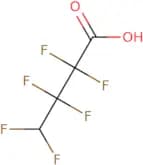
CAS:<p>2,2,3,3,4,4-Hexafluorobutyric acid is a hydroxylated organic compound. It has been shown to be more chemically stable than other quaternary ammonium compounds. 2,2,3,3,4,4-Hexafluorobutyric acid is used as a polymerization initiator for the preparation of cationic polymers. This chemical can also be used to fragment proteins and nucleic acids in order to prepare samples for analysis by mass spectrometry. 2HFBA is reactive and can cause irritation on contact with the skin or eyes. It has been shown that this chemical may have an effect on body mass index and can bind to calcium ions.</p>Formula:C4H2F6O2Purity:Min. 95%Molecular weight:196.05 g/mol1,1,1,3,3,3-Hexafluoro-2-isocyanatopropane
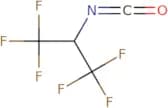
CAS:<p>1,1,1,3,3,3-Hexafluoro-2-isocyanatopropane (HFI) is an unsymmetrical molecule that is a colorless gas at room temperature. It is used as a reagent in the synthesis of carbodiimides. HFI has been shown to be an effective and selective nucleophile for the coupling of aryl halides with amines. The reactions are carried out in water without any additives or catalysts.</p>Formula:C4HF6NOPurity:Min. 95%Molecular weight:193.05 g/molMethoxy(2,2,2-trichloro-1-hydroxyethyl)phosphinic acid
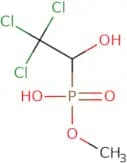
CAS:<p>Methoxy(2,2,2-trichloro-1-hydroxyethyl)phosphinic acid is a chemical substance that has been shown to be mutagenic in laboratory animals. It has been shown to produce birth defects in laboratory mice when given orally or intraperitoneally. Methoxy(2,2,2-trichloro-1-hydroxyethyl)phosphinic acid also causes damage to the central nervous system and can cause behavioral changes in rats.</p>Formula:C3H6Cl3O4PPurity:Min. 95%Molecular weight:243.41 g/molN-Chloroacetyl-L-leucine
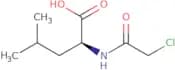
CAS:<p>N-Chloroacetyl-L-leucine is a chloromethyl ketone that is used as a pesticide and insecticide. It is effective against insects such as the Colorado potato beetle and the European corn borer, but not against snails or slugs. N-Chloroacetyl-L-leucine denatures proteins at high concentrations. This chemical has been shown to be toxic to the pancreas and can cause hepatitis in rats. N-Chloroacetyl-L-leucine can be used for pest control by disrupting the metabolism of an organism's nervous system. Techniques include thermal denaturation, metal ion uptake, and homogenization.</p>Formula:C8H14ClNO3Purity:Min. 95%Molecular weight:207.65 g/molMethyl 3-amino-3-thioxopropanoate
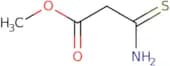
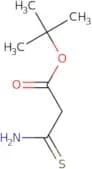
CAS:<p>Methyl 3-amino-3-thioxopropanoate is an antipyretic agent that belongs to the group of acid derivatives. The compound has been shown to have a blood pH lowering effect in animals. It also inhibits the synthesis of triglycerides, fibrinogen, and cholesterol. Methyl 3-amino-3-thioxopropanoate also displays anti-inflammatory properties and is used as an analgesic for rheumatic conditions.</p>Formula:C4H7NO2SPurity:Min. 95%Molecular weight:133.17 g/moltert-butyl 3-amino-3-thioxopropanoate
CAS:<p>Versatile small molecule scaffold</p>Formula:C7H13NO2SPurity:Min. 95%Molecular weight:175.25 g/molPropan-2-yl 3-chloropropanoate
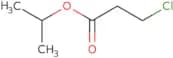
CAS:<p>Versatile small molecule scaffold</p>Formula:C6H11ClO2Purity:Min. 95%Molecular weight:150.6 g/mol2-Aminooctane
CAS:<p>2-Aminooctane is an organic compound that has a variety of industrial applications. It is used in the production of butyric acid and as a viscosity index improver in lubricating oils. 2-Aminooctane is also used to produce nitrides, which are compounds containing nitrogen and at least one other element. These compounds are useful for their high thermal stability, low reactivity, and high melting point. 2-Aminooctane can be obtained by oxidizing 2-aminoethanol with nitric acid or by reacting aminobutyric acid with formaldehyde. The product is then distilled under vacuum to remove excess water and other volatile substances.<br>2-Aminooctane is a colorless liquid that boils at 140°C (284°F) and freezes at -89°C (-129°F). It has an acidic odor and can react with bases such as calcium hydroxide to form calcium amin</p>Formula:C8H19NPurity:Min. 95%Molecular weight:129.25 g/mol1-Bromoundecane
CAS:<p>1-Bromoundecane is an antimicrobial agent that inhibits the growth of bacteria by binding to their cell wall, thereby preventing its synthesis. It has been found to be effective against chronic kidney disease and metabolic disorders in tissue culture. 1-Bromoundecane has a low potency and is not reactive or activated. The chemical can react with hydrochloric acid to form a polarizer, which is used in optical instruments for measuring the refractive index of transparent materials such as glass and water. 1-Bromoundecane also inhibits the production of growth factors that are necessary for cellular proliferation. This drug may have biological functions as a fatty acid and hydrogen bond donor.</p>Formula:C11H23BrPurity:Min. 95%Molecular weight:235.2 g/molVinylcyclopropane
CAS:<p>Versatile small molecule scaffold</p>Formula:C5H8Purity:Min. 95%Molecular weight:68.12 g/mol4-Methyloxazole
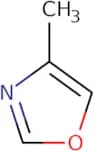
CAS:<p>4-Methyloxazole is a reactive compound that has been used in the synthesis of vitamins, ligands, and other organic chemicals. It can be prepared by formylation of nitroethane with formic acid, followed by oxidation with potassium permanganate. When heated to 300°C, 4-methyloxazole decomposes to form nitrogen gas and water vapor. 4-Methyloxazole is a ligand for several metal ions including platinum and palladium. The stability of 4-methyloxazole decreases as the number of methyl groups increases. This property makes it an excellent ligand for complex formation with metals such as zirconium oxide or imidazole derivatives.</p>Formula:C4H5NOPurity:Min. 95%Molecular weight:83.09 g/mol2-Mercapto-3-methyl-3,5-dihydro-imidazol-4-one
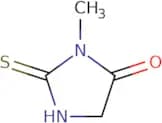
CAS:<p>2-Mercapto-3-methyl-3,5-dihydro-imidazol-4-one (MMI) is a diagnostic agent that belongs to the group of chemical ionization reagents. It has been shown to be effective as a carcinogen in Sprague Dawley rats and to induce cancer at high doses. MMI is used in the analysis of acidity, and is also used for the analysis of amino acids in proteins by chromatography. MMI reacts with histidine residues on ribosomes and forms an iminium ion, which leads to protein synthesis inhibition. This reaction mechanism can be inhibited by adding an amine such as methylamine or ammonia, thereby inhibiting protein synthesis.</p>Formula:C4H6N2OSPurity:Min. 95%Molecular weight:130.17 g/mol2-Bromobicyclo[2.2.1]hept-2-ene
CAS:<p>2-Bromobicyclo[2.2.1]hept-2-ene is a brominating agent that is used for the synthesis of organic compounds, such as halogenated hydrocarbons and pharmaceuticals. The use of this reagent in the synthesis of halogenated hydrocarbons is based on its ability to form a metal hydride with the desired metal, which can then be used as a reducing agent. This brominating agent also has stereospecificity, allowing for the selective introduction of one type of substituent at one position in an organic molecule. 2-Bromobicyclo[2.2.1]hept-2-ene is a precursor to other brominating agents and metal hydrides, such as lithium bromide and sodium hydride.</p>Formula:C7H9BrPurity:Min. 95%Molecular weight:173.05 g/mol3-Bromotricyclo[2.2.1.0,2,6]heptane
CAS:<p>3-Bromotricyclo[2.2.1.0,2,6]heptane is a biomolecule and azabicyclic compound with molecular formula C8H14Br and molecular weight of 152.19 g/mol. It has been shown to react through nucleophilic attack at the carbonyl carbon to produce an intermediate that tautomerizes to the corresponding ketone in a cycloaddition reaction with acetaldehyde or xylene. The deuterated derivative of this compound has been synthesized using deuteration techniques and can be used for studies on the mechanism of substitution reactions of nucleophiles such as chloride or butyltin compounds. This biomolecule also reacts with alkoxides at temperatures greater than 0°C to form ethyl 2-bromo-3-methylhexanoate, which can be used as a starting material for the synthesis of biphenyls by Friedel-Crafts</p>Formula:C7H9BrPurity:Min. 95%Molecular weight:173.05 g/mol5,6-Dihydro Thymine
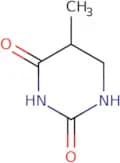
CAS:<p>5,6-Dihydrothymine is a metabolic precursor to thymine. It has been shown to inhibit the production of DNA and RNA in cells, which causes cellular transformation. 5,6-Dihydrothymine also inhibits enzyme activity by competing with substrates or by forming covalent bonds with the enzyme. This drug has been found to be genotoxic and may cause cancer, but it can also be used for diagnosis and treatment of radiation-induced genetic damage. The drug is an oral prodrug that is hydrolyzed in the gastrointestinal tract to release thymine. 5,6-Dihydrothymine is used for molecular pathogenesis studies on solid tumours, such as breast cancer and prostate cancer.</p>Formula:C5H8N2O2Purity:Min. 95%Molecular weight:128.13 g/mol1-Methyl-1,3-diazinane-2,4-dione
CAS:<p>1-Methyl-1,3-diazinane-2,4-dione is a heterocycle that has been shown to have immunosuppressive effects. It has been shown to inhibit the production of inflammatory cells, including T cells and natural killer cells, in response to stimulation with mitogens. In addition, 1-methyl-1,3-diazinane-2,4-dione inhibits the activation of T cells by inhibiting the synthesis of β-amino acid and reducing intracellular levels of LPS. This compound also has been shown to be a potent inhibitor of HIV replication and cancer growth in vitro.</p>Formula:C5H8N2O2Purity:Min. 95%Molecular weight:128.13 g/molα-Fluorostyrene
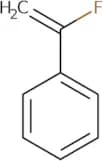
CAS:<p>Styrene is a synthetic monomer that belongs to the group of cycloalkanes. It is a colorless, volatile liquid with a boiling point of at least 100°C and a viscosity of 0.5-2 mm2/s. Styrene is usually used in the production of polystyrene plastic and styrenic resins. Its most well-known application is in the manufacture of polystyrene foam insulation (commonly known as Styrofoam). Styrene can be converted into other compounds by thermolysis, oxidation, or hydrolysis. One such conversion is debromination, which occurs when styrene reacts with bromine in an alkaline solution to produce di-bromostyrene and hydrogen bromide gas. The isotopomers alpha-fluorostyrene and beta-fluorostyrene are derivatives of styrene that are used for analysis purposes because they have different physical properties due to their different masses.</p>Formula:C8H7FPurity:Min. 95%Molecular weight:122.14 g/molCyclooctanol
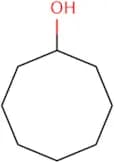
CAS:<p>Cyclooctanol is an organic compound that belongs to the group of aliphatic hydrocarbons. It is a reaction product of trifluoroacetic acid and cyclooctyl, which is formed at a rate dependent on the hydroxyl group content. Cyclooctanol inhibits monoamine reuptake, which may be due to its carbonyl group, and has been shown to have insulin resistance-inducing properties. Cyclooctanol also inhibits the formation of insulin receptors in diabetic neuropathy by binding with piperazine, thus inhibiting the redox potential of the cells.</p>Formula:C8H16OPurity:Min. 95%Molecular weight:128.22 g/mol


![2-[(2,2,2-Trifluoroethyl)sulfanyl]acetic acid](/_next/image/?url=https%3A%2Fstatic.cymitquimica.com%2Fproducts%2F3D%2Fthumb-webp%2FAAA67568.webp&w=3840&q=75)



![2-Bromobicyclo[2.2.1]hept-2-ene](/_next/image/?url=https%3A%2Fstatic.cymitquimica.com%2Fproducts%2F3D%2Fthumb-webp%2FAAA69490.webp&w=3840&q=75)
![3-Bromotricyclo[2.2.1.0,2,6]heptane](/_next/image/?url=https%3A%2Fstatic.cymitquimica.com%2Fproducts%2F3D%2Fthumb-webp%2FAAA69502.webp&w=3840&q=75)