Building Blocks
Subcategories of "Building Blocks"
- Boronic Acids & Boronic Acid Derivatives(5,784 products)
- Chiral Building Blocks(1,242 products)
- Hydrocarbon Building Blocks(6,105 products)
- Organic Building Blocks(61,061 products)
Found 205399 products of "Building Blocks"
1-[2-(1H-Imidazol-1-yl)phenyl]ethan-1-one
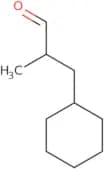
CAS:Versatile small molecule scaffoldFormula:C11H10N2OPurity:Min. 95%Molecular weight:186.21 g/mol3-Cyclohexyl-2-methylpropanal
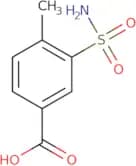
CAS:Versatile small molecule scaffoldFormula:C10H18OPurity:Min. 95%Molecular weight:154.25 g/mol4-Methyl-3-sulfamoylbenzoic acid
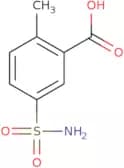
CAS:Versatile small molecule scaffoldFormula:C8H9NO4SPurity:Min. 95%Molecular weight:215.23 g/mol5-(Aminosulfonyl)-2-methylbenzoic acid
CAS:Versatile small molecule scaffoldFormula:C8H9NO4SPurity:Min. 95%Molecular weight:215.23 g/mol2,4-Dichlorobenzenesulphonamide
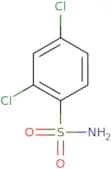
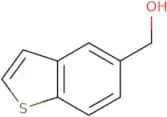
CAS:2,4-Dichlorobenzenesulphonamide is a chlorinated benzenesulphonamide compound that has been shown to have anticancer activity. The mechanism of action is not well understood, but it has been suggested that the drug may inhibit mitochondrial membrane potential, leading to cancer cell death. 2,4-Dichlorobenzenesulphonamide has also been shown to induce apoptosis in cervical cancer cells. This drug may be useful for the treatment of carcinomas, as well as other cancers.Formula:C6H5Cl2NO2SPurity:Min. 95%Molecular weight:226.08 g/mol1-Benzothien-5-ylmethanol
CAS:Versatile small molecule scaffold
Formula:C9H8OSPurity:Min. 95%Molecular weight:164.23 g/molN-(4-{[(2-Hydroxyethyl)amino]-sulfonyl}phenyl)acetamide
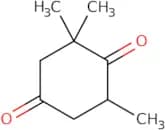
CAS:Versatile small molecule scaffoldFormula:C10H14N2O4SPurity:Min. 95%Molecular weight:258.29 g/mol2,2,6-Trimethyl-1,4-cyclohexanedione
CAS:2,2,6-Trimethyl-1,4-cyclohexanedione is a diketone that is produced from the shikimate pathway. It is used in organic synthesis as a carbon source and to produce volatile compounds. 2,2,6-Trimethyl-1,4-cyclohexanedione has been shown to be an attractant for mosquitoes and other insects. This compound also has pheromone activity which may be due to the presence of different isomers. 2,2,6-Trimethyl-1,4-cyclohexanedione can be found in solution form as well as in solid form with a melting point of 156°C. The compound can also be identified using various biochemical markers (e.g., esterase) or by biological studies on subcultures of bacteria or fungi.
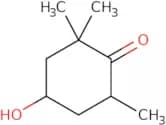
Formula:C9H14O2Purity:Min. 95%Molecular weight:154.21 g/mol4-Hydroxy-2,2,6-trimethylcyclohexan-1-one
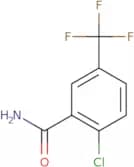
CAS:4-Hydroxy-2,2,6-trimethylcyclohexan-1-one is a subunit of the nonproteinogenic amino acid, selenocysteine. It is an intermediate in the synthesis of selenocysteine and has been shown to be stereoselective and homologous to other amino acids. 4-Hydroxy-2,2,6-trimethylcyclohexan-1-one is found in corynebacterium and thermophilic species. The enzyme dehydrogenase catalyses the conversion of this compound to 3-(3′hydroxyphenyl)-4-(4′hydroxyphenyl)butanoic acid (4HPPBA). This reaction also produces hydrogen peroxide as a byproduct. 4HPPBA can be converted back into 4-hydroxy-2,2,6-trimethylcyclohexanone by the enzyme reductase. ThereFormula:C9H16O2Purity:Min. 95%Molecular weight:156.22 g/mol2-Chloro-5-(trifluoromethyl)benzamide
CAS:2-Chloro-5-(trifluoromethyl)benzamide is a profile that belongs to the group of anti-tuberculosis drugs. It has a high cytotoxic effect against eukaryotic cells and has been shown to have an anti-tuberculosis effect in mice. 2C5BM also inhibits bacterial growth by binding to DNA gyrase and topoisomerases, thereby inhibiting the replication of bacteria. Studies have found that 2C5BM can inhibit the growth of Mycobacterium tuberculosis, but not Mycobacterium avium complex. The therapeutic index for 2C5BM is high, which means it has a wide range of safety margins, with no detectable side effects on healthy human erythrocytes.
Formula:C8H5ClF3NOPurity:Min. 95%Molecular weight:223.58 g/molRef: 3D-VAA56693
1gTo inquire5gTo inquire10gTo inquire25gTo inquire50gTo inquire250mg298.00€2500mg1,126.00€Spiro[2.3]hexan-4-one
CAS:Spiro[2.3]hexan-4-one is a reactive, hydrophobic molecule that is synthesized by the reaction of an epoxide with an alcohol. This compound has been shown to undergo photooxidation and thermally induced reactions. It can be used in coatings to provide resistance to environmental effects such as hydrolysis, oxidation, or photooxidation. Spiro[2.3]hexan-4-one can also be used in the production of methylenecyclopropanes, which are used as chemical intermediates for pharmaceuticals and other organic compounds.Purity:Min. 95%4-Methyl-1,5,6,7-tetrahydro-2H-cyclopenta[b]-pyridin-2-one
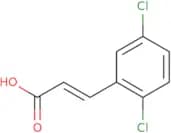
CAS:4-Methyl-1,5,6,7-tetrahydro-2H-cyclopenta[b]-pyridin-2-one is a cycloalkane that has been shown to have antiinflammatory properties. It has been found to produce phosphoric acid and methanol when heated in the presence of phosphoric acid. 4-Methylcyclohexanone has also been shown to form hydrogen bonds with a variety of molecules including other cycloalkanes, nitro compounds, aromatic hydrocarbons, and heterocyclic compounds. Single crystal x-ray diffraction studies of this compound have revealed that it adopts an anisotropic molecular structure.Formula:C9H11NOPurity:Min. 95%Molecular weight:149.19 g/moltrans-2,5-Dichlorocinnamic acid
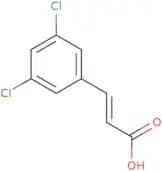
CAS:Versatile small molecule scaffoldFormula:C9H6Cl2O2Purity:Min. 95%Molecular weight:217.05 g/mol3-(3,5-Dichlorophenyl)acrylic acid
CAS:Versatile small molecule scaffoldFormula:C9H6Cl2O2Purity:Min. 95%Molecular weight:217.5 g/mol2-Methyloct-3-yn-2-ol
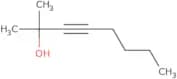
CAS:2-Methyloct-3-yn-2-ol is a nucleophile that can be used to make an efficient method for the synthesis of olefinic bonds. This compound is also a ligand, which can form bidentate complexes with electrophilic metal centers. 2-Methyloct-3-yn-2-ol has been shown to react with heterocycles and alkenes in nucleophilic addition reactions. The reaction mechanism is thought to proceed through c–h bond cleavage, followed by dehydration of the resulting olefinic products. This process is reversible and can be driven by acid or base catalysis.
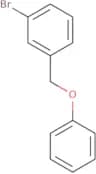
Formula:C9H16OPurity:Min. 95%Molecular weight:140.22 g/mol1-Bromo-3-(phenoxymethyl)benzene
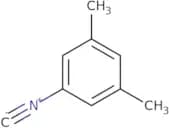
CAS:Versatile small molecule scaffoldFormula:C13H11BrOPurity:Min. 95%Molecular weight:263.13 g/mol1-Isocyano-3,5-dimethylbenzene
CAS:Versatile small molecule scaffold
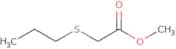
Formula:C9H9NPurity:Min. 95%Molecular weight:131.17 g/molMethyl 2-(propylsulfanyl)acetate
CAS:Versatile small molecule scaffold
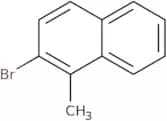
Formula:C6H12O2SPurity:Min. 95%Molecular weight:148.23 g/mol2-Bromo-1-methylnaphthalene
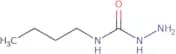
CAS:2-Bromo-1-methylnaphthalene is the chemical compound with the formula C6H5BrCH2. It is a brominated derivative of naphthalene. This compound is an intermediate in the synthesis of arylboronic acids, which are used as coupling partners in Suzuki and Miyaura cross-coupling reactions. It also has been used as a catalyst for indole synthesis from chlorobenzene and ammonia. 2-Bromo-1-methylnaphthalene can be prepared by treating naphthalene with bromine and potassium t-butoxide at low temperature. The reaction can also be conducted using chloride or potassium instead of t-butoxide. 2-Bromo-1methyhnaphthalene is a useful chemical because it can react efficiently with aryl bromides to produce coupling products, such as benzofuran derivatives, in high yield.Formula:C11H9BrPurity:Min. 95%Molecular weight:221.09 g/mol3-Amino-1-butylurea
CAS:Versatile small molecule scaffoldFormula:C5H13N3OPurity:Min. 95%Molecular weight:131.18 g/mol
![1-[2-(1H-Imidazol-1-yl)phenyl]ethan-1-one](/_next/image/?url=https%3A%2Fstatic.cymitquimica.com%2Fproducts%2F3D%2Fthumb-webp%2FVAA51361.webp&w=3840&q=75)

![N-(4-{[(2-Hydroxyethyl)amino]-sulfonyl}phenyl)acetamide](/_next/image/?url=https%3A%2Fstatic.cymitquimica.com%2Fproducts%2F3D%2Fthumb-webp%2FVAA53576.webp&w=3840&q=75)
![Spiro[2.3]hexan-4-one](/_next/image/?url=https%3A%2Fstatic.cymitquimica.com%2Fproducts%2F3D%2Fthumb-webp%2FVAA57115.webp&w=3840&q=75)
![4-Methyl-1,5,6,7-tetrahydro-2H-cyclopenta[b]-pyridin-2-one](/_next/image/?url=https%3A%2Fstatic.cymitquimica.com%2Fproducts%2F3D%2Fthumb-webp%2FVAA59430.webp&w=3840&q=75)