


Building Blocks
This section contains fundamental products for the synthesis of organic and biological compounds. Building blocks are the essential starting materials used to construct complex molecules through various chemical reactions. They play a critical role in drug discovery, material science, and chemical research. At CymitQuimica, we offer a diverse range of high-quality building blocks to support your innovative research and industrial projects, ensuring you have the essential components for successful synthesis.
Subcategories of "Building Blocks"
- Boronic Acids & Boronic Acid Derivatives(5,756 products)
- Chiral Building Blocks(1,242 products)
- Hydrocarbon Building Blocks(6,093 products)
- Organic Building Blocks(60,522 products)
Found 195533 products of "Building Blocks"
Sort by
Purity (%)
0
100
|
0
|
50
|
90
|
95
|
100
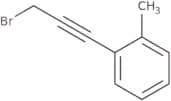
1-(3-Bromoprop-1-yn-1-yl)-2-methylbenzene
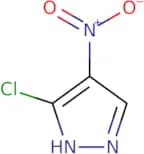
CAS:<p>Versatile small molecule scaffold</p>Formula:C10H9BrPurity:Min. 95%Molecular weight:209.08 g/mol3-chloro-4-nitro-1H-pyrazole
CAS:<p>Versatile small molecule scaffold</p>Formula:C3H2N3O2ClPurity:Min. 95%Molecular weight:147.51 g/mol4-[(4-Methoxyphenyl)methyl]pyridine
CAS:<p>Versatile small molecule scaffold</p>Formula:C13H13NOPurity:Min. 95%Molecular weight:199.25 g/mol2-[(4-Methoxyphenyl)methyl]pyridine
CAS:<p>Versatile small molecule scaffold</p>Formula:C13H13NOPurity:Min. 95%Molecular weight:199.25 g/mol3-Phenylimidazo[1,5-a]pyridine
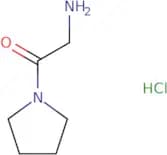
CAS:<p>3-Phenylimidazo[1,5-a]pyridine is a quinoline derivative that is used as an anticancer agent. It inhibits the mitochondrial membrane potential and induces apoptosis in cancer cells. 3-Phenylimidazo[1,5-a]pyridine has also been shown to be effective against cervical cancer cells. The cytotoxic effects of this drug are not due to its DNA binding properties but may be due to its ability to inhibit the synthesis of nitroalkanes from nitrites, which may be carcinogenic. This compound binds to the ring of the quinoline moiety in active site of mitochondrial enzymes such as quinolinate phosphoribosyltransferase (QPRT). This binding prevents the enzyme from catalyzing reactions involving nucleotide biosynthesis, protein synthesis, and cell division.</p>Formula:C13H10N2Purity:Min. 95%Molecular weight:194.24 g/mol2-Amino-1-(1-pyrrolidinyl)-1-ethanone hydrochloride
CAS:<p>Versatile small molecule scaffold</p>Formula:C6H13ClN2OPurity:Min. 95%Molecular weight:164.63 g/mol3-[(2-Methoxyethyl)amino]propanenitrile
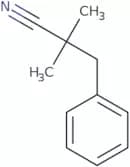
CAS:<p>Versatile small molecule scaffold</p>Formula:C6H12N2OPurity:Min. 95%Molecular weight:128.17 g/mol2,2-Dimethyl-3-phenylpropanenitrile
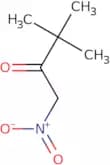
CAS:<p>Versatile small molecule scaffold</p>Formula:C11H13NPurity:Min. 95%Molecular weight:159.23 g/mol3,3-Dimethyl-1-nitrobutan-2-one
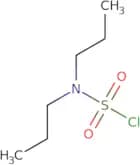
CAS:<p>3,3-Dimethyl-1-nitrobutan-2-one is a ligand that is used in magnetic resonance spectroscopy. It has an axial symmetry and a square planar geometry with four apical nitrogens and four tetragonally equatorial nitrogens. The oxygen atoms are located equatorially. The ligand has two magnetic isotopes, one of which is 3,3-dimethyl-1-nitrobutan-2-one (DMB) with a nuclear spin of 1/2 and the other being 2,2'-dimethylpropionyloxybutyronitrile (DMPRB) with a nuclear spin of 3/2. The electronic spectrum for DMB spans from about 0.4 to about 10 MHz, while the spectrum for DMPRB spans from about 0.4 to about 5 MHz. 3,3-Dimethyl-1-nitrobutan-2-one also has a chrom</p>Formula:C6H11NO3Purity:Min. 95%Molecular weight:145.16 g/molN,N-Dipropylsulfamoyl chloride
CAS:<p>N,N-Dipropylsulfamoyl chloride is an organic compound with the chemical formula ClCH(NH)SOCl. It is a colorless liquid that is soluble in water and polar organic solvents. The molecule consists of a pyrimidine moiety substituted at one of the nitrogen atoms with an alkylthio group, and a sulfamoyl substituent on the other nitrogen atom. This compound has been used as a diluent for reactions involving other chlorinating agents and to produce cyclohexane derivatives.</p>Formula:C6H14ClNO2SPurity:Min. 95%Molecular weight:199.7 g/mol1-benzyl-1H-pyrazolo[3,4-d]pyrimidin-4-ol
CAS:<p>Versatile small molecule scaffold</p>Formula:C12H10N4OPurity:Min. 95%Molecular weight:226.24 g/molrac-(3aR,8aS)-Hexahydro-1H-cyclohepta[C]furan-1,3(3aH)-dione
CAS:<p>Versatile small molecule scaffold</p>Formula:C9H12O3Purity:Min. 95%Molecular weight:168.19 g/mol2-Methoxy-6,7,8,9-tetrahydro-5H-benzo[7]annulen-6-amine hydrochloride
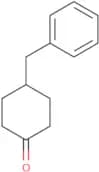
CAS:Controlled Product<p>Versatile small molecule scaffold</p>Formula:C12H18ClNOPurity:Min. 95%Molecular weight:227.7 g/mol4-Benzylcyclohexan-1-one
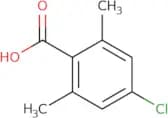
CAS:<p>4-Benzylcyclohexan-1-one is a ketone that can be produced by the dehydrogenation of cyclohexanones. It can also be synthesized from enamines and decarbonylation. This compound is catalytic and used for desymmetrization, hydrolysis, and catalytic reduction reactions. 4-Benzylcyclohexan-1-one has been shown to form oximes through perchloric acid treatment. In addition to its use as an industrial chemical, 4-benzylcyclohexan-1-one is also used in the synthesis of chiral drugs such as thalidomide, which is used to treat a variety of diseases including leprosy, erythema nodosum leprosum, multiple myeloma, and cancer.</p>Formula:C13H16OPurity:Min. 95%Molecular weight:188.26 g/mol4-Chloro-2,6-dimethylbenzoic acid
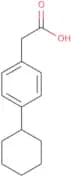
CAS:<p>Versatile small molecule scaffold</p>Formula:C9H9ClO2Purity:Min. 95%Molecular weight:184.62 g/mol2-(4-Cyclohexylphenyl)acetic acid
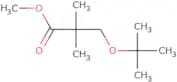
CAS:<p>2-(4-Cyclohexylphenyl)acetic acid is an organic compound that has a chloride substituent and a carboxylic acid functional group. The hydrogen chloride molecule is bound to the active site in the experimental model. 2-(4-Cyclohexylphenyl)acetic acid is also found in cyclohexane ring, phenylpropionic acid and diethylamine salt. It is an isomeric compound, which has two different forms, namely the cis and trans form. The cis form has a quadratic structure with 4 carbons in the benzene ring, while the trans form has a linear structure with 3 carbons in the benzene ring. Chromatographic analysis of 2-(4-cyclohexylphenyl)acetic acid shows a single peak at Rf 0.48 (chloride). High-performance liquid chromatography analysis shows that there are only two peaks detected, one at t=0</p>Formula:C14H18O2Purity:Min. 95%Molecular weight:218.29 g/molMethyl 3-(tert-butoxy)-2,2-dimethylpropanoate
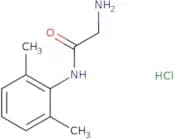
CAS:<p>Versatile small molecule scaffold</p>Formula:C10H20O3Purity:Min. 95%Molecular weight:188.26 g/mol2-Amino-N-(2,6-dimethylphenyl)acetamide hydrochloride
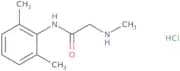
CAS:<p>Procaine is a local anesthetic that can be used in humans and animals. It is a competitive inhibitor of enzymes that catalyze the formation of prostaglandins from arachidonic acid, such as cyclooxygenase, lipoxygenase, and cytochrome P450. Procaine has been shown to inhibit the activity of these enzymes by binding to their active site, thereby preventing them from forming prostaglandins. The inhibition of prostaglandin synthesis by procaine prevents the pain caused by tissue damage or inflammation. Procaine is also thought to interact with calcium concentrations in neurons and synaptic vesicles, which may lead to its ability to block voltage-gated sodium channels in nerve cells (e.g., transmission).</p>Formula:C10H15ClN2OPurity:Min. 95%Molecular weight:214.69 g/molN-(2,6-Dimethylphenyl)-2-(methylamino)acetamide hydrochloride
CAS:<p>Versatile small molecule scaffold</p>Formula:C11H17ClN2OPurity:Min. 95%Molecular weight:228.72 g/mol2H,4H,5H,6H-Furo[3,2-b]pyridin-2-one
CAS:<p>Versatile small molecule scaffold</p>Formula:C7H7NO2Purity:Min. 95%Molecular weight:137.14 g/mol

![4-[(4-Methoxyphenyl)methyl]pyridine](/_next/image/?url=https%3A%2Fstatic.cymitquimica.com%2Fproducts%2F3D%2Fthumb-webp%2FKBA85435.webp&w=3840&q=75)
![2-[(4-Methoxyphenyl)methyl]pyridine](/_next/image/?url=https%3A%2Fstatic.cymitquimica.com%2Fproducts%2F3D%2Fthumb-webp%2FKBA85445.webp&w=3840&q=75)
![3-Phenylimidazo[1,5-a]pyridine](/_next/image/?url=https%3A%2Fstatic.cymitquimica.com%2Fproducts%2F3D%2Fthumb-webp%2FKBA85446.webp&w=3840&q=75)
![3-[(2-Methoxyethyl)amino]propanenitrile](/_next/image/?url=https%3A%2Fstatic.cymitquimica.com%2Fproducts%2F3D%2Fthumb-webp%2FKBA85566.webp&w=3840&q=75)
![1-benzyl-1H-pyrazolo[3,4-d]pyrimidin-4-ol](/_next/image/?url=https%3A%2Fstatic.cymitquimica.com%2Fproducts%2F3D%2Fthumb-webp%2FKBA87737.webp&w=3840&q=75)
![rac-(3aR,8aS)-Hexahydro-1H-cyclohepta[C]furan-1,3(3aH)-dione](/_next/image/?url=https%3A%2Fstatic.cymitquimica.com%2Fproducts%2F3D%2Fthumb-webp%2FKBA87829.webp&w=3840&q=75)
![2-Methoxy-6,7,8,9-tetrahydro-5H-benzo[7]annulen-6-amine hydrochloride](/_next/image/?url=https%3A%2Fstatic.cymitquimica.com%2Fproducts%2F3D%2Fthumb-webp%2FKBA88116.webp&w=3840&q=75)
![2H,4H,5H,6H-Furo[3,2-b]pyridin-2-one](/_next/image/?url=https%3A%2Fstatic.cymitquimica.com%2Fproducts%2F3D%2Fthumb-webp%2FKBA89435.webp&w=3840&q=75)