Building Blocks
This section contains fundamental products for the synthesis of organic and biological compounds. Building blocks are the essential starting materials used to construct complex molecules through various chemical reactions. They play a critical role in drug discovery, material science, and chemical research. At CymitQuimica, we offer a diverse range of high-quality building blocks to support your innovative research and industrial projects, ensuring you have the essential components for successful synthesis.
Subcategories of "Building Blocks"
- Boronic Acids & Boronic Acid Derivatives(5,778 products)
- Chiral Building Blocks(1,242 products)
- Hydrocarbon Building Blocks(6,098 products)
- Organic Building Blocks(61,084 products)
Found 198714 products of "Building Blocks"
Sort by
Purity (%)
0
100
|
0
|
50
|
90
|
95
|
100
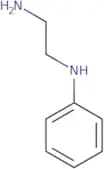
N-Phenylethylenediamine
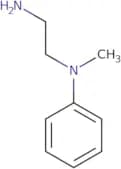
CAS:N-Phenylethylenediamine is a molecule that contains hydrogen bonds. Hydrogen bonds are the covalent interactions between hydrogen atoms and electronegative atoms, like oxygen or nitrogen, in molecules. N-phenylethylenediamine has been shown to have antiinflammatory activity, which may be due to its ability to inhibit prostaglandin synthesis. Hydrogen bonding interactions are also present between carbonyl groups and protonated amines in this molecule. This allows for stereoselective reactions with amines that have a hydrogen atom on an asymmetric carbon atom at the alpha position. It has been isolated as a yield of 34%.Formula:C8H12N2Purity:Min. 95%Molecular weight:136.2 g/molN1-Methyl-N1-phenyl-ethane-1,2-diamine
CAS:Versatile small molecule scaffoldFormula:C9H14N2Purity:Min. 95%Molecular weight:150.23 g/mol6,9-diazaspiro[4.5]decan-10-one
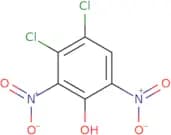
CAS:<p>Versatile small molecule scaffold</p>Formula:C8H14N2OPurity:Min. 95%Molecular weight:154.21 g/mol3,4-Dichloro-2,6-dinitrophenol
CAS:<p>Versatile small molecule scaffold</p>Formula:C6H2Cl2N2O5Purity:Min. 95%Molecular weight:252.99 g/mol1-(1-Adamantyl)propan-1-one
CAS:<p>Versatile small molecule scaffold</p>Formula:C13H20OPurity:Min. 95%Molecular weight:192.3 g/mol6,7,8,9-Tetrahydro-5H-benzo[7]annulen-2-ol
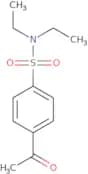
CAS:<p>Versatile small molecule scaffold</p>Formula:C11H14OPurity:Min. 95%Molecular weight:162.23 g/mol4-Acetyl-N,N-diethylbenzene-1-sulfonamide
CAS:Versatile small molecule scaffoldFormula:C12H17NO3SPurity:Min. 95%Molecular weight:255.34 g/mol2-Cyanoethyl ether
CAS:<p>2-Cyanoethyl ether is a chemical compound used for the treatment of wastewater. The compound is prepared by reacting ethylene with hydrogen peroxide in the presence of an alkali metal catalyst. 2-Cyanoethyl ether has been shown to be effective in removing cyanides, acrylonitrile, and other organic compounds from wastewater. The activation energy for this reaction is 22.3 kJ/mol. This chemical can also exist as four isomers: cis-, trans-, syn-, and anti-.</p>Formula:C6H8N2OPurity:Min. 98%Color and Shape:Clear LiquidMolecular weight:124.14 g/mol6-Methylazulene
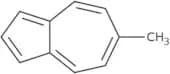
CAS:<p>6-Methylazulene is a trifluoroacetic acid derivative of azulene that has been used in the synthesis of annulenes and fulvenes. It can be synthesized from carbinols or by cross-coupling with a metal halide. 6-Methylazulene is a reactive intermediate for organic synthesis, which can be used to create new molecules with fluorescent properties. It is also used as a precursor for the synthesis of fulvene and annulene. This compound has two functional groups, an acidic methyl group and an amine group. The molecule adopts a five-membered ring structure with three double bonds around the central carbon atom. The reactivity of this compound is influenced by the presence of electron withdrawing groups at positions 3 and 5, which allow it to undergo nucleophilic substitution reactions more readily than other azulenes. These properties make 6-methylazulene useful in synthetic organic chemistry as well as in</p>Formula:C11H10Purity:Min. 95%Molecular weight:142.2 g/mol2-Methyl-2-dodecanol
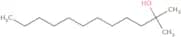
CAS:<p>2-Methyl-2-dodecanol is a reactive chemical that can be used as an additive in metal halides. It has been found to be an effective catalyst for the production of ethylene glycol and other chemicals. The reaction is catalyzed by alkali metals, such as sodium and potassium. 2-Methyl-2-dodecanol can also function as a solvent and has viscosity comparable to water.</p>Formula:C13H28OPurity:Min. 95%Molecular weight:200.36 g/mol2-Bromoethylcyclohexane
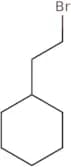
CAS:<p>2-Bromoethylcyclohexane (2BC) is a heterocycle that has shown antituberculosis activity. This compound inhibits the growth of mycobacteria by inhibiting protein synthesis and cell division, which are vital for bacterial growth. 2BC also has an inhibitory effect on the human papillomavirus (HPV). It binds to the virus' receptor, thereby preventing it from binding to a host cell. 2BC has been shown to be effective against skin cancer cells by inhibiting their proliferation. This heterocyclic compound has fluorescence resonance energy transfer properties and can be used as a marker for DNA double strand breaks in cells.</p>Formula:C8H15BrPurity:Min. 95%Molecular weight:191.11 g/mol1,4-Dibromo-2,3,5,6-tetramethylbenzene
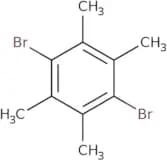
CAS:<p>1,4-Dibromo-2,3,5,6-tetramethylbenzene is a five-membered ring molecule with the chemical formula C8H8Br6. It has been shown to react with dichlorocarbene to form a 1:1 adduct, which is stable at room temperature and can be isolated as a crystalline solid. This compound has been used in the synthesis of perfluorinated compounds. The reaction rate of 1,4-dibromo-2,3,5,6-tetramethylbenzene is affected by electron donating or withdrawing groups on the methyl group. The compound has also been found to have inflammatory effects on diseases such as asthma and arthritis.</p>Formula:C10H12Br2Purity:Min. 95%Molecular weight:292.01 g/mol1-Bromo-2,3,5,6-tetramethylbenzene
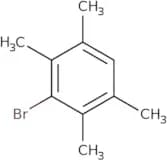
CAS:<p>1-Bromo-2,3,5,6-tetramethylbenzene (1-BTTB) is an organic compound that is used as a model system to study the reactivity of methyl groups. 1-BTTB reacts with potassium t-butoxide in a nonpolar solvent to form a cyclic ether product. The reaction is initiated by the addition of hydrogen peroxide. This reaction can be monitored using vibrational spectroscopy and yields nitro groups and imidazole derivatives when it is carried out in the presence of nitric acid or ammonium nitrate. 1-BTTB also has heat resistant properties that make it useful for use in chemical processes involving carbon tetrachloride or hydrogen fluoride.</p>Formula:C10H13BrPurity:Min. 95%Molecular weight:213.11 g/molMethyl benzo[b]furan-2-carboxylate
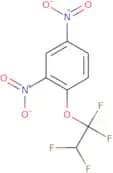
CAS:<p>Methyl benzo[b]furan-2-carboxylate is a synthetic chemical compound that is not found in nature. It has been shown to have potent anticancer activity against a variety of cancer cell lines, including leukemia, prostate, colon, and breast cancer cells. Methyl benzo[b]furan-2-carboxylate inhibits the growth of these cells by inducing programmed cell death (apoptosis) through a mechanism that is different from other anticancer drugs. This chemical also has significant inhibitory activity against alkene and benzofuran derivatives, which are known to be resistant to chemotherapy. Methyl benzo[b]furan-2-carboxylate has not shown any neurotoxicity in animal models and has a good safety profile.</p>Formula:C10H8O3Purity:Min. 95%Molecular weight:176.17 g/mol2,4-Dinitro-1-(1,1,2,2-tetrafluoroethoxy)benzene
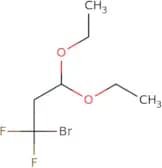
CAS:Versatile small molecule scaffoldFormula:C8H4F4N2O5Purity:Min. 95%Molecular weight:284.12 g/mol1-Bromo-3,3-diethoxy-1,1-difluoropropane
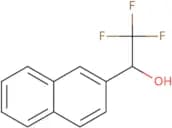
CAS:Versatile small molecule scaffoldFormula:C7H13BrF2O2Purity:Min. 95%Molecular weight:247.08 g/mol2,2,2-Trifluoro-1-(naphthalen-2-yl)ethan-1-ol
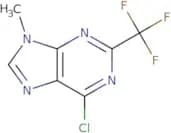
CAS:2,2,2-Trifluoro-1-(naphthalen-2-yl)ethan-1-ol is a diastereomerically pure compound that can be synthesized in high yield. It is a precursor to other compounds that are used as pharmaceuticals and pesticides. This compound is not commercially available, but it can be prepared from the corresponding alcohol by desilylation followed by enantioselective sulfinylation or trifluoromethylation with the use of chiral fluorinating reagents such as trifluoromethyltrimethylsilane. The sulfinyl group in this molecule has been shown to have an increased diastereoselectivity compared to related substrates.Formula:C12H9F3OPurity:Min. 95%Molecular weight:226.19 g/mol6-Chloro-9-methyl-2-(trifluoromethyl)-9H-purine
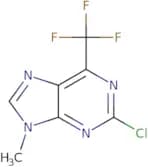
CAS:Versatile small molecule scaffoldFormula:C7H4ClF3N4Purity:Min. 95%Molecular weight:236.58 g/mol2-Chloro-9-methyl-6-(trifluoromethyl)-9H-purine
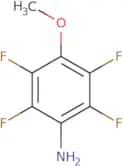
CAS:<p>Versatile small molecule scaffold</p>Formula:C7H4ClF3N4Purity:Min. 95%Molecular weight:236.58 g/mol2,3,5,6-Tetrafluoro-4-methoxyaniline
CAS:<p>Versatile small molecule scaffold</p>Formula:C7H5F4NOPurity:Min. 95%Molecular weight:195.11 g/mol

![6,9-diazaspiro[4.5]decan-10-one](/_next/image/?url=https%3A%2Fstatic.cymitquimica.com%2Fproducts%2F3D%2Fthumb-webp%2FBAA66433.webp&w=3840&q=75)

![6,7,8,9-Tetrahydro-5H-benzo[7]annulen-2-ol](/_next/image/?url=https%3A%2Fstatic.cymitquimica.com%2Fproducts%2F3D%2Fthumb-webp%2FBAA65993.webp&w=3840&q=75)

![Methyl benzo[b]furan-2-carboxylate](/_next/image/?url=https%3A%2Fstatic.cymitquimica.com%2Fproducts%2F3D%2Fthumb-webp%2FBAA64627.webp&w=3840&q=75)