Building Blocks
Subcategories of "Building Blocks"
- Boronic Acids & Boronic Acid Derivatives(5,780 products)
- Chiral Building Blocks(1,241 products)
- Hydrocarbon Building Blocks(6,100 products)
- Organic Building Blocks(61,024 products)
Found 205297 products of "Building Blocks"
3-Iodobiphenyl
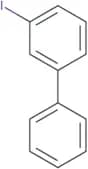
CAS:3-Iodobiphenyl is a synthetic chemical compound that has been used in the manufacture of dyes, pesticides, and other organic chemicals. 3-Iodobiphenyl is a low molecular weight soluble solid with a high solubility in most organic solvents. It is insoluble in water and may be produced as one of two different isomeric forms, depending on the conditions used to synthesize it. The physical properties of these two forms are similar but they differ in their reactivity. 3-Iodobiphenyl can adsorb onto amine groups on proteins and phospholipid membranes, forming a monolayer that alters the permeability of membrane bilayers. This organocatalytic reaction can also be facilitated by metal ions such as copper or zinc. 3-Iodobiphenyl also reacts with halides such as chloride or bromide to form soluble complexes that may be used for solute separation during phase chrom
Formula:C12H9IPurity:Min. 95%Molecular weight:280.11 g/mol2-(1-Bromoethyl)-1,3-dichlorobenzene
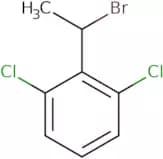
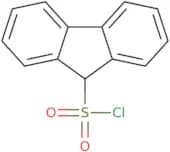
CAS:Versatile small molecule scaffoldFormula:C8H7BrCl2Purity:Min. 95%Molecular weight:253.95 g/mol9H-Fluorene-9-sulfonyl chloride
CAS:Versatile small molecule scaffold
Formula:C13H9ClO2SPurity:Min. 95%Molecular weight:264.73 g/molSpiro[bicyclo[2.2.1]heptane-7,1'-cyclopropan]-6-one
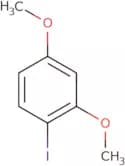
CAS:Versatile small molecule scaffoldFormula:C9H12OPurity:Min. 95%Molecular weight:136.2 g/mol2,4-Dimethoxyiodobenzene
CAS:2,4-Dimethoxyiodobenzene is a methyl ketone that has three methoxy groups. It is used as a building block in organic synthesis and can be synthesized by the reaction of 2,4-dimethoxybenzaldehyde with peroxide and methylamine. 2,4-Dimethoxyiodobenzene inhibits radical formation by reacting with an activated metal halide to form a covalent bond between the two molecules. The terminal alkyne reacts with a halogen to form an alkynyl radical which then reacts with another activated metal halide to form a second covalent bond. This process creates a new radical that has been deactivated by the addition of two bonds, preventing it from initiating another chain reaction. 2,4-Dimethoxyiodobenzene also exhibits inhibitory potency against β-amino acid decomposition through the same mechanism.
Formula:C8H9IO2Purity:Min. 95%Molecular weight:264.06 g/molEthyl 4-chloro-1,3-dimethylpyrazolo[3,4-b]pyridine-5-carboxylate
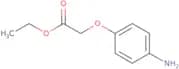
CAS:Versatile small molecule scaffoldFormula:C11H12ClN3O2Purity:Min. 95%Molecular weight:253.69 g/molEthyl 2-(4-aminophenoxy)acetate
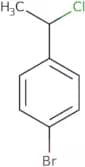
CAS:Versatile small molecule scaffoldFormula:C10H13NO3Purity:Min. 95%Molecular weight:195.21 g/mol1-Bromo-4-(1-chloroethyl)benzene
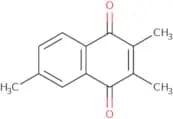
CAS:Versatile small molecule scaffoldFormula:C8H8BrClPurity:Min. 95%Molecular weight:219.5 g/mol2,3,6-Trimethyl-1,4-naphthoquinone
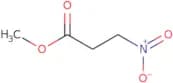
CAS:2,3,6-Trimethyl-1,4-naphthoquinone (2,3,6-TQ) is a hexane extract from the bark of the East Indian tree Pterocarpus marsupium that has been shown to have both reversible and irreversible inhibitory effects on monoamine oxidase. 2,3,6-TQ has been shown to have neuroprotective properties in mouse models of Parkinson's disease. It also has neurotrophic effects in cultured cells. The molecular modeling data suggest that 2,3,6-TQ binds to the active site of monoamine oxidase type A and B with a binding affinity comparable to that of clorgyline and deprenyl. In addition, it inhibits dopamine metabolism by inhibiting monoamine oxidase type A and B.Formula:C13H12O2Purity:Min. 95%Molecular weight:200.23 g/molMethyl 3-nitropropanoate
CAS:Methyl 3-nitropropanoate is a chemical compound that is used in synthetic organic chemistry. It can be synthesized by the nitration of propionic acid and then reacting the product with methyl iodide. This reaction produces an asymmetric synthesis of an α-lactam ring, which is one of the most commonly found functional groups in natural products. The carbonyl group on this molecule is also reactive to many other reagents, which enables it to be modified for use in various methods. The lactam ring has been shown to have anti-inflammatory properties, focusing research on its potential medicinal uses.Formula:C4H7NO4Purity:Min. 95%Molecular weight:133.1 g/mol1-Hydroxybicyclo[3.3.1]nonan-3-one
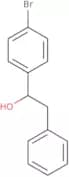
CAS:Versatile small molecule scaffoldFormula:C9H14O2Purity:Min. 95%Molecular weight:154.21 g/mol1-(4-Bromophenyl)-2-phenylethan-1-ol
CAS:Versatile small molecule scaffoldFormula:C14H13BrOPurity:Min. 95%Molecular weight:277.16 g/mol2,3-Dihydro-benzo[b]thiophen-6-amine 1,1-dioxide
CAS:2,3-Dihydro-benzo[b]thiophen-6-amine 1,1-dioxide is a morpholine that undergoes rapid elimination to form an azepine. The compound also undergoes bromination and then subsequent debromination. The compound was found to be stable in the presence of azide, but sensitive to irradiation. Spectroscopic studies revealed that the isomers are present in equal proportions.Formula:C8H9NO2SPurity:Min. 95%Molecular weight:183.23 g/molrac-[(1R,2R,4R)-Bicyclo[2.2.2]oct-5-en-2-yl]methanol
CAS:Versatile small molecule scaffoldFormula:C9H14OPurity:Min. 95%Molecular weight:138.2 g/molrac-(1R,2R,4R)-Bicyclo[2.2.2]oct-5-ene-2-carboxylic acid
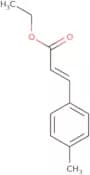
CAS:Versatile small molecule scaffoldFormula:C9H12O2Purity:Min. 95%Molecular weight:152.19 g/molEthyl 4-methylcinnamate
CAS:Ethyl 4-methylcinnamate is a ligand that binds to diazoacetate, which reacts with ethylene and aldehydes to form ethyl diazoacetate. The reaction rate increases with the addition of alkali, which causes hydrolysis of the acetal group in ethyl 4-methylcinnamate. Impurities may be present in this product, including genotoxic impurities and 8-hydroxyquinoline. Industrialized countries have strict quality control standards for this compound, whereas in developing countries, the purity of this chemical is not regulated.Formula:C12H14O2Purity:Min. 95%Molecular weight:190.24 g/mol1-[2-(1H-Imidazol-1-yl)phenyl]ethan-1-one
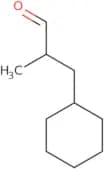
CAS:Versatile small molecule scaffoldFormula:C11H10N2OPurity:Min. 95%Molecular weight:186.21 g/mol3-Cyclohexyl-2-methylpropanal
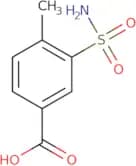
CAS:Versatile small molecule scaffoldFormula:C10H18OPurity:Min. 95%Molecular weight:154.25 g/mol4-Methyl-3-sulfamoylbenzoic acid
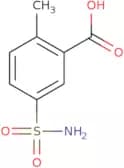
CAS:Versatile small molecule scaffoldFormula:C8H9NO4SPurity:Min. 95%Molecular weight:215.23 g/mol5-(Aminosulfonyl)-2-methylbenzoic acid
CAS:Versatile small molecule scaffoldFormula:C8H9NO4SPurity:Min. 95%Molecular weight:215.23 g/mol

![Spiro[bicyclo[2.2.1]heptane-7,1'-cyclopropan]-6-one](/_next/image/?url=https%3A%2Fstatic.cymitquimica.com%2Fproducts%2F3D%2Fthumb-webp%2FVAA45477.webp&w=3840&q=75)
![Ethyl 4-chloro-1,3-dimethylpyrazolo[3,4-b]pyridine-5-carboxylate](/_next/image/?url=https%3A%2Fstatic.cymitquimica.com%2Fproducts%2F3D%2Fthumb-webp%2FVAA48115.webp&w=3840&q=75)
![1-Hydroxybicyclo[3.3.1]nonan-3-one](/_next/image/?url=https%3A%2Fstatic.cymitquimica.com%2Fproducts%2F3D%2Fthumb-webp%2FVAA49802.webp&w=3840&q=75)
![2,3-Dihydro-benzo[b]thiophen-6-amine 1,1-dioxide](/_next/image/?url=https%3A%2Fstatic.cymitquimica.com%2Fproducts%2F3D%2Fthumb-webp%2FVAA50339.webp&w=3840&q=75)
![rac-[(1R,2R,4R)-Bicyclo[2.2.2]oct-5-en-2-yl]methanol](/_next/image/?url=https%3A%2Fstatic.cymitquimica.com%2Fproducts%2F3D%2Fthumb-webp%2FVAA50755.webp&w=3840&q=75)
![rac-(1R,2R,4R)-Bicyclo[2.2.2]oct-5-ene-2-carboxylic acid](/_next/image/?url=https%3A%2Fstatic.cymitquimica.com%2Fproducts%2F3D%2Fthumb-webp%2FVAA50756.webp&w=3840&q=75)
![1-[2-(1H-Imidazol-1-yl)phenyl]ethan-1-one](/_next/image/?url=https%3A%2Fstatic.cymitquimica.com%2Fproducts%2F3D%2Fthumb-webp%2FVAA51361.webp&w=3840&q=75)