Building Blocks
This section contains fundamental products for the synthesis of organic and biological compounds. Building blocks are the essential starting materials used to construct complex molecules through various chemical reactions. They play a critical role in drug discovery, material science, and chemical research. At CymitQuimica, we offer a diverse range of high-quality building blocks to support your innovative research and industrial projects, ensuring you have the essential components for successful synthesis.
Subcategories of "Building Blocks"
- Boronic Acids & Boronic Acid Derivatives(5,778 products)
- Chiral Building Blocks(1,242 products)
- Hydrocarbon Building Blocks(6,098 products)
- Organic Building Blocks(61,084 products)
Found 198714 products of "Building Blocks"
Sort by
Purity (%)
0
100
|
0
|
50
|
90
|
95
|
100
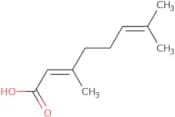
Decaprenoic acid, 98% sum of isomers
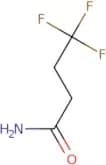
CAS:<p>Decaprenoic acid is a sesquiterpene lactone that has been isolated from the plant Nepeta cataria. It has minimal toxicity and can be used to make other drugs. Decaprenoic acid inhibits the production of prostaglandins by inhibiting the enzyme cyclooxygenase. This compound is also used to produce monoclonal antibodies, which are used to fight cancer cells. Decaprenoic acid is also effective in treating skin diseases such as psoriasis and atopic dermatitis, due to its ability to inhibit keratinocyte proliferation and regulate cell differentiation.</p>Formula:C10H16O2Purity:Min. 95%Molecular weight:168.24 g/mol4,4,4-Trifluorobutanamide
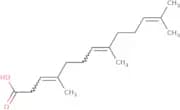
CAS:<p>Versatile small molecule scaffold</p>Formula:C4H6F3NOPurity:Min. 95%Molecular weight:141.09 g/mol(3E,7E)-4,8,12-Trimethyl-3,7,11-tridecatrienoic acid
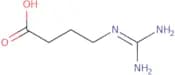
CAS:Versatile small molecule scaffoldFormula:C16H26O2Purity:Min. 95%Molecular weight:250.38 g/mol4-Guanidinobutanoic acid
CAS:<p>4-Guanidinobutanoic acid is a metabolite of creatine that is excreted in the urine. The metabolic profiles of 4-guanidinobutanoic acid have been determined in rat kidneys and compared to other metabolites, such as creatinine, gamma-aminobutyric acid, and urea nitrogen. Chronic exposure to 4-guanidinobutanoic acid leads to an increase in urea nitrogen and creatinine levels. It also causes a decrease in enzyme activities and uptake of creatine by the kidney. 4-Guanidinobutanoic acid has not shown any toxic effects on the kidney or any other organ system at concentrations up to 1000 mg/kg body weight per day.</p>Formula:C5H11N3O2Purity:Min. 95%Molecular weight:145.16 g/mol2-Bromo-2-ethyl-3-methylbutanamide
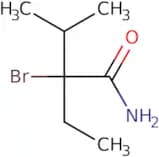
CAS:<p>2-Bromo-2-ethyl-3-methylbutanamide is a fatty acid which is a possible nonsteroidal anti-inflammatory drug. It is also used in the production of pharmaceutical dosage forms, and in the manufacture of other chemicals. This compound has been shown to have analgesic effects, as well as other pharmacological activities such as antiemetic, anesthetic, and vasodilator properties. 2-Bromo-2-ethyl-3-methylbutanamide is soluble in organic solvents but insoluble in water. It can be reconstituted with sodium citrate or sodium bicarbonate to form a sterile solution for injection. The reconstituted solution should be refrigerated and used within 24 hours.</p>Formula:C7H14BrNOPurity:Min. 95%Molecular weight:208.1 g/mol3,3-Diethyl-5-methyl-1,2,3,4-tetrahydropyridine-2,4-dione
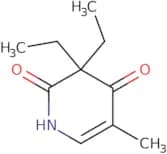
CAS:3,3-Diethyl-5-methyl-1,2,3,4-tetrahydropyridine-2,4-dione is an insoluble hydrophobic implantable drug that can be reconstituted with a diluent and injected. It has been developed as a targetable drug delivery system for iontophoresis devices and has shown clinical effects in the treatment of various diseases. 3,3-Diethyl-5-methyl-1,2,3,4-tetrahydropyridine-2,4-dione is a bioactive agent that acts as an ion channel blocker. It inhibits the uptake of calcium ions into cells by blocking voltage gated calcium channels in the cell membrane. This leads to a reduction in intracellular free calcium concentration and subsequent inhibition of cellular activity.Formula:C10H15NO2Purity:Min. 95%Molecular weight:181.23 g/mol2,2-Dimethyl-4-oxopentanoic acid
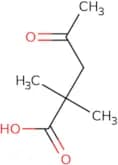
CAS:<p>2,2-Dimethyl-4-oxopentanoic acid is a molecule that belongs to the group of polarizers. It has an important role in the nervous system and has been shown to be involved in numerous diseases such as psychotic disorders, diabetes mellitus, and inflammatory diseases. 2,2-Dimethyl-4-oxopentanoic acid is synthesized from two molecules of acetyl coenzyme A via a series of reactions. In addition, this molecule is hydrolyzed by phospholipase C to form diacylglycerol. 2,2-Dimethyl-4-oxopentanoic acid also inhibits the production of inflammatory cytokines such as IL-1β and TNFα.</p>Formula:C7H12O3Purity:Min. 95%Molecular weight:144.17 g/mol2,6,6-Trimethyl-1-cyclohexene-1-acetaldehyde
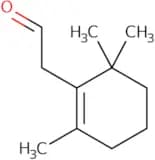
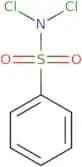
CAS:<p>Trimethylcyclohexanone peroxide is a colorless to yellowish liquid that is soluble in organic solvents and in water. It is used as a precursor for the production of ester hydrochloride and formamide, which are used in the manufacture of plastics and pesticides. Trimethylcyclohexanone peroxide is also used as an intermediate for the synthesis of various other organic compounds, such as eugenol and acetaldehyde. The compound has been shown to be a powerful oxidizing agent capable of initiating radical reactions with many types of substrates.</p>Formula:C11H18OPurity:Min. 95%Molecular weight:166.26 g/molN,N-Dichlorobenzenesulfonamide
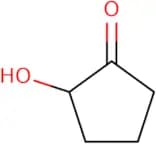
CAS:<p>N,N-Dichlorobenzenesulfonamide is a sulfonyl chloride that is used as an additive in the production of cellulose derivatives. It reacts with sodium salts to produce a number of sodium salts and acetylation products. The reaction proceeds through a two-step process: first, the chloroalkene reacts with sodium carbonate to form the corresponding sodium salt and an intermediate chloride; secondly, this intermediate chloride reacts with styrene to form N,N-dichlorobenzenesulfonamide. The chemical properties of N,N-dichlorobenzenesulfonamide have been examined by means of kinetic studies and structural analysis. This chemical has shown potential for use as a quaternary ammonium compound.</p>Formula:C6H5Cl2NO2SPurity:Min. 95%Molecular weight:226.08 g/mol2-Hydroxycyclopentan-1-one
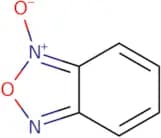
CAS:<p>Versatile small molecule scaffold</p>Formula:C5H8O2Purity:Min. 95%Molecular weight:100.12 g/molBenzofuroxan
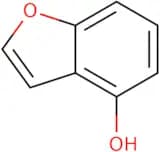
CAS:<p>Benzofuroxan is a nitrogen-containing heterocyclic compound that has been shown to have minimal toxicity in animal studies. It has been used as a pharmacological treatment for cardiac diseases, and as an ester hydrochloride, it can be applied topically or taken orally. Benzofuroxan reacts with water vapor to form oxalic acid and hydrogen fluoride, which is the major cause of its toxic effects. The chemical structure of benzofuroxan has been analyzed by X-ray crystallography and NMR spectroscopy. In addition, skin cancer in mice was induced by topical application of benzofuroxan in the form of a solution in trifluoroacetic acid (TFA), which may be due to its antimicrobial properties.</p>Formula:C6H4N2O2Purity:Min. 95%Molecular weight:136.11 g/molBenzofuran-4-ol
CAS:<p>Benzofuran-4-ol is a decarboxylated, branched-chain, synthetic compound that has been shown to have anti-inflammatory properties. It was obtained by the ring opening of bromoacetic acid with benzene in the presence of hydrogen chloride and amines. In addition, it has been shown to inhibit leukocyte migration, suggesting that it could be used as an anti-inflammatory agent. Benzofuran derivatives are reactive and readily form hydrogen bonds with amines. This property makes them useful for chemical modification of proteins and nucleic acids.</p>Formula:C8H6O2Purity:Min. 95%Molecular weight:134.13 g/mol1-Chloro-2-naphthol
CAS:<p>1-Chloro-2-naphthol is a chemical compound that is used for biological purposes.</p>Formula:C10H7ClOPurity:Min. 95%Molecular weight:178.62 g/mol1,2,3,4-Tetrachlorobenzene
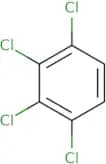
CAS:<p>1,2,3,4-Tetrachlorobenzene is a chemical compound that has been used as an intermediate in the production of other chemicals. It is also used as a solvent and in the manufacture of dyes and pesticides. 1,2,3,4-Tetrachlorobenzene is stable in air but reacts with metal hydroxides and sodium carbonate to form tetrachloro-1-hydroxybenzene. It has shown hypoglycemic effect in bacterial strain. The toxicity of 1,2,3,4-tetrachlorobenzene is evaluated by studying its effects on redox potential and water vapor. It also causes liver cells to release enzymes; therefore it can be used for analytical methods. The surface methodology of 1,2,3,4-tetrachlorobenzene can be studied by solid phase microextraction (SPME).</p>Formula:C6H2Cl4Purity:Min. 95%Molecular weight:215.89 g/mol2-Methylquinoline-3-carboxylic acid
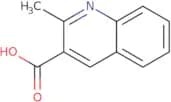
CAS:2-Methylquinoline-3-carboxylic acid (2MQCA) is a nucleophilic, acidic and hiv integrase inhibitor. It has been shown to inhibit the activity of HIV integrase by binding to the active site of the enzyme. 2MQCA has a strong affinity for chloride ions and is soluble in organic solvents such as diethyl ether or chloroform. 2MQCA shows diffraction peaks at 2.5Å, which is indicative of an acidic molecule with a hydroxymethyl group. Reaction time for a reaction between 2MQCA and methylamine was found to be optimal at 10 minutes at room temperature and pH 5. The technique used for this reaction was NMR spectroscopy.Formula:C11H9NO2Purity:Min. 95%Molecular weight:187.2 g/mol1,2,4,5-Tetraiodobenzene
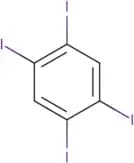
CAS:<p>1,2,4,5-Tetraiodobenzene is a fluorescent molecule that has been used in optical imaging and molecular imaging. 1,2,4,5-Tetraiodobenzene is a fluorophore with an isolated yield of 100%. It has been shown to be useful as a rate enhancer for the transfer of singlet oxygen.</p>Formula:C6H2I4Purity:Min. 95%Molecular weight:581.7 g/mol2-Ethylsuccinic acid
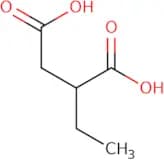
CAS:<p>2-Ethylsuccinic acid is a trifluoroacetic acid derivative. It can be used as a cationic surfactant, cross-linking agent, and a trifluoromethanesulfonic acid (TFMS) catalyst. 2-Ethylsuccinic acid has been shown to react with calcium carbonate, hydroxyl group, or divalent hydrocarbon to form a film-forming polymer. This compound also has the ability to form polycarboxylic acids when reacted with glycol ethers and aluminium. 2-Ethylsuccinic acid is used as a solid catalyst for the acylation reaction of amines and alcohols.</p>Formula:C6H10O4Purity:Min. 95%Molecular weight:146.14 g/mol2-Hydroxyheptanoic acid
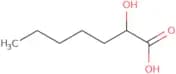
CAS:<p>2-Hydroxyheptanoic acid is a metabolite of 2,6-dihydroxypyridine (DHP), which is an organic compound that can be found in the environment and produced by microbes. 2-Hydroxyheptanoic acid has been shown to inhibit the function of the ryanodine receptor in rat cardiac cells, which may cause arrhythmia. The drug also inhibits fatty acid synthesis and hydrolysis in the small intestine. It is synthesized from oleic acid through demethylation or hydroxylation. The technique used to produce this drug is not known. Verticillium produces this metabolite as a result of its metabolism of DHP.END></p>Formula:C7H14O3Purity:Min. 95%Molecular weight:146.18 g/molp-Phenetidine Hydrochloride
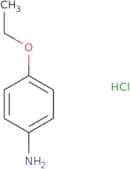
CAS:<p>p-Phenetidine hydrochloride is a pharmaceutical preparation that is used as an intermediate in the production of chlorate, which is used in the synthesis of other organochlorine compounds. It can be prepared by reacting p-phenetidine with a solution of hydrochloric acid and zirconium dichloride in a reaction vessel. The reaction products are then heat treated to produce a solid catalyst, which can be further reacted with organic acids to form metal ion complexes. These complexes are stable and can be separated from unreacted reactants by distillation or recrystallization. The kinetic method has been shown to be useful for determining the order of reaction between these complex ions.<br>The benzalkonium chloride acts as a cocatalyst in this process, while the solid catalyst provides kinetic stability to the process.</p>Formula:C8H11NO·HClPurity:Min. 95%Molecular weight:173.64 g/molPramoxine HCl
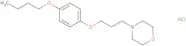
CAS:<p>Pramoxine HCl is a leukotriene receptor antagonist that inhibits the action of the enzyme phospholipase A2, which is responsible for the conversion of arachidonic acid to prostaglandin H2. Pramoxine HCl has been shown to inhibit skin cell proliferation and induce apoptosis in human skin cells. It also has anti-inflammatory properties, and may have therapeutic potential for treating autoimmune diseases such as Crohn's disease. Pramoxine HCl is a colorless liquid that has a particle size of less than 10 microns, and has an odor of benzalkonium chloride. The melting point of pramoxine is 203°C, and its boiling point is 390°C.</p>Formula:C17H27NO3·HClPurity:Min. 95%Molecular weight:329.86 g/mol