Building Blocks
This section contains fundamental products for the synthesis of organic and biological compounds. Building blocks are the essential starting materials used to construct complex molecules through various chemical reactions. They play a critical role in drug discovery, material science, and chemical research. At CymitQuimica, we offer a diverse range of high-quality building blocks to support your innovative research and industrial projects, ensuring you have the essential components for successful synthesis.
Subcategories of "Building Blocks"
- Boronic Acids & Boronic Acid Derivatives(5,783 products)
- Chiral Building Blocks(1,242 products)
- Hydrocarbon Building Blocks(6,105 products)
- Organic Building Blocks(61,055 products)
Found 205383 products of "Building Blocks"
Sort by
Purity (%)
0
100
|
0
|
50
|
90
|
95
|
100
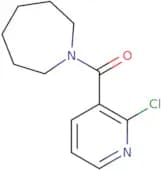
1-Azepanyl(2-chloro-3-pyridinyl)methanone
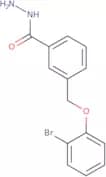
CAS:Versatile small molecule scaffoldFormula:C12H15ClN2OPurity:Min. 95%Molecular weight:238.71 g/mol3-(2-Bromo-phenoxymethyl)-benzoic acid hydrazide
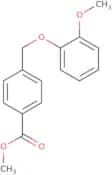
CAS:Versatile small molecule scaffoldFormula:C14H13BrN2O2Purity:Min. 95%Molecular weight:321.17 g/mol4-(2-Methoxy-phenoxymethyl)-benzoic acid methyl ester
CAS:Versatile small molecule scaffold
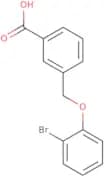
Formula:C16H16O4Purity:Min. 95%Molecular weight:272.29 g/mol3-(2-Bromophenoxymethyl)benzoic acid
CAS:Versatile small molecule scaffoldFormula:C14H11BrO3Purity:Min. 95%Molecular weight:307.14 g/mol3-[(2,2,2-Trifluoroethoxy)methyl]benzoic acid
CAS:Versatile small molecule scaffoldFormula:C10H9F3O3Purity:Min. 95%Molecular weight:234.17 g/mol3-[(4-Ethoxyphenoxy)methyl]benzoic acid
CAS:Versatile small molecule scaffoldFormula:C16H16O4Purity:Min. 95%Molecular weight:272.29 g/molrac-1-[(1R,2R)-2-Phenylcyclopropyl]ethan-1-one
CAS:Versatile small molecule scaffoldFormula:C11H12OPurity:Min. 95%Molecular weight:160.2 g/mol4-Aminobutane-1-sulfonic acid
CAS:4-Aminobutane-1-sulfonic acid is a drug that has been shown to inhibit the growth of cancer cells in vitro. It binds to sulfonic acid groups, which are found on the surface of many cancer cells, and inhibits cell growth by preventing the formation of hydrogen bonds between water and proteins. The affinity of 4-aminobutane-1-sulfonic acid for different tissues has been quantified using human lung tissue. This drug may be a promising therapeutic agent for cancer because it can be used at low concentrations. It has been shown to have an anticancer effect on A549 cells in vitro. Nuclear magnetic resonance spectroscopy was used to investigate the binding mode of 4-aminobutane-1-sulfonic acid with respect to its parameters such as activation energies and distances.Formula:C4H11NO3SPurity:Min. 95%Molecular weight:153.2 g/mol4-Chloro-N-(4-methylbenzenesulfonyl)benzamide
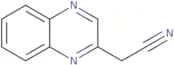
CAS:Versatile small molecule scaffoldFormula:C14H12ClNO3SPurity:Min. 95%Molecular weight:309.77 g/mol2-(Quinoxalin-2-yl)acetonitrile
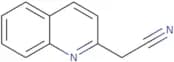
CAS:Versatile small molecule scaffoldFormula:C10H7N3Purity:Min. 95%Molecular weight:169.18 g/mol2-(Quinolin-2-yl)acetonitrile
CAS:2-(Quinolin-2-yl)acetonitrile is an acceptor molecule in the nitrobenzene oxidation scheme. It has a nitro group, which is converted to a chiral chromophore by diethyl etherate. This compound also has oxygen atoms that can act as nucleophiles and activated malonate anions. 2-(Quinolin-2-yl)acetonitrile is an alkylating agent that is used for the synthesis of chiral compounds.Formula:C11H8N2Purity:Min. 95%Molecular weight:168.19 g/molMethyl N-(4-sulfamoylphenyl)carbamate
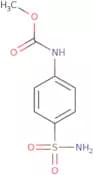
CAS:Versatile small molecule scaffoldFormula:C8H10N2O4SPurity:Min. 95%Molecular weight:230.24 g/molN-Cyclohexylpyrimidin-2-amine
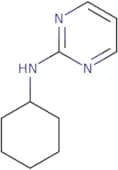
CAS:Versatile small molecule scaffoldFormula:C10H15N3Purity:Min. 95%Molecular weight:177.25 g/mol5-Nitropyrimidine
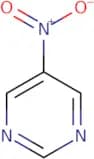
CAS:5-Nitropyrimidine is a chemical with antiviral properties. It inhibits the synthesis of new viruses by reacting with malonic acid, which is an intermediate in the virus's life cycle. 5-Nitropyrimidine has also been shown to have anti-malarial and anti-parasitic properties. This compound binds to amines and inhibits their production, which may be due to its ability to react with dialkylamino groups in proteins. 5-Nitropyrimidine has been found in humans and animals, but not plants or fungi.Formula:C4H3N3O2Purity:Min. 95%Molecular weight:125.09 g/molThieno[2,3-d]pyrimidine-4-thiol
CAS:Versatile small molecule scaffoldFormula:C6H4N2S2Purity:Min. 95%Molecular weight:168.2 g/mol4-Aminothieno[2,3-d]pyrimidine
CAS:4-Aminothieno[2,3-d]pyrimidine is a potent inhibitor of the P-glycoprotein multidrug transporter. It has been shown to inhibit chloride transport in the kidney and gastrointestinal tract. 4-Aminothieno[2,3-d]pyrimidine also inhibits the function of amine oxidase, which is involved in the metabolism of endogenous compounds such as catecholamines and serotonin. This drug may also be effective against cancer cells. The mechanism of action for this drug is not well understood but it has been shown to have an effect on DNA replication and repair by inhibiting phosphorous acid and formamidines. 4-Aminothieno[2,3-d]pyrimidine can produce crosslinking between DNA strands that leads to chain termination or intramolecular hydrogen transfer with formamidines. This process produces formaldehyde, which can react with other molecules to produce crosslinks betweenFormula:C6H5N3SPurity:Min. 95%Molecular weight:151.19 g/mol2-(5-Amino-3-phenylpyrazol-1-yl)ethanol
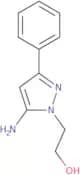
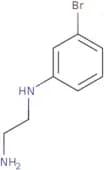
CAS:2-(5-Amino-3-phenylpyrazol-1-yl)ethanol is a chemical compound that is used in the preparation of mezlocillin, an antibiotic medicine. It is also used as a raw material for the production of ampicillin sodium by crystallization with sodium hydroxide. 2-(5-Amino-3-phenylpyrazol-1-yl)ethanol has been shown to inhibit bacterial growth by binding to penicillin binding proteins, which prevents the formation of an antibiotic inhibitor complex with enzymes involved in cell wall synthesis, inhibiting protein synthesis and cell division.Formula:C11H13N3OPurity:Min. 95%Molecular weight:203.25 g/molN-(2-Aminoethyl)-3-bromoaniline
CAS:Versatile small molecule scaffoldFormula:C8H11BrN2Purity:Min. 95%Molecular weight:215.09 g/mol1-[3-(Trifluoromethyl)phenyl]imidazolidin-2-one
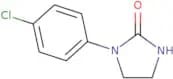
CAS:Versatile small molecule scaffoldFormula:C10H9F3N2OPurity:Min. 95%Molecular weight:230.19 g/mol1-(4-chlorophenyl)imidazolidin-2-one
CAS:Versatile small molecule scaffoldFormula:C9H9N2OClPurity:Min. 95%Molecular weight:196.63 g/mol

![3-[(2,2,2-Trifluoroethoxy)methyl]benzoic acid](/_next/image/?url=https%3A%2Fstatic.cymitquimica.com%2Fproducts%2F3D%2Fthumb-webp%2FNSA47519.webp&w=3840&q=75)
![3-[(4-Ethoxyphenoxy)methyl]benzoic acid](/_next/image/?url=https%3A%2Fstatic.cymitquimica.com%2Fproducts%2F3D%2Fthumb-webp%2FNSA47573.webp&w=3840&q=75)
![rac-1-[(1R,2R)-2-Phenylcyclopropyl]ethan-1-one](/_next/image/?url=https%3A%2Fstatic.cymitquimica.com%2Fproducts%2F3D%2Fthumb-webp%2FPAA06386.webp&w=3840&q=75)

![Thieno[2,3-d]pyrimidine-4-thiol](/_next/image/?url=https%3A%2Fstatic.cymitquimica.com%2Fproducts%2F3D%2Fthumb-webp%2FPAA08055.webp&w=3840&q=75)
![4-Aminothieno[2,3-d]pyrimidine](/_next/image/?url=https%3A%2Fstatic.cymitquimica.com%2Fproducts%2F3D%2Fthumb-webp%2FPAA08056.webp&w=3840&q=75)
![1-[3-(Trifluoromethyl)phenyl]imidazolidin-2-one](/_next/image/?url=https%3A%2Fstatic.cymitquimica.com%2Fproducts%2F3D%2Fthumb-webp%2FPAA08895.webp&w=3840&q=75)