Building Blocks
Subcategories of "Building Blocks"
- Boronic Acids & Boronic Acid Derivatives(5,784 products)
- Chiral Building Blocks(1,242 products)
- Hydrocarbon Building Blocks(6,105 products)
- Organic Building Blocks(61,061 products)
Found 205399 products of "Building Blocks"
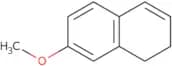
7-Methoxy-1,2-dihydronaphthalene
CAS:7-Methoxy-1,2-dihydronaphthalene is a cyclic compound that has been synthesized from 7-methoxy-1,2,3,4-tetrahydronaphthalene. It is a crystalline form that is soluble in organic solvents. The chemical structure of the compound is similar to the naphthalenes and it has been used as an intermediate for the synthesis of ferulic acid and other compounds. 7-Methoxy-1,2-dihydronaphthalene has also been used in treatments for organisms such as fungi and bacteria. This compound has been investigated for its chiral properties and radical coupling with biphenyl.
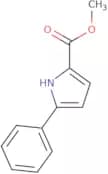
Formula:C11H12OPurity:Min. 95%Molecular weight:160.21 g/molMethyl 5-phenyl-1H-pyrrole-2-carboxylate
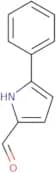
CAS:Methyl 5-phenyl-1H-pyrrole-2-carboxylate is a pharmacological class of antagonist. It has been shown to be an effective antagonist in experimental and computational studies. Methyl 5-phenyl-1H-pyrrole-2-carboxylate is a lead compound for the discovery of novel neuropeptide antagonists. Methyl 5-phenyl-1H-pyrrole-2-carboxylate has been used in screening experiments for the discovery of new drugs to treat various types of cancer, such as pancreatic cancer.Formula:C12H11NO2Purity:Min. 95%Molecular weight:201.22 g/mol5-Phenyl-1H-pyrrole-2-carbaldehyde
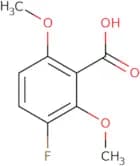
CAS:5-Phenyl-1H-pyrrole-2-carbaldehyde is an antibacterial agent, which has been synthesized and shown to have a broad spectrum of antibacterial activity against both Gram-positive and Gram-negative bacteria. It is a formylated pyrrole that binds to the bacterial ribosome, inhibiting protein synthesis. 5-Phenyl-1H-pyrrole-2-carbaldehyde has been shown to be active against staphylococci and other bacteria that are resistant to conventional antibiotics. The molecular mechanism of action for this drug is not yet fully understood, but it has been shown that the drug can bind to flavonoids and hydrogen bonding interactions in nature.Formula:C11H9NOPurity:Min. 95%Molecular weight:171.19 g/mol3-Fluoro-2,6-dimethoxybenzoic acid
CAS:Versatile small molecule scaffoldFormula:C9H9FO4Purity:Min. 95%Molecular weight:200.16 g/mol1-[2-(2-Bromoethoxy)phenyl]ethan-1-one
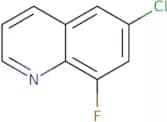
CAS:Versatile small molecule scaffoldFormula:C10H11BrO2Purity:Min. 95%Molecular weight:243.1 g/mol6-Chloro-8-fluoroquinoline
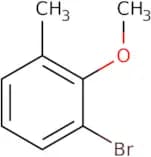
CAS:Versatile small molecule scaffoldFormula:C9H5ClFNPurity:Min. 95%Molecular weight:181.6 g/mol2-Bromo-6-methylanisole
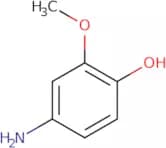
CAS:2-Bromo-6-methylanisole is a sulfoxide that is synthesized by the reaction of aniline with bromine and methanesulfonic acid. 2-Bromo-6-methylanisole has significant antibacterial activity against a range of bacterial species, including methicillin-resistant Staphylococcus aureus (MRSA). It has also been shown to be active against Gram positive bacteria, such as Bacillus cereus and Clostridium perfringens. 2-Bromo-6-methylanisole can be used in strategies to produce structurally analogues, such as halobenzenes or nitrobenzenes. It is also chiral and amenable to asymmetric synthesis.Formula:C8H9BrOPurity:Min. 95%Molecular weight:201.06 g/mol4-Amino-2-methoxyphenol
CAS:4-Amino-2-methoxyphenol is a phenolic compound that is found in the human body. It has been shown to have significant anti-inflammatory activity and can be used as an analgesic. The mechanism of action of 4-Amino-2-methoxyphenol is not fully understood, but it may inhibit the production of reactive oxygen species and promote the synthesis of prostaglandins. The drug also inhibits lipoprotein lipase and increases serum cholesterol levels in rats.
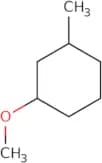
Formula:C7H9NO2Purity:Min. 95%Molecular weight:139.15 g/mol1-Methoxy-3-methylcyclohexane
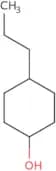
CAS:Versatile small molecule scaffoldFormula:C8H16OPurity:Min. 95%Molecular weight:128.21 g/mol4-Propylcyclohexan-1-ol
CAS:4-Propylcyclohexan-1-ol is a liquid crystal that has been shown to be an activator of eugenol. It is a reactive intermediate in the reaction with bond cleavage. It has been shown to have a kinetic rate that is dependent on the number of carbon walls and metal ions. 4-Propylcyclohexan-1-ol can cause dehydration (loss of water) and detergent compositions can be made using it as a functional group. The hydroxyl group present in this molecule, combined with its functional groups, makes this liquid crystal useful for the production of polymers and plastics. This monomer can also polymerize into polyesters, polyamides, or polyurethanes.
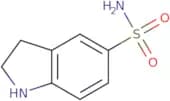
Formula:C9H18OPurity:Min. 95%Molecular weight:142.24 g/mol2,3-Dihydro-1H-indole-5-sulfonic acid amide
CAS:2,3-Dihydro-1H-indole-5-sulfonic acid amide (DAS) is a receptor agonist. It has been shown to be selective for the alpha adrenergic receptor and has agonist activity in human tissue. DAS has n-substituted phenyl groups that are important for binding to the alpha adrenergic receptor, which are substituted at positions adjacent to the sulfonamide group. The pharmacophore of this compound is an aromatic ring with a sulphonamide group on one side and two n-substituted phenyl groups on the other side.
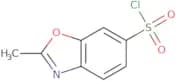
Formula:C8H10N2O2SPurity:Min. 95%Molecular weight:198.24 g/mol2-Methyl-1,3-benzoxazole-6-sulfonyl chloride
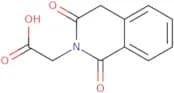
CAS:Versatile small molecule scaffoldFormula:C8H6ClNO3SPurity:Min. 95%Molecular weight:231.66 g/mol2-(1,3-Dioxo-1,2,3,4-tetrahydroisoquinolin-2-yl)acetic acid
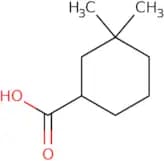
CAS:Versatile small molecule scaffoldFormula:C11H9NO4Purity:Min. 95%Molecular weight:219.19 g/mol3,3-Dimethylcyclohexane-1-carboxylic acid
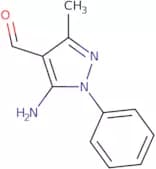
CAS:Versatile small molecule scaffoldFormula:C9H16O2Purity:Min. 95%Molecular weight:156.22 g/mol5-Amino-3-methyl-1-phenyl-1H-pyrazole-4-carbaldehyde
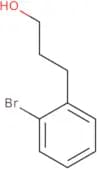
CAS:5-Amino-3-methyl-1-phenyl-1H-pyrazole-4-carbaldehyde is a molecule that has a pyrazole ring, which is a five membered ring with three atoms of nitrogen and two carbon atoms. It can be found in the functional theory as an energy. The frequencies of the compound are given by its nmr spectra. The conformational theory is used to describe this molecule. Molecules have atomic orbitals, which are at different energies, and these can be described by the vibrational theory. The magnetic properties of this molecule can be seen in its resonance spectrum. A spectrum is the distribution of intensity across a range of frequencies and wavenumbers.Formula:C11H11N3OPurity:Min. 95%Molecular weight:201.22 g/mol3-(2-Bromo-phenyl)-propan-1-ol
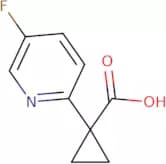
CAS:Versatile small molecule scaffoldFormula:C9H11BrOPurity:Min. 95%Molecular weight:215.09 g/mol1-(5-Fluoropyridin-2-yl)cyclopropanecarboxylic acid
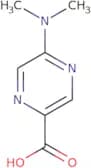
CAS:Versatile small molecule scaffoldFormula:C9H8FNO2Purity:Min. 95%Molecular weight:181.16 g/mol5-(Dimethylamino)pyrazine-2-carboxylic acid
CAS:Versatile small molecule scaffold
Formula:C7H9N3O2Purity:Min. 95%Molecular weight:167.17 g/molrac-tert-Butyl (1R,5S,6R)-6-(methylamino)-3-azabicyclo[3.1.0]hexane-3-carboxylate
CAS:Versatile small molecule scaffoldFormula:C11H20N2O2Purity:Min. 95%Molecular weight:212.3 g/mol4-(1H-Imidazol-2-ylsulfanyl)-1H-pyrazole
CAS:Versatile small molecule scaffold
Formula:C6H6N4SPurity:Min. 95%Molecular weight:166.2 g/mol

![1-[2-(2-Bromoethoxy)phenyl]ethan-1-one](/_next/image/?url=https%3A%2Fstatic.cymitquimica.com%2Fproducts%2F3D%2Fthumb-webp%2FCCA19114.webp&w=3840&q=75)
![rac-tert-Butyl (1R,5S,6R)-6-(methylamino)-3-azabicyclo[3.1.0]hexane-3-carboxylate](/_next/image/?url=https%3A%2Fstatic.cymitquimica.com%2Fproducts%2F3D%2Fthumb-webp%2FCCD86438.webp&w=3840&q=75)