Building Blocks
This section contains fundamental products for the synthesis of organic and biological compounds. Building blocks are the essential starting materials used to construct complex molecules through various chemical reactions. They play a critical role in drug discovery, material science, and chemical research. At CymitQuimica, we offer a diverse range of high-quality building blocks to support your innovative research and industrial projects, ensuring you have the essential components for successful synthesis.
Subcategories of "Building Blocks"
- Boronic Acids & Boronic Acid Derivatives(5,780 products)
- Chiral Building Blocks(1,241 products)
- Hydrocarbon Building Blocks(6,100 products)
- Organic Building Blocks(61,010 products)
Found 205258 products of "Building Blocks"
Sort by
Purity (%)
0
100
|
0
|
50
|
90
|
95
|
100
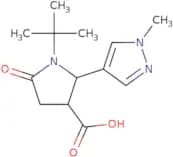
1-tert-Butyl-2-(1-methyl-1H-pyrazol-4-yl)-5-oxopyrrolidine-3-carboxylic acid
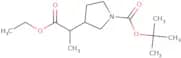
CAS:Versatile small molecule scaffoldFormula:C13H19N3O3Purity:Min. 95%Molecular weight:265.31 g/moltert-Butyl 3-(1-ethoxy-1-oxopropan-2-yl)pyrrolidine-1-carboxylate
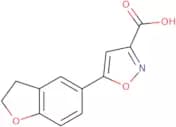
CAS:Versatile small molecule scaffoldFormula:C14H25NO4Purity:Min. 95%Molecular weight:271.4 g/mol5-(2,3-Dihydro-1-benzofuran-5-yl)-1,2-oxazole-3-carboxylic acid
CAS:Versatile small molecule scaffoldFormula:C12H9NO4Purity:Min. 95%Molecular weight:231.2 g/mol6-(Iodomethyl)-2,5-dioxaspiro[3.4]octane
CAS:Versatile small molecule scaffoldFormula:C7H11IO2Purity:Min. 95%Molecular weight:254.07 g/mol2-[(4,6-Dioxo-1,4,5,6-tetrahydro-1,3,5-triazin-2-yl)oxy]acetic acid
CAS:Versatile small molecule scaffoldFormula:C5H7N3O5Purity:Min. 95%Molecular weight:189.13 g/mol[1-(4-Methoxypyridin-2-yl)cyclohexyl]methanamine
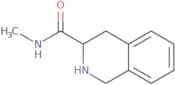
CAS:Versatile small molecule scaffoldFormula:C13H20N2OPurity:Min. 95%Molecular weight:220.3 g/mol(3S)-N-Methyl-1,2,3,4-tetrahydroisoquinoline-3-carboxamide
CAS:Versatile small molecule scaffoldFormula:C11H14N2OPurity:Min. 95%Molecular weight:190.24 g/molMethyl 2-[(3S)-1,2,3,4-tetrahydroisoquinolin-3-yl]acetate hydrochloride
CAS:Versatile small molecule scaffoldFormula:C12H16ClNO2Purity:Min. 95%Molecular weight:241.71 g/mol2-{[(tert-Butoxy)carbonyl]amino}-3-(1,3-oxazol-5-yl)propanoic acid
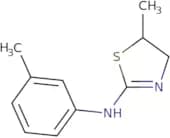
CAS:Versatile small molecule scaffoldFormula:C11H16N2O5Purity:Min. 95%Molecular weight:256.3 g/mol5-Methyl-N-(3-methylphenyl)-4,5-dihydro-1,3-thiazol-2-amine
CAS:Versatile small molecule scaffoldFormula:C11H14N2SPurity:Min. 95%Molecular weight:206.31 g/molMonastrol
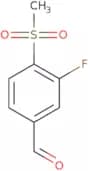
CAS:Monastrol is a natural compound that has been shown to induce apoptosis in cancer cells. It binds to the mitochondrial membrane, thereby causing mitochondrial membrane depolarization and inhibiting ATP production. Monastrol also inhibits axonal growth by blocking tubulin polymerization, which is required for axon elongation. This drug is being investigated as a potential treatment for skin cancers and leishmaniasis. Monastrol has been shown to inhibit the proliferation of carcinoma cell lines and to reduce metastasis in animals models. Preparative high pressure liquid chromatography (HPLC) has been used to isolate monastrol from Anhydrous Sodium Monastearate (ASM).Formula:C14H16N2O3SPurity:Min. 95%Molecular weight:292.35 g/mol3-Fluoro-4-(methylsulphonyl)benzaldehyde
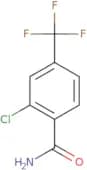
CAS:Versatile small molecule scaffoldFormula:C8H7FO3SPurity:Min. 95%Molecular weight:202.2 g/mol2-Chloro-4-(trifluoromethyl)benzamide
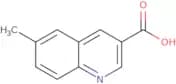
CAS:Versatile small molecule scaffoldFormula:C8H5ClF3NOPurity:Min. 95%Molecular weight:223.58 g/mol6-Methylquinoline-3-carboxylic acid
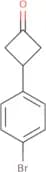
CAS:Versatile small molecule scaffoldFormula:C11H9NO2Purity:Min. 95%Molecular weight:187.2 g/mol3-(4-Bromophenyl)cyclobutanone
CAS:3-(4-Bromophenyl)cyclobutanone is a lactonization product of 4-bromophenylacetic acid. Lactonization is the process of converting an ester into a cyclic lactone. 3-(4-Bromophenyl)cyclobutanone is synthesized from 4-bromophenylacetic acid in yields of up to 97%. The substrate concentration has been shown to have a significant effect on the yield of 3-(4-bromophenyl)cyclobutanone, and the maximum yield was achieved at a concentration of 5 g/L. This compound can be prepared by oxidation of cyclobutanone using peroxides, lipases, or chemoenzymatic methods. 3-(4-Bromophenyl)cyclobutanone belongs to the family of aliphatic ketones and has an aromatic ring with two substituents (a phenyl group and a bromine atom).
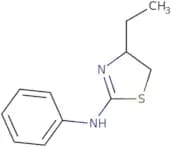
Formula:C10H9BrOPurity:Min. 95%Molecular weight:225.08 g/mol4-Ethyl-N-phenyl-4,5-dihydro-1,3-thiazol-2-amine
CAS:Versatile small molecule scaffoldFormula:C11H14N2SPurity:Min. 95%Molecular weight:206.31 g/mol5-(Benzyloxy)-2-{[(benzyloxy)carbonyl]-amino}-5-oxopentanoic acid
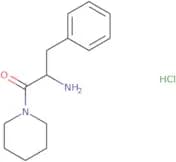
CAS:Versatile small molecule scaffoldFormula:C20H21NO6Purity:Min. 95%Molecular weight:371.4 g/mol2-Amino-3-phenyl-1-(1-piperidinyl)-1-propanone hydrochloride
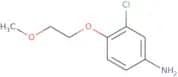
CAS:Versatile small molecule scaffoldFormula:C14H21ClN2OPurity:Min. 95%Molecular weight:268.79 g/mol3-Chloro-4-(2-methoxy-ethoxy)-phenylamine
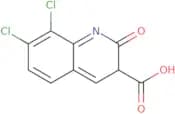
CAS:Versatile small molecule scaffoldFormula:C9H12ClNO2Purity:Min. 95%Molecular weight:201.65 g/mol7,8-Dichloro-2-oxo-1,2-dihydroquinoline-3-carboxylic acid
CAS:Versatile small molecule scaffoldFormula:C10H5Cl2NO3Purity:Min. 95%Molecular weight:258.05 g/mol

![6-(Iodomethyl)-2,5-dioxaspiro[3.4]octane](/_next/image/?url=https%3A%2Fstatic.cymitquimica.com%2Fproducts%2F3D%2Fthumb-webp%2FEJD51157.webp&w=3840&q=75)
![2-[(4,6-Dioxo-1,4,5,6-tetrahydro-1,3,5-triazin-2-yl)oxy]acetic acid](/_next/image/?url=https%3A%2Fstatic.cymitquimica.com%2Fproducts%2F3D%2Fthumb-webp%2FEJD69352.webp&w=3840&q=75)
![[1-(4-Methoxypyridin-2-yl)cyclohexyl]methanamine](/_next/image/?url=https%3A%2Fstatic.cymitquimica.com%2Fproducts%2F3D%2Fthumb-webp%2FEJD88688.webp&w=3840&q=75)
![Methyl 2-[(3S)-1,2,3,4-tetrahydroisoquinolin-3-yl]acetate hydrochloride](/_next/image/?url=https%3A%2Fstatic.cymitquimica.com%2Fproducts%2F3D%2Fthumb-webp%2FEKA10233.webp&w=3840&q=75)
![2-{[(tert-Butoxy)carbonyl]amino}-3-(1,3-oxazol-5-yl)propanoic acid](/_next/image/?url=https%3A%2Fstatic.cymitquimica.com%2Fproducts%2F3D%2Fthumb-webp%2FEKA43884.webp&w=3840&q=75)

![5-(Benzyloxy)-2-{[(benzyloxy)carbonyl]-amino}-5-oxopentanoic acid](/_next/image/?url=https%3A%2Fstatic.cymitquimica.com%2Fproducts%2F3D%2Fthumb-webp%2FEKA98013.webp&w=3840&q=75)