


Building Blocks
This section contains fundamental products for the synthesis of organic and biological compounds. Building blocks are the essential starting materials used to construct complex molecules through various chemical reactions. They play a critical role in drug discovery, material science, and chemical research. At CymitQuimica, we offer a diverse range of high-quality building blocks to support your innovative research and industrial projects, ensuring you have the essential components for successful synthesis.
Subcategories of "Building Blocks"
- Boronic Acids & Boronic Acid Derivatives(5,780 products)
- Chiral Building Blocks(1,241 products)
- Hydrocarbon Building Blocks(6,100 products)
- Organic Building Blocks(61,017 products)
Found 205265 products of "Building Blocks"
Sort by
Purity (%)
0
100
|
0
|
50
|
90
|
95
|
100
7-Chlorobenzo[d]thiazol-2-amine
CAS:7-Chlorobenzo[d]thiazol-2-amine is a synthetic intermediate used in the production of dyes, pigments, and pharmaceuticals. It is prepared by the reaction of 2-aminobenzothiazole with nitrous acid and 7-chloroacetophenone. 7-Chlorobenzo[d]thiazol-2-amine can be cleaved at the 2 position to produce 2,4,5-trichlorobenzothiazole. The infrared absorption spectrum of 7-chlorobenzo[d]thiazol-2-amine has been recorded in the solid phase at room temperature and shows three bands between 1710 cm−1 and 1700 cm−1.Formula:C7H5ClN2SPurity:Min. 95%Molecular weight:184.65 g/mol3-Hydroxy-1H-isoindole-1-carboxylic acid
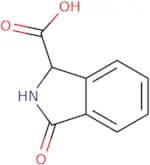
CAS:Versatile small molecule scaffoldFormula:C9H7NO3Purity:Min. 95%Molecular weight:177.16 g/mol2,2-Dimethyl-1,2,3,4-tetrahydroquinoline
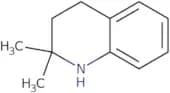
CAS:2,2-Dimethyl-1,2,3,4-tetrahydroquinoline is a molecule with the chemical formula C8H10N. It is a white crystalline solid that has a pyridine ring and a tetrahydroquinoline ring. 2,2-Dimethyl-1,2,3,4-tetrahydroquinoline has been shown to interact with nitrogen atoms in its environment. This process can lead to the formation of an N-oxide or carbonyl groups at the nitrogen atom. The molecule has also been shown to react with methyl groups and form stoichiometric amounts of n-oxides or carbonyl groups. 2,2-Dimethyl-1,2,3,4-tetrahydroquinoline can be used as a desorption agent for gas chromatography (GC).Formula:C11H15NPurity:Min. 95%Molecular weight:161.24 g/mol1-Bromo-5-methylnaphthalene
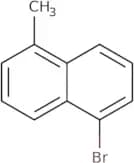
CAS:1-Bromo-5-methylnaphthalene is a chemical compound that belongs to the group of organic compounds. It can be synthesized by deoxygenation of 1,2-dibromonaphthalene with lithium diisopropylamide and diisopropylamide in an alkaline medium. The reaction yields high yields of 1-bromo-5-methylnaphthalene. The synthesis can also be achieved by the regioisomeric lithium–diels–alder reaction.
Formula:C11H9BrPurity:Min. 95%Molecular weight:221.09 g/molN-(4-Propoxyphenyl)acetamide
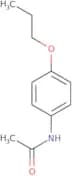
CAS:N-(4-Propoxyphenyl)acetamide is a crystalline solid that has the chemical formula C8H11NO2. This compound belongs to the group of hydrogen bond coplanar molecules. It has a molecular weight of 153.19 and a melting point of 209 degrees Celsius. Its crystal structure is monoclinic with chains that are parallel to each other and have an angle of 90 degrees, with four propoxyphenyl groups at one end and one acetamide group at the other end.Formula:C11H15NO2Purity:Min. 95%Molecular weight:193.24 g/molFenbendazole Related Compound B
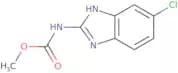
CAS:Versatile small molecule scaffold
Formula:C9H8ClN3O2Purity:Min. 95%Molecular weight:225.63 g/mol3-(2-Methoxyphenoxy)propanoic acid
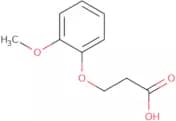
CAS:3-(2-Methoxyphenoxy)propanoic acid is a nonracemic compound that is an enantiomer of phenoxyacetic acid. 3-(2-Methoxyphenoxy)propanoic acid has been shown to inhibit the growth of bacteria by inhibiting protein synthesis. It also inhibits the production of proteins essential for cell division and causes bacterial cells to undergo apoptosis, which leads to cell death. 3-(2-Methoxyphenoxy)propanoic acid is active against both Gram-positive and Gram-negative bacteria, but is not active against Mycobacterium tuberculosis or Mycobacterium avium complex.Formula:C10H12O4Purity:Min. 95%Molecular weight:196.2 g/mol1,1-Bis(bromomethyl)cyclobutane
CAS:Versatile small molecule scaffoldFormula:C6H10Br2Purity:Min. 95%Molecular weight:241.95 g/mol5-Azidoquinoline
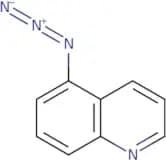
CAS:5-Azidoquinoline is a molecule with the molecular formula CHN. It is classified as an oxadiazoloquinine and has a range of chemical properties that make it suitable for use in medicine, including its ability to form halides and nitro groups. 5-Azidoquinoline can also be used to synthesize other molecules, such as chloroacetone, by nucleophilic substitution reactions. The electronegativity of the 5-azido group makes it an excellent nucleophile, which allows for kinetic reactions. This molecule has six different heterocycles and can be substituted with halogens or other azides.Formula:C9H6N4Purity:Min. 95%Molecular weight:170.17 g/mol1,1,3-Trichloropropane
CAS:Versatile small molecule scaffold
Formula:C3H5Cl3Purity:Min. 95%Molecular weight:147.43 g/mol5-Chloropentyl Acetate
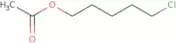
CAS:Versatile small molecule scaffoldFormula:C7H13ClO2Purity:Min. 95%Molecular weight:164.63 g/mol2-(4-Chlorophenyl)-2-methylpropanal
CAS:Versatile small molecule scaffold
Formula:C10H11ClOPurity:Min. 95%Molecular weight:182.64 g/molRef: 3D-VAA40129
1gTo inquire5gTo inquire10gTo inquire5mg250.00€50mg990.00€250mgTo inquire500mgTo inquire1-(Propan-2-yl)imidazolidine-2-thione
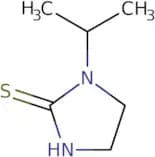
CAS:1-(Propan-2-yl)imidazolidine-2-thione is a thione that has been shown to be a degradable molecule. It has been used in devices such as hydrogen bonding interactions, sublimable, targetable, and dispersive. The properties of 1-(Propan-2-yl)imidazolidine-2-thione make it an ideal candidate for diagnostic or therapeutic applications of iontophoresis and coordination chemistry.Formula:C6H12N2SPurity:Min. 95%Molecular weight:144.24 g/mol2-(Trimethylacetyl)thiophene
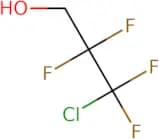
CAS:2-(Trimethylacetyl)thiophene is a thiophene derivative that is used as a precursor to other organic compounds. It reacts with carbon tetrachloride in the presence of light to yield 2-chloro-1,3-dithiole-4,5-dithiol and 2-trimethylacetylthiophene. The kinetics of this reaction has been studied using magnetic resonance spectroscopy. The abundances of the two products have been measured by gas chromatography/mass spectrometry (GC/MS). The dihedral angles for the reactant and product molecules have also been determined by NMR spectroscopy. This compound's conformational studies have revealed dipole moment values and frequencies that are different than those found in other thiophenes.Formula:C9H12OSPurity:Min. 95%Molecular weight:168.26 g/mol3-Chloro-2,2,3,3-tetrafluoropropan-1-ol
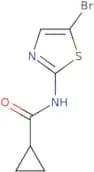
CAS:Versatile small molecule scaffoldFormula:C3H3ClF4OPurity:Min. 95%Molecular weight:166.5 g/molN-(5-Bromo-1,3-thiazol-2-yl)cyclopropanecarboxamide
CAS:Versatile small molecule scaffold
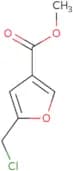
Formula:C7H7BrN2OSPurity:Min. 95%Molecular weight:247.11 g/molMethyl 5-(chloromethyl)furan-3-carboxylate
CAS:Versatile small molecule scaffoldFormula:C7H7ClO3Purity:Min. 95%Color and Shape:PowderMolecular weight:174.58 g/molEthyl 4-oxo-5-phenylpentanoate
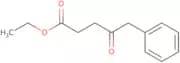
CAS:Ethyl 4-oxo-5-phenylpentanoate (ETP) is a synthetic chemical that can be used as a test compound for cancer research. ETP has been shown to inhibit the growth of human breast cancer cells in vitro and in vivo. It has also been shown to have an inhibitory effect on the growth of liver cancer cells. ETP inhibits the production of endogenous retinoids, which are naturally occurring compounds derived from vitamin A, by binding to lysine residues on histones. This prevents the transcription and replication of DNA, thereby preventing cell division. The terminal half-life of this compound is approximately 1 hour in humans.Formula:C13H16O3Purity:Min. 95%Molecular weight:220.26 g/mol5-Amino-1-methyl-1H-1,2,3-triazole-4-carboxamide
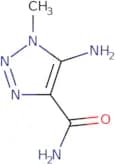
CAS:Versatile small molecule scaffoldFormula:C4H7N5OPurity:Min. 95%Molecular weight:141.13 g/mol3-Bromo-1H,6H,7H-pyrazolo[4,3-d]pyrimidin-7-one
CAS:Versatile small molecule scaffoldFormula:C5H3BrN4OPurity:Min. 95%Molecular weight:215.01 g/mol
![7-Chlorobenzo[d]thiazol-2-amine](/_next/image/?url=https%3A%2Fstatic.cymitquimica.com%2Fproducts%2F3D%2Fthumb-webp%2FVAA35801.webp&w=3840&q=75)





![3-Bromo-1H,6H,7H-pyrazolo[4,3-d]pyrimidin-7-one](/_next/image/?url=https%3A%2Fstatic.cymitquimica.com%2Fproducts%2F3D%2Fthumb-webp%2FVAA41967.webp&w=3840&q=75)