Building Blocks
This section contains fundamental products for the synthesis of organic and biological compounds. Building blocks are the essential starting materials used to construct complex molecules through various chemical reactions. They play a critical role in drug discovery, material science, and chemical research. At CymitQuimica, we offer a diverse range of high-quality building blocks to support your innovative research and industrial projects, ensuring you have the essential components for successful synthesis.
Subcategories of "Building Blocks"
- Boronic Acids & Boronic Acid Derivatives(5,784 products)
- Chiral Building Blocks(1,242 products)
- Hydrocarbon Building Blocks(6,105 products)
- Organic Building Blocks(61,061 products)
Found 205399 products of "Building Blocks"
Sort by
Purity (%)
0
100
|
0
|
50
|
90
|
95
|
100
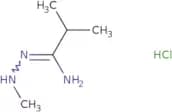
2-Methyl-N-(methylamino)propanimidamide hydrochloride
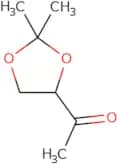
CAS:Versatile small molecule scaffoldFormula:C5H14ClN3Purity:Min. 95%Molecular weight:151.64 g/mol(R)-1-(2,2-Dimethyl-1,3-dioxolan-4-yl)ethanone
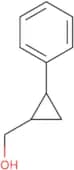
CAS:Versatile small molecule scaffoldFormula:C7H12O3Purity:Min. 95%Molecular weight:144.17 g/mol(2-Phenylcyclopropyl)methanol
CAS:(2-Phenylcyclopropyl)methanol is an optically pure, chiral reagent that can be used to synthesize cinnamyl alcohols and other enantiomers. (2-Phenylcyclopropyl)methanol has been shown to react with monomers in a cross-linking reaction to produce polymers of various lengths and molecular weights. This compound is also reactive, which means it can be used as a reagent in experiments. It can also be used as an intermediate for the synthesis of other compounds. (2-Phenylcyclopropyl)methanol is sensitive to light, so should be stored in the dark or under inert atmosphere conditions.
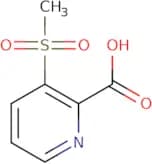
Formula:C10H12OPurity:Min. 95%Molecular weight:148.2 g/mol3-Methanesulfonylpyridine-2-carboxylic acid
CAS:Versatile small molecule scaffoldFormula:C7H7NO4SPurity:Min. 95%Molecular weight:201.2 g/molEthyl 2-{7-methylimidazo[1,2-a]pyrimidin-2-yl}acetate
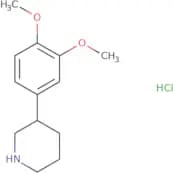
CAS:Versatile small molecule scaffoldFormula:C11H13N3O2Purity:Min. 95%Molecular weight:219.24 g/mol3-(3,4-Dimethoxyphenyl)piperidine hydrochloride
CAS:Versatile small molecule scaffoldFormula:C13H20ClNO2Purity:Min. 95%Molecular weight:257.8 g/mol5-Methyloxolane-2-carboxylic acid
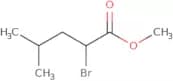
CAS:Versatile small molecule scaffoldFormula:C6H10O3Purity:Min. 95%Molecular weight:130.14 g/molMethyl 2-bromo-4-methylpentanoate
CAS:Versatile small molecule scaffoldFormula:C7H13BrO2Purity:Min. 95%Molecular weight:209.08 g/molN-Methyl-N-(prop-2-yn-1-yl)methanesulfonamide
CAS:Versatile small molecule scaffoldFormula:C5H9NO2SPurity:Min. 95%Molecular weight:147.2 g/mol5-(Bromomethyl)-2,2-dimethyl-1,3-dioxane
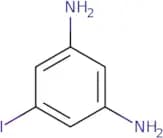
CAS:Versatile small molecule scaffoldFormula:C7H13BrO2Purity:Min. 95%Molecular weight:209.08 g/mol5-Iodobenzene-1,3-diamine
CAS:Versatile small molecule scaffoldFormula:C6H7IN2Purity:Min. 95%Molecular weight:234.04 g/mol2-Hydroxy-N-[2-(pyridin-4-yl)ethyl]propanamide
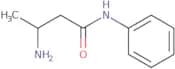
CAS:Versatile small molecule scaffoldFormula:C10H14N2O2Purity:Min. 95%Molecular weight:194.23 g/mol3-Amino-N-phenylbutanamide
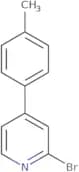
CAS:Versatile small molecule scaffoldFormula:C10H14N2OPurity:Min. 95%Molecular weight:178.23 g/mol2-Bromo-4-(4-methylphenyl)pyridine
CAS:Versatile small molecule scaffoldFormula:C12H10BrNPurity:Min. 95%Molecular weight:248.12 g/mol1-(5-Chloropyridin-2-yl)-3-methyl-4,5-dihydro-1H-pyrazol-5-one
CAS:Versatile small molecule scaffoldFormula:C9H8ClN3OPurity:Min. 95%Molecular weight:209.63 g/mol2-[4-(Trifluoromethyl)phenyl]oxirane
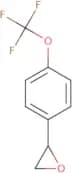
CAS:Versatile small molecule scaffoldFormula:C9H7OF3Purity:Min. 95%Molecular weight:188.14 g/mol2-(4-(Trifluoromethoxy)phenyl)oxirane
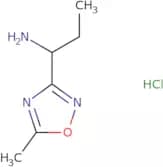
CAS:Versatile small molecule scaffoldFormula:C9H7F3O2Purity:Min. 95%Molecular weight:204.15 g/mol1-(5-Methyl-1,2,4-oxadiazol-3-yl)propan-1-amine hydrochloride
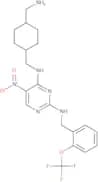
CAS:Versatile small molecule scaffoldFormula:C6H12ClN3OPurity:Min. 95%Molecular weight:177.63 g/molPKC-theta inhibitor
CAS:PKC-theta inhibitors are a class of compounds that inhibit protein kinase C-theta (PKC-θ), which is a serine/threonine-specific protein kinase. PKC-θ inhibition is being studied as a potential therapeutic strategy for the treatment of Alzheimer's disease and HIV integrase inhibitor. A number of strategies have been developed to inhibit the enzyme, including paraformaldehyde, nucleophilic substitutions, primary amines, and alkylation. These strategies have yielded different yields and chemotypes with varying bioactivity profiles.Formula:C20H25F3N6O3Purity:Min. 95%Molecular weight:454.45 g/mol6-(Hydroxymethyl)pyridine-3,4-diol
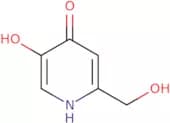
CAS:6-(Hydroxymethyl)pyridine-3,4-diol is a ligand that binds to the opioid receptor and is used as a tool for studying opioid receptors. The ligand has been shown to bind specifically to the mu-, delta-, and kappa-opioid receptors in rat brain membranes and is an agonist for these receptor types. 6-(Hydroxymethyl)pyridine-3,4-diol has also been shown to be an antagonist for the nociceptin receptor. This compound has been analyzed using quantum chemistry tools to determine its electronic structure and geometry. The energies of these molecules have been calculated using quantum chemistry calculations. Geometric parameters were optimized by minimizing the energy of the molecule using molecular mechanics calculations. Parameters such as solvation, complex formation, and chelate constants have also been determined with quantum chemistry calculations. The binding constants are then analyzed with quantum chemistry methods to optimize the parameters of structures in order to find those structures withFormula:C6H7NO3Purity:Min. 95%Molecular weight:141.12 g/mol

![Ethyl 2-{7-methylimidazo[1,2-a]pyrimidin-2-yl}acetate](/_next/image/?url=https%3A%2Fstatic.cymitquimica.com%2Fproducts%2F3D%2Fthumb-webp%2FLCA83069.webp&w=3840&q=75)



![2-Hydroxy-N-[2-(pyridin-4-yl)ethyl]propanamide](/_next/image/?url=https%3A%2Fstatic.cymitquimica.com%2Fproducts%2F3D%2Fthumb-webp%2FLEA96094.webp&w=3840&q=75)
![2-[4-(Trifluoromethyl)phenyl]oxirane](/_next/image/?url=https%3A%2Fstatic.cymitquimica.com%2Fproducts%2F3D%2Fthumb-webp%2FLEA99114.webp&w=3840&q=75)