Building Blocks
This section contains fundamental products for the synthesis of organic and biological compounds. Building blocks are the essential starting materials used to construct complex molecules through various chemical reactions. They play a critical role in drug discovery, material science, and chemical research. At CymitQuimica, we offer a diverse range of high-quality building blocks to support your innovative research and industrial projects, ensuring you have the essential components for successful synthesis.
Subcategories of "Building Blocks"
- Boronic Acids & Boronic Acid Derivatives(5,756 products)
- Chiral Building Blocks(1,242 products)
- Hydrocarbon Building Blocks(6,095 products)
- Organic Building Blocks(61,051 products)
Found 199813 products of "Building Blocks"
Sort by
Purity (%)
0
100
|
0
|
50
|
90
|
95
|
100
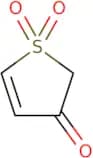
2,3-Dihydro-1λ⁶-thiophene-1,1,3-trione
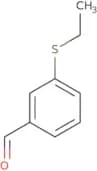
CAS:<p>2,3-Dihydro-1λ⁶-thiophene-1,1,3-trione is a chemical compound that has been synthesized by the reaction of two molecules of dimethyldioxirane with one molecule of thiol. It is a colorless liquid that can be oxidized to 2,3-dihydro-2λ⁶-thiophene-2,2,4(1H)-trione or reduced to 2-(2'-formylphenyl)ethanol. This chemical is an important precursor for the synthesis of sulfur and nitrogen nucleophiles. The yields are high and it is commercially available.</p>Formula:C4H4O3SPurity:Min. 95%Molecular weight:132.14 g/mol3-(Ethylsulfanyl)benzaldehyde
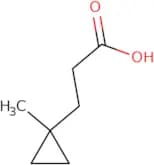
CAS:<p>Versatile small molecule scaffold</p>Formula:C9H10OSPurity:Min. 95%Molecular weight:166.24 g/mol3-(1-Methylcyclopropyl)propanoic acid
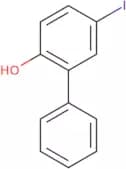
CAS:<p>Versatile small molecule scaffold</p>Formula:C7H12O2Purity:Min. 95%Molecular weight:128.17 g/mol4-Iodo-2-phenylphenol
CAS:<p>Versatile small molecule scaffold</p>Formula:C12H9IOPurity:Min. 95%Molecular weight:296.1 g/mol7-Iodo-1-heptyne
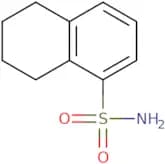
CAS:<p>7-Iodo-1-heptyne is an alkylating agent that is used in organic chemistry. It reacts with a wide range of functional groups and readily undergoes substitution reactions. 7-Iodo-1-heptyne can be prepared by the reaction of 1,2-dibromoethane and iodic acid, which produce the desired product and bromide as a byproduct. The reaction system can be catalyzed with silver nitrate, sodium acetate, and hydrochloric acid. The reagents are heated in a water bath for about two hours at 100 degrees Celsius. The yields for this process are variable depending on the substituents. 7-Iodo-1-heptyne is also used to synthesize other substituted heptynes through alkylation or substitution reactions.</p>Formula:C7H11IPurity:Min. 95%Molecular weight:222.07 g/mol5,6,7,8-Tetrahydronaphthalene-1-sulfonamide
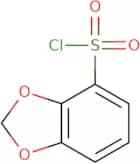
CAS:<p>Versatile small molecule scaffold</p>Formula:C10H13NO2SPurity:Min. 95%Molecular weight:211.28 g/mol1,3-Dioxaindane-4-sulfonyl chloride
CAS:<p>Versatile small molecule scaffold</p>Formula:C7H5ClO4SPurity:Min. 95%Molecular weight:220.63 g/mol2,3-Dihydrobenzo[1,4]dioxine-5-sulfonic acid amide
CAS:<p>Versatile small molecule scaffold</p>Formula:C8H9NO4SPurity:Min. 95%Molecular weight:215.23 g/mol[(2-Aminoethyl)sulfamoyl]dimethylamine hydrochloride
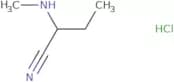
CAS:<p>Versatile small molecule scaffold</p>Formula:C4H14ClN3O2SPurity:Min. 95%Molecular weight:203.69 g/mol2-(Methylamino)butanenitrile hydrochloride
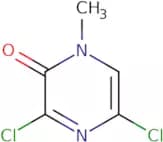
CAS:<p>Versatile small molecule scaffold</p>Formula:C5H11ClN2Purity:Min. 95%Molecular weight:134.61 g/mol3,5-dichloro-1-methyl-1,2-dihydropyrazin-2-one
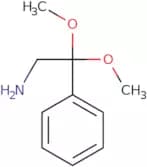
CAS:Versatile small molecule scaffoldFormula:C5H4Cl2N2OPurity:Min. 95%Molecular weight:179 g/mol2,2-Dimethoxy-2-phenylethan-1-amine
CAS:<p>Versatile small molecule scaffold</p>Formula:C10H15NO2Purity:Min. 95%Molecular weight:181.23 g/molTricyclo[3.3.1.0,2,7]nonan-6-one
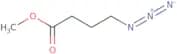
CAS:<p>Versatile small molecule scaffold</p>Formula:C9H12OPurity:Min. 95%Molecular weight:136.2 g/molmethyl 4-azidobutanoate
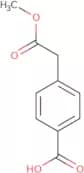
CAS:<p>Methyl 4-azidobutanoate is a reactive moiety that can be used to form ethers with other molecules. It reacts with two-dimensional surfaces, such as those found in electron microscopy grids, and has been shown to be sensitive to the presence of other compounds in solution. The methyl 4-azidobutanoate reacts with succinimide to form an azido moiety. This reaction is efficient and can be used for the study of glycols and azides.</p>Formula:C5H9N3O2Purity:Min. 95%Molecular weight:143.1 g/mol4-(2-methoxy-2-oxoethyl)benzoic acid
CAS:<p>Versatile small molecule scaffold</p>Formula:C10H10O4Purity:Min. 95%Molecular weight:194.2 g/molEthyl 5-amino-4-methyl-1,2-oxazole-3-carboxylate
CAS:<p>Versatile small molecule scaffold</p>Formula:C7H10N2O3Purity:Min. 95%Molecular weight:170.17 g/molEthyl 3-methyl-5-(methylamino)-1,2-oxazole-4-carboxylate
CAS:<p>Versatile small molecule scaffold</p>Formula:C8H12N2O3Purity:Min. 95%Molecular weight:184.19 g/moltert-butyl N-{3-[(3-aminopropyl)(methyl)amino]propyl}carbamate
CAS:<p>Versatile small molecule scaffold</p>Formula:C12H27N3O2Purity:Min. 95%Molecular weight:245.4 g/molMethyl 4-cyanonicotinate
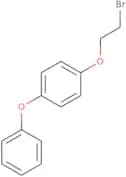
CAS:<p>Versatile small molecule scaffold</p>Formula:C8H6N2O2Purity:Min. 95%Molecular weight:162.15 g/mol1-(2-Bromoethoxy)-4-phenoxybenzene
CAS:<p>Versatile small molecule scaffold</p>Formula:C14H13BrO2Purity:Min. 95%Molecular weight:293.15 g/mol


![2,3-Dihydrobenzo[1,4]dioxine-5-sulfonic acid amide](/_next/image/?url=https%3A%2Fstatic.cymitquimica.com%2Fproducts%2F3D%2Fthumb-webp%2FMDA47416.webp&w=3840&q=75)
![[(2-Aminoethyl)sulfamoyl]dimethylamine hydrochloride](/_next/image/?url=https%3A%2Fstatic.cymitquimica.com%2Fproducts%2F3D%2Fthumb-webp%2FMDA48494.webp&w=3840&q=75)
![Tricyclo[3.3.1.0,2,7]nonan-6-one](/_next/image/?url=https%3A%2Fstatic.cymitquimica.com%2Fproducts%2F3D%2Fthumb-webp%2FMDA50736.webp&w=3840&q=75)


![tert-butyl N-{3-[(3-aminopropyl)(methyl)amino]propyl}carbamate](/_next/image/?url=https%3A%2Fstatic.cymitquimica.com%2Fproducts%2F3D%2Fthumb-webp%2FMDA53014.webp&w=3840&q=75)