Building Blocks
This section contains fundamental products for the synthesis of organic and biological compounds. Building blocks are the essential starting materials used to construct complex molecules through various chemical reactions. They play a critical role in drug discovery, material science, and chemical research. At CymitQuimica, we offer a diverse range of high-quality building blocks to support your innovative research and industrial projects, ensuring you have the essential components for successful synthesis.
Subcategories of "Building Blocks"
- Boronic Acids & Boronic Acid Derivatives(5,756 products)
- Chiral Building Blocks(1,242 products)
- Hydrocarbon Building Blocks(6,095 products)
- Organic Building Blocks(61,038 products)
Found 196817 products of "Building Blocks"
Sort by
Purity (%)
0
100
|
0
|
50
|
90
|
95
|
100
N-Carbamoyl linagliptin
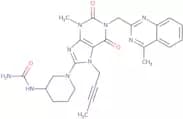
CAS:<p>N-Carbamoyl linagliptin is a synthetic drug that is a selective, reversible inhibitor of dipeptidyl peptidase-4 (DPP-4), an enzyme that breaks down the incretin hormones GLP-1 and GIP. This drug has been shown to help control blood glucose levels in patients with type 2 diabetes. It binds to the active site of DPP-4 and prevents it from breaking down GLP-1 and GIP, which leads to increased levels of these hormones in the body. N-Carbamoyl linagliptin has a long half life, making it suitable for once daily administration. It also lacks any significant interactions with other drugs or foods.</p>Formula:C26H29N9O3Purity:Min. 95%Molecular weight:515.6 g/mol(4-Acetylpiperazin-1-yl)acetic acid
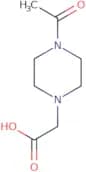
CAS:<p>Versatile small molecule scaffold</p>Formula:C8H14N2O3Purity:Min. 95%Molecular weight:186.21 g/mol[Ru(bpz)3][PF6]2
CAS:<p>Ru(bpz)3[PF6]2 is a catalytic reagent that was developed for the synthesis of indoles. It is composed of a ruthenium complex with two ligands, bpy and pfpz. Ru(bpz)3[PF6]2 can be used to synthesize indoles from simple organic compounds containing benzene rings. Ru(bpz)3[PF6]2 has been used by researchers to synthesize indoles in the laboratory. The catalytic activity of this compound depends on the reaction conditions, including temperature and solvent type. This catalyst has also been shown to be able to generate new types of molecules that are not found in nature.</p>Formula:C24H18F12N12P2RuPurity:Min. 95%Molecular weight:865.48 g/mol2,5-Dimethyl-1,4-benzenediamine
CAS:<p>2,5-Dimethyl-1,4-benzenediamine is an amine that is used as a reagent in organic synthesis. It is also used to derivatize other molecules and as a precursor to other compounds. 2,5-Dimethyl-1,4-benzenediamine has been shown to be a good nucleophile and can react with electrophiles such as difluoride and the metal ion Ag(I). The reaction rate of 2,5-dimethyl-1,4-benzenediamine can be determined using high performance liquid chromatography or electrospray ionization. This compound can be synthesized from phenylmagnesium bromide and methyl iodide in the presence of aluminium chloride. It is possible to immobilize 2,5-dimethyl-1,4-benzenediamine on mesoporous silica by attaching it to the surface of the porous material with aminop</p>Formula:C8H12N2Purity:Min. 95%Color and Shape:Beige To Brown SolidMolecular weight:136.19 g/moltrans-1,2-Dichloroethylene
CAS:<p>Trans-1,2-Dichloroethylene is a chlorinated hydrocarbon that is used in the production of polyvinyl chloride plastics. When ingested at dietary concentrations, trans-1,2-Dichloroethylene may cause liver damage and death in CD-1 mice. Trans-1,2-Dichloroethylene has been shown to react with nucleophilic substitutions and produce toxic reaction products. This chemical also causes polymerase chain reactions that can lead to cell death. The effective dose for this chemical is unknown because it has not been tested in clinical trials.</p>Formula:C2H2Cl2Purity:Min. 95%Molecular weight:96.94 g/mol1,1-Dibromo-2,2-bis(chloromethyl)cyclopropane
CAS:<p>1,1-Dibromo-2,2-bis(chloromethyl)cyclopropane is a synthetic chemical that can be used to synthesize lactams. It is a member of the class of enolates and has two isomers: sulfoxide and sulfone. The synthesis process begins with an amination reaction between 1,1-dibromo-2,2-bis(chloromethyl)cyclopropane and an amine in the presence of magnesium chloride. This reaction produces a sulfide intermediate that reacts with an aldehyde or ketone to form the desired lactam. The reaction time varies depending on the reactivity of the reactants, but it typically takes less than one hour at room temperature. Magnesium metal is needed as a catalyst for this reaction because it will not take place without it. 1,1-Dibromo-2,2-bis(chloromethyl)cyclopropane also reacts easily</p>Formula:C5H6Br2Cl2Purity:Min. 95%Molecular weight:296.81 g/mol2,4-Dichloropyrido [2,3-D] pyrimidine
CAS:<p>2,4-Dichloropyrido [2,3-D] pyrimidine is a regioselective chlorination agent that can be used for the synthesis of various organic compounds. It is often used in cross-coupling reactions to form carbon-carbon bonds. 2,4-Dichloropyrido [2,3-D] pyrimidine has been shown to give high yields and is selective for disubstituted or monosubstituted substrates. This compound is also useful for the functionalization of C-H bonds via palladium-catalyzed coupling reactions.</p>Formula:C7H3Cl2N3Purity:Min. 95%Color and Shape:White PowderMolecular weight:200.02 g/mol2,6-Dichloro-4-methoxyaniline
CAS:<p>2,6-Dichloro-4-methoxyaniline is a chemical that belongs to the group of methyl derivatives. It is used as an industrial chemical and as a precursor to other chemicals in the production of pesticides, herbicides, and other products. 2,6-Dichloro-4-methoxyaniline can be found in brominated flame retardants and phenolic resins. It is also present in pentachlorophenol (PCP) and hydroxylated congeners. 2,6-Dichloro-4-methoxyaniline has been detected in humans at levels ranging from 10 to 100 parts per billion. The chemical structure of 2,6-dichloro-4-methoxyaniline is similar to that of triclosan, which has been shown to have antimicrobial activity against bacteria such as Staphylococcus aureus and Escherich</p>Formula:C7H7Cl2NOPurity:Min. 95%Molecular weight:192.04 g/mol1-[3-(Dimethylamino)propyl]-1-(4-fluorophenyl)-1,3-dihydro-3-oxo-5-isobenzofurancarbonitrile
CAS:<p>Please enquire for more information about 1-[3-(Dimethylamino)propyl]-1-(4-fluorophenyl)-1,3-dihydro-3-oxo-5-isobenzofurancarbonitrile including the price, delivery time and more detailed product information at the technical inquiry form on this page</p>Formula:C20H19FN2O2Purity:Min. 95%Molecular weight:338.38 g/molDepropyl rotigotine hydrochloride
CAS:<p>Please enquire for more information about Depropyl rotigotine hydrochloride including the price, delivery time and more detailed product information at the technical inquiry form on this page</p>Formula:C16H19NOS•(HCl)xPurity:Min. 95%Domperidone N-oxide
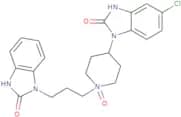
CAS:<p>Please enquire for more information about Domperidone N-oxide including the price, delivery time and more detailed product information at the technical inquiry form on this page</p>Formula:C22H24ClN5O3Purity:Min. 95%Molecular weight:441.91 g/mol4-Desmethyl-2-methyl celecoxib
CAS:<p>Please enquire for more information about 4-Desmethyl-2-methyl celecoxib including the price, delivery time and more detailed product information at the technical inquiry form on this page</p>Formula:C17H14F3N3O2SPurity:Min. 95%Molecular weight:381.4 g/mol4,5-Dihydro-1H-imidazol-2-amine hydrochloride
CAS:<p>Please enquire for more information about 4,5-Dihydro-1H-imidazol-2-amine hydrochloride including the price, delivery time and more detailed product information at the technical inquiry form on this page</p>Formula:C3H7N3•HClPurity:Min. 95%Molecular weight:121.57 g/mol6,7-Dichloro-1-cyclopropyl-1,4-dihydro-4-oxo-3-quinolinecarboxylic acid
CAS:<p>Please enquire for more information about 6,7-Dichloro-1-cyclopropyl-1,4-dihydro-4-oxo-3-quinolinecarboxylic acid including the price, delivery time and more detailed product information at the technical inquiry form on this page</p>Formula:C13H9Cl2NO3Purity:Min. 95%Molecular weight:298.12 g/mol4,5-Dihydro-2-methyl-4-thiazolecarboxylic acid trifluoroacetate
CAS:<p>Please enquire for more information about 4,5-Dihydro-2-methyl-4-thiazolecarboxylic acid trifluoroacetate including the price, delivery time and more detailed product information at the technical inquiry form on this page</p>Formula:C5H7NO2S•(C2HF3O2)xPurity:Min. 95%3-(cis-4-(2-(4-(2,3-Dichlorophenyl)piperazin-1-yl)ethyl)cyclohexyl)-1,1-dimethylurea
CAS:<p>Please enquire for more information about 3-(cis-4-(2-(4-(2,3-Dichlorophenyl)piperazin-1-yl)ethyl)cyclohexyl)-1,1-dimethylurea including the price, delivery time and more detailed product information at the technical inquiry form on this page</p>Formula:C21H32Cl2N4OPurity:Min. 95%Molecular weight:427.41 g/molDeschloro amlodipine maleate
CAS:<p>Please enquire for more information about Deschloro amlodipine maleate including the price, delivery time and more detailed product information at the technical inquiry form on this page</p>Formula:C20H26N2O5•C4H4O4Purity:Min. 95%Molecular weight:490.5 g/molrac-Demiditraz
CAS:<p>Please enquire for more information about rac-Demiditraz including the price, delivery time and more detailed product information at the technical inquiry form on this page</p>Formula:C13H16N2Purity:Min. 95%Molecular weight:200.28 g/mol2,2'-Dithiodianiline
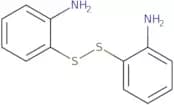
CAS:<p>2,2'-Dithiodianiline is a redox-active molecule with a redox potential of -0.08 V. It has been shown to inhibit the polymerase chain reaction by binding to DNA and inhibiting the enzyme DNA polymerase. 2,2'-Dithiodianiline is a potent inhibitor of bacterial growth in vitro, and has been shown to be cytotoxic in vivo. 2,2'-Dithiodianiline inhibits the growth of resistant mutants that are resistant to other antibiotics such as penicillin and ampicillin. This compound binds to molybdenum at an optimum concentration of 0.5 mM and coordinates through electrostatic interactions with the molybdenum atom. Structural analysis reveals that 2,2'-dithiodianiline forms hydrogen bonds with adenine residues in DNA and interacts with guanine residues in RNA through π-π stacking interactions. This interaction prevents transcription by blocking the binding</p>Formula:C12H12N2S2Purity:Min. 98 Area-%Color and Shape:PowderMolecular weight:248.37 g/mol1,4-Dicyanobenzene
CAS:<p>1,4-Dicyanobenzene is an organic compound that is used as a reactant in the production of other chemicals. It has been shown to be reactive with nucleophiles such as amines and alcohols. 1,4-Dicyanobenzene has shown good transport properties and can be used in industrial preparation of polymers such as polyurethane. The reaction mechanism for 1,4-dicyanobenzene is nucleophilic attack by a nucleophile on the carbonyl carbon of the double bond. This reaction yields two products: an amide or an aliphatic hydrocarbon. 1,4-Dicyanobenzene can also undergo reactions involving hydrogen bonds with other molecules in order to form new compounds.</p>Formula:C8H4N2Purity:Min. 98 Area-%Color and Shape:Off-White PowderMolecular weight:128.13 g/mol

![[Ru(bpz)3][PF6]2](/_next/image/?url=https%3A%2Fstatic.cymitquimica.com%2Fproducts%2F3D%2Fthumb-webp%2FFDA90756.webp&w=3840&q=75)


![2,4-Dichloropyrido [2,3-D] pyrimidine](/_next/image/?url=https%3A%2Fstatic.cymitquimica.com%2Fproducts%2F3D%2Fthumb-webp%2FFD31600.webp&w=3840&q=75)

![1-[3-(Dimethylamino)propyl]-1-(4-fluorophenyl)-1,3-dihydro-3-oxo-5-isobenzofurancarbonitrile](/_next/image/?url=https%3A%2Fstatic.cymitquimica.com%2Fproducts%2F3D%2Fthumb-webp%2FFD184085.webp&w=3840&q=75)