Building Blocks
This section contains fundamental products for the synthesis of organic and biological compounds. Building blocks are the essential starting materials used to construct complex molecules through various chemical reactions. They play a critical role in drug discovery, material science, and chemical research. At CymitQuimica, we offer a diverse range of high-quality building blocks to support your innovative research and industrial projects, ensuring you have the essential components for successful synthesis.
Subcategories of "Building Blocks"
- Boronic Acids & Boronic Acid Derivatives(5,778 products)
- Chiral Building Blocks(1,242 products)
- Hydrocarbon Building Blocks(6,098 products)
- Organic Building Blocks(61,034 products)
Found 199601 products of "Building Blocks"
Sort by
Purity (%)
0
100
|
0
|
50
|
90
|
95
|
100
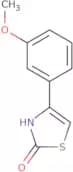
4-(3-Methoxyphenyl)-2,3-dihydro-1,3-thiazol-2-one
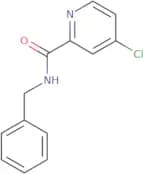
CAS:<p>Versatile small molecule scaffold</p>Formula:C10H9NO2SPurity:Min. 95%Molecular weight:207.25 g/molN-Benzyl-4-chloropyridine-2-carboxamide
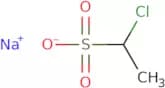
CAS:<p>Versatile small molecule scaffold</p>Formula:C13H11ClN2OPurity:Min. 95%Molecular weight:246.69 g/molSodium 1-chloroethane-1-sulfonate
CAS:<p>Sodium 1-chloroethane-1-sulfonate is a sulfamate that has a hydroxy group. It is an inorganic compound that has been used in the form of its sodium salt as a clinical treatment for hyperkalemia. It reacts with hydroxyl groups to form vinyl alcohol and can be aminated to form piperazine. The acidic pH of the environment also promotes amination reactions. This chemical is reactive and cationic, which makes it useful as a surfactant or detergent.</p>Formula:C2H4ClNaO3SPurity:Min. 95%Molecular weight:166.56 g/mol3-(3-Methylphenoxy)aniline
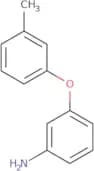
CAS:<p>Versatile small molecule scaffold</p>Formula:C13H13NOPurity:Min. 95%Molecular weight:199.25 g/mol2-(5-Acetyl-2-methoxyphenyl)acetic acid
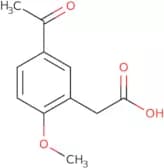
CAS:<p>Versatile small molecule scaffold</p>Formula:C11H12O4Purity:Min. 95%Molecular weight:208.21 g/molN-(4-Amino-2,6-dimethylphenyl)acetamide
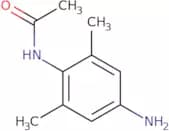
CAS:<p>Versatile small molecule scaffold</p>Formula:C10H14N2OPurity:Min. 95%Molecular weight:178.23 g/mol1,2-Dihydroxy-3,5-diformylbenzene
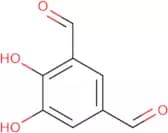
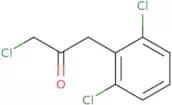
CAS:<p>Versatile small molecule scaffold</p>Formula:C8H6O4Purity:Min. 95%Molecular weight:166.13 g/mol1-Chloro-3-(2,6-dichlorophenyl)propan-2-one
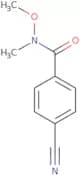
CAS:<p>Versatile small molecule scaffold</p>Formula:C9H7Cl3OPurity:Min. 95%Molecular weight:237.5 g/mol4-Cyano-N-methoxy-N-methylbenzenecarboxamide
CAS:<p>4-Cyano-N-methoxy-N-methylbenzenecarboxamide is a genotoxic agent that can be detected in wastewater samples. It can cause genotoxic effects in human cells and animal experiments, but the toxicity of 4-cyano-N-methoxy-N-methylbenzenecarboxamide to humans has not been studied. The compound may be present as an environmental pollutant in wastewater treatment plants and may have a toxic potential for the intestinal microflora and for healthy controls. The compound has been analysed in congenital cases with no significant association found.</p>Formula:C10H10N2O2Purity:Min. 95%Molecular weight:190.2 g/molEthyl 2-[(dimethylamino)methylidene]-4-methyl-3-oxopentanoate
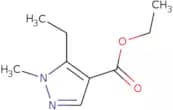
CAS:<p>Versatile small molecule scaffold</p>Formula:C11H19NO3Purity:Min. 95%Molecular weight:213.27 g/molEthyl 5-ethyl-1-methyl-1H-pyrazole-4-carboxylate
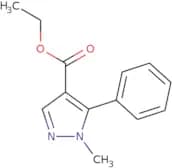
CAS:<p>Versatile small molecule scaffold</p>Formula:C9H14N2O2Purity:Min. 95%Molecular weight:182.22 g/molEthyl 1-methyl-5-phenyl-1H-pyrazole-4-carboxylate
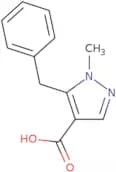
CAS:<p>Versatile small molecule scaffold</p>Formula:C13H14N2O2Purity:Min. 95%Molecular weight:230.26 g/mol5-Benzyl-1-methyl-1H-pyrazole-4-carboxylic acid
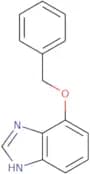
CAS:<p>Versatile small molecule scaffold</p>Formula:C12H12N2O2Purity:Min. 95%Molecular weight:216.24 g/mol4-(Benzyloxy)-1H-1,3-benzodiazole
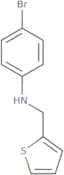
CAS:<p>Versatile small molecule scaffold</p>Formula:C14H12N2OPurity:Min. 95%Molecular weight:224.26 g/mol4-Bromo-N-(thiophen-2-ylmethyl)aniline
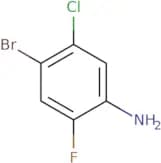
CAS:Versatile small molecule scaffoldFormula:C11H10BrNSPurity:Min. 95%Molecular weight:268.17 g/mol4-Bromo-5-chloro-2-fluoroaniline
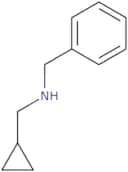
CAS:<p>Versatile small molecule scaffold</p>Formula:C6H4BrClFNPurity:Min. 95%Molecular weight:224.46 g/molN-Benzyl(cyclopropyl)methanamine
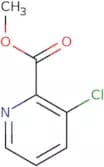
CAS:<p>N-Benzyl(cyclopropyl)methanamine is a phenanthrene derivative that is synthesized by the reaction of benzylic methylene with methanol. This compound can be hydrolyzed to benzoic acid and cyclopropanol. N-Benzyl(cyclopropyl)methanamine has been used as an electrode material for organic electrochemical cells as it has high electron transfer and overpotential, making this compound more suitable than other materials such as benzylic or alkyl groups. The synthesis of esters from N-benzyl(cyclopropyl)methanamine can be achieved through the use of acetals.</p>Formula:C11H15NPurity:Min. 95%Molecular weight:161.24 g/molMethyl 3-chloropyridine-2-carboxylate
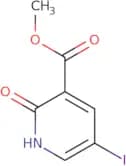
CAS:<p>Methyl 3-chloropyridine-2-carboxylate is a synthetic, orally active analog of picolinic acid. It is used in the synthesis of pharmaceuticals and agrochemicals. Methyl 3-chloropyridine-2-carboxylate is a bactericidal drug that inhibits bacterial growth by inhibiting protein synthesis, which leads to cell death. This compound has been shown to be effective against cancer cells, with low toxicity to normal tissues.</p>Formula:C7H6ClNO2Purity:Min. 95%Molecular weight:171.58 g/molMethyl 5-iodo-2-oxo-1,2-dihydropyridine-3-carboxylate
CAS:<p>Versatile small molecule scaffold</p>Formula:C7H6INO3Purity:Min. 95%Molecular weight:279.03 g/mol2-Fluoro-4-isothiocyanato-1-methylbenzene
CAS:<p>2-Fluoro-4-isothiocyanato-1-methylbenzene is an industrial chemical that belongs to the class of triethylene diamines. The 2-Fluoro-4-isothiocyanato-1-methylbenzene molecule has a carbon disulfide group in its structure. It is used as a raw material for the production of carbon tetrachloride, hexamethylenetetramine, and other organic compounds. 2-Fluoro-4-isothiocyanato-1-methylbenzene is also used in the synthesis of 2,2'-dithiodiethanol, which is a useful precursor in organic chemistry.</p>Formula:C8H6FNSPurity:Min. 95%Molecular weight:167.21 g/mol

![Ethyl 2-[(dimethylamino)methylidene]-4-methyl-3-oxopentanoate](/_next/image/?url=https%3A%2Fstatic.cymitquimica.com%2Fproducts%2F3D%2Fthumb-webp%2FREA34409.webp&w=3840&q=75)