Building Blocks
This section contains fundamental products for the synthesis of organic and biological compounds. Building blocks are the essential starting materials used to construct complex molecules through various chemical reactions. They play a critical role in drug discovery, material science, and chemical research. At CymitQuimica, we offer a diverse range of high-quality building blocks to support your innovative research and industrial projects, ensuring you have the essential components for successful synthesis.
Subcategories of "Building Blocks"
- Boronic Acids & Boronic Acid Derivatives(5,756 products)
- Chiral Building Blocks(1,242 products)
- Hydrocarbon Building Blocks(6,095 products)
- Organic Building Blocks(61,055 products)
Found 199650 products of "Building Blocks"
Sort by
Purity (%)
0
100
|
0
|
50
|
90
|
95
|
100
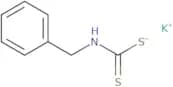
Potassium (benzylcarbamothioyl)sulfanide
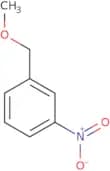
CAS:Versatile small molecule scaffoldFormula:C8H8KNS2Purity:Min. 95%Molecular weight:221.4 g/mol1-(Methoxymethyl)-3-nitrobenzene
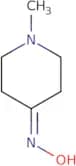
CAS:<p>Versatile small molecule scaffold</p>Formula:C8H9NO3Purity:Min. 95%Molecular weight:167.16 g/mol1-Methylpiperidin-4-one oxime
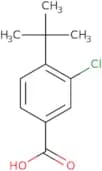
CAS:<p>Versatile small molecule scaffold</p>Formula:C6H12N2OPurity:Min. 95%Molecular weight:128.17 g/mol4-tert-Butyl-3-chlorobenzoic acid
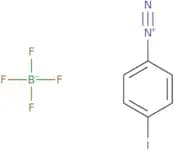
CAS:<p>Versatile small molecule scaffold</p>Formula:C11H13ClO2Purity:Min. 95%Molecular weight:212.67 g/mol4-Iodobenzene-1-diazonium tetrafluoroboranuide
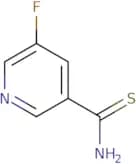
CAS:<p>Versatile small molecule scaffold</p>Formula:C6H4IN2•BF4Purity:Min. 95%Color and Shape:PowderMolecular weight:317.82 g/mol5-fluoropyridine-3-carbothioamide
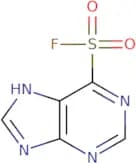
CAS:<p>Versatile small molecule scaffold</p>Formula:C6H5FN2SPurity:Min. 95%Molecular weight:156.18 g/mol9H-Purine-6-sulfonyl fluoride
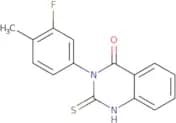
CAS:<p>The purpose of this study was to examine the association between fluoridated water and the prevalence of obesity in children. The study found that, in areas with a higher percentage of children who drank fluoridated water, there was a significant increase in the prevalence of obesity. It is important to note that fluoride has been shown to have health effects other than dental fluorosis. One such effect is an increase in bone fractures. Fluoride also interacts with physiological processes, such as blood pressure regulation and insulin secretion. This article reviews epidemiological studies that have investigated the association between fluoride exposure and various systemic diseases, including cardiovascular disease and diabetes mellitus type 2.</p>Formula:C5H3FN4O2SPurity:Min. 95%Molecular weight:202.17 g/mol3-(3-Fluoro-4-methylphenyl)-2-sulfanyl-3,4-dihydroquinazolin-4-one
CAS:<p>Versatile small molecule scaffold</p>Formula:C15H11FN2OSPurity:Min. 95%Molecular weight:286.3 g/mol5-Methylbenzo[b]thiophene-2-carboxylic acid
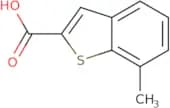
CAS:<p>Versatile small molecule scaffold</p>Formula:C10H8O2SPurity:Min. 95%Molecular weight:192.23 g/mol7-Methyl-1-benzothiophene-2-carboxylic acid
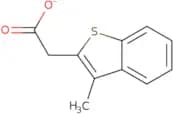
CAS:Versatile small molecule scaffoldFormula:C10H8O2SPurity:Min. 95%Molecular weight:192.24 g/mol2-(3-methyl-1-benzothiophen-2-yl)acetic acid
CAS:<p>Versatile small molecule scaffold</p>Formula:C11H10O2SPurity:Min. 95%Molecular weight:206.27 g/mol4-(Thiophen-3-yl)butanoic acid
CAS:<p>Versatile small molecule scaffold</p>Formula:C8H10O2SPurity:Min. 95%Molecular weight:170.23 g/mol2-Cyclohexylacetamide
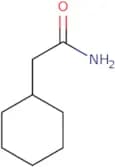
CAS:<p>2-Cyclohexylacetamide is a pharmaceutical compound that acts as an immunosuppressant and anti-inflammatory agent. It has been shown to protect against autoimmune diseases by suppressing the immune system. 2-Cyclohexylacetamide interacts with other drugs, increasing their effects or decreasing their effects, and may have cancer-fighting properties. This drug also binds to the ccr5 receptor in HIV cells and inhibits viral replication. 2-Cyclohexylacetamide is synthesized by reacting sodium citrate with deuterium isotope. The synthesis of this drug can be accomplished using a variety of methods, including protease activity, hydroxylation reactions, or by reductive amination of 2-chloroethanol.</p>Formula:C8H15NOPurity:Min. 95%Molecular weight:141.21 g/molN-Benzoylethylenediamine hydrochloride
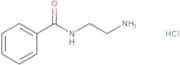
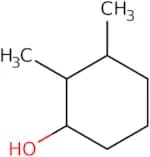
CAS:<p>Versatile small molecule scaffold</p>Formula:C9H13ClN2OPurity:Min. 95%Molecular weight:200.67 g/mol2,3-Dimethylcyclohexanol
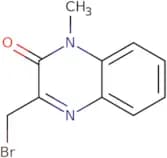
CAS:<p>2,3-Dimethylcyclohexanol is a tertiary butyl alcohol that has a boiling point of about 200°C. It is used in the production of esters, such as diethyl ester. 2,3-Dimethylcyclohexanol is also used in the production of cyclobutane and cyclohexanol. The reaction rate for this compound is slow and requires a large amount of heat to reach completion. This product reacts with aldehydes to form reaction products, which are usually volatile compounds. 2,3-Dimethylcyclohexanol can be synthesized from cyclobutane or cyclohexanol by reacting them with an organic acid or hydroxyl group.</p>Formula:C8H16OPurity:Min. 95%Molecular weight:128.22 g/mol3-(Bromomethyl)-1-methyl-1,2-dihydroquinoxalin-2-one
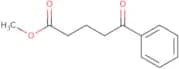
CAS:<p>Versatile small molecule scaffold</p>Formula:C10H9BrN2OPurity:Min. 95%Molecular weight:253.09 g/molMethyl 5-oxo-5-phenylpentanoate
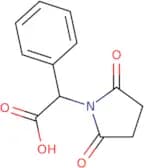
CAS:<p>Methyl 5-oxo-5-phenylpentanoate is a chiral, bimodal molecule that is an organic solvent. This compound has been shown to be consumed by bacteria and yeasts, which are the main contributors to butyric acid production. Methyl 5-oxo-5-phenylpentanoate can be used as a synthetic intermediate for the production of drugs and antibiotics. The formyl group on methyl 5-oxo-5-phenylpentanoate can act as an acceptor or nucleophile in reactions with other molecules, making it useful for biomolecular studies.</p>Formula:C12H14O3Purity:Min. 95%Molecular weight:206.24 g/mol2-(2,5-Dioxopyrrolidin-1-yl)-2-phenylacetic acid
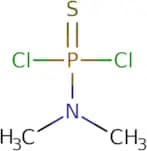
CAS:Versatile small molecule scaffoldFormula:C12H11NO4Purity:Min. 95%Molecular weight:233.22 g/mol(Dimethylamino)phosphonothioyl dichloride
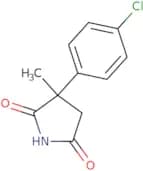
CAS:<p>Dimethylamino)phosphonothioyl dichloride is a linker that contains two phosphonothioic acid groups. It is an electron-deficient compound with symmetries, which are important for the design of anticancer drugs. This linker has been shown to cause chromosomal damage in vitro and inhibits DNA synthesis in cell cultures. The dimethylamino group of the molecule can be substituted with deuterated atoms to provide a tool for studying kinetics and ion pairs.</p>Formula:C2H6Cl2NPSPurity:Min. 95%Molecular weight:178.02 g/mol3-(4-Chlorophenyl)-3-methylpyrrolidine-2,5-dione
CAS:<p>Versatile small molecule scaffold</p>Formula:C11H10ClNO2Purity:Min. 95%Molecular weight:223.65 g/mol

![5-Methylbenzo[b]thiophene-2-carboxylic acid](/_next/image/?url=https%3A%2Fstatic.cymitquimica.com%2Fproducts%2F3D%2Fthumb-webp%2FBAA50562.webp&w=3840&q=75)