Building Blocks
This section contains fundamental products for the synthesis of organic and biological compounds. Building blocks are the essential starting materials used to construct complex molecules through various chemical reactions. They play a critical role in drug discovery, material science, and chemical research. At CymitQuimica, we offer a diverse range of high-quality building blocks to support your innovative research and industrial projects, ensuring you have the essential components for successful synthesis.
Subcategories of "Building Blocks"
- Boronic Acids & Boronic Acid Derivatives(5,756 products)
- Chiral Building Blocks(1,242 products)
- Hydrocarbon Building Blocks(6,095 products)
- Organic Building Blocks(61,037 products)
Found 196200 products of "Building Blocks"
Sort by
Purity (%)
0
100
|
0
|
50
|
90
|
95
|
100
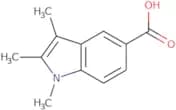
1,2,3-Trimethyl-1H-indole-5-carboxylic acid
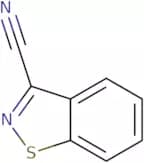
CAS:<p>Versatile small molecule scaffold</p>Formula:C12H13NO2Purity:Min. 95%Molecular weight:203.24 g/mol1,2-Benzothiazole-3-carbonitrile
CAS:<p>Versatile small molecule scaffold</p>Formula:C8H4N2SPurity:Min. 95%Molecular weight:160.2 g/molRef: 3D-RAA80720
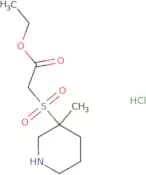
Discontinued productEthyl 2-((3-methylpiperidin-3-yl)sulfonyl)acetate hydrochloride
CAS:<p>Versatile small molecule scaffold</p>Formula:C10H20ClNO4SPurity:Min. 95%Molecular weight:285.79 g/mol2-[(Cyclopropylmethyl)[(9H-fluoren-9-ylmethoxy)carbonyl]amino]acetic acid
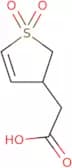
CAS:<p>Versatile small molecule scaffold</p>Formula:C21H21NO4Purity:Min. 95%Molecular weight:351.4 g/mol2,3-Dihydro-3-thiopheneacetic acid 1,1-dioxide
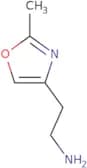
CAS:<p>2,3-Dihydro-3-thiopheneacetic acid 1,1-dioxide is a nucleophilic reagent that can be used to synthesize amides. It reacts with amines to form 2,3-dihydro-3-thiophenecarboxylic acid 1,1-diamide. Reactions of this compound with heterocycles such as pyridine and quinoline result in the formation of heterocyclic amines.</p>Formula:C6H8O4SPurity:Min. 95%Molecular weight:176.19 g/mol2-(2-Methyl-1,3-oxazol-4-yl)ethan-1-amine
CAS:<p>Versatile small molecule scaffold</p>Formula:C6H10N2OPurity:Min. 95%Molecular weight:126.2 g/molRef: 3D-SAC48361
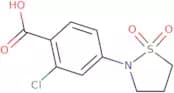
Discontinued product2-Chloro-4-(1,1-dioxo-1,2-thiazolidin-2-yl)benzoic acid
CAS:<p>Versatile small molecule scaffold</p>Formula:C10H10ClNO4SPurity:Min. 95%Molecular weight:275.71 g/molRef: 3D-SBC62071
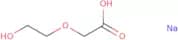
Discontinued productSodium ²-Hydroxyethoxyacetate
CAS:<p>Sodium 2-hydroxyethoxyacetate is a cross-linker that is used to immobilize proteins and enzymes. It has been shown to be effective in the treatment of autoimmune diseases, such as rheumatoid arthritis. This chemical can also be used as a cross-linking agent for the production of biodegradable polymers. The synthesis of this chemical was first reported in 1874 and it has been used for copolymerization with other compounds to form particles with potential biomedical applications.</p>Formula:C4H7NaO4Purity:Min. 95%Molecular weight:142.09 g/mol(3-Chlorophenyl)(cyclohexyl)methanone
CAS:<p>Versatile small molecule scaffold</p>Formula:C13H15ClOPurity:Min. 95%Molecular weight:222.71 g/mol2-Ethynyl-4-methylthiazole
CAS:<p>2-Ethynyl-4-methylthiazole is a cell-based kinase inhibitor that binds to the ATP binding site on the enzyme and inhibits phosphorylation. It was shown to inhibit cell growth in vitro by interfering with the production of TGF-β, activin, and other growth factors. The inhibitory activity of 2-Ethynyl-4-methylthiazole is selective for receptor kinases and is not effective against alk5 kinase. This drug has been shown to be an inhibitor of cellular growth in vitro and may be useful for the treatment of cancer.</p>Formula:C6H5NSPurity:Min. 95%Molecular weight:123.17 g/molRef: 3D-LIA94025
Discontinued product4-(Cyclobutylmethyl)-1H-pyrrole-2-carboxylic acid
CAS:<p>Versatile small molecule scaffold</p>Formula:C10H13NO2Purity:Min. 95%Molecular weight:179.2 g/molRef: 3D-JWC80161
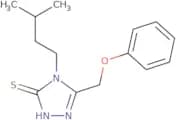
Discontinued product4-(3-Methylbutyl)-5-(phenoxymethyl)-4H-1,2,4-triazole-3-thiol
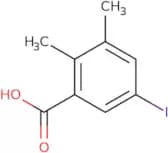
CAS:<p>Versatile small molecule scaffold</p>Formula:C14H19N3OSPurity:Min. 95%Molecular weight:277.39 g/mol5-Iodo-2,3-dimethylbenzoic acid
CAS:<p>Versatile small molecule scaffold</p>Formula:C9H9IO2Purity:Min. 95%Molecular weight:276.07 g/molRef: 3D-FAA61333
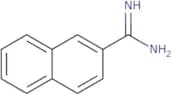
Discontinued productNaphthalene-2-carboximidamide
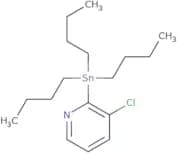
CAS:<p>Naphthalene-2-carboximidamide is a benzamidine derivative that interacts with the active site of serine proteases. It was shown to have potent inhibitory potency against a number of proteinases, including urokinase-type plasminogen activator (uPA), matrix metalloproteinase-9 (MMP-9), and cathepsin G. The interaction of naphthalene-2-carboximidamide with uPA was specific and led to inhibition of its catalytic activity. Naphthalene-2-carboximidamide has been tested in clinical trials for the treatment of influenza.</p>Formula:C11H10N2Purity:Min. 95%Molecular weight:170.21 g/mol2-(Tributylstannyl)-3-chloropyridine
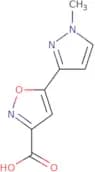
CAS:Controlled Product<p>Versatile small molecule scaffold</p>Formula:C17H30ClNSnPurity:Min. 95%Molecular weight:402.59 g/mol5-(1-Methyl-1H-pyrazol-3-yl)-1,2-oxazole-3-carboxylic acid
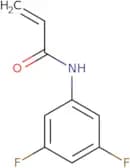
CAS:<p>Versatile small molecule scaffold</p>Formula:C8H7N3O3Purity:Min. 95%Molecular weight:193.16 g/molN-(3,5-Difluorophenyl)prop-2-enamide
CAS:<p>Versatile small molecule scaffold</p>Formula:C9H7F2NOPurity:Min. 95%Molecular weight:183.15 g/molRef: 3D-GWB75581
Discontinued product3-{[3-(Trifluoromethyl)phenyl]methyl}azetidine hydrochloride
CAS:<p>Versatile small molecule scaffold</p>Formula:C11H13ClF3NPurity:Min. 95%Molecular weight:251.67 g/molRef: 3D-GXB45823
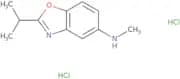
Discontinued productN-Methyl-2-(propan-2-yl)-1,3-benzoxazol-5-amine dihydrochloride
CAS:<p>Versatile small molecule scaffold</p>Formula:C11H16Cl2N2OPurity:Min. 95%Molecular weight:263.16 g/molRef: 3D-HHC68136
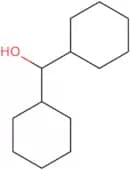
Discontinued productDicyclohexylmethanol
CAS:<p>Dicyclohexylmethanol is a trifunctional compound that contains a hydroxyl group, and can be used as a hydrogen bond donor or acceptor. The chemical structure of dicyclohexylmethanol can be seen in the figure below. Dicyclohexylmethanol has been used for sample preparation for hydrogen chloride gas. It has also been used to determine the concentration of blood ethanol levels and to measure blood pH in humans. Dicyclohexylmethanol is an important reactant in asymmetric synthesis reactions due to its ability to form hydrogen bonds with both reactants.</p>Formula:C13H24OPurity:Min. 95%Molecular weight:196.33 g/mol

![2-[(Cyclopropylmethyl)[(9H-fluoren-9-ylmethoxy)carbonyl]amino]acetic acid](/_next/image/?url=https%3A%2Fstatic.cymitquimica.com%2Fproducts%2F3D%2Fthumb-webp%2FRDC30632.webp&w=3840&q=75)


![3-{[3-(Trifluoromethyl)phenyl]methyl}azetidine hydrochloride](/_next/image/?url=https%3A%2Fstatic.cymitquimica.com%2Fproducts%2F3D%2Fthumb-webp%2FGXB45823.webp&w=3840&q=75)