


Building Blocks
This section contains fundamental products for the synthesis of organic and biological compounds. Building blocks are the essential starting materials used to construct complex molecules through various chemical reactions. They play a critical role in drug discovery, material science, and chemical research. At CymitQuimica, we offer a diverse range of high-quality building blocks to support your innovative research and industrial projects, ensuring you have the essential components for successful synthesis.
Subcategories of "Building Blocks"
- Boronic Acids & Boronic Acid Derivatives(5,756 products)
- Chiral Building Blocks(1,242 products)
- Hydrocarbon Building Blocks(6,095 products)
- Organic Building Blocks(61,055 products)
Found 199650 products of "Building Blocks"
Sort by
Purity (%)
0
100
|
0
|
50
|
90
|
95
|
100
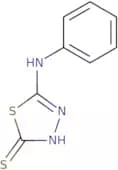
5-(Phenylamino)-1,3,4-thiadiazole-2-thiol
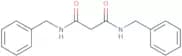
CAS:<p>Versatile small molecule scaffold</p>Formula:C8H7N3S2Purity:Min. 95%Molecular weight:209.3 g/molN,N'-Dibenzylpropanediamide
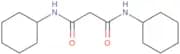
CAS:<p>Versatile small molecule scaffold</p>Formula:C17H18N2O2Purity:Min. 95%Molecular weight:282.34 g/molN,N'-Dicyclohexylpropanediamide
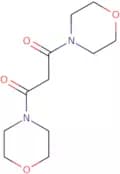
CAS:<p>Versatile small molecule scaffold</p>Formula:C15H26N2O2Purity:Min. 95%Molecular weight:266.38 g/mol1,3-Bis(morpholin-4-yl)propane-1,3-dione
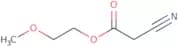
CAS:<p>Versatile small molecule scaffold</p>Formula:C11H18N2O4Purity:Min. 95%Molecular weight:242.27 g/molAcetic acid, 2-cyano-, 2-methoxyethyl ester
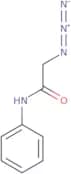
CAS:<p>2-Cyano-2-methoxyethyl acetic acid is a reactive organic solvent that has a boiling point of 152°C. It is soluble in water and has an acidic pH. This compound is used as a monomer, and is also used as an alkylating agent for the synthesis of polymers. 2-Cyano-2-methoxyethyl acetic acid can be copolymerized with other compounds to create a variety of products with different properties. The reaction time depends on the type of product being synthesized, but it typically takes up to 48 hours to complete the reaction. 2-Cyano-2-methoxyethyl acetic acid can react with c1–6 alkyl groups, which may affect its solubility. This compound has a high degree of configurability, which may allow it to be used in more chemical reactions than other organic solvents.</p>Formula:C6H9NO3Purity:Min. 95%Molecular weight:143.14 g/mol2-Azido-N-phenylacetamide
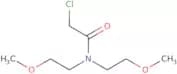
CAS:<p>2-Azido-N-phenylacetamide is an anticancer drug that inhibits cancer cell growth. It is a noncompetitive inhibitor of tyrosine kinases, which are enzymes that control the cellular division cycle. The inhibition of tyrosine kinases prevents the activation of phosphatidylinositol 3-kinase (PI3K). This leads to a decrease in the production of proteins such as Bcl-2 and Bcl-xL, which are responsible for the survival and proliferation of cancer cells. 2-Azido-N-phenylacetamide has been shown to be active against human lung cancer cells in vitro and has also been used to treat bacterial infections. The molecular electrostatic potentials of this compound indicate that it may be an effective antibacterial agent due to its carbonyl group.</p>Formula:C8H8N4OPurity:Min. 95%Molecular weight:176.18 g/mol2-Chloro-N,N-bis(2-methoxyethyl)acetamide
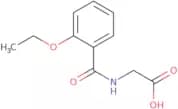
CAS:<p>Versatile small molecule scaffold</p>Formula:C8H16ClNO3Purity:Min. 95%Molecular weight:209.67 g/mol(2-Ethoxy-benzoylamino)-acetic acid
CAS:<p>Versatile small molecule scaffold</p>Formula:C11H13NO4Purity:Min. 95%Molecular weight:223.22 g/mol2-Chloro-N-[3-(propan-2-yloxy)propyl]acetamide
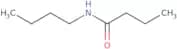
CAS:<p>Versatile small molecule scaffold</p>Formula:C8H16ClNO2Purity:Min. 95%Molecular weight:193.67 g/molN-Butylbutanamide
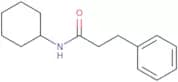
CAS:<p>N-Butylbutanamide is a colorless, volatile liquid that has a distinctive odor. It is used as an intermediate in the production of other chemicals and a solvent for coatings and adhesives. N-Butylbutanamide has been shown to react with amines and amides with high concentrations of primary alcohols to form diazirine. Diazirine can be detected by UV spectroscopy at 254 nm and by mass spectrometry. N-Butylbutanamide can be analyzed using on-line liquid chromatography or GCMS.</p>Formula:C8H17NOPurity:Min. 95%Molecular weight:143.23 g/molN-Cyclohexyl-3-phenylpropanamide
CAS:<p>Versatile small molecule scaffold</p>Formula:C15H21NOPurity:Min. 95%Molecular weight:231.33 g/molrac-(4aR,7aR)-Octahydro-1H-cyclopenta[C]pyridine
CAS:<p>Versatile small molecule scaffold</p>Formula:C8H15NPurity:Min. 95%Molecular weight:125.2 g/mol2-(2-Chlorophenyl)acetamide
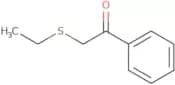
CAS:<p>2-(2-Chlorophenyl)acetamide is a trisubstituted acetamide that has been shown to bind to the benzodiazepine receptor. This binding prevents the binding of GABA to the receptor and inhibits the ion channel, which leads to increased cell membrane permeability and cell death. 2-(2-Chlorophenyl)acetamide also binds to the anhydrase II isoform, which causes inhibition of carbonic anhydrase activity. This in turn leads to increased levels of carbon dioxide in some tissues, such as those found in the eye, leading to irritation and pain. The compound has also been shown to inhibit mitogen-activated protein kinase (MAPK), which is a protein involved in cellular signalling pathways that regulate growth and differentiation. It does this by preventing phosphorylation of MAPK at tyrosine residues.</p>Formula:C8H8ClNOPurity:Min. 95%Molecular weight:169.61 g/mol2-(Ethylsulfanyl)-1-phenylethan-1-one
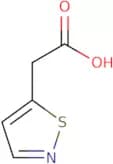
CAS:<p>Versatile small molecule scaffold</p>Formula:C10H12OSPurity:Min. 95%Molecular weight:180.27 g/mol2-(1,2-Thiazol-5-yl)acetic acid
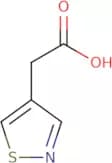
CAS:<p>Versatile small molecule scaffold</p>Formula:C5H5NO2SPurity:Min. 95%Molecular weight:143.17 g/mol2-(1,2-Thiazol-4-yl)acetic acid
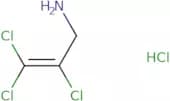
CAS:<p>Versatile small molecule scaffold</p>Formula:C5H5NO2SPurity:Min. 95%Molecular weight:143.17 g/mol2,3,3-Trichloroprop-2-en-1-amine hydrochloride
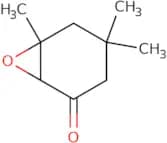
CAS:<p>Versatile small molecule scaffold</p>Formula:C3H5Cl4NPurity:Min. 95%Molecular weight:196.9 g/molIsophorone Oxide
CAS:<p>Isophorone Oxide is a molecule that contains a carbonyl group. It is unreactive and does not form hydrogen bonds or react with hydroxy groups. Isophorone oxide has two reactive groups, the hydroxyl group and amido group, which are responsible for its chemical properties. The electron reduction of the carbonyl group can be achieved by using deionized water as a reducing agent. In solution form, Isophorone Oxide is colorless to light yellow liquid with a molecular weight of 144.16 g/mol.</p>Formula:C9H14O2Purity:Min. 95%Molecular weight:154.21 g/mol2-Oxo-2-{4,7,7-trimethyl-3-oxobicyclo[2.2.1]heptan-2-yl}acetic acid
CAS:<p>Versatile small molecule scaffold</p>Formula:C12H16O4Purity:Min. 95%Molecular weight:224.25 g/mol({1,7,7-Trimethylbicyclo[2.2.1]heptan-2-ylidene}amino)urea
CAS:<p>Versatile small molecule scaffold</p>Formula:C11H19N3OPurity:Min. 95%Molecular weight:209.29 g/mol

![2-Chloro-N-[3-(propan-2-yloxy)propyl]acetamide](/_next/image/?url=https%3A%2Fstatic.cymitquimica.com%2Fproducts%2F3D%2Fthumb-webp%2FKAA26367.webp&w=3840&q=75)
![rac-(4aR,7aR)-Octahydro-1H-cyclopenta[C]pyridine](/_next/image/?url=https%3A%2Fstatic.cymitquimica.com%2Fproducts%2F3D%2Fthumb-webp%2FKAA26802.webp&w=3840&q=75)
![2-Oxo-2-{4,7,7-trimethyl-3-oxobicyclo[2.2.1]heptan-2-yl}acetic acid](/_next/image/?url=https%3A%2Fstatic.cymitquimica.com%2Fproducts%2F3D%2Fthumb-webp%2FKAA27734.webp&w=3840&q=75)
![({1,7,7-Trimethylbicyclo[2.2.1]heptan-2-ylidene}amino)urea](/_next/image/?url=https%3A%2Fstatic.cymitquimica.com%2Fproducts%2F3D%2Fthumb-webp%2FKAA28141.webp&w=3840&q=75)