Building Blocks
This section contains fundamental products for the synthesis of organic and biological compounds. Building blocks are the essential starting materials used to construct complex molecules through various chemical reactions. They play a critical role in drug discovery, material science, and chemical research. At CymitQuimica, we offer a diverse range of high-quality building blocks to support your innovative research and industrial projects, ensuring you have the essential components for successful synthesis.
Subcategories of "Building Blocks"
- Boronic Acids & Boronic Acid Derivatives(5,756 products)
- Chiral Building Blocks(1,242 products)
- Hydrocarbon Building Blocks(6,095 products)
- Organic Building Blocks(61,055 products)
Found 199650 products of "Building Blocks"
Sort by
Purity (%)
0
100
|
0
|
50
|
90
|
95
|
100
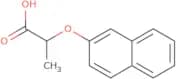
(2S)-2-(Naphthalen-2-yloxy)propanoic acid
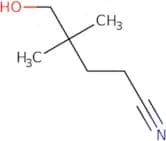
CAS:<p>Versatile small molecule scaffold</p>Formula:C13H12O3Purity:Min. 95%Molecular weight:216.23 g/mol5-Hydroxy-4,4-dimethylpentanenitrile
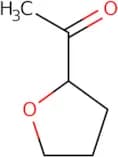
CAS:<p>Versatile small molecule scaffold</p>Formula:C7H13NOPurity:Min. 95%Molecular weight:127.18 g/mol1-(Oxolan-2-yl)ethan-1-one
CAS:<p>Versatile small molecule scaffold</p>Formula:C6H10O2Purity:Min. 95%Molecular weight:114.14 g/mol1-Methyl-3-phenyl-1H-thieno[2,3-c]pyrazole-5-carboxylic acid
CAS:<p>Versatile small molecule scaffold</p>Formula:C13H10N2O2SPurity:Min. 95%Molecular weight:258.3 g/mol1-Iodo-2,3-dimethoxybenzene
CAS:<p>1-Iodo-2,3-dimethoxybenzene is a complex of palladium with two molecules of diiodomethane. It has been shown to inhibit the activity of tyrosinase and to be toxic to tumor cells in culture. 1-Iodo-2,3-dimethoxybenzene is also an environmental pollutant and has been shown to react with aromatic hydrocarbons in the environment and form carcinogenic compounds.</p>Formula:C8H9IO2Purity:Min. 95%Molecular weight:264.06 g/mol2-(10H-Phenothiazin-10-yl)acetic acid
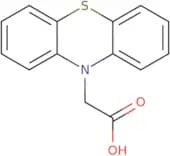
CAS:<p>The 2-(10H-phenothiazine-10-yl)acetic acid (2PTA) is a protonated molecule that has been studied computationally and experimentally in order to understand its supramolecular properties. It was found that 2PTA can be protonated at the C2 position by simulated light, leading to a change in properties. This molecule may have applications as a photoactive material for supramolecular assembly, as well as as a photochromic agent for DNA sequences. The compound also has the ability to bind nucleobases and flavin, which are used in DNA synthesis and repair.</p>Formula:C14H11NO2SPurity:Min. 95%Molecular weight:257.31 g/mol2-[(2-Aminoethyl)amino]acetic acid dihydrochloride
CAS:<p>Tetracarboxylic acid dianhydride is a tetradentate ligand that can form complexes with metals. It has been shown to have magnetic properties and can be used as a kinetic reagent in the study of chemical reactions that involve electron transfer. Tetracarboxylic acid dianhydride can also be used for chromatographic analysis of unsymmetrical compounds and isomers. This compound exists in two geometric isomers, namely the cis- and trans-isomers. The trans-isomer has been shown to be more stable than the cis-isomer due to its higher energy content. The functional theory predicts that this difference in stability results from steric hindrance between hydrogen atoms on adjacent carbons.<br>2-[(2-Aminoethyl)amino]acetic acid dihydrochloride has been shown to have a constant carboxylate group and deuterated analogues that are useful for kinetic studies of electron transfer</p>Formula:C4H12Cl2N2O2Purity:Min. 95%Molecular weight:191.05 g/mol2-Ethyloctanoic acid
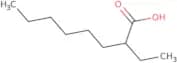
CAS:<p>2-Ethyloctanoic acid is an industrial chemical used in the process of making polymers. It is a low temperature, processable chemical that has been shown to form nanoparticles at room temperature. 2-Ethyloctanoic acid can be used as a raw material for the production of polymeric materials and coatings with optical, metallic, and transition properties. This compound has been shown to have a high transmittance (80%) and low exothermic values (less than 0.5 J/g).</p>Formula:C10H20O2Purity:Min. 95%Molecular weight:172.26 g/molN-(3-Methylphenyl)-3-oxobutanamide
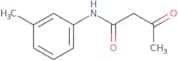
CAS:<p>Versatile small molecule scaffold</p>Formula:C11H13NO2Purity:Min. 95%Molecular weight:191.23 g/molmethyl 2-formylpyridine-3-carboxylate
CAS:<p>Versatile small molecule scaffold</p>Formula:C8H7NO3Purity:Min. 95%Molecular weight:165.1 g/mol2-[(1E)-1,2,3,4-Tetrahydronaphthalen-1-ylidene]acetic acid
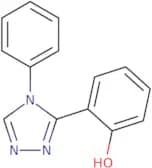
CAS:<p>Versatile small molecule scaffold</p>Formula:C12H12O2Purity:Min. 95%Molecular weight:188.2 g/mol2-(4-Phenyl-4H-1,2,4-triazol-3-yl)phenol
CAS:<p>Versatile small molecule scaffold</p>Formula:C14H11N3OPurity:Min. 95%Molecular weight:237.26 g/molTricyclo[3.3.1.1~3,7~]dec-2-ylideneacetic acid
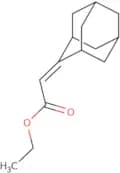
CAS:<p>Versatile small molecule scaffold</p>Formula:C12H16O2Purity:Min. 95%Molecular weight:192.25 g/molEthyl 2-(adamantan-2-ylidene)acetate
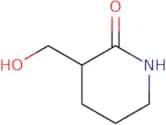
CAS:<p>Ethyl 2-(adamantan-2-ylidene)acetate is a reactive molecule that can undergo 1,3-dipolar cycloaddition with spiropyrans and benzonitrile. The experimentally observed regioselectivities of the reaction are benzopyran > spiropyran > benzonitrile. The colour changes from colourless to red in the presence of light. The reactivity of this molecule is increased at higher temperatures. Ethyl 2-(adamantan-2-ylidene)acetate is an isomeric molecule and can be converted into spiropyrans and benzonitrile by thermolysis or photochromic reactions.</p>Formula:C14H20O2Purity:Min. 95%Molecular weight:220.31 g/mol3-(Hydroxymethyl)piperidin-2-one
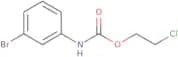
CAS:<p>Versatile small molecule scaffold</p>Formula:C6H11NO2Purity:Min. 95%Molecular weight:129.16 g/mol2-Chloroethyl N-(3-bromophenyl)carbamate
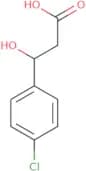
CAS:<p>Versatile small molecule scaffold</p>Formula:C9H9BrClNO2Purity:Min. 95%Molecular weight:278.53 g/mol3-(4-Chlorophenyl)-3-hydroxypropanoic acid
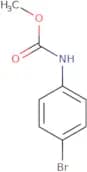
CAS:<p>Versatile small molecule scaffold</p>Formula:C9H9ClO3Purity:Min. 95%Molecular weight:200.62 g/molMethyl N-(4-bromophenyl)carbamate
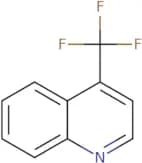
CAS:<p>Methyl N-(4-bromophenyl)carbamate is a chemical compound with the molecular formula CHBrNOC. It has an orthorhombic crystal structure and is soluble in organic solvents such as acetone, ethanol, and diethyl ether.</p>Formula:C8H8BrNO2Purity:Min. 95%Molecular weight:230.06 g/mol4-(Trifluoromethyl)quinoline
CAS:<p>4-(Trifluoromethyl)quinoline (4-TFMQ) is an aniline derivative that can be used in the preparation of heroin. 4-TFMQ is a photophysics reactive compound and has been shown to react with nucleophiles, such as amines, thiols, and alcohols. 4-TFMQ has been shown to react with acidic compounds such as water and alcohols. The fluorescence of 4-TFMQ is sensitive to changes in pH. It also reacts with quinoline derivatives and fluorescent quinolinecarboxylic acid esters. Cross-coupling reactions are used to attach the 4-TFMQ molecule to other organic molecules. These reactions are often performed using palladium catalysis and copper salts.</p>Formula:C10H6F3NPurity:Min. 95%Molecular weight:197.16 g/mol2-(Methanesulfonylmethyl)aniline
CAS:<p>Versatile small molecule scaffold</p>Formula:C8H11NO2SPurity:Min. 95%Molecular weight:185.25 g/mol

![1-Methyl-3-phenyl-1H-thieno[2,3-c]pyrazole-5-carboxylic acid](/_next/image/?url=https%3A%2Fstatic.cymitquimica.com%2Fproducts%2F3D%2Fthumb-webp%2FABA25247.webp&w=3840&q=75)

![2-[(2-Aminoethyl)amino]acetic acid dihydrochloride](/_next/image/?url=https%3A%2Fstatic.cymitquimica.com%2Fproducts%2F3D%2Fthumb-webp%2FABA24038.webp&w=3840&q=75)

![2-[(1E)-1,2,3,4-Tetrahydronaphthalen-1-ylidene]acetic acid](/_next/image/?url=https%3A%2Fstatic.cymitquimica.com%2Fproducts%2F3D%2Fthumb-webp%2FABA22737.webp&w=3840&q=75)
![Tricyclo[3.3.1.1~3,7~]dec-2-ylideneacetic acid](/_next/image/?url=https%3A%2Fstatic.cymitquimica.com%2Fproducts%2F3D%2Fthumb-webp%2FABA22007.webp&w=3840&q=75)