


Building Blocks
Subcategories of "Building Blocks"
- Boronic Acids & Boronic Acid Derivatives(5,780 products)
- Chiral Building Blocks(1,239 products)
- Hydrocarbon Building Blocks(6,100 products)
- Organic Building Blocks(61,005 products)
Found 205234 products of "Building Blocks"
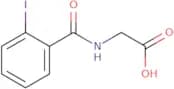
2-Iodohippuric acid
CAS:2-Iodohippuric acid (2HPA) is a diagnostic agent that is used to measure the renal function of patients with chronic kidney disease. It is a radionuclide that is taken up by the renal tubules and excreted in the urine. 2HPA has been shown to be effective in diagnosing acute renal injury and chronic kidney disease, as well as estimating the glomerular filtration rate (GFR). This drug binds to metals such as cadmium, mercury, lead, and nickel and can be used for the treatment of metal poisoning. 2HPA has been shown to have a pharmacokinetic profile that includes a rapid uptake phase followed by an elimination phase with a half-life of approximately 9 hours.
Formula:IC6H4CONHCH2CO2HPurity:Min. 95%Molecular weight:305.07 g/molButyl benzoate
CAS:Butyl benzoate is a glycol ester that is used as a chemical solvent and as a catalyst for chemical reactions. It has been shown to be an effective catalyst for the synthesis of polymers, such as polybutylene terephthalate (PBT), from the monomers butanediol and terephthalic acid. Butyl benzoate also has been used in the production of fatty acids and pharmaceuticals, such as warfarin. The activation energy for butyl benzoate is 10.5 kJ/mol, which is higher than the activation energy for water at 10.2 kJ/mol.
Formula:C11H14O2Purity:Min. 95%Molecular weight:178.23 g/mol1,2-Diethylbenzene
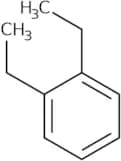
CAS:1,2-Diethylbenzene is a trifluoroacetic acid derivative that is used as an acylation agent and a solid catalyst. 1,2-Diethylbenzene has been shown to increase the energy metabolism in cultured human cells. It also influences fatty acid synthesis and nmr spectra of plant families. 1,2-Diethylbenzene was found to be safe for use in sciatic nerve regeneration in Sprague-Dawley rats with axonopathy. This chemical can also be used as an analytical reagent for the separation of urine samples by liquid chromatography methods.
Formula:C10H14Purity:Min. 95%Molecular weight:134.22 g/molDiallylamine
CAS:Diallylamine is a colorless, volatile liquid that is miscible with water and most organic solvents. It is chemically stable and has a constant boiling point. Diallylamine has the ability to bind nitrogen atoms from the air and transfer them to other substances. It can also react with trifluoroacetic acid in the presence of water vapor to produce polymers and particles. This reaction mechanism is determined by structural analysis, which shows that diallylamine has an ester hydrochloride linkage between two fatty acids with hydroxyl groups on each end.
Formula:C8H17NPurity:Min. 95%Molecular weight:127.23 g/mol±-Amylcinnamaldehyde
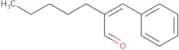
CAS:±-Amylcinnamaldehyde is a hydrocarbon that has been used as a fragrance and flavoring agent. The compound is found naturally in plants such as cinnamon, nutmeg, and cumin. It can be synthesized from acetone and benzaldehyde by the reaction of trifluoroacetic acid. ±-Amylcinnamaldehyde has been shown to stimulate growth factor production and to inhibit the growth of bacteria. This compound has also been shown to possess detergent compositions for use in detergent compositions, including hypochlorite-based detergents. The chemical structure of ±-Amylcinnamaldehyde is shown below: CH3COCH=CH2 ±-AMYLCINNAMALDEHYDE Molecular Weight: 180.25 Boiling Point: n/a Melting Point: n/a Density: 1.00 g/mL at 25°C
Formula:C14H18OPurity:90%MinMolecular weight:202.3 g/molN,N,3-Trimethylaniline
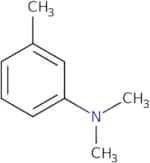
CAS:N,N,3-Trimethylaniline is a precursor for the production of 3-isopropylaniline. The compound is an isomer of trimethylamine. N,N,3-trimethylaniline undergoes cationic polymerization with acrylonitrile to produce a polyacrylonitrile. It also reacts with cellulose acetate to form cellulose nitrate. This compound has been shown to be useful in the synthesis of anthracene and peroxide. It can be used as a reagent for the demethylation of phenols and quinones.
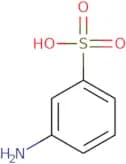
Formula:C9H13NPurity:Min. 95%Molecular weight:135.21 g/mol3-Aminobenzenesulfonic acid
CAS:3-Aminobenzenesulfonic acid (ABAS) is a chemical that belongs to the group of inhibitor molecules. It has been shown to be an efficient inhibitor of the enzyme carbonic anhydrase, which is essential for the conversion of CO2 to bicarbonate and protons. This inhibition causes a decrease in pH and increased thermal expansion, leading to increased permeability of water through cell walls. ABAS has also been shown to have antibacterial efficacy against bacteria such as Escherichia coli, Pseudomonas aeruginosa, and Staphylococcus aureus. Furthermore, it has been used in wastewater treatment due to its ability to break down organic matter into simpler compounds.
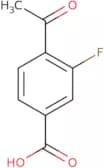
Formula:H2NC6H4SO3HPurity:Min. 95%Molecular weight:173.19 g/mol4-Acetyl-3-fluorobenzoic acid
CAS:Versatile small molecule scaffold
Formula:C9H7FO3Purity:Min. 95%Molecular weight:182.15 g/mol2-(1H-Pyrazol-1-ylmethyl)piperidine
CAS:Versatile small molecule scaffold
Formula:C9H15N3Purity:Min. 95%Molecular weight:165.24 g/molRef: 3D-ZZB39390
Discontinued product6-Bromo-8-chloroquinolin-4-amine
CAS:Versatile small molecule scaffold
Formula:C9H6BrClN2Purity:Min. 95%Molecular weight:257.51 g/molRef: 3D-ZZB38096
Discontinued product2-Ethylbutane-1-sulfonamide
CAS:Versatile small molecule scaffold
Formula:C6H15NO2SPurity:Min. 95%Molecular weight:165.26 g/molRef: 3D-ZZB34769
Discontinued productMethyl 2-chloro-2-(2,3-dichlorophenyl)acetate
CAS:Versatile small molecule scaffold
Formula:C9H7Cl3O2Purity:Min. 95%Molecular weight:253.5 g/mol2-(Pyridazin-3-yloxy)phenol
CAS:Versatile small molecule scaffold
Formula:C10H8N2O2Purity:Min. 95%Molecular weight:188.2 g/molRef: 3D-ZZB28564
Discontinued product4-(4-Bromopyrazol-1-yl)benzaldehyde
CAS:Versatile small molecule scaffold
Formula:C10H7BrN2OPurity:Min. 95%Molecular weight:251.08 g/mol4-oxo-2-spiro(N-Boc-piperidine-4-yl)-benzopyran
CAS:Versatile small molecule scaffold
Formula:C18H23NO4Purity:Min. 95%Molecular weight:317.39 g/molRef: 3D-ZIB92822
Discontinued product2-(4-Methylsulfonyl-phenyl)-ethylaminehydrochloride
CAS:Versatile small molecule scaffold
Formula:C9H14ClNO2SPurity:Min. 95%Molecular weight:235.73 g/molRef: 3D-ZIB02096
Discontinued productN-(tert-Butyl)benzohydrazide
CAS:Versatile small molecule scaffold
Formula:C11H16N2OPurity:Min. 95%Molecular weight:192.26 g/molRef: 3D-ZDA98148
Discontinued product2-(Chloromethyl)-2-methyloxolane
CAS:Versatile small molecule scaffold
Formula:C6H11ClOPurity:Min. 95%Molecular weight:134.6 g/molRef: 3D-ZDA83965
Discontinued product1,4-Diazepan-2-one
CAS:1,4-Diazepan-2-one is a versatile compound that has various applications in different fields. It is commonly used as a research chemical for scientific studies and experiments. This compound has been found to have potential antimicrobial properties, making it an attractive option for the development of new antibiotics. Additionally, 1,4-Diazepan-2-one has been studied for its ability to inhibit cholesterol synthesis and reduce the levels of fatty acids in the body. It has also shown promise as a fluorescent probe for detecting certain substances in biological samples. Overall, 1,4-Diazepan-2-one is a valuable compound with numerous potential uses in various scientific and medical fields.
Formula:C5H11ClN2OPurity:Min. 95%Molecular weight:150.61 g/molSpiro[2.5]octan-6-amine
CAS:Versatile small molecule scaffold
Formula:C8H15NPurity:Min. 95%Molecular weight:125.21 g/mol






![Spiro[2.5]octan-6-amine](/_next/image/?url=https%3A%2Fstatic.cymitquimica.com%2Fproducts%2F3D%2Fthumb-webp%2FZDA79973.webp&w=3840&q=75)