Building Blocks
Subcategories of "Building Blocks"
- Boronic Acids & Boronic Acid Derivatives(5,774 products)
- Chiral Building Blocks(1,237 products)
- Hydrocarbon Building Blocks(6,098 products)
- Organic Building Blocks(60,970 products)
Found 205134 products of "Building Blocks"
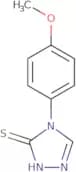
4-(4-Methoxyphenyl)-4H-1,2,4-triazole-3-thiol
CAS:Versatile small molecule scaffoldFormula:C9H9N3OSPurity:Min. 95%Molecular weight:207.25 g/mol3-Phenyl-2-sulfanylidene-1H,2H,3H,4H-pyrido[2,3-d]pyrimidin-4-one
CAS:Versatile small molecule scaffoldFormula:C13H9N3OSPurity:Min. 95%Molecular weight:255.3 g/mol2-Phenyl-2,3-dihydropyridazin-3-one
CAS:2-Phenyl-2,3-dihydropyridazin-3-one is a natural product that has been found in the human liver. It is also an organic solvent that is used in pest control to kill insects and spiders. 2-Phenyl-2,3-dihydropyridazin-3-one is a model system for studying cancer, as it has been shown to induce tumor formation in animals. It is also active against cervical cancer cells at low concentrations and induces apoptosis at high concentrations. This compound can be used as a potential therapeutic agent for the treatment of cancer in humans.
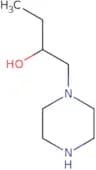
Formula:C10H8N2OPurity:Min. 95%Molecular weight:172.18 g/mol1-(Piperazin-1-yl)butan-2-ol
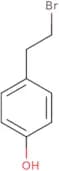
CAS:Versatile small molecule scaffoldFormula:C8H18N2OPurity:Min. 95%Molecular weight:158.24 g/mol4-(2-Bromoethyl)phenol
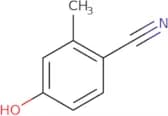
CAS:4-(2-Bromoethyl)phenol is a synthetic substance that has been shown to have antinociceptive properties. It is an organic compound that is used in the synthesis of other substances. 4-(2-Bromoethyl)phenol has been shown to inhibit the growth of cancer cells, and it inhibits the production of microalgal lipids and proteins. This substance also has inhibitory properties against copper chromite (CuCrO4) oxidation and can be used as a biodegradable additive for oil paints or lacquers. 4-(2-Bromoethyl)phenol can also be used as an active substance in therapeutic drugs for the treatment of pain or cancer.Formula:C8H9BrOPurity:Min. 95%Molecular weight:201.06 g/mol4-hydroxy-2-methylbenzonitrile
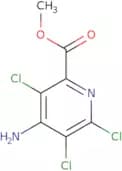
CAS:Versatile small molecule scaffoldFormula:C7H7N3Purity:Min. 95%Molecular weight:133.15 g/molMethyl 4-amino-3,5,6-trichloropicolinate
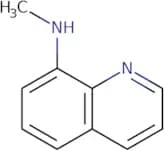
CAS:Methyl 4-amino-3,5,6-trichloropicolinate (MTAP) is a synthetic compound that inhibits fatty acid transport. It was found to have potent antiviral activity against HIV and it has been used as a topical treatment for herpes. MTAP inhibits the biosynthesis of fatty acids by inhibiting the enzyme phospholipase A2. This inhibition prevents the hydrolysis of phospholipids into free fatty acids and glycerides. MTAP also has been shown to be a potent inhibitor of human leukemia cells in culture and is under investigation for its potential use in cancer treatment.Formula:C7H5Cl3N2O2Purity:Min. 95%Molecular weight:255.49 g/molN-Methylquinolin-8-amine
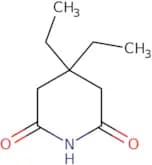
CAS:N-Methylquinolin-8-amine (NMQ) is a cytosolic calcium ionophore, which is a drug target for the treatment of HIV infections. NMQ binds to the cytosolic calcium channels and potently inhibits the release of this ion from the cells. It also has stereoselective binding to phenyl groups and terminal alkynes. This drug has been shown to have anti-cancer properties in vitro and in vivo, as well as chemokine inhibition. The synthesis of NMQ was achieved by reacting aniline with chloroacetaldehyde followed by quinolinoyl chloride and then methylation with methyl iodide.Formula:C10H10N2Purity:Min. 95%Molecular weight:158.2 g/mol4,4-Diethylpiperidine-2,6-dione
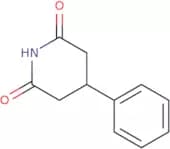
CAS:Versatile small molecule scaffoldFormula:C9H15NO2Purity:Min. 95%Molecular weight:169.22 g/mol4-Phenylpiperidine-2,6-dione
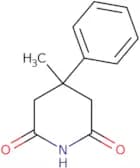
CAS:4-Phenylpiperidine-2,6-dione is a pharmacological agent that binds to the lipoprotein receptor, which is found on the surface of cells. It has been shown to reduce serum lipid levels in animals by decreasing the synthesis of cholesterol and triglycerides. 4-Phenylpiperidine-2,6-dione has also been shown to inhibit the activity of chylomicrons and very low density lipoproteins (VLDL) by reducing their production or increasing their catabolism. The affinity of 4-phenylpiperidine-2,6-dione for chylomicrons and VLDLs can be measured using assay methods such as ELISA or Western blot analysis.Formula:C11H11NO2Purity:Min. 95%Molecular weight:189.21 g/mol4-Methyl-4-phenylpiperidine-2,6-dione
CAS:Versatile small molecule scaffold
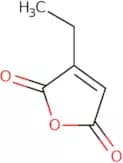
Formula:C12H13NO2Purity:Min. 95%Molecular weight:203.24 g/mol3-Ethyl-2,5-dihydrofuran-2,5-dione
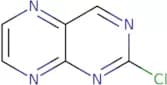
CAS:3-Ethyl-2,5-dihydrofuran-2,5-dione is a phenylsiloxane that has been synthesized by the reaction of 2,5-diiodohexene with ethyl 2,3-epoxypropanoate. It is soluble in organic solvents and has been used as an antibacterial agent. 3-Ethyl-2,5-dihydrofuran-2,5-dione is also used as a coating material with excellent barrier properties and good resistance to water. This compound can be modified to produce reactive silanes or silicon polymers.Formula:C6H6O3Purity:Min. 95%Molecular weight:126.11 g/mol2-Chloropteridine
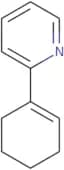
CAS:2-Chloropteridine is a surfactant that has been shown to have antibacterial, antifungal, and antiviral activities. This compound is a triethyl orthoformate derivative of 2-chloro-1,3-dimethylhydrazine. It has been shown to have antimicrobial activity against gram positive bacteria such as methicillin resistant Staphylococcus aureus (MRSA) and Acinetobacter baumannii. 2-Chloropteridine also inhibits the production of TNF-α in macrophages by suppressing the transcription of NF-κB. This molecule can be used as a fluorescent probe for nucleic acid hybridization studies. It can also be used in an electroluminescent device or an ethyl orthoformate based light emitting diode (LED).Formula:C6H3ClN4Purity:Min. 95%Molecular weight:166.57 g/mol2-(Cyclohex-1-en-1-yl)pyridine
CAS:2-(Cyclohex-1-en-1-yl)pyridine (CXEP) is a synthetic precursor in the synthesis of aminopyridines. CXEP has been used as a reagent for the synthesis of pyrimidine compounds, and it has been proposed as a possible antibacterial agent. This compound reacts with alcohols to form cyclohexene derivatives that have antibacterial properties. It can also be used as an acceptor in mechanistic studies or to connect two molecules together.
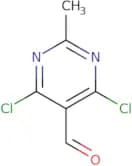
Formula:C11H13NPurity:Min. 95%Molecular weight:159.23 g/mol4,6-Dichloro-2-methylpyrimidine-5-carbaldehyde
CAS:Versatile small molecule scaffoldFormula:C6H4Cl2N2OPurity:Min. 95%Molecular weight:191.01 g/mol4-Chloro-6-(dimethylamino)pyrimidine-5-carbaldehyde
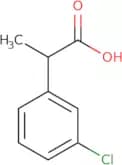
CAS:Versatile small molecule scaffoldFormula:C7H8ClN3OPurity:Min. 95%Molecular weight:185.61 g/mol2-(3-Chlorophenyl)propanoic acid
CAS:2-(3-Chlorophenyl)propanoic acid is a surfactant that is soluble in water. It has been shown to be an effective reactant in the liquid phase of a reaction system. The molecular structure of 2-(3-Chlorophenyl)propanoic acid has been determined by optical and nuclear magnetic resonance spectroscopy. Its chemical formula is C8H10ClO2, with a molecular weight of 228.19 g/mol. It can be hydrolyzed by lipases, which are enzymes that catalyze the hydrolysis of ester bonds in lipids and other organic compounds. The reaction was monitored by high-performance liquid chromatography (HPLC). 2-(3-Chlorophenyl)propanoic acid is used as an intermediate in the production of polymers, plastics, and pharmaceuticals.
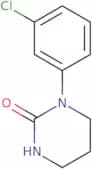
Formula:C9H9ClO2Purity:Min. 95%Molecular weight:184.62 g/mol1-(3-Chlorophenyl)tetrahydropyrimidin-2(1H)-one
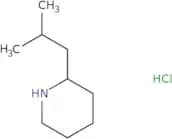
CAS:Versatile small molecule scaffoldFormula:C10H11ClN2OPurity:Min. 95%Molecular weight:210.66 g/mol2-(2-Methylpropyl)piperidine hydrochloride
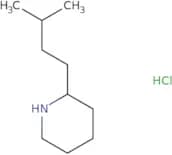
CAS:Versatile small molecule scaffoldFormula:C9H20ClNPurity:Min. 95%Molecular weight:177.71 g/mol2-(3-Methylbutyl)piperidine hydrochloride
CAS:Versatile small molecule scaffoldFormula:C10H22ClNPurity:Min. 95%Molecular weight:191.74 g/mol

![3-Phenyl-2-sulfanylidene-1H,2H,3H,4H-pyrido[2,3-d]pyrimidin-4-one](/_next/image/?url=https%3A%2Fstatic.cymitquimica.com%2Fproducts%2F3D%2Fthumb-webp%2FPAA13323.webp&w=3840&q=75)