


Building Blocks
Subcategories of "Building Blocks"
- Boronic Acids & Boronic Acid Derivatives(5,780 products)
- Chiral Building Blocks(1,239 products)
- Hydrocarbon Building Blocks(6,100 products)
- Organic Building Blocks(61,005 products)
Found 205234 products of "Building Blocks"
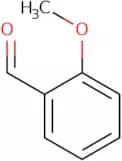
2-Methoxybenzaldehyde-d3
CAS:Versatile small molecule scaffold
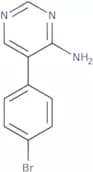
Formula:C8H8O2Purity:Min. 95%Molecular weight:139.17 g/mol5-(4-Bromophenyl)pyrimidin-4-amine
CAS:Versatile small molecule scaffold
Formula:C10H8BrN3Purity:Min. 95%Molecular weight:250.09 g/molRef: 3D-GCA23914
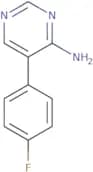
Discontinued product5-(4-Fluorophenyl)pyrimidin-4-amine
CAS:Versatile small molecule scaffold
Formula:C10H8FN3Purity:Min. 95%Molecular weight:189.19 g/molRef: 3D-GCA23905
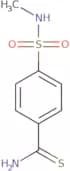
Discontinued product4-(Methylsulfamoyl)benzene-1-carbothioamide
CAS:Versatile small molecule scaffold
Formula:C8H10N2O2S2Purity:Min. 95%Molecular weight:230.3 g/molRef: 3D-GCA23681
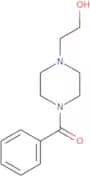
Discontinued product2-(4-Benzoyl-1-piperazinyl)ethanol
CAS:Versatile small molecule scaffold
Formula:C13H18N2O2Purity:Min. 95%Molecular weight:234.3 g/molRef: 3D-GCA22756
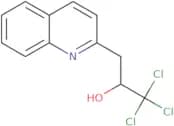
Discontinued product1,1,1-Trichloro-3-(quinolin-2-yl)propan-2-ol
CAS:Versatile small molecule scaffoldFormula:C12H10Cl3NOPurity:Min. 95%Molecular weight:290.6 g/molRef: 3D-GCA21174
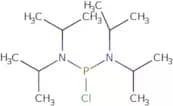
Discontinued productBis(diisopropylamino)chlorophosphine
CAS:Bis(diisopropylamino)chlorophosphine is a phosphorylating agent that binds to the polymerase active site of the hepatitis C virus (HCV) NS5B protein. It is a promising anti-HCV drug candidate for the treatment of chronic hepatitis C infections. Bis(diisopropylamino)chlorophosphine has been shown to be effective in inhibiting HCV replication in vitro and in vivo, with no significant toxicity. Bis(diisopropylamino)chlorophosphine has also been shown to be an excellent probe for detecting HCV RNA in clinical samples by fluorescence microscopy. This compound has been successfully used in a phase I clinical trial and is currently undergoing phase II clinical development.
Formula:C12H28ClN2PPurity:Min. 95%Molecular weight:266.79 g/molRef: 3D-GCA18363
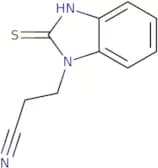
Discontinued product3-(2-Sulfanyl-1H-1,3-benzodiazol-1-yl)propanenitrile
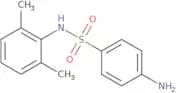
CAS:Versatile small molecule scaffoldFormula:C10H9N3SPurity:Min. 95%Molecular weight:203.27 g/mol4-Amino-N-(2,6-dimethylphenyl)benzenesulfonamide
CAS:Versatile small molecule scaffold
Formula:C14H16N2O2SPurity:Min. 95%Molecular weight:276.36 g/mol6-Methyl-2-picolylmethylamine
CAS:6-Methyl-2-picolylmethylamine is a dimeric compound that contains two picolyl methyl groups per molecule. It can be prepared by the reaction of picolinic acid with an appropriate amine, such as methylamine. 6-Methyl-2-picolylmethylamine reacts with dioxane to form a yellow solid, which is a potentiometric indicator. The potentiometric titration of 6-methyl-2-picolylmethylamine has shown that it has a pK value of 7.3 and a color change at pH 7.8.
Formula:C8H12N2Purity:Min. 95%Molecular weight:136.19 g/molRef: 3D-GAA97157
Discontinued product1,2,4-Triazolo[4,3-a]pyridin-3(2H)-one
CAS:1,2,4-Triazolo[4,3-a]pyridin-3(2H)-one is a potent inhibitor of the enzyme c-glycosylase. This compound has been used in pharmaceutical preparations and as a feedstock in organic syntheses. It is used to produce the anti-inflammatory drug piroxicam, which inhibits the action of cyclooxygenase and blocks the synthesis of prostaglandins. 1,2,4-Triazolo[4,3-a]pyridin-3(2H)-one also has been shown to inhibit crystallization of the bovine liver enzyme phosphatidylcholine:cholesterol acyltransferase (PCAT). The inhibition was found to be competitive with respect to PCAT substrate and was not due to inhibition of PCAT by 1,2,4-triazolo[4,3-a]pyridin-3(
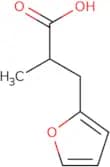
Formula:C6H5N3OPurity:Min. 95%Molecular weight:135.13 g/mol3-(Furan-2-yl)-2-methylpropanoic acid
CAS:Versatile small molecule scaffold
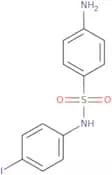
Formula:C8H10O3Purity:Min. 95%Molecular weight:154.16 g/mol4-Amino-N-(4-iodophenyl)benzene-1-sulfonamide
CAS:Versatile small molecule scaffold
Formula:C12H11IN2O2SPurity:Min. 95%Molecular weight:374.2 g/molRef: 3D-GAA96575
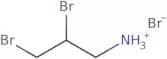
Discontinued product2,3-Dibromo-propylamine, hydrobromide
CAS:2,3-Dibromo-propylamine, hydrobromide is an organolithium compound that is postulated to exist. It has been synthesized in the laboratory but its structure and properties have not yet been fully characterized. In addition to allylamine and azetidine, it has also been shown to react with benzoyl peroxide to form a peroxide. The magnesium ion coordinates the bromine atom of 2,3-dibromo-propylamine, hydrobromide. This mechanism is similar to that of other organolithium compounds.
Formula:C3H8Br3NPurity:Min. 95%Molecular weight:297.81 g/molRef: 3D-GAA96332
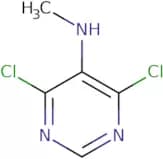
Discontinued product4,6-dichloro-N-methylpyrimidin-5-amine
CAS:Versatile small molecule scaffoldFormula:C5H5Cl2N3Purity:Min. 95%Molecular weight:178 g/mol2-(4-Bromo-2-methylphenoxy)acetic acid
CAS:2-(4-Bromo-2-methylphenoxy)acetic acid is a sulfonated phenolic compound that is synthesized by the sulfurylation of 2-methylphenoxyacetic acid with sulfuryl chloride. It has been used as a chemical intermediate in the synthesis of various drugs, such as triethanolamine. 2-(4-Bromo-2-methylphenoxy)acetic acid can also be used to produce fluorinated compounds, such as pentafluoropropionic and hexafluoroacetic acids. The chlorination reaction is an efficient method for the production of this compound.
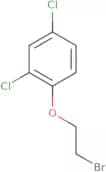
Formula:C9H9BrO3Purity:Min. 95%Molecular weight:245.08 g/mol1-(2-Bromoethoxy)-2,4-dichlorobenzene
CAS:Versatile small molecule scaffold
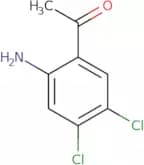
Formula:C8H7BrCl2OPurity:Min. 95%Molecular weight:269.96 g/mol1-(2-Amino-4,5-dichlorophenyl)ethanone
CAS:Versatile small molecule scaffold
Formula:C8H7Cl2NOPurity:Min. 95%Molecular weight:204.05 g/mol3-[(Pyridin-2-ylmethyl)amino]propan-1-ol
CAS:3-[(Pyridin-2-ylmethyl)amino]propan-1-ol is an industrial chemical that is used in the production of peroxy compounds. It is a byproduct of hydrogenation and aluminium production processes, and can be produced using transition metal ions such as copper or nickel. 3-[(Pyridin-2-ylmethyl)amino]propan-1-ol has a low molecular weight, which allows it to be used in a variety of applications. This compound has been shown to interact with adsorption equilibrium and kinetic techniques, as well as being suitable for sustainable development.
Formula:C9H14N2OPurity:Min. 95%Molecular weight:166.22 g/molRef: 3D-GAA95099
Discontinued product[2-(Methylsulfanyl)ethyl]urea
CAS:Versatile small molecule scaffold
Formula:C4H10N2OSPurity:Min. 95%Molecular weight:134.2 g/molRef: 3D-GAA95055
Discontinued product


![1,2,4-Triazolo[4,3-a]pyridin-3(2H)-one](/_next/image/?url=https%3A%2Fstatic.cymitquimica.com%2Fproducts%2F3D%2Fthumb-webp%2FGAA96971.webp&w=3840&q=75)
![3-[(Pyridin-2-ylmethyl)amino]propan-1-ol](/_next/image/?url=https%3A%2Fstatic.cymitquimica.com%2Fproducts%2F3D%2Fthumb-webp%2FGAA95099.webp&w=3840&q=75)
![[2-(Methylsulfanyl)ethyl]urea](/_next/image/?url=https%3A%2Fstatic.cymitquimica.com%2Fproducts%2F3D%2Fthumb-webp%2FGAA95055.webp&w=3840&q=75)