


Building Blocks
This section contains fundamental products for the synthesis of organic and biological compounds. Building blocks are the essential starting materials used to construct complex molecules through various chemical reactions. They play a critical role in drug discovery, material science, and chemical research. At CymitQuimica, we offer a diverse range of high-quality building blocks to support your innovative research and industrial projects, ensuring you have the essential components for successful synthesis.
Subcategories of "Building Blocks"
- Boronic Acids & Boronic Acid Derivatives(5,756 products)
- Chiral Building Blocks(1,242 products)
- Hydrocarbon Building Blocks(6,095 products)
- Organic Building Blocks(61,055 products)
Found 199650 products of "Building Blocks"
Sort by
Purity (%)
0
100
|
0
|
50
|
90
|
95
|
100
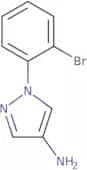
1-(2-Bromophenyl)-1H-pyrazol-4-amine
CAS:<p>Versatile small molecule scaffold</p>Formula:C9H8BrN3Purity:Min. 95%Molecular weight:238.08 g/molRef: 3D-DWB03945
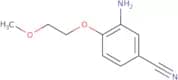
Discontinued product3-Amino-4-(2-methoxyethoxy)benzonitrile
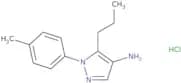
CAS:<p>Versatile small molecule scaffold</p>Formula:C10H12N2O2Purity:Min. 95%Molecular weight:192.21 g/mol1-(4-Methylphenyl)-5-propyl-1H-pyrazol-4-amine hydrochloride
CAS:<p>Versatile small molecule scaffold</p>Formula:C13H18ClN3Purity:Min. 95%Molecular weight:251.75 g/molRef: 3D-DXC60792
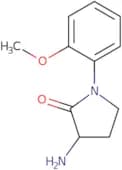
Discontinued product3-Amino-1-(2-methoxyphenyl)pyrrolidin-2-one
CAS:<p>Versatile small molecule scaffold</p>Formula:C11H14N2O2Purity:Min. 95%Molecular weight:206.24 g/molRef: 3D-XZB85912
Discontinued productPyrazolo[1,5-a]pyridin-4-ol
CAS:<p>Pyrazolo[1,5-a]pyridin-4-ol is a heteroaromatic compound that acts as an inhibitor of phosphodiesterase (PDE). It prevents the breakdown of cyclic nucleotides and thus leads to increased levels of cAMP and cGMP. Pyrazolo[1,5-a]pyridin-4-ol has been shown to have bronchodilatory activity in animal models. The drug also inhibits the production of inflammatory mediators such as prostaglandins by inhibiting cyclooxygenases. In addition, pyrazolo[1,5-a]pyridin-4-ol has been shown to be a potential PDE inhibitor replacement for the more commonly used PDE inhibitors such as sildenafil and tadalafil. However, due to its lack of stereochemistry and its bicyclic chemical structure, pyrazolo[1,5-a]</p>Formula:C7H6N2OPurity:Min. 95%Molecular weight:134.14 g/moltert-Butyl 6,6-dioxo-6λ6-thia-2,7-diazaspiro[3.4]octane-2-carboxylate
CAS:<p>Versatile small molecule scaffold</p>Formula:C10H18N2O4SPurity:Min. 95%Molecular weight:262.3 g/mol2-[2-(Furan-2-yl)-2-oxoethylidene]-3-methyl-1,3-thiazolidin-4-one
CAS:<p>Versatile small molecule scaffold</p>Formula:C10H9NO3SPurity:Min. 95%Molecular weight:223.25 g/molRef: 3D-AQB93221
Discontinued product(2-Bromo-5-chlorophenyl)methanesulfonyl chloride
CAS:<p>Versatile small molecule scaffold</p>Formula:C7H5BrCl2O2SPurity:Min. 95%Molecular weight:303.99 g/molRef: 3D-AKC85158
Discontinued product2-Bromo-3,3,3-trifluoro-1-propene
CAS:Controlled Product<p>2-Bromo-3,3,3-trifluoro-1-propene is a chemical compound that has been synthesized in an asymmetric reaction. The reactant is bromopropane and the product is 2,2,2-trifluoropropene. The methylene group on the propene molecule is activated by the nucleophilic attack of a fluoride ion from hydrogen fluoride to form a cavity with a highly strained bond. The kinetic study of this reaction revealed that the activation energy for the reaction is 42 kJ/mol. Palladium-catalyzed coupling reactions are catalyzed by palladium and require nonpolar solvents such as toluene or dichloromethane. This type of reaction has been shown to be exothermic with an isolated yield of 1%.</p>Formula:C3H2BrF3Purity:Min. 95%Color and Shape:Colorless PowderMolecular weight:174.95 g/mol3-Boc-3-azabicyclo[3.2.1]octan-8-amine
CAS:<p>Versatile small molecule scaffold</p>Formula:C12H22N2O2Purity:Min. 95%Molecular weight:226.32 g/mol

![Pyrazolo[1,5-a]pyridin-4-ol](/_next/image/?url=https%3A%2Fstatic.cymitquimica.com%2Fproducts%2F3D%2Fthumb-webp%2FRFA03272.webp&w=3840&q=75)
![tert-Butyl 6,6-dioxo-6λ6-thia-2,7-diazaspiro[3.4]octane-2-carboxylate](/_next/image/?url=https%3A%2Fstatic.cymitquimica.com%2Fproducts%2F3D%2Fthumb-webp%2FAVD27336.webp&w=3840&q=75)
![2-[2-(Furan-2-yl)-2-oxoethylidene]-3-methyl-1,3-thiazolidin-4-one](/_next/image/?url=https%3A%2Fstatic.cymitquimica.com%2Fproducts%2F3D%2Fthumb-webp%2FAQB93221.webp&w=3840&q=75)


![3-Boc-3-azabicyclo[3.2.1]octan-8-amine](/_next/image/?url=https%3A%2Fstatic.cymitquimica.com%2Fproducts%2F3D%2Fthumb-webp%2FFDC76351.webp&w=3840&q=75)