Building Blocks
This section contains fundamental products for the synthesis of organic and biological compounds. Building blocks are the essential starting materials used to construct complex molecules through various chemical reactions. They play a critical role in drug discovery, material science, and chemical research. At CymitQuimica, we offer a diverse range of high-quality building blocks to support your innovative research and industrial projects, ensuring you have the essential components for successful synthesis.
Subcategories of "Building Blocks"
- Boronic Acids & Boronic Acid Derivatives(5,756 products)
- Chiral Building Blocks(1,242 products)
- Hydrocarbon Building Blocks(6,095 products)
- Organic Building Blocks(61,051 products)
Found 199813 products of "Building Blocks"
Sort by
Purity (%)
0
100
|
0
|
50
|
90
|
95
|
100
[1-(1-Amino-2-methylpropyl)cyclopent-3-en-1-yl]methanol hydrochloride
CAS:<p>Versatile small molecule scaffold</p>Formula:C10H20ClNOPurity:Min. 95%Molecular weight:205.72 g/molRef: 3D-JBD31750
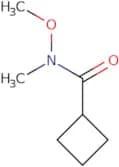
Discontinued productN-Methoxy-N-methyl-cyclobutanecarboxamide
CAS:<p>Versatile small molecule scaffold</p>Formula:C7H13NO2Purity:Min. 95%Molecular weight:143.18 g/mol1-[2-(4-Bromophenoxy)ethyl]-4-methylpiperazine dihydrochloride
CAS:<p>Versatile small molecule scaffold</p>Formula:C13H21BrCl2N2OPurity:Min. 95%Molecular weight:372.1 g/molRef: 3D-QDA23668
Discontinued product2,2,2-Trifluoro-1-(4-methyl-1H-indol-3-yl)ethan-1-one
CAS:Controlled Product<p>Versatile small molecule scaffold</p>Formula:C11H8F3NOPurity:Min. 95%Molecular weight:227.18 g/molRef: 3D-EDA87801
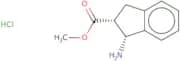
Discontinued productrac-Methyl (1R,2R)-1-amino-2,3-dihydro-1H-indene-2-carboxylate hydrochloride
CAS:<p>Versatile small molecule scaffold</p>Formula:C11H14ClNO2Purity:Min. 95%Molecular weight:227.7 g/molRef: 3D-FCA27000
Discontinued productEthyl 3-(2-aminoethyl)-1H-indole-2-carboxylate hydrochloride
CAS:<p>Versatile small molecule scaffold</p>Formula:C13H17ClN2O2Purity:Min. 95%Molecular weight:268.7 g/molRef: 3D-DCA59032
Discontinued product2-Chloro-N-[2-(3-chlorophenyl)ethyl]acetamide
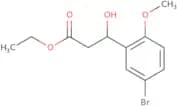
CAS:<p>Versatile small molecule scaffold</p>Formula:C10H11Cl2NOPurity:Min. 95%Molecular weight:232.1 g/molEthyl 3-(5-bromo-2-methoxyphenyl)-3-hydroxypropanoate
CAS:<p>Versatile small molecule scaffold</p>Formula:C12H15BrO4Purity:Min. 95%Molecular weight:303.15 g/molRef: 3D-QCC36863
Discontinued productMethyl 4-methyl-3-{[(4-methyl-1H-imidazol-5-yl)methyl]amino}benzoate
CAS:<p>Versatile small molecule scaffold</p>Formula:C14H17N3O2Purity:Min. 95%Molecular weight:259.3 g/molRef: 3D-QCC36887
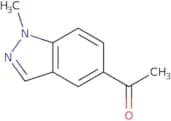
Discontinued product1-(1-Methyl-1H-indazol-5-yl)ethanone
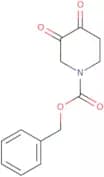
CAS:<p>Versatile small molecule scaffold</p>Formula:C10H10N2OPurity:Min. 95%Molecular weight:174.2 g/molBenzyl 3,4-dioxopiperidine-1-carboxylate
CAS:<p>Versatile small molecule scaffold</p>Formula:C13H13NO4Purity:Min. 95%Molecular weight:247.25 g/molRef: 3D-JHD94774
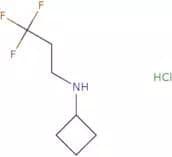
Discontinued productN-(3,3,3-Trifluoropropyl)cyclobutanamine hydrochloride
CAS:<p>Versatile small molecule scaffold</p>Formula:C7H13ClF3NPurity:Min. 95%Molecular weight:203.63 g/molRef: 3D-JFC42748
Discontinued productQuinoline-5-carbonitrile
CAS:<p>Quinoline-5-carbonitrile is a cyanide compound that can be used in the synthesis of heterocyclic compounds. The reaction between quinoline and 5-cyanovaleric acid produces 6-nitroquinoline, which is then converted to dimethyl sulfoxide by alcoholysis. This reaction product can then be used to synthesize an amide or nucleophile. Quinoline-5-carbonitrile reacts with potassium in the presence of bifunctional hydrazide to produce a cyanide ion, which can be hydrolyzed by an acid to release hydrogen cyanide gas. This experiment has been shown as a model for reactions involving cyano compounds.</p>Formula:C10H6N2Purity:Min. 95%Molecular weight:154.17 g/molRef: 3D-JCA55102
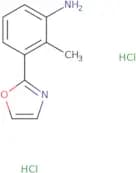
Discontinued product2-Methyl-3-(1,3-oxazol-2-yl)aniline dihydrochloride
CAS:<p>Versatile small molecule scaffold</p>Formula:C10H12Cl2N2OPurity:Min. 95%Molecular weight:247.12 g/molRef: 3D-JBD31004
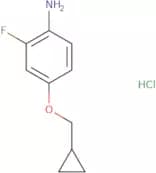
Discontinued product4-(Cyclopropylmethoxy)-2-fluoroaniline hydrochloride
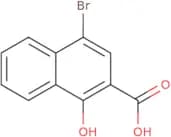
CAS:<p>Versatile small molecule scaffold</p>Formula:C10H13ClFNOPurity:Min. 95%Molecular weight:217.67 g/mol4-bromo-1-hydroxynaphthalene-2-carboxylic acid
CAS:<p>4-Bromo-1-hydroxynaphthalene-2-carboxylic acid (4BHN) is a spectroscopic compound that has been used as a radioligand to study the binding of dopamine and dopamine D3 receptors. This compound binds to the d3 receptor with high affinity and specificity, but it does not interact with the d1 or d2 receptors. 4BHN has been shown to act as an agonist at the dopamine D3 receptor. It also acts as an antagonist at the piperidine site of the dopamine D2 receptor. The effects of 4BHN are reversible, which means that it can be displaced by unlabeled 4BHN or other compounds that bind to the same site on the receptor. This technique is useful for studying drug interactions and for determining whether drugs have a subtype selectivity profile.</p>Formula:C11H7BrO3Purity:Min. 95%Molecular weight:267.1 g/mol2-Cyclopropylbenzaldehyde
CAS:<p>Versatile small molecule scaffold</p>Formula:C10H10OPurity:Min. 95%Molecular weight:146.19 g/molMethyl 2-[4-(2-aminoethyl)phenoxy]acetate hydrochloride
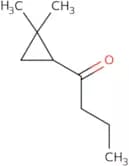
CAS:<p>Versatile small molecule scaffold</p>Formula:C11H16ClNO3Purity:Min. 95%Molecular weight:245.7 g/mol1-(2,2-Dimethylcyclopropyl)butan-1-one
CAS:<p>Versatile small molecule scaffold</p>Formula:C9H16OPurity:Min. 95%Molecular weight:140.22 g/molRef: 3D-VSC00273
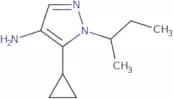
Discontinued product1-(Butan-2-yl)-5-cyclopropyl-1H-pyrazol-4-amine
CAS:<p>Versatile small molecule scaffold</p>Formula:C10H17N3Purity:Min. 95%Molecular weight:179.26 g/molRef: 3D-GQB45453
Discontinued product
![[1-(1-Amino-2-methylpropyl)cyclopent-3-en-1-yl]methanol hydrochloride](/_next/image/?url=https%3A%2Fstatic.cymitquimica.com%2Fproducts%2F3D%2Fthumb-webp%2FJBD31750.webp&w=3840&q=75)

![1-[2-(4-Bromophenoxy)ethyl]-4-methylpiperazine dihydrochloride](/_next/image/?url=https%3A%2Fstatic.cymitquimica.com%2Fproducts%2F3D%2Fthumb-webp%2FQDA23668.webp&w=3840&q=75)


![2-Chloro-N-[2-(3-chlorophenyl)ethyl]acetamide](/_next/image/?url=https%3A%2Fstatic.cymitquimica.com%2Fproducts%2F3D%2Fthumb-webp%2FJBA16215.webp&w=3840&q=75)
![Methyl 4-methyl-3-{[(4-methyl-1H-imidazol-5-yl)methyl]amino}benzoate](/_next/image/?url=https%3A%2Fstatic.cymitquimica.com%2Fproducts%2F3D%2Fthumb-webp%2FQCC36887.webp&w=3840&q=75)

![Methyl 2-[4-(2-aminoethyl)phenoxy]acetate hydrochloride](/_next/image/?url=https%3A%2Fstatic.cymitquimica.com%2Fproducts%2F3D%2Fthumb-webp%2FHFA22482.webp&w=3840&q=75)