


Building Blocks
This section contains fundamental products for the synthesis of organic and biological compounds. Building blocks are the essential starting materials used to construct complex molecules through various chemical reactions. They play a critical role in drug discovery, material science, and chemical research. At CymitQuimica, we offer a diverse range of high-quality building blocks to support your innovative research and industrial projects, ensuring you have the essential components for successful synthesis.
Subcategories of "Building Blocks"
- Boronic Acids & Boronic Acid Derivatives(5,756 products)
- Chiral Building Blocks(1,242 products)
- Hydrocarbon Building Blocks(6,093 products)
- Organic Building Blocks(60,525 products)
Found 195536 products of "Building Blocks"
Sort by
Purity (%)
0
100
|
0
|
50
|
90
|
95
|
100
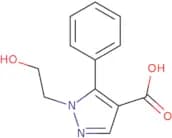
1-(2-Hydroxyethyl)-5-phenyl-1H-pyrazole-4-carboxylic acid
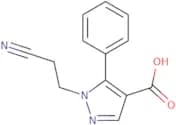
CAS:<p>Versatile small molecule scaffold</p>Formula:C12H12N2O3Purity:Min. 95%Molecular weight:232.23 g/mol1-(2-Cyanoethyl)-5-phenyl-1H-pyrazole-4-carboxylic acid
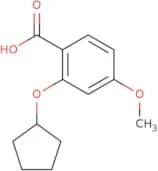
CAS:<p>Versatile small molecule scaffold</p>Formula:C13H11N3O2Purity:Min. 95%Molecular weight:241.24 g/mol2-(Cyclopentyloxy)-4-methoxybenzoic acid
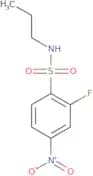
CAS:<p>Versatile small molecule scaffold</p>Formula:C13H16O4Purity:Min. 95%Molecular weight:236.26 g/mol2-Fluoro-4-nitro-N-propylbenzene-1-sulfonamide
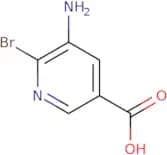
CAS:<p>Versatile small molecule scaffold</p>Formula:C9H11FN2O4SPurity:Min. 95%Molecular weight:262.26 g/mol5-Amino-6-bromopyridine-3-carboxylic acid
CAS:<p>Versatile small molecule scaffold</p>Formula:C6H5BrN2O2Purity:Min. 95%Molecular weight:217.02 g/mol1-{[(tert-Butoxy)carbonyl]amino}-2-methylcyclohexane-1-carboxylic acid
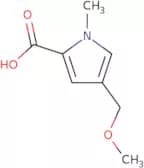
CAS:<p>Versatile small molecule scaffold</p>Formula:C13H23NO4Purity:Min. 95%Molecular weight:257.33 g/mol4-(Methoxymethyl)-1-methyl-1H-pyrrole-2-carboxylic acid
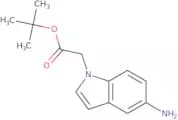
CAS:<p>Versatile small molecule scaffold</p>Formula:C8H11NO3Purity:Min. 95%Molecular weight:169.18 g/moltert-Butyl 2-(5-amino-1H-indol-1-yl)acetate
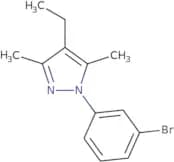
CAS:<p>Versatile small molecule scaffold</p>Formula:C14H18N2O2Purity:Min. 95%Molecular weight:246.3 g/mol1-(3-Bromophenyl)-4-ethyl-3,5-dimethyl-1H-pyrazole
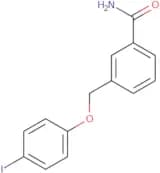
CAS:<p>Versatile small molecule scaffold</p>Formula:C13H15BrN2Purity:Min. 95%Molecular weight:279.18 g/mol3-(4-Iodophenoxymethyl)benzamide
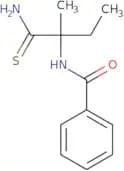
CAS:<p>Versatile small molecule scaffold</p>Formula:C14H12INO2Purity:Min. 95%Molecular weight:353.15 g/molN-(1-Carbamothioyl-1-methylpropyl)benzamide
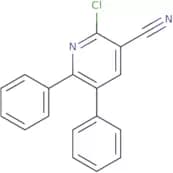
CAS:<p>Versatile small molecule scaffold</p>Formula:C12H16N2OSPurity:Min. 95%Molecular weight:236.34 g/mol2-Chloro-5,6-diphenylpyridine-3-carbonitrile
CAS:<p>Versatile small molecule scaffold</p>Formula:C18H11ClN2Purity:Min. 95%Molecular weight:290.7 g/mol(6-(2-(2-(2-Methoxyethoxy)ethoxy)ethoxy)pyridin-2-yl)methanol
CAS:<p>Versatile small molecule scaffold</p>Formula:C13H21NO5Purity:Min. 95%Molecular weight:271.31 g/mol2-[(4-Bromophenyl)methyl]-6-methoxyhexanoic acid
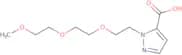
CAS:<p>Versatile small molecule scaffold</p>Formula:C14H19BrO3Purity:Min. 95%Molecular weight:315.2 g/mol1-(2-(2-(2-Methoxyethoxy)ethoxy)ethyl)-1H-pyrazole-5-carboxylic acid
CAS:<p>Versatile small molecule scaffold</p>Formula:C11H18N2O5Purity:Min. 95%Molecular weight:258.27 g/mol3-Ethyl-2-phenylimidazo[1,2-a]pyrazine
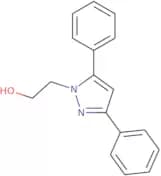
CAS:<p>Versatile small molecule scaffold</p>Formula:C14H13N3Purity:Min. 95%Molecular weight:223.27 g/mol2-(3,5-Diphenyl-1H-pyrazol-1-yl)ethan-1-ol
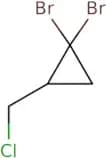
CAS:<p>2-(3,5-Diphenyl-1H-pyrazol-1-yl)ethan-1-ol is a synthetic ligand that binds to proton receptors. It has been shown to be hypoglycemic in rats and to have hypotensive effects in rabbits. This drug also has antiarrhythmic properties, which may be due to its ability to inhibit platelet aggregation. 2-(3,5-Diphenyl-1H-pyrazol-1-yl)ethan-1-ol can be used as an analytical method for the determination of chalcone and bond cleavage products in epoxide analysis.</p>Formula:C17H16N2OPurity:Min. 95%Molecular weight:264.32 g/mol1,1-Dibromo-2-(chloromethyl)cyclopropane
CAS:<p>Versatile small molecule scaffold</p>Formula:C4H5Br2ClPurity:Min. 95%Molecular weight:248.34 g/mol4-[(Methylsulfanyl)methyl]benzoic acid
CAS:<p>4-[(Methylsulfanyl)methyl]benzoic acid is a chiral compound with a sulfur atom. It can be prepared by the reaction between methylsulfonyl chloride and benzoyl chloride in chloroform or by the reaction of methoxysulfur trifluoride with benzoic acid. 4-[(Methylsulfanyl)methyl]benzoic acid can also be synthesized by the reaction of sulfone and carboxylic acid derivatives, such as benzyl or cyano. 4-[(Methylsulfanyl)methyl]benzoic acid is used as a fungicide, insecticide, and herbicide. The substituents on this molecule are able to form bonds with other molecules to create an array of different structures. The most common substitution is for methoxy, which has a hydroxy group attached to it. This substitution is found in many different types of molecules including some drugs, hormones, vitamins,</p>Formula:C9H10O2SPurity:Min. 95%Molecular weight:182.24 g/mol8-(4-Methoxyphenyl)-1,4-dioxaspiro[4.5]decan-8-ol
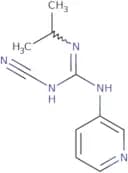
CAS:<p>Versatile small molecule scaffold</p>Formula:C15H20O4Purity:Min. 95%Molecular weight:264.32 g/molN''-Cyano-N'-(propan-2-yl)-N-(pyridin-3-yl)guanidine
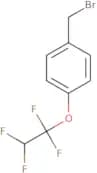
CAS:<p>N-Cyano-N'-(propan-2-yl)-N-(pyridin-3-yl)guanidine is an experimental drug that has been shown to have a therapeutic effect in children with autoimmune diseases. It inhibits the uptake of bacteria by monocytes and macrophages, thereby preventing them from entering the bloodstream. N-Cyano-N'-(propan-2-yl)-N-(pyridin-3-yl)guanidine also has antimicrobial activity against Gram negative and Gram positive bacteria. The drug has been tested in patients with urothelial carcinoma, adrenocortical carcinoma, and bacterial vaginosis.br><br>br><br>This medication is not approved for use in the United States.</p>Formula:C10H13N5Purity:Min. 95%Molecular weight:203.24 g/mol1-(Bromomethyl)-4-(1,1,2,2-tetrafluoroethoxy)benzene
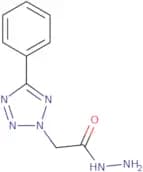
CAS:<p>Versatile small molecule scaffold</p>Formula:C9H7BrF4OPurity:Min. 95%Molecular weight:287.05 g/mol(5-Phenyl-tetrazol-2-yl)-acetic acid hydrazide
CAS:<p>Versatile small molecule scaffold</p>Formula:C9H10N6OPurity:Min. 95%Molecular weight:218.22 g/molEthyl 1H-pyrrolo[2,3-c]pyridine-3-carboxylate
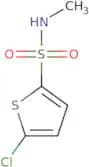
CAS:<p>Versatile small molecule scaffold</p>Formula:C10H10N2O2Purity:Min. 95%Molecular weight:190.2 g/mol5-Chloro-N-methylthiophene-2-sulfonamide
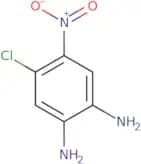
CAS:<p>Versatile small molecule scaffold</p>Formula:C5H6ClNO2S2Purity:Min. 95%Molecular weight:211.7 g/mol4-Chloro-5-nitrobenzene-1,2-diamine
CAS:<p>Versatile small molecule scaffold</p>Formula:C6H6ClN3O2Purity:Min. 95%Color and Shape:PowderMolecular weight:187.58 g/mol1-Methylpyrido[2,3-b]pyrazine-2,3(1H,4H)-dione
CAS:<p>Versatile small molecule scaffold</p>Formula:C8H7N3O2Purity:Min. 95%Molecular weight:177.16 g/mol1h,2h,3h,4h-Pyrido[2,3-b]pyrazin-2-one
CAS:<p>1h,2h,3h,4h-Pyrido[2,3-b]pyrazin-2-one is a synthetic compound that has been shown to selectively react with lactones. It is a regioisomeric compound that can be used to investigate the difference between 1 and 2 positions on the ring.</p>Formula:C7H7N3OPurity:Min. 95%Molecular weight:149.15 g/mol1H,2H,3H,4H-Pyrido[3,4-b]pyrazin-3-one
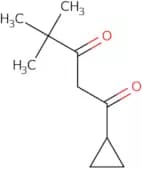
CAS:<p>Versatile small molecule scaffold</p>Formula:C7H7N3OPurity:Min. 95%Molecular weight:149.15 g/mol1-Cyclopropyl-4,4-dimethylpentane-1,3-dione
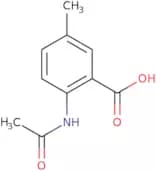
CAS:<p>Versatile small molecule scaffold</p>Formula:C10H16O2Purity:Min. 95%Molecular weight:168.23 g/mol2-Acetamido-5-methylbenzoic acid
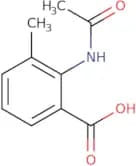
CAS:<p>Versatile small molecule scaffold</p>Formula:C10H11NO3Purity:Min. 95%Molecular weight:193.2 g/mol2-Acetamido-3-methylbenzoic acid
CAS:<p>Versatile small molecule scaffold</p>Formula:C10H11NO3Purity:Min. 95%Molecular weight:193.2 g/mol5-Bromoimidazo[2,1-b][1,3]thiazole
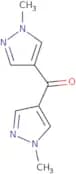
CAS:<p>Versatile small molecule scaffold</p>Formula:C5H3BrN2SPurity:Min. 95%Molecular weight:203.06 g/mol1-Methyl-4-(1-methyl-1H-pyrazole-4-carbonyl)-1H-pyrazole
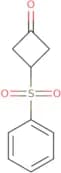
CAS:<p>Versatile small molecule scaffold</p>Formula:C9H10N4OPurity:Min. 95%Molecular weight:190.2 g/mol3-(Benzenesulfonyl)cyclobutan-1-one
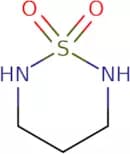
CAS:<p>Versatile small molecule scaffold</p>Formula:C10H10O3SPurity:Min. 95%Molecular weight:210.25 g/mol1,2,6-Thiadiazinane 1,1-dioxide
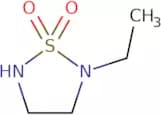
CAS:<p>Versatile small molecule scaffold</p>Formula:C3H8N2O2SPurity:Min. 95%Molecular weight:136.18 g/mol2-Ethyl-1λ⁶,2,5-thiadiazolidine-1,1-dione
CAS:<p>Versatile small molecule scaffold</p>Formula:C4H10N2O2SPurity:Min. 95%Molecular weight:150.2 g/mol2-(Methylsulfonyl)-1,2,5-thiadiazolidine 1,1-dioxide
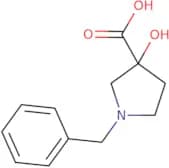
CAS:<p>Versatile small molecule scaffold</p>Formula:C3H8N2O4S2Purity:Min. 95%Molecular weight:200.2 g/mol1-Benzyl-3-hydroxypyrrolidine-3-carboxylic acid
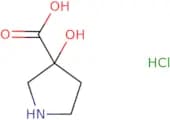
CAS:<p>Versatile small molecule scaffold</p>Formula:C12H15NO3Purity:Min. 95%Molecular weight:221.25 g/mol3-Hydroxypyrrolidine-3-carboxylic acid hydrochloride
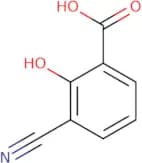
CAS:<p>Versatile small molecule scaffold</p>Formula:C5H10ClNO3Purity:Min. 95%Molecular weight:167.59 g/mol3-cyano-2-hydroxybenzoicacid
CAS:<p>Versatile small molecule scaffold</p>Formula:C8H5NO3Purity:Min. 95%Molecular weight:163.13 g/mol7-Chloro-1H-benzotriazole
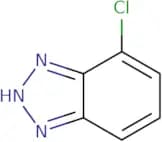
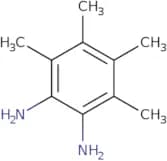
CAS:<p>7-Chloro-1H-benzotriazole is a divalent hydrocarbon that is used as a corrosion inhibitor in polymers, such as polyvinyl chloride (PVC). It has been shown to be an effective inhibitor of carbonyl group and phosphorus pentoxide. The compound can be modified by the addition of other compounds, such as hydrochloric acid, to form a polymer film. This film acts as an optical filter when it absorbs uv radiation in the range of 220 to 300 nanometers and transmits radiation in the range of 300 to 380 nanometers. 7-Chloro-1H-benzotriazole also serves as an initiator for polymerization reactions.</p>Formula:C6H4ClN3Purity:Min. 95%Molecular weight:153.57 g/molTetramethylbenzene-1,2-diamine
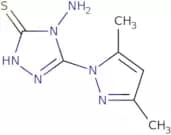
CAS:<p>Versatile small molecule scaffold</p>Formula:C10H16N2Purity:Min. 95%Molecular weight:164.25 g/mol4-Amino-5-(3,5-dimethyl-1H-pyrazol-1-yl)-4H-1,2,4-triazole-3-thiol
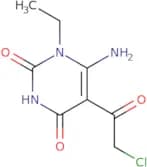
CAS:<p>Versatile small molecule scaffold</p>Formula:C7H10N6SPurity:Min. 95%Molecular weight:210.26 g/mol6-Amino-5-(2-chloroacetyl)-1-ethyl-1,2,3,4-tetrahydropyrimidine-2,4-dione
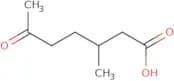
CAS:<p>Versatile small molecule scaffold</p>Formula:C8H10ClN3O3Purity:Min. 95%Molecular weight:231.63 g/mol3-Methyl-6-oxoheptanoic acid
CAS:<p>Versatile small molecule scaffold</p>Formula:C8H14O3Purity:Min. 95%Molecular weight:158.19 g/mol5H,6H,7H,8H,9H-Imidazo[1,2-a][1,3]diazepine
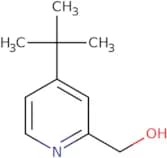
CAS:<p>Versatile small molecule scaffold</p>Formula:C7H11N3Purity:Min. 95%Molecular weight:137.18 g/mol(4-tert-Butylpyridin-2-yl)methanol
CAS:<p>(4-tert-Butylpyridin-2-yl)methanol is a ligand that has the ability to bind metal ions through the intramolecular hydrogen bond. The strong magnetic properties of (4-tert-butylpyridin-2-yl)methanol have been studied by measuring the anisotropy of the NMR signal and found to be a paramagnetic molecule. This compound also has an anion, which is a negatively charged ion with a charge of -1. The anions are inorganic, meaning they are not organic compounds. The temperature and electron density of this molecule were also studied, as well as its interaction with methyl groups and electrospray ionization.</p>Formula:C10H15NOPurity:Min. 95%Molecular weight:165.23 g/mol4-tert-Butylpyridine-2-carbaldehyde
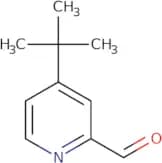
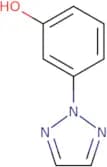
CAS:<p>Versatile small molecule scaffold</p>Formula:C10H13NOPurity:Min. 95%Molecular weight:163.22 g/mol3-(2H-1,2,3-Triazol-2-yl)phenol
CAS:<p>Versatile small molecule scaffold</p>Formula:C8H7N3OPurity:Min. 95%Molecular weight:161.16 g/mol4-[(Piperidin-2-yl)methyl]benzonitrile
CAS:Controlled Product<p>Versatile small molecule scaffold</p>Formula:C13H16N2Purity:Min. 95%Molecular weight:200.28 g/mol4-[3-(Trifluoromethyl)phenyl]pyrrolidin-2-one
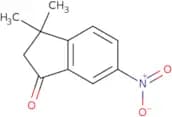
CAS:<p>Versatile small molecule scaffold</p>Formula:C11H10F3NOPurity:Min. 95%Molecular weight:229.2 g/mol3,3-Dimethyl-6-nitro-2,3-dihydro-1H-inden-1-one
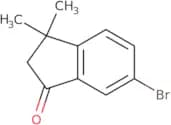
CAS:<p>Versatile small molecule scaffold</p>Formula:C11H11NO3Purity:Min. 95%Molecular weight:205.21 g/mol6-bromo-3,3-dimethyl-2,3-dihydro-1H-inden-1-one
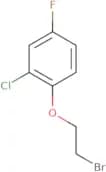
CAS:<p>Versatile small molecule scaffold</p>Formula:C11H11BrOPurity:Min. 95%Molecular weight:239.11 g/mol1-(2-Bromoethoxy)-2-chloro-4-fluorobenzene
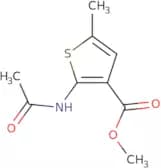
CAS:<p>Versatile small molecule scaffold</p>Formula:C8H7BrClFOPurity:Min. 95%Molecular weight:253.49 g/molMethyl 2-(acetylamino)-5-methylthiophene-3-carboxylate
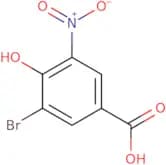
CAS:<p>Versatile small molecule scaffold</p>Formula:C9H11NO3SPurity:Min. 95%Molecular weight:213.26 g/mol3-Bromo-4-hydroxy-5-nitrobenzoic acid
CAS:<p>Versatile small molecule scaffold</p>Formula:C7H4BrNO5Purity:Min. 95%Molecular weight:262.02 g/mol1-Hydroxy-2-naphthonitrile
CAS:<p>Versatile small molecule scaffold</p>Formula:C11H7NOPurity:Min. 95%Molecular weight:169.18 g/mol1H,2H,3H,4H,5H,11H,11aH-[1,4]Diazepino[1,2-a]indole
CAS:<p>Versatile small molecule scaffold</p>Formula:C12H16N2Purity:Min. 95%Molecular weight:188.27 g/mol2H-Thieno[2,3-d][1,3]dithiole-2-thione
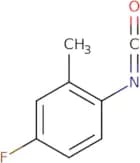
CAS:<p>Versatile small molecule scaffold</p>Formula:C5H2S4Purity:Min. 95%Molecular weight:190.3 g/mol4-Fluoro-1-isocyanato-2-methylbenzene
CAS:<p>Versatile small molecule scaffold</p>Formula:C8H6FNOPurity:Min. 95%Molecular weight:151.14 g/mol7-Hydroxy-2H-benzo[b][1,4]oxazin-3(4H)-one
CAS:<p>Versatile small molecule scaffold</p>Formula:C8H7NO3Purity:Min. 95%Molecular weight:165.15 g/mol9-Thiabicyclo[3.3.1]nonan-3-one
CAS:<p>9-Thiabicyclo[3.3.1]nonan-3-one is an analog of a monocyclic compound that has been explored for its potential use in exploratory studies. The synthesis of this compound was accomplished by the reaction of 9-bromobicyclo[3.3.1]nonan-3-one with tert-butyl alcohol, which provided the desired product in moderate yield. It has been found to have a strong interaction with methanol and tert-butyl alcohol, which can be used to synthesize other analogues of the compound. This analog has not yet been studied for any biological activity, but it may have chemoselectivity due to its steric properties and its ability to act as a hydrogen bond donor or acceptor.</p>Formula:C8H12OSPurity:Min. 95%Molecular weight:156.25 g/mol2-(4-Bromo-2-chlorophenyl)acetonitrile
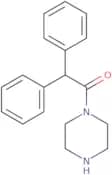
CAS:<p>Versatile small molecule scaffold</p>Formula:C8H5BrClNPurity:Min. 95%Molecular weight:230.49 g/mol2,2-Diphenyl-1-(piperazin-1-yl)ethan-1-one
CAS:<p>2,2-Diphenyl-1-(piperazin-1-yl)ethan-1-one is a hydroxy group, expressed, alkynyl group, medicines. It is used in the treatment of myocardial infarct. 2,2-Diphenyl-1-(piperazin-1-yl)ethan-1-one has been shown to inhibit the reuptake of monoamines (e.g., dopamine and norepinephrine), which are neurotransmitters that play an important role in regulating mood and behavior. This drug also inhibits the growth of infectious organisms by binding to their DNA or RNA. The residue from this process is eliminated by the body's natural processes. Phenyl groups are found on the molecule's benzene ring and can be used as a marker for optical rotation.</p>Formula:C18H20N2OPurity:Min. 95%Molecular weight:280.4 g/mol5-Methoxy-6-methylindan-1-one
CAS:<p>Versatile small molecule scaffold</p>Formula:C11H12O2Purity:Min. 95%Molecular weight:176.21 g/mol4-Methoxy-2,3-dihydro-1H-inden-1-ol
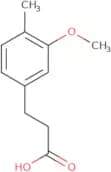
CAS:<p>Versatile small molecule scaffold</p>Formula:C10H12O2Purity:Min. 95%Molecular weight:164.2 g/mol3-(3-Methoxy-4-methylphenyl)propanoic acid
CAS:<p>Versatile small molecule scaffold</p>Formula:C11H14O3Purity:Min. 95%Molecular weight:194.23 g/molSMER3
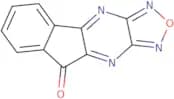
CAS:<p>SMER3 is a ubiquitin ligase that regulates protein degradation through the ubiquitin-proteasome pathway. SMER3 is involved in the response to microbial infection, cancer, and cardiac arrhythmia. SMER3 has been shown to regulate protein levels by binding to and stabilizing proteins in order to prevent their degradation. It also plays a role in the regulation of NF-κB signaling pathways, which affects cell proliferation and differentiation.<br>SMER3 has been shown to play an important role in the regulation of Toll-like receptors (TLRs) by interacting with TLR2, TLR4, and TLR6. This interaction leads to activation of downstream signaling pathways that may lead to cellular responses such as inflammation and immunity.</p>Formula:C11H4N4O2Purity:Min. 95%Molecular weight:224.18 g/mol4-Iodo-1,3-dimethyl-1H-pyrazole-5-carboxylic acid
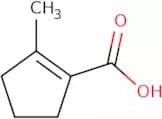
CAS:<p>Versatile small molecule scaffold</p>Formula:C6H7IN2O2Purity:Min. 95%Molecular weight:266.04 g/mol2-Methylcyclopent-1-ene-1-carboxylic acid
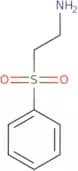
CAS:<p>2-Methylcyclopent-1-ene-1-carboxylic acid is an efficient synthetic route for the preparation of nitroalkanes. This process proceeds by the reaction of ammonium formate with nitromethane to produce 2-methylcyclopent-1-ene, which is then converted to 2-methylcyclopent-1-ene-1-carboxylic acid with hydrolysis. The allylic rearrangement can be carried out using sodium methoxide in methanol, and the denitration can be carried out using piperidine.</p>Formula:C7H10O2Purity:Min. 95%Molecular weight:126.15 g/mol2-(Benzenesulfonyl)ethan-1-amine
CAS:<p>Versatile small molecule scaffold</p>Formula:C8H11NO2SPurity:Min. 95%Molecular weight:185.25 g/mol4-[(Trifluoromethyl)sulfanyl]benzene-1-sulfonyl chloride
CAS:<p>Versatile small molecule scaffold</p>Formula:C7H4ClF3O2S2Purity:Min. 95%Molecular weight:276.7 g/mol{[2-(Bromomethyl)phenyl]methyl}triphenylphosphanium bromide
CAS:<p>Versatile small molecule scaffold</p>Formula:C26H23Br2PPurity:Min. 95%Molecular weight:526.2 g/moltert-Butyldimethylsilyl 2-[(tert-butyldimethylsilyl)oxy]acetate
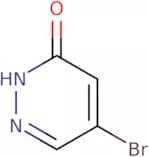
CAS:<p>Tert-butyldimethylsilyl 2-[(tert-butyldimethylsilyl)oxy]acetate (TBDSO) is an acetylating agent used to produce tertiary alcohols. TBDSO is a nitro compound that is converted by the body into carbon dioxide and water. TBDSO is not orally bioavailable, but can be administered intravenously or intramuscularly. TBDSO has been shown to inhibit the production of cholesterol in animals and humans. It may be used as a chiral building block for pharmaceutical drugs such as statins. Statins are drugs that lower cholesterol levels by inhibiting HMG-CoA reductase, an enzyme involved in the synthesis of cholesterol from mevalonic acid.</p>Formula:C14H32O3Si2Purity:Min. 95%Molecular weight:304.57 g/mol5-Bromo-2,3-dihydropyridazin-3-one
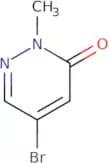
CAS:<p>Versatile small molecule scaffold</p>Formula:C4H3BrN2OPurity:Min. 95%Molecular weight:174.98 g/mol5-Bromo-2-methylpyridazin-3(2H)-one
CAS:<p>Versatile small molecule scaffold</p>Formula:C5H5BrN2OPurity:Min. 95%Molecular weight:189.01 g/mol4H-Furo[3,2-b]pyrrole-5-carboxylic acid
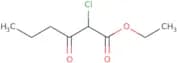
CAS:<p>4H-Furo[3,2-b]pyrrole-5-carboxylic acid is a chemical compound that has been shown to be an effective optical sensor for the detection of neutrinos. It has also been used in the study of skin cancer and solar radiation. This chemical can be detected using a filament that emits light when it is excited by the absorption of energy from 4H-Furo[3,2-b]pyrrole-5-carboxylic acid. The chemical's ability to produce unique optical properties makes it a valuable tool for diagnosis. Titration calorimetry experiments have confirmed that 4H-Furo[3,2-b]pyrrole-5-carboxylic acid absorbs electromagnetic radiation with wavelengths between 190 nm and 260 nm.</p>Formula:C7H5NO3Purity:Min. 95%Molecular weight:151.12 g/molEthyl 2-chloro-3-oxohexanoate
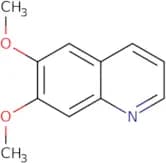
CAS:<p>Versatile small molecule scaffold</p>Formula:C8H13ClO3Purity:Min. 95%Molecular weight:192.64 g/mol6,7-dimethoxyquinoline
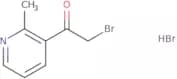
CAS:<p>6,7-dimethoxyquinoline is a palladium-catalyzed coupling agent that has been shown to inhibit the growth of cells by blocking epidermal growth factor receptor. It has been shown to be effective in inhibiting restenosis and angioplasty in animal models. 6,7-Dimethoxyquinoline also has an innovative mechanism of action for cancer treatment as it inhibits the activation of certain signal transduction molecules. It also acts as a potent inhibitor for chloride channels and other ion channels, which may lead to its use as a powerful antihypertensive agent.</p>Formula:C11H11NO2Purity:Min. 95%Molecular weight:189.21 g/mol2-Bromo-1-(2-methylpyridin-3-yl)ethan-1-one hydrobromide
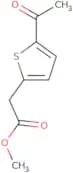
CAS:<p>Versatile small molecule scaffold</p>Formula:C8H9Br2NOPurity:Min. 95%Molecular weight:294.97 g/molMethyl 2-(5-acetylthiophen-2-yl)acetate
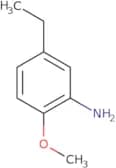
CAS:<p>Versatile small molecule scaffold</p>Formula:C9H10O3SPurity:Min. 95%Molecular weight:198.24 g/mol5-Ethyl-2-methoxyaniline
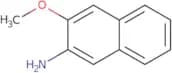
CAS:<p>Versatile small molecule scaffold</p>Formula:C9H13NOPurity:Min. 95%Molecular weight:151.21 g/mol2-Amino-3-methoxynaphthalene
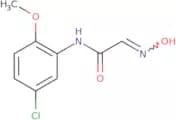
CAS:<p>Versatile small molecule scaffold</p>Formula:C11H11NOPurity:Min. 95%Molecular weight:173.21 g/molN-(5-Chloro-2-methoxyphenyl)-2-(N-hydroxyimino)acetamide
CAS:<p>Versatile small molecule scaffold</p>Formula:C9H9ClN2O3Purity:Min. 95%Molecular weight:228.63 g/mol4-Bromo-7-methoxyindoline-2,3-dione
CAS:<p>Versatile small molecule scaffold</p>Formula:C9H6BrNO3Purity:Min. 95%Molecular weight:256.05 g/mol2-Amino-4-chloro-3-methoxybenzoic acid
CAS:<p>Versatile small molecule scaffold</p>Formula:C8H8ClNO3Purity:Min. 95%Molecular weight:201.61 g/mol2-Amino-6-chloro-3-methoxybenzoic acid
CAS:<p>Versatile small molecule scaffold</p>Formula:C8H8ClNO3Purity:Min. 95%Molecular weight:201.61 g/mol2-(6-Bromo-4-oxo-3,4-dihydroquinazolin-3-yl)acetic acid
CAS:<p>Versatile small molecule scaffold</p>Formula:C10H7BrN2O3Purity:Min. 95%Molecular weight:283.08 g/molMethyl 2-(6-nitro-4-oxo-3,4-dihydroquinazolin-3-yl)acetate
CAS:<p>Versatile small molecule scaffold</p>Formula:C11H9N3O5Purity:Min. 95%Molecular weight:263.21 g/mol1-(3,4,5-Trichlorophenyl)piperazine
CAS:Controlled Product<p>Versatile small molecule scaffold</p>Formula:C10H11Cl3N2Purity:Min. 95%Molecular weight:265.6 g/mol3,3-Dimethyl-1-phenylbutan-2-amine
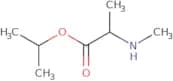
CAS:Controlled Product<p>Versatile small molecule scaffold</p>Formula:C12H19NPurity:Min. 95%Molecular weight:177.29 g/molPropan-2-yl 2-(methylamino)propanoate
CAS:<p>Versatile small molecule scaffold</p>Formula:C7H15NO2Purity:Min. 95%Molecular weight:145.2 g/molEthyl 2-(2-ethoxy-2-oxoacetamido)-4,5-dimethylthiophene-3-carboxylate
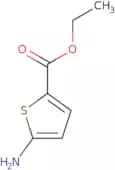
CAS:<p>Versatile small molecule scaffold</p>Formula:C13H17NO5SPurity:Min. 95%Molecular weight:299.34 g/molEthyl 5-aminothiophene-2-carboxylate
CAS:<p>Ethyl 5-aminothiophene-2-carboxylate is a hydrazine derivative that can be synthesized in two steps from ethyl 2-chloroacetate, ethyl chloroformate and sodium hydroxide. It has been shown to react with the trimethylsilyl chloride and trifluoroacetic anhydride in the presence of trifluoroacetic acid to form the corresponding 4-hydroxycoumarin derivative. The regioselective synthesis of ethyl 5-aminothiophene-2-carboxylate is achieved by using x-ray crystallography to identify the most reactive positions on the molecule for nucleophilic attack. This compound is efficient for generating 4-hydroxycoumarin derivatives, which are used as pharmaceuticals or as precursors for organic synthesis.</p>Formula:C7H9NO2SPurity:Min. 95%Molecular weight:171.22 g/molBenzyl N-[3-(2,5-dioxoimidazolidin-4-yl)propyl]carbamate
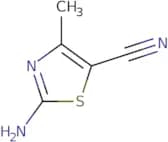
CAS:<p>Versatile small molecule scaffold</p>Formula:C14H17N3O4Purity:Min. 95%Molecular weight:291.3 g/mol2-Amino-4-methyl-1,3-thiazole-5-carbonitrile
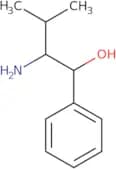
CAS:<p>Versatile small molecule scaffold</p>Formula:C5H5N3SPurity:Min. 95%Molecular weight:139.18 g/mol2-Amino-3-methyl-1-phenylbutan-1-ol
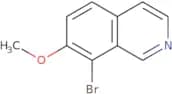
CAS:Controlled Product<p>Versatile small molecule scaffold</p>Formula:C11H17NOPurity:Min. 95%Molecular weight:179.26 g/mol8-Bromo-7-methoxyisoquinoline
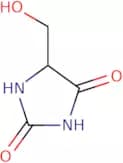
CAS:<p>Versatile small molecule scaffold</p>Formula:C10H8BrNOPurity:Min. 95%Molecular weight:238.08 g/mol5-(Hydroxymethyl)imidazolidine-2,4-dione
CAS:<p>5-(Hydroxymethyl)imidazolidine-2,4-dione (HMI) is a synthetic compound that has been shown to be effective for the treatment of tuberculosis. HMI is an analog of d-serine and is immobilized on activated carbon to produce filtration media. It was found to be more efficient than other immobilization methods in terms of yield, operational time, and filtration capacity. The affinity and chiral properties of HMI make it a good candidate for use as a drug delivery system.</p>Formula:C4H6N2O3Purity:Min. 95%Molecular weight:130.1 g/mol1-{[(Cyclopent-3-en-1-yl)methyl]sulfanyl}ethan-1-one
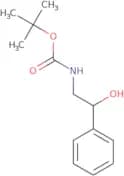
CAS:<p>Versatile small molecule scaffold</p>Formula:C8H12OSPurity:Min. 95%Molecular weight:156.2 g/molN-(tert-Butoxycarbonyl)-DL-2-phenylglycinol
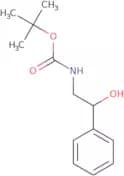
CAS:<p>Versatile small molecule scaffold</p>Formula:C13H19NO3Purity:Min. 95%Molecular weight:237.3 g/molN-Boc-2-hydroxy-2-phenylethylamine
CAS:<p>N-Boc-2-hydroxy-2-phenylethylamine is a chemical that inhibits the reuptake of serotonin, which is a monoamine neurotransmitter. It is classified as a reuptake inhibitor. N-Boc-2-hydroxy-2-phenylethylamine competitively binds to the transporter that removes serotonin from the synapse, which leads to increased concentrations of serotonin in the synapse. This drug has shown efficacy in treating depression and could be used as an antidepressant.</p>Formula:C13H19NO3Purity:Min. 95%Molecular weight:237.3 g/molethyl 3-oxododecanoate
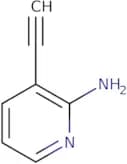
CAS:<p>Ethyl 3-oxododecanoate is a molecule that was synthesized by the bioassay-guided synthesis of flavonoids. It has antimicrobial activity against Pseudomonas aeruginosa and can be used for inhibiting bacterial growth in culture supernatant. Ethyl 3-oxododecanoate is an effective inhibitor of fatty acid biosynthesis, which makes it a potential therapeutic agent for infections caused by P. aeruginosa. This molecule has been modified to inhibit the production of lipopolysaccharide in P. aeruginosa, which inhibits its ability to stimulate immune responses and activate the complement system.</p>Formula:C14H26O3Purity:Min. 95%Molecular weight:242.36 g/mol3-Ethynylpyridin-2-amine
CAS:<p>3-Ethynylpyridin-2-amine is a nucleophilic amine that has been synthesized as an intermediate for the synthesis of other compounds. It is a molecule that can be scavenged by electron deficiency and introduce water molecules to optimize biomolecular reactions. 3-Ethynylpyridin-2-amine is synthesized by reacting pyrrole with trifluoroacetic acid in the presence of ammonium hydroxide. The product can be isolated by removing the solvent and drying with magnesium sulfate. 3-Ethynylpyridin-2-amine has been shown to scavenge reactive oxygen species, such as hydrogen peroxide, which are produced during oxidative stress and have been implicated in many diseases, including cancer and cardiovascular disease.</p>Purity:Min. 95%N-Hydroxy-3-(4-methoxyphenyl)propanamide
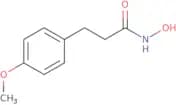
CAS:<p>Versatile small molecule scaffold</p>Formula:C10H13NO3Purity:Min. 95%Molecular weight:195.21 g/molPyrazine-2,3-dicarboxylic Acid Monoamide
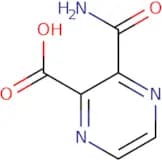
CAS:<p>Pyrazine-2,3-dicarboxylic Acid Monoamide is a ligand that regulates the activity of metal ions. It has been shown to bind to alkali metal ions, such as potassium ion, and form coordination complexes with them. Pyrazine-2,3-dicarboxylic Acid Monoamide has also been shown to bind with other metals such as copper and zinc. The structural properties of these complexes have been determined by elemental analysis and X-ray crystallography. The coordination complexes have been found to have physicochemical properties similar to those of metal compounds.</p>Formula:C6H5N3O3Purity:Min. 95%Molecular weight:167.12 g/mol4-Methyl-2-(4-methylbenzenesulfonamido)pentanoic acid
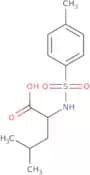
CAS:<p>4-Methyl-2-(4-methylbenzenesulfonamido)pentanoic acid (MBSA) is a synthetic histidine molecule that exhibits specificities for the pancreas. MBSA is converted to chloromethyl ketone when subjected to photooxidation. The mechanism of action of MBSA is postulated to be related to its chemical composition and kinetic properties, which are different from other histidines. Chemical analyses have shown that it has a tryptic pattern and an amino acid composition that is different from other histidines. It has been found that MBSA inactivates spermatozoa in vitro, which may be due to the presence of chloromethylketone on its molecular structure.</p>Formula:C13H19NO4SPurity:Min. 95%Molecular weight:285.36 g/mol2-Hydroxy-3-isopropylbenzaldehyde
CAS:<p>2-Hydroxy-3-isopropylbenzaldehyde is an aldehyde with the chemical formula C9H10O4. It is synthesized from 2,3-dihydroxybenzaldehyde by cyanosilylation and has an enantiomeric purity of 99%. The conformation of 2-hydroxy-3-isopropylbenzaldehyde can be determined by 2D NMR techniques as well as x-ray diffraction. The x-ray structure indicates that the molecule has a chair conformation, with a dihedral angle of 60°.<br>2-Hydroxy-3-isopropylbenzaldehyde can be used in the synthesis of heteroaromatic compounds, such as indole derivatives, through catalytic hydrogenation. This compound also reacts with sodium nitrite to form salicylaldehydes and alicyclic compounds.</p>Formula:C10H12O2Purity:Min. 95%Molecular weight:164.2 g/mol2-Bromo-1-(3-methyl-1-benzofuran-2-yl)ethan-1-one
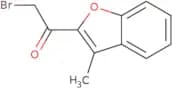
CAS:<p>Versatile small molecule scaffold</p>Formula:C11H9BrO2Purity:Min. 95%Molecular weight:253.09 g/molN-[2-(Morpholin-4-yl)ethyl]pyridin-2-amine
CAS:<p>Versatile small molecule scaffold</p>Formula:C11H17N3OPurity:Min. 95%Molecular weight:207.27 g/mol2-Hydroxy-4-[(5-methyl-1,2-oxazole-4-carbonyl)amino]benzoic acid
CAS:<p>2-Hydroxy-4-[(5-methyl-1,2-oxazole-4-carbonyl)amino]benzoic acid is an ion channel inhibitor. It is a ligand that binds to the receptor site of voltage gated potassium channels and prevents the flow of ions through the channel. This inhibits the depolarization of nerve cells and reduces pain sensation. 2HMBAA has been used as a research tool for investigating protein interactions and has been shown to be a potent inhibitor of peptide binding to antibody sites on cell membranes.</p>Formula:C12H10N2O5Purity:Min. 95%Molecular weight:262.22 g/mol2-Hydroxy-5-(5-methyl-1,2-oxazole-4-amido)benzoic acid
CAS:<p>Versatile small molecule scaffold</p>Formula:C12H10N2O5Purity:Min. 95%Molecular weight:262.22 g/molMethyl 4-methanesulfonylbutanoate
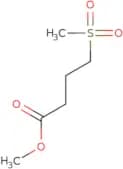
CAS:<p>Versatile small molecule scaffold</p>Formula:C6H12O4SPurity:Min. 95%Molecular weight:180.22 g/mol1-Ethylcycloheptan-1-amine
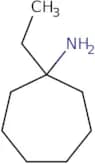
CAS:<p>Versatile small molecule scaffold</p>Formula:C9H19NPurity:Min. 95%Molecular weight:141.25 g/mol1H,2H,3H,4H-Imidazo[1,2-a][1,3,5]triazine-2,4-dione
CAS:<p>Versatile small molecule scaffold</p>Formula:C5H4N4O2Purity:Min. 95%Molecular weight:152.11 g/mol5,6,7,8-Tetrahydroindolizine-1-carbonitrile
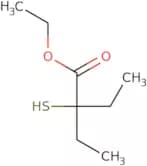
CAS:<p>Versatile small molecule scaffold</p>Formula:C9H10N2Purity:Min. 95%Molecular weight:146.19 g/molEthyl 2-ethyl-2-sulfanylbutanoate
CAS:<p>Versatile small molecule scaffold</p>Formula:C8H16O2SPurity:Min. 95%Molecular weight:176.28 g/mol2-(3-Bromophenyl)-1,3-dioxane
CAS:<p>Versatile small molecule scaffold</p>Formula:C10H11BrO2Purity:Min. 95%Molecular weight:243.1 g/mol2-[(Thiophen-2-yl)methoxy]benzoic acid
CAS:<p>Versatile small molecule scaffold</p>Formula:C12H10O3SPurity:Min. 95%Molecular weight:234.27 g/molMethyl 2-chloro-2-(4-chlorophenyl)acetate
CAS:<p>Versatile small molecule scaffold</p>Formula:C9H8Cl2O2Purity:Min. 95%Molecular weight:219.06 g/molN,N,2-Trimethylbenzenesulfonamide
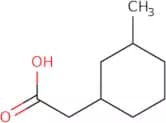
CAS:<p>Versatile small molecule scaffold</p>Formula:C9H13NO2SPurity:Min. 95%Molecular weight:199.27 g/mol2-(3-Methylcyclohexyl)acetic acid
CAS:<p>Versatile small molecule scaffold</p>Formula:C9H16O2Purity:Min. 95%Molecular weight:156.22 g/mol1-Benzoylpiperidin-3-ol
CAS:<p>Versatile small molecule scaffold</p>Formula:C12H15NO2Purity:Min. 95%Molecular weight:205.3 g/mol6-Chloro-3-methyl-[1,2,4]triazolo[3,4-a]-phthalazine
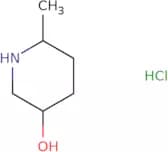
CAS:<p>Versatile small molecule scaffold</p>Formula:C10H7ClN4Purity:Min. 95%Molecular weight:218.65 g/molcis-6-Methylpiperidin-3-ol hydrochloride
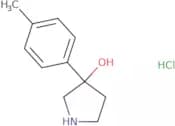
CAS:<p>Versatile small molecule scaffold</p>Formula:C6H14ClNOPurity:Min. 95%Molecular weight:151.63 g/mol3-p-Tolyl-pyrrolidin-3-ol hydrochloride
CAS:<p>Versatile small molecule scaffold</p>Formula:C11H16ClNOPurity:Min. 95%Molecular weight:213.71 g/mol3-(4-Bromophenyl)pyrrolidin-3-ol hydrochloride
CAS:<p>Versatile small molecule scaffold</p>Formula:C10H13BrClNOPurity:Min. 95%Molecular weight:278.57 g/mol3-[(4-Chlorophenyl)methyl]pyrrolidin-3-ol hydrochloride
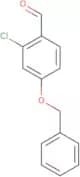
CAS:<p>Versatile small molecule scaffold</p>Formula:C11H15Cl2NOPurity:Min. 95%Molecular weight:248.15 g/mol4-(Benzyloxy)-2-chlorobenzaldehyde
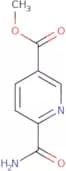
CAS:<p>4-(Benzyloxy)-2-chlorobenzaldehyde is an aldehyde that can be used for the synthesis of organic compounds. It is made from 2-chloro-4-hydroxybenzaldehyde, which is synthesized from hydroxybenzaldehyde, oxime, and benzyl alcohol. The product has been shown to react with riboflavin and a second reagent in the presence of palladium to form a chromatographic column. 4-(Benzyloxy)-2-chlorobenzaldehyde reacts with 6-chlorouracil to form an oxirane ring. This reaction can also be used to synthesize tulobuterol, which is a β2-agonist. 4-(Benzyloxy)-2-chlorobenzaldehyde reacts with ribose in the presence of hydroxy to produce glucose and 2-(6'-hydroxypurinomethyl)riboflavin as a byproduct.</p>Formula:C14H11ClO2Purity:Min. 95%Molecular weight:246.69 g/molMethyl 6-carbamoylnicotinate
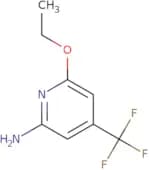
CAS:<p>Versatile small molecule scaffold</p>Formula:C8H8N2O3Purity:Min. 95%Molecular weight:180.16 g/mol6-Ethoxy-4-(trifluoromethyl)pyridin-2-amine
CAS:<p>Versatile small molecule scaffold</p>Formula:C8H9F3N2OPurity:Min. 95%Molecular weight:206.16 g/mol7-Amino-1,3-dimethyl-1H,2H,3H,4H,5H,8H-pyrido[2,3-d]pyrimidine-2,4,5-trione
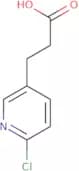
CAS:<p>Versatile small molecule scaffold</p>Formula:C9H10N4O3Purity:Min. 95%Molecular weight:222.2 g/mol3-(6-Chloropyridin-3-yl)propanoic acid
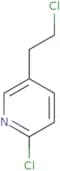
CAS:<p>Versatile small molecule scaffold</p>Formula:C8H8ClNO2Purity:Min. 95%Molecular weight:185.61 g/mol2-Chloro-5-(2-chloroethyl)-pyridine
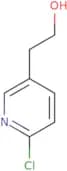
CAS:<p>Versatile small molecule scaffold</p>Formula:C7H7Cl2NPurity:Min. 95%Molecular weight:176.04 g/mol2-(6-Chloropyridin-3-yl)ethanol
CAS:<p>Versatile small molecule scaffold</p>Formula:C7H8ClNOPurity:Min. 95%Molecular weight:157.6 g/molMethyl furo[3,2-c]pyridine-3-carboxylate
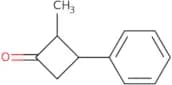
CAS:<p>Versatile small molecule scaffold</p>Formula:C9H7NO3Purity:Min. 95%Molecular weight:177.16 g/mol2-Methyl-3-phenylcyclobutan-1-one
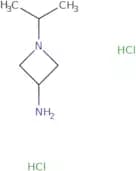
CAS:<p>Versatile small molecule scaffold</p>Formula:C11H12OPurity:Min. 95%Molecular weight:160.21 g/mol1-(1-Methylethyl)-3-azetidinamine, hydrochloride (1:2)
CAS:<p>1-(1-Methylethyl)-3-azetidinamine, hydrochloride (1:2) is a synthetic compound that has been shown to be a potent and selective γ-secretase modulator. It is a triol with an alcohol group at C-3 and two hydroxyl groups at C-4 and C-5. This compound has been shown to inhibit the production of cycloartenol from soybean oil in vitro, which may be due to its inhibition of γ-secretase activity. 1-(1-Methylethyl)-3-azetidinamine, hydrochloride (1:2) also has the potential for use as a target compound for research purposes.</p>Formula:C6H16Cl2N2Purity:Min. 95%Molecular weight:187.11 g/molrac-(2R,4S)-2-Phenyl-3,4-dihydro-2H-1-benzopyran-4-amine hydrochloride
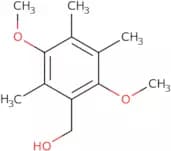
CAS:<p>Versatile small molecule scaffold</p>Formula:C15H16ClNOPurity:Min. 95%Molecular weight:261.7 g/mol(2,5-Dimethoxy-3,4,6-trimethylphenyl)methanol
CAS:<p>Versatile small molecule scaffold</p>Formula:C12H18O3Purity:Min. 95%Molecular weight:210.27 g/mol4-(4,5-Dimethyl-1H-imidazol-1-yl)benzaldehyde
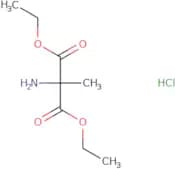
CAS:<p>Versatile small molecule scaffold</p>Formula:C12H12N2OPurity:Min. 95%Molecular weight:200.24 g/mol1,3-Diethyl 2-amino-2-methylpropanedioate hydrochloride
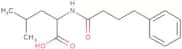
CAS:<p>Versatile small molecule scaffold</p>Formula:C8H16ClNO4Purity:Min. 95%Molecular weight:225.67 g/mol(2S)-4-Methyl-2-(4-phenylbutanamido)pentanoic acid
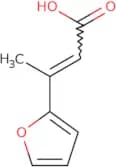
CAS:<p>Versatile small molecule scaffold</p>Formula:C16H23NO3Purity:Min. 95%Molecular weight:277.36 g/mol3-(Furan-2-yl)but-2-enoic acid
CAS:<p>Versatile small molecule scaffold</p>Formula:C8H8O3Purity:Min. 95%Molecular weight:152.15 g/mol4-Methyl-4H-furo[3,2-b]pyrrole-5-carboxylic acid
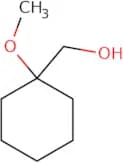
CAS:<p>Versatile small molecule scaffold</p>Formula:C8H7NO3Purity:Min. 95%Molecular weight:165.15 g/mol(1-Methoxycyclohexyl)methanol
CAS:<p>Versatile small molecule scaffold</p>Formula:C8H16O2Purity:Min. 95%Molecular weight:144.21 g/molEthyl 2-amino-4,7-dihydro-5H-thieno[2,3-c]pyran-3-carboxylate
CAS:<p>Versatile small molecule scaffold</p>Formula:C10H13NO3SPurity:Min. 95%Molecular weight:227.28 g/molEthyl 2-[(2-cyanoethyl)(4-methoxyphenyl)amino]acetate
CAS:<p>Versatile small molecule scaffold</p>Formula:C14H18N2O3Purity:Min. 95%Molecular weight:262.3 g/mol6-(1H-1,2,3,4-Tetrazol-5-yl)pyridine-3-carboxylic acid
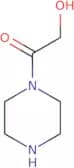
CAS:<p>Versatile small molecule scaffold</p>Formula:C7H5N5O2Purity:Min. 95%Molecular weight:191.1 g/mol2-Hydroxy-1-(piperazin-1-yl)ethan-1-one
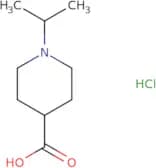
CAS:<p>Versatile small molecule scaffold</p>Formula:C6H12N2O2Purity:Min. 95%Molecular weight:144.17 g/mol1-Isopropylpiperidine-4-carboxylic acidhydrochloride
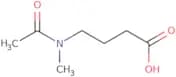
CAS:<p>Versatile small molecule scaffold</p>Formula:C9H18ClNO2Purity:Min. 95%Molecular weight:207.7 g/mol4-(N-Methylacetamido)butanoic acid
CAS:<p>Versatile small molecule scaffold</p>Formula:C7H13NO3Purity:Min. 95%Molecular weight:159.18 g/molMethyl (2R)-2-{[(tert-butoxy)carbonyl]amino}-4-oxobutanoate
CAS:<p>Versatile small molecule scaffold</p>Formula:C10H17NO5Purity:Min. 95%Molecular weight:231.2 g/molImidazo[1,2-a]pyrazin-8-amine
CAS:<p>Imidazo[1,2-a]pyrazin-8-amine is a molecule that has been shown to be an inhibitor of protein kinase activity. It blocks the adenosine A3 receptor and is therefore a possible drug target for cancer. Imidazo[1,2-a]pyrazin-8-amine is an antimicrobial resistance determinant and has been shown to inhibit bacterial growth in vitro by binding to the adenosine A3 receptor. This molecule also inhibits the production of inflammatory cytokines such as TNFα and IL6 in human cells. Imidazo[1,2-a]pyrazin-8-amine may be useful for treating chronic inflammation, cancer, or both.</p>Formula:C6H6N4Purity:Min. 95%Molecular weight:134.14 g/molPyrido[3,4-G]isoquinoline-5,10-dione
CAS:<p>Pyrido[3,4-G]isoquinoline-5,10-dione is a nanosheet material with a layered structure. It has been shown to be able to absorb electromagnetic radiation and convert it into heat. The electronic spectra of this material changes when it interacts with light, which may be due to the transition between different molecular orbitals that are formed in the material. Pyrido[3,4-G]isoquinoline-5,10-dione has been shown to have anion and chiral properties. Boron nitride is often used as the substrate for this type of material because it has a high thermal conductivity and can be easily cleaved from the nanosheets.</p>Formula:C12H6N2O2Purity:Min. 95%Molecular weight:210.19 g/mol[(2-Nitrophenyl)sulfinyl]acetic acid
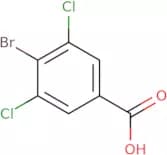
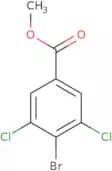
CAS:<p>[(2-Nitrophenyl)sulfinyl]acetic acid is a white powder that has a molecular weight of 214.2 and is soluble in water. It reacts with hydrogen to form nitrosyl, which is an electron acceptor. It also has the ability to stabilize hydrogen bonds.</p>Formula:C8H7NO5SPurity:Min. 95%Molecular weight:229.21 g/mol4-Bromo-3,5-dichlorobenzoic acid
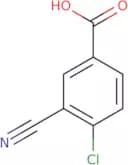
CAS:<p>Versatile small molecule scaffold</p>Formula:C7H3BrCl2O2Purity:Min. 95%Molecular weight:269.91 g/mol4-Chloro-3-cyanobenzoic acid
CAS:<p>Versatile small molecule scaffold</p>Formula:C8H4ClNO2Purity:Min. 95%Molecular weight:181.58 g/mol4-Bromo-3,5-dichloro-benzoic Acid Methyl Ester
CAS:<p>Versatile small molecule scaffold</p>Formula:C8H5O2Cl2BrPurity:Min. 95%Molecular weight:283.93 g/molMethyl 2-methyl-1,2,3,4-tetrahydronaphthalene-2-carboxylate
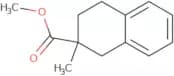
CAS:<p>Versatile small molecule scaffold</p>Formula:C13H16O2Purity:Min. 95%Molecular weight:204.26 g/mol7-Chloro-2-methyl-1H-indole-3-carbaldehyde
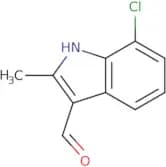
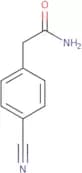
CAS:<p>Versatile small molecule scaffold</p>Formula:C10H8ClNOPurity:Min. 95%Molecular weight:193.63 g/mol2-(4-Cyanophenyl)acetamide
CAS:<p>Versatile small molecule scaffold</p>Formula:C9H8N2OPurity:Min. 95%Molecular weight:160.17 g/mol5-[Chloro(phenyl)methyl]-3-phenyl-1,2,4-oxadiazole
CAS:<p>Versatile small molecule scaffold</p>Formula:C15H11ClN2OPurity:Min. 95%Molecular weight:270.71 g/mol(H-Pyrazolo[1,5-a]pyridin-3-yl)methanol
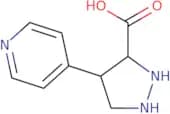
CAS:<p>Pyrazolopyridazine is a compound that has antiparasitic and antibiotic properties. It is used as an antiparasitic drug in the treatment of roundworm, hookworm, whipworm, and tapeworm infections. Pyrazolopyridazine is also used to treat bacterial infections such as tuberculosis. This drug has been shown to be effective against both Gram-positive and Gram-negative bacteria. Pyrazolopyridazine also exhibits antiviral properties against HIV-1 (human immunodeficiency virus) replication in human lymphocytes in vitro. The synthetic pathway of pyrazolopyridazine involves the condensation of 2-aminoacetophenone with 3-chloro-5-(2,4,6-trichlorophenyl)-pyridine followed by reaction with ammonia to give 3-amino-N-(2,4,6-trichlorophenyl)pyrazole.<br>Pyrazolopyr</p>Formula:C8H8N2OPurity:Min. 95%Molecular weight:148.16 g/mol4-(Pyridin-4-yl)-1H-pyrazole-3-carboxylic acid
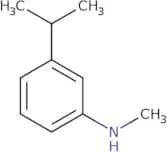
CAS:<p>Versatile small molecule scaffold</p>Formula:C9H7N3O2Purity:Min. 95%Molecular weight:189.17 g/molN-Methyl-3-(propan-2-yl)aniline
CAS:<p>Versatile small molecule scaffold</p>Formula:C10H15NPurity:Min. 95%Molecular weight:149.23 g/mol4-[(2-Hydroxyethyl)amino]benzoic acid
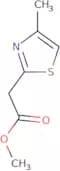
CAS:<p>Versatile small molecule scaffold</p>Formula:C9H11NO3Purity:Min. 95%Molecular weight:181.19 g/molMethyl 2-(4-methyl-1,3-thiazol-2-yl)acetate
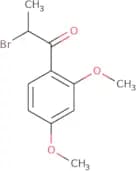
CAS:<p>Versatile small molecule scaffold</p>Formula:C7H9NO2SPurity:Min. 95%Molecular weight:171.22 g/mol2-Bromo-1-(2,4-dimethoxyphenyl)propan-1-one
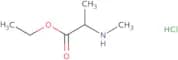
CAS:<p>Versatile small molecule scaffold</p>Formula:C11H13BrO3Purity:Min. 95%Molecular weight:273.12 g/molEthyl (2S)-2-(methylamino)propanoate hydrochloride
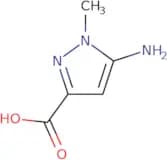
CAS:<p>Versatile small molecule scaffold</p>Formula:C6H14ClNO2Purity:Min. 95%Molecular weight:167.63 g/mol5-amino-1-methyl-pyrazole-3-carboxylic acid
CAS:<p>Versatile small molecule scaffold</p>Formula:C5H7N3O2Purity:Min. 95%Molecular weight:141.13 g/mol3-(methoxycarbonyl)-1-methyl-1H-pyrazole-5-carboxylic acid
CAS:<p>Versatile small molecule scaffold</p>Formula:C7H8N2O4Purity:Min. 95%Molecular weight:184.1 g/mol5-(Methoxycarbonyl)-1-methyl-1H-pyrazole-3-carboxylic acid
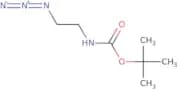
CAS:<p>Versatile small molecule scaffold</p>Formula:C7H8N2O4Purity:Min. 95%Molecular weight:184.15 g/moltert-butyl N-(2-azidoethyl)carbamate
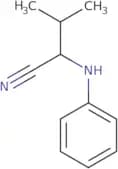
CAS:<p>Versatile small molecule scaffold</p>Formula:C7H14N4O2Purity:Min. 95%Molecular weight:186.2 g/mol3-Methyl-2-(phenylamino)butanenitrile
CAS:<p>Versatile small molecule scaffold</p>Formula:C11H14N2Purity:Min. 95%Molecular weight:174.24 g/molN2-Methylpyridine-2,5-diamine Hydrochloride
CAS:<p>Versatile small molecule scaffold</p>Formula:C6H9N3·HClPurity:Min. 95%Molecular weight:123.16 g/mol2H-1,2,4-Benzothiadiazine-3-methanamine 1,1-dioxide hydrochloride
CAS:<p>Versatile small molecule scaffold</p>Formula:C8H10ClN3O2SPurity:Min. 95%Molecular weight:247.7 g/moltert-Butyl 2-acetamidoacetate
CAS:<p>Versatile small molecule scaffold</p>Formula:C8H15NO3Purity:Min. 95%Molecular weight:173.21 g/mol3-(Chloromethyl)-1H-indazole hydrochloride
CAS:<p>Versatile small molecule scaffold</p>Formula:C8H8Cl2N2Purity:Min. 95%Molecular weight:203.1 g/mol5-Chloro-6-hydroxy-2,3-dihydro-1H-indole-2,3-dione
CAS:<p>Versatile small molecule scaffold</p>Formula:C8H4ClNO3Purity:Min. 95%Molecular weight:197.57 g/mol6-Chloro-3-(hydroxyimino)-2,3-dihydro-1H-indol-2-one
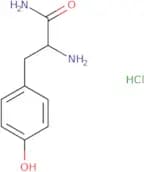
CAS:<p>Versatile small molecule scaffold</p>Formula:C8H5ClN2O2Purity:Min. 95%Color and Shape:PowderMolecular weight:196.59 g/molH-D-Tyr-NH2·HCl
CAS:<p>Versatile small molecule scaffold</p>Formula:C9H12N2O2Purity:Min. 95%Molecular weight:216.66 g/mol6-Bromo-3H-imidazo[4,5-b]pyridine-7-carboxylic Acid
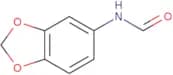
CAS:<p>Versatile small molecule scaffold</p>Formula:C7H4BrN3O2Purity:Min. 95%Molecular weight:242.03 g/molN-(1,3-Dioxaindan-5-yl)formamide
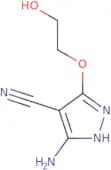
CAS:<p>Versatile small molecule scaffold</p>Formula:C8H7NO3Purity:Min. 95%Molecular weight:165.15 g/mol5-Amino-3-(2-hydroxyethoxy)-1H-pyrazole-4-carbonitrile
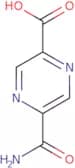
CAS:<p>Versatile small molecule scaffold</p>Formula:C6H8N4O2Purity:Min. 95%Molecular weight:168.15 g/mol5-Carbamoylpyrazine-2-carboxylic acid
CAS:<p>Versatile small molecule scaffold</p>Formula:C6H5N3O3Purity:Min. 95%Molecular weight:167.12 g/mol2-Chloro-6,7-dihydro-5H-cyclopenta[b]pyridine
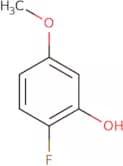
CAS:<p>Versatile small molecule scaffold</p>Formula:C8H8ClNPurity:Min. 95%Molecular weight:153.61 g/mol2-Fluoro-5-methoxyphenol
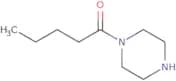
CAS:<p>Versatile small molecule scaffold</p>Formula:C7H7FO2Purity:Min. 95%Molecular weight:142.13 g/mol1-(Piperazin-1-yl)pentan-1-one
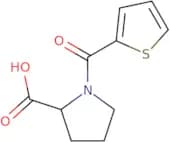
CAS:<p>Versatile small molecule scaffold</p>Formula:C9H18N2OPurity:Min. 95%Molecular weight:170.25 g/mol(2S)-1-(Thiophene-2-carbonyl)pyrrolidine-2-carboxylic acid
CAS:<p>Versatile small molecule scaffold</p>Formula:C10H11NO3SPurity:Min. 95%Molecular weight:225.27 g/mol2-[(Methoxycarbonyl)amino]-4-methylpentanoic acid
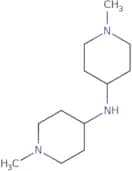
CAS:<p>2-[(Methoxycarbonyl)amino]-4-methylpentanoic acid (2-MePA) is a custom synthesis that is used as a building block in the synthesis of complex carbohydrates and polysaccharides. This chemical is modified with methylation, glycosylation, or fluorination to create saccharide derivatives. 2-MePA has been used in the synthesis of oligosaccharides and polysaccharides for use in biotechnology applications.</p>Formula:C8H15NO4Purity:Min. 95%Molecular weight:189.21 g/molBis(1-methylpiperidin-4-yl)amine
CAS:<p>Versatile small molecule scaffold</p>Formula:C12H25N3Purity:Min. 95%Molecular weight:211.35 g/mol(e)-3-cyclopentylacrylic acid
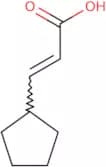
CAS:<p>Versatile small molecule scaffold</p>Formula:C8H12O2Purity:Min. 95%Molecular weight:140.18 g/mol4-(chloromethyl)-3-methylpyridine hcl
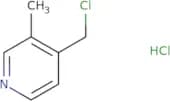
CAS:<p>4-(Chloromethyl)-3-methylpyridine hcl is a radiotracer that has been shown to bind reversibly to the synaptic vesicle protein synaptosomal-associated protein 25 (SNAP-25) in nonhuman primates. This drug has also been shown to be absorbed into the brain and to have pharmacokinetic properties. 4-(Chloromethyl)-3-methylpyridine hcl is a potential therapeutic agent for neuropsychiatric disorders, as it may reduce the binding of dopamine receptors in the brain. The affinity of 4-(chloromethyl)-3-methylpyridine hcl for SNAP-25 is dependent on the concentration of potassium ions, which suggests that this drug may also be used as an imaging agent for studying ion channels in humans.</p>Formula:C7H9Cl2NPurity:Min. 95%Molecular weight:178.06 g/mol2-Chloro-4-(chloromethyl)pyridine hydrochloride
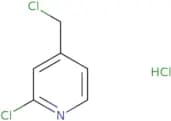
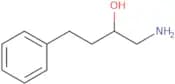
CAS:<p>Versatile small molecule scaffold</p>Formula:C6H6Cl3NPurity:Min. 95%Molecular weight:198.5 g/mol1-Amino-4-phenylbutan-2-ol
CAS:<p>Versatile small molecule scaffold</p>Formula:C10H15NOPurity:Min. 95%Molecular weight:165.23 g/mol1,3-Diethyl 2-methanesulfonamidopropanedioate
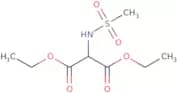
CAS:<p>Versatile small molecule scaffold</p>Formula:C8H15NO6SPurity:Min. 95%Molecular weight:253.28 g/molN-(Benzo[D]thiazol-2-ylmethyl)benzamide
CAS:<p>Versatile small molecule scaffold</p>Formula:C15H12N2OSPurity:Min. 95%Molecular weight:268.3 g/mol6-(Bromomethyl)-3-phenyl-5H,6H-[1,2,4]triazolo[3,4-b][1,3]thiazole
CAS:<p>Versatile small molecule scaffold</p>Formula:C11H10BrN3SPurity:Min. 95%Molecular weight:296.19 g/mol

![1-{[(tert-Butoxy)carbonyl]amino}-2-methylcyclohexane-1-carboxylic acid](/_next/image/?url=https%3A%2Fstatic.cymitquimica.com%2Fproducts%2F3D%2Fthumb-webp%2FSBC81811.webp&w=3840&q=75)

![2-[(4-Bromophenyl)methyl]-6-methoxyhexanoic acid](/_next/image/?url=https%3A%2Fstatic.cymitquimica.com%2Fproducts%2F3D%2Fthumb-webp%2FSBD42050.webp&w=3840&q=75)
![3-Ethyl-2-phenylimidazo[1,2-a]pyrazine](/_next/image/?url=https%3A%2Fstatic.cymitquimica.com%2Fproducts%2F3D%2Fthumb-webp%2FSBD70961.webp&w=3840&q=75)
![4-[(Methylsulfanyl)methyl]benzoic acid](/_next/image/?url=https%3A%2Fstatic.cymitquimica.com%2Fproducts%2F3D%2Fthumb-webp%2FSCA00348.webp&w=3840&q=75)
![8-(4-Methoxyphenyl)-1,4-dioxaspiro[4.5]decan-8-ol](/_next/image/?url=https%3A%2Fstatic.cymitquimica.com%2Fproducts%2F3D%2Fthumb-webp%2FSCA01951.webp&w=3840&q=75)
![Ethyl 1H-pyrrolo[2,3-c]pyridine-3-carboxylate](/_next/image/?url=https%3A%2Fstatic.cymitquimica.com%2Fproducts%2F3D%2Fthumb-webp%2FSCA05873.webp&w=3840&q=75)
![1-Methylpyrido[2,3-b]pyrazine-2,3(1H,4H)-dione](/_next/image/?url=https%3A%2Fstatic.cymitquimica.com%2Fproducts%2F3D%2Fthumb-webp%2FSCA07471.webp&w=3840&q=75)
![1h,2h,3h,4h-Pyrido[2,3-b]pyrazin-2-one](/_next/image/?url=https%3A%2Fstatic.cymitquimica.com%2Fproducts%2F3D%2Fthumb-webp%2FSCA07478.webp&w=3840&q=75)
![1H,2H,3H,4H-Pyrido[3,4-b]pyrazin-3-one](/_next/image/?url=https%3A%2Fstatic.cymitquimica.com%2Fproducts%2F3D%2Fthumb-webp%2FSCA07480.webp&w=3840&q=75)
![5-Bromoimidazo[2,1-b][1,3]thiazole](/_next/image/?url=https%3A%2Fstatic.cymitquimica.com%2Fproducts%2F3D%2Fthumb-webp%2FSCA08853.webp&w=3840&q=75)

![5H,6H,7H,8H,9H-Imidazo[1,2-a][1,3]diazepine](/_next/image/?url=https%3A%2Fstatic.cymitquimica.com%2Fproducts%2F3D%2Fthumb-webp%2FSCA13925.webp&w=3840&q=75)
![4-[(Piperidin-2-yl)methyl]benzonitrile](/_next/image/?url=https%3A%2Fstatic.cymitquimica.com%2Fproducts%2F3D%2Fthumb-webp%2FSCA15734.webp&w=3840&q=75)
![4-[3-(Trifluoromethyl)phenyl]pyrrolidin-2-one](/_next/image/?url=https%3A%2Fstatic.cymitquimica.com%2Fproducts%2F3D%2Fthumb-webp%2FSCA15942.webp&w=3840&q=75)

![1H,2H,3H,4H,5H,11H,11aH-[1,4]Diazepino[1,2-a]indole](/_next/image/?url=https%3A%2Fstatic.cymitquimica.com%2Fproducts%2F3D%2Fthumb-webp%2FSCA17754.webp&w=3840&q=75)
![2H-Thieno[2,3-d][1,3]dithiole-2-thione](/_next/image/?url=https%3A%2Fstatic.cymitquimica.com%2Fproducts%2F3D%2Fthumb-webp%2FSCA18888.webp&w=3840&q=75)
![7-Hydroxy-2H-benzo[b][1,4]oxazin-3(4H)-one](/_next/image/?url=https%3A%2Fstatic.cymitquimica.com%2Fproducts%2F3D%2Fthumb-webp%2FSCA19397.webp&w=3840&q=75)
![9-Thiabicyclo[3.3.1]nonan-3-one](/_next/image/?url=https%3A%2Fstatic.cymitquimica.com%2Fproducts%2F3D%2Fthumb-webp%2FSCA19470.webp&w=3840&q=75)




![4-[(Trifluoromethyl)sulfanyl]benzene-1-sulfonyl chloride](/_next/image/?url=https%3A%2Fstatic.cymitquimica.com%2Fproducts%2F3D%2Fthumb-webp%2FSCA21675.webp&w=3840&q=75)
![{[2-(Bromomethyl)phenyl]methyl}triphenylphosphanium bromide](/_next/image/?url=https%3A%2Fstatic.cymitquimica.com%2Fproducts%2F3D%2Fthumb-webp%2FSCA21944.webp&w=3840&q=75)
![tert-Butyldimethylsilyl 2-[(tert-butyldimethylsilyl)oxy]acetate](/_next/image/?url=https%3A%2Fstatic.cymitquimica.com%2Fproducts%2F3D%2Fthumb-webp%2FSCA22676.webp&w=3840&q=75)
![4H-Furo[3,2-b]pyrrole-5-carboxylic acid](/_next/image/?url=https%3A%2Fstatic.cymitquimica.com%2Fproducts%2F3D%2Fthumb-webp%2FSCA26837.webp&w=3840&q=75)



![Benzyl N-[3-(2,5-dioxoimidazolidin-4-yl)propyl]carbamate](/_next/image/?url=https%3A%2Fstatic.cymitquimica.com%2Fproducts%2F3D%2Fthumb-webp%2FSCA32077.webp&w=3840&q=75)
![1-{[(Cyclopent-3-en-1-yl)methyl]sulfanyl}ethan-1-one](/_next/image/?url=https%3A%2Fstatic.cymitquimica.com%2Fproducts%2F3D%2Fthumb-webp%2FSCA33831.webp&w=3840&q=75)


![N-[2-(Morpholin-4-yl)ethyl]pyridin-2-amine](/_next/image/?url=https%3A%2Fstatic.cymitquimica.com%2Fproducts%2F3D%2Fthumb-webp%2FSCA38533.webp&w=3840&q=75)
![2-Hydroxy-4-[(5-methyl-1,2-oxazole-4-carbonyl)amino]benzoic acid](/_next/image/?url=https%3A%2Fstatic.cymitquimica.com%2Fproducts%2F3D%2Fthumb-webp%2FSCA38753.webp&w=3840&q=75)

![1H,2H,3H,4H-Imidazo[1,2-a][1,3,5]triazine-2,4-dione](/_next/image/?url=https%3A%2Fstatic.cymitquimica.com%2Fproducts%2F3D%2Fthumb-webp%2FSCA41057.webp&w=3840&q=75)


![2-[(Thiophen-2-yl)methoxy]benzoic acid](/_next/image/?url=https%3A%2Fstatic.cymitquimica.com%2Fproducts%2F3D%2Fthumb-webp%2FSCA44352.webp&w=3840&q=75)



![6-Chloro-3-methyl-[1,2,4]triazolo[3,4-a]-phthalazine](/_next/image/?url=https%3A%2Fstatic.cymitquimica.com%2Fproducts%2F3D%2Fthumb-webp%2FSCA45838.webp&w=3840&q=75)
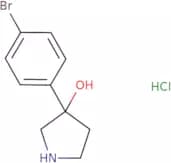
![3-[(4-Chlorophenyl)methyl]pyrrolidin-3-ol hydrochloride](/_next/image/?url=https%3A%2Fstatic.cymitquimica.com%2Fproducts%2F3D%2Fthumb-webp%2FSCA46633.webp&w=3840&q=75)
![7-Amino-1,3-dimethyl-1H,2H,3H,4H,5H,8H-pyrido[2,3-d]pyrimidine-2,4,5-trione](/_next/image/?url=https%3A%2Fstatic.cymitquimica.com%2Fproducts%2F3D%2Fthumb-webp%2FSEA52595.webp&w=3840&q=75)
![Methyl furo[3,2-c]pyridine-3-carboxylate](/_next/image/?url=https%3A%2Fstatic.cymitquimica.com%2Fproducts%2F3D%2Fthumb-webp%2FSEA53512.webp&w=3840&q=75)

![4-Methyl-4H-furo[3,2-b]pyrrole-5-carboxylic acid](/_next/image/?url=https%3A%2Fstatic.cymitquimica.com%2Fproducts%2F3D%2Fthumb-webp%2FSEA61330.webp&w=3840&q=75)
![Ethyl 2-amino-4,7-dihydro-5H-thieno[2,3-c]pyran-3-carboxylate](/_next/image/?url=https%3A%2Fstatic.cymitquimica.com%2Fproducts%2F3D%2Fthumb-webp%2FSEA64216.webp&w=3840&q=75)
![Ethyl 2-[(2-cyanoethyl)(4-methoxyphenyl)amino]acetate](/_next/image/?url=https%3A%2Fstatic.cymitquimica.com%2Fproducts%2F3D%2Fthumb-webp%2FSEA65236.webp&w=3840&q=75)
![Methyl (2R)-2-{[(tert-butoxy)carbonyl]amino}-4-oxobutanoate](/_next/image/?url=https%3A%2Fstatic.cymitquimica.com%2Fproducts%2F3D%2Fthumb-webp%2FSEA70696.webp&w=3840&q=75)
![Imidazo[1,2-a]pyrazin-8-amine](/_next/image/?url=https%3A%2Fstatic.cymitquimica.com%2Fproducts%2F3D%2Fthumb-webp%2FSEA71888.webp&w=3840&q=75)
![Pyrido[3,4-G]isoquinoline-5,10-dione](/_next/image/?url=https%3A%2Fstatic.cymitquimica.com%2Fproducts%2F3D%2Fthumb-webp%2FSEA72715.webp&w=3840&q=75)
![[(2-Nitrophenyl)sulfinyl]acetic acid](/_next/image/?url=https%3A%2Fstatic.cymitquimica.com%2Fproducts%2F3D%2Fthumb-webp%2FSEA73743.webp&w=3840&q=75)
![5-[Chloro(phenyl)methyl]-3-phenyl-1,2,4-oxadiazole](/_next/image/?url=https%3A%2Fstatic.cymitquimica.com%2Fproducts%2F3D%2Fthumb-webp%2FSEA76194.webp&w=3840&q=75)
![(H-Pyrazolo[1,5-a]pyridin-3-yl)methanol](/_next/image/?url=https%3A%2Fstatic.cymitquimica.com%2Fproducts%2F3D%2Fthumb-webp%2FSEA78276.webp&w=3840&q=75)
![4-[(2-Hydroxyethyl)amino]benzoic acid](/_next/image/?url=https%3A%2Fstatic.cymitquimica.com%2Fproducts%2F3D%2Fthumb-webp%2FSEA82134.webp&w=3840&q=75)




![6-Bromo-3H-imidazo[4,5-b]pyridine-7-carboxylic Acid](/_next/image/?url=https%3A%2Fstatic.cymitquimica.com%2Fproducts%2F3D%2Fthumb-webp%2FSEA88898.webp&w=3840&q=75)
![2-Chloro-6,7-dihydro-5H-cyclopenta[b]pyridine](/_next/image/?url=https%3A%2Fstatic.cymitquimica.com%2Fproducts%2F3D%2Fthumb-webp%2FSEA89055.webp&w=3840&q=75)
![2-[(Methoxycarbonyl)amino]-4-methylpentanoic acid](/_next/image/?url=https%3A%2Fstatic.cymitquimica.com%2Fproducts%2F3D%2Fthumb-webp%2FSEA91956.webp&w=3840&q=75)
![N-(Benzo[D]thiazol-2-ylmethyl)benzamide](/_next/image/?url=https%3A%2Fstatic.cymitquimica.com%2Fproducts%2F3D%2Fthumb-webp%2FSEA99890.webp&w=3840&q=75)
![6-(Bromomethyl)-3-phenyl-5H,6H-[1,2,4]triazolo[3,4-b][1,3]thiazole](/_next/image/?url=https%3A%2Fstatic.cymitquimica.com%2Fproducts%2F3D%2Fthumb-webp%2FSEB00446.webp&w=3840&q=75)