Building Blocks
This section contains fundamental products for the synthesis of organic and biological compounds. Building blocks are the essential starting materials used to construct complex molecules through various chemical reactions. They play a critical role in drug discovery, material science, and chemical research. At CymitQuimica, we offer a diverse range of high-quality building blocks to support your innovative research and industrial projects, ensuring you have the essential components for successful synthesis.
Subcategories of "Building Blocks"
- Boronic Acids & Boronic Acid Derivatives(5,756 products)
- Chiral Building Blocks(1,242 products)
- Hydrocarbon Building Blocks(6,093 products)
- Organic Building Blocks(60,525 products)
Found 195536 products of "Building Blocks"
Sort by
Purity (%)
0
100
|
0
|
50
|
90
|
95
|
100
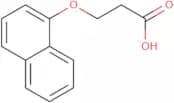
3-(Naphthalen-1-yloxy)propanoic acid
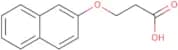
CAS:<p>Versatile small molecule scaffold</p>Formula:C13H12O3Purity:Min. 95%Molecular weight:216.23 g/mol3-(Naphthalen-2-yloxy)propanoic acid
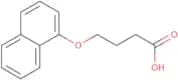
CAS:<p>Versatile small molecule scaffold</p>Formula:C13H12O3Purity:Min. 95%Molecular weight:216.23 g/mol4-(Naphthalen-1-yloxy)butanoic acid
CAS:Controlled Product<p>Versatile small molecule scaffold</p>Formula:C14H14O3Purity:Min. 95%Molecular weight:230.26 g/mol2H,3H,4H,5H-Naphtho[1,2-b]oxepin-5-one
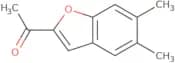
CAS:<p>Naphtho[1,2-b]oxepin-5-one is a crystalline compound that is a derivative of naphthalene. It has an elemental composition of C10H8O and a molecular weight of 142.16 g/mol. Naphtho[1,2-b]oxepin-5-one is stabilized by hydrogen bonding interactions with the hydroxyl groups on the benzene rings and has been shown to have a crystallographic space group of P21/c. The molecule can be analyzed using x-ray diffraction studies, which will provide information about its atomic structure and topology. Computational analysis of the molecule reveals that it has non-covalent interactions at its surface that are due to van der Waals forces. Nature also plays an important role in determining the structural properties of this compound by providing an environment for it to exist in, such as water or air.</p>Formula:C14H12O2Purity:Min. 95%Molecular weight:212.24 g/mol1-(5,6-Dimethyl-1-benzofuran-2-yl)ethan-1-one
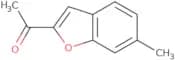
CAS:<p>Versatile small molecule scaffold</p>Formula:C12H12O2Purity:Min. 95%Molecular weight:188.22 g/mol1-(6-Methyl-1-benzofuran-2-yl)ethan-1-one
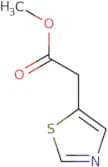
CAS:<p>Versatile small molecule scaffold</p>Formula:C11H10O2Purity:Min. 95%Molecular weight:174.2 g/molMethyl 2-(1,3-thiazol-5-yl)acetate
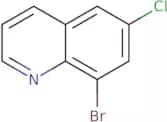
CAS:<p>Versatile small molecule scaffold</p>Formula:C6H7NO2SPurity:Min. 95%Molecular weight:157.19 g/mol8-Bromo-6-chloroquinoline
CAS:<p>8-Bromo-6-chloroquinoline (8BCQ) is a fluorescent dye that emits blue light. It has photophysical properties such as its emission, absorption, and fluorescence. 8BCQ is an isomeric compound that can be used to study the relationship between emission and absorption spectra. It has been shown to be a good mediator of cross-coupling reactions in the synthesis of heterocycles. 8BCQ has a high yield as it can be synthesized by heating dioxane with potassium carbonate and palladium chloride under pressure.</p>Formula:C9H5BrClNPurity:Min. 95%Molecular weight:242.5 g/mol2-Benzoylquinoline
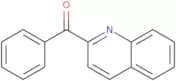
CAS:<p>2-Benzoylquinoline is an antimicrobial agent that can be used as a corrosion inhibitor. It contains a nitro group, an inorganic acid, and an aliphatic hydrocarbon. The molecule has been shown to be effective against Gram-positive and Gram-negative bacteria, fungi, and yeast. 2-Benzoylquinoline is also an efficient method for the synthesis of β-unsaturated ketones.</p>Formula:C16H11NOPurity:Min. 95%Molecular weight:233.26 g/mol1-Chloro-3-methyl-5-nitrobenzene
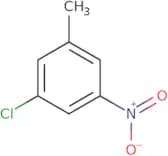
CAS:<p>1-Chloro-3-methyl-5-nitrobenzene is a reactant that is used to prepare the chlorination reaction of hydrochloric acid and sodium nitrite. It has been used in the preparation process for polysaccharides and amino acids. 1-Chloro-3-methyl-5-nitrobenzene is an organic compound that contains a carbamate group and a methylphenyl group. This molecule can be prepared by the chlorination of 1,1,1,2,2,3,4,4,5,5,-octachlorobenzene with potassium chloride or sodium chloride in the presence of hydrochloric acid and sodium nitrite. The nitrite reacts with the methylphenyl group to form an amide bond that then undergoes deamination to form ammonia.</p>Formula:C7H6ClNO2Purity:Min. 95%Molecular weight:171.58 g/mol6-Iodobenzo[d]thiazol-2-amine
CAS:<p>6-Iodobenzo[d]thiazol-2-amine is an antimicrobial agent that has been shown to have antimycobacterial activity against Mycobacterium tuberculosis. 6-Iodobenzo[d]thiazol-2-amine inhibits the synthesis of mycolic acid, which is a key component in the cell wall of the bacteria. It also has shown to be effective against other bacteria such as Staphylococcus aureus and Pseudomonas aeruginosa. The mechanism of action is not fully understood but may involve binding to bacterial DNA or RNA, inhibiting protein synthesis, or altering cellular membranes. This compound is used as a building block for drug development, where it can be conjugated with other molecules to form new compounds with different properties.</p>Formula:C7H5IN2SPurity:Min. 95%Molecular weight:276.1 g/mol2-Methyl-2H-1,2,3-benzotriazole
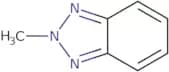
CAS:<p>2-Methyl-2H-1,2,3-benzotriazole is a denser form of 2-methyl-1,2,3-benzotriazole. It has been deuterated to facilitate magnetic resonance analysis and has been quantified in wastewater samples. The molecular weight of 2-methyl-2H-1,2,3-benzotriazole is higher than its methylated counterpart. The ionization potential of this molecule is lower than that of the methylated molecule. This difference in electron density between the two molecules can be attributed to the incorporation of deuterium atoms into the molecule's structure. 2-Methyl-2H-1,2,3-benzotriazole may be synthesized from desethylatrazine by hydrogenation. Density profiles were generated for both compounds and it was found that 2-methyl-2H -1,2,3 -benzot</p>Formula:C7H7N3Purity:Min. 95%Molecular weight:133.15 g/mol1-Ethylbenzotriazole
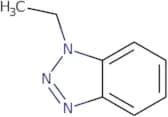
CAS:<p>1-Ethylbenzotriazole is a biologically active compound that is used in organic synthesis. 1-Ethylbenzotriazole can be prepared through the reaction of benzotriazole and ethanol. This compound has been shown to yield high yields of imidazoles in aqueous ethanol solutions. It also has hypsochromic properties, which are changes in color when exposed to ultraviolet light or radiation. The conformational properties of 1-ethylbenzotriazole have been studied using photoelectron spectroscopy. These studies have revealed that the molecule has a conformation with an electronegativity parameter of 0.48 and an average potential energy of -0.8 eV for the benzene ring, as well as a high cyclic potential energy (-2.6 eV).</p>Formula:C8H9N3Purity:Min. 95%Molecular weight:147.18 g/mol5-(Propan-2-yl)-1,3-thiazole
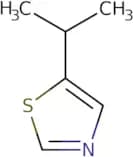
CAS:<p>5-(Propan-2-yl)-1,3-thiazole is a bioactive compound that belongs to the class of antimicrobial agents. It has been shown to have a broad spectrum of activity against Gram-positive and Gram-negative bacteria. 5-(Propan-2-yl)-1,3-thiazole has been used as an active ingredient in biocides, making it effective against both aerobic and anaerobic organisms. This compound has been shown to denature proteins and inhibit their enzymatic activity. 5-(Propan-2-yl)-1,3-thiazole also inhibits protein synthesis by binding to ribosomes at the site of mRNA translation. The minimal inhibitory concentration for this compound is not yet known.</p>Formula:C6H9NSPurity:Min. 95%Molecular weight:127.21 g/mol4-Methoxy-6-nitro-1,3-benzothiazol-2-amine
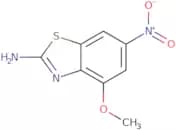
CAS:<p>Versatile small molecule scaffold</p>Formula:C8H7N3O3SPurity:Min. 95%Molecular weight:225.23 g/mol2,7-Dimethyl-1-benzothiophene
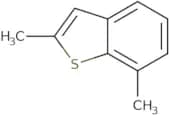
CAS:<p>Versatile small molecule scaffold</p>Formula:C10H10SPurity:Min. 95%Molecular weight:162.25 g/mol4-(tert-Pentyl)cyclohexanone
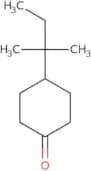
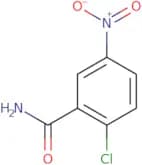
CAS:<p>4-(tert-Pentyl)cyclohexanone is a cyclohexanone derivative that has been modified to have a tert-pentyl group. The compound has been shown to be effective in vitro against bacteria, yeast, and fungi. 4-(tert-Pentyl)cyclohexanone is used as a feedstock for the production of sugar alcohols and can be used as a feedstock for the production of detergent compositions. This compound also has photolabile properties that make it an ideal candidate for use in sterilization processes. 4-(tert-Pentyl)cyclohexanone is also soluble in liquid phase systems and can be removed by filtration methods. The chemical structure of this compound contains functional groups such as ethers and esters, which allow it to function well with other compounds in many different applications.</p>Formula:C11H20OPurity:Min. 95%Molecular weight:168.28 g/mol2-Chloro-5-nitrobenzamide
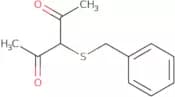
CAS:<p>Versatile small molecule scaffold</p>Formula:C7H5ClN2O3Purity:Min. 95%Molecular weight:200.58 g/mol3-(Benzylsulfanyl)pentane-2,4-dione
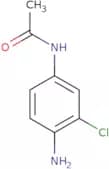
CAS:<p>Versatile small molecule scaffold</p>Formula:C12H14O2SPurity:Min. 95%Molecular weight:222.31 g/molN-(4-Amino-3-chlorophenyl)acetamide
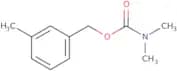
CAS:<p>Versatile small molecule scaffold</p>Formula:C8H9ClN2OPurity:Min. 95%Molecular weight:184.62 g/mol(3-Methylphenyl)methyl N,N-dimethylcarbamate
CAS:<p>Versatile small molecule scaffold</p>Formula:C11H15NO2Purity:Min. 95%Molecular weight:193.24 g/mol6-Benzyl-6-azabicyclo[3.2.1]octan-3-one
CAS:<p>Versatile small molecule scaffold</p>Formula:C14H17NOPurity:Min. 95%Molecular weight:215.29 g/mol(1R,3S,5S)-6,6-Dimethylbicyclo[3.1.0]hexan-3-ol
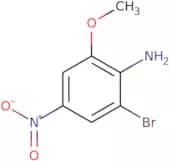
CAS:<p>Versatile small molecule scaffold</p>Formula:C8H14OPurity:Min. 95%Molecular weight:126.2 g/mol2-bromo-6-methoxy-4-nitroaniline
CAS:<p>Versatile small molecule scaffold</p>Formula:C7H7BrN2O3Purity:Min. 95%Molecular weight:247 g/molOctahydropyrrolo[1,2-a]piperazin-1-one
CAS:<p>Versatile small molecule scaffold</p>Formula:C7H12N2OPurity:Min. 95%Molecular weight:140.18 g/molOctahydropyrrolo[1,2-a]piperazin-3-one
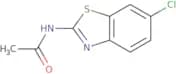
CAS:<p>Versatile small molecule scaffold</p>Formula:C7H12N2OPurity:Min. 95%Molecular weight:140.18 g/molN-(6-Chloro-1,3-benzothiazol-2-yl)acetamide
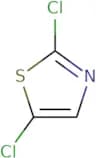
CAS:<p>Versatile small molecule scaffold</p>Formula:C9H7ClN2OSPurity:Min. 95%Molecular weight:226.68 g/mol2,5-dichlorothiazole
CAS:<p>2,5-Dichlorothiazole is a nitroaromatic compound with a six-membered ring. It is an anionic molecule that has been shown to be a good nucleophile in the presence of a transition metal. 2,5-Dichlorothiazole interacts with piperidine to form a 1:1 adduct. This reaction proceeds through the formation of an intermediate nitroso species, which undergoes nucleophilic attack by piperidine. The kinetic data for this reaction have been found to be dependent on the concentration of piperidine and temperature.</p>Formula:C3HCl2NSPurity:Min. 95%Molecular weight:154.01 g/mol4-(2-Methylphenyl)-5-(pyridin-4-yl)-4H-1,2,4-triazole-3-thiol
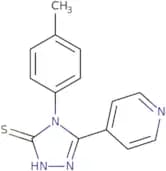
CAS:<p>Versatile small molecule scaffold</p>Formula:C14H12N4SPurity:Min. 95%Molecular weight:268.34 g/mol4-(4-Methylphenyl)-5-(pyridin-4-yl)-4H-1,2,4-triazole-3-thiol
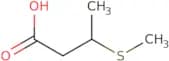
CAS:<p>Versatile small molecule scaffold</p>Formula:C14H12N4SPurity:Min. 95%Molecular weight:268.34 g/mol3-(Methylsulfanyl)butanoic acid
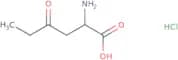
CAS:<p>Versatile small molecule scaffold</p>Formula:C5H10O2SPurity:Min. 95%Molecular weight:134.2 g/mol2-Amino-4-oxohexanoic acid hydrochloride
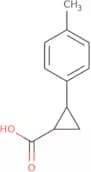
CAS:<p>Versatile small molecule scaffold</p>Formula:C6H12ClNO3Purity:Min. 95%Molecular weight:181.62 g/molrac-(1R,2R)-2-(4-Methylphenyl)cyclopropane-1-carboxylic acid
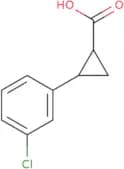
CAS:<p>Versatile small molecule scaffold</p>Formula:C11H12O2Purity:Min. 95%Molecular weight:176.21 g/molrac-(1R,2R)-2-(3-Chlorophenyl)cyclopropane-1-carboxylic acid
CAS:<p>Versatile small molecule scaffold</p>Formula:C10H9ClO2Purity:Min. 95%Molecular weight:196.63 g/molrac-(1R,2R)-2-(4-Nitrophenyl)cyclopropane-1-carboxylic acid
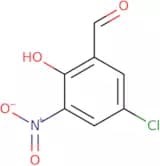
CAS:<p>Versatile small molecule scaffold</p>Formula:C10H9NO4Purity:Min. 95%Molecular weight:207.18 g/mol5-Chloro-3-nitrosalicylaldehyde
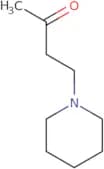
CAS:<p>5-Chloro-3-nitrosalicylaldehyde is a cyclohexanol with catalytic properties. It has been shown to have high activity in the transfer and selectivity of cyclohexanone from cyclohexane. 5-Chloro-3-nitrosalicylaldehyde has also been used as a ligand in the preparation of catalysts for electrochemical reactions. 5-Chloro-3-nitrosalicylaldehyde is used in spectroscopic studies and elemental analysis, which includes elemental analysis by gas chromatography, atomic absorption spectroscopy, inductively coupled plasma mass spectrometry, and X ray powder diffraction.</p>Formula:C7H4ClNO4Purity:Min. 95%Molecular weight:201.56 g/mol4-(Piperidin-1-yl)butan-2-one
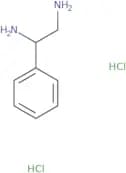
CAS:<p>Versatile small molecule scaffold</p>Formula:C9H17NOPurity:Min. 95%Molecular weight:155.24 g/mol1-Phenylethane-1,2-diamine dihydrochloride
CAS:<p>Versatile small molecule scaffold</p>Formula:C8H14Cl2N2Purity:Min. 95%Molecular weight:209.12 g/mol2-Propenoic acid, 3-(4-cyanophenyl)-, (E)-
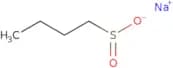
CAS:<p>2-Propenoic acid, 3-(4-cyanophenyl)-, (E)- is a fatty acid that is used in the production of biodiesel. This reaction is catalyzed by an acid methyl ester, which can be either reactive or unreactive. The product of this reaction - fatty acid methyl esters - has significant activity as an anion and has a high boiling point. It also has the potential to be used as a fuel in the future.</p>Formula:C10H7NO2Purity:Min. 95%Molecular weight:173.17 g/molSodium butane-1-sulfinate
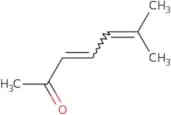
CAS:<p>Sodium butane-1-sulfinate is a reagent that can be used to synthesize sulfoxides, pyrrole derivatives, and other organic compounds. It is also used as a salt form for pharmaceuticals. Sodium butane-1-sulfinate may be used to produce sulfoxides, which are often used in organic synthesis because they are both reactive and unreactive. This compound has been found to be an antagonist of the CRTH2 receptor, which is involved in the production of prostaglandins that regulate inflammation.</p>Formula:C4H9NaO2SPurity:Min. 95%Molecular weight:144.17 g/mol6-Methyl-3,5-heptadien-2-one
CAS:<p>This product is a mixture of 6-methyl-3,5-heptadien-2-one and 2,6-dimethyloctane. It has a pleasant, fruity odor. It is used as an additive for perfumes and other products to improve the smell. This product can be found in foods such as meat, cheese, chocolate, and coffee. The minutiflora plant contains this compound. It is also present in propolis and chitosan nanoparticles (as an antioxidant). The maltol content of this product is about 95% with yields ranging from 10% to 50%.</p>Formula:C8H12OPurity:Min. 95%Molecular weight:124.18 g/molBicyclo[3.1.0]hexane-6-carboxylic acid, somers
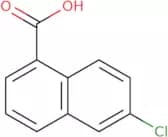
CAS:<p>Bicyclo[3.1.0]hexane-6-carboxylic acid, somers is an organic compound that is a carboxylic acid derivative with a cyclopentane ring and six carboxyl groups. It is used in the synthesis of other compounds, such as hydroxyalkyl, tetrahydropyranyl, sulfur, carboxylic acid, alkylthio, c1-6 alkyl, cycloalkyl and efficient carboxylic. Bicyclo[3.1.0]hexane-6-carboxylic acid, somers can be synthesized from bicyclo[2.2.1]heptane-2-carboxylic acid by reaction with ethylene oxide and hydrogen sulfide in the presence of a catalytic amount of hydrochloric acid or pyridine hydrochloride.</p>Formula:C7H10O2Purity:Min. 95%Molecular weight:126.15 g/mol6-Chloronaphthalene-1-carboxylic acid
CAS:<p>6-Chloronaphthalene-1-carboxylic acid is a chlorinated aromatic compound with the chemical formula ClCH=CClO2H. The compound was first synthesized in 1887 by Friedel and Crafts reaction between aluminum chloride and 2-furoic acid. It is an intermediate in the production of chlorobenzene, which is used to make polychlorinated biphenyls (PCBs). 6-Chloronaphthalene-1-carboxylic acid can be prepared by nitration of benzene or toluene, followed by hydrolysis with hydrochloric acid. It also has applications as a herbicide.</p>Formula:C11H7ClO2Purity:Min. 95%Molecular weight:206.62 g/mol2-Amino-2-[4-(aminomethyl)phenyl]acetic acid dihydrochloride
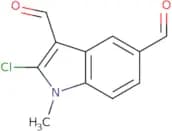
CAS:<p>Versatile small molecule scaffold</p>Formula:C9H14Cl2N2O2Purity:Min. 95%Molecular weight:253.12 g/mol2-Chloro-1-methyl-1H-indole-3,5-dicarbaldehyde
CAS:<p>Versatile small molecule scaffold</p>Formula:C11H8ClNO2Purity:Min. 95%Molecular weight:221.64 g/mol8-Methyl-1,4-dioxaspiro[4.5]decan-8-ol
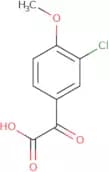
CAS:<p>Versatile small molecule scaffold</p>Formula:C9H16O3Purity:Min. 95%Molecular weight:172.23 g/mol2-(3-Chloro-4-methoxyphenyl)-2-oxoacetic acid
CAS:<p>Versatile small molecule scaffold</p>Formula:C9H7ClO4Purity:Min. 95%Molecular weight:214.6 g/molrac-[(1R,2S,4R,5R,6R)-3-Oxatricyclo[3.2.1.0,2,4]octan-6-yl]methanamine
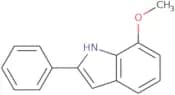
CAS:<p>Versatile small molecule scaffold</p>Formula:C8H13NOPurity:Min. 95%Molecular weight:139.2 g/mol7-Methoxy-2-phenyl-1H-indole
CAS:<p>Versatile small molecule scaffold</p>Formula:C15H13NOPurity:Min. 95%Molecular weight:223.27 g/molImidazo[1,2-a]pyridin-5-ylamine
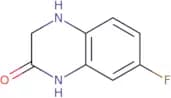
CAS:<p>Versatile small molecule scaffold</p>Formula:C7H7N3Purity:Min. 95%Molecular weight:133.15 g/mol7-Fluoro-3,4-dihydro-2(1H)-quinoxalinone
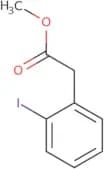
CAS:<p>Versatile small molecule scaffold</p>Formula:C8H7FN2OPurity:Min. 95%Molecular weight:166.15 g/molMethyl 2-(2-iodophenyl)acetate
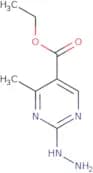
CAS:<p>Methyl 2-(2-iodophenyl)acetate is an alkylating agent that inhibits the growth of cancer cells by binding to their estrogen receptors. It has been shown that this drug binds to the estrogen receptor and blocks its interaction with estradiol in MCF-7 cells. Methyl 2-(2-iodophenyl)acetate also inhibits cell cycle progression, leading to cancer cell death. The stereoselective nature of this drug may be due to a specific interaction with the estrogen receptor, as well as other interactions with proteins in the target cell. In addition, this compound can be used to treat breast cancer by inhibiting tumor growth and stimulating apoptosis in MDA-MB-231 cells.</p>Formula:C9H9IO2Purity:Min. 95%Molecular weight:276.07 g/mol2-Hydrazino-4-methyl-pyrimidine-5-carboxylic acid ethyl ester
CAS:<p>2-Hydrazino-4-methylpyrimidine-5-carboxylic acid ethyl ester is a heterocyclic compound that is used in organic synthesis. It is obtained by the reaction of ethylene with chloroacetic acid and 2,6-dichloropyrimidine. This product can be used as a cocatalyst to promote the polymerization of ethylene. The molecular structure of this heterocyclic ring consists of three carbon atoms, five nitrogen atoms, and two oxygen atoms. The nomenclature for this product can be found in IUPAC Gold Book 1985. Triisobutylaluminium (TIBA) is a typical catalyst for the reaction. In addition, 2-hydrazino-4-methylpyrimidine-5-carboxylic acid ethyl ester chelates with copper or zinc compounds to form catalysts for reactions with other substrates.</p>Formula:C8H12N4O2Purity:Min. 95%Molecular weight:196.21 g/mol3-Ethyl-4,5-dihydro-1,2-oxazole-5-carbonitrile
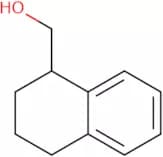
CAS:<p>Versatile small molecule scaffold</p>Formula:C6H8N2OPurity:Min. 95%Molecular weight:124.14 g/mol(1,2,3,4-Tetrahydronaphthalen-1-yl)methanol
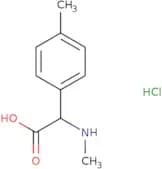
CAS:<p>Versatile small molecule scaffold</p>Formula:C11H14OPurity:Min. 95%Molecular weight:162.23 g/mol2-(Methylamino)-2-(4-methylphenyl)acetic acid hydrochloride
CAS:<p>Versatile small molecule scaffold</p>Formula:C10H14ClNO2Purity:Min. 95%Molecular weight:215.67 g/mol3-Bromo-5,7-dimethyl-1H,2H-pyrazolo[1,5-a]pyrimidin-2-one
CAS:<p>Versatile small molecule scaffold</p>Formula:C8H8BrN3OPurity:Min. 95%Molecular weight:242.07 g/mol3-(1-Benzothiophen-3-yl)-2-oxopropanoic acid
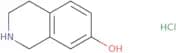
CAS:<p>Versatile small molecule scaffold</p>Formula:C11H8O3SPurity:Min. 95%Molecular weight:220.2 g/mol1,2,3,4-tetrahydroisoquinolin-7-ol hydrochloride
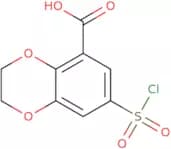
CAS:<p>Versatile small molecule scaffold</p>Formula:C9H12ClNOPurity:Min. 95%Molecular weight:185.65 g/mol7-(Chlorosulfonyl)-2,3-dihydro-1,4-benzodioxine-5-carboxylic acid
CAS:<p>Versatile small molecule scaffold</p>Formula:C9H7ClO6SPurity:Min. 95%Molecular weight:278.67 g/mol7-Nitro-2,3-dihydro-1,4-benzodioxine-5-carboxylic acid
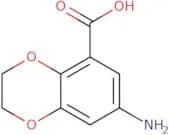
CAS:<p>Versatile small molecule scaffold</p>Formula:C9H7NO6Purity:Min. 95%Molecular weight:225.15 g/mol7-Amino-2,3-dihydro-1,4-benzodioxine-5-carboxylic acid
CAS:<p>Versatile small molecule scaffold</p>Formula:C9H9NO4Purity:Min. 95%Molecular weight:195.17 g/mol6,7-Dibromo-2,3-dihydro-1,4-benzodioxine-5-carboxylic acid
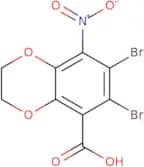
CAS:<p>Versatile small molecule scaffold</p>Formula:C9H6Br2O4Purity:Min. 95%Molecular weight:337.9 g/mol6,7-Dibromo-8-nitro-2,3-dihydro-1,4-benzodioxine-5-carboxylic acid
CAS:<p>Versatile small molecule scaffold</p>Formula:C9H5Br2NO6Purity:Min. 95%Molecular weight:382.95 g/mol8-Chloro-2,3-dihydro-1,4-benzodioxine-5-carboxylic acid
CAS:<p>Versatile small molecule scaffold</p>Formula:C9H7ClO4Purity:Min. 95%Molecular weight:214.6 g/mol6,7-Dinitro-2,3-dihydro-1,4-benzodioxine-5-carboxylic acid
CAS:<p>Versatile small molecule scaffold</p>Formula:C9H6N2O8Purity:Min. 95%Molecular weight:270.2 g/mol2,4-Diethyl 3-ethyl-5-methyl-1H-pyrrole-2,4-dicarboxylate
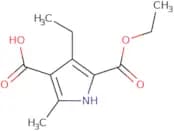
CAS:<p>Versatile small molecule scaffold</p>Formula:C13H19NO4Purity:Min. 95%Molecular weight:253.29 g/mol5-(Ethoxycarbonyl)-4-ethyl-2-methyl-1H-pyrrole-3-carboxylic acid
CAS:<p>Versatile small molecule scaffold</p>Formula:C11H15NO4Purity:Min. 95%Molecular weight:225.24 g/mol2-Methyl-6-phenylpyridine-3-carboxylic acid
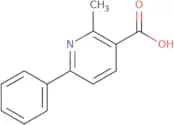
CAS:<p>2-Methyl-6-phenylpyridine-3-carboxylic acid is a compound that has been used as an antimicrobial agent. It is the most active of the aldehydes for the treatment of tuberculosis. 2-Methyl-6-phenylpyridine-3-carboxylic acid inhibits bacterial growth by binding to DNA dependent RNA polymerase, thereby preventing transcription and replication. The high frequency of human activity has been shown using a patch clamp technique on human erythrocytes. This active form is metabolized through a number of metabolic transformations, including hydrolysis by esterases or glucuronidases, oxidation by cytochrome P450 enzymes, reduction by glutathione reductase, or conjugation with glucuronic acid. 2 methyl 6 phenylpyridine 3 carboxylic acid also specifically binds to markers expressed at high levels in Mycobacterium tuberculosis strains (e.g</p>Formula:C13H11NO2Purity:Min. 95%Molecular weight:213.23 g/mol4-[4-(Oxiran-2-ylmethoxy)phenyl]butan-2-one
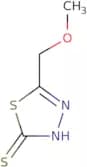
CAS:<p>Versatile small molecule scaffold</p>Formula:C13H16O3Purity:Min. 95%Molecular weight:220.26 g/mol5-Methoxymethyl-1,3,4-thiadiazole-2-thiol
CAS:<p>Versatile small molecule scaffold</p>Formula:C4H6N2OS2Purity:Min. 95%Molecular weight:162.2 g/mol2-(1,2-Thiazol-4-yl)acetonitrile
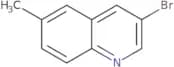
CAS:<p>Versatile small molecule scaffold</p>Formula:C5H4N2SPurity:Min. 95%Molecular weight:124.2 g/mol3-Bromo-6-methylquinoline
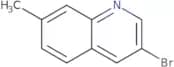
CAS:<p>3-Bromo-6-methylquinoline is a helical molecule with an axial arrangement of methyl groups around the central benzene ring. It has been shown to undergo racemization in aqueous solution, and the helicenes are photoproducts from the reaction. The photophysical properties of 3-bromo-6-methylquinoline have been studied extensively and it is found to be a good candidate for applications in organic light emitting diodes and solar cells. Computational studies have shown that 3-bromo-6-methylquinoline is a potential substrate for alkylation reactions with pyridinium ions and may be used as a catalyst.<br>Helix molecules are composed of repeating units called turns or residues. Each turn consists of two parts: one part which runs up the center of the helix, called the backbone; and one part which runs down the outside edge, called the side chain. The backbone is always made</p>Formula:C10H8BrNPurity:Min. 95%Molecular weight:222.08 g/mol3-Bromo-7-methylquinoline
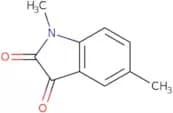
CAS:<p>Versatile small molecule scaffold</p>Formula:C10H8BrNPurity:Min. 95%Molecular weight:222.08 g/mol1,5-Dimethyl-1H-indole-2,3-dione
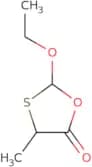
CAS:<p>1,5-Dimethyl-1H-indole-2,3-dione is a molecule with antibacterial activity. It has been shown to have interactions with staphylococcus and subtilis strains. Computational results show that the molecule has inhibitory effects on bacterial dna gyrase and topoisomerase IV. This inhibits the synthesis of bacterial proteins and leads to cell death. Hydrazides have been shown to be effective against staphylococcus aureus isolates and are hypothesized to inhibit protein synthesis by binding to bacterial ribosomes. The mechanism of action of 1,5-dimethyl-1H-indole-2,3-dione is not yet known.</p>Formula:C10H9NO2Purity:Min. 95%Molecular weight:175.19 g/mol2-Ethoxy-4-methyl-1,3-oxathiolan-5-one
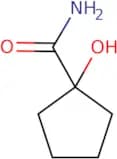
CAS:<p>Versatile small molecule scaffold</p>Formula:C6H10O3SPurity:Min. 95%Molecular weight:162.21 g/mol1-Hydroxycyclopentane-1-carboxamide
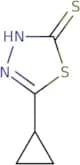
CAS:<p>Versatile small molecule scaffold</p>Formula:C6H11NO2Purity:Min. 95%Molecular weight:129.16 g/mol5-Cyclopropyl-1,3,4-thiadiazole-2-thiol
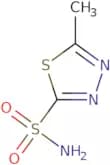
CAS:<p>Versatile small molecule scaffold</p>Formula:C5H6N2S2Purity:Min. 95%Molecular weight:158.2 g/mol5-Methyl-1,3,4-thiadiazole-2-sulfonamide
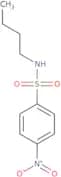
CAS:<p>Versatile small molecule scaffold</p>Formula:C3H5N3O2S2Purity:Min. 95%Molecular weight:179.2 g/molN-Butyl-4-nitrobenzenesulfonamide
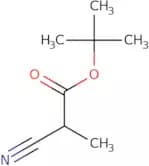
CAS:<p>N-Butyl-4-nitrobenzenesulfonamide is a chemical compound that belongs to the group of nitro compounds. It is synthesized by the reaction of an aliphatic amine with nitrobenzenesulfonyl chloride. The structure of this compound is characterized by an electron-deficient phenyl ring, which can be protonated and form a radical anion. N-Butyl-4-nitrobenzenesulfonamide has been shown to yield nitrated aliphatic amines, such as 3-nitropropane sulfonamide, when treated with sodium nitrate in dilute sulfuric acid. This chemical reaction occurs through radical ion mechanisms and involves the cleavage of a bond between two carbon atoms.</p>Formula:C10H14N2O4SPurity:Min. 95%Molecular weight:258.3 g/moltert-Butyl 2-cyano-2-methylacetate
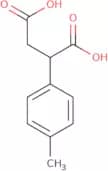
CAS:<p>tert-Butyl 2-cyano-2-methylacetate is a nonpolar chemical that is used as an alkylating agent in organic chemistry. It is synthesized by the reaction of glyoxylate and imine, which forms an enantiomeric pair with opposite stereogenic properties. The compound can also be used in asymmetric synthesis to form enantiomerically pure products. This compound has been shown to have catalytic activity when dissolved in organic solvents. Tert-butyl 2-cyano-2-methylacetate is soluble in both polar and nonpolar solvents, making it suitable for use in a variety of reactions.</p>Formula:C8H13NO2Purity:Min. 95%Molecular weight:155.19 g/mol2-(4-Methylphenyl)butanedioic acid
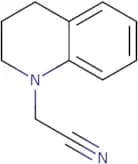
CAS:<p>Versatile small molecule scaffold</p>Formula:C11H12O4Purity:Min. 95%Molecular weight:208.21 g/mol2-(1,2,3,4-Tetrahydroquinolin-1-yl)acetonitrile
CAS:<p>Versatile small molecule scaffold</p>Formula:C11H12N2Purity:Min. 95%Molecular weight:172.23 g/mol6-chloro-3-methylbenzo[b]thiophene-2-carboxylic acid
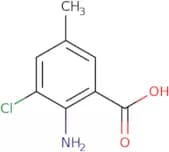
CAS:<p>Versatile small molecule scaffold</p>Formula:C10H7ClO2SPurity:Min. 95%Molecular weight:226.67 g/mol2-Amino-3-chloro-5-methylbenzoic acid
CAS:<p>Versatile small molecule scaffold</p>Formula:C8H8ClNO2Purity:Min. 95%Molecular weight:185.61 g/mol2-Cyclohexyl-oxazole-4-carboxylic acid
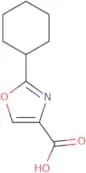
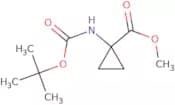
CAS:<p>Versatile small molecule scaffold</p>Formula:C10H13NO3Purity:Min. 95%Molecular weight:195.22 g/molMethyl 1-((tert-butoxycarbonyl)amino)cyclopropanecarboxylate
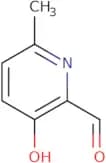
CAS:<p>Methyl 1-((tert-butoxycarbonyl)amino)cyclopropanecarboxylate is a six-membered analogue of the five-membered ring compound iprodione. It is used in the synthesis of compounds that are used as fungicides, such as propiconazole and fenpropimorph. This chemical reacts with nucleophiles to form adducts, which can be isolated in high yield by chromatography or crystallization. The methyl group in this compound also makes it an analogue of the six-membered ring molecule methylcyclopropane carboxylate.</p>Formula:C10H17NO4Purity:Min. 95%Molecular weight:215.25 g/mol3-Hydroxy-6-methylpyridine-2-carbaldehyde
CAS:<p>3-Hydroxy-6-methylpyridine-2-carbaldehyde is a building block for the synthesis of spiropyran, a magnetic heterocyclic compound. 3-Hydroxy-6-methylpyridine-2-carbaldehyde is an aldehyde with a short chain and has the ability to form crossover chains. It has been shown to be fluorescent under UV light and has magnetic properties.</p>Formula:C7H7NO2Purity:Min. 95%Molecular weight:137.14 g/mol5-methylfuro[3,2-b]pyridine-2-carboxylic Acid hydrochloride
CAS:<p>Versatile small molecule scaffold</p>Formula:C9H7NO3·HClPurity:Min. 95%Molecular weight:213.61 g/molrac-(1R,5S)-1-Phenyl-3-azabicyclo[3.1.0]hexane hydrochloride
CAS:<p>Versatile small molecule scaffold</p>Formula:C11H14ClNPurity:Min. 95%Molecular weight:195.69 g/molrac-(1R,5S)-1-Phenyl-3-azabicyclo[3.1.0]hexane-2,4-dione
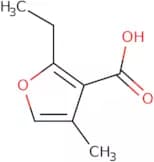
CAS:<p>Versatile small molecule scaffold</p>Formula:C11H9NO2Purity:Min. 95%Molecular weight:187.19 g/mol2-Ethyl-4-methylfuran-3-carboxylic acid
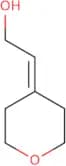
CAS:<p>Versatile small molecule scaffold</p>Formula:C8H10O3Purity:Min. 95%Molecular weight:154.16 g/mol2-(Oxan-4-ylidene)ethan-1-ol
CAS:<p>Versatile small molecule scaffold</p>Formula:C7H12O2Purity:Min. 95%Molecular weight:128.2 g/mol[(1E)-3-(Hydroxyamino)prop-1-en-1-yl]phosphonic acid
CAS:<p>Versatile small molecule scaffold</p>Formula:C3H8NO4PPurity:Min. 95%Molecular weight:153.07 g/mol[(2-Chlorobenzyl)thio]acetic acid
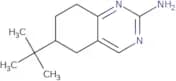
CAS:<p>Versatile small molecule scaffold</p>Formula:C9H9ClO2SPurity:Min. 95%Molecular weight:216.68 g/mol6-tert-Butyl-5,6,7,8-tetrahydroquinazolin-2-amine
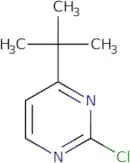
CAS:<p>Versatile small molecule scaffold</p>Formula:C12H19N3Purity:Min. 95%Molecular weight:205.3 g/mol4-tert-Butyl-2-chloropyrimidine
CAS:<p>4-tert-Butyl-2-chloropyrimidine is an Australian nitrogen heterocycle with a chiral center. It is a metal complex that has substituents on the ring and the nitrogen atom. 4-tert-Butyl-2-chloropyrimidine is a mononuclear ligand.</p>Formula:C8H11ClN2Purity:Min. 95%Molecular weight:170.64 g/mol4-(tert-Butyl)pyrimidine-2-thiol
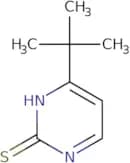
CAS:<p>Versatile small molecule scaffold</p>Formula:C8H12N2SPurity:Min. 95%Molecular weight:168.26 g/mol[4-(2-Methyl-1,3-dioxolan-2-yl)phenyl]methanamine
CAS:<p>Versatile small molecule scaffold</p>Formula:C11H15NO2Purity:Min. 95%Molecular weight:193.24 g/mol6-(Ethylsulfanyl)pyrazine-2-carboxylic acid
CAS:<p>Versatile small molecule scaffold</p>Formula:C7H8N2O2SPurity:Min. 95%Molecular weight:184.22 g/mol6-[3-(Trifluoromethyl)phenyl]pyridazin-3-ol
CAS:<p>6-[3-(Trifluoromethyl)phenyl]pyridazin-3-ol is a medicament that belongs to the class of anti-tumour agents. It was shown to have antitumor activity against liver cancer in mice. 6-[3-(Trifluoromethyl)phenyl]pyridazin-3-ol inhibits the growth of tumor cells by binding to the nucleus and preventing transcription of DNA into RNA. This drug also inhibits erythrocyte proliferation and increases the rate of apoptosis, which may be due to its ability to inhibit the synthesis of proteins required for cell division.</p>Formula:C11H7F3N2OPurity:Min. 95%Molecular weight:240.18 g/mol3-Chloro-6-[3-(trifluoromethyl)phenyl]pyridazine
CAS:<p>Versatile small molecule scaffold</p>Formula:C11H6ClF3N2Purity:Min. 95%Molecular weight:258.62 g/mol2-(2-Chlorophenyl)-2-(morpholin-4-yl)acetonitrile
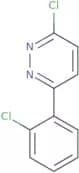
CAS:<p>Versatile small molecule scaffold</p>Formula:C12H13ClN2OPurity:Min. 95%Molecular weight:236.7 g/mol3-Chloro-6-(2-chlorophenyl)pyridazine
CAS:<p>Versatile small molecule scaffold</p>Formula:C10H6Cl2N2Purity:Min. 95%Molecular weight:225.07 g/mol6-(2-Fluorophenyl)pyridazin-3(2H)-one
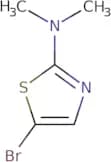
CAS:<p>Versatile small molecule scaffold</p>Formula:C10H7FN2OPurity:Min. 95%Molecular weight:190.18 g/mol5-Bromo-N,N-dimethyl-1,3-thiazol-2-amine
CAS:<p>Versatile small molecule scaffold</p>Formula:C5H7BrN2SPurity:Min. 95%Molecular weight:207.09 g/mol4-Ethylhexan-1-ol
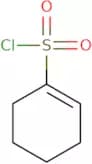
CAS:<p>Versatile small molecule scaffold</p>Formula:C8H18OPurity:Min. 95%Molecular weight:130.2 g/molCyclohex-1-ene-1-sulfonyl chloride
CAS:<p>Versatile small molecule scaffold</p>Formula:C6H9ClO2SPurity:Min. 95%Color and Shape:Clear LiquidMolecular weight:180.65 g/mol5-(Benzylamino)-8-thia-4,6-diazatricyclo[7.4.0.0,2,7]trideca-1(9),2(7),5-trien-3-one
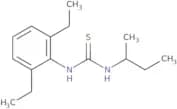
CAS:<p>Versatile small molecule scaffold</p>Formula:C17H17N3OSPurity:Min. 95%Molecular weight:311.4 g/mol3-(Butan-2-yl)-1-(2,6-diethylphenyl)thiourea
CAS:<p>Versatile small molecule scaffold</p>Formula:C15H24N2SPurity:Min. 95%Molecular weight:264.4 g/mol3-Acetylbenzo[b]furan
CAS:<p>3-Acetylbenzo[b]furan is a potent inhibitor of lipase and other enzymes. It has been shown to inhibit acetaldehyde dehydrogenase, an enzyme that catalyzes the conversion of acetaldehyde to acetic acid. 3-Acetylbenzo[b]furan also inhibits chemoenzymatic reactions and has a potent inhibitory activity against asymmetric synthesis. This compound has been shown to be useful for the production of chiral compounds with high selectivities. 3-Acetylbenzo[b]furan can be used as a ligand and isomeric in various fluorescent assays.</p>Formula:C10H8O2Purity:Min. 95%Molecular weight:160.17 g/molRU 24969
CAS:<p>RU 24969 is a 5-ht1a and 5-ht1b receptor agonist and has been shown to increase locomotor activity in animals. This drug also antagonizes the effects of drugs that bind to the 5-ht1b receptor, such as sumatriptan, which can lead to an increase in locomotor activity. RU 24969 may have therapeutic uses for treating depression and anxiety disorders. It is also an antagonist of 5-ht2 receptors, which can cause an increase in dopamine levels and a decrease in camp levels.</p>Formula:C14H16N2OPurity:Min. 95%Molecular weight:228.29 g/mol5-Phenyl-1H-indole
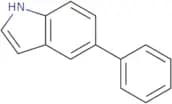
CAS:<p>Phenylindole is a chemical compound that is used as a medicine to treat bacterial infections. It has been shown to inhibit the production of chemokines, which are proinflammatory cytokines that play an important role in the immune system. Phenylindole has been shown to cross-couple with biphenyl or other compounds and has antibacterial activity. It can be used for microscopy to optimize water content or other factors such as pH. Phenylindole inhibits bacterial growth by binding to the ribosomal RNA and preventing protein synthesis. The inhibitory effect can be observed through morphological changes, such as cell shrinkage or cell lysis. Phenylindole has also been found to have antifungal effects, which may be due to its ability to react with aryl halides or activate energy for aryl chlorides.</p>Formula:C14H11NPurity:Min. 95%Molecular weight:193.25 g/mol2-Phenyl-1H-benzimidazole-7-carboxylic acid
CAS:<p>2-Phenyl-1H-benzimidazole-7-carboxylic acid is a heterocyclic compound that has been shown to have antiviral and antiparasitic properties. It is an analog of benzimidazole, which is a lead compound for the development of new drugs for the treatment of viral diseases, such as coxsackievirus B3. This drug also has antiinflammatory properties and is documented to inhibit Coxsackie virus in cell culture.</p>Formula:C14H10N2O2Purity:Min. 95%Molecular weight:238.24 g/mol1-Ethyltetrahydro-2(1H)-pyrimidinone
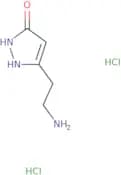
CAS:<p>Versatile small molecule scaffold</p>Formula:C6H12N2OPurity:Min. 95%Molecular weight:128.17 g/mol5-(2-Aminoethyl)-2,3-dihydro-1H-pyrazol-3-one dihydrochloride
CAS:<p>Versatile small molecule scaffold</p>Formula:C5H11Cl2N3OPurity:Min. 95%Molecular weight:200.06 g/molEthyl 4-{[(tert-butoxy)carbonyl]amino}-3-oxopentanoate
CAS:<p>Versatile small molecule scaffold</p>Formula:C12H20O5Purity:Min. 95%Molecular weight:244.28 g/mol1-(Pyridazin-4-yl)propan-1-one
CAS:<p>Versatile small molecule scaffold</p>Formula:C7H8N2OPurity:Min. 95%Molecular weight:136.15 g/mol4-Azido-[1,2,3,4]tetrazolo[1,5-a]quinoxaline
CAS:<p>Versatile small molecule scaffold</p>Formula:C8H4N8Purity:Min. 95%Molecular weight:212.17 g/mol2-[(2,6-Difluorophenyl)formamido]acetic acid
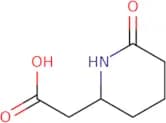
CAS:<p>Versatile small molecule scaffold</p>Formula:C9H7F2NO3Purity:Min. 95%Molecular weight:215.15 g/mol2-(6-Oxopiperidin-2-yl)acetic acid
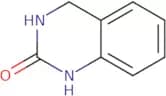
CAS:<p>Versatile small molecule scaffold</p>Formula:C7H11NO3Purity:Min. 95%Molecular weight:157.17 g/mol3,4-Dihydro-1H-quinazolin-2-one
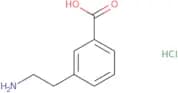
CAS:<p>3,4-Dihydro-1H-quinazolin-2-one is a compound that belongs to the class of thp-1 cells. It has been shown to inhibit the proliferation of cancer cells in vitro. 3,4-Dihydro-1H-quinazolin-2-one inhibits the production of oleanonic acid and other prostaglandins by inhibiting cyclooxygenase and lipoxygenase activities. This compound is stable in hydrochloric acid, which may be used for chemical synthesis. The flow system is a technique for synthesizing polymers with high molecular weight by polymerization at elevated temperature and pressure. 3,4-Dihydro-1H-quinazolin-2-one is minimally toxic to mammals and can be easily synthesized using palladium catalysis with amino acids as coupling partners. Biological studies have shown that it has heteroatomic properties and reacts through an S N 2 mechanism</p>Formula:C8H8N2OPurity:Min. 95%Molecular weight:148.16 g/mol3-(2-Aminoethyl)benzoic acid hydrochloride
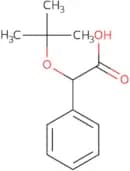
CAS:<p>Versatile small molecule scaffold</p>Formula:C9H12ClNO2Purity:Min. 95%Molecular weight:201.65 g/mol2-(tert-Butoxy)-2-phenylacetic acid
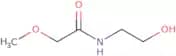
CAS:<p>Versatile small molecule scaffold</p>Formula:C12H16O3Purity:Min. 95%Molecular weight:208.25 g/molN-(2-Hydroxyethyl)-2-methoxyacetamide
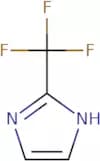
CAS:<p>Versatile small molecule scaffold</p>Formula:C5H11NO3Purity:Min. 95%Molecular weight:133.15 g/mol2-(Trifluoromethyl)-1H-imidazole
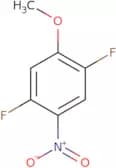
CAS:<p>2-(Trifluoromethyl)-1H-imidazole is a petrochemical that has a trifluoromethyl group. The imidazoles are thermally activated and pentafluoroethyl, ethane, reactive, hydrophobic, and their analogs react with ethyl bromoacetate to form an ether linkage. 2-(Trifluoromethyl)-1H-imidazole is used in the synthesis of products such as the linker for reaction mechanism with trifluoroacetyl.</p>Formula:C4H3F3N2Purity:Min. 95%Molecular weight:136.08 g/mol1,4-difluoro-2-methoxy-5-nitrobenzene
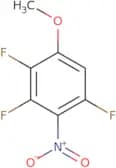
CAS:<p>Versatile small molecule scaffold</p>Formula:C7H5NO3F2Purity:Min. 95%Molecular weight:189.11 g/mol1,3,4-Trifluoro-5-methoxy-2-nitrobenzene
CAS:<p>Versatile small molecule scaffold</p>Formula:C7H4F3NO3Purity:Min. 95%Molecular weight:207.11 g/molEthyl 3-formyl-2,2-dimethylcyclopropane-1-carboxylate
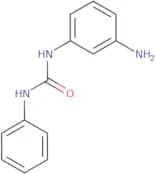
CAS:<p>Versatile small molecule scaffold</p>Formula:C9H14O3Purity:Min. 95%Molecular weight:170.21 g/mol3-(3-Aminophenyl)-1-phenylurea
CAS:<p>Versatile small molecule scaffold</p>Formula:C13H13N3OPurity:Min. 95%Molecular weight:227.26 g/mol3-(2-Hydroxyethyl)-2-methyl-4H,6H,7H,8H,9H-pyrido[1,2-a]pyrimidin-4-one
CAS:<p>3-(2-Hydroxyethyl)-2-methyl-4H,6H,7H,8H,9H-pyrido[1,2-a]pyrimidin-4-one is an impurity in the drug paliperidone. It is a pyridinic acid derivative and has been used as a ligand in X-ray crystallography to identify protein structures. 3-(2-Hydroxyethyl)-2-methyl-4H,6H,7H,8H,9H-pyrido[1,2-a]pyrimidin-4 one is also known to have high detection sensitivity and can be used to analyze ammonium formate. This impurity has been detected in the urine of patients taking paliperidone extended release tablets. To remove this impurity from the drug paliperidone, it must be purified by liquid chromatography or liquid chromatography with high performance liquid chromatography (</p>Formula:C11H16N2O2Purity:Min. 95%Molecular weight:208.26 g/mol6-(tert-Butyl)-2-thioxo-2,3-dihydro-4(1H)-pyrimidinone
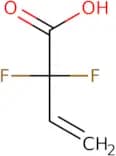
CAS:<p>Versatile small molecule scaffold</p>Formula:C8H12N2OSPurity:Min. 95%Molecular weight:184.26 g/mol2,2-Difluorobut-3-enoic acid
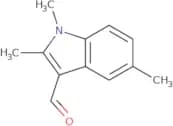
CAS:<p>Versatile small molecule scaffold</p>Formula:C4H4F2O2Purity:Min. 95%Molecular weight:122.07 g/mol1,2,5-Trimethyl-1H-indole-3-carbaldehyde
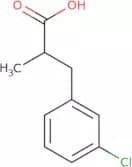
CAS:<p>Versatile small molecule scaffold</p>Formula:C12H13NOPurity:Min. 95%Molecular weight:187.24 g/mol3-(3-Chlorophenyl)-2-methylpropanoic acid
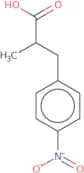
CAS:<p>Versatile small molecule scaffold</p>Formula:C10H11ClO2Purity:Min. 95%Molecular weight:198.64 g/mol2-Methyl-3-(4-nitrophenyl)propanoic acid
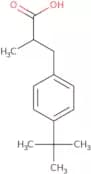
CAS:<p>Versatile small molecule scaffold</p>Formula:C10H11NO4Purity:Min. 95%Molecular weight:209.2 g/mol3-(4-tert-Butylphenyl)-2-methylpropionic acid
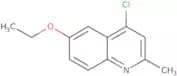
CAS:<p>Versatile small molecule scaffold</p>Formula:C14H20O2Purity:Min. 95%Molecular weight:220.31 g/mol4-Chloro-6-ethoxy-2-methylquinoline
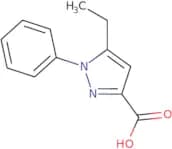
CAS:<p>Versatile small molecule scaffold</p>Formula:C12H12ClNOPurity:Min. 95%Molecular weight:221.68 g/mol5-Ethyl-1-phenyl-1H-pyrazole-3-carboxylic acid
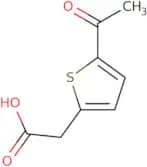
CAS:<p>Versatile small molecule scaffold</p>Formula:C12H12N2O2Purity:Min. 95%Molecular weight:216.24 g/mol(5-Acetylthien-2-yl)acetic acid
CAS:<p>Versatile small molecule scaffold</p>Formula:C8H8O3SPurity:Min. 95%Molecular weight:184.22 g/mol1-Benzyl-6-chloro-1H,2H,3H-pyrrolo[3,2-c]pyridine-7-carbonitrile
CAS:<p>1-Benzyl-6-chloro-1H,2H,3H-pyrrolo[3,2-c]pyridine-7-carbonitrile is an alkoxy compound that has been shown to react with amines and halogen to form pyridines. The compound also reacts with hydroxy groups and nucleophilic residues to form alkoxy groups. This reaction is catalyzed by hydroxy groups or a base such as sodium hydroxide or potassium hydroxide. 1-Benzyl-6-chloro-1H,2H,3H-pyrrolo[3,2-c]pyridine-7-carbonitrile can be used in the synthesis of polymers and plastics. It can also be used as a precursor for the synthesis of other compounds.</p>Formula:C15H12ClN3Purity:Min. 95%Molecular weight:269.73 g/molEncainide
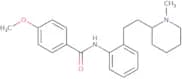
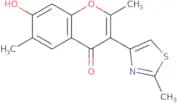
CAS:<p>Encainide is a class I antiarrhythmic drug that belongs to the group of class Ia drugs and inhibits the fast sodium channel. It slows the heart rate and decreases conduction velocity in cardiac tissue. Encainide has been shown to be effective against tachycardia and ventricular arrhythmias. It has been shown to have a stable dose-response curve as well as no known drug interactions. Encainide has also been shown to improve cardiac function by inhibiting the activity of beta-receptors in cardiac muscle, which may lead to increased contractility, improved relaxation, and increased blood flow. Encainide is mainly used for the treatment of arrhythmias in patients with certain heart conditions, such as papillary muscle dysfunction or cardiomyopathy.</p>Formula:C22H28N2O2Purity:Min. 95%Molecular weight:352.5 g/mol7-Hydroxy-2,6-dimethyl-3-(2-methyl-1,3-thiazol-4-yl)-4H-chromen-4-one
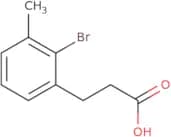
CAS:<p>Versatile small molecule scaffold</p>Formula:C15H13NO3SPurity:Min. 95%Molecular weight:287.3 g/mol3-(2-Bromo-3-methylphenyl)propanoic acid
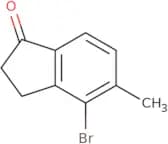
CAS:<p>Versatile small molecule scaffold</p>Formula:C10H11BrO2Purity:Min. 95%Molecular weight:243.1 g/mol4-bromo-5-methyl-2,3-dihydro-1h-inden-1-one
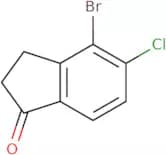
CAS:<p>Versatile small molecule scaffold</p>Formula:C10H9BrOPurity:Min. 95%Molecular weight:225.09 g/mol4-Bromo-5-chloro-2,3-dihydro-1H-inden-1-one
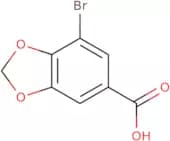
CAS:<p>Versatile small molecule scaffold</p>Formula:C9H6BrClOPurity:Min. 95%Molecular weight:245.5 g/mol7-bromo-1,3-dioxaindane-5-carboxylic acid
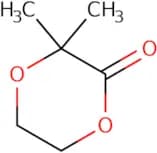
CAS:<p>Versatile small molecule scaffold</p>Formula:C8H5BrO4Purity:Min. 95%Molecular weight:245 g/mol3,3-Dimethyl-1,4-dioxan-2-one
CAS:<p>3,3-Dimethyl-1,4-dioxan-2-one (DMDO) is a chiral compound that is used in organic synthesis as a chiral auxiliary. This molecule has been shown to be useful for the stereoselective polymerization of lactones, enolates, amides and aldehydes. DMDO has also been investigated for its ability to form spindle-like polymers with glycolide and optical activity. 3,3-Dimethyl-1,4-dioxan-2-one is soluble in common organic solvents such as chloroform and dichloromethane at room temperature and can be used for the preparation of microparticles with a diameter up to 50 µm. The high yield of this compound makes it an attractive alternative to other synthetic methods.</p>Formula:C6H10O3Purity:Min. 95%Molecular weight:130.14 g/mol2-[(2-Bromoethoxy)methyl]oxirane
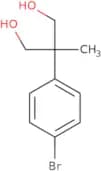
CAS:<p>Versatile small molecule scaffold</p>Formula:C5H9BrO2Purity:Min. 95%Molecular weight:181.03 g/mol2-(4-Bromophenyl)-2-methylpropane-1,3-diol
CAS:<p>Versatile small molecule scaffold</p>Formula:C10H13BrO2Purity:Min. 95%Molecular weight:245.11 g/mol2-[(6-Amino-1H-purin-8-yl)amino]ethan-1-ol
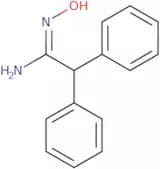
CAS:<p>2-[(6-Amino-1H-purin-8-yl)amino]ethan-1-ol (6APA) is a prodrug that is metabolized by the liver to 6-mercaptopurine (6MP). It is an antiinflammatory drug that has been shown to suppress collagen synthesis and inhibit the activity of proteases. 6APA is also used as a diagnostic agent for systemic diseases, such as reactive arthritis and systemic lupus erythematosus. This compound can be used in the treatment of inflammatory diseases, such as rheumatoid arthritis and Crohn's disease, due to its ability to inhibit the production of inflammatory compounds. The drug binds to affinity ligands which are associated with various proteins, including collagen. This binding prevents the formation of new proteins, which leads to cell death by inhibiting protein synthesis.</p>Formula:C7H10N6OPurity:Min. 95%Molecular weight:194.19 g/mol(1Z)-N'-Hydroxy-2,2-diphenylethanimidamide
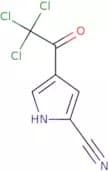
CAS:<p>Versatile small molecule scaffold</p>Formula:C14H14N2OPurity:Min. 95%Molecular weight:226.27 g/mol4-(Trichloroacetyl)-1H-pyrrole-2-carbonitrile
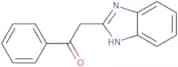
CAS:<p>Versatile small molecule scaffold</p>Formula:C7H3Cl3N2OPurity:Min. 95%Molecular weight:237.5 g/mol2-(1H-1,3-Benzodiazol-2-yl)-1-phenylethan-1-one
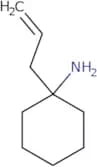
CAS:<p>2-(1H-1,3-Benzodiazol-2-yl)-1-phenylethanone is an unsymmetrical phenacyl chloride that is used in the synthesis of drugs. The generation of acidolysis products and the formation of active methylene compounds are catalyzed by 2-(1H-1,3-benzodiazol-2-yl)-1-phenylethanone. This compound is also used for the preparation of chlorides and methylhydrazones. Preparative methods for this compound involve thionyl chloride, hydrochloric acid, and phenylhydrazone.</p>Formula:C15H12N2OPurity:Min. 95%Molecular weight:236.27 g/mol1-(Prop-2-en-1-yl)cyclohexan-1-amine
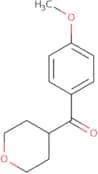
CAS:<p>Versatile small molecule scaffold</p>Formula:C9H17NPurity:Min. 95%Molecular weight:139.24 g/mol4-(4-Methoxybenzoyl)oxane
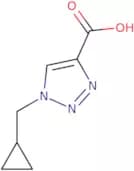
CAS:<p>Versatile small molecule scaffold</p>Formula:C13H16O3Purity:Min. 95%Molecular weight:220.26 g/mol1-(Cyclopropylmethyl)-1H-1,2,3-triazole-4-carboxylic acid
CAS:<p>Versatile small molecule scaffold</p>Formula:C7H9N3O2Purity:Min. 95%Molecular weight:167.17 g/mol2-[4-({[(9H-Fluoren-9-yl)methoxy]carbonyl}amino)-1H-pyrazol-1-yl]acetic acid
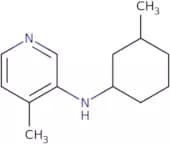
CAS:<p>Versatile small molecule scaffold</p>Formula:C20H17N3O4Purity:Min. 95%Molecular weight:363.4 g/mol4-Methyl-N-(3-methylcyclohexyl)pyridin-3-amine
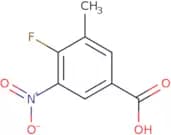
CAS:<p>Versatile small molecule scaffold</p>Formula:C13H20N2Purity:Min. 95%Molecular weight:204.31 g/mol4-Fluoro-3-methyl-5-nitrobenzoic acid
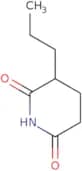
CAS:<p>Versatile small molecule scaffold</p>Formula:C8H6FNO4Purity:Min. 95%Molecular weight:199.14 g/mol3-Propylpiperidine-2,6-dione
CAS:<p>Versatile small molecule scaffold</p>Formula:C8H13NO2Purity:Min. 95%Molecular weight:155.19 g/mol3-Methyl-[1,2]oxazolo[5,4-b]pyridine-6-carboxylic acid
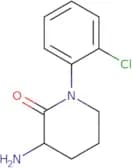
CAS:<p>Versatile small molecule scaffold</p>Formula:C8H6N2O3Purity:Min. 95%Molecular weight:178.1 g/mol3-Amino-1-(2-chlorophenyl)piperidin-2-one
CAS:<p>Versatile small molecule scaffold</p>Formula:C11H13ClN2OPurity:Min. 95%Molecular weight:224.68 g/mol3-[(Trimethylsilyl)oxy]oxane-3-carbonitrile
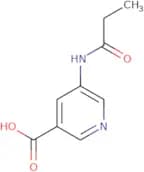
CAS:<p>Versatile small molecule scaffold</p>Formula:C9H17NO2SiPurity:Min. 95%Molecular weight:199.32 g/mol5-Propanamidopyridine-3-carboxylic acid
CAS:<p>Versatile small molecule scaffold</p>Formula:C9H10N2O3Purity:Min. 95%Molecular weight:194.19 g/mol3-Bromo-1-(2,2-dimethylpropyl)piperidin-2-one
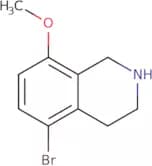
CAS:<p>Versatile small molecule scaffold</p>Formula:C10H18BrNOPurity:Min. 95%Molecular weight:248.16 g/mol5-Bromo-8-methoxy-1,2,3,4-tetrahydroisoquinoline
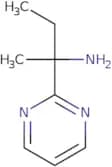
CAS:<p>Versatile small molecule scaffold</p>Formula:C10H12BrNOPurity:Min. 95%Molecular weight:242.11 g/mol2-(Pyrimidin-2-yl)butan-2-amine
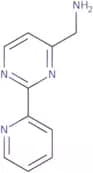
CAS:<p>Versatile small molecule scaffold</p>Formula:C8H13N3Purity:Min. 95%Molecular weight:151.21 g/mol(2-(Pyridin-2-yl)pyrimidin-4-yl)methanamine
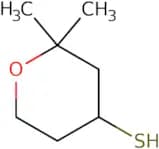
CAS:<p>Versatile small molecule scaffold</p>Formula:C10H10N4Purity:Min. 95%Molecular weight:186.21 g/mol2,2-Dimethyloxane-4-thiol
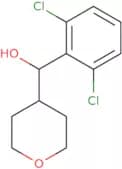
CAS:<p>Versatile small molecule scaffold</p>Formula:C7H14OSPurity:Min. 95%Molecular weight:146.25 g/mol(2,6-Dichlorophenyl)(oxan-4-yl)methanol
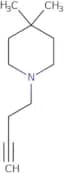
CAS:<p>Versatile small molecule scaffold</p>Formula:C12H14Cl2O2Purity:Min. 95%Molecular weight:261.14 g/mol1-(But-3-yn-1-yl)-4,4-dimethylpiperidine
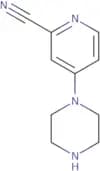
CAS:<p>Versatile small molecule scaffold</p>Formula:C11H19NPurity:Min. 95%Molecular weight:165.3 g/mol4-(Piperazin-1-yl)pyridine-2-carbonitrile
CAS:<p>Versatile small molecule scaffold</p>Formula:C10H12N4Purity:Min. 95%Molecular weight:188.23 g/mol2-(tert-Butoxy)ethane-1-sulfonamide
CAS:<p>Versatile small molecule scaffold</p>Formula:C6H15NO3SPurity:Min. 95%Molecular weight:181.26 g/molMethyl({[2-(propan-2-yl)pyrimidin-5-yl]methyl})amine
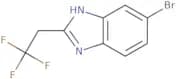
CAS:<p>Versatile small molecule scaffold</p>Formula:C9H15N3Purity:Min. 95%Molecular weight:165.24 g/mol5-Bromo-2-(2,2,2-trifluoroethyl)-1H-1,3-benzodiazole
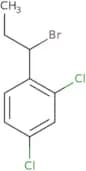
CAS:<p>Versatile small molecule scaffold</p>Formula:C9H6BrF3N2Purity:Min. 95%Molecular weight:279.06 g/mol1-(1-Bromopropyl)-2,4-dichlorobenzene
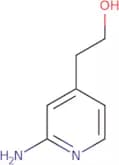
CAS:<p>Versatile small molecule scaffold</p>Formula:C9H9BrCl2Purity:Min. 95%Molecular weight:267.97 g/mol2-(2-Aminopyridin-4-yl)ethan-1-ol
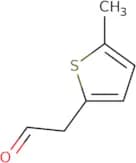
CAS:<p>Versatile small molecule scaffold</p>Formula:C7H10N2OPurity:Min. 95%Molecular weight:138.17 g/mol2-(5-Methylthiophen-2-yl)acetaldehyde
CAS:<p>Versatile small molecule scaffold</p>Formula:C7H8OSPurity:Min. 95%Molecular weight:140.2 g/mol5-{[(9H-Fluoren-9-ylmethoxy)carbonyl]amino}-2-fluorobenzoic acid
CAS:<p>Versatile small molecule scaffold</p>Formula:C22H16FNO4Purity:Min. 95%Molecular weight:377.4 g/mol3-[Cyclopropyl(methyl)amino]-4,4,4-trifluorobutanoic acid
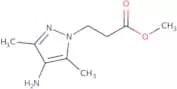
CAS:<p>Versatile small molecule scaffold</p>Formula:C8H12F3NO2Purity:Min. 95%Molecular weight:211.18 g/molMethyl 3-(4-amino-3,5-dimethyl-1H-pyrazol-1-yl)propanoate
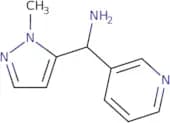
CAS:<p>Versatile small molecule scaffold</p>Formula:C9H15N3O2Purity:Min. 95%Molecular weight:197.23 g/mol(1-Methyl-1H-pyrazol-5-yl)(pyridin-3-yl)methanamine
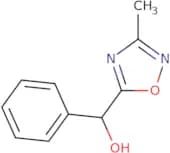
CAS:<p>Versatile small molecule scaffold</p>Formula:C10H12N4Purity:Min. 95%Molecular weight:188.23 g/mol(3-Methyl-1,2,4-oxadiazol-5-yl)(phenyl)methanol
CAS:<p>Versatile small molecule scaffold</p>Formula:C10H10N2O2Purity:Min. 95%Molecular weight:190.2 g/mol2-[4-(Propan-2-yloxy)phenyl]cyclopentan-1-amine
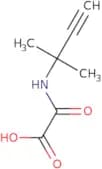
CAS:<p>Versatile small molecule scaffold</p>Formula:C14H21NOPurity:Min. 95%Molecular weight:219.32 g/mol2-((2-Methylbut-3-yn-2-yl)amino)-2-oxoacetic acid
CAS:<p>Versatile small molecule scaffold</p>Formula:C7H9NO3Purity:Min. 95%Molecular weight:155.15 g/mol[1-(2,4-Difluorophenyl)cyclopentyl]methanamine
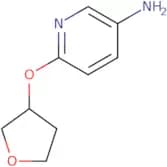
CAS:<p>Versatile small molecule scaffold</p>Formula:C12H15F2NPurity:Min. 95%Molecular weight:211.25 g/mol6-(Oxolan-3-yloxy)pyridin-3-amine
CAS:<p>Versatile small molecule scaffold</p>Formula:C9H12N2O2Purity:Min. 95%Molecular weight:180.2 g/mol1-{[1,2,4]Triazolo[4,3-a]pyrazin-8-yl}piperidin-3-ol
CAS:<p>Versatile small molecule scaffold</p>Formula:C10H13N5OPurity:Min. 95%Molecular weight:219.24 g/mol6-Fluoro-8-methyl-1,2,3,4-tetrahydroisoquinoline
CAS:<p>Versatile small molecule scaffold</p>Formula:C10H12FNPurity:Min. 95%Molecular weight:165.21 g/mol2-[1-(Cyclopropylmethyl)-3,5-dimethyl-1H-pyrazol-4-yl]acetic acid
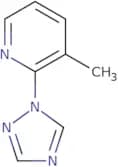
CAS:<p>Versatile small molecule scaffold</p>Formula:C11H16N2O2Purity:Min. 95%Molecular weight:208.26 g/mol3-Methyl-2-(1H-1,2,4-triazol-1-yl)pyridine
CAS:<p>Versatile small molecule scaffold</p>Formula:C8H8N4Purity:Min. 95%Molecular weight:160.2 g/mol7-Thia-1,3-diazaspiro[4.5]decane-2,4-dione
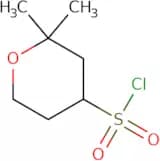
CAS:<p>Versatile small molecule scaffold</p>Formula:C7H10N2O2SPurity:Min. 95%Molecular weight:186.2 g/mol2,2-Dimethyloxane-4-sulfonyl chloride
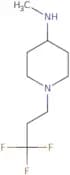
CAS:<p>Versatile small molecule scaffold</p>Formula:C7H13ClO3SPurity:Min. 95%Molecular weight:212.7 g/molN-Methyl-1-(3,3,3-trifluoropropyl)piperidin-4-amine
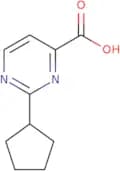
CAS:<p>Versatile small molecule scaffold</p>Formula:C9H17F3N2Purity:Min. 95%Molecular weight:210.24 g/mol2-Cyclopentylpyrimidine-4-carboxylic acid
CAS:<p>Versatile small molecule scaffold</p>Formula:C10H12N2O2Purity:Min. 95%Molecular weight:192.21 g/mol4-(3-Fluoro-4-methoxyphenyl)oxan-4-amine
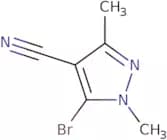
CAS:<p>Versatile small molecule scaffold</p>Formula:C12H16FNO2Purity:Min. 95%Molecular weight:225.26 g/mol5-Bromo-1,3-dimethyl-1H-pyrazole-4-carbonitrile
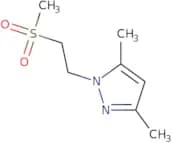
CAS:<p>Versatile small molecule scaffold</p>Formula:C6H6BrN3Purity:Min. 95%Molecular weight:200.04 g/mol1-(2-Methanesulfonylethyl)-3,5-dimethyl-1H-pyrazole
CAS:<p>Versatile small molecule scaffold</p>Formula:C8H14N2O2SPurity:Min. 95%Molecular weight:202.28 g/mol

![2H,3H,4H,5H-Naphtho[1,2-b]oxepin-5-one](/_next/image/?url=https%3A%2Fstatic.cymitquimica.com%2Fproducts%2F3D%2Fthumb-webp%2FRAA56358.webp&w=3840&q=75)
![6-Iodobenzo[d]thiazol-2-amine](/_next/image/?url=https%3A%2Fstatic.cymitquimica.com%2Fproducts%2F3D%2Fthumb-webp%2FRAA58258.webp&w=3840&q=75)
![6-Benzyl-6-azabicyclo[3.2.1]octan-3-one](/_next/image/?url=https%3A%2Fstatic.cymitquimica.com%2Fproducts%2F3D%2Fthumb-webp%2FRAA60747.webp&w=3840&q=75)
![(1R,3S,5S)-6,6-Dimethylbicyclo[3.1.0]hexan-3-ol](/_next/image/?url=https%3A%2Fstatic.cymitquimica.com%2Fproducts%2F3D%2Fthumb-webp%2FRAA61381.webp&w=3840&q=75)
![Octahydropyrrolo[1,2-a]piperazin-1-one](/_next/image/?url=https%3A%2Fstatic.cymitquimica.com%2Fproducts%2F3D%2Fthumb-webp%2FRAA62061.webp&w=3840&q=75)
![Octahydropyrrolo[1,2-a]piperazin-3-one](/_next/image/?url=https%3A%2Fstatic.cymitquimica.com%2Fproducts%2F3D%2Fthumb-webp%2FRAA62083.webp&w=3840&q=75)



![Bicyclo[3.1.0]hexane-6-carboxylic acid, somers](/_next/image/?url=https%3A%2Fstatic.cymitquimica.com%2Fproducts%2F3D%2Fthumb-webp%2FRAA65037.webp&w=3840&q=75)
![2-Amino-2-[4-(aminomethyl)phenyl]acetic acid dihydrochloride](/_next/image/?url=https%3A%2Fstatic.cymitquimica.com%2Fproducts%2F3D%2Fthumb-webp%2FRCA32062.webp&w=3840&q=75)
![8-Methyl-1,4-dioxaspiro[4.5]decan-8-ol](/_next/image/?url=https%3A%2Fstatic.cymitquimica.com%2Fproducts%2F3D%2Fthumb-webp%2FRCA33642.webp&w=3840&q=75)
![rac-[(1R,2S,4R,5R,6R)-3-Oxatricyclo[3.2.1.0,2,4]octan-6-yl]methanamine](/_next/image/?url=https%3A%2Fstatic.cymitquimica.com%2Fproducts%2F3D%2Fthumb-webp%2FRCA34153.webp&w=3840&q=75)
![Imidazo[1,2-a]pyridin-5-ylamine](/_next/image/?url=https%3A%2Fstatic.cymitquimica.com%2Fproducts%2F3D%2Fthumb-webp%2FRCA35823.webp&w=3840&q=75)

![3-Bromo-5,7-dimethyl-1H,2H-pyrazolo[1,5-a]pyrimidin-2-one](/_next/image/?url=https%3A%2Fstatic.cymitquimica.com%2Fproducts%2F3D%2Fthumb-webp%2FRCA38354.webp&w=3840&q=75)





![4-[4-(Oxiran-2-ylmethoxy)phenyl]butan-2-one](/_next/image/?url=https%3A%2Fstatic.cymitquimica.com%2Fproducts%2F3D%2Fthumb-webp%2FRCA42254.webp&w=3840&q=75)
![6-chloro-3-methylbenzo[b]thiophene-2-carboxylic acid](/_next/image/?url=https%3A%2Fstatic.cymitquimica.com%2Fproducts%2F3D%2Fthumb-webp%2FRCA49032.webp&w=3840&q=75)
![5-methylfuro[3,2-b]pyridine-2-carboxylic Acid hydrochloride](/_next/image/?url=https%3A%2Fstatic.cymitquimica.com%2Fproducts%2F3D%2Fthumb-webp%2FRCA49744.webp&w=3840&q=75)
![rac-(1R,5S)-1-Phenyl-3-azabicyclo[3.1.0]hexane hydrochloride](/_next/image/?url=https%3A%2Fstatic.cymitquimica.com%2Fproducts%2F3D%2Fthumb-webp%2FRCA50436.webp&w=3840&q=75)
![rac-(1R,5S)-1-Phenyl-3-azabicyclo[3.1.0]hexane-2,4-dione](/_next/image/?url=https%3A%2Fstatic.cymitquimica.com%2Fproducts%2F3D%2Fthumb-webp%2FRCA50437.webp&w=3840&q=75)
![[(1E)-3-(Hydroxyamino)prop-1-en-1-yl]phosphonic acid](/_next/image/?url=https%3A%2Fstatic.cymitquimica.com%2Fproducts%2F3D%2Fthumb-webp%2FRCA50829.webp&w=3840&q=75)
![[(2-Chlorobenzyl)thio]acetic acid](/_next/image/?url=https%3A%2Fstatic.cymitquimica.com%2Fproducts%2F3D%2Fthumb-webp%2FRCA51665.webp&w=3840&q=75)
![[4-(2-Methyl-1,3-dioxolan-2-yl)phenyl]methanamine](/_next/image/?url=https%3A%2Fstatic.cymitquimica.com%2Fproducts%2F3D%2Fthumb-webp%2FRCA52261.webp&w=3840&q=75)

![6-[3-(Trifluoromethyl)phenyl]pyridazin-3-ol](/_next/image/?url=https%3A%2Fstatic.cymitquimica.com%2Fproducts%2F3D%2Fthumb-webp%2FRCA54862.webp&w=3840&q=75)
![3-Chloro-6-[3-(trifluoromethyl)phenyl]pyridazine](/_next/image/?url=https%3A%2Fstatic.cymitquimica.com%2Fproducts%2F3D%2Fthumb-webp%2FRCA54863.webp&w=3840&q=75)



![5-(Benzylamino)-8-thia-4,6-diazatricyclo[7.4.0.0,2,7]trideca-1(9),2(7),5-trien-3-one](/_next/image/?url=https%3A%2Fstatic.cymitquimica.com%2Fproducts%2F3D%2Fthumb-webp%2FRCA60749.webp&w=3840&q=75)
![3-Acetylbenzo[b]furan](/_next/image/?url=https%3A%2Fstatic.cymitquimica.com%2Fproducts%2F3D%2Fthumb-webp%2FRCA61115.webp&w=3840&q=75)



![Ethyl 4-{[(tert-butoxy)carbonyl]amino}-3-oxopentanoate](/_next/image/?url=https%3A%2Fstatic.cymitquimica.com%2Fproducts%2F3D%2Fthumb-webp%2FRCA64380.webp&w=3840&q=75)

![4-Azido-[1,2,3,4]tetrazolo[1,5-a]quinoxaline](/_next/image/?url=https%3A%2Fstatic.cymitquimica.com%2Fproducts%2F3D%2Fthumb-webp%2FRCA64823.webp&w=3840&q=75)
![2-[(2,6-Difluorophenyl)formamido]acetic acid](/_next/image/?url=https%3A%2Fstatic.cymitquimica.com%2Fproducts%2F3D%2Fthumb-webp%2FRCA64838.webp&w=3840&q=75)

![3-(2-Hydroxyethyl)-2-methyl-4H,6H,7H,8H,9H-pyrido[1,2-a]pyrimidin-4-one](/_next/image/?url=https%3A%2Fstatic.cymitquimica.com%2Fproducts%2F3D%2Fthumb-webp%2FRCA69827.webp&w=3840&q=75)
![1-Benzyl-6-chloro-1H,2H,3H-pyrrolo[3,2-c]pyridine-7-carbonitrile](/_next/image/?url=https%3A%2Fstatic.cymitquimica.com%2Fproducts%2F3D%2Fthumb-webp%2FRCA75132.webp&w=3840&q=75)
![2-[(2-Bromoethoxy)methyl]oxirane](/_next/image/?url=https%3A%2Fstatic.cymitquimica.com%2Fproducts%2F3D%2Fthumb-webp%2FRCA80359.webp&w=3840&q=75)
![2-[(6-Amino-1H-purin-8-yl)amino]ethan-1-ol](/_next/image/?url=https%3A%2Fstatic.cymitquimica.com%2Fproducts%2F3D%2Fthumb-webp%2FRCA81329.webp&w=3840&q=75)
![2-[4-({[(9H-Fluoren-9-yl)methoxy]carbonyl}amino)-1H-pyrazol-1-yl]acetic acid](/_next/image/?url=https%3A%2Fstatic.cymitquimica.com%2Fproducts%2F3D%2Fthumb-webp%2FRDC76224.webp&w=3840&q=75)
![3-Methyl-[1,2]oxazolo[5,4-b]pyridine-6-carboxylic acid](/_next/image/?url=https%3A%2Fstatic.cymitquimica.com%2Fproducts%2F3D%2Fthumb-webp%2FRDC76753.webp&w=3840&q=75)
![3-[(Trimethylsilyl)oxy]oxane-3-carbonitrile](/_next/image/?url=https%3A%2Fstatic.cymitquimica.com%2Fproducts%2F3D%2Fthumb-webp%2FRDC77065.webp&w=3840&q=75)


![Methyl({[2-(propan-2-yl)pyrimidin-5-yl]methyl})amine](/_next/image/?url=https%3A%2Fstatic.cymitquimica.com%2Fproducts%2F3D%2Fthumb-webp%2FRDC79964.webp&w=3840&q=75)
![5-{[(9H-Fluoren-9-ylmethoxy)carbonyl]amino}-2-fluorobenzoic acid](/_next/image/?url=https%3A%2Fstatic.cymitquimica.com%2Fproducts%2F3D%2Fthumb-webp%2FRDC82236.webp&w=3840&q=75)
![3-[Cyclopropyl(methyl)amino]-4,4,4-trifluorobutanoic acid](/_next/image/?url=https%3A%2Fstatic.cymitquimica.com%2Fproducts%2F3D%2Fthumb-webp%2FRDC82498.webp&w=3840&q=75)
![2-[4-(Propan-2-yloxy)phenyl]cyclopentan-1-amine](/_next/image/?url=https%3A%2Fstatic.cymitquimica.com%2Fproducts%2F3D%2Fthumb-webp%2FRDC82994.webp&w=3840&q=75)
![[1-(2,4-Difluorophenyl)cyclopentyl]methanamine](/_next/image/?url=https%3A%2Fstatic.cymitquimica.com%2Fproducts%2F3D%2Fthumb-webp%2FRDC83026.webp&w=3840&q=75)
![1-{[1,2,4]Triazolo[4,3-a]pyrazin-8-yl}piperidin-3-ol](/_next/image/?url=https%3A%2Fstatic.cymitquimica.com%2Fproducts%2F3D%2Fthumb-webp%2FRDC83526.webp&w=3840&q=75)

![2-[1-(Cyclopropylmethyl)-3,5-dimethyl-1H-pyrazol-4-yl]acetic acid](/_next/image/?url=https%3A%2Fstatic.cymitquimica.com%2Fproducts%2F3D%2Fthumb-webp%2FRDC84498.webp&w=3840&q=75)
![7-Thia-1,3-diazaspiro[4.5]decane-2,4-dione](/_next/image/?url=https%3A%2Fstatic.cymitquimica.com%2Fproducts%2F3D%2Fthumb-webp%2FRDC85910.webp&w=3840&q=75)