


Building Blocks
This section contains fundamental products for the synthesis of organic and biological compounds. Building blocks are the essential starting materials used to construct complex molecules through various chemical reactions. They play a critical role in drug discovery, material science, and chemical research. At CymitQuimica, we offer a diverse range of high-quality building blocks to support your innovative research and industrial projects, ensuring you have the essential components for successful synthesis.
Subcategories of "Building Blocks"
- Boronic Acids & Boronic Acid Derivatives(5,756 products)
- Chiral Building Blocks(1,242 products)
- Hydrocarbon Building Blocks(6,093 products)
- Organic Building Blocks(60,525 products)
Found 195536 products of "Building Blocks"
Sort by
Purity (%)
0
100
|
0
|
50
|
90
|
95
|
100
6-Chloro-4-hydroxy-2-methylquinoline
CAS:<p>6-Chloro-4-hydroxy-2-methylquinoline is a vasorelaxant that blocks potassium channels in the cell membrane. 6CHMQ has been shown to inhibit calcium and potassium channels, which are involved in the transmission of nerve impulses. It also inhibits glibenclamide binding to pancreatic beta cells, which is an action that contributes to the anti-diabetic effects of this drug. 6CHMQ has been shown to block voltage gated potassium channels and may have a role in regulating blood pressure by inhibiting the release of norepinephrine.</p>Formula:C10H8ClNOPurity:Min. 95%Molecular weight:193.63 g/mol7-Chloro-4-hydroxy-2-methylquinoline
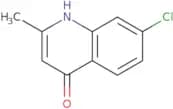
CAS:<p>Versatile small molecule scaffold</p>Formula:C10H8ClNOPurity:Min. 95%Molecular weight:193.63 g/mol8-Methoxy-2-methylquinolin-4(1H)-one
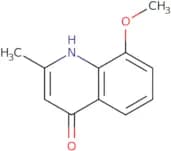
CAS:<p>Versatile small molecule scaffold</p>Formula:C11H11NO2Purity:Min. 95%Molecular weight:189.21 g/mol4-Hydroxy-6-methoxy-2-methylquinoline
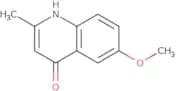
CAS:<p>4-Hydroxy-6-methoxy-2-methylquinoline is a heterocyclic compound that belongs to the quinone class of compounds. It is used as a dye in plastics and textiles, but it has also been shown to have antibacterial properties. The chemical reacts with copper ions in solution to produce hydroxyl radicals, which react with other molecules in the solution to produce reactive oxygen species such as hydrogen peroxide. These reactive oxygen species attack bacterial cells and cause cell death. 4-Hydroxy-6-methoxy-2-methylquinoline can be saponified by alkali to form 4-hydroxyquinoline, which is an analgesic drug that has been shown to have antiinflammatory activities.</p>Formula:C11H11NO2Purity:Min. 95%Molecular weight:189.21 g/mol5-(Benzoylamino)valeric Acid
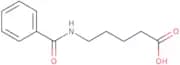
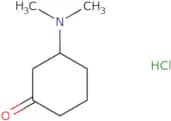
CAS:<p>Versatile small molecule scaffold</p>Formula:C12H15NO3Purity:Min. 95%Molecular weight:221.26 g/mol3-(Dimethylamino)cyclohexan-1-one hydrochloride
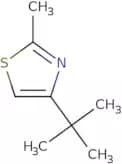
CAS:<p>Versatile small molecule scaffold</p>Formula:C8H16ClNOPurity:Min. 95%Molecular weight:177.67 g/mol4-(tert-Butyl)-2-methyl-1,3-thiazole
CAS:<p>4-(tert-Butyl)-2-methyl-1,3-thiazole is a catalyst that is used in carbonyl, heteroaryl and heteroaromatic arylation reactions. 4-(tert-Butyl)-2-methyl-1,3-thiazole has been shown to produce high yields of product and to be an effective catalyst for arylation reactions.</p>Formula:C8H13NSPurity:Min. 95%Molecular weight:155.26 g/mol2-(4-Chlorophenyl)-4-methylpentane-2,4-diol
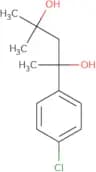
CAS:Controlled Product<p>2-(4-Chlorophenyl)-4-methylpentane-2,4-diol is an analog of 2-(4-chlorophenyl)-4-methylpentane that has been shown to be a CB2 receptor agonist, which may be useful in the treatment of inflammatory bowel disease. The structure of this compound is similar to that of the natural ligand for the CB2 receptor, 2-(6′-hydroxyhexahydrocannabinol). This compound has also been shown to act as an agonist for toll-like receptor 4 (TLR4) and as a sodium citrate synthase inhibitor. This molecule can be synthesized from two molecules of acetone with a chiral catalyst by using asymmetric synthesis.</p>Formula:C12H17ClO2Purity:Min. 95%Molecular weight:228.71 g/mol2-(1-Phenylethyl)oxirane
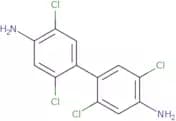
CAS:<p>Versatile small molecule scaffold</p>Formula:C10H12OPurity:Min. 95%Molecular weight:148.2 g/mol2,2',5,5'-Tetrachlorobenzidine
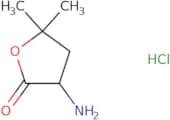
CAS:<p>2,2',5,5'-Tetrachlorobenzidine (TCB) is a diacid that has been shown to have thermal expansion properties. TCB is also hydrophobic and exhibits a fatty acid-like structure. This compound has been used in the synthesis of several other compounds such as alicyclic amides, birefringent dyes, and polarizers. TCB has also been used in the production of polymer films for optical purposes such as hydrochloric acid particle size analysis.</p>Formula:C12H8Cl4N2Purity:Min. 95%Molecular weight:322.01 g/mol3-Amino-5,5-dimethyloxolan-2-one hydrochloride
CAS:<p>Versatile small molecule scaffold</p>Formula:C6H12ClNO2Purity:Min. 95%Molecular weight:165.62 g/mol3-Methyl-4-heptanone
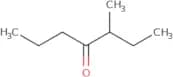
CAS:<p>3-Methyl-4-heptanone is an antibacterial agent that has been shown to have a broad spectrum of activity against bacteria. It is a reactive molecule and can form various products during the reaction with other molecules. 3-Methyl-4-heptanone has been found to be effective against Staphylococcus, Songaricum, and other genera of bacteria. 3-Methyl-4-heptanone is a fatty acid that possesses a primary alcohol group and one or more oxygenated functional groups such as hydroxyl (-OH) or alkoxy (-OCH3). 3-Methyl-4-heptanone also possesses 16 carbon atoms, which are arranged in three rings.</p>Formula:C8H16OPurity:Min. 95%Molecular weight:128.22 g/mol2-Phenylamino-propionic acid
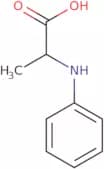
CAS:<p>2-Phenylamino-propionic acid is an analogue of acrylic acid with two methyl groups on the terminal carbon. It is a colorless liquid that can be synthesized by the reaction of acrylic acid with sodium amide in the presence of benzene. 2-Phenylamino-propionic acid has been shown to undergo homogeneous and cyclic reactions, as well as elimination and monoxide reactions. The experimental value obtained for its rate constant, k, was found to be 1.6 × 10^6 L/mol*s using acrylic acid as a substrate. This product may also be used as a catalyst for radical reactions or in catalytic pyrolysis reactions.</p>Formula:C9H11NO2Purity:Min. 95%Molecular weight:165.19 g/molProp-2-en-1-yl 2-methylpropanoate
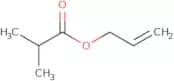
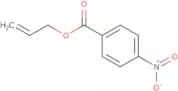
CAS:<p>Prop-2-en-1-yl 2-methylpropanoate is a hydrocarbon with two hydroxyl groups. It is a reactive, functional group that is monosubstituted by fluorine atoms. The carboxylate group of prop-2-en-1-yl 2-methylpropanoate has a divalent hydrocarbon structure and contains one reactive, functional group. Prop-2-en-1-yl 2-methylpropanoate can be found as bound form in endophytic fungi and in the leaves of plants. It can also be found as an unbound form in organic solvents and fatty acids.</p>Formula:C7H12O2Purity:Min. 95%Molecular weight:128.17 g/molAllyl 4-nitrobenzoate
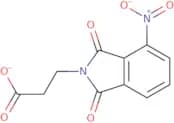
CAS:<p>Versatile small molecule scaffold</p>Formula:C10H9NO4Purity:Min. 95%Molecular weight:207.18 g/mol3-(4-Nitro-1,3-dioxo-2,3-dihydro-1H-isoindol-2-yl)propanoic acid
CAS:<p>Versatile small molecule scaffold</p>Formula:C11H7N2O6Purity:Min. 95%Molecular weight:263.18 g/mol1-bromo-4-[(methylsulfanyl)methyl]benzene
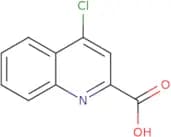
CAS:<p>Versatile small molecule scaffold</p>Formula:C8H9BrSPurity:Min. 95%Molecular weight:217.12 g/mol4-Chloroquinoline-2-carboxylic acid
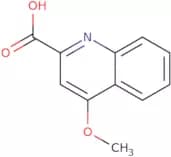
CAS:<p>Versatile small molecule scaffold</p>Formula:C10H6ClNO2Purity:Min. 95%Molecular weight:207.61 g/mol4-Methoxy-2-quinolinecarboxylic acid
CAS:<p>4-Methoxy-2-quinolinecarboxylic acid is a compound that contains a phenyl ring with two substituents, one of which is a methoxy group. It has been shown to regenerate primary alcohols from the corresponding hydroxyaldehyde under mild conditions. 4-Methoxy-2-quinolinecarboxylic acid also reacts with aldehydes to form an oxime and an acetal in the presence of base. The functional theory proposes that the molecular orbitals are formed by the overlap of atomic orbitals and may be used to explain reactions such as these. The neurotoxic effect of 4-methoxy-2-quinolinecarboxylic acid has been observed in rats after intraperitoneal injection. This compound also has been shown to catalyze the formation of bidentate ligands and chelate ligands.</p>Formula:C11H9NO3Purity:Min. 95%Molecular weight:203.19 g/mol6-Methylquinoline-2-Carboxylic Acid
CAS:<p>6-Methylquinoline-2-carboxylic acid is a chromophore that is found in the molecule isoquinoline-3-carboxylic acid. It is an antibacterial agent that has been shown to inhibit bacterial biosynthesis and growth. 6-Methylquinoline-2-Carboxylic Acid may also have potential as a chemotherapeutic agent for cancer treatment due to its ability to bind to DNA and inhibit RNA synthesis. This drug is synthesized by the condensation of quinoline derivatives with carboxylic acids, followed by reduction of the resulting imine with sodium dithionite. The product can be purified using high performance liquid chromatography, incubated with magnetic particles, and desorbed from the beads using protonation.</p>Formula:C11H9NO2Purity:Min. 95%Molecular weight:187.2 g/mol8-Nitroquinoline-2-carboxylic acid
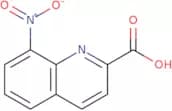
CAS:<p>8-Nitroquinoline-2-carboxylic acid is a spectrometric, inorganic compound that is structurally modified to have an electron-donating group. Modifications on the nitrogen atoms of 8-Nitroquinoline-2-carboxylic acid allow for long-term treatment. It is also used as a fluorophore and has shown to interact with metal ions and form an inorganic complex. 8-Nitroquinoline-2-carboxylic acid can be used for the detection of metal ions by mass spectrometry and microscopy. This compound has been shown to be effective in preventing nitrosamine formation and in the prevention of cancer cells from proliferating.</p>Formula:C10H6N2O4Purity:Min. 95%Molecular weight:218.17 g/mol1-(Hydroxymethyl)cyclohexan-1-ol
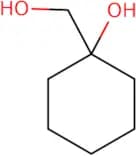
CAS:<p>1-(Hydroxymethyl)cyclohexan-1-ol is a ligand that binds to transition metal ions. It has been shown to bind to a variety of metals, including Cu(II), Fe(III), Zn(II), and Ni(II). 1-(Hydroxymethyl)cyclohexan-1-ol is also able to coordinate with glucokinase activators, such as 5-hydroxytryptamine (5HT), which can lead to an increase in the activity of this enzyme.</p>Formula:C7H14O2Purity:Min. 95%Molecular weight:130.18 g/molrac-(1R,3S)-3-(Hydroxymethyl)cyclohexan-1-ol
CAS:<p>Versatile small molecule scaffold</p>Formula:C7H14O2Purity:Min. 95%Molecular weight:130.2 g/mol2-Phenylimidazo[1,2-a]pyrimidine
CAS:<p>2-Phenylimidazo[1,2-a]pyrimidine is an optical isomer of imidazo[1,2-a]pyrimidine. It contains a pyrazinyl group that has a nitrogen atom in the alpha position and a thiophenyl group that has a single bond to the alpha carbon. This compound is used as a diagnostic agent for Alzheimer's disease because it can be detected in the cerebrospinal fluid of patients with this disorder. The enantiomers are racemic mixtures and are typically not separated during chemical synthesis.</p>Formula:C12H9N3Purity:Min. 95%Molecular weight:195.22 g/mol2-(1H-Pyrrole-2-carbonyl)-1H-pyrrole
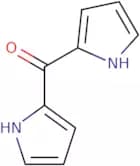
CAS:<p>2-(1H-Pyrrole-2-carbonyl)-1H-pyrrole is a chloride salt that inhibits the growth of tuberculosis by inhibiting the replication of bacterial DNA. It has also been shown to inhibit HIV replication in vitro. 2-(1H-Pyrrole-2-carbonyl)-1H-pyrrole is insoluble in water, so it can be dissolved in organic solvents such as carbon tetrachloride or chloroform. The solubility of this compound may be due to its ability to exist as a tautomeric pair. The geometric isomers of this compound are also possible due to its chiral center.</p>Formula:C9H8N2OPurity:Min. 95%Molecular weight:160.17 g/mol6-Chloro-5,7-dimethyl-3,4-dihydro-2H-1-benzopyran-4-one
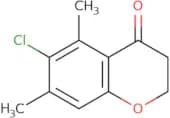
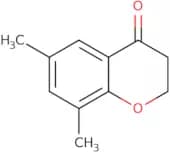
CAS:<p>Versatile small molecule scaffold</p>Formula:C11H11ClO2Purity:Min. 95%Molecular weight:210.65 g/mol6,8-Dimethyl-3,4-dihydro-2H-1-benzopyran-4-one
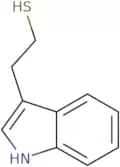
CAS:<p>Versatile small molecule scaffold</p>Formula:C11H12O2Purity:Min. 95%Molecular weight:176.21 g/mol2-(1H-Indol-3-yl)ethane-1-thiol
CAS:<p>Versatile small molecule scaffold</p>Formula:C10H11NSPurity:Min. 95%Molecular weight:177.27 g/mol3-Methyl-1-[2-(morpholin-4-yl)ethyl]thiourea
CAS:<p>Versatile small molecule scaffold</p>Formula:C8H17N3OSPurity:Min. 95%Molecular weight:203.31 g/mol2-Chloro-N-(5-isopropyl-[1,3,4]thiadiazol-2-yl)-acetamide
CAS:<p>Versatile small molecule scaffold</p>Formula:C7H10ClN3OSPurity:Min. 95%Molecular weight:219.69 g/molN-(5-Butyl-1,3,4-thiadiazol-2-yl)-2-chloroacetamide
CAS:<p>Versatile small molecule scaffold</p>Formula:C8H12ClN3OSPurity:Min. 95%Molecular weight:233.72 g/mol2-Chloro-N-[5-(2-methylpropyl)-1,3,4-thiadiazol-2-yl]acetamide
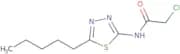
CAS:<p>Versatile small molecule scaffold</p>Formula:C8H12ClN3OSPurity:Min. 95%Molecular weight:233.72 g/mol2-Chloro-N-(5-pentyl-1,3,4-thiadiazol-2-yl)acetamide
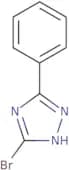
CAS:<p>Versatile small molecule scaffold</p>Formula:C9H14ClN3OSPurity:Min. 95%Molecular weight:247.75 g/mol3-Bromo-5-phenyl-1H-1,2,4-triazole
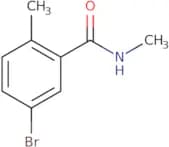
CAS:<p>Versatile small molecule scaffold</p>Formula:C8H6BrN3Purity:Min. 95%Molecular weight:224.1 g/mol5-Bromo-N,2-dimethylbenzamide
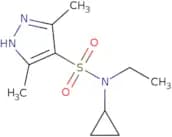
CAS:<p>Versatile small molecule scaffold</p>Formula:C9H10BrNOPurity:Min. 95%Molecular weight:228.09 g/molN-Cyclopropyl-N-ethyl-3,5-dimethyl-1H-pyrazole-4-sulfonamide
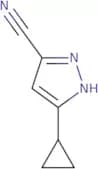
CAS:<p>Versatile small molecule scaffold</p>Formula:C10H17N3O2SPurity:Min. 95%Molecular weight:243.33 g/mol5-Cyclopropyl-1H-pyrazole-3-carbonitrile
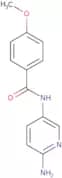
CAS:<p>Versatile small molecule scaffold</p>Formula:C7H7N3Purity:Min. 95%Molecular weight:133.15 g/molN-(6-Aminopyridin-3-yl)-4-methoxybenzamide
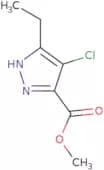
CAS:<p>Versatile small molecule scaffold</p>Formula:C13H13N3O2Purity:Min. 95%Molecular weight:243.26 g/molMethyl 4-chloro-5-ethyl-1H-pyrazole-3-carboxylate
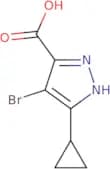
CAS:<p>Versatile small molecule scaffold</p>Formula:C7H9ClN2O2Purity:Min. 95%Molecular weight:188.61 g/mol4-Bromo-3-cyclopropyl-1H-pyrazole-5-carboxylic acid
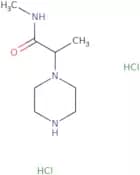
CAS:<p>Versatile small molecule scaffold</p>Formula:C7H7BrN2O2Purity:Min. 95%Molecular weight:231.05 g/molN-Methyl-2-(piperazin-1-yl)propanamide dihydrochloride
CAS:<p>Versatile small molecule scaffold</p>Formula:C8H19Cl2N3OPurity:Min. 95%Molecular weight:244.16 g/mol2-Methyl-6-{[(1-methyl-1H-pyrazol-4-yl)methyl]amino}pyridine-4-carboxylic acid
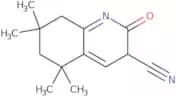
CAS:<p>Versatile small molecule scaffold</p>Formula:C12H14N4O2Purity:Min. 95%Molecular weight:246.3 g/mol5,5,7,7-Tetramethyl-2-oxo-1,2,5,6,7,8-hexahydroquinoline-3-carbonitrile
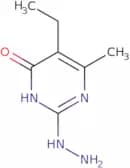
CAS:<p>Versatile small molecule scaffold</p>Formula:C14H18N2OPurity:Min. 95%Molecular weight:230.31 g/mol5-Ethyl-2-hydrazinyl-6-methyl-3,4-dihydropyrimidin-4-one
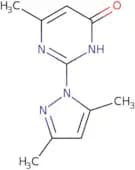
CAS:<p>5-Ethyl-2-hydrazinyl-6-methyl-3,4-dihydropyrimidin-4-one is a hydrazine compound that has been shown to have antiinflammatory and analgesic properties. It binds to the pyrimidine ring of nucleosides and inhibits their incorporation into DNA and RNA. The compound also has a role in the metabolism of aromatic amino acids, such as tyrosine. 5EHTP is an inhibitor of acetylacetone synthase, which converts acetoacetate into acetylacetone. This inhibition prevents the conversion of acetoacetate into other products, such as 4-hydroxybutanal. 5EHTP also inhibits isatin dehydrogenase, which catalyzes the oxidation of isatin to 2,5-diketopiperazine (ketopiperazine).</p>Formula:C7H12N4OPurity:Min. 95%Molecular weight:168.2 g/mol2-(3,5-Dimethyl-1H-pyrazol-1-yl)-6-methylpyrimidin-4-ol
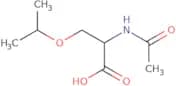
CAS:<p>2-(3,5-Dimethyl-1H-pyrazol-1-yl)-6-methylpyrimidin-4-ol is a tautomeric form of 2-(3,5-dimethylpyrazol-1-yl)-6-[(2R,3S)-3,5-dimethoxyphenyl]pyrimidin-4-ol. It is a potent inhibitor of lipases and has been shown to have antiinflammatory properties. The drug has also been found to decrease the number of inflammatory cells in the bowel and can be used for the treatment of inflammatory bowel disease. The drug may also be effective for treating other autoimmune diseases such as thyroiditis and scleroderma. This drug also has cancer prevention effects because it inhibits cell division and tumor growth by binding to DNA.</p>Formula:C10H12N4OPurity:Min. 95%Molecular weight:204.23 g/mol2-Acetamido-3-(propan-2-yloxy)propanoic acid
CAS:<p>Versatile small molecule scaffold</p>Formula:C8H15NO4Purity:Min. 95%Molecular weight:189.21 g/mol6-Hydrazinyl-8-oxa-3,5-diazatricyclo[7.4.0.0,2,7]trideca-1(9),2(7),3,5,10,12-hexaene
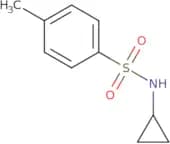
CAS:<p>Versatile small molecule scaffold</p>Formula:C10H8N4OPurity:Min. 95%Molecular weight:200.2 g/molN-Cyclopropyl-4-methylbenzene-1-sulfonamide
CAS:<p>Versatile small molecule scaffold</p>Formula:C10H13NO2SPurity:Min. 95%Molecular weight:211.28 g/mol1-[4-Hydroxy-3-(methoxymethyl)phenyl]ethan-1-one
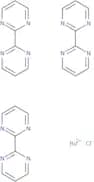
CAS:<p>Versatile small molecule scaffold</p>Formula:C10H12O3Purity:Min. 95%Molecular weight:180.2 g/molTris(2,2'-bipyrimidine), dichlororuthenium
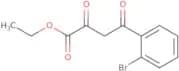
CAS:<p>Versatile small molecule scaffold</p>Formula:C24H18ClN12RuPurity:Min. 95%Molecular weight:611 g/molEthyl 4-(2-bromophenyl)-2,4-dioxobutanoate
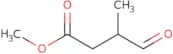
CAS:<p>Versatile small molecule scaffold</p>Formula:C12H11BrO4Purity:Min. 95%Molecular weight:299.12 g/molMethyl 3-methyl-4-oxobutanoate
CAS:<p>Versatile small molecule scaffold</p>Formula:C6H10O3Purity:Min. 95%Molecular weight:130.14 g/mol2-{[(2,4-Dichlorophenyl)methyl]sulfanyl}acetic acid
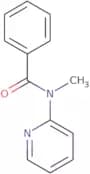
CAS:<p>Versatile small molecule scaffold</p>Formula:C9H8Cl2O2SPurity:Min. 95%Molecular weight:251.13 g/molN-Methyl-N-(pyridin-2-yl)benzamide
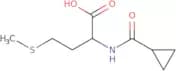
CAS:<p>Versatile small molecule scaffold</p>Formula:C13H12N2OPurity:Min. 95%Molecular weight:212.25 g/mol2-(Cyclopropylformamido)-4-(methylsulfanyl)butanoic acid
CAS:<p>Versatile small molecule scaffold</p>Formula:C9H15NO3SPurity:Min. 95%Molecular weight:217.29 g/mol2-[(2-Chlorophenyl)formamido]-4-(methylsulfanyl)butanoic acid
CAS:<p>Versatile small molecule scaffold</p>Formula:C12H14ClNO3SPurity:Min. 95%Molecular weight:287.76 g/mol2-[(2,4-Dichlorophenyl)formamido]-4-(methylsulfanyl)butanoic acid
CAS:<p>Versatile small molecule scaffold</p>Formula:C12H13Cl2NO3SPurity:Min. 95%Molecular weight:322.2 g/mol2-[(3-Methylphenyl)formamido]-4-(methylsulfanyl)butanoic acid
CAS:<p>Versatile small molecule scaffold</p>Formula:C13H17NO3SPurity:Min. 95%Molecular weight:267.35 g/mol2-[(4-tert-Butylphenyl)formamido]-4-(methylsulfanyl)butanoic acid
CAS:<p>Versatile small molecule scaffold</p>Formula:C16H23NO3SPurity:Min. 95%Molecular weight:309.4 g/mol2-[(2-Methoxyphenyl)formamido]-4-(methylsulfanyl)butanoic acid
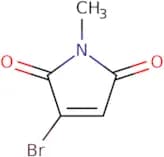
CAS:<p>Versatile small molecule scaffold</p>Formula:C13H17NO4SPurity:Min. 95%Molecular weight:283.35 g/mol3-Bromo-1-methyl-2,5-dihydro-1H-pyrrole-2,5-dione
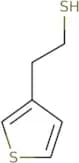
CAS:<p>3-Bromo-1-methyl-2,5-dihydro-1H-pyrrole-2,5-dione is a fluorescent molecule that can be used as a phosphine. It has been shown to be a useful tool for investigating the nature of phosphines and their reactions with other molecules. This compound has also been used in the kinetic modification of drugs to optimise their therapeutic properties. 3-Bromo-1-methyl-2,5-dihydro-1H-pyrrole-2,5-dione has been conjugated with biotin to create a reactive disulfide bond that can be visualised using fluorescent microscopy. The unmodified form of 3BMPD is used in molecular modelling studies as a model system for reactive disulfide bonds. 3BMPD can also be modified by reacting it with thiols or maleimides to produce reactive disulfides that are useful in conjug</p>Formula:C5H4BrNO2Purity:Min. 95%Molecular weight:189.99 g/mol2-(Thiophen-3-yl)ethane-1-thiol
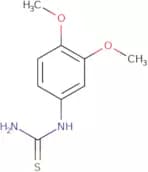
CAS:<p>Versatile small molecule scaffold</p>Formula:C6H8S2Purity:Min. 95%Molecular weight:144.3 g/mol(3,4-Dimethoxyphenyl)thiourea
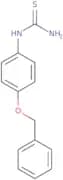
CAS:<p>Versatile small molecule scaffold</p>Formula:C9H12N2O2SPurity:Min. 95%Molecular weight:212.27 g/mol1-(4-Benzyloxyphenyl)-2-thiourea
CAS:<p>Versatile small molecule scaffold</p>Formula:C14H14N2OSPurity:Min. 95%Molecular weight:258.34 g/mol1-(Benzo[d][1,3]dioxol-5-yl)thiourea
CAS:<p>1-(Benzo[d][1,3]dioxol-5-yl)thiourea is a molecule that belongs to the class of heterocycles. The molecular geometry of this compound has been calculated at the density functional theory level using the B3LYP hybrid functional. The hyperpolarizability of 1-(benzo[d][1,3]dioxol-5-yl)thiourea has been calculated by using the polarizability and frequency parameters in conjunction with the frequency spectrum. The optimum values for these parameters have been determined from an analysis of the electronic structure and density theory.</p>Formula:C8H8N2O2SPurity:Min. 95%Molecular weight:196.23 g/molN'-Phenylpiperidine-1-carboximidamide
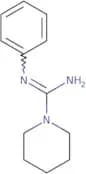
CAS:<p>Versatile small molecule scaffold</p>Formula:C12H17N3Purity:Min. 95%Molecular weight:203.28 g/mol2,3-Dichloro-6-nitroaniline
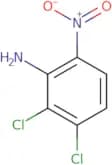
CAS:<p>2,3-Dichloro-6-nitroaniline is a nitro compound that is used as an antibacterial agent. It has been shown to inhibit the growth of Staphylococcus bacteria, with a selectivity for gram-positive organisms. 2,3-Dichloro-6-nitroaniline has also been shown to have catalytic effects on the reaction of nitroarenes with morpholine in the presence of alginic acid. This chemical can be synthesized by reacting sodium nitrite with morpholine and dichloroacetamide in boiling water and then adding zinc chloride. The reaction time varies depending on the concentration of reactants. 2,3-Dichloro-6-nitroaniline has anti HIV activity due to its ability to block electron transfer in viral DNA polymerases.</p>Formula:C6H4Cl2N2O2Purity:Min. 95%Molecular weight:207.02 g/mol2-Cyclopropyl-2-methoxypropan-1-ol
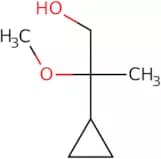
CAS:<p>Versatile small molecule scaffold</p>Formula:C7H14O2Purity:Min. 95%Molecular weight:130.18 g/mol2-Cyclopropyl-2-methoxypropanal
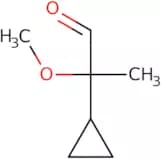
CAS:<p>Versatile small molecule scaffold</p>Formula:C7H12O2Purity:Min. 95%Molecular weight:128.17 g/molMethyl 3-(carbamoylamino)benzoate
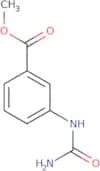
CAS:<p>Versatile small molecule scaffold</p>Formula:C9H10N2O3Purity:Min. 95%Molecular weight:194.19 g/mol4-(Methylthio)-2-[(3-nitrobenzoyl)amino]butanoic acid
CAS:<p>Versatile small molecule scaffold</p>Formula:C12H14N2O5SPurity:Min. 95%Molecular weight:298.32 g/mol1-{3,5,6,7-Tetrahydrospiro[imidazo[4,5-c]pyridine-4,4'-piperidine]-1'-yl}ethan-1-one
CAS:<p>Versatile small molecule scaffold</p>Formula:C12H18N4OPurity:Min. 95%Molecular weight:234.3 g/mol1-Chloro-4-nitroisoquinoline
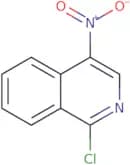
CAS:<p>1-Chloro-4-nitroisoquinoline is an antagonist of the alpha2-adrenergic receptor. It binds to the receptor and blocks the binding of agonists such as clonidine, causing a decrease in lipolysis and vasoconstriction. This agent has been shown to have a low affinity for other receptors, such as dopamine, histamine, serotonin, acetylcholine, and opioid receptors. 1-Chloro-4-nitroisoquinoline has been used to treat hypertension, Raynaud's phenomenon (a disorder that causes reduced blood flow to the fingers or toes), and benign prostatic hypertrophy (enlargement of the prostate).</p>Formula:C9H5ClN2O2Purity:Min. 95%Molecular weight:208.6 g/mol4-(Morpholinomethyl)benzoic acid hydrochloride
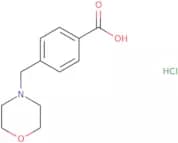
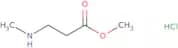
CAS:<p>Versatile small molecule scaffold</p>Formula:C12H16ClNO3Purity:Min. 95%Molecular weight:257.71 g/molmethyl 3-(methylamino)propanoate hydrochloride
CAS:<p>Versatile small molecule scaffold</p>Formula:C5H12ClNO2Purity:Min. 95%Molecular weight:153.6 g/mol2-[2-(Naphthalen-2-yl)acetamido]pentanedioic acid
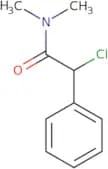
CAS:<p>Versatile small molecule scaffold</p>Formula:C17H17NO5Purity:Min. 95%Molecular weight:315.32 g/mol2-Chloro-N,N-dimethyl-2-phenylacetamide
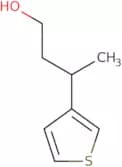
CAS:<p>Versatile small molecule scaffold</p>Formula:C10H12ClNOPurity:Min. 95%Molecular weight:197.66 g/mol3-(Thiophen-3-yl)butan-1-ol
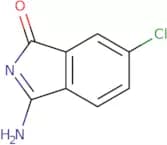
CAS:<p>Versatile small molecule scaffold</p>Formula:C8H12OSPurity:Min. 95%Molecular weight:156.25 g/mol3-Amino-6-chloro-1H-isoindol-1-one
CAS:<p>Versatile small molecule scaffold</p>Formula:C8H5ClN2OPurity:Min. 95%Molecular weight:180.59 g/mol{[1,3]Thiazolo[4,5-c]pyridin-2-yl}hydrazine
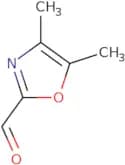
CAS:<p>Versatile small molecule scaffold</p>Formula:C6H6N4SPurity:Min. 95%Molecular weight:166.21 g/mol4,5-Dimethyl-1,3-oxazole-2-carbaldehyde
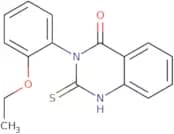
CAS:<p>Versatile small molecule scaffold</p>Formula:C6H7NO2Purity:Min. 95%Molecular weight:125.13 g/mol3-(2-Ethoxyphenyl)-2-sulfanyl-3,4-dihydroquinazolin-4-one
CAS:<p>Versatile small molecule scaffold</p>Formula:C16H14N2O2SPurity:Min. 95%Molecular weight:298.4 g/mol3-{6-Bromo-3H-imidazo[4,5-b]pyridin-2-yl}pyridine
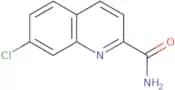
CAS:<p>Versatile small molecule scaffold</p>Formula:C11H7BrN4Purity:Min. 95%Molecular weight:275.1 g/mol7-Chloroquinoline-2-carboxamide
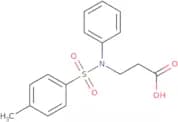
CAS:<p>Versatile small molecule scaffold</p>Formula:C10H7ClN2OPurity:Min. 95%Molecular weight:206.63 g/mol3-(N-Phenyl4-methylbenzenesulfonamido)propanoic acid
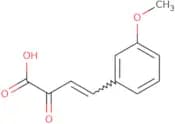
CAS:<p>Versatile small molecule scaffold</p>Formula:C16H17NO4SPurity:Min. 95%Molecular weight:319.4 g/mol4-(3-Methoxyphenyl)-2-oxobut-3-enoic acid
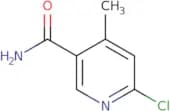
CAS:<p>Versatile small molecule scaffold</p>Formula:C11H10O4Purity:Min. 95%Molecular weight:206.19 g/mol6-Chloro-4-methyl-nicotinamide
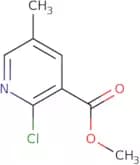
CAS:<p>Versatile small molecule scaffold</p>Formula:C7H7ClN2OPurity:Min. 95%Molecular weight:170.59 g/molMethyl 2-chloro-5-methylnicotinate
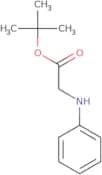
CAS:<p>Versatile small molecule scaffold</p>Formula:C8H8ClNO2Purity:Min. 95%Molecular weight:185.61 g/moltert-Butyl 2-(phenylamino)acetate
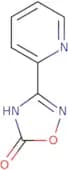
CAS:<p>Versatile small molecule scaffold</p>Formula:C12H17NO2Purity:Min. 95%Molecular weight:207.27 g/mol3-(Pyridin-2-yl)-4,5-dihydro-1,2,4-oxadiazol-5-one
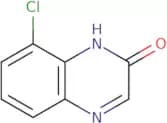
CAS:<p>Versatile small molecule scaffold</p>Formula:C7H5N3O2Purity:Min. 95%Molecular weight:163.13 g/mol8-Chloro-2-quinoxalinol
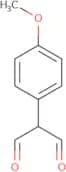
CAS:<p>Versatile small molecule scaffold</p>Formula:C8H5ClN2OPurity:Min. 95%Molecular weight:180.59 g/mol2-(4-Methoxyphenyl)malondialdehyde
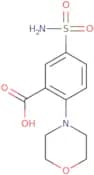
CAS:<p>2-(4-Methoxyphenyl)malondialdehyde is a synthetic chemical that is used as a reagent for the synthesis of piperidine derivatives. It can be readily prepared using hydrogen chloride and a hydrocarbon solvent in the presence of an acid catalyst. 2-(4-Methoxyphenyl)malondialdehyde has been used in the synthesis of bone morphogenetic proteins and other molecules, such as dorsomorphin and ldn-193189.</p>Formula:C10H10O3Purity:Min. 95%Molecular weight:178.18 g/mol2-(Morpholin-4-yl)-5-sulfamoylbenzoic acid
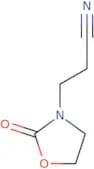
CAS:<p>Versatile small molecule scaffold</p>Formula:C11H14N2O5SPurity:Min. 95%Molecular weight:286.31 g/mol3-(2-Oxo-1,3-oxazolidin-3-yl)propanenitrile
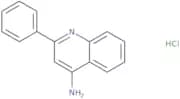
CAS:<p>Versatile small molecule scaffold</p>Formula:C6H8N2O2Purity:Min. 95%Molecular weight:140.14 g/mol2-Phenylquinolin-4-amine hydrochloride
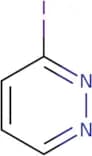
CAS:<p>Versatile small molecule scaffold</p>Formula:C15H13ClN2Purity:Min. 95%Molecular weight:256.73 g/mol3-Iodopyridazine
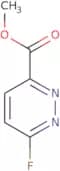
CAS:<p>3-Iodopyridazine is a trifunctional molecule that has been used as a luminophor. It can be synthesized by palladium-catalyzed cross-coupling of 3-bromopyridazine with diethyl ester, yielding the desired product. This product is an organic solvent that contains nitrogen atoms and exhibits enhanced fluorescent properties. The supramolecular chemistry of this compound has been studied extensively, and it has been shown to have nucleophilic functionalities, which make it useful in cross-coupling reactions.</p>Formula:C4H3IN2Purity:Min. 95%Molecular weight:205.98 g/molMethyl 6-fluoropyridazine-3-carboxylate
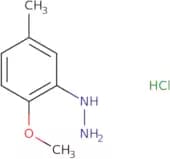
CAS:<p>Versatile small molecule scaffold</p>Formula:C6H5FN2O2Purity:Min. 95%Molecular weight:156.11 g/mol(2-Methoxy-5-methylphenyl)hydrazine hydrochloride
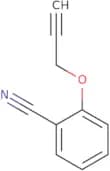
CAS:<p>Versatile small molecule scaffold</p>Formula:C8H13ClN2OPurity:Min. 95%Molecular weight:188.65 g/mol2-(Prop-2-yn-1-yloxy)benzonitrile
CAS:<p>Versatile small molecule scaffold</p>Formula:C10H7NOPurity:Min. 95%Molecular weight:157.17 g/mol3-[(2-Aminophenyl)amino]propan-1-ol
CAS:<p>Versatile small molecule scaffold</p>Formula:C9H14N2OPurity:Min. 95%Molecular weight:166.22 g/mol4-(4-Methoxyphenyl)-5-sulfanyl-8-thia-4,6-diazatricyclo[7.4.0.0,2,7]trideca-1(9),2(7),5-trien-3-one
CAS:<p>Versatile small molecule scaffold</p>Formula:C17H16N2O2S2Purity:Min. 95%Molecular weight:344.5 g/mol4-(4-Ethoxyphenyl)-5-sulfanyl-8-thia-4,6-diazatricyclo[7.4.0.0,2,7]trideca-1(9),2(7),5-trien-3-one
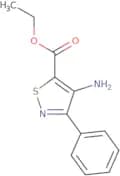
CAS:<p>Versatile small molecule scaffold</p>Formula:C18H18N2O2S2Purity:Min. 95%Molecular weight:358.5 g/molEthyl 4-amino-3-phenyl-1,2-thiazole-5-carboxylate
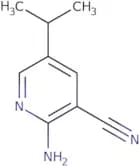
CAS:<p>Versatile small molecule scaffold</p>Formula:C12H12N2O2SPurity:Min. 95%Molecular weight:248.3 g/mol2-Amino-5-(propan-2-yl)pyridine-3-carbonitrile
CAS:<p>Versatile small molecule scaffold</p>Formula:C9H11N3Purity:Min. 95%Molecular weight:161.2 g/mol2-Amino-5H,6H,7H-cyclopenta[b]pyridine-3-carbonitrile
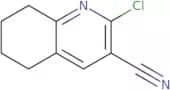
CAS:<p>Versatile small molecule scaffold</p>Formula:C9H9N3Purity:Min. 95%Molecular weight:159.19 g/mol2-Chloro-5,6,7,8-tetrahydroquinoline-3-carbonitrile
CAS:<p>2-Chloro-5,6,7,8-tetrahydroquinoline-3-carbonitrile is an anhydrous organic compound that is used as a starting material for the synthesis of pharmaceuticals. It is prepared by the reaction of anhydrous ethanol with benzoyl chloride and hydrogen chloride in the presence of a catalyst. The product has been shown to be stable at room temperature.</p>Formula:C10H9ClN2Purity:Min. 95%Molecular weight:192.64 g/mol3-Methyl-1-(4-methylphenyl)butan-2-one
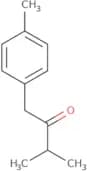
CAS:<p>Versatile small molecule scaffold</p>Formula:C12H16OPurity:Min. 95%Molecular weight:176.25 g/mol1-(4-Chlorophenyl)-3-methylbutan-2-one
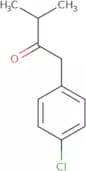
CAS:<p>Versatile small molecule scaffold</p>Formula:C11H13ClOPurity:Min. 95%Molecular weight:196.67 g/mol5-Benzyl-4-methyl-1,3-thiazol-2-amine
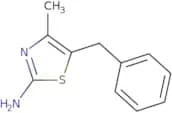
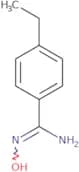
CAS:<p>Versatile small molecule scaffold</p>Formula:C11H12N2SPurity:Min. 95%Molecular weight:204.29 g/mol4-Ethyl-N'-hydroxybenzene-1-carboximidamide
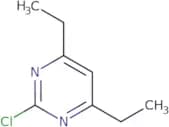
CAS:<p>Versatile small molecule scaffold</p>Formula:C9H12N2OPurity:Min. 95%Molecular weight:164.2 g/mol2-Chloro-4,6-diethylpyrimidine
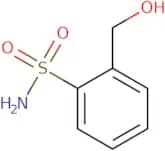
CAS:<p>Versatile small molecule scaffold</p>Formula:C8H11ClN2Purity:Min. 95%Molecular weight:170.64 g/mol2-(Hydroxymethyl)benzene-1-sulfonamide
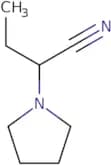
CAS:<p>Versatile small molecule scaffold</p>Formula:C7H9NO3SPurity:Min. 95%Molecular weight:187.22 g/mol2-(Pyrrolidin-1-yl)butanenitrile
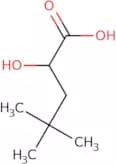
CAS:<p>Versatile small molecule scaffold</p>Formula:C8H14N2Purity:Min. 95%Molecular weight:138.21 g/mol2-Hydroxy-4,4-dimethylpentanoic acid
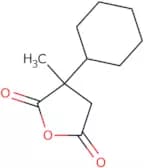
CAS:<p>Versatile small molecule scaffold</p>Formula:C7H14O3Purity:Min. 95%Molecular weight:146.18 g/mol3-Cyclohexyl-3-methyloxolane-2,5-dione
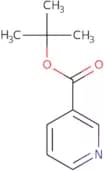
CAS:<p>Versatile small molecule scaffold</p>Formula:C11H16O3Purity:Min. 95%Molecular weight:196.24 g/moltert-Butyl pyridine-3-carboxylate
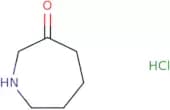
CAS:<p>Tert-butyl pyridine-3-carboxylate is a synthetic precursor to the anti-HIV drug, 3,4-dihydro-2(1H)-quinolinone. It is an activated molecule that can be used in organic synthesis as an amide or ester activator for the formation of amides and esters from carboxylic acids. Tert-butyl pyridine-3-carboxylate binds to the e3 ubiquitin ligase, which prevents its ability to interact with other proteins such as HIV protease. This drug also has a proton at the methyl nicotinate nitrogen atom, which may contribute to its activity against HIV.</p>Formula:C10H13NO2Purity:Min. 95%Molecular weight:179.22 g/molAzepan-3-one hydrochloride
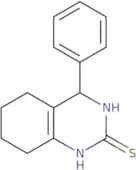
CAS:<p>Versatile small molecule scaffold</p>Formula:C6H12ClNOPurity:Min. 95%Molecular weight:149.62 g/mol4-Phenyl-1,2,3,4,5,6,7,8-octahydroquinazoline-2-thione
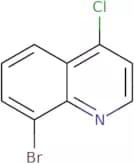
CAS:<p>Versatile small molecule scaffold</p>Formula:C14H16N2SPurity:Min. 95%Molecular weight:244.36 g/mol8-Bromo-4-chloroquinoline
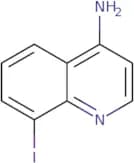
CAS:<p>8-Bromo-4-chloroquinoline is a chemotherapeutic that inhibits the growth of cells in the human fibroblast cell line. It also has cytotoxic properties and can be used to treat breast cancer, colon cancer, and leukemia. Cytotoxicity is seen at concentrations of 8-bromo-4-chloroquinoline that are below the concentration required for DNA synthesis inhibition. The mechanism of action of 8-bromo-4-chloroquinoline is not well understood, but it may involve interaction with cytochrome P450 1A1 (CYP1A1) or other cellular proteins.</p>Formula:C9H5BrClNPurity:Min. 95%Molecular weight:242.5 g/mol4-Amino-8-iodoquinoline
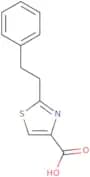
CAS:<p>Versatile small molecule scaffold</p>Formula:C9H7IN2Purity:Min. 95%Molecular weight:270.07 g/mol2-(2-Phenylethyl)-1,3-thiazole-4-carboxylic acid
CAS:<p>Versatile small molecule scaffold</p>Formula:C12H11NO2SPurity:Min. 95%Molecular weight:233.29 g/molN-(Propan-2-yl)sulfamoyl fluoride
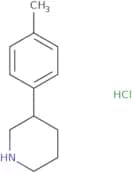
CAS:<p>Versatile small molecule scaffold</p>Formula:C3H8FNO2SPurity:Min. 95%Molecular weight:141.17 g/mol3-(4-Methylphenyl)piperidine hydrochloride
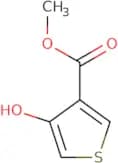
CAS:<p>Versatile small molecule scaffold</p>Formula:C12H18ClNPurity:Min. 95%Molecular weight:211.73 g/molMethyl 4-hydroxythiophene-3-carboxylate
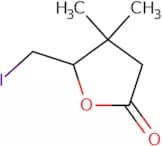
CAS:<p>Versatile small molecule scaffold</p>Formula:C6H6O3SPurity:Min. 95%Molecular weight:158.18 g/mol5-(Iodomethyl)-4,4-dimethyloxolan-2-one
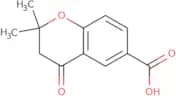
CAS:<p>Versatile small molecule scaffold</p>Formula:C7H11IO2Purity:Min. 95%Molecular weight:254.07 g/mol3,4-Dihydro-2,2-dimethyl-4-oxo-2H-1-benzopyran-6-carboxylic Acid
CAS:<p>Versatile small molecule scaffold</p>Formula:C12H12O4Purity:Min. 95%Molecular weight:220.22 g/mol5-Chloro-4-methylbenzo[d]thiazol-2-amine
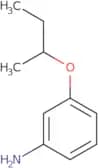
CAS:<p>Versatile small molecule scaffold</p>Formula:C8H7ClN2SPurity:Min. 95%Molecular weight:198.67 g/mol3-(sec-Butoxy)aniline
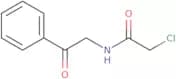
CAS:<p>Versatile small molecule scaffold</p>Formula:C10H15NOPurity:Min. 95%Molecular weight:165.24 g/mol2-Chloro-N-(2-oxo-2-phenylethyl)acetamide
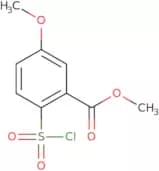
CAS:<p>Versatile small molecule scaffold</p>Formula:C10H10ClNO2Purity:Min. 95%Molecular weight:211.64 g/molMethyl 2-(chlorosulfonyl)-5-methoxybenzoate
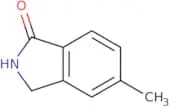
CAS:<p>Versatile small molecule scaffold</p>Formula:C9H9ClO5SPurity:Min. 95%Molecular weight:264.68 g/mol5-Methyl-2,3-dihydro-isoindol-1-one
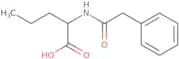
CAS:<p>Versatile small molecule scaffold</p>Formula:C9H9NOPurity:Min. 95%Molecular weight:147.17 g/mol2-(2-Phenylacetamido)pentanoic acid
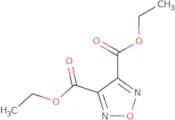
CAS:<p>Versatile small molecule scaffold</p>Formula:C13H17NO3Purity:Min. 95%Molecular weight:235.28 g/mol3,4-Diethyl 1,2,5-oxadiazole-3,4-dicarboxylate
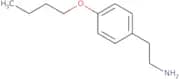
CAS:<p>Versatile small molecule scaffold</p>Formula:C8H10N2O5Purity:Min. 95%Molecular weight:214.18 g/mol2-(4-Butoxyphenyl)ethan-1-amine
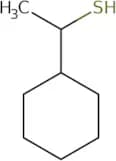
CAS:Controlled Product<p>Versatile small molecule scaffold</p>Formula:C12H19NOPurity:Min. 95%Molecular weight:193.28 g/mol1-Cyclohexylethane-1-thiol
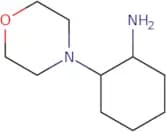
CAS:<p>Versatile small molecule scaffold</p>Formula:C8H16SPurity:Min. 95%Molecular weight:144.28 g/mol2-(Morpholin-4-yl)cyclohexan-1-amine
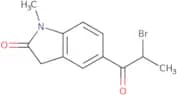
CAS:<p>Versatile small molecule scaffold</p>Formula:C10H20N2OPurity:Min. 95%Molecular weight:184.28 g/mol5-(2-Bromopropanoyl)-1-methyl-2,3-dihydro-1H-indol-2-one
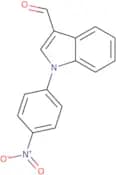
CAS:<p>Versatile small molecule scaffold</p>Formula:C12H12BrNO2Purity:Min. 95%Molecular weight:282.13 g/mol1-(4-Nitrophenyl)-1H-indole-3-carbaldehyde
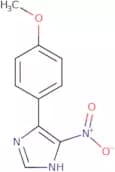
CAS:<p>Versatile small molecule scaffold</p>Formula:C15H10N2O3Purity:Min. 95%Molecular weight:266.25 g/mol4-(4-Methoxyphenyl)-5-nitro-1H-imidazole
CAS:<p>Versatile small molecule scaffold</p>Formula:C10H9N3O3Purity:Min. 95%Molecular weight:219.2 g/mol2-[(2-Chlorothiophen-3-yl)oxy]acetic acid
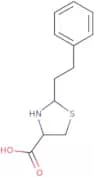
CAS:<p>Versatile small molecule scaffold</p>Formula:C6H5ClO3SPurity:Min. 95%Molecular weight:192.62 g/mol2-(2-Phenylethyl)-1,3-thiazolidine-4-carboxylic acid
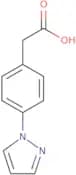
CAS:<p>Versatile small molecule scaffold</p>Formula:C12H15NO2SPurity:Min. 95%Molecular weight:237.32 g/mol2-(4-(1H-pyrazol-1-yl)phenyl)acetic acid
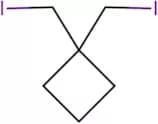
CAS:<p>Versatile small molecule scaffold</p>Formula:C11H10N2O2Purity:Min. 95%Molecular weight:202.21 g/mol1,1-Bis(iodomethyl)cyclobutane
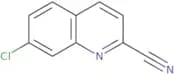
CAS:<p>Versatile small molecule scaffold</p>Formula:C6H10I2Purity:Min. 95%Molecular weight:335.96 g/mol7-Chloroquinoline-2-carbonitrile
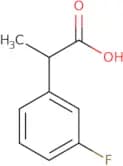
CAS:<p>Versatile small molecule scaffold</p>Formula:C10H5ClN2Purity:Min. 95%Molecular weight:188.61 g/mol2-(3-fluorophenyl)propanoic acid
CAS:<p>Versatile small molecule scaffold</p>Formula:C9H9O2FPurity:Min. 95%Molecular weight:168.16 g/mol1-[2-(2-Methylphenoxy)ethyl]piperazine
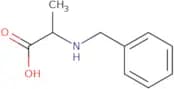
CAS:<p>Versatile small molecule scaffold</p>Formula:C13H20N2OPurity:Min. 95%Molecular weight:220.31 g/mol(2R)-2-(Benzylamino)propanoic acid
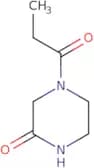
CAS:<p>Versatile small molecule scaffold</p>Formula:C10H13NO2Purity:Min. 95%Molecular weight:179.22 g/mol4-Propanoylpiperazin-2-one
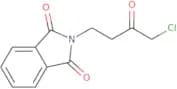
CAS:<p>Versatile small molecule scaffold</p>Formula:C7H12N2O2Purity:Min. 95%Molecular weight:156.18 g/mol2-(4-Chloro-3-oxobutyl)-2,3-dihydro-1H-isoindole-1,3-dione
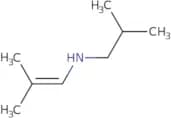
CAS:<p>Versatile small molecule scaffold</p>Formula:C12H10ClNO3Purity:Min. 95%Molecular weight:251.66 g/mol(2-Methylprop-1-en-1-yl)(2-methylpropyl)amine
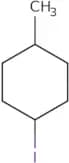
CAS:<p>Versatile small molecule scaffold</p>Formula:C8H17NPurity:Min. 95%Molecular weight:127.23 g/mol1-Iodo-4-methylcyclohexane
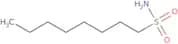
CAS:<p>Versatile small molecule scaffold</p>Formula:C7H13IPurity:Min. 95%Molecular weight:224.08 g/molOctane-1-sulfonamide
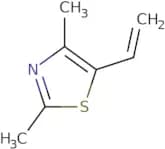
CAS:<p>Octane-1-sulfonamide (OSA) is a glycol ether that is used as a reagent for biological samples. It reacts with the hydroxyl group on proteins, which causes the compounds to become more hydrophobic and interact with each other. The OSAs are also reactive with fatty acids, which leads to cross-linking of cell membranes. This interaction may be related to the low light activity of OSA. Octane-1-sulfonamide can also bind cationic polymers, which may be useful in ophthalmic drugs.</p>Formula:C8H19NO2SPurity:Min. 95%Molecular weight:193.31 g/mol2,4-Dimethyl-5-vinylthiazole
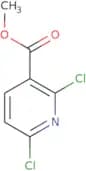
CAS:<p>Versatile small molecule scaffold</p>Formula:C7H9NSPurity:Min. 95%Molecular weight:139.22 g/molMethyl 2,6-dichloropyridine-3-carboxylate
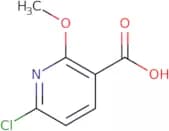
CAS:<p>Methyl 2,6-dichloropyridine-3-carboxylate is a carboxylic acid that can be synthesized by reacting 2,6-dichloropyridine with an acetyl chloride. It has been used in the synthesis of dopamine D2 receptor antagonists. The sulfoxide group in this compound may undergo alkaline hydrolysis to yield an anion and a nucleophilic adduct. This carboxylic acid also reacts with triethylamine to form esters. In addition, methyl 2,6-dichloropyridine-3-carboxylate is regioselective for the alpha position when it reacts with methyltetrahydrofuran.</p>Formula:C7H5Cl2NO2Purity:Min. 95%Molecular weight:206.03 g/mol6-Chloro-2-methoxynicotinic acid
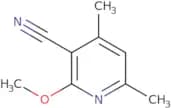
CAS:<p>6-Chloro-2-methoxynicotinic acid is a ketone that reacts with chlorine in the presence of light to form chlorinated products. It is a versatile intermediate for the synthesis of various compounds. 6-Chloro-2-methoxynicotinic acid is used in the synthesis of naphthacene, which is a precursor to dyes and pharmaceuticals. The reactivity of this compound depends on substituents located at the 2 position. Substituents cause sterically hindering effects and lead to different geometries and reactivities, such as attack by chlorine or substitution by hydrogen.</p>Formula:C7H6ClNO3Purity:Min. 95%Molecular weight:187.58 g/mol2-Methoxy-4,6-dimethylnicotinonitrile
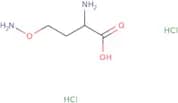
CAS:<p>2-Methoxy-4,6-dimethylnicotinonitrile is a photoreactive compound that reacts with UV light to produce an adduct. The 1-cyanonaphthalene group in 2-methoxy-4,6-dimethylnicotinonitrile undergoes a photochemical reaction to form an adduct with the benzene ring. It is postulated that the dimer and x-ray structural analysis of 2-methoxy-4,6-dimethylnicotinonitrile are stable and pyridine can be used as a solvent.</p>Formula:C9H10N2OPurity:Min. 95%Molecular weight:162.19 g/mol2-Amino-4-(aminooxy)butanoic acid dihydrochloride
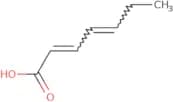
CAS:<p>2-Amino-4-(aminooxy)butanoic acid dihydrochloride is a cyclization product of the antibiotic cycloserine. It has been synthesised from 2-amino-4-oxobutanoic acid by the addition of hydrochloric acid and then heated to reflux for 20 hours. The purity of this product is >98%.<br>2-Amino-4-(aminooxy)butanoic acid dihydrochloride has been shown to be a homologue of canaline, which is an antibiotic used in the treatment of tuberculosis. This compound also has antibacterial activity, although it is less potent than cycloserine.</p>Formula:C4H12Cl2N2O3Purity:Min. 95%Molecular weight:207.05 g/mol(2E,4E)-Hepta-2,4-dienoic acid
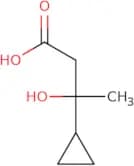
CAS:<p>(2E,4E)-Hepta-2,4-dienoic acid is an organic compound that belongs to the group of quinoline derivatives. It is a colorless liquid at room temperature and is soluble in organic solvents. This compound can be used as a dehydrohalogenating agent in the synthesis of mappicine and camptothecin derivatives. (2E,4E)-Hepta-2,4-dienoic acid can also react with ketocarboxylic acids to form carotenoid compounds. The chemical formula for this molecule is C8H10O3.</p>Formula:C7H10O2Purity:Min. 95%Molecular weight:126.15 g/mol3-Cyclopropyl-3-hydroxybutanoic acid
CAS:<p>Versatile small molecule scaffold</p>Formula:C7H12O3Purity:Min. 95%Molecular weight:144.17 g/mol3,3-Dimethyl-1,5-dioxa-9-azaspiro[5.5]undecane
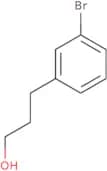
CAS:Controlled Product<p>Versatile small molecule scaffold</p>Formula:C10H19NO2Purity:Min. 95%Molecular weight:185.26 g/mol3-(3-Bromophenyl)propan-1-ol
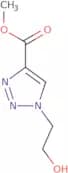
CAS:<p>Versatile small molecule scaffold</p>Formula:C9H11BrOPurity:Min. 95%Molecular weight:215.09 g/molMethyl 1-(2-hydroxyethyl)-1H-1,2,3-triazole-4-carboxylate
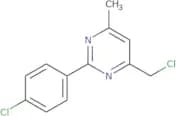
CAS:<p>Versatile small molecule scaffold</p>Formula:C6H9N3O3Purity:Min. 95%Molecular weight:171.15 g/mol4-(Chloromethyl)-2-(4-chlorophenyl)-6-methylpyrimidine
CAS:<p>Versatile small molecule scaffold</p>Formula:C12H10Cl2N2Purity:Min. 95%Molecular weight:253.12 g/mol3-[(6-Chloropyridin-2-yl)oxy]propan-1-ol
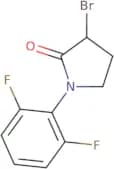
CAS:<p>Versatile small molecule scaffold</p>Formula:C8H10ClNO2Purity:Min. 95%Molecular weight:187.62 g/mol3-Bromo-1-(2,6-difluorophenyl)pyrrolidin-2-one
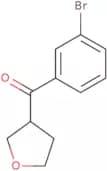
CAS:<p>Versatile small molecule scaffold</p>Formula:C10H8BrF2NOPurity:Min. 95%Molecular weight:276.08 g/mol(3-Bromophenyl)(tetrahydrofuran-3-yl)methanone
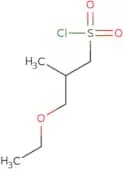
CAS:<p>Versatile small molecule scaffold</p>Formula:C11H11BrO2Purity:Min. 95%Molecular weight:255.11 g/mol3-Ethoxy-2-methylpropane-1-sulfonyl chloride
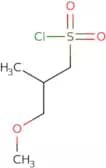
CAS:<p>Versatile small molecule scaffold</p>Formula:C6H13ClO3SPurity:Min. 95%Molecular weight:200.68 g/mol3-Methoxy-2-methylpropane-1-sulfonyl chloride
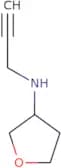
CAS:<p>Versatile small molecule scaffold</p>Formula:C5H11ClO3SPurity:Min. 95%Molecular weight:186.66 g/molN-(Prop-2-yn-1-yl)oxolan-3-amine
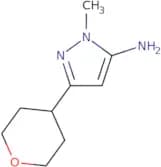
CAS:<p>Versatile small molecule scaffold</p>Formula:C7H11NOPurity:Min. 95%Molecular weight:125.17 g/mol1-Methyl-3-(oxan-4-yl)-1H-pyrazol-5-amine
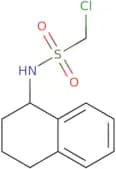
CAS:<p>Versatile small molecule scaffold</p>Formula:C9H15N3OPurity:Min. 95%Molecular weight:181.23 g/mol1-Chloro-N-(1,2,3,4-tetrahydronaphthalen-1-yl)methanesulfonamide
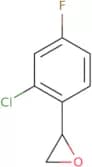
CAS:<p>Versatile small molecule scaffold</p>Formula:C11H14ClNO2SPurity:Min. 95%Molecular weight:259.75 g/mol2-(2-Chloro-4-fluorophenyl)oxirane
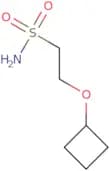
CAS:<p>Versatile small molecule scaffold</p>Formula:C8H6ClFOPurity:Min. 95%Molecular weight:172.58 g/mol2-Cyclobutoxyethane-1-sulfonamide
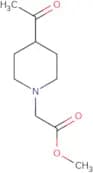
CAS:<p>Versatile small molecule scaffold</p>Formula:C6H13NO3SPurity:Min. 95%Molecular weight:179.24 g/molMethyl 2-(4-acetylpiperidin-1-yl)acetate
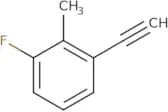
CAS:<p>Versatile small molecule scaffold</p>Formula:C10H17NO3Purity:Min. 95%Molecular weight:199.25 g/mol1-Ethynyl-3-fluoro-2-methylbenzene
CAS:<p>Versatile small molecule scaffold</p>Formula:C9H7FPurity:Min. 95%Molecular weight:134.15 g/mol1-Cyclobutyl-1H,4H,5H,6H,7H-imidazo[4,5-c]pyridine
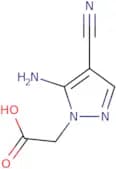
CAS:<p>Versatile small molecule scaffold</p>Formula:C10H15N3Purity:Min. 95%Molecular weight:177.25 g/mol2-(5-Amino-4-cyano-1H-pyrazol-1-yl)acetic acid
CAS:<p>Versatile small molecule scaffold</p>Formula:C6H6N4O2Purity:Min. 95%Molecular weight:166.14 g/mol2-(2-Bromo-ethyl)-1,4-difluoro-benzene
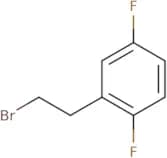
CAS:<p>Versatile small molecule scaffold</p>Formula:C8H7BrF2Purity:Min. 95%Molecular weight:221.04 g/mol5-(Chloromethyl)-1-(oxan-4-yl)-1H-1,2,3,4-tetrazole
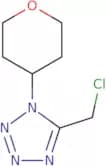
CAS:<p>Versatile small molecule scaffold</p>Formula:C7H11ClN4OPurity:Min. 95%Molecular weight:202.64 g/mol3-(Oxan-4-yloxy)pyridin-2-amine
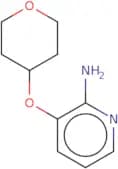
CAS:<p>Versatile small molecule scaffold</p>Formula:C10H14N2O2Purity:Min. 95%Molecular weight:194.2 g/mol5-[(Trifluoromethyl)sulfanyl]furan-2-carboxylic acid
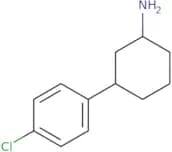
CAS:<p>Versatile small molecule scaffold</p>Formula:C6H3F3O3SPurity:Min. 95%Molecular weight:212.15 g/mol3-(4-Chlorophenyl)cyclohexan-1-amine
CAS:<p>Versatile small molecule scaffold</p>Formula:C12H16ClNPurity:Min. 95%Molecular weight:209.71 g/mol[(1H-1,2,3-Benzotriazol-5-yl)methyl](methyl)amine
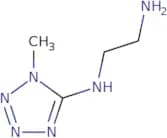
CAS:<p>Versatile small molecule scaffold</p>Formula:C8H10N4Purity:Min. 95%Molecular weight:162.2 g/molN-(2-Aminoethyl)-1-methyl-1H-1,2,3,4-tetrazol-5-amine
CAS:<p>Versatile small molecule scaffold</p>Formula:C4H10N6Purity:Min. 95%Molecular weight:142.16 g/molMethyl({[1-(2-phenylethyl)-1H-1,2,3,4-tetrazol-5-yl]methyl})amine
CAS:<p>Versatile small molecule scaffold</p>Formula:C11H15N5Purity:Min. 95%Molecular weight:217.3 g/mol2-Cyclopropyl-2-({[(9H-fluoren-9-yl)methoxy]carbonyl}amino)propanoic acid
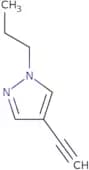
CAS:<p>Versatile small molecule scaffold</p>Formula:C21H21NO4Purity:Min. 95%Molecular weight:351.4 g/mol4-Ethynyl-1-propyl-1H-pyrazole
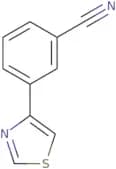
CAS:<p>Versatile small molecule scaffold</p>Formula:C8H10N2Purity:Min. 95%Molecular weight:134.18 g/mol3-(1,3-Thiazol-4-yl)benzonitrile
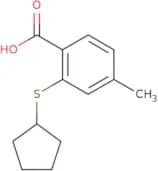
CAS:<p>Versatile small molecule scaffold</p>Formula:C10H6N2SPurity:Min. 95%Molecular weight:186.24 g/mol2-(Cyclopentylsulfanyl)-4-methylbenzoic acid
CAS:<p>Versatile small molecule scaffold</p>Formula:C13H16O2SPurity:Min. 95%Molecular weight:236.33 g/mol4-Bromo-1-(1-phenylethyl)-1H-pyrazole
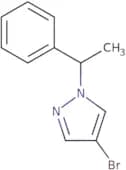
CAS:<p>Versatile small molecule scaffold</p>Formula:C11H11BrN2Purity:Min. 95%Molecular weight:251.12 g/mol1-(Pyridin-3-yl)-1H-1,2,4-triazol-3-amine
CAS:<p>Versatile small molecule scaffold</p>Formula:C7H7N5Purity:Min. 95%Molecular weight:161.16 g/mol1-(Cyclobutylmethyl)-5-oxopyrrolidine-3-carbonitrile
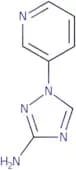
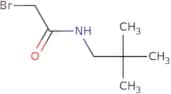
CAS:<p>Versatile small molecule scaffold</p>Formula:C10H14N2OPurity:Min. 95%Molecular weight:178.23 g/mol2-Bromo-N-(2,2-dimethylpropyl)acetamide
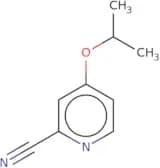
CAS:<p>Versatile small molecule scaffold</p>Formula:C7H14BrNOPurity:Min. 95%Molecular weight:208.1 g/mol4-(Propan-2-yloxy)pyridine-2-carbonitrile
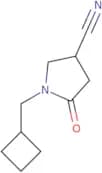
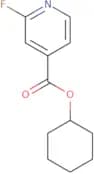
CAS:<p>Versatile small molecule scaffold</p>Formula:C9H10N2OPurity:Min. 95%Molecular weight:162.2 g/molCyclohexyl 2-fluoropyridine-4-carboxylate
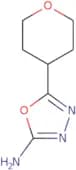
CAS:<p>Versatile small molecule scaffold</p>Formula:C12H14FNO2Purity:Min. 95%Molecular weight:223.24 g/mol5-(Oxan-4-yl)-1,3,4-oxadiazol-2-amine
CAS:<p>Versatile small molecule scaffold</p>Formula:C7H11N3O2Purity:Min. 95%Molecular weight:169.18 g/mol5-Cyclopropylpyrazolo[1,5-a]pyrimidine-7-carboxylic acid
CAS:<p>Versatile small molecule scaffold</p>Formula:C10H9N3O2Purity:Min. 95%Molecular weight:203.2 g/mol3-[3-(1-Ethoxyethyl)-1,2,4-oxadiazol-5-yl]propanoic acid
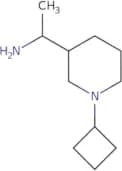
CAS:<p>Versatile small molecule scaffold</p>Formula:C9H14N2O4Purity:Min. 95%Molecular weight:214.22 g/mol1-(1-Cyclobutylpiperidin-3-yl)ethan-1-amine
CAS:<p>Versatile small molecule scaffold</p>Formula:C11H22N2Purity:Min. 95%Molecular weight:182.31 g/mol5-{2-Azabicyclo[2.2.1]heptan-2-yl}-2-methylaniline
CAS:<p>Versatile small molecule scaffold</p>Formula:C13H18N2Purity:Min. 95%Molecular weight:202.3 g/mol



![1-bromo-4-[(methylsulfanyl)methyl]benzene](/_next/image/?url=https%3A%2Fstatic.cymitquimica.com%2Fproducts%2F3D%2Fthumb-webp%2FQAA73307.webp&w=3840&q=75)


![2-Phenylimidazo[1,2-a]pyrimidine](/_next/image/?url=https%3A%2Fstatic.cymitquimica.com%2Fproducts%2F3D%2Fthumb-webp%2FQAA76447.webp&w=3840&q=75)
![3-Methyl-1-[2-(morpholin-4-yl)ethyl]thiourea](/_next/image/?url=https%3A%2Fstatic.cymitquimica.com%2Fproducts%2F3D%2Fthumb-webp%2FQAA77599.webp&w=3840&q=75)
![2-Chloro-N-(5-isopropyl-[1,3,4]thiadiazol-2-yl)-acetamide](/_next/image/?url=https%3A%2Fstatic.cymitquimica.com%2Fproducts%2F3D%2Fthumb-webp%2FQAA77741.webp&w=3840&q=75)

![2-Chloro-N-[5-(2-methylpropyl)-1,3,4-thiadiazol-2-yl]acetamide](/_next/image/?url=https%3A%2Fstatic.cymitquimica.com%2Fproducts%2F3D%2Fthumb-webp%2FQAA77746.webp&w=3840&q=75)
![2-Methyl-6-{[(1-methyl-1H-pyrazol-4-yl)methyl]amino}pyridine-4-carboxylic acid](/_next/image/?url=https%3A%2Fstatic.cymitquimica.com%2Fproducts%2F3D%2Fthumb-webp%2FQBD34875.webp&w=3840&q=75)
![6-Hydrazinyl-8-oxa-3,5-diazatricyclo[7.4.0.0,2,7]trideca-1(9),2(7),3,5,10,12-hexaene](/_next/image/?url=https%3A%2Fstatic.cymitquimica.com%2Fproducts%2F3D%2Fthumb-webp%2FQCA02400.webp&w=3840&q=75)
![1-[4-Hydroxy-3-(methoxymethyl)phenyl]ethan-1-one](/_next/image/?url=https%3A%2Fstatic.cymitquimica.com%2Fproducts%2F3D%2Fthumb-webp%2FQCA03320.webp&w=3840&q=75)
![2-{[(2,4-Dichlorophenyl)methyl]sulfanyl}acetic acid](/_next/image/?url=https%3A%2Fstatic.cymitquimica.com%2Fproducts%2F3D%2Fthumb-webp%2FQCA05131.webp&w=3840&q=75)
![2-[(2-Chlorophenyl)formamido]-4-(methylsulfanyl)butanoic acid](/_next/image/?url=https%3A%2Fstatic.cymitquimica.com%2Fproducts%2F3D%2Fthumb-webp%2FQCA05472.webp&w=3840&q=75)
![2-[(2,4-Dichlorophenyl)formamido]-4-(methylsulfanyl)butanoic acid](/_next/image/?url=https%3A%2Fstatic.cymitquimica.com%2Fproducts%2F3D%2Fthumb-webp%2FQCA05477.webp&w=3840&q=75)
![2-[(3-Methylphenyl)formamido]-4-(methylsulfanyl)butanoic acid](/_next/image/?url=https%3A%2Fstatic.cymitquimica.com%2Fproducts%2F3D%2Fthumb-webp%2FQCA05481.webp&w=3840&q=75)
![2-[(4-tert-Butylphenyl)formamido]-4-(methylsulfanyl)butanoic acid](/_next/image/?url=https%3A%2Fstatic.cymitquimica.com%2Fproducts%2F3D%2Fthumb-webp%2FQCA05482.webp&w=3840&q=75)
![2-[(2-Methoxyphenyl)formamido]-4-(methylsulfanyl)butanoic acid](/_next/image/?url=https%3A%2Fstatic.cymitquimica.com%2Fproducts%2F3D%2Fthumb-webp%2FQCA05483.webp&w=3840&q=75)
![1-(Benzo[d][1,3]dioxol-5-yl)thiourea](/_next/image/?url=https%3A%2Fstatic.cymitquimica.com%2Fproducts%2F3D%2Fthumb-webp%2FQCA06955.webp&w=3840&q=75)
![4-(Methylthio)-2-[(3-nitrobenzoyl)amino]butanoic acid](/_next/image/?url=https%3A%2Fstatic.cymitquimica.com%2Fproducts%2F3D%2Fthumb-webp%2FQCA08434.webp&w=3840&q=75)
![1-{3,5,6,7-Tetrahydrospiro[imidazo[4,5-c]pyridine-4,4'-piperidine]-1'-yl}ethan-1-one](/_next/image/?url=https%3A%2Fstatic.cymitquimica.com%2Fproducts%2F3D%2Fthumb-webp%2FQCA09221.webp&w=3840&q=75)
![2-[2-(Naphthalen-2-yl)acetamido]pentanedioic acid](/_next/image/?url=https%3A%2Fstatic.cymitquimica.com%2Fproducts%2F3D%2Fthumb-webp%2FQCA11447.webp&w=3840&q=75)
![{[1,3]Thiazolo[4,5-c]pyridin-2-yl}hydrazine](/_next/image/?url=https%3A%2Fstatic.cymitquimica.com%2Fproducts%2F3D%2Fthumb-webp%2FQCA12868.webp&w=3840&q=75)
![3-{6-Bromo-3H-imidazo[4,5-b]pyridin-2-yl}pyridine](/_next/image/?url=https%3A%2Fstatic.cymitquimica.com%2Fproducts%2F3D%2Fthumb-webp%2FQCA14790.webp&w=3840&q=75)
![3-[(2-Aminophenyl)amino]propan-1-ol](/_next/image/?url=https%3A%2Fstatic.cymitquimica.com%2Fproducts%2F3D%2Fthumb-webp%2FQCA21443.webp&w=3840&q=75)
![4-(4-Methoxyphenyl)-5-sulfanyl-8-thia-4,6-diazatricyclo[7.4.0.0,2,7]trideca-1(9),2(7),5-trien-3-one](/_next/image/?url=https%3A%2Fstatic.cymitquimica.com%2Fproducts%2F3D%2Fthumb-webp%2FQCA23402.webp&w=3840&q=75)
![4-(4-Ethoxyphenyl)-5-sulfanyl-8-thia-4,6-diazatricyclo[7.4.0.0,2,7]trideca-1(9),2(7),5-trien-3-one](/_next/image/?url=https%3A%2Fstatic.cymitquimica.com%2Fproducts%2F3D%2Fthumb-webp%2FQCA23403.webp&w=3840&q=75)
![2-Amino-5H,6H,7H-cyclopenta[b]pyridine-3-carbonitrile](/_next/image/?url=https%3A%2Fstatic.cymitquimica.com%2Fproducts%2F3D%2Fthumb-webp%2FQCA24218.webp&w=3840&q=75)

![5-Chloro-4-methylbenzo[d]thiazol-2-amine](/_next/image/?url=https%3A%2Fstatic.cymitquimica.com%2Fproducts%2F3D%2Fthumb-webp%2FQCA37318.webp&w=3840&q=75)
![2-[(2-Chlorothiophen-3-yl)oxy]acetic acid](/_next/image/?url=https%3A%2Fstatic.cymitquimica.com%2Fproducts%2F3D%2Fthumb-webp%2FQCA44953.webp&w=3840&q=75)
![1-[2-(2-Methylphenoxy)ethyl]piperazine](/_next/image/?url=https%3A%2Fstatic.cymitquimica.com%2Fproducts%2F3D%2Fthumb-webp%2FQCA48903.webp&w=3840&q=75)
![3,3-Dimethyl-1,5-dioxa-9-azaspiro[5.5]undecane](/_next/image/?url=https%3A%2Fstatic.cymitquimica.com%2Fproducts%2F3D%2Fthumb-webp%2FQCA53586.webp&w=3840&q=75)
![3-[(6-Chloropyridin-2-yl)oxy]propan-1-ol](/_next/image/?url=https%3A%2Fstatic.cymitquimica.com%2Fproducts%2F3D%2Fthumb-webp%2FQDC09447.webp&w=3840&q=75)
![1-Cyclobutyl-1H,4H,5H,6H,7H-imidazo[4,5-c]pyridine](/_next/image/?url=https%3A%2Fstatic.cymitquimica.com%2Fproducts%2F3D%2Fthumb-webp%2FQDC12221.webp&w=3840&q=75)
![5-[(Trifluoromethyl)sulfanyl]furan-2-carboxylic acid](/_next/image/?url=https%3A%2Fstatic.cymitquimica.com%2Fproducts%2F3D%2Fthumb-webp%2FQDC13676.webp&w=3840&q=75)
amine](/_next/image/?url=https%3A%2Fstatic.cymitquimica.com%2Fproducts%2F3D%2Fthumb-webp%2FQDC14438.webp&w=3840&q=75)
![Methyl({[1-(2-phenylethyl)-1H-1,2,3,4-tetrazol-5-yl]methyl})amine](/_next/image/?url=https%3A%2Fstatic.cymitquimica.com%2Fproducts%2F3D%2Fthumb-webp%2FQDC14625.webp&w=3840&q=75)
![2-Cyclopropyl-2-({[(9H-fluoren-9-yl)methoxy]carbonyl}amino)propanoic acid](/_next/image/?url=https%3A%2Fstatic.cymitquimica.com%2Fproducts%2F3D%2Fthumb-webp%2FQDC15482.webp&w=3840&q=75)
![5-Cyclopropylpyrazolo[1,5-a]pyrimidine-7-carboxylic acid](/_next/image/?url=https%3A%2Fstatic.cymitquimica.com%2Fproducts%2F3D%2Fthumb-webp%2FQDC17878.webp&w=3840&q=75)
![3-[3-(1-Ethoxyethyl)-1,2,4-oxadiazol-5-yl]propanoic acid](/_next/image/?url=https%3A%2Fstatic.cymitquimica.com%2Fproducts%2F3D%2Fthumb-webp%2FQDC17973.webp&w=3840&q=75)
![5-{2-Azabicyclo[2.2.1]heptan-2-yl}-2-methylaniline](/_next/image/?url=https%3A%2Fstatic.cymitquimica.com%2Fproducts%2F3D%2Fthumb-webp%2FQDC18920.webp&w=3840&q=75)