Building Blocks
This section contains fundamental products for the synthesis of organic and biological compounds. Building blocks are the essential starting materials used to construct complex molecules through various chemical reactions. They play a critical role in drug discovery, material science, and chemical research. At CymitQuimica, we offer a diverse range of high-quality building blocks to support your innovative research and industrial projects, ensuring you have the essential components for successful synthesis.
Subcategories of "Building Blocks"
- Boronic Acids & Boronic Acid Derivatives(5,756 products)
- Chiral Building Blocks(1,242 products)
- Hydrocarbon Building Blocks(6,095 products)
- Organic Building Blocks(61,051 products)
Found 199813 products of "Building Blocks"
Sort by
Purity (%)
0
100
|
0
|
50
|
90
|
95
|
100
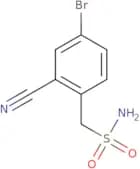
(4-Bromo-2-cyanophenyl)methanesulfonamide
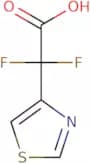
CAS:<p>Versatile small molecule scaffold</p>Formula:C8H7BrN2O2SPurity:Min. 95%Molecular weight:275.12 g/mol2,2-Difluoro-2-(1,3-thiazol-4-yl)acetic acid
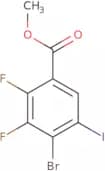
CAS:<p>Versatile small molecule scaffold</p>Formula:C5H3F2NO2SPurity:Min. 95%Molecular weight:179.15 g/molmethyl 4-bromo-2,3-difluoro-5-iodobenzoate
CAS:<p>Versatile small molecule scaffold</p>Formula:C8H4BrF2IO2Purity:Min. 95%Molecular weight:376.92 g/mol2-[1-(Trifluoromethyl)cyclopropyl]pyridin-4-ol
CAS:<p>Versatile small molecule scaffold</p>Formula:C9H8F3NOPurity:Min. 95%Molecular weight:203.16 g/molN-Xantphos Pd G4
CAS:<p>Versatile small molecule scaffold</p>Formula:C50H42N2O4P2PdSPurity:Min. 95%Molecular weight:935.31 g/mol[(1-Methoxy-4,4-dimethylcyclohexyl)methyl](methyl)amine
CAS:<p>Versatile small molecule scaffold</p>Formula:C11H23NOPurity:Min. 95%Molecular weight:185.31 g/mol1-{[1,2,4]Triazolo[4,3-a]pyrazin-8-yl}piperidine
CAS:<p>Versatile small molecule scaffold</p>Formula:C10H13N5Purity:Min. 95%Molecular weight:203.24 g/mol2-{1-[(tert-Butyldimethylsilyl)oxy]cyclopropyl}acetaldehyde
CAS:<p>Versatile small molecule scaffold</p>Formula:C11H22O2SiPurity:Min. 95%Molecular weight:214.4 g/molMethyl 3-amino-2-methyl-2-phenylpropanoate hydrochloride
CAS:<p>Versatile small molecule scaffold</p>Formula:C11H16ClNO2Purity:Min. 95%Molecular weight:229.7 g/mol[3-(4-Bromo-3-methylphenoxy)propyl]dimethylamine
CAS:<p>Versatile small molecule scaffold</p>Formula:C12H18BrNOPurity:Min. 95%Molecular weight:272.18 g/mol1-[(2,4-Dichlorophenyl)methyl]-1H-1,2,3-triazole-4-carboxylic acid
CAS:Versatile small molecule scaffoldFormula:C10H7Cl2N3O2Purity:Min. 95%Molecular weight:272.08 g/mol1-tert-Butyl 4-ethyl 4-formylpiperidine-1,4-dicarboxylate
CAS:<p>Versatile small molecule scaffold</p>Formula:C14H23NO5Purity:Min. 95%Molecular weight:285.34 g/molboc-(+/-)-trans-4-methyl-pyrrolidine-3-carboxylic acid
CAS:<p>Versatile small molecule scaffold</p>Formula:C11H19NO4Purity:Min. 95%Molecular weight:229.28 g/moltert-Butyl 5,6,7,8-tetrahydro-1,7-naphthyridin-3-ylcarbamate
CAS:<p>Versatile small molecule scaffold</p>Formula:C13H19N3O2Purity:Min. 95%Molecular weight:249.31 g/mol1-tert-butyl 3-methyl 1,4-diazepane-1,3-dicarboxylate
CAS:Versatile small molecule scaffoldFormula:C12H22N2O4Purity:Min. 95%Molecular weight:258.3 g/mol1,8,10-Triazatricyclo[7.4.0.0,2,7]trideca-2,4,6,8,10,12-hexaene-12-carbaldehyde
CAS:Versatile small molecule scaffoldFormula:C11H7N3OPurity:Min. 95%Molecular weight:197.19 g/mol6-Formylpyrazolo[1,5-a]pyrimidine-3-carbonitrile
CAS:Versatile small molecule scaffoldFormula:C8H4N4OPurity:Min. 95%Molecular weight:172.14 g/mol3-Methyl-[1,2]oxazolo[5,4-b]pyridine-5-carbaldehyde
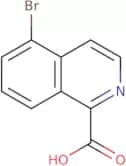
CAS:<p>Versatile small molecule scaffold</p>Formula:C8H6N2O2Purity:Min. 95%Molecular weight:162.15 g/mol5-Bromoisoquinoline-1-carboxylic acid
CAS:<p>Versatile small molecule scaffold</p>Formula:C10H6BrNO2Purity:Min. 95%Molecular weight:252.06 g/moltert-Butyl N-[2-(trifluoromethyl)pyridin-3-yl]carbamate
CAS:<p>Versatile small molecule scaffold</p>Formula:C11H13F3N2O2Purity:Min. 95%Molecular weight:262.23 g/mol6-Methoxy-2-methyl-1H,2H,3H,4H,5H-pyrido[4,3-b]indole
CAS:<p>Versatile small molecule scaffold</p>Formula:C13H16N2OPurity:Min. 95%Molecular weight:216.3 g/mol2-(5-Fluoro-2-thienyl)-4,4,5,5-tetramethyl-1,3,2-dioxaborolane
CAS:Versatile small molecule scaffoldFormula:C10H14BFO2SPurity:Min. 95%Molecular weight:228.09 g/molMethyl 5-(methylamino)pentanoate hydrochloride
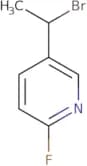
CAS:Versatile small molecule scaffoldFormula:C7H16ClNO2Purity:Min. 95%Molecular weight:181.66 g/mol5-(1-Bromoethyl)-2-fluoropyridine
CAS:<p>Versatile small molecule scaffold</p>Formula:C7H7BrFNPurity:Min. 95%Molecular weight:204.04 g/moltert-Butyl N-{[4-amino-5-({[(tert-butoxy)carbonyl]amino}methyl)-4H-1,2,4-triazol-3-yl]methyl}carbamate
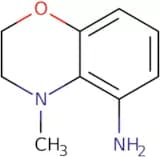
CAS:<p>Versatile small molecule scaffold</p>Formula:C14H26N6O4Purity:Min. 95%Molecular weight:342.39 g/mol4-Methyl-3,4-dihydro-2H-1,4-benzoxazin-5-amine
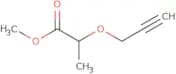
CAS:<p>Versatile small molecule scaffold</p>Formula:C9H12N2OPurity:Min. 95%Molecular weight:164.2 g/molMethyl (2R)-2-(prop-2-yn-1-yloxy)propanoate
CAS:<p>Versatile small molecule scaffold</p>Formula:C7H10O3Purity:Min. 95%Molecular weight:142.15 g/mol2-Amino-4H,6H,7H-pyrano[3,4-d][1,3]thiazol-7-one
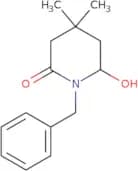
CAS:<p>Versatile small molecule scaffold</p>Formula:C6H6N2O2SPurity:Min. 95%Molecular weight:170.19 g/mol1-Benzyl-6-hydroxy-4,4-dimethylpiperidin-2-one
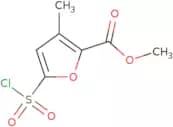
CAS:<p>Versatile small molecule scaffold</p>Formula:C14H19NO2Purity:Min. 95%Molecular weight:233.31 g/molMethyl 5-(chlorosulfonyl)-3-methylfuran-2-carboxylate
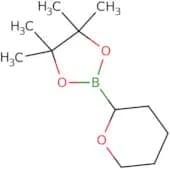
CAS:Versatile small molecule scaffoldFormula:C7H7ClO5SPurity:Min. 95%Molecular weight:238.65 g/mol4,4,5,5-Tetramethyl-2-(oxan-2-yl)-1,3,2-dioxaborolane
CAS:<p>Versatile small molecule scaffold</p>Formula:C11H21BO3Purity:Min. 95%Molecular weight:212.1 g/molrac-(3R,6S)-1-[(tert-butoxy)carbonyl]-6-methylpiperidine-3-carboxylic acid, cis
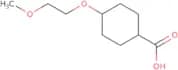
CAS:<p>Versatile small molecule scaffold</p>Formula:C12H21NO4Purity:Min. 95%Molecular weight:243.3 g/mol4-(2-Methoxyethoxy)cyclohexane-1-carboxylic acid
CAS:<p>Versatile small molecule scaffold</p>Formula:C10H18O4Purity:Min. 95%Molecular weight:202.25 g/mol2-[4-(Trifluoromethyl)phenyl]cyclopentan-1-one
CAS:Versatile small molecule scaffoldFormula:C12H11F3OPurity:Min. 95%Molecular weight:228.21 g/mol2,3,5-Trimethyl-3H-imidazo[4,5-b]pyridine-7-carboxylic acid
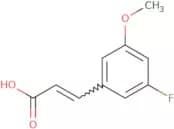
CAS:<p>Versatile small molecule scaffold</p>Formula:C10H11N3O2Purity:Min. 95%Molecular weight:205.21 g/mol3-(3-fluoro-5-methoxyphenyl)prop-2-enoic Acid
CAS:<p>Versatile small molecule scaffold</p>Formula:C10H9O3FPurity:Min. 95%Molecular weight:196.17 g/mol2,3-Dihydro-7-iodoinden-1-one
CAS:<p>Versatile small molecule scaffold</p>Formula:C9H7IOPurity:Min. 95%Molecular weight:258.06 g/mol7-Chloro-8-fluoroimidazo[1,2-a]pyridine
CAS:<p>Versatile small molecule scaffold</p>Formula:C7H4ClFN2Purity:Min. 95%Molecular weight:170.57 g/mol1-{3-[2-(Dimethylamino)ethoxy]phenyl}ethan-1-one
CAS:Controlled Product<p>Versatile small molecule scaffold</p>Formula:C12H17NO2Purity:Min. 95%Molecular weight:207.27 g/mol1-{3-[(Dimethylamino)methyl]phenyl}ethan-1-one
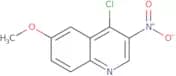
CAS:Versatile small molecule scaffoldFormula:C11H15NOPurity:Min. 95%Molecular weight:177.24 g/mol4-Chloro-6-methoxy-3-nitroquinoline
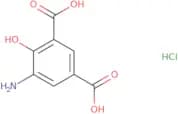
CAS:<p>Versatile small molecule scaffold</p>Formula:C10H7ClN2O3Purity:Min. 95%Molecular weight:238.63 g/mol5-Amino-4-hydroxybenzene-1,3-dicarboxylic acid hydrochloride
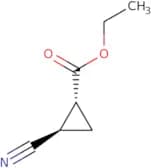
CAS:<p>Versatile small molecule scaffold</p>Formula:C8H8ClNO5Purity:Min. 95%Molecular weight:233.6 g/molEthyl trans-2-cyanocyclopropane-1-carboxylate
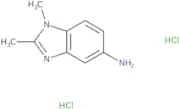
CAS:Versatile small molecule scaffoldFormula:C7H9NO2Purity:Min. 95%Molecular weight:139.15 g/mol1,2-Dimethyl-1 H -benzoimidazol-5-ylamine dihydrochloride
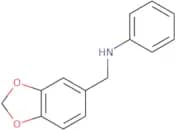
CAS:Versatile small molecule scaffoldFormula:C9H11N3Purity:Min. 95%Molecular weight:161.21 g/molN-(1,3-Dioxaindan-5-ylmethyl)aniline
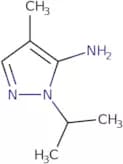
CAS:<p>Versatile small molecule scaffold</p>Formula:C14H13NO2Purity:Min. 95%Molecular weight:227.26 g/mol2-Isopropyl-4-methyl-2H-pyrazol-3-ylamine
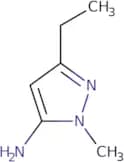
CAS:<p>Versatile small molecule scaffold</p>Formula:C7H13N3Purity:Min. 95%Molecular weight:139.2 g/mol3-Ethyl-1-methyl-1H-pyrazol-5-amine
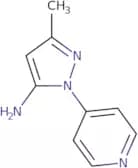
CAS:<p>Versatile small molecule scaffold</p>Formula:C6H11N3Purity:Min. 95%Molecular weight:125.17 g/mol3-Methyl-1-(pyridin-4-yl)-1H-pyrazol-5-amine
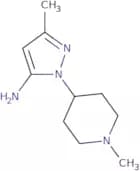
CAS:<p>Versatile small molecule scaffold</p>Formula:C9H10N4Purity:Min. 95%Molecular weight:174.2 g/mol5-Methyl-2-(1-methyl-piperidin-4-yl)-2H-pyrazol-3-ylamine
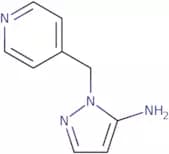
CAS:<p>Versatile small molecule scaffold</p>Formula:C10H18N4Purity:Min. 95%Molecular weight:194.28 g/mol2-Pyridin-4-ylmethyl-2H-pyrazol-3-ylamine
CAS:<p>Versatile small molecule scaffold</p>Formula:C9H10N4Purity:Min. 95%Molecular weight:174.2 g/mol1-{[4-(Dimethylamino)phenyl]methyl}-1H-pyrazol-5-amine
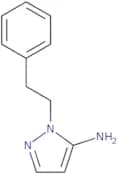
CAS:<p>Versatile small molecule scaffold</p>Formula:C12H16N4Purity:Min. 95%Molecular weight:216.28 g/mol1-(2-Phenylethyl)-1H-pyrazol-5-amine
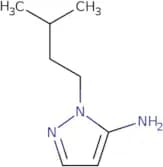
CAS:<p>Versatile small molecule scaffold</p>Formula:C11H13N3Purity:Min. 95%Molecular weight:187.24 g/mol1-(3-Methylbutyl)-1H-pyrazol-5-amine
CAS:<p>Versatile small molecule scaffold</p>Formula:C8H15N3Purity:Min. 95%Molecular weight:153.22 g/mol1-Isobutyl-1H-pyrazol-5-amine
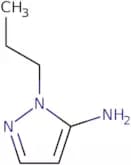
CAS:<p>Versatile small molecule scaffold</p>Formula:C7H13N3Purity:Min. 95%Molecular weight:139.2 g/mol2-Propyl-2H-pyrazol-3-ylamine
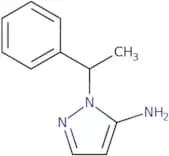
CAS:<p>Versatile small molecule scaffold</p>Formula:C6H11N3Purity:Min. 95%Molecular weight:125.17 g/mol2-(1-Phenyl-ethyl)-2H-pyrazol-3-ylamine
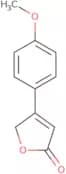
CAS:<p>Versatile small molecule scaffold</p>Formula:C11H13N3Purity:Min. 95%Molecular weight:187.24 g/mol4-(4-Methoxyphenyl)furan-2(5H)-one
CAS:Versatile small molecule scaffoldFormula:C11H10O3Purity:Min. 95%Molecular weight:190.19 g/mol6,12-Dibromo-1,4-dioxaspiro[4.7]dodecane
CAS:Versatile small molecule scaffoldFormula:C10H16Br2O2Purity:Min. 95%Molecular weight:328.04 g/molMethyl[(1-methyl-1H-indol-2-yl)methyl]amine
CAS:<p>Versatile small molecule scaffold</p>Formula:C11H14N2Purity:Min. 95%Molecular weight:174.24 g/mol2,4,6-Trifluoropyridine-3-carboxylic acid
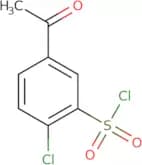
CAS:<p>Versatile small molecule scaffold</p>Formula:C6H2F3NO2Purity:Min. 95%Molecular weight:177.08 g/mol5-Acetyl-2-chlorobenzene-1-sulfonyl chloride
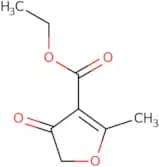
CAS:Versatile small molecule scaffoldFormula:C8H6Cl2O3SPurity:Min. 95%Molecular weight:253.1 g/molEthyl 2-Methyl-4-oxo-4,5-dihydro-3-furancarboxylate
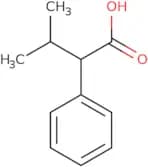
CAS:<p>Versatile small molecule scaffold</p>Formula:C8H10O4Purity:Min. 95%Molecular weight:170.16 g/mol3-Methyl-2-phenylbutyric acid
CAS:<p>3-Methyl-2-phenylbutyric acid is a reactive chemical that has a basic group and an ionic character. It is synthesized by the reaction of acetone with methyl iodide in the presence of sodium hydroxide and potassium carbonate. The product can be racemized to its isomer, 2-phenylbutyric acid, by heating with hydrochloric acid or acetic acid. 3-Methyl-2-phenylbutyric acid has been used in chromatographic analysis for the separation of phenols, amino acids, and other compounds. 3-Methyl-2-phenylbutyric acid also reacts with nucleophiles such as water to form ion pairs.</p>Formula:C11H14O2Purity:Min. 95%Molecular weight:178.23 g/mol2-Bromo-7-nitrobenzo[D]thiazole
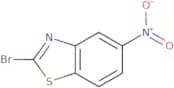
CAS:<p>Versatile small molecule scaffold</p>Formula:C7H3BrN2O2SPurity:Min. 95%Molecular weight:259.08 g/mol2-Bromo-5-nitro-1,3-benzothiazole
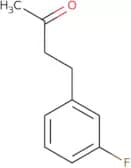
CAS:<p>Versatile small molecule scaffold</p>Formula:C7H3BrN2O2SPurity:Min. 95%Molecular weight:259.08 g/mol4-(3-Fluorophenyl)butan-2-one
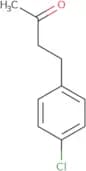
CAS:<p>Versatile small molecule scaffold</p>Formula:C10H11FOPurity:Min. 95%Molecular weight:166.19 g/mol4-(4-Chlorophenyl)butan-2-one
CAS:<p>4-Chlorobenzenediazonium is a benzenediazonium salt that can be used to form arylating agents. It has been used in the synthesis of olefins and as a reagent for the synthesis of 4-chloro-3-(4-chlorophenyl)butan-2-one, which is an intermediate for the synthesis of dyes. 4-Chlorobenzenediazonium can also be used to synthesize cyano compounds from nitroarenes and chloroformates.</p>Formula:C10H11ClOPurity:Min. 95%Molecular weight:182.64 g/mol3-(Dimethylamino)-1-phenylpropan-1-one hydrochloride
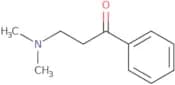
CAS:<p>3-(Dimethylamino)-1-phenylpropan-1-one hydrochloride (3DAPOH) is a potent and selective inhibitor of the enzyme fatty acid synthase. 3DAPOH is used in tissue culture to inhibit the growth of cancer cells. This drug has been shown to inhibit the development of xeno-graft tumors in mice. 3DAPOH also inhibits the growth of Gram-positive bacteria and anthelmintic drugs, such as Fasciola hepatica, Trichostrongylus axei, and Ascaris suum. The mechanism by which this drug inhibits bacterial growth is not well understood; however, it may be due to its ability to induce apoptosis in certain types of cells.</p>Formula:C11H15NOPurity:Min. 95%Molecular weight:177.24 g/molSamarium(III) isopropoxide
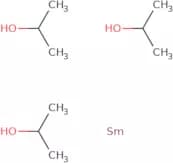
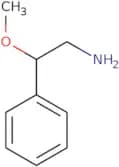
CAS:<p>Samarium(III) isopropoxide (Sm(0)IPO) is a metal ion that has a slow reaction rate with hydrochloric acid in the presence of nitrogen atoms. It can be used to form chiral compounds. Sm(0)IPO, which has fluorescence properties, is used as an analytical reagent in organic chemistry and biochemistry. The reactions of Sm(0)IPO are initiated by the protonation of the hydroxyl group on the metal ion followed by nucleophilic attack by the amino acid serine protease. This reaction results in the formation of an acyl halide.</p>Formula:C9H21O3SmPurity:Min. 95%Molecular weight:327.62 g/mol2-Methoxy-2-phenylethan-1-amine
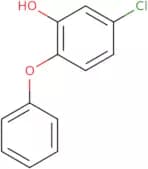
CAS:Controlled Product<p>2-Methoxy-2-phenylethan-1-amine is a modification of an amino acid that can be used to synthesize drugs. It belongs to the chemotype phenethylamines, which are compounds that contain a benzene ring and an amine group. 2-Methoxy-2-phenylethan-1-amine has been shown to bind to dopamine D4 receptors in the brain, which may contribute to its psychoactive effects. This compound is also able to inhibit chemokine production, which may help with inflammatory conditions such as asthma.</p>Formula:C9H13NOPurity:Min. 95%Molecular weight:151.21 g/mol5-Chloro-2-phenoxyphenol
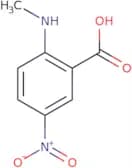
CAS:5-Chloro-2-phenoxyphenol (5CPP) is a phenolic compound that inhibits bacterial growth by binding to the diphenyl ether binding site on the enzyme fatty acid synthase. 5CPP is an inhibitor of bacterial fatty acid biosynthesis and has been shown to be effective against wild-type strains of staphylococcus aureus, including methicillin resistant strains. 5CPP binds to the active site of the enzyme and prevents it from functioning, thereby inhibiting production of fatty acids. It also has shown activity against Listeria monocytogenes and Bacillus subtilis.Formula:C12H9ClO2Purity:Min. 95%Molecular weight:220.65 g/mol2-(Methylamino)-5-nitrobenzoic acid
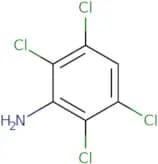
CAS:<p>2-(Methylamino)-5-nitrobenzoic acid is a benzimidazole that contains a planar, aromatic ring and an amino group in the side chain. The compound is a hydrogen bond donor and acceptor. It undergoes oxidative cyclisations to form benzoic acids from anilines, which are generated through hydrogen atom abstraction. 2-(Methylamino)-5-nitrobenzoic acid also reacts with other aromatic compounds to form dimers or benzoic acids.</p>Formula:C8H8N2O4Purity:Min. 95%Molecular weight:196.16 g/mol2,3,5,6-Tetrachloroaniline
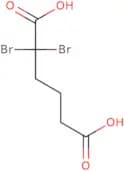
CAS:<p>2,3,5,6-Tetrachloroaniline is a chlorinated aromatic compound that is used as an intermediate for the production of other chemicals. It undergoes a number of reactions to form various chemical compounds. 2,3,5,6-Tetrachloroaniline has been shown to be reactive with hydrogen chloride in a two-step process involving acid formation and molecule elimination. The rate of this reaction depends on the concentration of hydrogen chloride present in solution. 2,3,5,6-Tetrachloroaniline also reacts with water to produce hydrochloric acid and tetrachloroethane. This reaction is reversible and can be described by the following equation:<br>2CCl4 + 4H2O -> 4HCl + C2H4 + Cl2 <br>The reaction mechanism for this process is not well understood but it is likely that it involves protonation followed by nucleophilic substitution.</p>Formula:C6H3Cl4NPurity:Min. 95%Molecular weight:230.9 g/mol2,5-Dibromoadipic acid
CAS:2,5-Dibromoadipic acid is an organic compound that can be synthesized by oxidation of 2,5-dibromohexanoic acid with sodium periodate in aqueous alcohol. It is used as a monomer for the production of polymers and plastics such as polyurethanes and polyesters. The product is obtained in high yield and has a stereoselectivity of 99%. It can be purified by recrystallization from water or from organic solvents. 2,5-Dibromoadipic acid reacts with nucleophiles such as alcohols to form an addition compound. The addition reaction can be followed by spectroscopic methods such as diffraction or NMR. This reaction type is called nucleophilic addition.Formula:C6H8Br2O4Purity:Min. 95%Molecular weight:303.94 g/mol2-[2-(Dimethylamino)ethyl]aniline
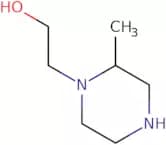
CAS:<p>Versatile small molecule scaffold</p>Formula:C10H16N2Purity:Min. 95%Molecular weight:164.25 g/mol2-(2-Methylpiperazin-1-yl)ethan-1-ol
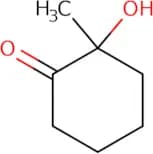
CAS:<p>Versatile small molecule scaffold</p>Formula:C7H16N2OPurity:Min. 95%Molecular weight:144.21 g/mol2-Hydroxy-2-methylcyclohexan-1-one
CAS:<p>2-Hydroxy-2-methylcyclohexan-1-one is a tetroxide that is a ligand for osmium. It can be used as an oxidant to produce epoxides, which are important chemical intermediates. This substance has been used in the synthesis of cyclic epoxides and osmium complexes. The yields of this reaction depend on the ligand and the metal catalyst that is used. Epoxidation is catalyzed by metal ions such as vanadium, manganese, or iron, with ruthenium being one of the most effective. 2-Hydroxy-2-methylcyclohexan-1-one also forms epoxides with oxygenated substrates due to its ability to act as an oxidant.<br>Epoxidation reactions can be performed using 2-hydroxy-2-methylcyclohexan-1-one as a catalyst or ligand, or it may function solely as an oxid</p>Formula:C7H12O2Purity:Min. 95%Molecular weight:128.17 g/mol4-Bromo-N-propylbenzenesulfonamide
CAS:<p>4-Bromo-N-propylbenzenesulfonamide is a tricyclic compound that has two skeletal carbons and three cyclic carbons. It is structurally similar to 4-bromobenzenesulfonyl chloride, but it lacks the sulfonyl group and instead has a sulfonamide group. The yields of this compound are high, with an average of 77% obtained from the reaction with 4-bromobenzoic acid. However, when there are substituents on the ring, such as in the case of 4-chloro-N-propylbenzenesulfonamide, the yield decreases significantly. This compound can be synthesized by reacting 4-bromoaniline with propylene oxide followed by reaction with bromosulfonic acid and sodium hydroxide.</p>Formula:C9H12BrNO2SPurity:Min. 95%Molecular weight:278.17 g/mol4-(Methylsulfanyl)benzene-1-sulfonamide
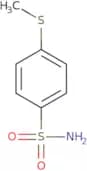
CAS:<p>Versatile small molecule scaffold</p>Formula:C7H9NO2S2Purity:Min. 95%Molecular weight:203.3 g/molMethyl 2-chloro-6-sulfamoylbenzoate
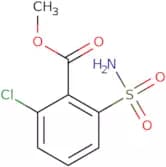
CAS:<p>Versatile small molecule scaffold</p>Formula:C8H8ClNO4SPurity:Min. 95%Molecular weight:249.67 g/mol2-Amino-6,7,8,9-tetrahydro-5H-benzo[7]annulen-5-one
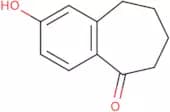
CAS:<p>Versatile small molecule scaffold</p>Formula:C11H13NOPurity:Min. 95%Molecular weight:175.23 g/mol2-Hydroxy-6,7,8,9-tetrahydro-benzocyclohepten-5-one
CAS:<p>Versatile small molecule scaffold</p>Formula:C11H12O2Purity:Min. 95%Molecular weight:176.21 g/mol5-Oxo-6,7,8,9-tetrahydro-5H-benzo[7]annulene-2-carboxylic acid
CAS:<p>Versatile small molecule scaffold</p>Formula:C12H12O3Purity:Min. 95%Molecular weight:204.22 g/molEthyl 5-methoxy-1H-pyrrolo[2,3-c]pyridine-2-carboxylate
CAS:Versatile small molecule scaffoldFormula:C11H12N2O3Purity:Min. 95%Molecular weight:220.23 g/mol2,3-Diphenylindole
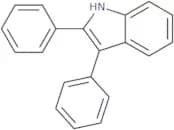
CAS:<p>2,3-Diphenylindole is a benzyl-substituted indole with the chemical formula C14H10N2. It is an organic compound that was first synthesized in 1887 by German chemist Adolf von Baeyer. 2,3-Diphenylindole was one of the first aromatic compounds to be synthesized from benzene. The synthesis of 2,3-diphenylindole involves Friedel-Crafts reactions with amines and azides. Benzyl groups can be cleaved from the molecule under UV irradiation or by treatment with carboxylic acid. Reaction yields are increased when primary amines are used as the starting material, since they are more reactive than secondary amines or tertiary amines.</p>Formula:C20H15NPurity:Min. 95%Molecular weight:269.34 g/mol[(1H-Indol-4-yl)methyl](methyl)amine
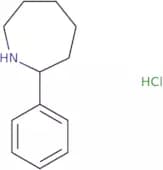
CAS:<p>[(1H-Indol-4-yl)methyl](methyl)amine is a substituted isoquinoline. It has been shown to be an effective inhibitor of the enzyme allyl alcohol dehydrogenase, which catalyzes the conversion of allyl alcohol to acetaldehyde. The reduction of [(1H-indol-4-yl)methyl]-(methyl)amine can be accomplished with either a Grignard reagent or a reductive alkylation.</p>Formula:C10H12N2Purity:Min. 95%Molecular weight:160.22 g/mol2-Phenylazepane hydrochloride
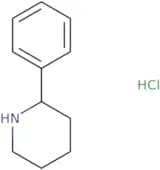
CAS:<p>Versatile small molecule scaffold</p>Formula:C12H18ClNPurity:Min. 95%Molecular weight:211.73 g/mol2-Phenylpiperidine hydrochloride
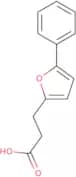
CAS:<p>2-Phenylpiperidine hydrochloride is a diastereoselective, intramolecular reaction product of β-unsaturated ketones and piperidines. The synthesis of 2-phenylpiperidine hydrochloride involves a β-unsaturated ketone and two different piperidines. The reaction is intramolecular because the starting material is used in the same molecule as the reagent. This compound was shown to be a competitive inhibitor of serotonin transporter (SERT) with an IC 50 value of 0.8 μM.<br>Synlett, 2008, 2987-2989</p>Formula:C11H16ClNPurity:Min. 95%Molecular weight:197.7 g/mol3-(5-Phenyl-furan-2-yl)-propionic acid
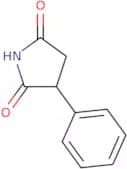
CAS:<p>Versatile small molecule scaffold</p>Formula:C13H12O3Purity:Min. 95%Molecular weight:216.24 g/mol3-Phenylpyrrolidine-2,5-dione
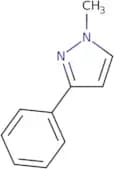
CAS:<p>3-Phenylpyrrolidine-2,5-dione is an organic compound with a polymer film. It has been shown to have antireflection properties and can be used for optical applications. 3-Phenylpyrrolidine-2,5-dione can be made by the reaction of hydrochloric acid and an organic solvent. It is soluble in methyl ethyl ketone and hydroxyl group. The colorless compound has a melting point of 104 degrees Celsius and decomposes at around 250 degrees Celsius. 3-Phenylpyrrolidine-2,5-dione is soluble in aromatic hydrocarbons such as naphthalene and structural formula consists of a benzene ring fused to a pyrrole ring with a carbonyl group on each side. 3-Phenylpyrrolidine-2,5-dione has been shown to have good thermal expansion properties which are useful for patterning or mold</p>Formula:C10H9NO2Purity:Min. 95%Molecular weight:175.18 g/mol1-Methyl-3-phenyl-1H-pyrazole
CAS:<p>1-Methyl-3-phenyl-1H-pyrazole is an agriculturally useful compound that can be used as an intermediate in the synthesis of pesticides. 1-Methyl-3-phenyl-1H-pyrazole has two different orientations with respect to the pyrazole ring, which gives rise to two isomers. The cis form is a photoelectron acceptor and the trans form is a photoelectron donor. The molecular orbitals of 1-methyl-3-phenylpyrazole are energetically similar to those of other pyrazoles. The difference lies in the orientation of the nitrogen atom, which makes it unsymmetrical. It also has a sulfate group and a dihedral angle of 60°. 1,2,4,5,6-Pentafluoroalkyl and pyrazolyl groups have been found on this molecule.</p>Formula:C10H10N2Purity:Min. 95%Molecular weight:158.2 g/mol(4-Cyanophenyl)thiourea
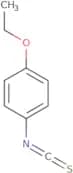
CAS:<p>Versatile small molecule scaffold</p>Formula:C8H7N3SPurity:Min. 95%Molecular weight:177.23 g/mol1-Ethoxy-4-isothiocyanato-benzene
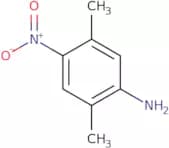
CAS:<p>1-Ethoxy-4-isothiocyanato-benzene is a chemical compound that has shown antihypertensive activity, as well as antioxidant and anticancer potential. It reacts with the primary amino group of proteins to form an amine, which can then react with hydrochloric acid or other aldehydes to form pentane. The pentane is then oxidized by amines or thiosemicarbazide to form methyl anthranilate. This compound also has antibacterial properties, which may be due to its ability to inhibit bacterial growth by disrupting hydrogen bonds and sulphonates.</p>Formula:C9H9NOSPurity:Min. 95%Molecular weight:179.24 g/mol2,5-Dimethyl-4-nitroaniline
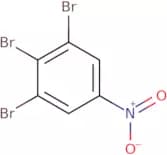
CAS:<p>2,5-Dimethyl-4-nitroaniline is an isomer of 2,5-dimethylaniline. The molecular electrostatic potential map reveals that the molecule has a high electron density at the 4 position of the aniline ring, which is characteristic of an aromatic system. This molecule displays a conformational change when it interacts with chloride ions, which can be seen in its vibrational spectrum. The nature of this molecule is interannular between aromatic and nonaromatic.<br>2,5-Dimethyl-4-nitroaniline's crystal system is orthorhombic. Its interactions with other molecules are determined by the electrostatic forces present on the surface of the crystal.</p>Formula:C8H10N2O2Purity:Min. 95%Color and Shape:PowderMolecular weight:166.18 g/mol1,2,3-Tribromo-5-nitrobenzene
CAS:<p>1,2,3-Tribromo-5-nitrobenzene (1,2,3-TBNB) is a chemical compound that is used as an electron acceptor in the Covid-19 pandemic. It has been shown to have a resonance of 3.8 ppm with a magnetic field strength of 5.0 T. 1,2,3-TBNB has been shown to be electronegative and can form halogen bonds with nitrobenzene. The molecule was synthesized by reacting bromine with nitric acid in ether solution.</p>Formula:C6H2Br3NO2Purity:Min. 95%Molecular weight:359.8 g/mol2-[(3-Hydroxypyridin-2-yl)formamido]acetic acid
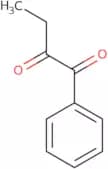
CAS:<p>2-[(3-Hydroxypyridin-2-yl)formamido]acetic acid is a pharmaceutical preparation that belongs to the group of metal ion chelating agents. It is used as a conditioning agent in the production of didemnin, an anti-inflammatory agent. 2-[(3-Hydroxypyridin-2-yl)formamido]acetic acid can be used to inhibit the formation of reactive oxygen species by removing metal ions such as iron and copper from cells. This drug also has been shown to have an antioxidant effect and can reduce inflammation due to its ability to inhibit prostaglandin synthesis.</p>Formula:C8H8N2O4Purity:Min. 95%Molecular weight:196.16 g/mol1-Phenylbutane-1,2-dione
CAS:Versatile small molecule scaffoldFormula:C10H10O2Purity:Min. 95%Molecular weight:162.18 g/mol2,3-Dioxo-2,3-dihydro-1H-indole-5-sulfonamide
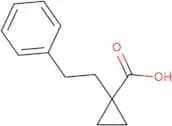
CAS:<p>2,3-Dioxo-2,3-dihydro-1H-indole-5-sulfonamide is a synthetic compound that has been shown to inhibit the growth of cancer cells. It is active against anhydrase and hCT116 cells but not against normal epidermal keratinocytes. 2,3-Dioxo-2,3-dihydro-1H-indole-5-sulfonamide binds to the epidermal growth factor receptor on the cell surface and inhibits its activity. This drug also inhibits the uptake of epidermal growth factor and carbonic anhydrase II in cancer cells. 2,3 Dioxo -2,3 dihydro -1H indole 5 sulfonamide has been used in some clinical trials as a potential anticancer agent for cancers such as non small cell lung cancer or colorectal cancer and may be used in combination with other drugs such as</p>Formula:C8H6N2O4SPurity:Min. 95%Molecular weight:226.21 g/mol1-(2-Phenylethyl)cyclopropane-1-carboxylic acid
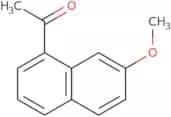
CAS:<p>Versatile small molecule scaffold</p>Formula:C12H14O2Purity:Min. 95%Molecular weight:190.24 g/mol1-(7-Methoxynaphthalen-1-yl)ethan-1-one
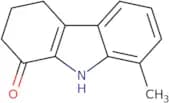
CAS:<p>1-(7-Methoxynaphthalen-1-yl)ethan-1-one is a heterocyclic compound that is used in the synthesis of other compounds. It is also used as a solvent and as a reaction product in acetylation reactions. The solubility of this compound is low and it shows low activity. It can be synthesized by reacting naphthalene with chloroform or benzene in the presence of aluminium chloride at high temperatures. This compound can also be obtained from 1,4-dichlorobenzene by deuterating it with D2O. 1-(7-Methoxynaphthalen-1-yl)ethan-1-one is soluble in nonpolar solvents such as hexane, but insoluble in water.</p>Formula:C13H12O2Purity:Min. 95%Molecular weight:200.23 g/mol8-methyl-2,3,4,9-tetrahydro-1H-carbazol-1-one
CAS:<p>8-methyl-2,3,4,9-tetrahydro-1H-carbazol-1-one is a pyrrole organic compound with the chemical formula C8H6N2. The molecule has two benzene rings and one cyclohexenone ring. The molecular structure has a dihedral angle of 18° and is conformationally flexible with hydrogen bonding interactions between the nitrogen atoms and the carbonyl groups. 8-methyl-2,3,4,9-tetrahydro-1H-carbazol-1-one has been shown to be an effective inhibitor of bacterial nitroreductase enzymes.</p>Formula:C13H13NOPurity:Min. 95%Molecular weight:199.25 g/mol6-Methoxy-2,3,4,9-tetrahydro-1H-carbazol-1-one
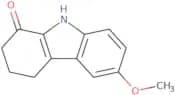
CAS:<p>The molecular formula for 6-methoxy-2,3,4,9-tetrahydro-1H-carbazol-1-one is C10H8O2. The molecular weight of this compound is 180.18 g/mol. This compound has a planar shape with a benzene ring and a pyrrole ring that are connected by hydrogen bonds. The pyrrole ring interacts with the cyclohexene and the benzene rings of this molecule. This interaction causes the molecule to have a dihedral conformation. In addition to these interactions, there are also intermolecular hydrogen bonds in this compound that are formed between the hydrogen atom on one pyrrole group and an oxygen atom on another pyrrole group.</p>Formula:C13H13NO2Purity:Min. 95%Molecular weight:215.25 g/mol[4-(Benzylsulfanyl)phenyl]methanol
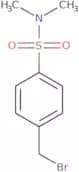
CAS:<p>Versatile small molecule scaffold</p>Formula:C14H14OSPurity:Min. 95%Molecular weight:230.33 g/mol4-Bromomethyl-N,N-dimethyl-benzenesulfonamide
CAS:<p>Versatile small molecule scaffold</p>Formula:C9H12BrNO2SPurity:Min. 95%Molecular weight:278.17 g/mol2-[4-(Propan-2-yl)phenyl]propan-2-ol
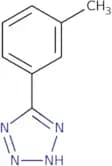
CAS:<p>Versatile small molecule scaffold</p>Formula:C12H18OPurity:Min. 95%Molecular weight:178.27 g/mol5-(m-Tolyl)tetrazole
CAS:<p>5-(m-Tolyl)tetrazole is an experimental compound that has been shown to be a nitrite reductase catalyst. It is also an electrochemical and photocatalytic oxidizing agent that can catalyze the oxidation of bromate. The crystal x-ray diffraction patterns of 5-(m-tolyl)tetrazole show the presence of channels, cycles, and nitrite ions in its structure.</p>Formula:C8H8N4Purity:Min. 95%Molecular weight:160.18 g/molMethyl 3-(ethylamino)-2-methylpropanoate
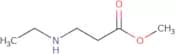
CAS:Versatile small molecule scaffoldFormula:C7H15NO2Purity:Min. 95%Molecular weight:145.2 g/molmethyl 3-(ethylamino)propanoate
CAS:<p>Versatile small molecule scaffold</p>Formula:C6H13NO2Purity:Min. 95%Molecular weight:131.2 g/mol5-Bromo-4-hydrazino-6-methylpyrimidine
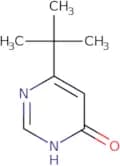
CAS:<p>Versatile small molecule scaffold</p>Formula:C5H7BrN4Purity:Min. 95%Molecular weight:203.04 g/mol6-tert-Butyl-3,4-dihydropyrimidin-4-one
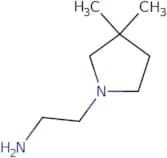
CAS:<p>Versatile small molecule scaffold</p>Formula:C8H12N2OPurity:Min. 95%Molecular weight:152.19 g/mol2-(3,3-Dimethylpyrrolidin-1-yl)ethan-1-amine
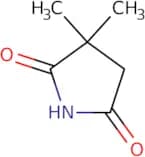
CAS:<p>Versatile small molecule scaffold</p>Formula:C8H18N2Purity:Min. 95%Molecular weight:142.24 g/mol3,3-Dimethylpyrrolidine-2,5-dione
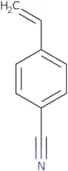
CAS:<p>Versatile small molecule scaffold</p>Formula:C6H9NO2Purity:Min. 95%Molecular weight:127.14 g/mol4-Cyanostyrene
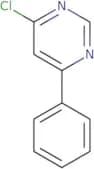
CAS:<p>4-Cyanostyrene is a monomer that belongs to the group of unsaturated hydrocarbons. It has the functional groups of methoxy and hydrogen chloride, which react with other molecules to form polymers. 4-Cyanostyrene is used in polymerization reactions as a functional group. It reacts with tetrazole in an homogeneous catalytic system to form a copolymer. This reaction can be monitored by gravimetric analysis and FT-IR spectroscopy. The polymerization reaction is influenced by the substrate binding and copolymerization, which is affected by temperature, pressure, and solvent choice.</p>Formula:C9H7NPurity:Min. 95%Molecular weight:129.16 g/mol4-Chloro-6-phenylpyrimidine
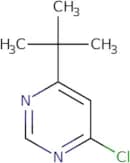
CAS:<p>4-Chloro-6-phenylpyrimidine is a crystalline solid. It has a molecular weight of 193.14 g/mol and a density of 1.832 g/cm3, with the chemical formula C11H10N4Cl2. The crystals are monoclinic and colourless. The crystals have an orthorhombic symmetry with space group P21/n. 4-Chloro-6-phenylpyrimidine has been used to measure the wavelength and radiation parameters for X-ray diffraction measurements. Bruker's software, which is used for data acquisition, was used to generate the parameters for this compound's crystal structure in order to perform these experiments.</p>Formula:C10H7ClN2Purity:Min. 95%Molecular weight:190.63 g/mol4-Tert-butyl-6-chloropyrimidine
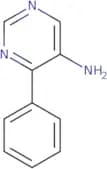
CAS:<p>Versatile small molecule scaffold</p>Formula:C8H11ClN2Purity:Min. 95%Molecular weight:170.64 g/mol4-Phenylpyrimidin-5-amine
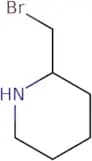
CAS:<p>4-Phenylpyrimidin-5-amine is an organic compound that belongs to the group of bromo compounds. It is a colorless solid. 4-Phenylpyrimidin-5-amine can be synthesized from phenylacetic acid, nitroethane, and ammonium acetate. The substance is used in the manufacture of other substances.</p>Formula:C10H9N3Purity:Min. 95%Molecular weight:171.2 g/mol2-Bromomethyl-piperidine hydrobromide
CAS:<p>2-Bromomethyl-piperidine hydrobromide is a potent 5-HT6 receptor antagonist. It has been shown to have affinity for the 5-HT6 receptor and is selective for this receptor over other serotonin receptors. 2-Bromomethyl-piperidine hydrobromide inhibits the binding of serotonin to its receptors and prevents the activation of these receptors, which leads to an anti-depressive effect. This compound is also used as an intermediate in organic synthesis, such as acrylates or hydrides.</p>Formula:C6H13Br2NPurity:Min. 95%Molecular weight:258.99 g/mol2-(Bromomethyl)pyrrolidine hydrobromide
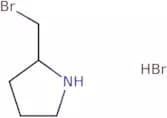
CAS:2-Bromomethylpyrrolidine hydrobromide is a brominated analog of pyrrolidine. It is an intermediate in the reaction pathway for the synthesis of piperidine, which is a precursor to many pharmaceuticals. 2-Bromomethylpyrrolidine hydrobromide is synthesized by the reaction of bromine with pyrrolidine and undergoes electrophilic substitution at the nitrogen atom in its chain. The equilibrium between 2-bromomethylpyrrolidine hydrobromide and 2-methylpyrrolidinium bromide is shifted to favor hydrobromide when it is reacted with an alcohol or amine.Formula:C5H11Br2NPurity:Min. 95%Molecular weight:244.96 g/mol2,3-Dihydro-1H-isoindole-2-carbonyl chloride
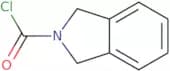
CAS:<p>Versatile small molecule scaffold</p>Formula:C9H8ClNOPurity:Min. 95%Molecular weight:181.62 g/mol9-Methyl-3,9-diazabicyclo[3.3.1]nonane dihydrochloride
CAS:<p>Versatile small molecule scaffold</p>Formula:C8H18Cl2N2Purity:Min. 95%Molecular weight:213.15 g/mol8-Ethyl-8-azabicyclo[3.2.1]octan-3-one
CAS:<p>8-Ethyl-8-azabicyclo[3.2.1]octan-3-one is a synthetic compound that is structurally similar to nicotine, which is found in the leaves of tobacco plants. It has been shown to have pharmacological activity as a nicotinic receptor agonist. 8-Ethyl-8-azabicyclo[3.2.1]octan-3-one has been used in the treatment of various types of cancer, including Hodgkin's disease and breast cancer, as well as for Parkinson's disease and Alzheimer's disease. 8EBAO also has antiemetic properties and can be used to treat motion sickness or postoperative nausea and vomiting. The drug is metabolized by CYP450 enzymes into tigloyloximes, which are then converted into pseudotropine or piperideine through the action of rhizogenes from Pseudomonas sp., Streptomyces sp.,</p>Formula:C9H15NOPurity:Min. 95%Molecular weight:153.22 g/mol1-(2-Methoxyethyl)-3,5-dimethyl-1H-pyrazol-4-amine
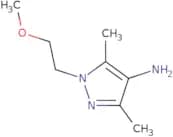
CAS:<p>Versatile small molecule scaffold</p>Formula:C8H15N3OPurity:Min. 95%Molecular weight:169.22 g/mol3-Amino-N,N-dimethyl-4-(propan-2-yloxy)benzene-1-sulfonamide
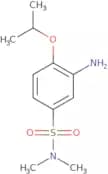
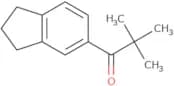
CAS:Versatile small molecule scaffoldFormula:C11H18N2O3SPurity:Min. 95%Molecular weight:258.34 g/mol1-(2,3-Dihydro-1H-inden-5-yl)-2,2-dimethylpropan-1-one
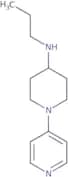
CAS:<p>Versatile small molecule scaffold</p>Formula:C14H18OPurity:Min. 95%Molecular weight:202.29 g/molN-Propyl-1-(pyridin-4-yl)piperidin-4-amine
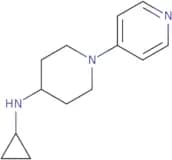
CAS:<p>Versatile small molecule scaffold</p>Formula:C13H21N3Purity:Min. 95%Molecular weight:219.33 g/molN-Cyclopropyl-1-(pyridin-4-yl)piperidin-4-amine
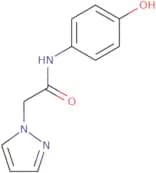
CAS:<p>Versatile small molecule scaffold</p>Formula:C13H19N3Purity:Min. 95%Molecular weight:217.31 g/molN-(4-Hydroxyphenyl)-2-(1H-pyrazol-1-yl)acetamide
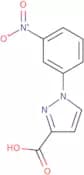
CAS:<p>Versatile small molecule scaffold</p>Formula:C11H11N3O2Purity:Min. 95%Molecular weight:217.22 g/mol1-(3-Nitrophenyl)-1H-pyrazole-3-carboxylic acid
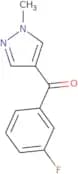
CAS:<p>Versatile small molecule scaffold</p>Formula:C10H7N3O4Purity:Min. 95%Molecular weight:233.18 g/mol4-(3-Fluorobenzoyl)-1-methyl-1H-pyrazole
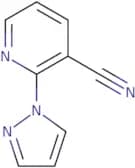
CAS:Controlled Product<p>Versatile small molecule scaffold</p>Formula:C11H9FN2OPurity:Min. 95%Molecular weight:204.2 g/mol2-(Pyrazol-1-yl)-3-cyanopyridine
CAS:<p>2-(Pyrazol-1-yl)-3-cyanopyridine is a benzyl pyridine that has been shown to have antimicrobial activity, including inhibition of bacterial growth. It was synthesized by the reaction of diazotization of thiourea with sodium sulfite and 2-(chlorosulfonyl)benzene. The product is a white solid that is soluble in water and ether. 2-(Pyrazol-1-yl)-3-cyanopyridine can be used as an antimicrobial agent to prevent bacterial growth in water systems such as chloroacetic acid, chloride, and nitrous acid. The compound inhibits the formation of the cytoplasmic membrane because it binds to the cytoplasmic membrane protein cytochrome c oxidase. This binding prevents the production of ATP, which leads to cell death.</p>Formula:C9H6N4Purity:Min. 95%Molecular weight:170.17 g/mol3-[2-(1H-Pyrazol-1-yl)ethoxy]aniline
CAS:<p>Versatile small molecule scaffold</p>Formula:C11H13N3OPurity:Min. 95%Molecular weight:203.24 g/mol1-[2-(Trifluoromethyl)phenyl]-1H-pyrazole-3-carboxylic acid
CAS:Versatile small molecule scaffoldFormula:C11H7F3N2O2Purity:Min. 95%Molecular weight:256.18 g/mol[4-(3,5-Dimethyl-1H-pyrazol-1-yl)-2-(trifluoromethyl)phenyl]methanamine
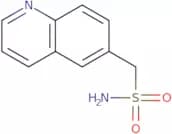
CAS:<p>Versatile small molecule scaffold</p>Formula:C13H14F3N3Purity:Min. 95%Molecular weight:269.27 g/mol(Quinolin-6-yl)methanesulfonamide
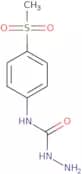
CAS:<p>Quinolin-6-yl)methanesulfonamide is an intermediate in the synthesis of azetidine.</p>Formula:C10H10N2O2SPurity:Min. 95%Molecular weight:222.27 g/mol3-Amino-1-(4-methanesulfonylphenyl)urea
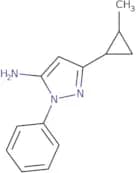
CAS:Versatile small molecule scaffoldFormula:C8H11N3O3SPurity:Min. 95%Molecular weight:229.26 g/mol3-(2-Methylcyclopropyl)-1-phenyl-1H-pyrazol-5-amine
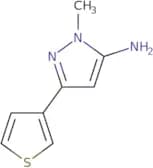
CAS:Versatile small molecule scaffoldFormula:C13H15N3Purity:Min. 95%Molecular weight:213.28 g/mol1-Methyl-3-(thiophen-3-yl)-1H-pyrazol-5-amine
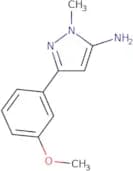
CAS:Versatile small molecule scaffoldFormula:C8H9N3SPurity:Min. 95%Molecular weight:179.24 g/mol3-(3-Methoxyphenyl)-1-methyl-1H-pyrazol-5-amine
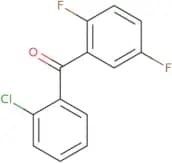
CAS:Versatile small molecule scaffoldFormula:C11H13N3OPurity:Min. 95%Molecular weight:203.24 g/mol(2-Chlorophenyl)(2,5-difluorophenyl)methanone
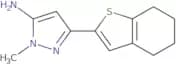
CAS:<p>Versatile small molecule scaffold</p>Formula:C13H7ClF2OPurity:Min. 95%Molecular weight:252.64 g/mol1-Methyl-3-(4,5,6,7-tetrahydro-1-benzothiophen-2-yl)-1H-pyrazol-5-amine
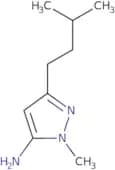
CAS:<p>Versatile small molecule scaffold</p>Formula:C12H15N3SPurity:Min. 95%Molecular weight:233.33 g/mol1-Methyl-3-(3-methylbutyl)-1H-pyrazol-5-amine
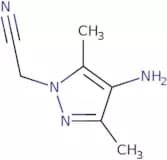
CAS:<p>Versatile small molecule scaffold</p>Formula:C9H17N3Purity:Min. 95%Molecular weight:167.25 g/mol2-(4-Amino-3,5-dimethyl-1H-pyrazol-1-yl)acetonitrile
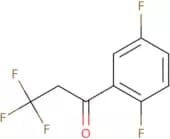
CAS:Versatile small molecule scaffoldFormula:C7H10N4Purity:Min. 95%Molecular weight:150.18 g/mol1-(2,5-Difluorophenyl)-3,3,3-trifluoropropan-1-one
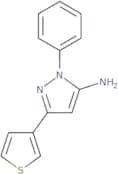
CAS:<p>Versatile small molecule scaffold</p>Formula:C9H5F5OPurity:Min. 95%Molecular weight:224.13 g/mol1-Phenyl-3-(thiophen-3-yl)-1H-pyrazol-5-amine
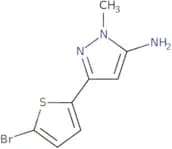
CAS:<p>Versatile small molecule scaffold</p>Formula:C13H11N3SPurity:Min. 95%Molecular weight:241.31 g/mol3-(5-Bromothiophen-2-yl)-1-methyl-1H-pyrazol-5-amine
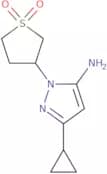
CAS:<p>Versatile small molecule scaffold</p>Formula:C8H8BrN3SPurity:Min. 95%Molecular weight:258.14 g/mol5-cyclopropyl-2-(1,1-dioxothiolan-3-yl)pyrazol-3-amine
CAS:<p>Versatile small molecule scaffold</p>Formula:C10H15N3O2SPurity:Min. 95%Molecular weight:241.31 g/mol[2-(Dimethylamino)ethyl]({[4-(1H-imidazol-1-yl)phenyl]methyl})amine
CAS:Versatile small molecule scaffoldFormula:C14H20N4Purity:Min. 95%Molecular weight:244.34 g/mol[(3,4-Dimethylphenyl)methyl](2-methoxyethyl)amine
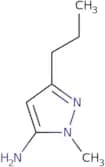
CAS:Versatile small molecule scaffoldFormula:C12H19NOPurity:Min. 95%Molecular weight:193.28 g/mol1-Methyl-3-propyl-1H-pyrazol-5-amine
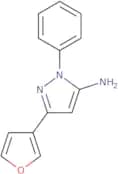
CAS:Versatile small molecule scaffoldFormula:C7H13N3Purity:Min. 95%Molecular weight:139.2 g/mol3-(Furan-3-yl)-1-phenyl-1H-pyrazol-5-amine
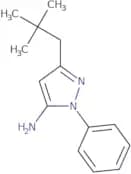
CAS:<p>Versatile small molecule scaffold</p>Formula:C13H11N3OPurity:Min. 95%Molecular weight:225.25 g/mol3-(2,2-Dimethylpropyl)-1-phenyl-1H-pyrazol-5-amine
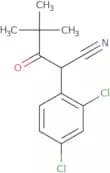
CAS:Versatile small molecule scaffoldFormula:C14H19N3Purity:Min. 95%Molecular weight:229.32 g/mol2-(2,4-Dichlorophenyl)-4,4-dimethyl-3-oxopentanenitrile
CAS:Versatile small molecule scaffoldFormula:C13H13Cl2NOPurity:Min. 95%Molecular weight:270.15 g/mol2-[4-(2,4-Dichlorophenyl)-4-methyl-2,5-dioxoimidazolidin-1-yl]acetic acid
CAS:Versatile small molecule scaffoldFormula:C12H10Cl2N2O4Purity:Min. 95%Molecular weight:317.12 g/mol2-[4-(2,4-Difluorophenyl)-4-methyl-2,5-dioxoimidazolidin-1-yl]acetic acid
CAS:<p>Versatile small molecule scaffold</p>Formula:C12H10F2N2O4Purity:Min. 95%Molecular weight:284.22 g/mol2-[4-(2-Methoxy-5-methylphenyl)-4-methyl-2,5-dioxoimidazolidin-1-yl]acetic acid
CAS:Versatile small molecule scaffoldFormula:C14H16N2O5Purity:Min. 95%Molecular weight:292.29 g/mol2-[4-(2-Methoxyphenyl)-4-methyl-2,5-dioxoimidazolidin-1-yl]acetic acid
CAS:<p>Versatile small molecule scaffold</p>Formula:C13H14N2O5Purity:Min. 95%Molecular weight:278.26 g/molN-[(4-Chlorophenyl)methyl]-1H-indazol-6-amine
CAS:<p>Versatile small molecule scaffold</p>Formula:C14H12ClN3Purity:Min. 95%Molecular weight:257.72 g/mol2-[N-Methyl-2-(1H-pyrazol-1-yl)propanamido]acetic acid
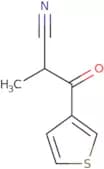
CAS:<p>Versatile small molecule scaffold</p>Formula:C9H13N3O3Purity:Min. 95%Molecular weight:211.22 g/mol2-Methyl-3-oxo-3-(thiophen-3-yl)propanenitrile
CAS:<p>Versatile small molecule scaffold</p>Formula:C8H7NOSPurity:Min. 95%Molecular weight:165.21 g/mol1-[2-(Naphthalen-2-ylsulfanyl)acetyl]piperidin-4-one
CAS:Controlled Product<p>Versatile small molecule scaffold</p>Formula:C17H17NO2SPurity:Min. 95%Molecular weight:299.4 g/mol1-Phenyl-4-propoxy-1H-pyrazole-3-carboxylic acid
CAS:<p>Versatile small molecule scaffold</p>Formula:C13H14N2O3Purity:Min. 95%Molecular weight:246.26 g/mol4-Hydroxy-1-[3-(propan-2-yl)phenyl]-1H-pyrazole-3-carboxylic acid
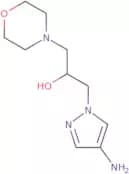
CAS:<p>Versatile small molecule scaffold</p>Formula:C13H14N2O3Purity:Min. 95%Molecular weight:246.26 g/mol1-(4-Amino-1H-pyrazol-1-yl)-3-(morpholin-4-yl)propan-2-ol
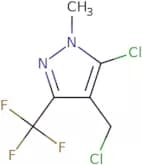
CAS:Versatile small molecule scaffoldFormula:C10H18N4O2Purity:Min. 95%Molecular weight:226.28 g/mol5-Chloro-4-(chloromethyl)-1-methyl-3-(trifluoromethyl)-1H-pyrazole
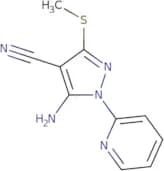
CAS:Versatile small molecule scaffoldFormula:C6H5Cl2F3N2Purity:Min. 95%Molecular weight:233.02 g/mol5-Amino-3-(methylsulfanyl)-1-(pyridin-2-yl)-1H-pyrazole-4-carbonitrile
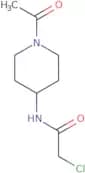
CAS:<p>Versatile small molecule scaffold</p>Formula:C10H9N5SPurity:Min. 95%Molecular weight:231.28 g/molN-(1-Acetylpiperidin-4-yl)-2-chloroacetamide
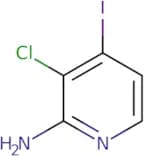
CAS:<p>Versatile small molecule scaffold</p>Formula:C9H15ClN2O2Purity:Min. 95%Molecular weight:218.68 g/mol3-Chloro-4-iodopyridin-2-amine
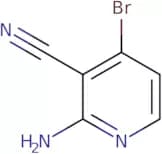
CAS:<p>3-Chloro-4-iodopyridin-2-amine is a chemical compound with the formula CHI. It is a white solid that can be used in evaluating cross-coupling reactions, such as the coupling of an alkyne with a chlorine atom. This chemical has been shown to react well with chlorination reagents and to form substituted cyanides. The nature of the substituent on the chlorine atom determines its regioselectivity and reactivity, making this compound useful for regiocontrolled synthesis.</p>Formula:C5H4ClIN2Purity:Min. 95%Molecular weight:254.46 g/mol2-Amino-4-bromopyridine-3-carbonitrile
CAS:<p>Versatile small molecule scaffold</p>Formula:C6H4BrN3Purity:Min. 95%Molecular weight:198.02 g/mol2,4-dibromopyridine-3-carbonitrile
CAS:<p>Versatile small molecule scaffold</p>Formula:C6H2Br2N2Purity:Min. 95%Molecular weight:261.9 g/mol2-(5-Chlorothiophen-2-yl)-1,3-thiazole-5-carboxylic acid
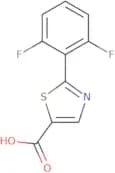
CAS:<p>Versatile small molecule scaffold</p>Formula:C8H4ClNO2S2Purity:Min. 95%Molecular weight:245.7 g/mol2-(2,6-Difluorophenyl)-1,3-thiazole-5-carboxylic acid
CAS:<p>Versatile small molecule scaffold</p>Formula:C10H5F2NO2SPurity:Min. 95%Molecular weight:241.22 g/mol1-[4-Chloro-2-(trifluoromethyl)phenyl]-4-hydroxy-1H-pyrazole-3-carboxylic acid
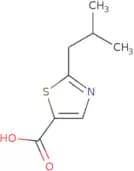
CAS:<p>Versatile small molecule scaffold</p>Formula:C11H6ClF3N2O3Purity:Min. 95%Molecular weight:306.62 g/mol2-(2-Methylpropyl)-1,3-thiazole-5-carboxylic acid
CAS:<p>Versatile small molecule scaffold</p>Formula:C8H11NO2SPurity:Min. 95%Molecular weight:185.25 g/mol3,4-Difluoro-N-[(trimethyl-1H-pyrazol-4-yl)methyl]aniline
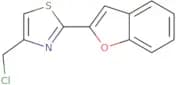
CAS:Versatile small molecule scaffoldFormula:C13H15F2N3Purity:Min. 95%Molecular weight:251.27 g/mol2-(1-Benzofuran-2-yl)-4-(chloromethyl)-1,3-thiazole
CAS:<p>Versatile small molecule scaffold</p>Formula:C12H8ClNOSPurity:Min. 95%Molecular weight:249.72 g/mol2-[2-(5-Chlorothiophen-2-yl)-1,3-thiazol-4-yl]acetic acid
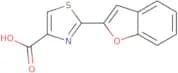
CAS:<p>Versatile small molecule scaffold</p>Formula:C9H6ClNO2S2Purity:Min. 95%Molecular weight:259.7 g/mol2-(1-Benzofuran-2-yl)-1,3-thiazole-4-carboxylic acid
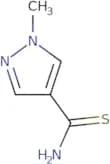
CAS:Versatile small molecule scaffoldFormula:C12H7NO3SPurity:Min. 95%Molecular weight:245.26 g/mol1-Methyl-1H-pyrazole-4-carbothioamide
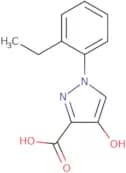
CAS:<p>Versatile small molecule scaffold</p>Formula:C5H7N3SPurity:Min. 95%Molecular weight:141.2 g/mol1-(2-Ethylphenyl)-4-hydroxy-1H-pyrazole-3-carboxylic acid
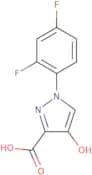
CAS:<p>Versatile small molecule scaffold</p>Formula:C12H12N2O3Purity:Min. 95%Molecular weight:232.23 g/mol1-(2,4-Difluorophenyl)-4-hydroxy-1H-pyrazole-3-carboxylic acid
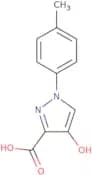
CAS:<p>Versatile small molecule scaffold</p>Formula:C10H6F2N2O3Purity:Min. 95%Molecular weight:240.16 g/mol4-Hydroxy-1-(4-methylphenyl)-1H-pyrazole-3-carboxylic acid
CAS:<p>Versatile small molecule scaffold</p>Formula:C11H10N2O3Purity:Min. 95%Molecular weight:218.21 g/mol2,2-Dimethyl-N-[2-(5-sulfamoylthiophen-2-yl)ethyl]propanamide
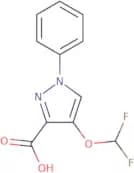
CAS:<p>Versatile small molecule scaffold</p>Formula:C11H18N2O3S2Purity:Min. 95%Molecular weight:290.4 g/mol4-(Difluoromethoxy)-1-phenyl-1H-pyrazole-3-carboxylic acid
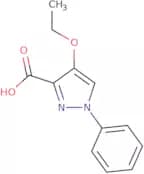
CAS:Versatile small molecule scaffoldFormula:C11H8F2N2O3Purity:Min. 95%Molecular weight:254.19 g/mol4-Ethoxy-1-phenyl-1H-pyrazole-3-carboxylic acid
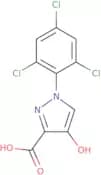
CAS:<p>Versatile small molecule scaffold</p>Formula:C12H12N2O3Purity:Min. 95%Molecular weight:232.23 g/mol4-Hydroxy-1-(2,4,6-trichlorophenyl)-1H-pyrazole-3-carboxylic acid
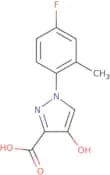
CAS:<p>Versatile small molecule scaffold</p>Formula:C10H5Cl3N2O3Purity:Min. 95%Molecular weight:307.5 g/mol1-(4-Fluoro-2-methylphenyl)-4-hydroxy-1H-pyrazole-3-carboxylic acid
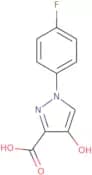
CAS:<p>Versatile small molecule scaffold</p>Formula:C11H9FN2O3Purity:Min. 95%Molecular weight:236.2 g/mol1-(4-Fluorophenyl)-4-hydroxy-1H-pyrazole-3-carboxylic acid
CAS:<p>Versatile small molecule scaffold</p>Formula:C10H7FN2O3Purity:Min. 95%Molecular weight:222.17 g/mol1-(2-Fluorophenyl)-4-hydroxy-1H-pyrazole-3-carboxylic acid
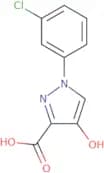
CAS:Versatile small molecule scaffoldFormula:C10H7FN2O3Purity:Min. 95%Molecular weight:222.17 g/mol1-(3-Chlorophenyl)-4-hydroxy-1H-pyrazole-3-carboxylic acid
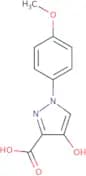
CAS:<p>Versatile small molecule scaffold</p>Formula:C10H7ClN2O3Purity:Min. 95%Molecular weight:238.63 g/mol4-Hydroxy-1-(4-methoxyphenyl)-1H-pyrazole-3-carboxylic acid
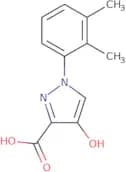
CAS:<p>Versatile small molecule scaffold</p>Formula:C11H10N2O4Purity:Min. 95%Molecular weight:234.21 g/mol1-(2,3-Dimethylphenyl)-4-hydroxy-1H-pyrazole-3-carboxylic acid
CAS:<p>Versatile small molecule scaffold</p>Formula:C12H12N2O3Purity:Min. 95%Molecular weight:232.23 g/molN-(Pyrimidin-2-yl)-2,3-dihydro-1H-indole-5-sulfonamide
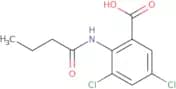
CAS:Versatile small molecule scaffoldFormula:C12H12N4O2SPurity:Min. 95%Molecular weight:276.32 g/mol2-Butanamido-3,5-dichlorobenzoic acid
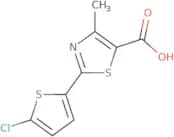
CAS:<p>Versatile small molecule scaffold</p>Formula:C11H11Cl2NO3Purity:Min. 95%Molecular weight:276.11 g/mol2-(5-Chlorothiophen-2-yl)-4-methyl-1,3-thiazole-5-carboxylic acid
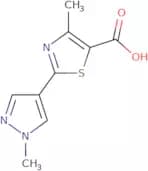
CAS:<p>Versatile small molecule scaffold</p>Formula:C9H6ClNO2S2Purity:Min. 95%Molecular weight:259.7 g/mol4-Methyl-2-(1-methyl-1H-pyrazol-4-yl)-1,3-thiazole-5-carboxylic acid
CAS:<p>Versatile small molecule scaffold</p>Formula:C9H9N3O2SPurity:Min. 95%Molecular weight:223.25 g/mol3-[2-(4-Methoxyphenyl)ethyl]-1,2-oxazol-5-amine
CAS:<p>Versatile small molecule scaffold</p>Formula:C12H14N2O2Purity:Min. 95%Molecular weight:218.25 g/mol3-[3-(Thiophen-2-yl)propyl]-1,2-oxazol-5-amine
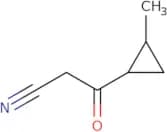
CAS:<p>Versatile small molecule scaffold</p>Formula:C10H12N2OSPurity:Min. 95%Molecular weight:208.28 g/mol3-(2-Methylcyclopropyl)-3-oxopropanenitrile
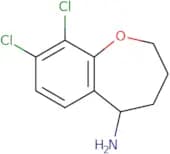
CAS:Versatile small molecule scaffoldFormula:C7H9NOPurity:Min. 95%Molecular weight:123.15 g/mol8,9-Dichloro-2,3,4,5-tetrahydro-1-benzoxepin-5-amine
CAS:Versatile small molecule scaffoldFormula:C10H11Cl2NOPurity:Min. 95%Molecular weight:232.1 g/mol1-Azido-3-chloro-2-fluorobenzene
CAS:<p>Versatile small molecule scaffold</p>Formula:C6H3ClFN3Purity:Min. 95%Molecular weight:171.6 g/mol

![2-[1-(Trifluoromethyl)cyclopropyl]pyridin-4-ol](/_next/image/?url=https%3A%2Fstatic.cymitquimica.com%2Fproducts%2F3D%2Fthumb-webp%2FDAD16705.webp&w=3840&q=75)
amine](/_next/image/?url=https%3A%2Fstatic.cymitquimica.com%2Fproducts%2F3D%2Fthumb-webp%2FDAD07461.webp&w=3840&q=75)
![1-{[1,2,4]Triazolo[4,3-a]pyrazin-8-yl}piperidine](/_next/image/?url=https%3A%2Fstatic.cymitquimica.com%2Fproducts%2F3D%2Fthumb-webp%2FDAD02244.webp&w=3840&q=75)
![2-{1-[(tert-Butyldimethylsilyl)oxy]cyclopropyl}acetaldehyde](/_next/image/?url=https%3A%2Fstatic.cymitquimica.com%2Fproducts%2F3D%2Fthumb-webp%2FDAC97816.webp&w=3840&q=75)

![[3-(4-Bromo-3-methylphenoxy)propyl]dimethylamine](/_next/image/?url=https%3A%2Fstatic.cymitquimica.com%2Fproducts%2F3D%2Fthumb-webp%2FDAC92644.webp&w=3840&q=75)
![1-[(2,4-Dichlorophenyl)methyl]-1H-1,2,3-triazole-4-carboxylic acid](/_next/image/?url=https%3A%2Fstatic.cymitquimica.com%2Fproducts%2F3D%2Fthumb-webp%2FDAC90628.webp&w=3840&q=75)


![1,8,10-Triazatricyclo[7.4.0.0,2,7]trideca-2,4,6,8,10,12-hexaene-12-carbaldehyde](/_next/image/?url=https%3A%2Fstatic.cymitquimica.com%2Fproducts%2F3D%2Fthumb-webp%2FDAC69636.webp&w=3840&q=75)
![6-Formylpyrazolo[1,5-a]pyrimidine-3-carbonitrile](/_next/image/?url=https%3A%2Fstatic.cymitquimica.com%2Fproducts%2F3D%2Fthumb-webp%2FDAC69635.webp&w=3840&q=75)
![3-Methyl-[1,2]oxazolo[5,4-b]pyridine-5-carbaldehyde](/_next/image/?url=https%3A%2Fstatic.cymitquimica.com%2Fproducts%2F3D%2Fthumb-webp%2FDAC69631.webp&w=3840&q=75)
![tert-Butyl N-[2-(trifluoromethyl)pyridin-3-yl]carbamate](/_next/image/?url=https%3A%2Fstatic.cymitquimica.com%2Fproducts%2F3D%2Fthumb-webp%2FDAC65452.webp&w=3840&q=75)
![6-Methoxy-2-methyl-1H,2H,3H,4H,5H-pyrido[4,3-b]indole](/_next/image/?url=https%3A%2Fstatic.cymitquimica.com%2Fproducts%2F3D%2Fthumb-webp%2FDAC64041.webp&w=3840&q=75)


![tert-Butyl N-{[4-amino-5-({[(tert-butoxy)carbonyl]amino}methyl)-4H-1,2,4-triazol-3-yl]methyl}carba…](/_next/image/?url=https%3A%2Fstatic.cymitquimica.com%2Fproducts%2F3D%2Fthumb-webp%2FDAC42036.webp&w=3840&q=75)
![2-Amino-4H,6H,7H-pyrano[3,4-d][1,3]thiazol-7-one](/_next/image/?url=https%3A%2Fstatic.cymitquimica.com%2Fproducts%2F3D%2Fthumb-webp%2FDAC28138.webp&w=3840&q=75)
![rac-(3R,6S)-1-[(tert-butoxy)carbonyl]-6-methylpiperidine-3-carboxylic acid, cis](/_next/image/?url=https%3A%2Fstatic.cymitquimica.com%2Fproducts%2F3D%2Fthumb-webp%2FDAC20082.webp&w=3840&q=75)
![2-[4-(Trifluoromethyl)phenyl]cyclopentan-1-one](/_next/image/?url=https%3A%2Fstatic.cymitquimica.com%2Fproducts%2F3D%2Fthumb-webp%2FDAC11175.webp&w=3840&q=75)
![2,3,5-Trimethyl-3H-imidazo[4,5-b]pyridine-7-carboxylic acid](/_next/image/?url=https%3A%2Fstatic.cymitquimica.com%2Fproducts%2F3D%2Fthumb-webp%2FDAC03890.webp&w=3840&q=75)
![7-Chloro-8-fluoroimidazo[1,2-a]pyridine](/_next/image/?url=https%3A%2Fstatic.cymitquimica.com%2Fproducts%2F3D%2Fthumb-webp%2FDAB69187.webp&w=3840&q=75)
![1-{3-[2-(Dimethylamino)ethoxy]phenyl}ethan-1-one](/_next/image/?url=https%3A%2Fstatic.cymitquimica.com%2Fproducts%2F3D%2Fthumb-webp%2FDAB30590.webp&w=3840&q=75)
![1-{3-[(Dimethylamino)methyl]phenyl}ethan-1-one](/_next/image/?url=https%3A%2Fstatic.cymitquimica.com%2Fproducts%2F3D%2Fthumb-webp%2FDAB30589.webp&w=3840&q=75)
![1-{[4-(Dimethylamino)phenyl]methyl}-1H-pyrazol-5-amine](/_next/image/?url=https%3A%2Fstatic.cymitquimica.com%2Fproducts%2F3D%2Fthumb-webp%2FDAA52427.webp&w=3840&q=75)

![6,12-Dibromo-1,4-dioxaspiro[4.7]dodecane](/_next/image/?url=https%3A%2Fstatic.cymitquimica.com%2Fproducts%2F3D%2Fthumb-webp%2FDAA51474.webp&w=3840&q=75)
![Methyl[(1-methyl-1H-indol-2-yl)methyl]amine](/_next/image/?url=https%3A%2Fstatic.cymitquimica.com%2Fproducts%2F3D%2Fthumb-webp%2FDAA51415.webp&w=3840&q=75)
![2-Bromo-7-nitrobenzo[D]thiazole](/_next/image/?url=https%3A%2Fstatic.cymitquimica.com%2Fproducts%2F3D%2Fthumb-webp%2FDAA50749.webp&w=3840&q=75)
![2-[2-(Dimethylamino)ethyl]aniline](/_next/image/?url=https%3A%2Fstatic.cymitquimica.com%2Fproducts%2F3D%2Fthumb-webp%2FDAA47892.webp&w=3840&q=75)
![2-Amino-6,7,8,9-tetrahydro-5H-benzo[7]annulen-5-one](/_next/image/?url=https%3A%2Fstatic.cymitquimica.com%2Fproducts%2F3D%2Fthumb-webp%2FDAA47055.webp&w=3840&q=75)
![5-Oxo-6,7,8,9-tetrahydro-5H-benzo[7]annulene-2-carboxylic acid](/_next/image/?url=https%3A%2Fstatic.cymitquimica.com%2Fproducts%2F3D%2Fthumb-webp%2FDAA47047.webp&w=3840&q=75)
![Ethyl 5-methoxy-1H-pyrrolo[2,3-c]pyridine-2-carboxylate](/_next/image/?url=https%3A%2Fstatic.cymitquimica.com%2Fproducts%2F3D%2Fthumb-webp%2FDAA46963.webp&w=3840&q=75)
amine](/_next/image/?url=https%3A%2Fstatic.cymitquimica.com%2Fproducts%2F3D%2Fthumb-webp%2FDAA46822.webp&w=3840&q=75)

![2-[(3-Hydroxypyridin-2-yl)formamido]acetic acid](/_next/image/?url=https%3A%2Fstatic.cymitquimica.com%2Fproducts%2F3D%2Fthumb-webp%2FDAA45869.webp&w=3840&q=75)

![[4-(Benzylsulfanyl)phenyl]methanol](/_next/image/?url=https%3A%2Fstatic.cymitquimica.com%2Fproducts%2F3D%2Fthumb-webp%2FDAA44898.webp&w=3840&q=75)
![2-[4-(Propan-2-yl)phenyl]propan-2-ol](/_next/image/?url=https%3A%2Fstatic.cymitquimica.com%2Fproducts%2F3D%2Fthumb-webp%2FDAA44542.webp&w=3840&q=75)


![9-Methyl-3,9-diazabicyclo[3.3.1]nonane dihydrochloride](/_next/image/?url=https%3A%2Fstatic.cymitquimica.com%2Fproducts%2F3D%2Fthumb-webp%2FDAA43107.webp&w=3840&q=75)
![8-Ethyl-8-azabicyclo[3.2.1]octan-3-one](/_next/image/?url=https%3A%2Fstatic.cymitquimica.com%2Fproducts%2F3D%2Fthumb-webp%2FDAA42330.webp&w=3840&q=75)
![3-[2-(1H-Pyrazol-1-yl)ethoxy]aniline](/_next/image/?url=https%3A%2Fstatic.cymitquimica.com%2Fproducts%2F3D%2Fthumb-webp%2FCWB81954.webp&w=3840&q=75)
![1-[2-(Trifluoromethyl)phenyl]-1H-pyrazole-3-carboxylic acid](/_next/image/?url=https%3A%2Fstatic.cymitquimica.com%2Fproducts%2F3D%2Fthumb-webp%2FCWB81538.webp&w=3840&q=75)
![[4-(3,5-Dimethyl-1H-pyrazol-1-yl)-2-(trifluoromethyl)phenyl]methanamine](/_next/image/?url=https%3A%2Fstatic.cymitquimica.com%2Fproducts%2F3D%2Fthumb-webp%2FCWB81526.webp&w=3840&q=75)
phenyl]methyl})amine](/_next/image/?url=https%3A%2Fstatic.cymitquimica.com%2Fproducts%2F3D%2Fthumb-webp%2FCWB65753.webp&w=3840&q=75)
amine](/_next/image/?url=https%3A%2Fstatic.cymitquimica.com%2Fproducts%2F3D%2Fthumb-webp%2FCWB65749.webp&w=3840&q=75)
![2-[4-(2,4-Dichlorophenyl)-4-methyl-2,5-dioxoimidazolidin-1-yl]acetic acid](/_next/image/?url=https%3A%2Fstatic.cymitquimica.com%2Fproducts%2F3D%2Fthumb-webp%2FCWB64217.webp&w=3840&q=75)
![2-[4-(2,4-Difluorophenyl)-4-methyl-2,5-dioxoimidazolidin-1-yl]acetic acid](/_next/image/?url=https%3A%2Fstatic.cymitquimica.com%2Fproducts%2F3D%2Fthumb-webp%2FCWB64209.webp&w=3840&q=75)
![2-[4-(2-Methoxy-5-methylphenyl)-4-methyl-2,5-dioxoimidazolidin-1-yl]acetic acid](/_next/image/?url=https%3A%2Fstatic.cymitquimica.com%2Fproducts%2F3D%2Fthumb-webp%2FCWB64200.webp&w=3840&q=75)
![2-[4-(2-Methoxyphenyl)-4-methyl-2,5-dioxoimidazolidin-1-yl]acetic acid](/_next/image/?url=https%3A%2Fstatic.cymitquimica.com%2Fproducts%2F3D%2Fthumb-webp%2FCWB64190.webp&w=3840&q=75)
![N-[(4-Chlorophenyl)methyl]-1H-indazol-6-amine](/_next/image/?url=https%3A%2Fstatic.cymitquimica.com%2Fproducts%2F3D%2Fthumb-webp%2FCWB63934.webp&w=3840&q=75)
![2-[N-Methyl-2-(1H-pyrazol-1-yl)propanamido]acetic acid](/_next/image/?url=https%3A%2Fstatic.cymitquimica.com%2Fproducts%2F3D%2Fthumb-webp%2FCWB63455.webp&w=3840&q=75)
![1-[2-(Naphthalen-2-ylsulfanyl)acetyl]piperidin-4-one](/_next/image/?url=https%3A%2Fstatic.cymitquimica.com%2Fproducts%2F3D%2Fthumb-webp%2FCWB62567.webp&w=3840&q=75)

![4-Hydroxy-1-[3-(propan-2-yl)phenyl]-1H-pyrazole-3-carboxylic acid](/_next/image/?url=https%3A%2Fstatic.cymitquimica.com%2Fproducts%2F3D%2Fthumb-webp%2FCWB62458.webp&w=3840&q=75)


![1-[4-Chloro-2-(trifluoromethyl)phenyl]-4-hydroxy-1H-pyrazole-3-carboxylic acid](/_next/image/?url=https%3A%2Fstatic.cymitquimica.com%2Fproducts%2F3D%2Fthumb-webp%2FCWB61440.webp&w=3840&q=75)
![3,4-Difluoro-N-[(trimethyl-1H-pyrazol-4-yl)methyl]aniline](/_next/image/?url=https%3A%2Fstatic.cymitquimica.com%2Fproducts%2F3D%2Fthumb-webp%2FCWB60974.webp&w=3840&q=75)
![2-[2-(5-Chlorothiophen-2-yl)-1,3-thiazol-4-yl]acetic acid](/_next/image/?url=https%3A%2Fstatic.cymitquimica.com%2Fproducts%2F3D%2Fthumb-webp%2FCWB60521.webp&w=3840&q=75)
![2,2-Dimethyl-N-[2-(5-sulfamoylthiophen-2-yl)ethyl]propanamide](/_next/image/?url=https%3A%2Fstatic.cymitquimica.com%2Fproducts%2F3D%2Fthumb-webp%2FCWB60353.webp&w=3840&q=75)


![3-[2-(4-Methoxyphenyl)ethyl]-1,2-oxazol-5-amine](/_next/image/?url=https%3A%2Fstatic.cymitquimica.com%2Fproducts%2F3D%2Fthumb-webp%2FCWB59947.webp&w=3840&q=75)
![3-[3-(Thiophen-2-yl)propyl]-1,2-oxazol-5-amine](/_next/image/?url=https%3A%2Fstatic.cymitquimica.com%2Fproducts%2F3D%2Fthumb-webp%2FCWB59944.webp&w=3840&q=75)