Building Blocks
This section contains fundamental products for the synthesis of organic and biological compounds. Building blocks are the essential starting materials used to construct complex molecules through various chemical reactions. They play a critical role in drug discovery, material science, and chemical research. At CymitQuimica, we offer a diverse range of high-quality building blocks to support your innovative research and industrial projects, ensuring you have the essential components for successful synthesis.
Subcategories of "Building Blocks"
- Boronic Acids & Boronic Acid Derivatives(5,756 products)
- Chiral Building Blocks(1,242 products)
- Hydrocarbon Building Blocks(6,095 products)
- Organic Building Blocks(61,055 products)
Found 199650 products of "Building Blocks"
Sort by
Purity (%)
0
100
|
0
|
50
|
90
|
95
|
100
3-[(4-Chloro-3-methylphenoxy)methyl]-4-methoxybenzohydrazide
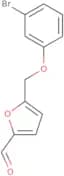
CAS:<p>Versatile small molecule scaffold</p>Formula:C16H17ClN2O3Purity:Min. 95%Molecular weight:320.77 g/mol5-(3-Bromophenoxymethyl)furan-2-carbaldehyde
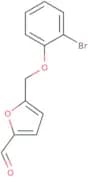
CAS:<p>Versatile small molecule scaffold</p>Formula:C12H9BrO3Purity:Min. 95%Molecular weight:281.1 g/mol5-(2-Bromophenoxymethyl)furan-2-carbaldehyde
CAS:<p>Versatile small molecule scaffold</p>Formula:C12H9BrO3Purity:Min. 95%Molecular weight:281.1 g/mol3-[(4-Bromophenoxy)methyl]-4-methoxybenzohydrazide
CAS:<p>Versatile small molecule scaffold</p>Formula:C15H15BrN2O3Purity:Min. 95%Molecular weight:351.19 g/mol3-[(4-Formylphenoxy)methyl]-4-methoxybenzaldehyde
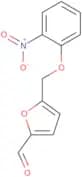
CAS:<p>Versatile small molecule scaffold</p>Formula:C16H14O4Purity:Min. 95%Molecular weight:270.28 g/mol5-((2-Nitrophenoxy)methyl)furan-2-carbaldehyde
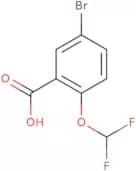
CAS:<p>Versatile small molecule scaffold</p>Formula:C12H9NO5Purity:Min. 95%Molecular weight:247.2 g/mol5-Bromo-2-(difluoromethoxy)benzoic acid
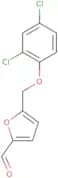
CAS:Versatile small molecule scaffoldFormula:C8H5BrF2O3Purity:Min. 95%Molecular weight:267.02 g/mol5-(2,4-Dichlorophenoxymethyl)furan-2-carbaldehyde
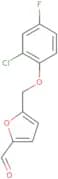
CAS:<p>Versatile small molecule scaffold</p>Formula:C12H8Cl2O3Purity:Min. 95%Molecular weight:271.09 g/mol5-(2-Chloro-4-fluorophenoxymethyl)furan-2-carbaldehyde
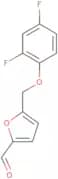
CAS:<p>Versatile small molecule scaffold</p>Formula:C12H8ClFO3Purity:Min. 95%Molecular weight:254.64 g/mol5-(2,4-Difluorophenoxymethyl)furan-2-carbaldehyde
CAS:<p>Versatile small molecule scaffold</p>Formula:C12H8F2O3Purity:Min. 95%Molecular weight:238.19 g/molEthyl 3-amino-6-(difluoromethyl)-4-methylthieno[2,3-b]pyridine-2-carboxylate
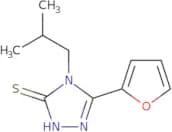
CAS:<p>Versatile small molecule scaffold</p>Formula:C12H12F2N2O2SPurity:Min. 95%Molecular weight:286.3 g/mol5-(Furan-2-yl)-4-(2-methylpropyl)-4H-1,2,4-triazole-3-thiol
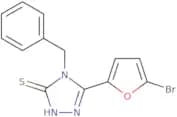
CAS:<p>Versatile small molecule scaffold</p>Formula:C10H13N3OSPurity:Min. 95%Molecular weight:223.3 g/mol4-Benzyl-5-(5-bromofuran-2-yl)-4H-1,2,4-triazole-3-thiol
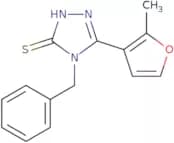
CAS:<p>Versatile small molecule scaffold</p>Formula:C13H10BrN3OSPurity:Min. 95%Molecular weight:336.21 g/mol4-Benzyl-5-(2-methylfuran-3-yl)-4H-1,2,4-triazole-3-thiol
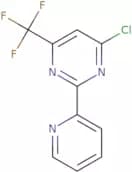
CAS:<p>Versatile small molecule scaffold</p>Formula:C14H13N3OSPurity:Min. 95%Molecular weight:271.34 g/mol4-Chloro-2-(2-pyridinyl)-6-(trifluoromethyl)-pyrimidine
CAS:<p>Versatile small molecule scaffold</p>Formula:C10H5ClF3N3Purity:Min. 95%Molecular weight:259.62 g/mol2-{[(tert-Butoxy)carbonyl]amino}-2-(2-ethyl-1,3-thiazol-4-yl)acetic acid
CAS:<p>Versatile small molecule scaffold</p>Formula:C12H18N2O4SPurity:Min. 95%Molecular weight:286.35 g/mol3-[(Naphthalen-2-yloxy)methyl]benzoic acid
CAS:Versatile small molecule scaffoldFormula:C18H14O3Purity:Min. 95%Molecular weight:278.3 g/mol5-[(4-Ethoxyphenoxy)methyl]-2-furohydrazide
CAS:<p>Versatile small molecule scaffold</p>Formula:C14H16N2O4Purity:Min. 95%Molecular weight:276.29 g/mol4-[(4-Ethoxyphenoxy)methyl]benzoic acid
CAS:<p>Versatile small molecule scaffold</p>Formula:C16H16O4Purity:Min. 95%Molecular weight:272.29 g/mol3-[(2,4-Dichlorophenoxy)methyl]benzoic acid
CAS:<p>Versatile small molecule scaffold</p>Formula:C14H10Cl2O3Purity:Min. 95%Molecular weight:297.1 g/mol3-{[4-(Propan-2-yl)phenoxy]methyl}benzoic acid
CAS:<p>Versatile small molecule scaffold</p>Formula:C17H18O3Purity:Min. 95%Molecular weight:270.32 g/mol3-[(Naphthalen-1-yloxy)methyl]benzoic acid
CAS:<p>Versatile small molecule scaffold</p>Formula:C18H14O3Purity:Min. 95%Molecular weight:278.3 g/mol3-[(2,2,3,3-Tetrafluoropropoxy)methyl]benzoic acid
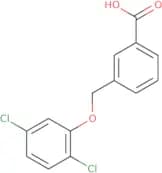
CAS:<p>Versatile small molecule scaffold</p>Formula:C11H10F4O3Purity:Min. 95%Molecular weight:266.19 g/mol3-(2,5-Dichlorophenoxymethyl)-benzoic acid
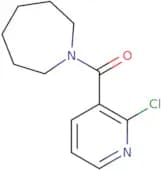
CAS:<p>Versatile small molecule scaffold</p>Formula:C14H10Cl2O3Purity:Min. 95%Molecular weight:297.1 g/mol1-Azepanyl(2-chloro-3-pyridinyl)methanone
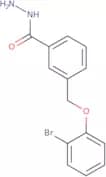
CAS:<p>Versatile small molecule scaffold</p>Formula:C12H15ClN2OPurity:Min. 95%Molecular weight:238.71 g/mol3-(2-Bromo-phenoxymethyl)-benzoic acid hydrazide
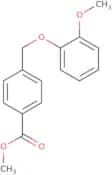
CAS:<p>Versatile small molecule scaffold</p>Formula:C14H13BrN2O2Purity:Min. 95%Molecular weight:321.17 g/mol4-(2-Methoxy-phenoxymethyl)-benzoic acid methyl ester
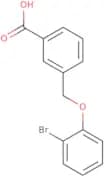
CAS:<p>Versatile small molecule scaffold</p>Formula:C16H16O4Purity:Min. 95%Molecular weight:272.29 g/mol3-(2-Bromophenoxymethyl)benzoic acid
CAS:<p>Versatile small molecule scaffold</p>Formula:C14H11BrO3Purity:Min. 95%Molecular weight:307.14 g/mol3-[(2,2,2-Trifluoroethoxy)methyl]benzoic acid
CAS:<p>Versatile small molecule scaffold</p>Formula:C10H9F3O3Purity:Min. 95%Molecular weight:234.17 g/mol3-[(4-Ethoxyphenoxy)methyl]benzoic acid
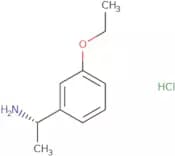
CAS:<p>Versatile small molecule scaffold</p>Formula:C16H16O4Purity:Min. 95%Molecular weight:272.29 g/mol(S)-1-(3-Eethoxyphenyl)ethanamine hydrochloride
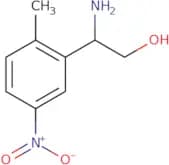
CAS:<p>Versatile small molecule scaffold</p>Formula:C10H16ClNOPurity:Min. 95%Molecular weight:201.69 g/mol(2R)-2-Amino-2-(2-methyl-5-nitrophenyl)ethan-1-ol
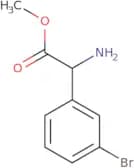
CAS:<p>Versatile small molecule scaffold</p>Formula:C9H12N2O3Purity:Min. 95%Molecular weight:196.2 g/molMethyl (2R)-2-amino-2-(3-bromophenyl)acetate
CAS:<p>Versatile small molecule scaffold</p>Formula:C9H10BrNO2Purity:Min. 95%Molecular weight:244.08 g/mol(2S)-2-Amino-2-(2-methyl-5-nitrophenyl)ethan-1-ol
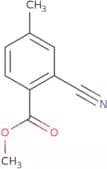
CAS:<p>Versatile small molecule scaffold</p>Formula:C9H12N2O3Purity:Min. 95%Molecular weight:196.2 g/molMethyl 2-cyano-4-methylbenzoate
CAS:<p>Versatile small molecule scaffold</p>Formula:C10H9NO2Purity:Min. 95%Molecular weight:175.18 g/molMethyl 2-oxo-8-oxabicyclo[3.2.1]octane-3-carboxylate
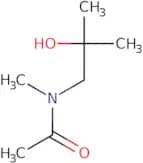
CAS:<p>Versatile small molecule scaffold</p>Formula:C9H12O4Purity:Min. 95%Molecular weight:184.19 g/molN-(2-Hydroxy-2-methylpropyl)-N-methylacetamide
CAS:<p>Versatile small molecule scaffold</p>Formula:C7H15NO2Purity:Min. 95%Molecular weight:145.2 g/mol(S)-1-[3-(Trifluoromethyl)phenyl]ethylamine hydrochloride
CAS:<p>Versatile small molecule scaffold</p>Formula:C9H11ClF3NPurity:Min. 95%Molecular weight:225.64 g/molMethyl 2-{[(tert-butoxy)carbonyl]amino}-3-hydroxybutanoate
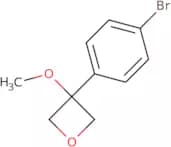
CAS:<p>Versatile small molecule scaffold</p>Formula:C10H19NO5Purity:Min. 95%Molecular weight:233.26 g/mol3-(4-Bromophenyl)-3-methoxyoxetane
CAS:<p>Versatile small molecule scaffold</p>Formula:C10H11BrO2Purity:Min. 95%Molecular weight:243.1 g/mol2-[4-(Methoxycarbonyl)bicyclo[2.2.2]octan-1-yl]acetic acid
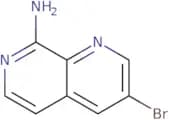
CAS:<p>Versatile small molecule scaffold</p>Formula:C12H18O4Purity:Min. 95%Molecular weight:226.27 g/mol3-Bromo-1,7-naphthyridin-8-amine
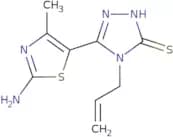
CAS:<p>Versatile small molecule scaffold</p>Formula:C8H6BrN3Purity:Min. 95%Molecular weight:224.06 g/mol3-(2-Amino-4-methyl-1,3-thiazol-5-yl)-4-(prop-2-en-1-yl)-4,5-dihydro-1H-1,2,4-triazole-5-thione
CAS:<p>Versatile small molecule scaffold</p>Formula:C9H11N5S2Purity:Min. 95%Molecular weight:253.4 g/molMethyl 2-{[4-(4-chlorophenyl)-3-oxo-8-thia-4,6-diazatricyclo[7.4.0.0,2,7]trideca-1(9),2(7),5-trien-5-yl]sulfanyl}acetate
CAS:<p>Versatile small molecule scaffold</p>Formula:C19H17ClN2O3S2Purity:Min. 95%Molecular weight:420.9 g/molMethyl 2-{[4-(4-bromophenyl)-3-oxo-8-thia-4,6-diazatricyclo[7.4.0.0,2,7]trideca-1(9),2(7),5-trien-5-yl]sulfanyl}acetate
CAS:<p>Versatile small molecule scaffold</p>Formula:C19H17BrN2O3S2Purity:Min. 95%Molecular weight:465.4 g/mol1-[4-(Chloromethyl)phenoxymethyl]-4-fluorobenzene
CAS:<p>Versatile small molecule scaffold</p>Formula:C14H12ClFOPurity:Min. 95%Molecular weight:250.69 g/molN-(1-Methyl-1H-1,2,3,4-tetrazol-5-yl)formamide
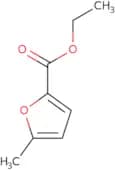
CAS:<p>Versatile small molecule scaffold</p>Formula:C3H5N5OPurity:Min. 95%Molecular weight:127.1 g/molEthyl 5-methylfuran-2-carboxylate
CAS:<p>Ethyl 5-methylfuran-2-carboxylate is a feedstock that is used in the production of additives for lubricants. Ethyl 5-methylfuran-2-carboxylate has been shown to have high thermal stability, excellent lubricity, and good resistance to oxidation. This feedstock has also been found to be compatible with alkoxycarbonyl groups and can be used as an additive for gasoline. The synthesis of this compound involves the alkylation of pyrrole using ethyllithium followed by dehydration, which leads to a high yield of this compound.</p>Formula:C8H10O3Purity:Min. 95%Molecular weight:154.16 g/mol4-Phenyl-tetrahydro-pyran-4-ylamine
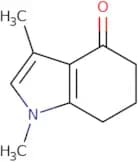
CAS:<p>Versatile small molecule scaffold</p>Formula:C11H15NOPurity:Min. 95%Molecular weight:177.24 g/mol1,3-Dimethyl-4,5,6,7-tetrahydro-1H-indol-4-one
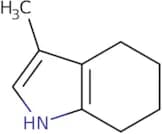
CAS:<p>Versatile small molecule scaffold</p>Formula:C10H13NOPurity:Min. 95%Molecular weight:163.22 g/mol3-Methyl-4,5,6,7-tetrahydro-1H-indole
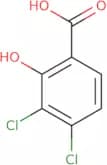
CAS:<p>Versatile small molecule scaffold</p>Formula:C9H13NPurity:Min. 95%Molecular weight:135.2 g/mol3,4-Dichloro-2-hydroxybenzoic acid
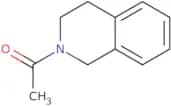
CAS:<p>3,4-Dichloro-2-hydroxybenzoic acid is a byproduct of the chlorination of carbon tetrachloride and 2,6-dichlorobenzoic acid. It can be used as an intermediate in the production of polyphosphoric acid. 3,4-Dichloro-2-hydroxybenzoic acid has been shown to have high yields and processability for use in polymer manufacturing. This active substance has also been shown to exhibit antibiotic activity against Staphylococcus aureus, which may be due to its ability to inhibit protein synthesis.</p>Formula:C7H4Cl2O3Purity:Min. 95%Molecular weight:207.01 g/mol1-(1,2,3,4-Tetrahydroisoquinolin-2-yl)ethan-1-one
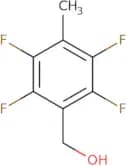
CAS:<p>Versatile small molecule scaffold</p>Formula:C11H13NOPurity:Min. 95%Molecular weight:175.23 g/mol[(4-Amino-3,5-dimethylphenyl)sulfanyl]formonitrile
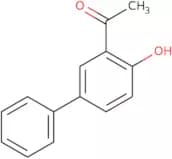
CAS:<p>Versatile small molecule scaffold</p>Formula:C9H10N2SPurity:Min. 95%Molecular weight:178.26 g/mol1-(2-Hydroxy-5-phenylphenyl)ethan-1-one
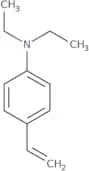
CAS:<p>Versatile small molecule scaffold</p>Formula:C14H12O2Purity:Min. 95%Molecular weight:212.24 g/mol4-Ethenyl-N,N-diethylaniline
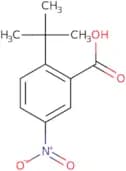
CAS:<p>Versatile small molecule scaffold</p>Formula:C12H17NPurity:Min. 95%Molecular weight:175.27 g/mol2-tert-Butyl-5-nitrobenzoic acid
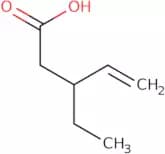
CAS:<p>Versatile small molecule scaffold</p>Formula:C11H13NO4Purity:Min. 95%Molecular weight:223.22 g/mol3-Ethylpent-4-enoic acid
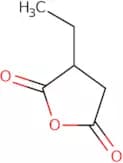
CAS:<p>Versatile small molecule scaffold</p>Formula:C7H12O2Purity:Min. 95%Molecular weight:128.17 g/mol3-Ethyloxolane-2,5-dione
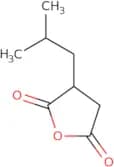
CAS:<p>3-Ethyloxolane-2,5-dione is a polymerization initiator that is used in the production of polymers and sealants. Its main application is for the production of polycarboxylic acid ester resins, which are monosubstituted with an ethyloxolane group. 3-Ethyloxolane-2,5-dione reacts with aluminium chloride to form a hydrochloric acid salt. This polymerization initiator also reacts with hydrogen chloride to form a monomer that is soluble in organic solvents. It has been shown to be biodegradable and not toxic to humans or animals at low doses.</p>Formula:C6H8O3Purity:Min. 95%Molecular weight:128.13 g/mol3-(2-Methylpropyl)oxolane-2,5-dione
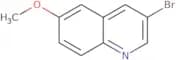
CAS:<p>3-(2-Methylpropyl)oxolane-2,5-dione is a synthetic drug that inhibits bone resorption and is used as an anti-inflammatory agent. It has been shown to have a synergistic effect with calcium carbonate in the prevention of restenosis. 3-(2-Methylpropyl)oxolane-2,5-dione also inhibits gelatinase activity and has been shown to be effective against cancer cells.</p>Formula:C8H12O3Purity:Min. 95%Molecular weight:156.18 g/mol3-Bromo-6-methoxyquinoline
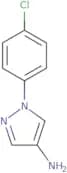
CAS:<p>Versatile small molecule scaffold</p>Formula:C10H8BrNOPurity:Min. 95%Molecular weight:238.08 g/mol1-(4-Chlorophenyl)-1H-pyrazol-4-amine
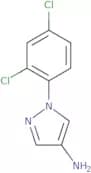
CAS:<p>Versatile small molecule scaffold</p>Formula:C9H8ClN3Purity:Min. 95%Molecular weight:193.63 g/mol1-(2,4-Dichlorophenyl)-1H-pyrazol-4-amine
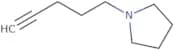
CAS:<p>Versatile small molecule scaffold</p>Formula:C9H7Cl2N3Purity:Min. 95%Molecular weight:228.07 g/mol1-(Pent-4-yn-1-yl)pyrrolidine
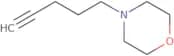
CAS:<p>Versatile small molecule scaffold</p>Formula:C9H15NPurity:Min. 95%Molecular weight:137.22 g/mol4-(Pent-4-yn-1-yl)morpholine
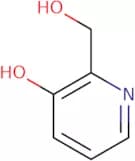
CAS:<p>Versatile small molecule scaffold</p>Formula:C9H15NOPurity:Min. 95%Molecular weight:153.22 g/mol2-(Hydroxymethyl)pyridin-3-ol
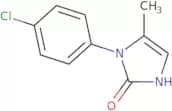
CAS:<p>2-(Hydroxymethyl)pyridin-3-ol is a pyridine derivative that has been shown to be an acetylcholinesterase inhibitor. It is used to treat tuberculosis and other bacterial infections. 2-(Hydroxymethyl)pyridin-3-ol binds to the active site of acetylcholinesterase, which leads to the inhibition of its activity. This drug also inhibits uptake of pyridines into cells, as well as uptake into mitochondria. In addition, it inhibits uptake of drugs by lung tissues and erythrocytes.</p>Formula:C6H7NO2Purity:Min. 95%Molecular weight:125.13 g/mol1-(4-Chlorophenyl)-5-methyl-2,3-dihydro-1H-imidazol-2-one
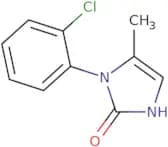
CAS:<p>Versatile small molecule scaffold</p>Formula:C10H9ClN2OPurity:Min. 95%Molecular weight:208.64 g/mol1-(2-Chlorophenyl)-5-methyl-2,3-dihydro-1H-imidazol-2-one
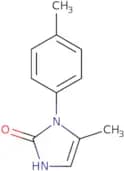
CAS:<p>Versatile small molecule scaffold</p>Formula:C10H9ClN2OPurity:Min. 95%Molecular weight:208.64 g/mol5-Methyl-1-(4-methylphenyl)-2,3-dihydro-1H-imidazol-2-one
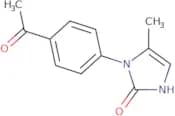
CAS:<p>Versatile small molecule scaffold</p>Formula:C11H12N2OPurity:Min. 95%Molecular weight:188.23 g/mol1-(4-Acetylphenyl)-5-methyl-2,3-dihydro-1H-imidazol-2-one
CAS:<p>Versatile small molecule scaffold</p>Formula:C12H12N2O2Purity:Min. 95%Molecular weight:216.24 g/mol4-Ethyl-2,6-dimethoxyphenol
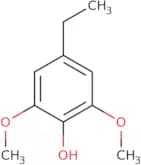
CAS:<p>4-Ethyl-2,6-dimethoxyphenol is a monomer that belongs to the group of phenols. It is used as a catalyst in the production of polyurethane foam and other catalytic processes. The molecular weight is 176.4 g/mol, with a melting point of 36°C and boiling point of 285°C. 4-Ethyl-2,6-dimethoxyphenol is also used in treatments for low molecular weight organic compounds such as methanol, phenolic, and hydrogenolysis. This monomer has been shown to be an effective catalyst for the industrial production of polyurethane foam and various other catalytic processes. The yield from 4-Ethyl-2,6-dimethoxyphenol ranges from 60% to 90%.</p>Formula:C10H14O3Purity:Min. 95%Molecular weight:182.22 g/mol1-(2-Chlorophenyl)-1H-pyrazol-4-amine
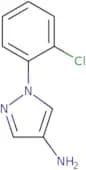
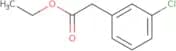
CAS:<p>Versatile small molecule scaffold</p>Formula:C9H8ClN3Purity:Min. 95%Molecular weight:193.63 g/molEthyl 2-(3-chlorophenyl)acetate
CAS:<p>Ethyl 2-(3-chlorophenyl)acetate is an orally active small molecule that has been shown to have a potent immunosuppressive activity in mice. It inhibits the production of antibodies and T cells by binding to the antibody-producing cells in the spleen. Ethyl 2-(3-chlorophenyl)acetate also blocks the production of interleukin-4, which is important for eosinophil activation, and it can be used for asthma treatment. This compound is a competitive antagonist of histamine H1 receptors and has been shown to be a bronchodilator in murine models of asthma.</p>Formula:C10H11ClO2Purity:Min. 95%Molecular weight:198.65 g/mol6,6-Dimethyl-1,4-dioxaspiro[4.5]decan-7-one
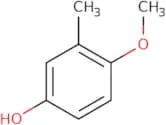
CAS:<p>Versatile small molecule scaffold</p>Formula:C10H16O3Purity:Min. 95%Molecular weight:184.23 g/mol4-Methoxy-3-methylphenol
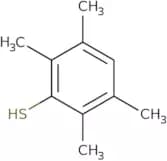
CAS:<p>4-Methoxy-3-methylphenol is a phenolic compound that is used as an intermediate in the production of other organic compounds. It has been shown to be bactericidal against Staphylococcus aureus and Salmonella typhimurium, but not against Escherichia coli. 4-Methoxy-3-methylphenol can be synthesized by hydrolysis of 3,4-dimethoxyphenol with sodium hydroxide solution. This reaction produces alkoxyphenols and oxidation products such as 4-hydroxybenzaldehyde and 4,5-dihydroxymethyl phenylcarbinol. The mass spectrometric detection of this compound can be achieved through the use of electron ionization or chemical ionization techniques.</p>Formula:C8H10O2Purity:Min. 95%Molecular weight:138.16 g/mol2,3,5,6-Tetramethylbenzene-1-thiol
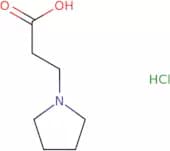
CAS:<p>Versatile small molecule scaffold</p>Formula:C10H14SPurity:Min. 95%Molecular weight:166.29 g/mol3-Pyrrolidin-1-yl-propionic acid HCl
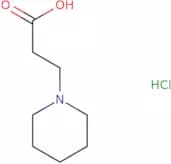
CAS:<p>Versatile small molecule scaffold</p>Formula:C7H14ClNO2Purity:Min. 95%Molecular weight:179.64 g/mol3-(Piperidin-1-yl)propanoic acid hydrochloride
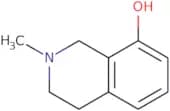
CAS:<p>Versatile small molecule scaffold</p>Formula:C8H16ClNO2Purity:Min. 95%Molecular weight:193.67 g/mol2-Methyl-1,2,3,4-tetrahydroisoquinolin-8-ol
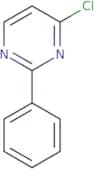
CAS:<p>Longimamma is a natural product that was first isolated from the Mexican plant Mammillaria. This compound has a chemical structure that is similar to that of the hallucinogen mescaline, which is found in the peyote cactus. Longimamma has been shown to have an inhibitory effect on monoamine oxidase-A and serotonin reuptake, suggesting potential therapeutic use for depression and other mental disorders.</p>Formula:C10H13NOPurity:Min. 95%Molecular weight:163.22 g/mol4-Chloro-2-phenyl-pyrimidine
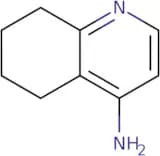
CAS:<p>4-Chloro-2-phenyl-pyrimidine is a synthetic compound that has been shown to be effective against bacterial strains resistant to other antibiotics. 4CPP is an amide with a chloro group at the 2 position and a pyridine ring at the 4 position. It has been shown to inhibit bacteria by binding to the molecule and preventing its function. This binding causes cell death by inhibiting protein synthesis and DNA replication. 4CPP also undergoes phototransformation when exposed to ultraviolet light, which may lead to increased efficacy of this drug in vivo.4CPP is synthesized from 2,4-dichloropyrimidine, which reacts with an amine in acidic conditions. The substituent effects on the aromatic rings are important for determining reactivity of this molecule.END>></p>Formula:C10H7ClN2Purity:Min. 95%Molecular weight:190.63 g/mol5,6,7,8-Tetrahydroquinolin-4-amine
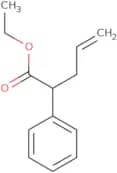
CAS:<p>Versatile small molecule scaffold</p>Formula:C9H12N2Purity:Min. 95%Molecular weight:148.2 g/molEthyl 2-phenylpent-4-enoate
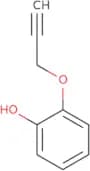
CAS:<p>Versatile small molecule scaffold</p>Formula:C13H16O2Purity:Min. 95%Molecular weight:204.26 g/mol2-(prop-2-yn-1-yloxy)phenol
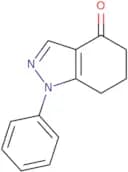
CAS:<p>Versatile small molecule scaffold</p>Formula:C9H8O2Purity:Min. 95%Molecular weight:148.15 g/mol1-Phenyl-4,5,6,7-tetrahydro-1H-indazol-4-one
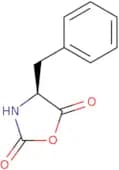
CAS:<p>Versatile small molecule scaffold</p>Formula:C13H12N2OPurity:Min. 95%Molecular weight:212.25 g/mol(4S)-4-benzyl-1,3-oxazolidine-2,5-dione
CAS:<p>This compound is a model for the study of hydroxyapatite. The (4S)-4-benzyl-1,3-oxazolidine-2,5-dione has been shown to be an effective macroinitiator for ring-opening polymerization. It can be used as a biological marker for bone growth factor. The compound has also been shown to have antiinflammatory properties in both animal and cell culture studies.</p>Formula:C10H9NO3Purity:Min. 95%Molecular weight:191.18 g/molEthyl 4-amino-3-phenyl-1,2-oxazole-5-carboxylate
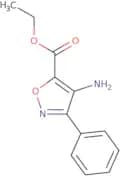
CAS:<p>Versatile small molecule scaffold</p>Formula:C12H12N2O3Purity:Min. 95%Molecular weight:232.23 g/mol1-Methylbicyclo[4.1.0]heptan-2-one
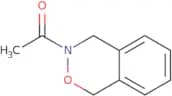
CAS:<p>Versatile small molecule scaffold</p>Formula:C8H12OPurity:Min. 95%Molecular weight:124.18 g/mol1-(3,4-Dihydro-1H-2,3-benzoxazin-3-yl)ethan-1-one
CAS:<p>Versatile small molecule scaffold</p>Formula:C10H11NO2Purity:Min. 95%Molecular weight:177.2 g/mol(3-Iodopropyl)trimethoxysilane
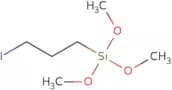
CAS:<p>3-Iodopropyltrimethoxysilane is a multifunctional silane that can be used for the synthesis of polymers with a variety of properties. It reacts with hydroxyl groups, amines, and carboxylic acids to form esters, amides, or urethanes. 3-Iodopropyltrimethoxysilane has been shown to have an uptake in the range of 10-10 mol/L under physiological conditions and has been found to be stable in biological studies. This compound is reactive with hydrogen ions and proton sources such as hydrochloric acid. 3-Iodopropyltrimethoxysilane has been shown to exhibit Toll-like receptor 4 (TLR4) specificity when used as a treatment for nitrogen atoms. The reaction mechanism of this compound is not well understood but it has been proposed that it may involve electrochemical impedance spectroscopy.</p>Formula:C6H15IO3SiPurity:Min. 95%Molecular weight:290.17 g/mol2,3-Dihydroxy-2-methylbutanoic acid
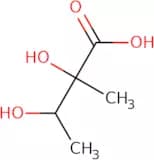
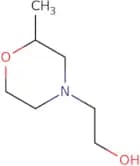
CAS:<p>2,3-Dihydroxy-2-methylbutanoic acid is a flavonoid that has been shown to have acetylation and ion exchange properties. It is also an enantiopure compound that can be synthesized by techniques including chemoenzymatic or kinetic techniques. 2,3-Dihydroxy-2-methylbutanoic acid can be prepared as either of two stereoisomers, which are dihydroxydimethylbutanoic acid and dihydroxyacetoacetic acid. The synthesis of this substance is typically carried out by trimethylation of the corresponding 3-hydroxypropanoic acid with an ethyl halide followed by hydrolysis of the ester group.</p>Formula:C5H10O4Purity:Min. 95%Color and Shape:PowderMolecular weight:134.13 g/mol2-(2-Methylmorpholin-4-yl)ethan-1-ol
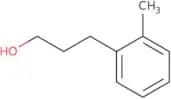
CAS:<p>Versatile small molecule scaffold</p>Formula:C7H15NO2Purity:Min. 95%Molecular weight:145.2 g/molBenzenepropanol, 2-methyl-
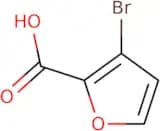
CAS:<p>Benzenepropanol, 2-methyl- is an alkoxide that has an X-ray transition and a low reactivity. It can be classified as a polymeric material because of its evolution and chemical composition. The 2-methyl group in the benzenepropanol molecule is responsible for the gelation of this material. Small angle x-ray scattering (SAXS) shows that benzenepropanol, 2-methyl- has a fractal dimension of approximately 1.6. This material's solvents are alkoxides, which can be dissolved in benzene and cyclohexane.</p>Formula:C10H14OPurity:Min. 95%Molecular weight:150.22 g/mol3-Bromo-2-furoic Acid
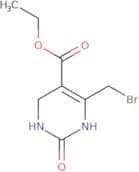
CAS:<p>3-Bromo-2-furoic acid is an intermediate in the synthesis of 3,4-dihydro-2H-pyran. It is produced by the oxidation of 2-furoic acid and can be synthesized by the reaction of furyl with biphenyl. 3-Bromo-2-furoic acid is a competitive inhibitor of glutamate dehydrogenase and glutamate synthetase. Inhibition of these enzymes prevents the conversion of glutamate to glutamine, which leads to elevated levels of glutamate in the brain, resulting in neurotoxicity. 3-Bromo-2-furoic acid also inhibits nicotinic acetylcholine receptors at low concentrations and has been shown to inhibit mitochondrial respiration. This drug has been used to treat hypertension in rats.</p>Formula:C5H3BrO3Purity:Min. 95%Molecular weight:190.98 g/molEthyl 6-(bromomethyl)-2-oxo-1,2,3,4-tetrahydropyrimidine-5-carboxylate
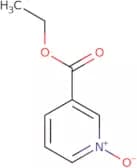
CAS:<p>Versatile small molecule scaffold</p>Formula:C8H11BrN2O3Purity:Min. 95%Molecular weight:263.09 g/mol3-(Ethoxycarbonyl)pyridin-1-ium-1-olate
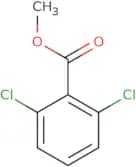
CAS:<p>Versatile small molecule scaffold</p>Formula:C8H9NO3Purity:Min. 95%Molecular weight:167.16 g/molMethyl 2,6-dichlorobenzoate
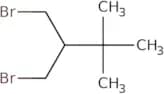
CAS:<p>Methyl 2,6-dichlorobenzoate is a nitro compound with a synlett isomeric amide. It was synthesized by reacting methyl benzoate with nitric acid to form the corresponding nitro compound which was then hydrolyzed to give the desired product. The molecule has two conformers and two geometries, one of which is non-polar and the other polar. The non-polar conformer has electron densities that are higher than those in the polar conformer.</p>Formula:C8H6Cl2O2Purity:Min. 95%Molecular weight:205.03 g/mol1-Bromo-2-(bromomethyl)-3,3-dimethylbutane
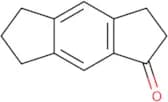
CAS:<p>Versatile small molecule scaffold</p>Formula:C7H14Br2Purity:Min. 95%Molecular weight:257.99 g/mol1,2,3,5,6,7-Hexahydro-S-indacen-1-one
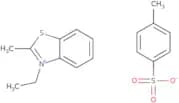
CAS:<p>Versatile small molecule scaffold</p>Formula:C12H12OPurity:Min. 95%Molecular weight:172.22 g/mol3-Ethyl-2-methyl-1,3-benzothiazol-3-ium 4-methylbenzene-1-sulfonate
CAS:3-Ethyl-2-methyl-1,3-benzothiazol-3-ium 4-methylbenzene-1-sulfonate is a tosylate salt that is used in organic synthesis. It is a mesoionic compound that can be prepared by the reaction of benzaldehyde with sodium methylsulfinate and ethyl iodide. This compound has been shown to react with anhydrides such as acetic anhydride and pivaloyl chloride to form esters.Formula:C17H19NO3S2Purity:Min. 95%Molecular weight:349.5 g/mol2-[(2-Aminoethyl)sulfanyl]benzoic acid hydrochloride
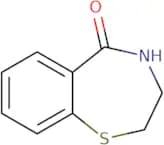
CAS:<p>Versatile small molecule scaffold</p>Formula:C9H11NO2SPurity:Min. 95%Molecular weight:197.26 g/mol2,3,4,5-Tetrahydro-1,4-benzothiazepin-5-one
CAS:<p>2,3,4,5-Tetrahydro-1,4-benzothiazepin-5-one is a crystalline dimer that has a seven membered ring and two hydrogen bonds. The conformation of the molecule is centrosymmetric and the crystal structure has been determined by X-ray diffraction.</p>Formula:C9H9NOSPurity:Min. 95%Molecular weight:179.24 g/mol3-Methyl-1,2,3,4-tetrahydronaphthalen-1-one
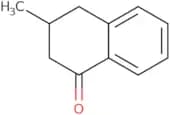
CAS:<p>3-Methyl-1,2,3,4-tetrahydronaphthalen-1-one is a methylated natural product. It is synthesized by the metalation of 1,2,3,4-tetrahydronaphthalene with methyl iodide and zinc. This reaction proceeds in two steps: first the ortho hydrogen of 1,2,3,4-tetrahydronaphthalene is replaced by the methyl group and then the nitrogen atom is alkylated. The formation of 3-methyl-1,2,3,4-tetrahydronaphthalen-1-one can be explained by an S N 2 substitution reaction in which a hydrogen on the methyl group attacks the electron deficient carbon atom of 1,2,3,4 tetrahydronaphthalene. 3-Methyl-1,2,3 4 tetrahydronaphthalen 1 one has been shown to</p>Formula:C11H12OPurity:Min. 95%Molecular weight:160.21 g/mol1-[Amino(methylsulfanyl)methylidene]guanidine hydroiodide
CAS:<p>Versatile small molecule scaffold</p>Formula:C3H9IN4SPurity:Min. 95%Molecular weight:260.1 g/mol2-Iodo-4-oxatricyclo[4.2.1.0,3,7]nonan-5-one
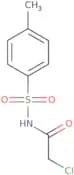
CAS:<p>Versatile small molecule scaffold</p>Formula:C8H9IO2Purity:Min. 95%Molecular weight:264.06 g/mol2-Chloro-N-(4-methylbenzenesulfonyl)acetamide
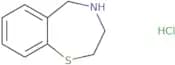
CAS:<p>Versatile small molecule scaffold</p>Formula:C9H10ClNO3SPurity:Min. 95%Molecular weight:247.7 g/mol2,3,4,5-Tetrahydro-1,4-benzothiazepine hydrochloride
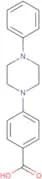
CAS:<p>Versatile small molecule scaffold</p>Formula:C9H12ClNSPurity:Min. 95%Molecular weight:201.72 g/mol4-(4-Phenylpiperazin-1-yl)benzoic acid
CAS:<p>Versatile small molecule scaffold</p>Formula:C17H18N2O2Purity:Min. 95%Molecular weight:282.34 g/mol4-Amino-4'-hydroxybenzophenone
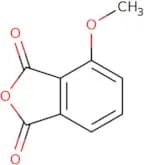
CAS:<p>4-Amino-4'-hydroxybenzophenone is a benzophenone with a hydroxyl group in the ortho position. It has absorption spectra that are similar to those of benzene, but it is less soluble in solvents and more soluble in water. The molecule has two possible conformations, both of which have an equilibrium constant (K) of 10. The two conformations can interconvert by rotation about the C=C bond, which is referred to as torsion. This conformational change in the molecule alters its light absorption properties.</p>Formula:C13H11NO2Purity:Min. 95%Molecular weight:213.24 g/mol4-Methoxyisobenzofuran-1,3-dione
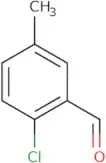
CAS:<p>4-Methoxyisobenzofuran-1,3-dione is a natural product that belongs to the group of hydroxybenzoic acids. It is obtained by the hydrogenation of 3-nitrophthalic anhydride and 3-hydroxyphthalic anhydride, which are obtained from anacardic acid. 4-Methoxyisobenzofuran-1,3-dione has been used as an intermediate for antibiotics and synthetic dyestuffs. The chloride salt of this compound has been used as a reagent in organic synthesis.</p>Formula:C9H6O4Purity:Min. 95%Molecular weight:178.14 g/mol2-Chloro-5-methylbenzaldehyde
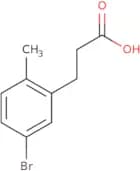
CAS:<p>Versatile small molecule scaffold</p>Formula:C8H7ClOPurity:Min. 95%Molecular weight:154.59 g/mol3-(5-Bromo-2-methylphenyl)propanoic acid
CAS:<p>Versatile small molecule scaffold</p>Formula:C10H11BrO2Purity:Min. 95%Molecular weight:243.1 g/mol1-Cyclopentyl-2-methoxyethan-1-one
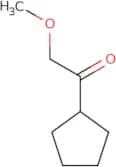
CAS:<p>Versatile small molecule scaffold</p>Formula:C8H14O2Purity:Min. 95%Molecular weight:142.2 g/molN,6-Dimethylpyridazin-3-amine
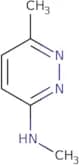
CAS:<p>Versatile small molecule scaffold</p>Formula:C6H9N3Purity:Min. 95%Molecular weight:123.16 g/molMethyl 3-methyl-5-oxohexanoate
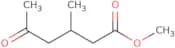
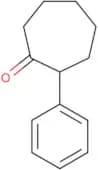
CAS:<p>Versatile small molecule scaffold</p>Formula:C8H14O3Purity:Min. 95%Molecular weight:158.19 g/mol2-Phenylcycloheptan-1-one
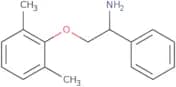
CAS:<p>2-Phenylcycloheptan-1-one is a chemical used in organic synthesis. It has been shown to undergo decarbonylation and dimerization reactions, as well as rearrangements of the carbon-carbon double bond. These reactions are used to synthesize a wide variety of other molecules. The efficiency of 2-phenylcycloheptan-1-one depends on the type and amount of reagents used in the process, as well as on the structure of the molecule being synthesized. 2-Phenylcycloheptan-1-one is often used as a sensitizer for photochemical reactions due to its ability to absorb ultraviolet light.</p>Formula:C13H16OPurity:Min. 95%Molecular weight:188.26 g/mol2-(2-Amino-2-phenylethoxy)-1,3-dimethylbenzene
CAS:<p>2-(2-Amino-2-phenylethoxy)-1,3-dimethylbenzene is a molecule that binds to the sodium channel of nerve cells and blocks the flow of ions. It prevents the nerve cell from transmitting its signal. This drug has been shown to be effective in animal models for muscle spasms, but it is not used clinically because it can cause paralysis.</p>Formula:C16H19NOPurity:Min. 95%Molecular weight:241.33 g/mol3-Methoxy-2,4-dimethylaniline
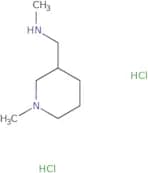
CAS:<p>Versatile small molecule scaffold</p>Formula:C9H13NOPurity:Min. 95%Molecular weight:151.21 g/molN-Methyl-1-(1-methylpiperidin-3-yl)methanamine
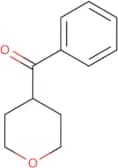
CAS:<p>Versatile small molecule scaffold</p>Formula:C8H18N2Purity:Min. 95%Molecular weight:142.25 g/mol4-benzoyloxane
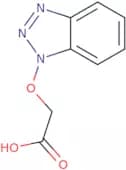
CAS:<p>Versatile small molecule scaffold</p>Formula:C12H14O2Purity:Min. 95%Molecular weight:190.23 g/mol2-(1H-1,2,3-Benzotriazol-1-yloxy)acetic acid
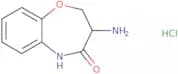
CAS:2-(1H-1,2,3-Benzotriazol-1-yloxy)acetic acid is a ligand that has been used to study molecular orbitals and the theory of diffraction. It is also luminescent and can be used for elemental analysis. The crystal system of 2-(1H-1,2,3-Benzotriazol-1-yloxy)acetic acid is trigonal pyramidal with a space group P212121. This molecule has an isomorphous substitution in the coordination sphere with the metal ion. The functional theory was applied to this molecule to elucidate its absorption properties. When this ligand absorbs light, it can transfer energy to other molecules through resonance, which may lead to changes in their electronic structure.Formula:C8H7N3O3Purity:Min. 95%Molecular weight:193.16 g/mol(3R)-3-Amino-2,3,4,5-tetrahydro-1,5-benzoxazepin-4-one hydrochloride
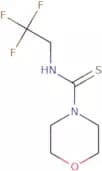
CAS:<p>Versatile small molecule scaffold</p>Formula:C9H11ClN2O2Purity:Min. 95%Molecular weight:214.65 g/molN-(2,2,2-Trifluoroethyl)morpholine-4-carbothioamide
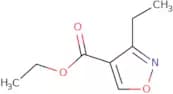
CAS:<p>Versatile small molecule scaffold</p>Formula:C7H11F3N2OSPurity:Min. 95%Molecular weight:228.24 g/molEthyl 3-ethyl-1,2-oxazole-4-carboxylate
CAS:<p>Versatile small molecule scaffold</p>Formula:C8H11NO3Purity:Min. 95%Molecular weight:169.18 g/mol3-Ethylisoxazole-4-carboxylic acid
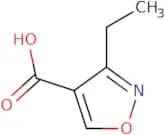
CAS:<p>Versatile small molecule scaffold</p>Formula:C6H7NO3Purity:Min. 95%Molecular weight:141.13 g/mol3-Cyclopropyl-1,2-oxazole-4-carboxylic acid
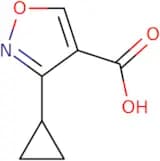
CAS:<p>Versatile small molecule scaffold</p>Formula:C7H7NO3Purity:Min. 95%Molecular weight:153.14 g/mol5H,6H,7H-[1,2,4]Triazolo[3,4-b][1,3]thiazin-3-amine
CAS:<p>Versatile small molecule scaffold</p>Formula:C5H8N4SPurity:Min. 95%Molecular weight:156.21 g/mol2-(Bromomethyl)-4-chloro-1-(difluoromethoxy)benzene
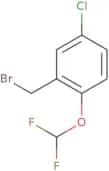
CAS:<p>Versatile small molecule scaffold</p>Formula:C8H6BrClF2OPurity:Min. 95%Molecular weight:271.48 g/mol5-Amino-2,4-difluorobenzoic acid
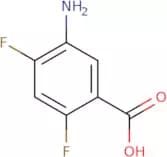
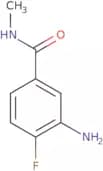
CAS:<p>Versatile small molecule scaffold</p>Formula:C7H5F2NO2Purity:Min. 95%Molecular weight:173.12 g/mol3-amino-4-fluoro-N-methylbenzamide
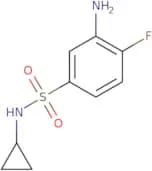
CAS:<p>Versatile small molecule scaffold</p>Formula:C8H9FN2OPurity:Min. 95%Molecular weight:168.17 g/mol3-Amino-N-cyclopropyl-4-fluorobenzene-1-sulfonamide
CAS:<p>Versatile small molecule scaffold</p>Formula:C9H11FN2O2SPurity:Min. 95%Molecular weight:230.26 g/mol2-[4-(4H-1,2,4-Triazol-4-yl)phenyl]acetic acid
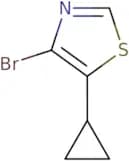
CAS:<p>2-[4-(4H-1,2,4-Triazol-4-yl)phenyl]acetic acid (DSC) is a compound that has been shown to have anti-cancer properties. It was found to be effective against breast cancer cells in vitro and in vivo. The cytotoxic effect of DSC on cancer cells may be due to its ability to bind to the membrane phospholipid bilayer and interfere with the cell's ability to regulate ion fluxes. This can lead to increased intracellular calcium levels and subsequent activation of proteases, which are important for the proliferation of cancer cells. 2-[4-(4H-1,2,4-Triazol-4-yl)phenyl]acetic acid has also been found to inhibit protein synthesis in cancer cells. These results show that 2-[4-(4H-1,2,4-Triazol-4-yl)phenyl]acetic acid may</p>Formula:C10H9N3O2Purity:Min. 95%Molecular weight:203.2 g/mol4-Bromo-5-cyclopropyl-1,3-thiazole
CAS:<p>Versatile small molecule scaffold</p>Formula:C6H6BrNSPurity:Min. 95%Molecular weight:204.09 g/mol2-[2-(Trifluoromethyl)phenyl]quinazolin-4-ol
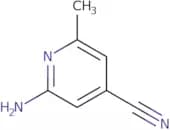
CAS:<p>Versatile small molecule scaffold</p>Formula:C15H9F3N2OPurity:Min. 95%Molecular weight:290.24 g/mol2-Amino-6-methylpyridine-4-carbonitrile
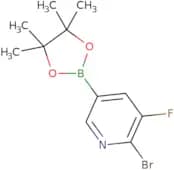
CAS:<p>Versatile small molecule scaffold</p>Formula:C7H7N3Purity:Min. 95%Molecular weight:133.15 g/mol6-Bromo-5-fluoropyridine-3-boronic acid pinacol ester
CAS:<p>Versatile small molecule scaffold</p>Formula:C11H14BBrFNO2Purity:Min. 95%Molecular weight:301.95 g/mol6-Bromopyrazolo[1,5-a]pyridine
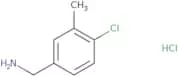
CAS:<p>Versatile small molecule scaffold</p>Formula:C7H5BrN2Purity:Min. 95%Molecular weight:197.03 g/mol(4-Chloro-3-methylphenyl)methanamine hydrochloride
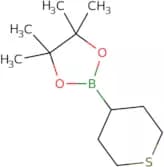
CAS:<p>Versatile small molecule scaffold</p>Formula:C8H11Cl2NPurity:Min. 95%Molecular weight:192.08 g/mol4,4,5,5-Tetramethyl-2-(3,5-dihydro-2H-thiopyran-4-yl)-1,3,2-dioxaborolane
CAS:<p>Versatile small molecule scaffold</p>Formula:C11H21BO2SPurity:Min. 95%Molecular weight:228.16 g/molFuro[3,2-c]pyridin-2-ylboronic acid
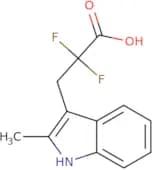
CAS:<p>Versatile small molecule scaffold</p>Formula:C7H6BNO3Purity:Min. 95%Molecular weight:162.94 g/mol2,2-Difluoro-3-(2-methyl-1H-indol-3-yl)propanoic acid
CAS:<p>Versatile small molecule scaffold</p>Formula:C12H11F2NO2Purity:Min. 95%Molecular weight:239.22 g/mol1-[(tert-Butoxy)carbonyl]-3-(2-oxopropyl)pyrrolidine-3-carboxylic acid
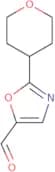
CAS:<p>Versatile small molecule scaffold</p>Formula:C13H21NO5Purity:Min. 95%Molecular weight:271.31 g/mol2-(Oxan-4-yl)-1,3-oxazole-5-carbaldehyde
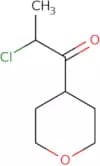
CAS:<p>Versatile small molecule scaffold</p>Formula:C9H11NO3Purity:Min. 95%Molecular weight:181.19 g/mol2-Chloro-1-(oxan-4-yl)propan-1-one
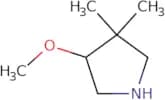
CAS:<p>Versatile small molecule scaffold</p>Formula:C8H13ClO2Purity:Min. 95%Molecular weight:176.64 g/mol4-Methoxy-3,3-dimethylpyrrolidine
CAS:<p>Versatile small molecule scaffold</p>Formula:C7H15NOPurity:Min. 95%Molecular weight:129.2 g/mol(5-Cyclopropyl-1,3-oxazol-2-yl)methanol
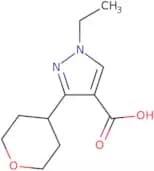
CAS:<p>Versatile small molecule scaffold</p>Formula:C7H9NO2Purity:Min. 95%Molecular weight:139.2 g/mol1-Ethyl-3-(oxan-4-yl)-1H-pyrazole-4-carboxylic acid
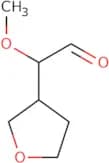
CAS:<p>Versatile small molecule scaffold</p>Formula:C11H16N2O3Purity:Min. 95%Molecular weight:224.26 g/mol2-Methoxy-2-(oxolan-3-yl)acetaldehyde
CAS:<p>Versatile small molecule scaffold</p>Formula:C7H12O3Purity:Min. 95%Molecular weight:144.17 g/mol3,3-Dimethyl-2-oxaspiro[4.5]decan-8-one
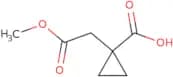
CAS:<p>Versatile small molecule scaffold</p>Formula:C11H18O2Purity:Min. 95%Molecular weight:182.26 g/mol1-(2-Methoxy-2-oxoethyl)cyclopropane-1-carboxylic acid
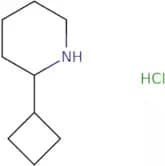
CAS:<p>Versatile small molecule scaffold</p>Formula:C7H10O4Purity:Min. 95%Molecular weight:158.15 g/mol2-Cyclobutylpiperidine hydrochloride
CAS:<p>Versatile small molecule scaffold</p>Formula:C9H18ClNPurity:Min. 95%Molecular weight:175.7 g/mol2-[2-(Difluoromethyl)phenoxy]acetic acid
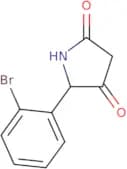
CAS:<p>Versatile small molecule scaffold</p>Formula:C9H8F2O3Purity:Min. 95%Molecular weight:202.15 g/mol5-(2-Bromophenyl)pyrrolidine-2,4-dione
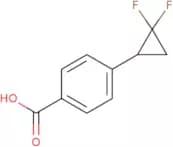
CAS:<p>Versatile small molecule scaffold</p>Formula:C10H8BrNO2Purity:Min. 95%Molecular weight:254.08 g/mol4-(2,2-Difluorocyclopropyl)benzoic acid
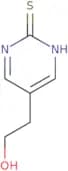
CAS:Versatile small molecule scaffoldFormula:C10H8F2O2Purity:Min. 95%Molecular weight:198.17 g/mol2-(2-Sulfanylpyrimidin-5-yl)ethan-1-ol
CAS:<p>Versatile small molecule scaffold</p>Formula:C6H8N2OSPurity:Min. 95%Molecular weight:156.21 g/mol3-[(Oxan-4-yl)methyl]morpholine
CAS:<p>Versatile small molecule scaffold</p>Formula:C10H19NO2Purity:Min. 95%Molecular weight:185.26 g/mol2-[1-(Methoxymethyl)cyclopentyl]acetic acid
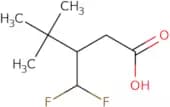
CAS:<p>Versatile small molecule scaffold</p>Formula:C9H16O3Purity:Min. 95%Molecular weight:172.22 g/mol3-(Difluoromethyl)-4,4-dimethylpentanoic acid
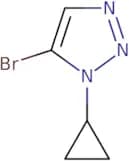
CAS:<p>Versatile small molecule scaffold</p>Formula:C8H14F2O2Purity:Min. 95%Molecular weight:180.19 g/mol5-Bromo-1-cyclopropyl-1H-1,2,3-triazole
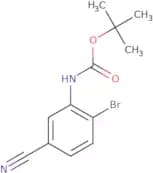
CAS:<p>Versatile small molecule scaffold</p>Formula:C5H6BrN3Purity:Min. 95%Molecular weight:188.03 g/moltert-Butyl N-(2-bromo-5-cyanophenyl)carbamate
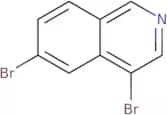
CAS:<p>Versatile small molecule scaffold</p>Formula:C12H13BrN2O2Purity:Min. 95%Molecular weight:297.15 g/mol4,6-Dibromoisoquinoline
CAS:<p>Versatile small molecule scaffold</p>Formula:C9H5Br2NPurity:Min. 95%Molecular weight:286.95 g/mol5-Cyclopropylpyrrolidin-3-ol hydrochloride
CAS:<p>Versatile small molecule scaffold</p>Formula:C7H14ClNOPurity:Min. 95%Molecular weight:163.64 g/mol1-Azaspiro[4.4]nonan-3-ol hydrochloride
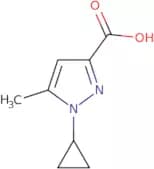
CAS:<p>Versatile small molecule scaffold</p>Formula:C8H16ClNOPurity:Min. 95%Molecular weight:177.7 g/mol1-Cyclopropyl-5-methyl-1H-pyrazole-3-carboxylic acid
CAS:<p>Versatile small molecule scaffold</p>Formula:C8H10N2O2Purity:Min. 95%Molecular weight:166.18 g/mol2-(Benzenesulfonyl)-2-methylpropan-1-ol
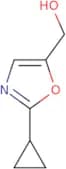
CAS:<p>Versatile small molecule scaffold</p>Formula:C10H14O3SPurity:Min. 95%Molecular weight:214.3 g/mol(2-cyclopropyloxazol-5-yl)methanol
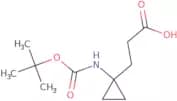
CAS:<p>Versatile small molecule scaffold</p>Formula:C7H9NO2Purity:Min. 95%Molecular weight:139.15 g/mol3-(1-((tert-Butoxycarbonyl)amino)cyclopropyl)propanoic acid
CAS:<p>Versatile small molecule scaffold</p>Formula:C11H19NO4Purity:Min. 95%Molecular weight:229.27 g/mol3-(1-{[(tert-Butoxy)carbonyl]amino}cyclopentyl)propanoic acid
CAS:<p>Versatile small molecule scaffold</p>Formula:C13H23NO4Purity:Min. 95%Molecular weight:257.33 g/moltert-Butyl N-[1-(piperidin-4-yl)cyclobutyl]carbamate
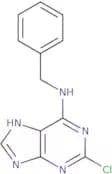
CAS:<p>Versatile small molecule scaffold</p>Formula:C14H26N2O2Purity:Min. 95%Molecular weight:254.37 g/molN-Benzyl-2-chloro-9H-purin-6-amine
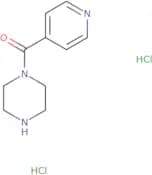
CAS:<p>Versatile small molecule scaffold</p>Formula:C12H10ClN5Purity:Min. 95%Molecular weight:259.69 g/mol1-(Pyridine-4-carbonyl)piperazine dihydrochloride
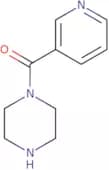
CAS:<p>Versatile small molecule scaffold</p>Formula:C10H15Cl2N3OPurity:Min. 95%Molecular weight:264.15 g/molPiperazin-1-yl-pyridin-3-yl-methanone dihydrochloride
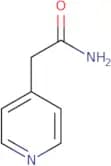
CAS:<p>Versatile small molecule scaffold</p>Formula:C10H15Cl2N3OPurity:Min. 95%Molecular weight:264.15 g/mol2-pyridin-4-ylacetamide
CAS:<p>2-pyridin-4-ylacetamide is a chiral inorganic compound that can be synthesized by reacting 4-hydroxypyridine with 2,2'-diaminodiethylamine. The crystal structure of this compound has been determined using x-ray diffraction techniques. The molecule adopts a conformation that is twisted about the central C=N bond, which is typical for pyridines. It also has a significant amide proton resonance, which causes it to have an intense conformational dependence on the temperature and solvent.</p>Formula:C7H8N2OPurity:Min. 95%Molecular weight:136.15 g/mol2-[2,2,3,3-Tetrafluoro-1-(hydroxymethyl)cyclobutyl]ethan-1-ol
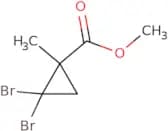
CAS:<p>Versatile small molecule scaffold</p>Formula:C7H10F4O2Purity:Min. 95%Molecular weight:202.15 g/molMethyl 2,2-dibromo-1-methylcyclopropane-1-carboxylate
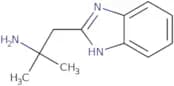
CAS:<p>Versatile small molecule scaffold</p>Formula:C6H8Br2O2Purity:Min. 95%Molecular weight:271.93 g/mol1-(1H-1,3-Benzodiazol-2-yl)-2-methylpropan-2-amine
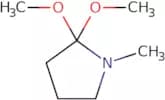
CAS:<p>Versatile small molecule scaffold</p>Formula:C11H15N3Purity:Min. 95%Molecular weight:189.26 g/mol2,2-Dimethoxy-1-methylpyrrolidine
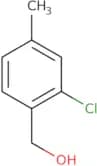
CAS:<p>Versatile small molecule scaffold</p>Formula:C7H15NO2Purity:Min. 95%Color and Shape:Clear LiquidMolecular weight:145.2 g/mol(2-chloro-4-methylphenyl)methanol
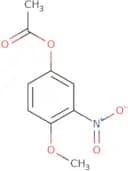
CAS:<p>Versatile small molecule scaffold</p>Formula:C8H9OClPurity:Min. 95%Molecular weight:156.6 g/mol4-Methoxy-3-nitrophenyl acetate
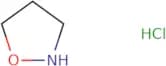
CAS:<p>Versatile small molecule scaffold</p>Formula:C9H9NO5Purity:Min. 95%Molecular weight:211.17 g/mol1,2-Oxazolidine hydrochloride
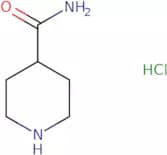
CAS:<p>1,2-Oxazolidine hydrochloride (1,2-OH) is an organic compound that is used as a reagent in organic synthesis. It is a chloride salt of the squaramide 1,2-oxazolidine and it reacts with hydrochloric acid to form the corresponding isoxazolidine. This process can be used to regenerate the starting reagent from a reaction mixture. The reaction yield for this process is in excess of 90%. 1,2-OH has shown pain control effects in mice and rats through its ability to inhibit prostaglandin synthesis. It also binds to c1-c6 alkoxyamines and iminiums, which are important intermediates in drug synthesis.</p>Formula:C3H8ClNOPurity:Min. 95%Molecular weight:109.55 g/mol4-Piperidinecarboxamide hydrochloride
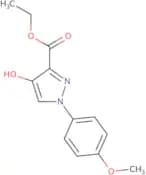
CAS:<p>Versatile small molecule scaffold</p>Formula:C6H13ClN2OPurity:Min. 95%Molecular weight:164.64 g/molEthyl 4-hydroxy-1-(4-methoxyphenyl)-1H-pyrazole-3-carboxylate
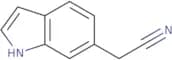
CAS:<p>Versatile small molecule scaffold</p>Formula:C13H14N2O4Purity:Min. 95%Molecular weight:262.26 g/mol2-(1H-Indol-6-yl)acetonitrile
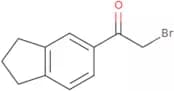
CAS:<p>Versatile small molecule scaffold</p>Formula:C10H8N2Purity:Min. 95%Molecular weight:156.18 g/mol2-Bromo-1-(2,3-dihydro-1H-inden-5-yl)ethan-1-one
CAS:<p>Versatile small molecule scaffold</p>Formula:C11H11BrOPurity:Min. 95%Molecular weight:239.11 g/mol7,8-Dihydro-5H-cyclohepta[b]pyridine-5,9(6H)-dione
CAS:<p>Versatile small molecule scaffold</p>Formula:C10H9NO2Purity:Min. 95%Molecular weight:175.19 g/molEthyl 3-chloro-5H,6H,7H,8H-pyrido[4,3-c]pyridazine-6-carboxylate
CAS:<p>Versatile small molecule scaffold</p>Formula:C10H12ClN3O2Purity:Min. 95%Molecular weight:241.67 g/molMethyl 3-chloro-5H,6H,7H,8H-pyrido[4,3-c]pyridazine-6-carboxylate
CAS:<p>Versatile small molecule scaffold</p>Formula:C9H10ClN3O2Purity:Min. 95%Molecular weight:227.65 g/molEthyl 3-hydroxy-5H,6H,7H,8H-pyrido[4,3-c]pyridazine-6-carboxylate
CAS:<p>Versatile small molecule scaffold</p>Formula:C10H13N3O3Purity:Min. 95%Molecular weight:223.23 g/mol2H,3H,5H,6H,7H,8H-Pyrido[4,3-c]pyridazin-3-one hydrochloride
CAS:<p>Versatile small molecule scaffold</p>Formula:C7H10ClN3OPurity:Min. 95%Molecular weight:187.63 g/mol5H,6H,7H,8H-Pyrido[4,3-c]pyridazin-3-ol
CAS:<p>Versatile small molecule scaffold</p>Formula:C7H9N3OPurity:Min. 95%Molecular weight:151.17 g/molMethyl 3-oxo-2H,3H,5H,6H,7H,8H-pyrido[4,3-c]pyridazine-6-carboxylate
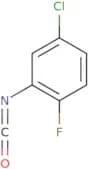
CAS:<p>Versatile small molecule scaffold</p>Formula:C9H11N3O3Purity:Min. 95%Molecular weight:209.2 g/mol4-Chloro-1-fluoro-2-isocyanatobenzene
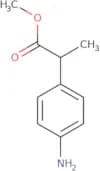
CAS:<p>Versatile small molecule scaffold</p>Formula:C7H3ClFNOPurity:Min. 95%Molecular weight:171.55 g/molmethyl 2-(4-aminophenyl)propanoate
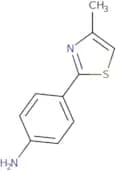
CAS:<p>Methyl 2-(4-aminophenyl)propanoate is a fatty acid amide that is derived from the arachidonic acid. It has been shown to be a lead compound with non-competitive inhibition of anandamide hydrolase. Methyl 2-(4-aminophenyl)propanoate also inhibits other hydrolases, such as the N-acylphosphatidylethanolamine phospholipase D and the phospholipase A2. This drug has been shown to have several effects in tissues, including cannabinoid receptors, which may be due to its ability to inhibit endocannabinoid metabolism and hydrolysis. This drug has also been shown to have anti-inflammatory properties.</p>Formula:C10H13NO2Purity:Min. 95%Molecular weight:179.2 g/mol4-(4-Methyl-1,3-thiazol-2-yl)aniline
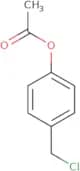
CAS:<p>Versatile small molecule scaffold</p>Formula:C10H10N2SPurity:Min. 95%Molecular weight:190.27 g/mol4-(Chloromethyl)phenyl acetate
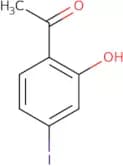
CAS:<p>4-(Chloromethyl)phenyl acetate is a nitro compound that is capable of inhibiting bacterial translocation in wild-type mice. It has been shown to decrease the influx of chloride ions into cells by binding to the membrane, preventing the formation of ion channels. 4-(Chloromethyl)phenyl acetate can also reduce lipid hydroperoxides and potentiate the activity of estradiol. This drug may be used to treat women with symptoms such as acne or endometriosis. The effects on phenotype are unknown because this drug has not been tested on humans.</p>Formula:C9H9ClO2Purity:Min. 95%Molecular weight:184.62 g/mol1-(2-Hydroxy-4-iodophenyl)ethan-1-one
CAS:<p>1-(2-Hydroxy-4-iodophenyl)ethan-1-one is a monomer that is used in the synthesis of polymers. It can be synthesized by irradiation of benzene with ultraviolet light. Yields are monitored by spectroscopies, such as elemental analysis, UV/visible spectroscopy, and IR spectroscopy. The reaction is carried out in organic solvents and yields 1-(2-hydroxy-4-iodophenyl)ethanone as an intermediate product. This compound can be polymerized using various methods to produce polymers with different properties. One method involves the use of benzene as a solvent and uv radiation for activation. 1-(2-Hydroxyphenyl)ethanone can also be polymerized using a metal catalyst (e.g., zinc). Theoretical models have been developed to predict the potential yields for this reaction.<br>END>></p>Formula:C8H7IO2Purity:Min. 95%Molecular weight:262.04 g/mol1-[4-Amino-2-(methylsulfanyl)-1,3-thiazol-5-yl]ethan-1-one
CAS:<p>Versatile small molecule scaffold</p>Formula:C6H8N2OS2Purity:Min. 95%Molecular weight:188.3 g/mol4-Amino-2-(methylthio)thiazole-5-carbonitrile
CAS:<p>4-Amino-2-(methylthio)thiazole-5-carbonitrile is an inhibitor of the epidermal growth factor receptor (EGFR). It binds to the EGFR and blocks the downstream signaling pathway, inhibiting cellular proliferation. This agent has been shown to inhibit tumor cell growth in vitro. 4-Amino-2-(methylthio)thiazole-5-carbonitrile binds to the enzyme tyrosine kinase, which is a key regulatory enzyme in signal transduction pathways. It inhibits phosphorylation of tyrosine residues on proteins, leading to inhibition of cellular proliferation. This drug has been shown to be effective against human tumor cells in culture and may be used for treating cancer patients with a specific mutation in their EGFR gene.</p>Formula:C9H17NO2Purity:Min. 95%Molecular weight:171.24 g/molMethyl 4-(1,3-dioxo-2,3-dihydro-1H-isoindol-2-yl)butanoate
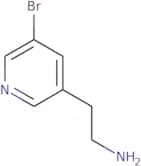
CAS:<p>Versatile small molecule scaffold</p>Formula:C13H13NO4Purity:Min. 95%Molecular weight:247.25 g/mol2-(5-Bromopyridin-3-yl)ethan-1-amine
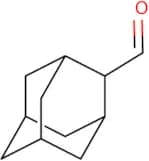
CAS:<p>Versatile small molecule scaffold</p>Formula:C7H9BrN2Purity:Min. 95%Molecular weight:201.06 g/molAdamantane-2-carbaldehyde
CAS:<p>Adamantane-2-carbaldehyde is a chemical that belongs to the class of organic compounds called ketones. It is used in model studies for the study of glutamate receptor metabotropic type 1 (mGluR1), which is a protein found in the central and peripheral nervous system. Adamantane-2-carbaldehyde can be synthesized by reacting an organometallic reagent with an enolate, which is formed from a Grignard reagent. This reaction produces an oxindole as a byproduct which can be converted into adamantane-2-carbaldehyde using acetonitrile. Adamantane-2-carbaldehyde has been shown to react with magnesium to form an adduct that binds to glutamic acid and other amino acids, demonstrating its use as a probe for studying glutamate receptor interactions with other biomolecules.</p>Formula:C11H16OPurity:Min. 95%Molecular weight:164.24 g/mol
![3-[(4-Chloro-3-methylphenoxy)methyl]-4-methoxybenzohydrazide](/_next/image/?url=https%3A%2Fstatic.cymitquimica.com%2Fproducts%2F3D%2Fthumb-webp%2FNSA22150.webp&w=3840&q=75)

![3-[(4-Bromophenoxy)methyl]-4-methoxybenzohydrazide](/_next/image/?url=https%3A%2Fstatic.cymitquimica.com%2Fproducts%2F3D%2Fthumb-webp%2FNSA22159.webp&w=3840&q=75)
![3-[(4-Formylphenoxy)methyl]-4-methoxybenzaldehyde](/_next/image/?url=https%3A%2Fstatic.cymitquimica.com%2Fproducts%2F3D%2Fthumb-webp%2FNSA22165.webp&w=3840&q=75)
![Ethyl 3-amino-6-(difluoromethyl)-4-methylthieno[2,3-b]pyridine-2-carboxylate](/_next/image/?url=https%3A%2Fstatic.cymitquimica.com%2Fproducts%2F3D%2Fthumb-webp%2FNSA22365.webp&w=3840&q=75)
![2-{[(tert-Butoxy)carbonyl]amino}-2-(2-ethyl-1,3-thiazol-4-yl)acetic acid](/_next/image/?url=https%3A%2Fstatic.cymitquimica.com%2Fproducts%2F3D%2Fthumb-webp%2FNSA25251.webp&w=3840&q=75)
![3-[(Naphthalen-2-yloxy)methyl]benzoic acid](/_next/image/?url=https%3A%2Fstatic.cymitquimica.com%2Fproducts%2F3D%2Fthumb-webp%2FNSA46401.webp&w=3840&q=75)
![5-[(4-Ethoxyphenoxy)methyl]-2-furohydrazide](/_next/image/?url=https%3A%2Fstatic.cymitquimica.com%2Fproducts%2F3D%2Fthumb-webp%2FNSA46488.webp&w=3840&q=75)
![4-[(4-Ethoxyphenoxy)methyl]benzoic acid](/_next/image/?url=https%3A%2Fstatic.cymitquimica.com%2Fproducts%2F3D%2Fthumb-webp%2FNSA46497.webp&w=3840&q=75)
![3-[(2,4-Dichlorophenoxy)methyl]benzoic acid](/_next/image/?url=https%3A%2Fstatic.cymitquimica.com%2Fproducts%2F3D%2Fthumb-webp%2FNSA46522.webp&w=3840&q=75)
![3-{[4-(Propan-2-yl)phenoxy]methyl}benzoic acid](/_next/image/?url=https%3A%2Fstatic.cymitquimica.com%2Fproducts%2F3D%2Fthumb-webp%2FNSA46541.webp&w=3840&q=75)
![3-[(Naphthalen-1-yloxy)methyl]benzoic acid](/_next/image/?url=https%3A%2Fstatic.cymitquimica.com%2Fproducts%2F3D%2Fthumb-webp%2FNSA46554.webp&w=3840&q=75)
![3-[(2,2,3,3-Tetrafluoropropoxy)methyl]benzoic acid](/_next/image/?url=https%3A%2Fstatic.cymitquimica.com%2Fproducts%2F3D%2Fthumb-webp%2FNSA46600.webp&w=3840&q=75)
![3-[(2,2,2-Trifluoroethoxy)methyl]benzoic acid](/_next/image/?url=https%3A%2Fstatic.cymitquimica.com%2Fproducts%2F3D%2Fthumb-webp%2FNSA47519.webp&w=3840&q=75)
![3-[(4-Ethoxyphenoxy)methyl]benzoic acid](/_next/image/?url=https%3A%2Fstatic.cymitquimica.com%2Fproducts%2F3D%2Fthumb-webp%2FNSA47573.webp&w=3840&q=75)
![Methyl 2-oxo-8-oxabicyclo[3.2.1]octane-3-carboxylate](/_next/image/?url=https%3A%2Fstatic.cymitquimica.com%2Fproducts%2F3D%2Fthumb-webp%2FNYB78112.webp&w=3840&q=75)
![(S)-1-[3-(Trifluoromethyl)phenyl]ethylamine hydrochloride](/_next/image/?url=https%3A%2Fstatic.cymitquimica.com%2Fproducts%2F3D%2Fthumb-webp%2FNYB93994.webp&w=3840&q=75)
![Methyl 2-{[(tert-butoxy)carbonyl]amino}-3-hydroxybutanoate](/_next/image/?url=https%3A%2Fstatic.cymitquimica.com%2Fproducts%2F3D%2Fthumb-webp%2FNYC57868.webp&w=3840&q=75)
![2-[4-(Methoxycarbonyl)bicyclo[2.2.2]octan-1-yl]acetic acid](/_next/image/?url=https%3A%2Fstatic.cymitquimica.com%2Fproducts%2F3D%2Fthumb-webp%2FNYC66875.webp&w=3840&q=75)
![Methyl 2-{[4-(4-chlorophenyl)-3-oxo-8-thia-4,6-diazatricyclo[7.4.0.0,2,7]trideca-1(9),2(7),5-trien…](/_next/image/?url=https%3A%2Fstatic.cymitquimica.com%2Fproducts%2F3D%2Fthumb-webp%2FNZA22782.webp&w=3840&q=75)
![Methyl 2-{[4-(4-bromophenyl)-3-oxo-8-thia-4,6-diazatricyclo[7.4.0.0,2,7]trideca-1(9),2(7),5-trien-…](/_next/image/?url=https%3A%2Fstatic.cymitquimica.com%2Fproducts%2F3D%2Fthumb-webp%2FNZA22842.webp&w=3840&q=75)
![1-[4-(Chloromethyl)phenoxymethyl]-4-fluorobenzene](/_next/image/?url=https%3A%2Fstatic.cymitquimica.com%2Fproducts%2F3D%2Fthumb-webp%2FNZA24041.webp&w=3840&q=75)
![[(4-Amino-3,5-dimethylphenyl)sulfanyl]formonitrile](/_next/image/?url=https%3A%2Fstatic.cymitquimica.com%2Fproducts%2F3D%2Fthumb-webp%2FPAA03102.webp&w=3840&q=75)
![6,6-Dimethyl-1,4-dioxaspiro[4.5]decan-7-one](/_next/image/?url=https%3A%2Fstatic.cymitquimica.com%2Fproducts%2F3D%2Fthumb-webp%2FPAA78252.webp&w=3840&q=75)
![1-Methylbicyclo[4.1.0]heptan-2-one](/_next/image/?url=https%3A%2Fstatic.cymitquimica.com%2Fproducts%2F3D%2Fthumb-webp%2FPAA84540.webp&w=3840&q=75)
![2-[(2-Aminoethyl)sulfanyl]benzoic acid hydrochloride](/_next/image/?url=https%3A%2Fstatic.cymitquimica.com%2Fproducts%2F3D%2Fthumb-webp%2FPAA94394.webp&w=3840&q=75)
![1-[Amino(methylsulfanyl)methylidene]guanidine hydroiodide](/_next/image/?url=https%3A%2Fstatic.cymitquimica.com%2Fproducts%2F3D%2Fthumb-webp%2FPAA94592.webp&w=3840&q=75)
![2-Iodo-4-oxatricyclo[4.2.1.0,3,7]nonan-5-one](/_next/image/?url=https%3A%2Fstatic.cymitquimica.com%2Fproducts%2F3D%2Fthumb-webp%2FPAA94868.webp&w=3840&q=75)


![5H,6H,7H-[1,2,4]Triazolo[3,4-b][1,3]thiazin-3-amine](/_next/image/?url=https%3A%2Fstatic.cymitquimica.com%2Fproducts%2F3D%2Fthumb-webp%2FPAB78244.webp&w=3840&q=75)
![2-[4-(4H-1,2,4-Triazol-4-yl)phenyl]acetic acid](/_next/image/?url=https%3A%2Fstatic.cymitquimica.com%2Fproducts%2F3D%2Fthumb-webp%2FPAB86389.webp&w=3840&q=75)
![2-[2-(Trifluoromethyl)phenyl]quinazolin-4-ol](/_next/image/?url=https%3A%2Fstatic.cymitquimica.com%2Fproducts%2F3D%2Fthumb-webp%2FPAC03781.webp&w=3840&q=75)
![6-Bromopyrazolo[1,5-a]pyridine](/_next/image/?url=https%3A%2Fstatic.cymitquimica.com%2Fproducts%2F3D%2Fthumb-webp%2FPAC19311.webp&w=3840&q=75)
![Furo[3,2-c]pyridin-2-ylboronic acid](/_next/image/?url=https%3A%2Fstatic.cymitquimica.com%2Fproducts%2F3D%2Fthumb-webp%2FPAC51167.webp&w=3840&q=75)
![1-[(tert-Butoxy)carbonyl]-3-(2-oxopropyl)pyrrolidine-3-carboxylic acid](/_next/image/?url=https%3A%2Fstatic.cymitquimica.com%2Fproducts%2F3D%2Fthumb-webp%2FPAD13624.webp&w=3840&q=75)
![3,3-Dimethyl-2-oxaspiro[4.5]decan-8-one](/_next/image/?url=https%3A%2Fstatic.cymitquimica.com%2Fproducts%2F3D%2Fthumb-webp%2FPAD26873.webp&w=3840&q=75)
![2-[2-(Difluoromethyl)phenoxy]acetic acid](/_next/image/?url=https%3A%2Fstatic.cymitquimica.com%2Fproducts%2F3D%2Fthumb-webp%2FPAD40031.webp&w=3840&q=75)
![3-[(Oxan-4-yl)methyl]morpholine](/_next/image/?url=https%3A%2Fstatic.cymitquimica.com%2Fproducts%2F3D%2Fthumb-webp%2FPAD61434.webp&w=3840&q=75)
![2-[1-(Methoxymethyl)cyclopentyl]acetic acid](/_next/image/?url=https%3A%2Fstatic.cymitquimica.com%2Fproducts%2F3D%2Fthumb-webp%2FPAD64527.webp&w=3840&q=75)
![1-Azaspiro[4.4]nonan-3-ol hydrochloride](/_next/image/?url=https%3A%2Fstatic.cymitquimica.com%2Fproducts%2F3D%2Fthumb-webp%2FPAD94005.webp&w=3840&q=75)
![3-(1-{[(tert-Butoxy)carbonyl]amino}cyclopentyl)propanoic acid](/_next/image/?url=https%3A%2Fstatic.cymitquimica.com%2Fproducts%2F3D%2Fthumb-webp%2FPAD97752.webp&w=3840&q=75)
![tert-Butyl N-[1-(piperidin-4-yl)cyclobutyl]carbamate](/_next/image/?url=https%3A%2Fstatic.cymitquimica.com%2Fproducts%2F3D%2Fthumb-webp%2FPAD97757.webp&w=3840&q=75)
![2-[2,2,3,3-Tetrafluoro-1-(hydroxymethyl)cyclobutyl]ethan-1-ol](/_next/image/?url=https%3A%2Fstatic.cymitquimica.com%2Fproducts%2F3D%2Fthumb-webp%2FPBA64537.webp&w=3840&q=75)
![7,8-Dihydro-5H-cyclohepta[b]pyridine-5,9(6H)-dione](/_next/image/?url=https%3A%2Fstatic.cymitquimica.com%2Fproducts%2F3D%2Fthumb-webp%2FPBA71340.webp&w=3840&q=75)
![Ethyl 3-chloro-5H,6H,7H,8H-pyrido[4,3-c]pyridazine-6-carboxylate](/_next/image/?url=https%3A%2Fstatic.cymitquimica.com%2Fproducts%2F3D%2Fthumb-webp%2FPBA71599.webp&w=3840&q=75)
![Methyl 3-chloro-5H,6H,7H,8H-pyrido[4,3-c]pyridazine-6-carboxylate](/_next/image/?url=https%3A%2Fstatic.cymitquimica.com%2Fproducts%2F3D%2Fthumb-webp%2FPBA71601.webp&w=3840&q=75)
![Ethyl 3-hydroxy-5H,6H,7H,8H-pyrido[4,3-c]pyridazine-6-carboxylate](/_next/image/?url=https%3A%2Fstatic.cymitquimica.com%2Fproducts%2F3D%2Fthumb-webp%2FPBA71648.webp&w=3840&q=75)
![2H,3H,5H,6H,7H,8H-Pyrido[4,3-c]pyridazin-3-one hydrochloride](/_next/image/?url=https%3A%2Fstatic.cymitquimica.com%2Fproducts%2F3D%2Fthumb-webp%2FPBA71649.webp&w=3840&q=75)
![5H,6H,7H,8H-Pyrido[4,3-c]pyridazin-3-ol](/_next/image/?url=https%3A%2Fstatic.cymitquimica.com%2Fproducts%2F3D%2Fthumb-webp%2FPBA71650.webp&w=3840&q=75)
![Methyl 3-oxo-2H,3H,5H,6H,7H,8H-pyrido[4,3-c]pyridazine-6-carboxylate](/_next/image/?url=https%3A%2Fstatic.cymitquimica.com%2Fproducts%2F3D%2Fthumb-webp%2FPBA71652.webp&w=3840&q=75)
![1-[4-Amino-2-(methylsulfanyl)-1,3-thiazol-5-yl]ethan-1-one](/_next/image/?url=https%3A%2Fstatic.cymitquimica.com%2Fproducts%2F3D%2Fthumb-webp%2FPBA73626.webp&w=3840&q=75)