Building Blocks
This section contains fundamental products for the synthesis of organic and biological compounds. Building blocks are the essential starting materials used to construct complex molecules through various chemical reactions. They play a critical role in drug discovery, material science, and chemical research. At CymitQuimica, we offer a diverse range of high-quality building blocks to support your innovative research and industrial projects, ensuring you have the essential components for successful synthesis.
Subcategories of "Building Blocks"
- Boronic Acids & Boronic Acid Derivatives(5,756 products)
- Chiral Building Blocks(1,242 products)
- Hydrocarbon Building Blocks(6,095 products)
- Organic Building Blocks(61,051 products)
Found 199813 products of "Building Blocks"
Sort by
Purity (%)
0
100
|
0
|
50
|
90
|
95
|
100
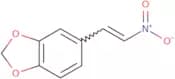
5-(2-Nitroethenyl)-2H-1,3-benzodioxole
CAS:<p>Versatile small molecule scaffold</p>Formula:C9H7NO4Purity:Min. 95%Molecular weight:193.16 g/mol2-({4-[(Carboxymethyl)carbamoyl]phenyl}formamido)acetic acid
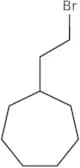
CAS:<p>Versatile small molecule scaffold</p>Formula:C12H12N2O6Purity:Min. 95%Molecular weight:280.23 g/mol(2-Bromoethyl)cycloheptane
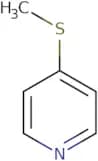
CAS:<p>Versatile small molecule scaffold</p>Formula:C9H17BrPurity:Min. 95%Molecular weight:205.13 g/mol4-(Methylsulfanyl)pyridine
CAS:<p>4-Methylsulfanylpyridine is a ligand, chiral, and metallophilic. It has a pyridine ring that is magnetic. 4-Methylsulfanylpyridine also shows oxidation process profiles in hexane and tetrahydrofuran. 4-Methylsulfanylpyridine interacts with other compounds through a number of spectroscopies, including photoelectron, diffraction, and single-crystal x-ray diffraction. 4-Methylsulfanylpyridine can be used to catalyze reactions.</p>Formula:C6H7NSPurity:Min. 95%Molecular weight:125.19 g/mol1,1-Dimethylguanidine hydrochloride
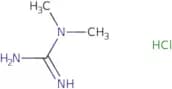
CAS:<p>1,1-Dimethylguanidine hydrochloride is an oxadiazole derivative that is used in the treatment of bacterial infections. It is a competitive inhibitor of bacterial leukocyte-mediated killing of bacteria and inhibits the growth of staphylococcal and staphylococcus aureus isolates. In vitro, 1,1-dimethylguanidine hydrochloride has been shown to inhibit the growth of gram-positive bacteria by binding to their cell wall. This drug also has a kinetic effect on leukocytes, which may be due to its ability to inhibit the release of reactive oxygen species from these cells.</p>Formula:C3H10ClN3Purity:Min. 95%Molecular weight:123.58 g/mol1-(2-tert-Butylphenyl)ethan-1-one
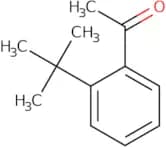
CAS:<p>Versatile small molecule scaffold</p>Formula:C12H16OPurity:Min. 95%Molecular weight:176.25 g/mol7-tert-Butyl-1,2,3,4-tetrahydronaphthalen-1-one
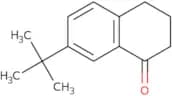
CAS:Versatile small molecule scaffoldFormula:C14H18OPurity:Min. 95%Molecular weight:202.29 g/molN-Propyl-1,2,3,4-tetrahydronaphthalen-2-amine hydrochloride
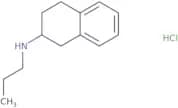
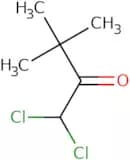
CAS:Controlled Product<p>Versatile small molecule scaffold</p>Formula:C13H20ClNPurity:Min. 95%Molecular weight:225.76 g/mol1,1-Dichloropinacolone
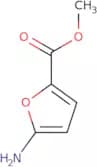
CAS:<p>1,1-Dichloropinacolone is a chlorinated derivative of the organic compound 1,1-dichloropinacol. It is used as a precursor to produce chloride gas and hydrogen chloride. The reaction of 1,1-dichloropinacolone with hydrochloric acid produces hydrogen and chlorine gas. This method has been used to remove nitro compounds from wastewater as well as to produce pesticides. The reaction products include hydrogen peroxide which can be used for wastewater treatment. Treatment methods include the use of organic solvents or catalysts to speed up the reaction rate.</p>Formula:C6H10Cl2OPurity:Min. 95%Molecular weight:169.05 g/molMethyl 5-amino-2-furoate
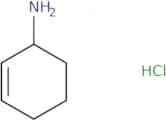
CAS:<p>Methyl 5-amino-2-furoate is a nitrofuran that is used as a reagent in the synthesis of other compounds. It has been shown to be metabolized by acetylation, hydrazine, and reduction. Methyl 5-amino-2-furoate can also act as an inhibitor of xanthine oxidase and xanthine dehydrogenase. The compound has been shown to inhibit the production of xanthine and aminofuran in an incubated system containing these enzymes. Spectrometry analysis showed that methyl 5-amino-2-furoate was reduced to form methyl 2,5-dihydroxybenzoate during incubation with xanthine oxidase and xanthine dehydrogenase.</p>Formula:C6H7NO3Purity:Min. 95%Molecular weight:141.13 g/molCyclohex-2-en-1-amine hydrochloride
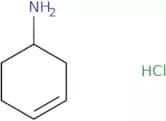
CAS:<p>Versatile small molecule scaffold</p>Formula:C6H12ClNPurity:Min. 95%Molecular weight:133.62 g/molCyclohex-3-en-1-amine hydrochloride
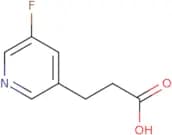
CAS:<p>Versatile small molecule scaffold</p>Formula:C6H11N·HClPurity:Min. 95%Molecular weight:133.62 g/mol3-(5-fluoropyridin-3-yl)propanoic acid
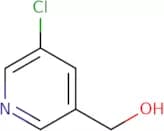
CAS:Versatile small molecule scaffoldFormula:C8H8NO2FPurity:Min. 95%Molecular weight:169.15 g/mol(5-Chloro-3-pyridinyl)methanol
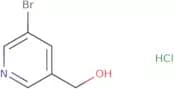
CAS:Versatile small molecule scaffoldFormula:C6H6ClNOPurity:Min. 95%Molecular weight:143.57 g/mol(5-bromopyridin-3-yl)methanol hcl
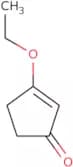
CAS:<p>Versatile small molecule scaffold</p>Formula:C6H7BrClNOPurity:Min. 95%Molecular weight:224.48 g/mol3-Ethoxy-2-cyclopentenone
CAS:<p>3-Ethoxy-2-cyclopentenone is an unsaturated fatty acid that is used in the synthesis of prostaglandins and other biologically active compounds. It can be synthesized by the hydrogenation of 3-ethoxy-2-cyclohexenecarboxaldehyde, which is an analog of a natural product. 3-Ethoxy-2-cyclopentenone has been used as a radioisotope for medical diagnosis, yielding high specific activity with low radiation dosages. This compound can also be produced by formylation and hydrogenation of 2-(3'-formoxyphenoxy)propane. 3-Ethoxy-2-cyclopentenone has shown inhibitory effects on glycosidases and can be diluted at 1:10 to produce a 10% concentration.</p>Formula:C7H10O2Purity:Min. 95%Molecular weight:126.15 g/mol3-(3-Butenyl)cyclopentanone
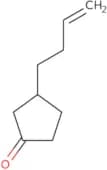
CAS:<p>Versatile small molecule scaffold</p>Formula:C9H14OPurity:Min. 95%Molecular weight:138.21 g/mol1-(Adamantan-2-yl)ethan-1-one
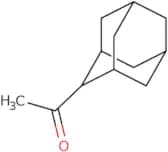
CAS:<p>Adamantan-2-yl ethan-1-one is a carbocation with an electron deficient double bond. This compound has been shown to react with alkyl halides, such as benzyl chloride, to form a 1,3-diphenylpropane. Adamantan-2-yl ethan-1-one was synthesized by radical intermediates in the course of hydrocarbon activation and has shown to be an important reaction intermediate for the synthesis of carbonyl compounds. The activation of hydrocarbons by adamantan-2-yl ethan-1-one has been studied extensively and has led to advances in medicinal chemistry.</p>Formula:C12H18OPurity:Min. 95%Molecular weight:178.27 g/mol3-(Dimethylamino)propanohydrazide
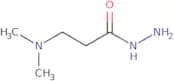
CAS:<p>3-(Dimethylamino)propanohydrazide is a potent inhibitor of lipoxygenases in the nanomolar range. It has been shown to inhibit a number of lipoxygenases, including 5-lipoxygenase and 15-lipoxygenase, which are enzymes that catalyze the conversion of arachidonic acid to leukotrienes. 3-(Dimethylamino)propanohydrazide was also found to be an efficient inhibitor of acylhydrazone formation and is being used as a lead compound for drug discovery. This compound has been shown to be potent inhibitors of regulatory enzymes in the lung disease screening reaction mixtures, such as those that regulate inflammation or blood pressure.</p>Formula:C5H13N3OPurity:Min. 95%Molecular weight:131.18 g/mol3-{Bicyclo[2.2.1]heptan-2-yl}propanoic acid
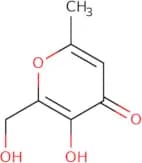
CAS:<p>Versatile small molecule scaffold</p>Formula:C10H16O2Purity:Min. 95%Molecular weight:168.23 g/mol3-Hydroxy-2-(hydroxymethyl)-6-methyl-4H-pyran-4-one
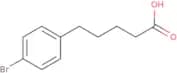
CAS:<p>Versatile small molecule scaffold</p>Formula:C7H8O4Purity:Min. 95%Molecular weight:156.14 g/mol5-(4-bromophenyl)pentanoic acid
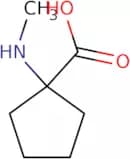
CAS:<p>5-(4-Bromophenyl)pentanoic acid is a molecule that is synthetically derived from the natural product pentalenene. It can be used to debrominate ccr5 in vitro, and has been envisaged as a synthetic chemotherapeutic agent for HIV infection. 5-(4-Bromophenyl)pentanoic acid is an amide of pentanoic acid and dibenzoylmethane. It is a biomolecular agent that has been shown to induce chromosomal rearrangements and chemokine modifications in cancer cells. 5-(4-Bromophenyl)pentanoic acid also prevents apoptosis by binding to survivin, thereby inhibiting its ability to trigger apoptosis.</p>Formula:C11H13BrO2Purity:Min. 95%Molecular weight:257.1 g/mol1-(Methylamino)cyclopentane-1-carboxylic acid
CAS:Versatile small molecule scaffoldFormula:C7H13NO2Purity:Min. 95%Molecular weight:143.18 g/molEthyl 1-aminocyclopentanecarboxylate hydrochloride
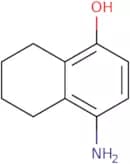
CAS:Controlled Product<p>Ethyl 1-aminocyclopentanecarboxylate hydrochloride is a urokinase inhibitor. It binds to the active site of the enzyme, blocks its substrate access and prevents cleavage of plasminogen to form plasmin. This leads to inhibition of fibrinolysis. Ethyl 1-aminocyclopentanecarboxylate hydrochloride has been shown to inhibit the activity of urokinase in calf thymus DNA, as well as in bacterial DNA gyrase and DNA topoisomerase, which are enzymes that maintain the integrity of bacterial DNA.</p>Formula:C8H16ClNO2Purity:Min. 95%Molecular weight:193.68 g/mol4-Amino-5,6,7,8-tetrahydronaphthalen-1-ol
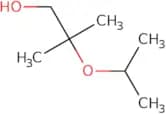
CAS:<p>Versatile small molecule scaffold</p>Formula:C10H13NOPurity:Min. 95%Molecular weight:163.22 g/mol2-Methyl-2-(propan-2-yloxy)propan-1-ol
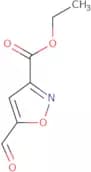
CAS:<p>Versatile small molecule scaffold</p>Formula:C7H16O2Purity:Min. 95%Molecular weight:132.2 g/molEthyl 5-formylisoxazole-3-carboxylate
CAS:Versatile small molecule scaffoldFormula:C7H7NO4Purity:Min. 95%Molecular weight:169.14 g/moltert-Butyl[(4-methoxyphenyl)methyl]amine
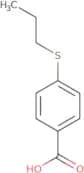
CAS:<p>Versatile small molecule scaffold</p>Formula:C12H19NOPurity:Min. 95%Molecular weight:193.28 g/mol4-(Propylsulfanyl)benzoic acid
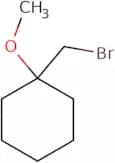
CAS:<p>Versatile small molecule scaffold</p>Formula:C10H12O2SPurity:Min. 95%Molecular weight:196.27 g/mol1-(Bromomethyl)-1-methoxycyclohexane
CAS:<p>Versatile small molecule scaffold</p>Formula:C8H15BrOPurity:Min. 95%Molecular weight:207.11 g/mol1-Chloro-5-methoxypentane
CAS:<p>1-Chloro-5-methoxypentane is a chlorinating agent that can be used to produce linear chlorides. 1-Chloro-5-methoxypentane is not an acid, but it can react with sulfur to form sulfuryl chloride. It has been shown to be a good nucleophile and reacts with ethers and chloride ions. 1-Chloro-5-methoxypentane is uncatalyzed and its rate of reaction increases when it is catalyzed by a metal salt such as zinc or iron.</p>Formula:C6H13ClOPurity:Min. 95%Molecular weight:136.62 g/molN-[4-(2,5-Dioxoimidazolidin-4-yl)phenyl]acetamide
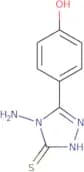
CAS:<p>Versatile small molecule scaffold</p>Formula:C11H11N3O3Purity:Min. 95%Molecular weight:233.22 g/mol4-(4-Amino-5-sulfanyl-4H-1,2,4-triazol-3-yl)phenol
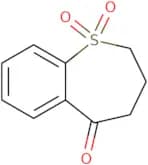
CAS:<p>4-(4-Amino-5-sulfanyl-4H-1,2,4-triazol-3-yl)phenol is a crystalline solid that has been shown to have biological activities. It can be synthesized from elemental sulfur and phosphorus. The yield of this process is high (>97%) and the product can be purified by x-ray crystallography. This compound contains both silicon and phosphorus, which are essential for life on Earth. Elemental analysis of 4-(4-Amino-5-sulfanyl-4H-1,2,4-triazol-3-yl)phenol has shown that it is made up of carbon (C), hydrogen (H), oxygen (O), nitrogen (N), sulfur (S), silicon (Si), and phosphorus (P).</p>Formula:C8H8N4OSPurity:Min. 95%Molecular weight:208.24 g/mol3,4-Dihydro-1-benzothiepin-5(2H)-one 1,1-dioxide
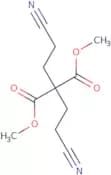
CAS:Versatile small molecule scaffoldFormula:C10H10O3SPurity:Min. 95%Molecular weight:210.25 g/mol1,3-Dimethyl 2,2-bis(2-cyanoethyl)propanedioate
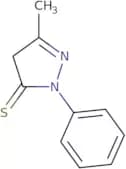
CAS:<p>Dimethyl 2,2-bis(2-cyanoethyl)propanedioate is a symmetric molecule with a cis-trans isomerism that can be described by an X and Y axis. The molecule has two hydrogen bonds and four asymmetric carbon atoms. The trans form of the molecule is shown below.</p>Formula:C11H14N2O4Purity:Min. 95%Molecular weight:238.24 g/mol3-Methyl-1-phenyl-4,5-dihydro-1H-pyrazole-5-thione
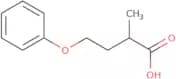
CAS:<p>3-Methyl-1-phenyl-4,5-dihydro-1H-pyrazole-5-thione (MPPT) is a lanthanide and actinide extractant that is used to separate these elements from other metals. MPPT forms a coordination complex with the metal ions and extracts them from their solution. This product can be used in conjunction with other extractants to create a synergistic effect.</p>Formula:C10H10N2SPurity:Min. 95%Molecular weight:190.27 g/mol2-Methyl-4-phenoxybutanoic acid
CAS:<p>Versatile small molecule scaffold</p>Formula:C11H14O3Purity:Min. 95%Molecular weight:194.23 g/mol2-Phenylcyclohexan-1-amine hydrochlorides
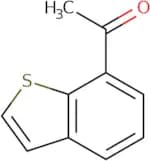
CAS:Versatile small molecule scaffoldFormula:C12H18ClNPurity:Min. 95%Molecular weight:211.7 g/mol1-(1-Benzothiophen-7-yl)ethan-1-one
CAS:<p>Versatile small molecule scaffold</p>Formula:C10H8OSPurity:Min. 95%Molecular weight:176.24 g/mol5-Bromo-2-(methylamino)benzoic acid
CAS:<p>Versatile small molecule scaffold</p>Formula:C8H8BrNO2Purity:Min. 95%Molecular weight:230.06 g/mol6-Bromo-1-methyl-1H-benzo[D][1,3]oxazine-2,4-dione
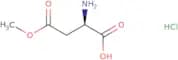
CAS:<p>Versatile small molecule scaffold</p>Formula:C9H6BrNO3Purity:Min. 95%Molecular weight:256.05 g/molD-Aspartic Acid 4-Methyl Ester Hydrochloride
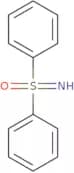
CAS:<p>Versatile small molecule scaffold</p>Formula:C5H10ClNO4Purity:Min. 95%Molecular weight:183.59 g/molS,S-Diphenyl-sulfoximine
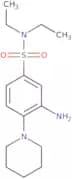
CAS:<p>S,S-Diphenyl sulfoximine is a sulfoxide with the chemical formula C6H6O2S. It has been used as a synthetic intermediate for the production of other chemicals. S,S-Diphenyl sulfoximine is also an efficient method for methylation reactions in organic solvents and radical coupling. In addition, it can be used to form functional groups with the functional theory and its analogs have been used as control experiments. S,S-Diphenyl sulfoximine is monosubstituted by two phenyl groups.</p>Formula:C12H11NOSPurity:Min. 95%Molecular weight:217.29 g/mol3-Amino-N,N-diethyl-4-piperidin-1-yl-benzenesulfonamide
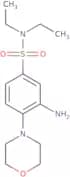
CAS:Versatile small molecule scaffoldFormula:C15H25N3O2SPurity:Min. 95%Molecular weight:311.4 g/mol3-Amino-N,N-diethyl-4-(morpholin-4-yl)benzene-1-sulfonamide
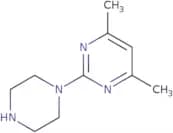
CAS:<p>Versatile small molecule scaffold</p>Formula:C14H23N3O3SPurity:Min. 95%Molecular weight:313.42 g/mol4,6-Dimethyl-2-(piperazin-1-yl)pyrimidine
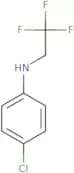
CAS:Versatile small molecule scaffoldFormula:C10H16N4Purity:Min. 95%Molecular weight:192.26 g/mol4-Chloro-N-(2,2,2-trifluoroethyl)aniline
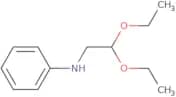
CAS:Versatile small molecule scaffoldFormula:C8H7ClF3NPurity:Min. 95%Molecular weight:209.59 g/molAnilinoacetaldehyde diethyl acetal
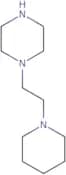
CAS:<p>Anilinoacetaldehyde diethyl acetal is a surfactant that has been shown to have an inhibitory effect on osteoclasts. It also inhibits bone resorption by inhibiting the enzymatic activity of cathepsin K. Anilinoacetaldehyde diethyl acetal works synergistically with other drugs such as hydrochloric acid and methoxy, and can be used in combination with hydrogenated polyvinyl alcohol for drug delivery. The particle size is typically around 1 micrometre.</p>Formula:C12H19NO2Purity:Min. 95%Molecular weight:209.28 g/mol1-(2-piperidinoethyl)piperazine
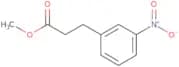
CAS:<p>Versatile small molecule scaffold</p>Formula:C11H23N3Purity:Min. 95%Molecular weight:197.32 g/molMethyl 3-(3-nitrophenyl)propanoate
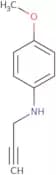
CAS:<p>Versatile small molecule scaffold</p>Formula:C10H11NO4Purity:Min. 95%Molecular weight:209.2 g/mol4-Methoxy-N-(prop-2-yn-1-yl)aniline
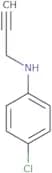
CAS:<p>Versatile small molecule scaffold</p>Formula:C10H11NOPurity:Min. 95%Molecular weight:161.2 g/mol(4-Chloro-phenyl)-prop-2-ynyl-amine
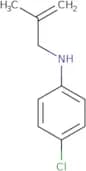
CAS:<p>Versatile small molecule scaffold</p>Formula:C9H8ClNPurity:Min. 95%Molecular weight:165.62 g/mol4-Chloro-N-(2-methylprop-2-en-1-yl)aniline
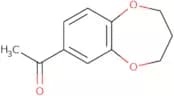
CAS:<p>Versatile small molecule scaffold</p>Formula:C10H12ClNPurity:Min. 95%Molecular weight:181.66 g/mol1-(3,4-Dihydro-2H-1,5-benzodioxepin-7-yl)ethan-1-one
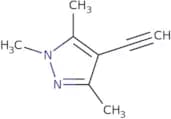
CAS:<p>Versatile small molecule scaffold</p>Formula:C11H12O3Purity:Min. 95%Molecular weight:192.21 g/mol4-Ethynyl-1,3,5-trimethyl-1H-pyrazole
CAS:<p>4-Ethynyl-1,3,5-trimethyl-1H-pyrazole is an aromatic compound that belongs to the pyrazole family. It has been shown to be a potent inhibitor of the dehydrochlorination of 4-ethynylphenol by chlorine at low pH. The spectral data indicate that 4-ethynyl-1,3,5-trimethylpyrazole is a n-substituted pyrazole with a ketone group in the para position.</p>Formula:C8H10N2Purity:Min. 95%Molecular weight:134.18 g/mol2-{[(2E)-3-(4-Methoxyphenyl)prop-2-enoyl]amino}benzoic acid
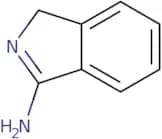
CAS:<p>2-{[(2E)-3-(4-Methoxyphenyl)prop-2-enoyl]amino}benzoic acid is a carboxamide, benzoic acid, anthranilic acid, and anthranilic. It has been shown to inhibit the growth of Mycobacterium tuberculosis and Mycobacterium avium complex. This compound also has anti-inflammatory properties that may be due to its ability to inhibit prostaglandin synthesis.</p>Formula:C17H15NO4Purity:Min. 95%Molecular weight:297.3 g/mol1H-Isoindol-3-amine
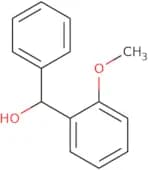
CAS:<p>1H-Isoindol-3-amine is a coordination complex with a palladium atom coordinated to three active methylene ligands. It is used as an intermediate in the synthesis of organic compounds. 1H-Isoindol-3-amine can be synthesized by the reaction of sodium hydrogen with hydroxybenzoic acid, followed by the Suzuki coupling reaction with copper chloride and an aryl chloride. The coordination chemistry between 1H-Isoindol-3-amine and palladium has been studied using viscosity measurements and X-ray diffraction data. The coordination complexes are usually based on aryl chlorides, which are electron rich, electron deficient, or electrophilic. The reaction mechanism for 1H-Isoindol-3-amine has been recorded.</p>Formula:C8H8N2Purity:Min. 95%Molecular weight:132.16 g/mol(2-Methoxyphenyl)(phenyl)methanol
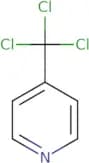
CAS:<p>2-Methoxyphenyl)(phenyl)methanol is a protonated molecule that becomes deuterium-labeled when it is treated with deuterium gas. The deuterium label can be used to measure the rate of proton transport in biological systems, including mitochondria and chloroplasts. 2-Methoxyphenyl)(phenyl)methanol has been shown to have a high yield of labeled product, which allows for the study of reactions involving carbonyl groups. This compound can also be used for labeling chalcones and other elements. It has been shown to catalyze benzene ring formation from phenol.</p>Formula:C14H14O2Purity:Min. 95%Molecular weight:214.26 g/mol4-(Trichloromethyl)pyridine
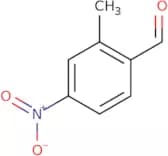
CAS:<p>4-(Trichloromethyl)pyridine is an organic compound that can be used as a pesticide. It is the main active ingredient in chloropicrin, which is used primarily for agricultural purposes to help protect crops from insect damage. 4-(Trichloromethyl)pyridine has been shown to have toxic effects on animals, including humans, and may cause adverse health effects such as headaches, nausea, vomiting and dizziness. The chemical reacts with hydrogen chloride in the presence of an organic solvent to form the chlorinated derivative of 4-chloropyridinol. The reactivity of 4-(trichloromethyl)pyridine towards nucleophilic inorganic bases has also been studied and it was found that it reacts with potassium hydroxide at room temperature to form a 1:1 mixture of 4-chloropyridinol and potassium chloride.</p>Formula:C6H4Cl3NPurity:Min. 95%Molecular weight:196.5 g/mol2-Methyl-4-nitrobenzaldehyde
CAS:<p>2-Methyl-4-nitrobenzaldehyde is an oxidizing agent that can be used as a phase transfer catalyst. It selectively transfers radicals from organic to inorganic systems and is used as a selective radical initiator or a transfer catalyst in high yield. 2-Methyl-4-nitrobenzaldehyde reacts with the chloride ion to produce an active radical, which will then react with the substrate to form products. It is typically used at refluxing temperatures and in the presence of a cocl2 phase transfer catalyst. 2-Methyl-4-nitrobenzoic acid is formed when 2-methyl-4-nitrobenzaldehyde is oxidized.</p>Formula:C8H7NO3Purity:Min. 95%Molecular weight:165.1 g/mol1,3-Dihydro-benzo[c]thiophene-5-sulfonamide 2,2-dioxide
CAS:<p>Versatile small molecule scaffold</p>Formula:C8H9NO4S2Purity:Min. 95%Molecular weight:247.3 g/mol1-Ethoxy-1-[(3-methylpent-1-en-4-yn-3-yl)oxy]ethane
CAS:<p>Versatile small molecule scaffold</p>Formula:C10H16O2Purity:Min. 95%Molecular weight:168.23 g/mol6-Bromo[1,2,5]thiadiazolo[3,4-b]pyridine
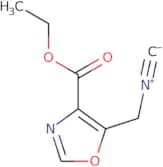
CAS:<p>Versatile small molecule scaffold</p>Formula:C5H2BrN3SPurity:Min. 95%Molecular weight:216.06 g/molEthyl 5-(isocyanomethyl)-1,3-oxazole-4-carboxylate
CAS:<p>Versatile small molecule scaffold</p>Formula:C8H8N2O3Purity:Min. 95%Molecular weight:180.16 g/molEthyl 4-hydroxypent-2-ynoate
CAS:<p>Versatile small molecule scaffold</p>Formula:C7H10O3Purity:Min. 95%Molecular weight:142.15 g/mol1-(4-Bromophenyl)-2-(pyridin-2-yl)ethan-1-one
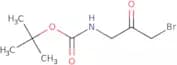
CAS:<p>Versatile small molecule scaffold</p>Formula:C13H10BrNOPurity:Min. 95%Molecular weight:276.13 g/moltert-Butyl N-(3-bromo-2-oxopropyl)carbamate
CAS:<p>Versatile small molecule scaffold</p>Formula:C8H14BrNO3Purity:Min. 95%Molecular weight:252.11 g/mol1-(4-Methylphenyl)-2-(pyridin-2-yl)ethan-1-one
CAS:<p>Versatile small molecule scaffold</p>Formula:C14H13NOPurity:Min. 95%Molecular weight:211.26 g/molMethyl 5-(furan-2-yl)-1H-pyrrole-2-carboxylate
CAS:<p>Versatile small molecule scaffold</p>Formula:C10H9NO3Purity:Min. 95%Molecular weight:191.18 g/mol5-(Furan-2-yl)-1H-pyrrole-2-carboxylic acid
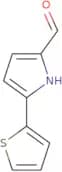
CAS:<p>Versatile small molecule scaffold</p>Formula:C9H7NO3Purity:Min. 95%Molecular weight:177.16 g/mol5-(Thiophen-2-yl)-1H-pyrrole-2-carbaldehyde
CAS:<p>Versatile small molecule scaffold</p>Formula:C9H7NOSPurity:Min. 95%Molecular weight:177.22 g/mol3-(2-Aminoethyl)-1,1-dimethylurea
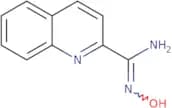
CAS:<p>Versatile small molecule scaffold</p>Formula:C5H13N3OPurity:Min. 95%Molecular weight:131.18 g/molN'-Hydroxyquinoline-2-carboximidamide
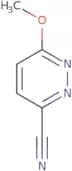
CAS:<p>N'-hydroxyquinoline-2-carboximidamide is a small molecule that was optimized for the treatment of cancer. It can bind to the DNA-dependent RNA polymerase, inhibiting transcription and replication. N'-hydroxyquinoline-2-carboximidamide selectively inhibits a hallmark signaling pathway in cancer cells, which leads to cell death. This compound has been shown to be effective in inhibiting the growth of tumor cells in various tissues including liver, lung, brain, and prostate. It also produces minimal side effects as it does not cross the blood brain barrier or enter the central nervous system.</p>Formula:C10H9N3OPurity:Min. 95%Molecular weight:187.2 g/mol6-methoxypyridazine-3-carbonitrile
CAS:<p>Versatile small molecule scaffold</p>Formula:C6H5N3OPurity:Min. 95%Molecular weight:135.12 g/mol7-oxa-2-azaspiro[4.5]decane
CAS:<p>Versatile small molecule scaffold</p>Formula:C8H15NOPurity:Min. 95%Molecular weight:141.2 g/mol2-Chloro-3,4-dimethylpyridine
CAS:<p>Versatile small molecule scaffold</p>Formula:C7H8ClNPurity:Min. 95%Molecular weight:141.6 g/mol6-Chloro-2,3-dimethylpyridine
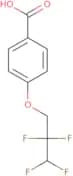
CAS:<p>Versatile small molecule scaffold</p>Formula:C7H8ClNPurity:Min. 95%Molecular weight:141.6 g/mol4-(2,2,3,3-Tetrafluoropropoxy)benzoic acid
CAS:<p>Versatile small molecule scaffold</p>Formula:C10H8F4O3Purity:Min. 95%Molecular weight:252.16 g/mol2-Amino-4-methoxybenzene-1-sulfonamide
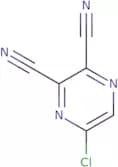
CAS:<p>Versatile small molecule scaffold</p>Formula:C7H10N2O3SPurity:Min. 95%Molecular weight:202.23 g/mol5-Chloropyrazine-2,3-dicarbonitrile
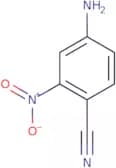
CAS:<p>5-Chloropyrazine-2,3-dicarbonitrile (5CPD) is an organochlorine compound that is used as a chlorinating agent in the production of alkyl and aralkyl chlorides. 5CPD is a monofunctional reagent that can also be used for the synthesis of furyl and thionyl chloride.</p>Formula:C6HClN4Purity:Min. 95%Molecular weight:164.55 g/mol4-Amino-2-nitrobenzonitrile
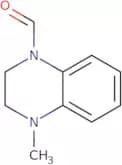
CAS:Versatile small molecule scaffoldFormula:C7H5N3O2Purity:Min. 95%Molecular weight:163.13 g/mol4-Methyl-3,4-dihydroquinoxaline-1(2H)-carbaldehyde
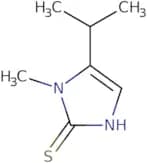
CAS:<p>Versatile small molecule scaffold</p>Formula:C10H12N2OPurity:Min. 95%Molecular weight:176.21 g/mol1-Methyl-5-(propan-2-yl)-1H-imidazole-2-thiol
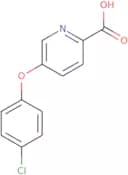
CAS:<p>Versatile small molecule scaffold</p>Formula:C7H12N2SPurity:Min. 95%Molecular weight:156.25 g/mol5-(4-Chlorophenoxy)pyridine-2-carboxylic acid
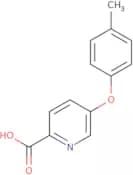
CAS:<p>Versatile small molecule scaffold</p>Formula:C12H8ClNO3Purity:Min. 95%Molecular weight:249.65 g/mol5-(4-Methylphenoxy)pyridine-2-carboxylic acid
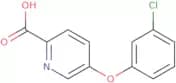
CAS:<p>Versatile small molecule scaffold</p>Formula:C13H11NO3Purity:Min. 95%Molecular weight:229.23 g/mol5-(3-Chlorophenoxy)pyridine-2-carboxylic acid
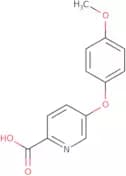
CAS:<p>Versatile small molecule scaffold</p>Formula:C12H8ClNO3Purity:Min. 95%Molecular weight:249.65 g/mol5-(4-Methoxyphenoxy)pyridine-2-carboxylic acid
CAS:<p>Versatile small molecule scaffold</p>Formula:C13H11NO4Purity:Min. 95%Molecular weight:245.23 g/mol[1-(Cyclohexylmethyl)pyrrolidin-2-yl]methanamine
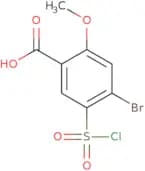
CAS:<p>Versatile small molecule scaffold</p>Formula:C12H24N2Purity:Min. 95%Molecular weight:196.33 g/mol4-Bromo-5-(chlorosulfonyl)-2-methoxybenzoic acid
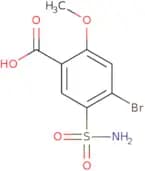
CAS:<p>Versatile small molecule scaffold</p>Formula:C8H6BrClO5SPurity:Min. 95%Molecular weight:329.55 g/mol4-Bromo-2-methoxy-5-sulfamoylbenzoic acid
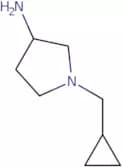
CAS:<p>Versatile small molecule scaffold</p>Formula:C8H8BrNO5SPurity:Min. 95%Molecular weight:310.12 g/mol1-(Cyclopropylmethyl)pyrrolidin-3-amine
CAS:<p>Versatile small molecule scaffold</p>Formula:C8H16N2Purity:Min. 95%Molecular weight:140.23 g/mol2H-[1,3]Dioxolo[4,5-b]pyridine
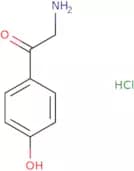
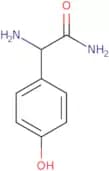
CAS:<p>Versatile small molecule scaffold</p>Formula:C6H5NO2Purity:Min. 95%Molecular weight:123.11 g/mol2-Amino-2-(4-hydroxyphenyl)acetamide hydrochloride
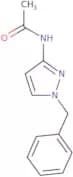
CAS:<p>2-Amino-2-(4-hydroxy-phenyl)-acetamide is a research chemical that belongs to the amide family. It is commonly used in scientific studies and experiments. This compound, also known as glycinamide, has various applications in the field of chemistry and biology. Its unique structure makes it a valuable tool for researchers looking to explore new areas of study or develop innovative solutions. With its high purity and reliable quality, 2-Amino-2-(4-hydroxy-phenyl)-acetamide is an essential component for any laboratory or research facility.</p>Formula:C8H10N2O2HClPurity:Min. 95%Molecular weight:202.64 g/molN-(1-Benzyl-1H-pyrazol-3-yl)acetamide
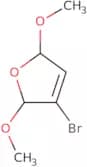
CAS:<p>Versatile small molecule scaffold</p>Formula:C12H13N3OPurity:Min. 95%Molecular weight:215.25 g/mol3-Bromo-2,5-dimethoxy-2,5-dihydrofuran
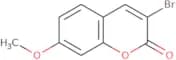
CAS:<p>Versatile small molecule scaffold</p>Formula:C6H9BrO3Purity:Min. 95%Molecular weight:209.04 g/mol3-Bromo-7-methoxy-2H-1-benzopyran-2-one
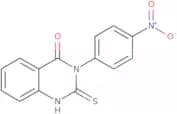
CAS:<p>3-Bromo-7-methoxy-2H-1-benzopyran-2-one is a coumarin derivative that has been shown to cause liver lesions in rats. The compound can also inhibit locomotor activity, as well as have a significant effect on the levels of serum prolactin. 3-Bromo-7-methoxy-2H-1-benzopyran-2-one is a ligand for the 5HT2 receptor, and it has been suggested that this may be due to its coordination geometry. In addition, 3BMOP binds to DNA with high affinity and specificity, which suggests that it could be used as an antitumor agent.</p>Formula:C10H7BrO3Purity:Min. 95%Molecular weight:255.06 g/mol3-(4-Nitrophenyl)-2-thioxo-2,3-dihydro-4(1H)-quinazolinone
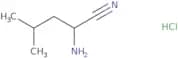
CAS:<p>Versatile small molecule scaffold</p>Formula:C14H9N3O3SPurity:Min. 95%Molecular weight:299.3 g/mol2-Amino-4-methylpentanenitrile hydrochloride
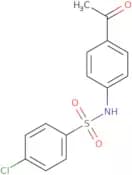
CAS:<p>Versatile small molecule scaffold</p>Formula:C6H12N2·HClPurity:Min. 95%Molecular weight:148.64 g/molN-(4-Acetylphenyl)-4-chlorobenzene-1-sulfonamide
CAS:Versatile small molecule scaffoldFormula:C14H12ClNO3SPurity:Min. 95%Molecular weight:309.8 g/mol[(Propan-2-yl)sulfamoyl]amine
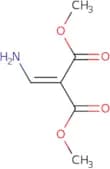
CAS:<p>[(Propan-2-yl)sulfamoyl]amine is a diphenyl ether, which is a type of aromatic hydrocarbon. It has a nitro group, phenyl groups and alkyl groups. This product also has a cycloalkyl ring with benzyl groups and hydrocarbon group. This compound is used as polymerization initiator in the production of polyacrylamide and other polymers. The [(propane-2-yl)sulfamoyl]amine can react with trifluoroacetic acid to form c1-4 alkyl sulfonic acid compounds. It can also react with urea derivatives to form bifunctional compounds that are used as plasticizers in plastics.</p>Formula:C3H10N2O2SPurity:Min. 95%Molecular weight:138.19 g/mol1,3-Dimethyl 2-(aminomethylidene)propanedioate
CAS:<p>1,3-Dimethyl 2-(aminomethylidene)propanedioate is an alkene that is used as a stabilizer for polymers. It can be found in the crystal structure of dimethyl.</p>Formula:C6H9NO4Purity:Min. 95%Molecular weight:159.14 g/mol(S)-1-Benzyl-2-methyl-4,4-difluoropyrrolidine-1,2-dicarboxylic acid
CAS:<p>Versatile small molecule scaffold</p>Formula:C14H15F2NO4Purity:Min. 95%Molecular weight:299.27 g/mol(S)-methyl 3-amino-2-hydroxypropanoate hydrochloride
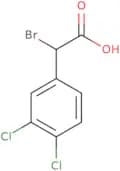
CAS:Versatile small molecule scaffoldFormula:C4H10ClNO3Purity:Min. 95%Molecular weight:155.6 g/mol2-Bromo-2-(3,4-dichlorophenyl)acetic acid
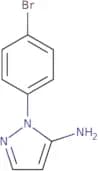
CAS:<p>Versatile small molecule scaffold</p>Formula:C8H5BrCl2O2Purity:Min. 95%Molecular weight:283.93 g/mol1-(4-Bromophenyl)-1H-pyrazol-5-amine
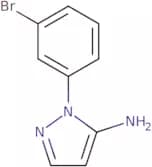
CAS:<p>Versatile small molecule scaffold</p>Formula:C9H8BrN3Purity:Min. 95%Molecular weight:238.08 g/mol1-(3-Bromophenyl)-1H-pyrazol-5-amine
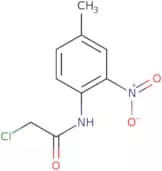
CAS:<p>Versatile small molecule scaffold</p>Formula:C9H8BrN3Purity:Min. 95%Molecular weight:238.08 g/mol2-Chloro-N-(4-methyl-2-nitrophenyl)acetamide
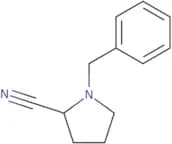
CAS:<p>Versatile small molecule scaffold</p>Formula:C9H9ClN2O3Purity:Min. 95%Molecular weight:228.63 g/mol1-Benzylpyrrolidine-2-carbonitrile
CAS:<p>Versatile small molecule scaffold</p>Formula:C12H14N2Purity:Min. 95%Molecular weight:186.25 g/mol2-[4-(Prop-2-en-1-yloxy)phenyl]acetic acid
CAS:<p>2-[4-(Prop-2-en-1-yloxy)phenyl]acetic acid, also known as propacetamol, is a nonsteroidal anti-inflammatory drug. It is an analgesic and a weak dehydrating agent. Propacetamol is used to relieve moderate or severe pain, such as that caused by headache, migraine, dental pain, or neuralgia. The chemical structure of propacetamol contains an ester which can be hydrolyzed to give the corresponding carboxylic acid and alcohol. 2-[4-(Prop-2-en-1-yloxy)phenyl]acetic acid has been shown to have antiplatelet properties and has been used to prevent thrombosis in patients undergoing coronary artery bypass grafting surgery. This drug also has the ability to inhibit epoxidation reactions that are catalyzed by cytochrome P450 enzymes.</p>Formula:C11H12O3Purity:Min. 95%Molecular weight:192.21 g/mol2-{4-[(Oxiran-2-yl)methoxy]phenyl}acetic acid
CAS:<p>2-{4-[(Oxiran-2-yl)methoxy]phenyl}acetic acid is an organic compound with the chemical formula CH3COCH2CH=OCH2C6H5. This white solid is a derivative of phenylacetic acid. It is used as a building block for the synthesis of esters, amides, and other derivatives. It can also be used to synthesize epoxides and amines by epoxidation or amine, respectively. 2-{4-[(Oxiran-2-yl)methoxy]phenyl}acetic acid has been shown to inhibit the growth of Pseudomonas aeruginosa and Staphylococcus aureus isolates. The ester group on this molecule may contribute to its anti-bacterial activity.</p>Formula:C11H12O4Purity:Min. 95%Molecular weight:208.21 g/mol3-(Chloromethyl)-5H,6H-imidazo[2,1-b][1,3]thiazole hydrochloride
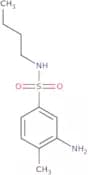
CAS:<p>Versatile small molecule scaffold</p>Formula:C6H8Cl2N2SPurity:Min. 95%Molecular weight:211.11 g/mol3-Amino-N-butyl-4-methylbenzenesulfonamide
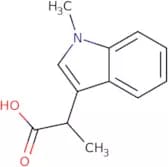
CAS:<p>Versatile small molecule scaffold</p>Formula:C11H18N2O2SPurity:Min. 95%Molecular weight:242.34 g/mol2-(1-Methyl-1H-indol-3-yl)propanoic acid
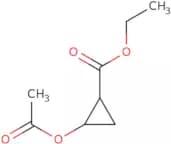
CAS:<p>Versatile small molecule scaffold</p>Formula:C12H13NO2Purity:Min. 95%Molecular weight:203.24 g/molethyl 2-(acetyloxy)cyclopropane-1-carboxylate
CAS:<p>Versatile small molecule scaffold</p>Formula:C8H12O4Purity:Min. 95%Molecular weight:172.17 g/molEthyl 2-oxabicyclo[4.1.0]heptane-7-carboxylate
CAS:<p>Versatile small molecule scaffold</p>Formula:C9H14O3Purity:Min. 95%Molecular weight:170.21 g/molN-[(4-Chlorophenyl)methyl]-4,5-dihydro-1,3-thiazol-2-amine
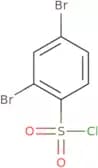
CAS:<p>Versatile small molecule scaffold</p>Formula:C10H11ClN2SPurity:Min. 95%Molecular weight:226.73 g/mol2,4-Dibromobenzenesulphonyl chloride
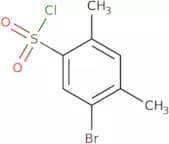
CAS:<p>Versatile small molecule scaffold</p>Formula:C6H3Br2ClO2SPurity:Min. 95%Molecular weight:334.41 g/mol5-Bromo-2,4-dimethylbenzenesulfonyl chloride
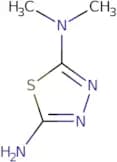
CAS:<p>Versatile small molecule scaffold</p>Formula:C8H8BrClO2SPurity:Min. 95%Molecular weight:283.56 g/molN2,N2-Dimethyl-1,3,4-thiadiazole-2,5-diamine
CAS:<p>Versatile small molecule scaffold</p>Formula:C4H8N4SPurity:Min. 95%Molecular weight:144.2 g/molMethoxy[1-(3-nitrophenyl)ethylidene]amine
CAS:<p>Versatile small molecule scaffold</p>Formula:C9H10N2O3Purity:Min. 95%Molecular weight:194.19 g/molN-{[(4-Chlorophenyl)carbamothioyl]amino}-2-phenylacetamide
CAS:<p>N-{[(4-Chlorophenyl)carbamothioyl]amino}-2-phenylacetamide is a small molecule that has been shown to be expressed in mammalian cells. It binds to the target enzyme and stabilizes the protein, which prevents it from denaturing. N-{[(4-Chlorophenyl)carbamothioyl]amino}-2-phenylacetamide has been shown to have beneficial effects on metabolic disorders such as aciduria and can be used as a chaperone when treating life threatening diseases. Structural analysis of this compound reveals coordination chemistry interactions with galactose.</p>Formula:C15H14ClN3OSPurity:Min. 95%Molecular weight:319.8 g/mol1-{4-[(2-Methylphenyl)methoxy]phenyl}ethan-1-one
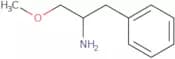
CAS:<p>1-{4-[(2-Methylphenyl)methoxy]phenyl}ethan-1-one is a small molecule that has been shown to inhibit the activity of ion channels. It binds to the receptor site, which is located on the outside of the cell membrane. This binding prevents the passage of ions through the channel, thereby preventing electrical signals from being transmitted by ligand gated ion channels. 1-{4-[(2-Methylphenyl)methoxy]phenyl}ethan-1-one is also an inhibitor of peptides and can be used as a research tool in cell biology and as an antibody in immunology.</p>Formula:C16H16O2Purity:Min. 95%Molecular weight:240.3 g/mol1-Methoxy-3-phenylpropan-2-amine
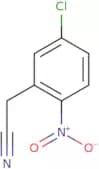
CAS:<p>Versatile small molecule scaffold</p>Formula:C10H15NOPurity:Min. 95%Molecular weight:165.23 g/mol2-(5-Chloro-2-nitrophenyl)acetonitrile
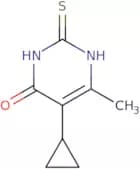
CAS:<p>2-(5-Chloro-2-nitrophenyl)acetonitrile is a n-oxide and carbanion that has been used as a model for the study of acrylonitrile. 2-(5-Chloro-2-nitrophenyl)acetonitrile can be synthesized by nitrating aniline with nitric acid, followed by oxidation with potassium permanganate. The resulting product is then reacted with acrylonitrile in the presence of an acid to form 2-(5-chloro-2-nitrophenyl)acrylonitrile. This compound is unstable and decomposes when it is heated to 150 degrees Celsius.</p>Formula:C8H5ClN2O2Purity:Min. 95%Molecular weight:196.59 g/mol5-Cyclopropyl-6-methyl-2-sulfanyl-1,4-dihydropyrimidin-4-one
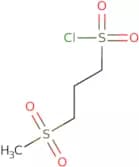
CAS:<p>Versatile small molecule scaffold</p>Formula:C8H10N2OSPurity:Min. 95%Molecular weight:182.25 g/mol3-Methanesulfonylpropane-1-sulfonyl chloride
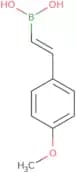
CAS:Versatile small molecule scaffoldFormula:C4H9ClO4S2Purity:Min. 95%Molecular weight:220.7 g/moltrans-2-(4-Methoxyphenyl)vinylboronic acid
CAS:<p>Versatile small molecule scaffold</p>Formula:C9H11BO3Purity:Min. 95%Molecular weight:177.99 g/mol5-Cyclobutyl-2-sulfanylidene-1,2,3,4-tetrahydropyrimidin-4-one
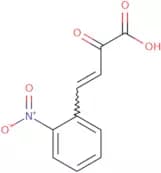
CAS:<p>Versatile small molecule scaffold</p>Formula:C8H10N2OSPurity:Min. 95%Molecular weight:182.2 g/mol4-(2-Nitrophenyl)-2-oxobut-3-enoic acid
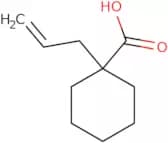
CAS:<p>4-(2-Nitrophenyl)-2-oxobut-3-enoic acid is an asymmetric synthesis of benazepril, a drug used to treat congestive heart failure. It is synthesized from formate and formaldehyde. The synthesis of 4-(2-nitrophenyl)-2-oxobut-3-enoic acid has been shown to be effective in reducing the severity of congestive heart failure in rats by inhibiting the production of l-glutamate. This compound also inhibits transamination reactions and glutamate dehydrogenase, which are enzymes that are involved in ammonia detoxification.</p>Formula:C10H7NO5Purity:Min. 95%Molecular weight:221.17 g/mol1-(Prop-2-en-1-yl)cyclohexane-1-carboxylic acid
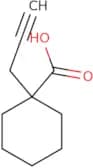
CAS:<p>1-(Prop-2-en-1-yl)cyclohexane-1-carboxylic acid is a functionalized, chloride salt. It has been shown to be an allylating agent in the presence of ultrasonication.</p>Formula:C10H16O2Purity:Min. 95%Molecular weight:168.23 g/mol1-(Prop-2-yn-1-yl)cyclohexane-1-carboxylic acid
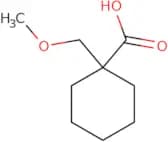
CAS:<p>Versatile small molecule scaffold</p>Formula:C10H14O2Purity:Min. 95%Molecular weight:166.22 g/mol1-(Methoxymethyl)cyclohexane-1-carboxylic acid
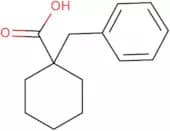
CAS:<p>Versatile small molecule scaffold</p>Formula:C9H16O3Purity:Min. 95%Molecular weight:172.22 g/mol1-Benzyl-1-cyclohexanecarboxylic acid
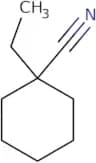
CAS:<p>Versatile small molecule scaffold</p>Formula:C14H18O2Purity:Min. 95%Molecular weight:218.29 g/mol1-Ethylcyclohexane-1-carbonitrile
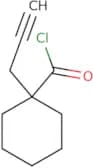
CAS:<p>Versatile small molecule scaffold</p>Formula:C9H15NPurity:Min. 95%Molecular weight:137.22 g/mol1-(Prop-2-yn-1-yl)cyclohexane-1-carbonyl chloride
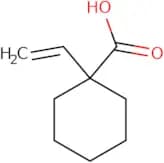
CAS:<p>Versatile small molecule scaffold</p>Formula:C10H13ClOPurity:Min. 95%Molecular weight:184.66 g/mol1-Ethenylcyclohexane-1-carboxylic acid
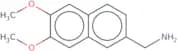
CAS:<p>Versatile small molecule scaffold</p>Formula:C9H14O2Purity:Min. 95%Molecular weight:154.2 g/mol(6,7-Dimethoxynaphthalen-2-yl)methanamine
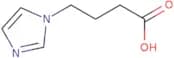
CAS:<p>Versatile small molecule scaffold</p>Formula:C13H15NO2Purity:Min. 95%Molecular weight:217.3 g/mol4-Imidazol-1-yl-butyric acid
CAS:<p>4-Imidazol-1-yl-butyric acid is a coordination polymer with a carboxylate group. It can be synthesized by the reaction of butyric acid with isopropoxide in the presence of titanium tetrachloride and benzimidazole. The resulting product has a dimerization ability, which allows it to bind to metal ions. This binding leads to chelation and polymerization, which have been shown to have many applications, including pharmaceuticals and biomedicine.</p>Formula:C7H10N2O2Purity:Min. 95%Molecular weight:154.17 g/mol4-Difluoromethoxy-benzoic acid methyl ester
CAS:<p>Versatile small molecule scaffold</p>Formula:C9H8F2O3Purity:Min. 95%Molecular weight:202.16 g/molMethyl 2,4-bis(difluoromethoxy)benzoate
CAS:<p>Versatile small molecule scaffold</p>Formula:C10H8F4O4Purity:Min. 95%Molecular weight:268.16 g/mol2,4-Bis(difluoromethoxy)benzoic acid
CAS:<p>Versatile small molecule scaffold</p>Formula:C9H6F4O4Purity:Min. 95%Molecular weight:254.13 g/molChlorsulfaquinoxaline
CAS:<p>Chlorsulfaquinoxaline is a chiral sulfonamide that inhibits the activity of cyclooxygenase-2 (COX-2) and 5-lipoxygenase. It has been shown to inhibit tumor growth in animal models of metastatic colorectal cancer as well as bowel disease. In addition, Chlorsulfaquinoxaline has been shown to have clinical relevance for inflammatory bowel disease and primary sclerosing cholangitis.<br>Chlorsulfaquinoxaline is an inhibitor of the COX-2 and 5-lipoxygenase enzymes, which are key enzymes in prostaglandin synthesis. It has been shown to inhibit tumor growth in animal models of metastatic colorectal cancer as well as bowel disease. In addition, Chlorsulfaquinoxaline has been shown to have clinical relevance for inflammatory bowel disease and primary sclerosing cholangitis.</p>Formula:C14H11ClN4O2SPurity:Min. 95%Molecular weight:334.8 g/mol4-(Trifluoromethyl)isatoic anhydride
CAS:<p>Versatile small molecule scaffold</p>Formula:C9H4F3NO3Purity:Min. 95%Molecular weight:231.13 g/molMethyl 9H-carbazole-3-carboxylate
CAS:<p>Methyl 9H-carbazole-3-carboxylate is a copper compound that reacts with boronic acids in the presence of a catalyst to form cross-coupling products. It can also be used for the synthesis of carbazoles, which are important for their ability to bind to copper. The reaction is highly selective and does not require harsh conditions or catalysts. Methyl 9H-carbazole-3-carboxylate has been shown to react with uracil, forming an arylation product in vivo at physiological temperature and pH. This reaction has been shown to have potential as a treatment for cervical cancer.</p>Formula:C14H11NO2Purity:Min. 95%Molecular weight:225.24 g/mol1,1-Dimethyl 2-methylcyclopropane-1,1-dicarboxylate
CAS:<p>Versatile small molecule scaffold</p>Formula:C8H12O4Purity:Min. 95%Molecular weight:172.18 g/mol3-bromo-2-methylpyridin-4-amine
CAS:<p>Versatile small molecule scaffold</p>Formula:C6H7BrN2Purity:Min. 95%Molecular weight:187 g/mol5-Chloro-2-methylpyridin-4-amine
CAS:<p>Versatile small molecule scaffold</p>Formula:C6H7ClN2Purity:Min. 95%Molecular weight:142.59 g/mol2-Chloro-5-methyl-4-nitropyridine
CAS:<p>2-Chloro-5-methyl-4-nitropyridine is a compound that has an intense yellow color. It has the chemical formula of C6H3ClN2O2. This molecule belongs to the group of heterocyclic compounds and contains a nitrogen atom with two substituents, one chloro, and one methyl group. The energy levels for this molecule are determined by its transition energies, which vary depending on the substitution patterns and electronic spectra. For example, if it has substituents at the 2 position, then its uv spectrum will have a maximum in the region of 230 nm. The electronic spectra for this molecule is characterized by transitions from the singlet state to the triplet state. In addition to these properties, 2-chloro-5-methyl-4-nitropyridine possesses n-oxides as well as an electron spin resonance (ESR) spectrum that contains peaks at g = 3/2 and g</p>Formula:C6H5ClN2O2Purity:Min. 95%Molecular weight:172.57 g/mol2-(Difluoromethoxy)-1-fluoro-4-nitro-benzene
CAS:<p>Versatile small molecule scaffold</p>Formula:C7H4F3NO3Purity:Min. 95%Molecular weight:207.11 g/mol3-(Difluoromethoxy)-4-methoxyaniline
CAS:<p>Versatile small molecule scaffold</p>Formula:C8H9F2NO2Purity:Min. 95%Molecular weight:189.16 g/mol2-(2-Cyclohexyl-1H-1,3-benzodiazol-1-yl)acetic acid
CAS:<p>Versatile small molecule scaffold</p>Formula:C15H18N2O2Purity:Min. 95%Molecular weight:258.32 g/molN,6-Dimethylpyridin-2-amine
CAS:<p>Versatile small molecule scaffold</p>Formula:C7H10N2Purity:Min. 95%Molecular weight:122.17 g/molDiethyl (1-amino-2,2,2-trifluoroethyl)phosphonate hydrochloride
CAS:<p>Versatile small molecule scaffold</p>Formula:C6H14ClF3NO3PPurity:Min. 95%Molecular weight:271.6 g/mol1-(5-Amino-2,3-dihydro-1H-isoindol-2-yl)ethan-1-one
CAS:<p>Versatile small molecule scaffold</p>Formula:C10H12N2OPurity:Min. 95%Molecular weight:176.21 g/mol3-[Benzyl(phenyl)sulfamoyl]benzoic acid
CAS:<p>3-[Benzyl(phenyl)sulfamoyl]benzoic acid is an analytical standard that can be used in the quality control of natural products. It is a secondary metabolite of plants, which are bioactive and may have medicinal properties. 3-[Benzyl(phenyl)sulfamoyl]benzoic acid is also a reference material for high purity and screening.</p>Formula:C20H17NO4SPurity:Min. 95%Molecular weight:367.4 g/mol4-(Morpholine-4-sulfonyl)-2-nitrophenol
CAS:<p>4-(Morpholine-4-sulfonyl)-2-nitrophenol is an analytical standard that is used as a reference material for the determination of purity and quality of other compounds. It has been isolated from plants and is a secondary metabolite. 4-(Morpholine-4-sulfonyl)-2-nitrophenol also acts as a plant derived phytochemical that can be used to study the chemical properties, biological activities, and chemical structures of natural products. This compound can be used in research and development by pharmaceutical companies to synthesize new drugs or as HPLC standards for quality control.</p>Formula:C10H12N2O6SPurity:Min. 95%Molecular weight:288.28 g/mol3-[2,5-Bis(trifluoromethyl)phenyl]-2-sulfanyl-3,4-dihydroquinazolin-4-one
CAS:<p>Versatile small molecule scaffold</p>Formula:C16H8F6N2OSPurity:Min. 95%Molecular weight:390.3 g/mol4-(2-Fluorophenyl)-5-(4-methoxyphenyl)-4H-1,2,4-triazole-3-thiol
CAS:<p>Versatile small molecule scaffold</p>Formula:C15H12FN3OSPurity:Min. 95%Molecular weight:301.3 g/mol6-Amino-1-benzyl-5-[(3-methylbutyl)amino]-1,2,3,4-tetrahydropyrimidine-2,4-dione
CAS:<p>Versatile small molecule scaffold</p>Formula:C16H22N4O2Purity:Min. 95%Molecular weight:302.37 g/mol6-Amino-1-benzyl-5-[(3-methoxypropyl)amino]-1,2,3,4-tetrahydropyrimidine-2,4-dione
CAS:<p>Versatile small molecule scaffold</p>Formula:C15H20N4O3Purity:Min. 95%Molecular weight:304.34 g/mol6-Amino-1-benzyl-5-[(2-methoxyethyl)amino]-1,2,3,4-tetrahydropyrimidine-2,4-dione
CAS:<p>Versatile small molecule scaffold</p>Formula:C14H18N4O3Purity:Min. 95%Molecular weight:290.32 g/mol1-(2,3,5,6-Tetramethylbenzenesulfonyl)piperidine-4-carboxylic acid
CAS:<p>Versatile small molecule scaffold</p>Formula:C16H23NO4SPurity:Min. 95%Molecular weight:325.4 g/mol1-(2-Methyl-5-nitrobenzenesulfonyl)piperidine-4-carboxylic acid
CAS:<p>Versatile small molecule scaffold</p>Formula:C13H16N2O6SPurity:Min. 95%Molecular weight:328.34 g/mol3-{[(1,3-Dioxaindan-5-yl)methyl]sulfamoyl}benzoic acid
CAS:<p>Versatile small molecule scaffold</p>Formula:C15H13NO6SPurity:Min. 95%Molecular weight:335.3 g/molN-[(2-Chlorophenyl)methyl]-2-fluorobenzene-1-sulfonamide
CAS:<p>Versatile small molecule scaffold</p>Formula:C13H11ClFNO2SPurity:Min. 95%Molecular weight:299.75 g/molethyl (cyclopropylamino)(oxo)acetate
CAS:<p>Versatile small molecule scaffold</p>Formula:C7H11NO3Purity:Min. 95%Molecular weight:157.16 g/mol4-Methoxy-3-(3-methylbutoxy)benzaldehyde
CAS:<p>Versatile small molecule scaffold</p>Formula:C13H18O3Purity:Min. 95%Molecular weight:222.28 g/mol2-Chloro-N-cyclopropyl-N-methylacetamide
CAS:<p>Versatile small molecule scaffold</p>Formula:C6H10ClNOPurity:Min. 95%Molecular weight:147.6 g/mol2-Amino-4-(pyrrolidin-1-yl)pyridine
CAS:<p>2-Amino-4-(pyrrolidin-1-yl)pyridine is a reagent used in the 1,3-dipolar cycloaddition reaction with an electron donor such as an ether or enol ether. It has been shown to be useful in the synthesis of imidazopyridines and cyclocondensation reactions. This compound can also be used for the synthesis of heterocycles by coupling two different molecules together.</p>Formula:C9H13N3Purity:Min. 95%Molecular weight:163.22 g/mol3-(1H-Pyrazol-5-yl)-1H-pyrazol-5-amine
CAS:<p>Versatile small molecule scaffold</p>Formula:C6H7N5Purity:Min. 95%Molecular weight:149.15 g/mol3-Amino-N-[2-(dimethylamino)ethyl]-1H-pyrazole-5-carboxamide
CAS:<p>Versatile small molecule scaffold</p>Formula:C8H15N5OPurity:Min. 95%Molecular weight:197.24 g/mol5-(Piperidin-1-ylcarbonyl)-1H-pyrazol-3-amine
CAS:<p>Versatile small molecule scaffold</p>Formula:C9H14N4OPurity:Min. 95%Molecular weight:194.23 g/mol5-(1H-1,3-Benzodiazol-2-yl)-1H-pyrazol-3-amine
CAS:<p>Versatile small molecule scaffold</p>Formula:C10H9N5Purity:Min. 95%Molecular weight:199.21 g/mol2-(1,2,3,6-Tetrahydropyridin-4-yl)pyridine dihydrochloride
CAS:<p>Versatile small molecule scaffold</p>Formula:C10H14Cl2N2Purity:Min. 95%Molecular weight:233.13 g/mol{5-Chlorofuro[3,2-b]pyridin-2-yl}methanol
CAS:<p>Versatile small molecule scaffold</p>Formula:C8H6ClNO2Purity:Min. 95%Molecular weight:183.59 g/mol2-{[(tert-Butoxy)carbonyl](propyl)amino}propanoic acid
CAS:<p>Versatile small molecule scaffold</p>Formula:C11H21NO4Purity:Min. 95%Molecular weight:231.29 g/molMethyl 3-amino-5,7-dimethyladamantane-1-carboxylate hydrochloride
CAS:<p>Versatile small molecule scaffold</p>Formula:C14H24ClNO2Purity:Min. 95%Molecular weight:273.8 g/mol2-Amino-3,3,3-trifluoro-2-methylpropanamide
CAS:<p>Versatile small molecule scaffold</p>Formula:C4H7F3N2OPurity:Min. 95%Molecular weight:156.11 g/mol[(2S)-1-(Benzenesulfonyl)pyrrolidin-2-yl]methanol
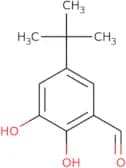
CAS:<p>Versatile small molecule scaffold</p>Formula:C11H15NO3SPurity:Min. 95%Molecular weight:241.31 g/mol5-tert-Butyl-2,3-dihydroxybenzaldehyde
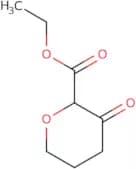
CAS:<p>Versatile small molecule scaffold</p>Formula:C11H14O3Purity:Min. 95%Molecular weight:194.23 g/molEthyl 3-oxotetrahydropyran-2-carboxylate
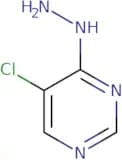
CAS:<p>Versatile small molecule scaffold</p>Formula:C8H12O4Purity:Min. 95%Molecular weight:172.18 g/mol5-Chloro-4-hydrazinylpyrimidine
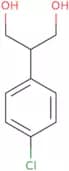
CAS:<p>5-Chloro-4-hydrazinylpyrimidine is a versatile compound used in various fields such as steroid synthesis, coumarins production, perfluoroalkyl compound research, and organic synthesis. It is commonly used as a building block in the synthesis of pyrimidine derivatives. Researchers also utilize this compound for the development of new drugs and chemicals.</p>Formula:C4H5N4ClPurity:Min. 95%Molecular weight:144.56 g/mol2-(4-Chlorophenyl)propane-1,3-diol
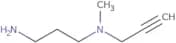
CAS:<p>Versatile small molecule scaffold</p>Formula:C9H11ClO2Purity:Min. 95%Molecular weight:186.63 g/mol(3-Aminopropyl)(methyl)(prop-2-yn-1-yl)amine
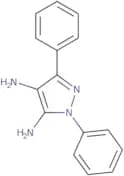
CAS:<p>Versatile small molecule scaffold</p>Formula:C7H14N2Purity:Min. 95%Molecular weight:126.2 g/molDiphenyl-1H-pyrazole-4,5-diamine
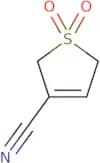
CAS:<p>Versatile small molecule scaffold</p>Formula:C15H14N4Purity:Min. 95%Molecular weight:250.3 g/mol3-Cyano-2,5-dihydrothiophene-1,1-dioxide
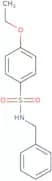
CAS:<p>Versatile small molecule scaffold</p>Formula:C5H5NO2SPurity:Min. 95%Molecular weight:143.17 g/molN-Benzyl-4-ethoxybenzene-1-sulfonamide
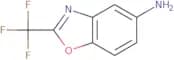
CAS:<p>Versatile small molecule scaffold</p>Formula:C15H17NO3SPurity:Min. 95%Molecular weight:291.4 g/mol2-(Trifluoromethyl)-1,3-benzoxazol-5-amine
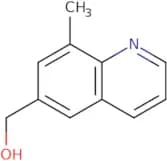
CAS:<p>Versatile small molecule scaffold</p>Formula:C8H5F3N2OPurity:Min. 95%Molecular weight:202.13 g/mol(8-Methylquinolin-6-yl)methanol
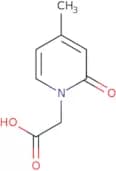
CAS:<p>Versatile small molecule scaffold</p>Formula:C11H11NOPurity:Min. 95%Molecular weight:173.21 g/mol2-(4-Methyl-2-oxo-1,2-dihydropyridin-1-yl)acetic acid
CAS:<p>Versatile small molecule scaffold</p>Formula:C8H9NO3Purity:Min. 95%Molecular weight:167.16 g/mol(2R)-1-(Benzenesulfonyl)pyrrolidine-2-carboxylic acid
CAS:<p>Versatile small molecule scaffold</p>Formula:C11H13NO4SPurity:Min. 95%Molecular weight:255.29 g/mol(2S)-3-azido-2-{[(tert-butoxy)carbonyl]amino}propanoic acid
CAS:<p>Versatile small molecule scaffold</p>Formula:C8H14N4O4Purity:Min. 95%Molecular weight:230.2 g/mol2-(4-Bromophenyl)-1,1,1-trifluoropropan-2-ol
CAS:<p>Versatile small molecule scaffold</p>Formula:C9H8OF3BrPurity:Min. 95%Molecular weight:269.05 g/mol2-(3-Bromophenyl)-1,1,1-trifluoropropan-2-ol
CAS:<p>Versatile small molecule scaffold</p>Formula:C9H8BrF3OPurity:Min. 95%Molecular weight:269.06 g/mol2,2-Dimethyl-2H,3H,4H-pyrano[2,3-b]pyridin-4-one
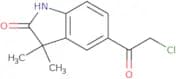
CAS:<p>Versatile small molecule scaffold</p>Formula:C10H11NO2Purity:Min. 95%Molecular weight:177.2 g/mol5-(2-Chloroacetyl)-3,3-dimethyl-2,3-dihydro-1H-indol-2-one
CAS:<p>Versatile small molecule scaffold</p>Formula:C12H12ClNO2Purity:Min. 95%Molecular weight:237.68 g/molMethyl 3-methyl-2-oxo-2,3-dihydro-1H-indole-3-carboxylate
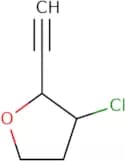
CAS:<p>Versatile small molecule scaffold</p>Formula:C11H11NO3Purity:Min. 95%Molecular weight:205.2 g/molrac-(2R,3R)-3-Chloro-2-ethynyloxolane
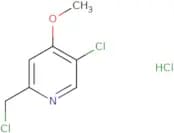
CAS:<p>Versatile small molecule scaffold</p>Formula:C6H7ClOPurity:Min. 95%Molecular weight:130.57 g/mol5-Chloro-2-(chloromethyl)-4-methoxypyridine hydrochloride
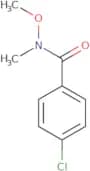
CAS:<p>Versatile small molecule scaffold</p>Formula:C7H8Cl3NOPurity:Min. 95%Molecular weight:228.5 g/mol4-Chloro-N-methoxy-N-methylbenzamide
CAS:<p>Versatile small molecule scaffold</p>Formula:C9H10ClNO2Purity:Min. 95%Molecular weight:199.63 g/mol

![2-({4-[(Carboxymethyl)carbamoyl]phenyl}formamido)acetic acid](/_next/image/?url=https%3A%2Fstatic.cymitquimica.com%2Fproducts%2F3D%2Fthumb-webp%2FXAA57894.webp&w=3840&q=75)
![3-{Bicyclo[2.2.1]heptan-2-yl}propanoic acid](/_next/image/?url=https%3A%2Fstatic.cymitquimica.com%2Fproducts%2F3D%2Fthumb-webp%2FXAA63741.webp&w=3840&q=75)
![tert-Butyl[(4-methoxyphenyl)methyl]amine](/_next/image/?url=https%3A%2Fstatic.cymitquimica.com%2Fproducts%2F3D%2Fthumb-webp%2FXAA67583.webp&w=3840&q=75)

![N-[4-(2,5-Dioxoimidazolidin-4-yl)phenyl]acetamide](/_next/image/?url=https%3A%2Fstatic.cymitquimica.com%2Fproducts%2F3D%2Fthumb-webp%2FXAA70608.webp&w=3840&q=75)

![6-Bromo-1-methyl-1H-benzo[D][1,3]oxazine-2,4-dione](/_next/image/?url=https%3A%2Fstatic.cymitquimica.com%2Fproducts%2F3D%2Fthumb-webp%2FXAA72117.webp&w=3840&q=75)
![2-{[(2E)-3-(4-Methoxyphenyl)prop-2-enoyl]amino}benzoic acid](/_next/image/?url=https%3A%2Fstatic.cymitquimica.com%2Fproducts%2F3D%2Fthumb-webp%2FXAA78032.webp&w=3840&q=75)
![1,3-Dihydro-benzo[c]thiophene-5-sulfonamide 2,2-dioxide](/_next/image/?url=https%3A%2Fstatic.cymitquimica.com%2Fproducts%2F3D%2Fthumb-webp%2FXCA00745.webp&w=3840&q=75)
![1-Ethoxy-1-[(3-methylpent-1-en-4-yn-3-yl)oxy]ethane](/_next/image/?url=https%3A%2Fstatic.cymitquimica.com%2Fproducts%2F3D%2Fthumb-webp%2FXCA00825.webp&w=3840&q=75)
![6-Bromo[1,2,5]thiadiazolo[3,4-b]pyridine](/_next/image/?url=https%3A%2Fstatic.cymitquimica.com%2Fproducts%2F3D%2Fthumb-webp%2FXCA02375.webp&w=3840&q=75)





![7-oxa-2-azaspiro[4.5]decane](/_next/image/?url=https%3A%2Fstatic.cymitquimica.com%2Fproducts%2F3D%2Fthumb-webp%2FXCA08842.webp&w=3840&q=75)


![[1-(Cyclohexylmethyl)pyrrolidin-2-yl]methanamine](/_next/image/?url=https%3A%2Fstatic.cymitquimica.com%2Fproducts%2F3D%2Fthumb-webp%2FXCA13532.webp&w=3840&q=75)
![2H-[1,3]Dioxolo[4,5-b]pyridine](/_next/image/?url=https%3A%2Fstatic.cymitquimica.com%2Fproducts%2F3D%2Fthumb-webp%2FXCA13873.webp&w=3840&q=75)
![[(Propan-2-yl)sulfamoyl]amine](/_next/image/?url=https%3A%2Fstatic.cymitquimica.com%2Fproducts%2F3D%2Fthumb-webp%2FXCA17985.webp&w=3840&q=75)


![2-[4-(Prop-2-en-1-yloxy)phenyl]acetic acid](/_next/image/?url=https%3A%2Fstatic.cymitquimica.com%2Fproducts%2F3D%2Fthumb-webp%2FXCA22422.webp&w=3840&q=75)
![2-{4-[(Oxiran-2-yl)methoxy]phenyl}acetic acid](/_next/image/?url=https%3A%2Fstatic.cymitquimica.com%2Fproducts%2F3D%2Fthumb-webp%2FXCA22425.webp&w=3840&q=75)
![3-(Chloromethyl)-5H,6H-imidazo[2,1-b][1,3]thiazole hydrochloride](/_next/image/?url=https%3A%2Fstatic.cymitquimica.com%2Fproducts%2F3D%2Fthumb-webp%2FXCA22461.webp&w=3840&q=75)
![Ethyl 2-oxabicyclo[4.1.0]heptane-7-carboxylate](/_next/image/?url=https%3A%2Fstatic.cymitquimica.com%2Fproducts%2F3D%2Fthumb-webp%2FXCA22908.webp&w=3840&q=75)
![N-[(4-Chlorophenyl)methyl]-4,5-dihydro-1,3-thiazol-2-amine](/_next/image/?url=https%3A%2Fstatic.cymitquimica.com%2Fproducts%2F3D%2Fthumb-webp%2FXCA23929.webp&w=3840&q=75)
![Methoxy[1-(3-nitrophenyl)ethylidene]amine](/_next/image/?url=https%3A%2Fstatic.cymitquimica.com%2Fproducts%2F3D%2Fthumb-webp%2FXCA27809.webp&w=3840&q=75)
![N-{[(4-Chlorophenyl)carbamothioyl]amino}-2-phenylacetamide](/_next/image/?url=https%3A%2Fstatic.cymitquimica.com%2Fproducts%2F3D%2Fthumb-webp%2FXCA29365.webp&w=3840&q=75)
![1-{4-[(2-Methylphenyl)methoxy]phenyl}ethan-1-one](/_next/image/?url=https%3A%2Fstatic.cymitquimica.com%2Fproducts%2F3D%2Fthumb-webp%2FXCA29394.webp&w=3840&q=75)



![3-[Benzyl(phenyl)sulfamoyl]benzoic acid](/_next/image/?url=https%3A%2Fstatic.cymitquimica.com%2Fproducts%2F3D%2Fthumb-webp%2FXDB46444.webp&w=3840&q=75)

![3-[2,5-Bis(trifluoromethyl)phenyl]-2-sulfanyl-3,4-dihydroquinazolin-4-one](/_next/image/?url=https%3A%2Fstatic.cymitquimica.com%2Fproducts%2F3D%2Fthumb-webp%2FXDB46584.webp&w=3840&q=75)

![6-Amino-1-benzyl-5-[(3-methylbutyl)amino]-1,2,3,4-tetrahydropyrimidine-2,4-dione](/_next/image/?url=https%3A%2Fstatic.cymitquimica.com%2Fproducts%2F3D%2Fthumb-webp%2FXDB47186.webp&w=3840&q=75)
![6-Amino-1-benzyl-5-[(3-methoxypropyl)amino]-1,2,3,4-tetrahydropyrimidine-2,4-dione](/_next/image/?url=https%3A%2Fstatic.cymitquimica.com%2Fproducts%2F3D%2Fthumb-webp%2FXDB47188.webp&w=3840&q=75)
![6-Amino-1-benzyl-5-[(2-methoxyethyl)amino]-1,2,3,4-tetrahydropyrimidine-2,4-dione](/_next/image/?url=https%3A%2Fstatic.cymitquimica.com%2Fproducts%2F3D%2Fthumb-webp%2FXDB47191.webp&w=3840&q=75)


![3-{[(1,3-Dioxaindan-5-yl)methyl]sulfamoyl}benzoic acid](/_next/image/?url=https%3A%2Fstatic.cymitquimica.com%2Fproducts%2F3D%2Fthumb-webp%2FXDB47364.webp&w=3840&q=75)
![N-[(2-Chlorophenyl)methyl]-2-fluorobenzene-1-sulfonamide](/_next/image/?url=https%3A%2Fstatic.cymitquimica.com%2Fproducts%2F3D%2Fthumb-webp%2FXDB47855.webp&w=3840&q=75)


![3-Amino-N-[2-(dimethylamino)ethyl]-1H-pyrazole-5-carboxamide](/_next/image/?url=https%3A%2Fstatic.cymitquimica.com%2Fproducts%2F3D%2Fthumb-webp%2FXDC08826.webp&w=3840&q=75)


![{5-Chlorofuro[3,2-b]pyridin-2-yl}methanol](/_next/image/?url=https%3A%2Fstatic.cymitquimica.com%2Fproducts%2F3D%2Fthumb-webp%2FXDC81495.webp&w=3840&q=75)
amino}propanoic acid](/_next/image/?url=https%3A%2Fstatic.cymitquimica.com%2Fproducts%2F3D%2Fthumb-webp%2FXDC87515.webp&w=3840&q=75)


![[(2S)-1-(Benzenesulfonyl)pyrrolidin-2-yl]methanol](/_next/image/?url=https%3A%2Fstatic.cymitquimica.com%2Fproducts%2F3D%2Fthumb-webp%2FXEA03080.webp&w=3840&q=75)
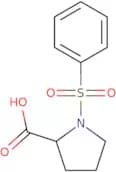
![(2S)-3-azido-2-{[(tert-butoxy)carbonyl]amino}propanoic acid](/_next/image/?url=https%3A%2Fstatic.cymitquimica.com%2Fproducts%2F3D%2Fthumb-webp%2FXEA22554.webp&w=3840&q=75)
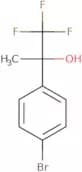
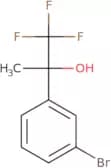
![2,2-Dimethyl-2H,3H,4H-pyrano[2,3-b]pyridin-4-one](/_next/image/?url=https%3A%2Fstatic.cymitquimica.com%2Fproducts%2F3D%2Fthumb-webp%2FXEA26238.webp&w=3840&q=75)