Building Blocks
This section contains fundamental products for the synthesis of organic and biological compounds. Building blocks are the essential starting materials used to construct complex molecules through various chemical reactions. They play a critical role in drug discovery, material science, and chemical research. At CymitQuimica, we offer a diverse range of high-quality building blocks to support your innovative research and industrial projects, ensuring you have the essential components for successful synthesis.
Subcategories of "Building Blocks"
- Boronic Acids & Boronic Acid Derivatives(5,778 products)
- Chiral Building Blocks(1,242 products)
- Hydrocarbon Building Blocks(6,098 products)
- Organic Building Blocks(61,084 products)
Found 198714 products of "Building Blocks"
Sort by
Purity (%)
0
100
|
0
|
50
|
90
|
95
|
100
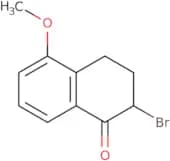
2-Bromo-5-methoxy-3,4-dihydronaphthalen-1(2H)-one
CAS:Versatile small molecule scaffoldFormula:C11H11BrO2Purity:Min. 95%Molecular weight:255.11 g/mol(1-tert-Butylazetidin-2-yl)methanol
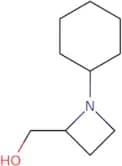
CAS:<p>Versatile small molecule scaffold</p>Formula:C8H17NOPurity:Min. 95%Molecular weight:143.23 g/mol(1-Cyclohexylazetidin-2-yl)methanol
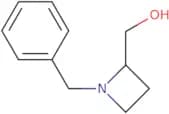
CAS:Versatile small molecule scaffoldFormula:C10H19NOPurity:Min. 95%Molecular weight:169.26 g/mol(1-Benzylazetidin-2-yl)methanol
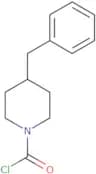
CAS:<p>Versatile small molecule scaffold</p>Formula:C11H15NOPurity:Min. 95%Molecular weight:177.24 g/mol4-Benzylpiperidine-1-carbonyl chloride
CAS:Versatile small molecule scaffoldFormula:C13H16ClNOPurity:Min. 95%Molecular weight:237.72 g/mol3-Methyl-2-oxo-2,3-dihydro-1,3-benzothiazole-6-sulfonamide
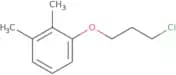
CAS:Versatile small molecule scaffoldFormula:C8H8N2O3S2Purity:Min. 95%Molecular weight:244.3 g/mol1-(3-Chloropropoxy)-2,3-dimethylbenzene
CAS:Versatile small molecule scaffoldFormula:C11H15ClOPurity:Min. 95%Molecular weight:198.69 g/mol2',3'-Dihydro-1'H-spiro[cyclopropane-1,4'-isoquinoline]-1',3'-dione
CAS:Versatile small molecule scaffoldFormula:C11H9NO2Purity:Min. 95%Molecular weight:187.19 g/mol4-Chloro-2-methylfuro[3,2-c]pyridine
CAS:<p>Versatile small molecule scaffold</p>Formula:C8H6ClNOPurity:Min. 95%Molecular weight:167.59 g/mol3-Ethyl-1-methyl-4,5-dihydro-1H-pyrazol-5-one
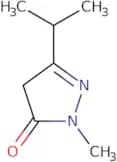
CAS:Versatile small molecule scaffoldFormula:C6H10N2OPurity:Min. 95%Molecular weight:126.16 g/mol1-Methyl-3-(propan-2-yl)-4,5-dihydro-1H-pyrazol-5-one
CAS:Versatile small molecule scaffoldFormula:C7H12N2OPurity:Min. 95%Molecular weight:140.18 g/mol5-Chloro-1-ethyl-3-methyl-1H-pyrazole
CAS:Versatile small molecule scaffoldFormula:C6H9ClN2Purity:Min. 95%Molecular weight:144.6 g/mol1-(chloromethyl)pyrrolidin-2-one
CAS:<p>1-(Chloromethyl)pyrrolidin-2-one is a synthetic molecule that is used as an ion exchanger. It has been shown to be effective for the removal of chlorides, phosphates, and sulfates from solutions. This compound can also be used as a reagent in organic synthesis and can be used to prepare other compounds with higher molecular weights. 1-(Chloromethyl)pyrrolidin-2-one has been shown to interact with silicon and form a number of stable complexes. This molecule is labile and undergoes ring opening under acidic conditions to release chloride ions. X-ray diffraction studies have shown that 1-(chloromethyl)pyrrolidin-2-one adopts a planar conformation in the solid state.</p>Formula:C5H8ClNOPurity:Min. 95%Molecular weight:133.58 g/mol2-Iodo-4-methylpentane
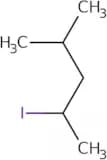
CAS:Versatile small molecule scaffoldFormula:C6H13IPurity:Min. 95%Molecular weight:212.07 g/mol4-Bromo-5-methyl-3-phenyl-1,2-oxazole
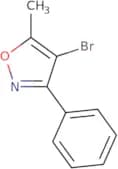
CAS:<p>Versatile small molecule scaffold</p>Formula:C10H8BrNOPurity:Min. 95%Molecular weight:238.08 g/molSpiro[4.4]non-3-en-2-one
CAS:<p>Versatile small molecule scaffold</p>Formula:C9H12OPurity:Min. 95%Molecular weight:136.19 g/mol2-[(Dimethylamino)(methylsulfanyl)methylidene]propanedinitrile
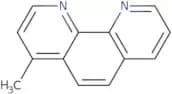
CAS:<p>Versatile small molecule scaffold</p>Formula:C7H9N3SPurity:Min. 95%Molecular weight:167.23 g/mol4-Methyl-1,10-phenanthroline
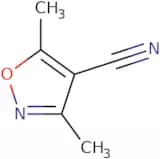
CAS:<p>4-Methyl-1,10-phenanthroline (4MP) is a functional molecule that has been extensively studied for its use as an anticancer agent. 4MP is a racemic mixture of 4-methyl and 1,10-phenanthroline enantiomers. It has shown anticancer activity in the L1210 murine leukemia model and cisplatin-resistant human ovarian cancer cells. The binding constants of 4MP to DNA depend on the orientation of the molecule with respect to the DNA helix. The cis configuration binds more tightly than the trans configuration, which may be due to steric hindrance. 4MP inhibits luminescence by interacting with micelles and forming aggregates in water.</p>Formula:C13H10N2Purity:Min. 95%Molecular weight:194.23 g/mol3,5-Dimethylisoxazole-4-carbonitrile
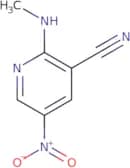
CAS:<p>Versatile small molecule scaffold</p>Formula:C6H6N2OPurity:Min. 95%Molecular weight:122.12 g/mol2-(Methylamino)-5-nitropyridine-3-carbonitrile
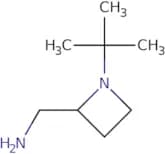
CAS:<p>Versatile small molecule scaffold</p>Formula:C7H6N4O2Purity:Min. 95%Molecular weight:178.15 g/mol(1-tert-Butylazetidin-2-yl)methanamine
CAS:<p>Versatile small molecule scaffold</p>Formula:C8H18N2Purity:Min. 95%Molecular weight:142.24 g/mol4-Bromo-N-(pyridin-2-ylmethyl)aniline
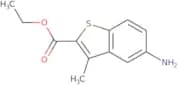
CAS:<p>Versatile small molecule scaffold</p>Formula:C12H11BrN2Purity:Min. 95%Molecular weight:263.13 g/molEthyl 5-amino-3-methyl-1-benzothiophene-2-carboxylate
CAS:<p>Ethyl 5-amino-3-methyl-1-benzothiophene-2-carboxylate is a drug that inhibits the activity of 2,4-dichlorobenzoic acid, an enzyme involved in energy metabolism. It has been shown to bind to and inhibit a number of other enzymes, including carboxylase, decarboxylase, and transferase. This drug is used as an antimicrobial agent against pandemic influenza and other respiratory infections. The drug binds to the carboxylate group of the enzyme's active site and coordinates with the metal ion via its benzoate moiety. The coumarin derivative may be responsible for the observed inhibition by binding to a different site on the enzyme or by interacting with a second molecule of ethyl 5-amino-3-methyl-1-benzothiophene-2-carboxylate.</p>Formula:C12H13NO2SPurity:Min. 95%Molecular weight:235.3 g/molBenzyl N-(2-oxooxolan-3-yl)carbamate
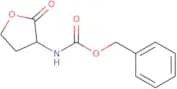
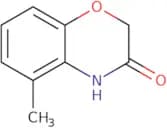
CAS:<p>Versatile small molecule scaffold</p>Formula:C12H13NO4Purity:Min. 95%Molecular weight:235.24 g/mol5-Methyl-2H-1,4-benzoxazin-3(4H)-one
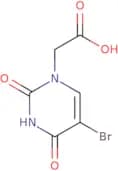
CAS:<p>Versatile small molecule scaffold</p>Formula:C9H9NO2Purity:Min. 95%Molecular weight:163.18 g/mol2-(5-Bromo-2,4-dioxo-1,2,3,4-tetrahydropyrimidin-1-yl)acetic acid
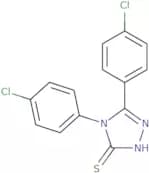
CAS:<p>Versatile small molecule scaffold</p>Formula:C6H5BrN2O4Purity:Min. 95%Molecular weight:249.02 g/molBis(4-chlorophenyl)-4H-1,2,4-triazole-3-thiol
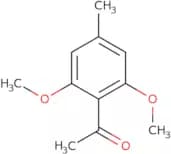
CAS:<p>Versatile small molecule scaffold</p>Formula:C14H9Cl2N3SPurity:Min. 95%Molecular weight:322.2 g/mol1-(2,6-Dimethoxy-4-methylphenyl)ethan-1-one
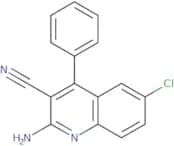
CAS:<p>Versatile small molecule scaffold</p>Formula:C11H14O3Purity:Min. 95%Molecular weight:194.23 g/mol2-Amino-3-cyano-4-phenyl-6-chloroquinoline
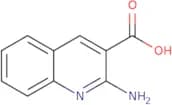
CAS:<p>Versatile small molecule scaffold</p>Formula:C16H10ClN3Purity:Min. 95%Molecular weight:279.72 g/mol2-Aminoquinoline-3-carboxylic acid
CAS:<p>2-Aminoquinoline-3-carboxylic acid is a heterocyclic compound that contains a carboxylic group and a cyano group. It is used in research as a trackable cation. 2-Aminoquinoline-3-carboxylic acid has been shown to inhibit the binding of chloride ions to the cytoplasmic membrane, which decreases the permeability of the membrane to chloride ions, thus inhibiting its transport into cells. This compound also inhibits nitric oxide synthase and exhibits anti-inflammatory effects by suppressing cytokine release from macrophages. 2-Aminoquinoline-3-carboxylic acid may be synthesized from 2 amino quinolines and chlorides.</p>Formula:C10H8N2O2Purity:Min. 95%Molecular weight:188.18 g/mol5-Phenylpyrimidin-2-amine
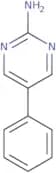
CAS:<p>5-Phenylpyrimidin-2-amine is a synthetic chemical that is an intermediate in the production of other chemicals. It can be used to produce sulfate, nucleophilic amines, or active methylene compounds. 5-Phenylpyrimidin-2-amine can also be used as a starting material for the production of triethyloxonium chloride and 13C NMR spectroscopy reagents. 5-Phenylpyrimidin-2-amine has a nucleophilic nature and is capable of reacting with a variety of functional groups. This chemical can undergo demethylation reactions with sulfate, chlorides, and cyanamide, which are all reactive with the methyl group on this chemical. 5-Phenylpyrimidin-2-amine is an isomeric compound that exists in two forms: one with substituents at positions 2 and 6 (syn) and one with substituents at positions 3</p>Formula:C10H9N3Purity:Min. 95%Molecular weight:171.2 g/mol1-Amino-4-phenylbutan-2-one hydrochloride
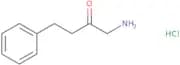
CAS:Versatile small molecule scaffoldFormula:C10H14ClNOPurity:Min. 95%Molecular weight:199.68 g/molrac-(1R,2S)-2-(methoxycarbonyl)cyclobutane-1-carboxylic acid, cis
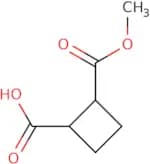
CAS:<p>Versatile small molecule scaffold</p>Formula:C7H10O4Purity:Min. 95%Molecular weight:158.2 g/molrac-(1R,2R)-2-(Methoxycarbonyl)cyclobutane-1-carboxylic acid
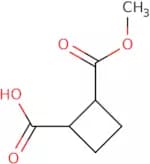
CAS:Versatile small molecule scaffoldFormula:C7H10O4Purity:Min. 95%Molecular weight:158.15 g/molTrans-1,2-cyclopropane-dicarboxylic acid mono ethyl ester
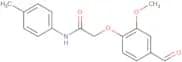
CAS:<p>Versatile small molecule scaffold</p>Formula:C7H10O4Purity:Min. 95%Molecular weight:158.2 g/mol2-(4-Formyl-2-methoxyphenoxy)-N-(4-methylphenyl)acetamide
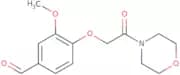
CAS:<p>Versatile small molecule scaffold</p>Formula:C17H17NO4Purity:Min. 95%Molecular weight:299.32 g/mol3-Methoxy-4-(2-morpholin-4-yl-2-oxoethoxy)benzaldehyde
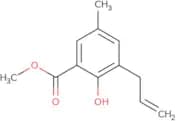
CAS:<p>Versatile small molecule scaffold</p>Formula:C14H17NO5Purity:Min. 95%Molecular weight:279.29 g/molMethyl 2-hydroxy-5-methyl-3-(prop-2-en-1-yl)benzoate
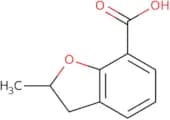
CAS:<p>Versatile small molecule scaffold</p>Formula:C12H14O3Purity:Min. 95%Molecular weight:206.24 g/mol2-Methyl-2,3-dihydro-1-benzofuran-7-carboxylic acid
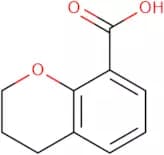
CAS:<p>Versatile small molecule scaffold</p>Formula:C10H10O3Purity:Min. 95%Molecular weight:178.18 g/molChroman-8-carboxylic acid
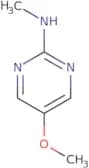
CAS:Chroman-8-carboxylic acid is a phenolic compound that has biological activity. It is found in many plants, including crop plants like sugarcane and rice. Chroman-8-carboxylic acid can be isolated from the tannins of these plants, as well as from the bark of trees such as oak and chestnut. Chroman-8-carboxylic acid has been shown to have significant antibacterial activity against Gram positive bacteria such as Staphylococcus aureus. This compound also shows low activity against Gram negative bacteria such as Escherichia coli. The potential use for this compound is in fungal control because it is found in many types of fungi and has been shown to inhibit the growth of some species.Formula:C10H10O3Purity:Min. 95%Molecular weight:178.19 g/mol5-Methoxy-N-methylpyrimidin-2-amine
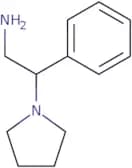
CAS:<p>Versatile small molecule scaffold</p>Formula:C6H9N3OPurity:Min. 95%Molecular weight:139.16 g/mol2-Phenyl-2-(pyrrolidin-1-yl)ethanamine
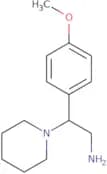
CAS:<p>Versatile small molecule scaffold</p>Formula:C12H18N2Purity:Min. 95%Molecular weight:190.28 g/mol2-(4-Methoxy-phenyl)-2-piperidin-1-yl-ethylamine
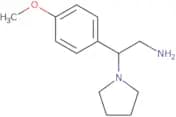
CAS:Versatile small molecule scaffoldFormula:C14H22N2OPurity:Min. 95%Molecular weight:234.34 g/mol2-(4-Methoxy-phenyl)-2-pyrrolidin-1-yl-ethylamine
CAS:<p>Versatile small molecule scaffold</p>Formula:C13H20N2OPurity:Min. 95%Molecular weight:220.31 g/molrac-(1R,2R,4R)-5-Oxobicyclo[2.2.1]heptane-2-carboxylic acid
CAS:<p>Versatile small molecule scaffold</p>Formula:C8H10O3Purity:Min. 95%Molecular weight:154.2 g/mol1,3-Diethyl-1,3-dimethylurea
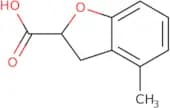
CAS:<p>Versatile small molecule scaffold</p>Formula:C7H16N2OPurity:Min. 95%Molecular weight:144.21 g/mol4-Methyl-2,3-dihydro-1-benzofuran-2-carboxylic acid
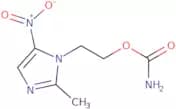
CAS:<p>Versatile small molecule scaffold</p>Formula:C10H10O3Purity:Min. 95%Molecular weight:178.18 g/mol2-(2-Methyl-5-nitro-1H-imidazol-1-yl)ethyl carbamate
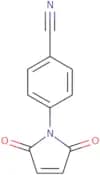
CAS:<p>2-(2-Methyl-5-nitro-1H-imidazol-1-yl)ethyl carbamate is a diluent that can be used to reconstitute fatty acids at high concentrations. It is also used in pharmaceutical preparations and conjugates. It has been shown to have an antiviral effect against chlamydia and has been used as a pharmaceutical dosage for the diagnosis of radiation exposure. The diluent can also be used in pharmaceutical preparations and conjugates, but it is not active against viruses or bacteria.</p>Formula:C7H10N4O4Purity:Min. 95%Molecular weight:214.18 g/mol4-(2,5-Dioxo-2,5-dihydro-1H-pyrrol-1-yl)benzonitrile
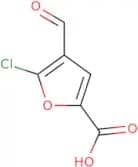
CAS:<p>4-(2,5-Dioxo-2,5-dihydro-1H-pyrrol-1-yl)benzonitrile is a versatile research chemical with various applications. It contains fluorine and is commonly used in the synthesis of copolymers, phenolic acids, and hydrocarbons. This compound also finds application in the field of medicine, where it has been studied for its potential as an antioxidant and for its activity on dopamine receptors. Additionally, 4-(2,5-Dioxo-2,5-dihydro-1H-pyrrol-1-yl)benzonitrile has been found to exhibit surface energy properties and can be used in interfacial processes or as an electrolyte. Its wide range of characteristics makes it a valuable compound for researchers across different fields.</p>Formula:C11H6N2O2Purity:Min. 95%Molecular weight:198.18 g/mol5-Chloro-4-formylfuran-2-carboxylic acid
CAS:<p>Versatile small molecule scaffold</p>Formula:C6H3ClO4Purity:Min. 95%Molecular weight:174.54 g/mol



![2',3'-Dihydro-1'H-spiro[cyclopropane-1,4'-isoquinoline]-1',3'-dione](/_next/image/?url=https%3A%2Fstatic.cymitquimica.com%2Fproducts%2F3D%2Fthumb-webp%2FGBA26707.webp&w=3840&q=75)
![4-Chloro-2-methylfuro[3,2-c]pyridine](/_next/image/?url=https%3A%2Fstatic.cymitquimica.com%2Fproducts%2F3D%2Fthumb-webp%2FGBA27081.webp&w=3840&q=75)



![Spiro[4.4]non-3-en-2-one](/_next/image/?url=https%3A%2Fstatic.cymitquimica.com%2Fproducts%2F3D%2Fthumb-webp%2FGBA29751.webp&w=3840&q=75)
![2-[(Dimethylamino)(methylsulfanyl)methylidene]propanedinitrile](/_next/image/?url=https%3A%2Fstatic.cymitquimica.com%2Fproducts%2F3D%2Fthumb-webp%2FGBA29760.webp&w=3840&q=75)


![rac-(1R,2R,4R)-5-Oxobicyclo[2.2.1]heptane-2-carboxylic acid](/_next/image/?url=https%3A%2Fstatic.cymitquimica.com%2Fproducts%2F3D%2Fthumb-webp%2FGBA46753.webp&w=3840&q=75)