Building Blocks
This section contains fundamental products for the synthesis of organic and biological compounds. Building blocks are the essential starting materials used to construct complex molecules through various chemical reactions. They play a critical role in drug discovery, material science, and chemical research. At CymitQuimica, we offer a diverse range of high-quality building blocks to support your innovative research and industrial projects, ensuring you have the essential components for successful synthesis.
Subcategories of "Building Blocks"
- Boronic Acids & Boronic Acid Derivatives(5,778 products)
- Chiral Building Blocks(1,242 products)
- Hydrocarbon Building Blocks(6,098 products)
- Organic Building Blocks(61,059 products)
Found 199580 products of "Building Blocks"
Sort by
Purity (%)
0
100
|
0
|
50
|
90
|
95
|
100
Myristyl Palmitate
CAS:Controlled Product<p>Applications Myristyl Palmitate is a wax ester of palmitic acid. Wax esters are esters between long chained fatty alcohols and fatty acids. Wax esters have significance in pharmaceutical and cosmetics applications and occur naturally in plants and animals.<br>References Wheatley, V., et al.: Biochem. J., 58, 167 (1954); Shichijo, S., et al.: Biochem. Med., 22, 256 (1979); Robosky, L., et al.: J. Lipid Res., 49, 686 (2008);<br></p>Formula:C30H60O2Color and Shape:NeatMolecular weight:452.801-Bromotetradecane-1,1,2,2-d4
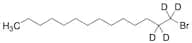
CAS:Controlled Product<p>Applications 1-Bromotetradecane-1,1,2,2-d4 (CAS# 1219798-81-8) is a useful isotopically labeled research compound.<br></p>Formula:C14H25D4BrColor and Shape:NeatMolecular weight:281.312-Bromo-3'-nitroacetophenone
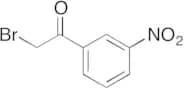
CAS:Controlled Product<p>Applications 2-Bromo-3'-nitroacetophenone is a reagent used the preparation of arylthiazolidinone derivatives which have BRD4 bromodomain inhibitors.<br> Not a dangerous good if item is equal to or less than 1g/ml and there is less than 100g/ml in the package<br>References Zhao, L., et al.: J. Med. Chem., 56, 3833 (2013);<br></p>Formula:C8H6BrNO3Color and Shape:NeatMolecular weight:244.042-Hydroxy-3-methyl-butanedioic Acid
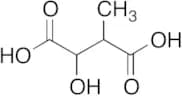
CAS:Controlled Product<p>Applications 2-Hydroxy-3-methyl-butanedioic Acid is used as a sole C source when metabolized by soil bacterium; Also, it is an intermediate used in the synthesis of 5-Methyl-2’-deoxy Cytidine-13C,15N2 (M295904), which is an isotopic analog of 5-Methyl-2’-deoxy Cytidine (M295900), a Cytidine (C998300) analog and also an isostere of Thymidine (T412000).<br>References Nakano, H., et al.: J. Biochem., 70, 429-440 (1971); Sabini, E., et al.: J. Med. Chem., 51, 4219 (2008), Sabini, E., et al.: J. Mol. Biol., 378, 607 (2008)<br></p>Formula:C5H8O5Color and Shape:NeatMolecular weight:148.1143-Bromothioanisole
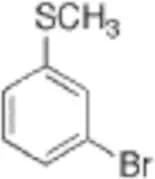
CAS:Controlled Product<p>Applications 3-Bromothioanisole (cas# 33733-73-2) is a compound useful in organic synthesis.<br> Not a dangerous good if item is equal to or less than 1g/ml and there is less than 100g/ml in the package<br></p>Formula:C7H7BrSColor and Shape:NeatMolecular weight:203.10Methyl 1-(4-(Bromomethyl)phenyl)cyclopropanecarboxylate
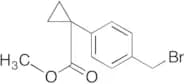
CAS:Controlled ProductFormula:C12H13BrO2Color and Shape:NeatMolecular weight:269.1342-Bromothiophene
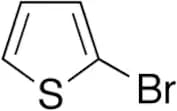
CAS:Controlled Product<p>Applications 2-Bromothiophene (cas# 1003-09-4) is a compound useful in organic synthesis.<br> Not a dangerous good if item is equal to or less than 1g/ml and there is less than 100g/ml in the package<br></p>Formula:C4H3BrSColor and Shape:NeatMolecular weight:163.0363-[(2-Hydroxyethyl)amino]propanoic Acid
CAS:Controlled Product<p>Applications 3-[(2-Hydroxyethyl)Amino]Propanoic Acid (cas# 5458-99-1) is a useful research chemical.<br></p>Formula:C5H11NO3Color and Shape:NeatMolecular weight:133.15(2E)-3-(4-Bromophenyl)-1-[4-(4-methoxybenzoyl)-1-piperazinyl]-2-propen-1-one
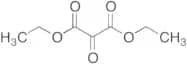
CAS:Controlled Product<p>Applications (2E)-3-(4-Bromophenyl)-1-[4-(4-methoxybenzoyl)-1-piperazinyl]-2-propen-1-one recently known as NIBR 189, is a selective Epstein-barr virus-induced gene 2 (EBI-2) receptor antagonist, resulting in a modulation of immune responses related to auto-immune diseases.<br>References Gessier, F. et al.: J. Med. Chem., 57, 3358 (2014);<br></p>Formula:C21H21BrN2O3Color and Shape:NeatMolecular weight:429.31Diethyl Ketomalonate
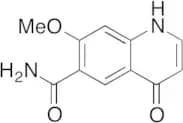
CAS:Controlled Product<p>Applications Diethyl Ketomalonate (cas# 609-09-6) is a compound useful in organic synthesis.<br></p>Formula:C7H10O5Color and Shape:NeatMolecular weight:174.151,4-Dihydro-7-methoxy-4-oxo-6-quinolinecarboxamide
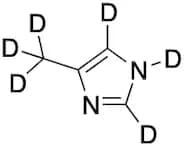
CAS:Controlled ProductFormula:C11H10N2O3Color and Shape:NeatMolecular weight:218.2094-Methylimidazole-d6
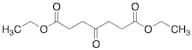
CAS:Controlled Product<p>Applications 4-Methylimidazole-d6 (CAS# 1219804-79-1) is a useful isotopically labeled research compound.<br></p>Formula:C4D6N2Color and Shape:NeatMolecular weight:88.14Diethyl 4-oxopimelate
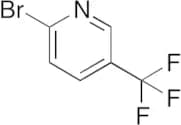
CAS:Controlled Product<p>Applications Diethyl 4-oxopimelate<br></p>Formula:C11H18O5Color and Shape:NeatMolecular weight:230.262-Bromo-5-(trifluoromethyl)pyridine
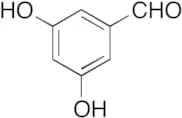
CAS:Controlled ProductFormula:C6H3BrF3NColor and Shape:NeatMolecular weight:225.993,5-Dihydroxybenzaldehyde
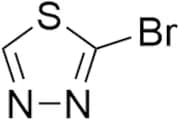
CAS:<p>Applications 3,5-Dihydroxybenzaldehyde, is a benzaldehyde derivative, that can be used as a building block in the synthesis of more complex structures. It is used in the synthesis of Terbutaline (T109750), which is an important bronchodilator.<br>References Effenberger, F. et al.: J. Org. Chem., 62, 3867 (1997);<br></p>Formula:C7H6O3Color and Shape:NeatMolecular weight:138.122-Bromo-1,3,4-thiadiazole
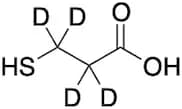
CAS:Controlled Product<p>Applications 2-Bromo-1,3,4-thiadiazole<br></p>Formula:C2HBrN2SColor and Shape:NeatMolecular weight:165.013-Mercaptopropionic-2,2,3,3-d4 Acid
CAS:Controlled Product<p>Applications 3-Mercaptopropionic-2,2,3,3-d4 Acid (CAS# 1141488-67-6) is a useful isotopically labeled research compound. It is used for structural proteomics interactions.<br>References Petrotchenko, E., et.al., Mol. Cell Proteomics, 8,273-286,(2009);<br></p>Formula:C3H2D4O2SColor and Shape:NeatMolecular weight:110.163H,4H,5H,6H,7H-Imidazo[4,5-c]pyridin-4-one
CAS:Controlled ProductFormula:C6H7N3OColor and Shape:NeatMolecular weight:137.1396,7-Dihydro-5H-pyrazolo[5,1-b][1,3] Oxazine
CAS:Controlled ProductFormula:C6H8N2OColor and Shape:NeatMolecular weight:124.1415H,6H,7H,8H-Imidazo[1,2-a]pyridine-3-sulfonyl Chloride (~85%)
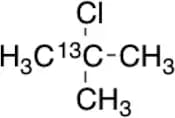
CAS:Controlled ProductFormula:C7H9N2O2SClPurity:~85%Color and Shape:NeatMolecular weight:220.672-Chloro-2-methylpropane-2-13C
CAS:Controlled Product<p>Applications 2-Chloro-2-methylpropane-2-13C (CAS# 32488-42-9) is a useful isotopically labeled research compound.<br></p>Formula:C3C)H9ClColor and Shape:NeatMolecular weight:93.562-Chloro-2-methylpropane
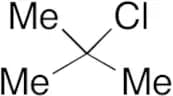
CAS:Controlled Product<p>Applications 2-Chloro-2-methylpropane is a starting molecule to carry out nucleophilic substitution reactions.<br> Not a dangerous good if item is equal to or less than 1g/ml and there is less than 100g/ml in the package<br>References Eyet, N., et al.: J. Phy. Chem. A., 117, 1136 (2013); Eyet, N., et al.: J. Am. Mass. Spec., 18, 1046 (2007);<br></p>Formula:C4H9ClColor and Shape:NeatMolecular weight:92.567Dibenzosuberenol
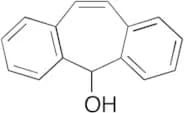
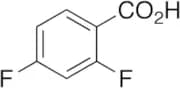
CAS:Controlled Product<p>Applications Dibenzosuberenol is an intermediate in the synthesis of 5H-Dibenzo[a,d]cycloheptene which itself was used in the synthesis of cyclotribenzylenes. Also functions as a calmodulin inhibitor affecting various crucial cellular processes.<br>References Schmuck, C. et al.: Synth., 5, 655 (2002); Lavoie, P.. et al.: J. Neurobio., 17, 681 (1986);<br></p>Formula:C15H12OColor and Shape:NeatMolecular weight:208.262,4-Difluorobenzoic Acid
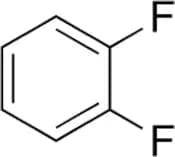
CAS:Controlled Product<p>Applications 2,4-Difluorobenzoic Acid (cas# 1583-58-0) is a compound useful in organic synthesis.<br></p>Formula:C7H4F2O2Color and Shape:NeatMolecular weight:158.101,2-Difluorobenzene
CAS:<p>Applications 1,2-Difluorobenzene is used in electrochemical analysis of transition metal complexes. 1,2-difluorobenzene is also a potent inhibitor of NMDA receptor.<br>References O'toole, T.R. et al.: Inorg. Chem., 28, 3923 (1989); Eger, E.I. et al.: Anesth. Analg., 102, 1397 (2006);<br></p>Formula:C6H4F2Color and Shape:NeatMolecular weight:114.0935-Hexynoic Acid
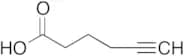
CAS:Controlled Product<p>Applications 5-Hexynoic Acid<br></p>Formula:C6H8O2Color and Shape:NeatMolecular weight:112.13Chloromethyl Pivalate
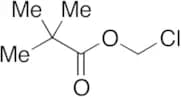
CAS:Controlled Product<p>Applications Chloromethyl Pivalate is used in the synthesis of oxazolines used in the preparation of imidazolium triflates. Also used in the synthesis of Src Kinase inhibitors used as anti-tumor agents.<br> Not a dangerous good if item is equal to or less than 1g/ml and there is less than 100g/ml in the package<br>References Glorius, F. et al.: Chem. Comm., 22, 2704 (2002); Hennequin, L. et al.: J. Med. Chem., 49, 6465 (2006);<br></p>Formula:C6H11ClO2Color and Shape:NeatMolecular weight:150.62,4,4-Trimethylcyclohex-1-ene-1-carboxylic acid
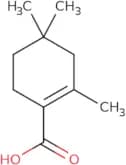
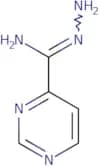
CAS:<p>Versatile small molecule scaffold</p>Formula:C10H16O2Purity:Min. 95%Molecular weight:168.23 g/molN-Aminopyrimidine-4-carboximidamide
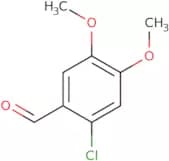
CAS:<p>Versatile small molecule scaffold</p>Formula:C5H7N5Purity:Min. 95%Molecular weight:137.14 g/mol2-Chloro-4,5-dimethoxybenzaldehyde
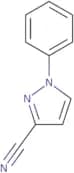
CAS:<p>2-Chloro-4,5-dimethoxybenzaldehyde is a functional group that can be used as a nucleophile in organic synthesis. It has been shown to react with amines to produce nitro compounds. This functional group also reacts with acidic substances such as malic acid and ethanol extractions, forming chlorinated products. 2-Chloro-4,5-dimethoxybenzaldehyde can be extracted from the surface of plants using piperazine or morpholine.</p>Formula:C9H9ClO3Purity:Min. 95%Molecular weight:200.62 g/mol1-Phenyl-1H-pyrazole-3-carbonitrile
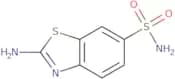
CAS:Versatile small molecule scaffoldFormula:C10H7N3Purity:Min. 95%Molecular weight:169.18 g/mol2-Amino-benzothiazole-6-sulfonic acid amide
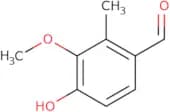
CAS:<p>2-Amino-benzothiazole-6-sulfonic acid amide is a drug that belongs to the class of anhydrase inhibitors. It has been found to have a potent inhibitory effect on carbonic anhydrase, which is thought to be involved in the pathogenesis of some cancers. This drug has also been shown to have antiviral effects against HIV and Herpes simplex virus type 1, as well as antibacterial activity against Entamoeba histolytica and Giardia lamblia. 2-Amino-benzothiazole-6-sulfonic acid amide has been shown to reduce inflammation by inhibiting immunodeficiency, which may be due to its inhibition of the enzyme carrageenan synthase. The carrageenan synthase enzyme is required for the production of polysaccharides found in red blood cells and microorganisms that are involved in inflammatory processes.</p>Formula:C7H7N3O2S2Purity:Min. 95%Molecular weight:229.28 g/mol4-Hydroxy-3-methoxy-2-methylbenzaldehyde
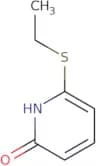
CAS:Versatile small molecule scaffoldFormula:C9H10O3Purity:Min. 95%Molecular weight:166.17 g/mol6-(Ethylthio)pyridin-2(1H)-one
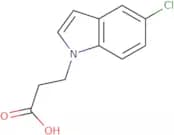
CAS:<p>Versatile small molecule scaffold</p>Formula:C7H9NOSPurity:Min. 95%Molecular weight:155.22 g/mol3-(5-Chloro-1H-indol-1-yl)propanoic acid
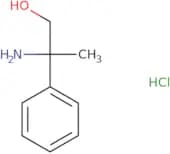
CAS:<p>Versatile small molecule scaffold</p>Formula:C11H10ClNO2Purity:Min. 95%Molecular weight:223.65 g/mol2-Amino-2-phenylpropan-1-ol Hydrochloride
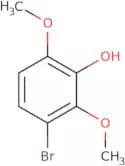
CAS:<p>Versatile small molecule scaffold</p>Formula:C9H13NO·HClPurity:Min. 95%Molecular weight:151.24 g/mol3-Bromo-2,6-dimethoxyphenol
CAS:Versatile small molecule scaffoldFormula:C8H9BrO3Purity:Min. 95%Molecular weight:233.06 g/mol2-Hydroxy-1-(1H-indol-3-yl)propan-1-one
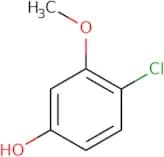
CAS:Controlled Product<p>Versatile small molecule scaffold</p>Formula:C11H11NO2Purity:Min. 95%Molecular weight:189.21 g/mol4-Chloro-3-methoxy phenol
CAS:<p>4-Chloro-3-methoxy phenol is a chemical that belongs to the group of halogenated aromatic compounds. It is a colorless liquid with a sweet odor. 4-Chloro-3-methoxy phenol has been found to be absorbed by humans through inhalation and ingestion. The absorbed dose is dependent on the individual's weight, and the radiation dose depends on the type of radiation used. 4-Chloro-3-methoxy phenol can be synthesized by reacting 2 chloroanisole with chlorine gas in an experimental reaction mechanism. This compound reacts with DNA bases and causes mutations, as well as producing reactive oxygen species that can cause oxidative damage to DNA.</p>Formula:C7H7CIO2Purity:Min. 95%Molecular weight:158.58 g/mol3-(1-Oxo-1,2,3,4-tetrahydronaphthalen-2-yl)propanoic acid
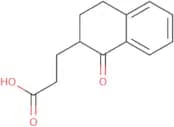
CAS:Versatile small molecule scaffoldFormula:C13H14O3Purity:Min. 95%Molecular weight:218.2 g/mol5-Oxo-1-Phenylpyrrolidine-2-carboxylic acid
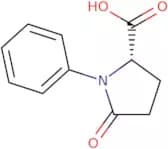
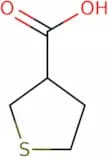
CAS:Versatile small molecule scaffoldFormula:C11H11NO3Purity:Min. 95%Molecular weight:205.21 g/molThiolane-3-carboxylic acid
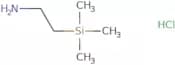
CAS:<p>Thiolane-3-carboxylic acid is a heterospirocyclic compound that inhibits HIV-1 reverse transcriptase. Thiolane-3-carboxylic acid is a biologically active metabolite of the anti-HIV drug azidothymidine, which is in turn obtained by the chemical transformation of the urethane intermediate. The structural similarity between this compound and valine has been shown to be due to the presence of a thiobenzoic ring system. The inhibition of HIV-1 replication by this active form has been shown using protease inhibitors, hydroxyethylamine, and alcohols.</p>Formula:C5H8O2SPurity:Min. 95%Molecular weight:132.18 g/mol(2-Aminoethyl)trimethylsilane hydrochloride
CAS:<p>Versatile small molecule scaffold</p>Formula:C5H16ClNSiPurity:Min. 95%Molecular weight:153.72 g/molMethyl[(trimethylsilyl)methyl]amine hydrochloride
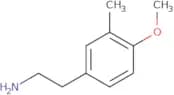
CAS:Versatile small molecule scaffoldFormula:C5H16ClNSiPurity:Min. 95%Molecular weight:153.72 g/mol2-(4-Methoxy-3-methylphenyl)ethan-1-amine
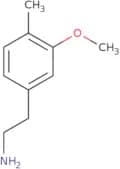
CAS:Controlled Product<p>Versatile small molecule scaffold</p>Formula:C10H15NOPurity:Min. 95%Molecular weight:165.23 g/mol2-(3-Methoxy-4-methylphenyl)ethan-1-amine
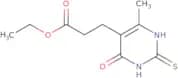
CAS:Controlled Product<p>Versatile small molecule scaffold</p>Formula:C10H15NOPurity:Min. 95%Molecular weight:165.23 g/molEthyl 3-(4-hydroxy-6-methyl-2-sulfanylpyrimidin-5-yl)propanoate
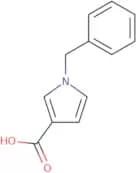
CAS:Versatile small molecule scaffoldFormula:C10H14N2O3SPurity:Min. 95%Molecular weight:242.3 g/mol1-Benzyl-1H-pyrrole-3-carboxylic acid
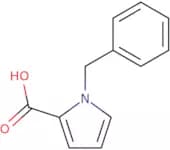
CAS:Versatile small molecule scaffoldFormula:C12H11NO2Purity:Min. 95%Molecular weight:201.22 g/mol1-Benzyl-1H-pyrrole-2-carboxylic acid
CAS:<p>Versatile small molecule scaffold</p>Formula:C12H11NO2Purity:Min. 95%Molecular weight:201.22 g/mol


![3-[(2-Hydroxyethyl)amino]propanoic Acid](/_next/image/?url=https%3A%2Fstatic.cymitquimica.com%2Fproducts%2FTR%2Fthumb-webp%2FH612070.webp&w=3840&q=75)
![(2E)-3-(4-Bromophenyl)-1-[4-(4-methoxybenzoyl)-1-piperazinyl]-2-propen-1-one](/_next/image/?url=https%3A%2Fstatic.cymitquimica.com%2Fproducts%2FTR%2Fthumb-webp%2FB688215.webp&w=3840&q=75)
![3H,4H,5H,6H,7H-Imidazo[4,5-c]pyridin-4-one](/_next/image/?url=https%3A%2Fstatic.cymitquimica.com%2Fproducts%2FTR%2Fthumb-webp%2FH325830.webp&w=3840&q=75)
![6,7-Dihydro-5H-pyrazolo[5,1-b][1,3] Oxazine](/_next/image/?url=https%3A%2Fstatic.cymitquimica.com%2Fproducts%2FTR%2Fthumb-webp%2FH325828.webp&w=3840&q=75)
![5H,6H,7H,8H-Imidazo[1,2-a]pyridine-3-sulfonyl Chloride (~85%)](/_next/image/?url=https%3A%2Fstatic.cymitquimica.com%2Fproducts%2FTR%2Fthumb-webp%2FH325683.webp&w=3840&q=75)


![Methyl[(trimethylsilyl)methyl]amine hydrochloride](/_next/image/?url=https%3A%2Fstatic.cymitquimica.com%2Fproducts%2F3D%2Fthumb-webp%2FTAA13532.webp&w=3840&q=75)