Building Blocks
This section contains fundamental products for the synthesis of organic and biological compounds. Building blocks are the essential starting materials used to construct complex molecules through various chemical reactions. They play a critical role in drug discovery, material science, and chemical research. At CymitQuimica, we offer a diverse range of high-quality building blocks to support your innovative research and industrial projects, ensuring you have the essential components for successful synthesis.
Subcategories of "Building Blocks"
- Boronic Acids & Boronic Acid Derivatives(5,778 products)
- Chiral Building Blocks(1,242 products)
- Hydrocarbon Building Blocks(6,098 products)
- Organic Building Blocks(61,034 products)
Found 199601 products of "Building Blocks"
Sort by
Purity (%)
0
100
|
0
|
50
|
90
|
95
|
100
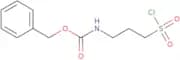
(3-Chlorosulfonyl-propyl)-carbamic acid benzyl ester
CAS:<p>Versatile small molecule scaffold</p>Formula:C11H14ClNO4SPurity:Min. 95%Molecular weight:291.75 g/mol1-[(tert-Butoxy)carbonyl]cyclopentane-1-carboxylic acid
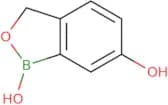
CAS:<p>Versatile small molecule scaffold</p>Formula:C11H18O4Purity:Min. 95%Molecular weight:214.26 g/mol1,3-dihydro-2,1-benzoxaborole-1,6-diol
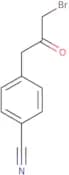
CAS:<p>Versatile small molecule scaffold</p>Formula:C7H7BO3Purity:Min. 95%Molecular weight:149.9 g/mol4-(3-Bromo-2-oxopropyl)benzonitrile
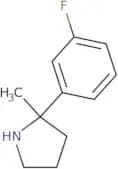
CAS:<p>Versatile small molecule scaffold</p>Formula:C10H8BrNOPurity:Min. 95%Molecular weight:238.08 g/mol2-(3-Fluorophenyl)-2-methylpyrrolidine
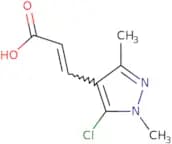
CAS:<p>Versatile small molecule scaffold</p>Formula:C11H14FNPurity:Min. 95%Molecular weight:179.23 g/mol3-(5-Chloro-1,3-dimethyl-1H-pyrazol-4-yl)prop-2-enoic acid
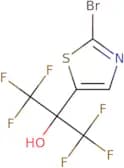
CAS:<p>Versatile small molecule scaffold</p>Formula:C8H9ClN2O2Purity:Min. 95%Molecular weight:200.62 g/mol2-(2-Bromo-1,3-thiazol-5-yl)-1,1,1,3,3,3-hexafluoropropan-2-ol
CAS:<p>Versatile small molecule scaffold</p>Formula:C6H2BrF6NOSPurity:Min. 95%Molecular weight:330.05 g/molHSF1A
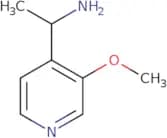
CAS:<p>Heat shock factor 1A (HSF1A) is a transcription factor that binds to regulatory elements in the DNA, and is also involved in the regulation of protein synthesis. HSF1A regulates gene expression during periods of cellular stress such as heat shock or oxidative stress. It is found in both cytosolic and nuclear compartments, and its binding domains are found in both cytosolic and nuclear compartments. HSF1A has a role in the specific treatment of HIV infection at physiological levels. It has been shown to regulate gene expression by binding to response elements on DNA, which is important for regulating the growth of cells. HSF1A can also act as a molecular chaperone, helping other proteins fold correctly.</p>Formula:C21H19N3O2S2Purity:Min. 95%Molecular weight:409.52 g/mol1-(3-Methoxypyridin-4-yl)ethan-1-amine
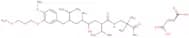
CAS:<p>Versatile small molecule scaffold</p>Formula:C8H12N2OPurity:Min. 95%Molecular weight:152.19 g/mol(2S,4S,5S,7S)-5-Amino-N-(2-carbamoyl-2,2-dimethylethyl)-4-hydroxy-7-{[4-methoxy-3-(3-methoxypropoxy)phenyl]methyl}-8-methyl-2-(propa n-2-yl)nonanamide, but-2-enedioic acid
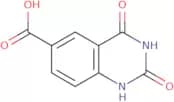
CAS:<p>(2S,4S,5S,7S)-5-Amino-N-(2-carbamoyl-2,2-dimethylethyl)-4-hydroxy-7-[(4-methoxy-3-(3-methoxypropoxy)phenyl]methyl}-- 8-methylnonanamide butanedioic acid is a degradable drug that has vasodilatory effects on the circulatory system. It is used in clinical studies for the treatment of cardiovascular disorders such as cardiac hypertrophy and hypertension. This drug is also used to diagnose diseases such as aortic aneurysms and myocardial infarctions. The drug can be taken orally or intravenously via a solid oral formulation. (2S,4S,5S,7S)-5-Amino-N-(2-carbamoyl-2,2-dimethylethyl)-4hydroxy</p>Formula:C34H57N3O10Purity:Min. 95%Molecular weight:667.8 g/mol2,4-dioxo-1,2,3,4-tetrahydroquinazoline-6-carboxylic acid
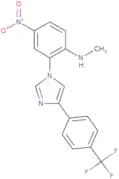
CAS:<p>Versatile small molecule scaffold</p>Formula:C9H6N2O4Purity:Min. 95%Molecular weight:206.16 g/molCU-T12-9
CAS:<p>CU-T12-9 is a molecule that belongs to the group of toll-like receptor (TLR) agonists. It activates TLRs and has potent inhibitory activity against IL-10, TNF-α, and other inflammatory cytokines. CU-T12-9 also prevents the growth of cancer cells by inhibiting the production of tumor necrosis factor alpha (TNFα). CU-T12-9 is highly specific for human macrophages, which makes it an excellent candidate for drug development in the treatment of inflammatory conditions such as cancer. This chemical has been shown to activate TLRs on human macrophages and reduce the production of inflammatory cytokines such as IL-10, TNFα, and other inflammatory cytokines.</p>Formula:C17H13F3N4O2Purity:Min. 95%Molecular weight:362.31 g/molrac-tert-Butyl (1S,3R,5R)-8-azaspiro[bicyclo[3.2.1]octane-3,2'-oxirane]-8-carboxylate
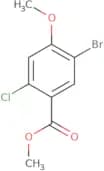
CAS:<p>Versatile small molecule scaffold</p>Formula:C13H21NO3Purity:Min. 95%Molecular weight:239.31 g/molMethyl 5-bromo-2-chloro-4-methoxybenzoate
CAS:<p>Versatile small molecule scaffold</p>Formula:C9H8BrClO3Purity:Min. 95%Molecular weight:279.51 g/mol[(8R)-1,4-Dioxa-7-azaspiro[4.4]nonan-8-yl]methanol
CAS:<p>Versatile small molecule scaffold</p>Formula:C7H13NO3Purity:Min. 95%Molecular weight:159.2 g/mol8-Chloroisoquinoline-5-sulfonyl chloride
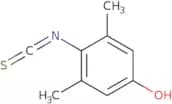
CAS:Versatile small molecule scaffoldFormula:C9H5Cl2NO2SPurity:Min. 95%Molecular weight:262.11 g/mol4-Isothiocyanato-3,5-dimethylphenol
CAS:<p>Versatile small molecule scaffold</p>Formula:C9H9NOSPurity:Min. 95%Molecular weight:179.24 g/molMethyl 2-{[(tert-butoxy)carbonyl]amino}-4-methyl-1,3-thiazole-5-carboxylate
CAS:<p>Versatile small molecule scaffold</p>Formula:C11H16N2O4SPurity:Min. 95%Molecular weight:272.32 g/mol{1-[2-(Pyridin-2-yl)ethyl]-1H-1,2,3-triazol-4-yl}methanol
CAS:<p>Versatile small molecule scaffold</p>Formula:C10H12N4OPurity:Min. 95%Molecular weight:204.23 g/mol2-Methyl-4,5,6,7-tetrahydro-oxazolo[4,5-c]pyridine hydrochloride
CAS:<p>Versatile small molecule scaffold</p>Formula:C7H11ClN2OPurity:Min. 95%Molecular weight:174.63 g/mol3-[(Pyridin-3-yl)amino]-1,2-dihydroisoquinolin-1-one
CAS:<p>Versatile small molecule scaffold</p>Formula:C14H11N3OPurity:Min. 95%Molecular weight:237.26 g/mol1-Ethoxypiperidin-4-amine
CAS:<p>Versatile small molecule scaffold</p>Formula:C7H16N2OPurity:Min. 95%Molecular weight:144.2 g/mol2-[(4-Benzylpiperazin-1-yl)methyl]-5-bromoaniline
CAS:Versatile small molecule scaffoldFormula:C18H22BrN3Purity:Min. 95%Molecular weight:360.3 g/molEthyl 5-chloro-2-(cyclopropylamino)pyridine-4-carboxylate
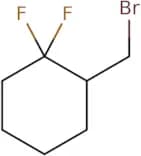
CAS:Versatile small molecule scaffoldFormula:C11H13ClN2O2Purity:Min. 95%Molecular weight:240.68 g/mol2-(Bromomethyl)-1,1-difluorocyclohexane
CAS:<p>Versatile small molecule scaffold</p>Formula:C7H11BrF2Purity:Min. 95%Molecular weight:213.06 g/mol2-[(Benzyloxy)methyl]-2-ethylbutanoic acid
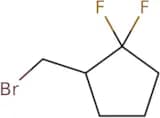
CAS:<p>Versatile small molecule scaffold</p>Formula:C14H20O3Purity:Min. 95%Molecular weight:236.31 g/mol2-(Bromomethyl)-1,1-difluorocyclopentane
CAS:<p>Versatile small molecule scaffold</p>Formula:C6H9BrF2Purity:Min. 95%Molecular weight:199.04 g/mol5-(3-Amino-4-methylphenyl)thiophene-2-carbonitrile
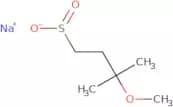
CAS:<p>Versatile small molecule scaffold</p>Formula:C12H10N2SPurity:Min. 95%Molecular weight:214.3 g/molSodium 3-methoxy-3-methylbutane-1-sulfinate
CAS:<p>Versatile small molecule scaffold</p>Formula:C6H13NaO3SPurity:Min. 95%Molecular weight:188.22 g/mol6-(Bromomethyl)-2,2-dimethyloxane
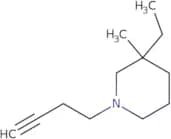
CAS:<p>Versatile small molecule scaffold</p>Formula:C8H15BrOPurity:Min. 95%Molecular weight:207.11 g/mol1-(But-3-yn-1-yl)-3-ethyl-3-methylpiperidine
CAS:<p>Versatile small molecule scaffold</p>Formula:C12H21NPurity:Min. 95%Molecular weight:179.3 g/mol1-Phenyl-2-azaspiro[3.5]nonane
CAS:<p>Versatile small molecule scaffold</p>Formula:C14H19NPurity:Min. 95%Molecular weight:201.31 g/mol3-(Methylsulfanyl)-1-(1,3-thiazolidin-3-yl)propan-1-one
CAS:<p>Versatile small molecule scaffold</p>Formula:C7H13NOS2Purity:Min. 95%Molecular weight:191.3 g/mol2-[(Dimethyloxido-λ4-sulfanylidene)amino]-2-oxo-acetic acid
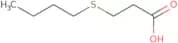
CAS:<p>Versatile small molecule scaffold</p>Formula:C4H7NO4SPurity:Min. 95%Molecular weight:165.17 g/mol3-(Butylthio)propanoic acid
CAS:<p>Versatile small molecule scaffold</p>Formula:C7H14O2SPurity:Min. 95%Molecular weight:162.25 g/mol4-Amino-7,8-dihydropteridin-7-one
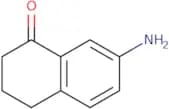
CAS:<p>Versatile small molecule scaffold</p>Formula:C6H5N5OPurity:Min. 95%Molecular weight:163.14 g/mol7-amino-alpha-tetralone
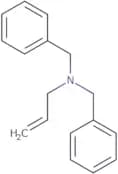
CAS:<p>Versatile small molecule scaffold</p>Formula:C10H11NOPurity:Min. 95%Molecular weight:161.2 g/molDibenzyl(prop-2-en-1-yl)amine
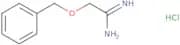
CAS:<p>Dibenzyl(prop-2-en-1-yl)amine is an imidazole compound that can be prepared from the reaction of benzyl chloride with ammonia. It is a heterocyclic compound that contains a benzyl group and is used as an intermediate for the synthesis of other molecules. Dibenzyl(prop-2-en-1-yl)amine has been shown to have antiplatelet effects in vitro and may be useful in the treatment of thrombosis.</p>Formula:C17H19NPurity:Min. 95%Molecular weight:237.34 g/mol2-(Benzyloxy)ethanimidamide hydrochloride
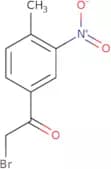
CAS:<p>Versatile small molecule scaffold</p>Formula:C9H13ClN2OPurity:Min. 95%Molecular weight:200.66 g/mol2-Bromo-1-(3-nitro-4-methylphenyl)ethanone
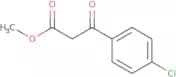
CAS:<p>Versatile small molecule scaffold</p>Formula:C9H8BrNO3Purity:Min. 95%Molecular weight:258.07 g/molMethyl (4-chlorobenzoyl)acetate
CAS:<p>Methyl (4-chlorobenzoyl)acetate is a nonlinear optical material with hyperpolarizability. It has a fingerprint spectrum that can be used as an identification tool and it has been shown to have diffraction properties. This compound crystallizes in the orthorhombic crystal structure and its optical properties are determined by its interconnected molecular lattice. Methyl (4-chlorobenzoyl)acetate is used in the preparation of other compounds, such as methoxymethane, which can be used to synthesize pharmaceuticals such as acetaminophen.</p>Formula:C10H9ClO3Purity:Min. 95%Molecular weight:212.63 g/mol(2-Ethoxyethyl)urea
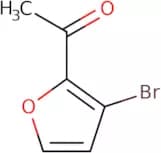
CAS:<p>Versatile small molecule scaffold</p>Formula:C5H12N2O2Purity:Min. 95%Molecular weight:132.16 g/mol1-(3-Bromofuran-2-yl)ethan-1-one
CAS:<p>1-(3-Bromofuran-2-yl)ethan-1-one is a monoterpenoid that belongs to the family of indole alkaloids. It has been isolated from natural sources and can be synthesized in the laboratory. Indole alkaloids are biologically active compounds with a variety of uses. 1-(3-Bromofuran-2-yl)ethan-1-one has shown biological activities, including antiinflammatory and antimicrobial properties.</p>Formula:C6H5BrO2Purity:Min. 95%Molecular weight:189.01 g/mol(R)-1-(thiophen-2-yl)ethanamine
CAS:<p>Versatile small molecule scaffold</p>Formula:C6H9NSPurity:Min. 95%Molecular weight:127.21 g/mol4-(2-Hydroxyethoxy)benzaldehyde
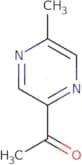
CAS:<p>4-(2-Hydroxyethoxy)benzaldehyde is a growth factor that inhibits the synthesis of isonicotinic acid and erythromycin. It can be used to treat inflammatory diseases, such as arthritis, by inhibiting prostaglandin production. 4-(2-Hydroxyethoxy)benzaldehyde can be synthesized by the reaction of hydroxybenzaldehyde with 2-bromoethanol in the presence of hydrochloric acid or methyl ethyl chloride. The compound forms a deep purple solution when mixed with hydrochloric acid and turns yellow when treated with an aqueous solution of hydroxide ions. Azobenzene can form adducts with 4-(2-hydroxyethoxy)benzaldehyde, which are useful for studying the photochemical properties of this molecule.</p>Formula:C9H10O3Purity:Min. 95%Molecular weight:166.18 g/mol1-(5-Methyl-pyrazin-2-yl)-ethanone
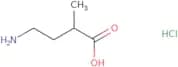
CAS:<p>1-(5-Methyl-pyrazin-2-yl)-ethanone is an acidic compound that has been detected in the headspace of foods such as meat and fish. It is formed by the reaction of hexanal with fatty acids. 1-(5-Methyl-pyrazin-2-yl)-ethanone has been detected in various foods and beverages, including meat, fish, bakery products, and fruit juices. The detection of this compound can be done using a mass spectrometer or a gas chromatograph. This chemical is analysed by solid phase microextraction (SPME) and ionization detector (GC/MS). In some cases it can also be determined by spectrometric analysis.</p>Formula:C7H8N2OPurity:Min. 95%Molecular weight:136.15 g/mol4-Amino-2-methylbutanoic acid hydrochloride
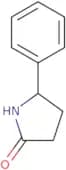
CAS:<p>Versatile small molecule scaffold</p>Formula:C5H12ClNO2Purity:Min. 95%Molecular weight:153.61 g/mol5-Phenylpyrrolidin-2-one
CAS:<p>5-Phenylpyrrolidin-2-one is a synthetic molecule that optimizes the catalysis of allylamines. This molecule has been shown to be a hydrolysis product of an amide and a carbonyl, and can be oxidized by sodium periodate to generate the allylamine. 5-Phenylpyrrolidin-2-one has also been found to catalyze the transfer of carbonyl groups from one molecule to another, which is useful for photocyclization reactions. This compound can also be used as an oxidant in allylamine reactions.</p>Formula:C10H11NOPurity:Min. 95%Molecular weight:161.2 g/mol1-[(2-Nitrophenyl)sulfanyl]propan-2-one
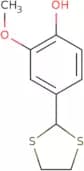
CAS:<p>Versatile small molecule scaffold</p>Formula:C9H9NO3SPurity:Min. 95%Molecular weight:211.24 g/mol2-(4-Hydroxy-3-methoxyphenyl)-1,3-dithiolane
CAS:2-(4-Hydroxy-3-methoxyphenyl)-1,3-dithiolane is a metabolite of the drug product 2-[4-(hydroxymethyl)phenyl]-1,3-dithiolane. It is used as an analytical standard for drug development and in natural product research and development. The chemical properties of 2-(4-hydroxy-3-methoxyphenyl)-1,3-dithiolane are similar to those of its parent compound, but it has a smaller molecular weight. This compound has been found to be a substrate for CYP2C9 and CYP2C19 in vitro. Metabolism studies have shown that 2-(4-hydroxy-3-methoxyphenyl)-1,3-dithiolane is not converted to the parent compound or any other metabolites when incubated with human liver microsomes at 37°C.Formula:C10H12O2S2Purity:Min. 95%Molecular weight:228.3 g/mol

![1-[(tert-Butoxy)carbonyl]cyclopentane-1-carboxylic acid](/_next/image/?url=https%3A%2Fstatic.cymitquimica.com%2Fproducts%2F3D%2Fthumb-webp%2FWXB26109.webp&w=3840&q=75)

![rac-tert-Butyl (1S,3R,5R)-8-azaspiro[bicyclo[3.2.1]octane-3,2'-oxirane]-8-carboxylate](/_next/image/?url=https%3A%2Fstatic.cymitquimica.com%2Fproducts%2F3D%2Fthumb-webp%2FWXC40191.webp&w=3840&q=75)
![[(8R)-1,4-Dioxa-7-azaspiro[4.4]nonan-8-yl]methanol](/_next/image/?url=https%3A%2Fstatic.cymitquimica.com%2Fproducts%2F3D%2Fthumb-webp%2FWXC51934.webp&w=3840&q=75)

![Methyl 2-{[(tert-butoxy)carbonyl]amino}-4-methyl-1,3-thiazole-5-carboxylate](/_next/image/?url=https%3A%2Fstatic.cymitquimica.com%2Fproducts%2F3D%2Fthumb-webp%2FWZB82922.webp&w=3840&q=75)
![{1-[2-(Pyridin-2-yl)ethyl]-1H-1,2,3-triazol-4-yl}methanol](/_next/image/?url=https%3A%2Fstatic.cymitquimica.com%2Fproducts%2F3D%2Fthumb-webp%2FWZB84779.webp&w=3840&q=75)
![2-Methyl-4,5,6,7-tetrahydro-oxazolo[4,5-c]pyridine hydrochloride](/_next/image/?url=https%3A%2Fstatic.cymitquimica.com%2Fproducts%2F3D%2Fthumb-webp%2FWZB89218.webp&w=3840&q=75)
![3-[(Pyridin-3-yl)amino]-1,2-dihydroisoquinolin-1-one](/_next/image/?url=https%3A%2Fstatic.cymitquimica.com%2Fproducts%2F3D%2Fthumb-webp%2FWZB96103.webp&w=3840&q=75)

![2-[(4-Benzylpiperazin-1-yl)methyl]-5-bromoaniline](/_next/image/?url=https%3A%2Fstatic.cymitquimica.com%2Fproducts%2F3D%2Fthumb-webp%2FWZC16399.webp&w=3840&q=75)

![2-[(Benzyloxy)methyl]-2-ethylbutanoic acid](/_next/image/?url=https%3A%2Fstatic.cymitquimica.com%2Fproducts%2F3D%2Fthumb-webp%2FWZC44131.webp&w=3840&q=75)


![1-Phenyl-2-azaspiro[3.5]nonane](/_next/image/?url=https%3A%2Fstatic.cymitquimica.com%2Fproducts%2F3D%2Fthumb-webp%2FWZC88941.webp&w=3840&q=75)

![2-[(Dimethyloxido-λ4-sulfanylidene)amino]-2-oxo-acetic acid](/_next/image/?url=https%3A%2Fstatic.cymitquimica.com%2Fproducts%2F3D%2Fthumb-webp%2FWZC99160.webp&w=3840&q=75)




![1-[(2-Nitrophenyl)sulfanyl]propan-2-one](/_next/image/?url=https%3A%2Fstatic.cymitquimica.com%2Fproducts%2F3D%2Fthumb-webp%2FXAA05728.webp&w=3840&q=75)