Building Blocks
This section contains fundamental products for the synthesis of organic and biological compounds. Building blocks are the essential starting materials used to construct complex molecules through various chemical reactions. They play a critical role in drug discovery, material science, and chemical research. At CymitQuimica, we offer a diverse range of high-quality building blocks to support your innovative research and industrial projects, ensuring you have the essential components for successful synthesis.
Subcategories of "Building Blocks"
- Boronic Acids & Boronic Acid Derivatives(5,756 products)
- Chiral Building Blocks(1,242 products)
- Hydrocarbon Building Blocks(6,093 products)
- Organic Building Blocks(60,519 products)
Found 195533 products of "Building Blocks"
Sort by
Purity (%)
0
100
|
0
|
50
|
90
|
95
|
100
1-Cyclopentyl-4-iodo-1H-pyrazole-3-carbaldehyde
CAS:<p>Versatile small molecule scaffold</p>Formula:C9H11IN2OPurity:Min. 95%Molecular weight:290.1 g/mol5-bromo-2-(methoxymethyl)pyrimidine
CAS:<p>Versatile small molecule scaffold</p>Formula:C6H7BrN2OPurity:Min. 95%Molecular weight:203.04 g/moltert-Butyl N-methyl-N-{[(2R)-piperidin-2-yl]methyl}carbamate
CAS:<p>Versatile small molecule scaffold</p>Formula:C12H24N2O2Purity:Min. 95%Molecular weight:228.33 g/mol(2R)-2-Amino-3,3-dimethylbutanamide hydrochloride
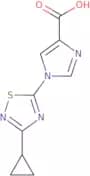
CAS:<p>Versatile small molecule scaffold</p>Formula:C6H15ClN2OPurity:Min. 95%Molecular weight:166.6 g/mol1-(3-Cyclopropyl-1,2,4-thiadiazol-5-yl)-1H-imidazole-4-carboxylic acid
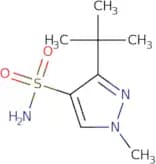
CAS:<p>Versatile small molecule scaffold</p>Formula:C9H8N4O2SPurity:Min. 95%Molecular weight:236.25 g/mol3-(tert-Butyl)-1-methyl-1H-pyrazole-4-sulfonamide
CAS:<p>Versatile small molecule scaffold</p>Formula:C8H15N3O2SPurity:Min. 95%Molecular weight:217.29 g/mol1-Trifluoromethylcyclopropane-1-carboxylic acid
CAS:<p>1-Trifluoromethylcyclopropane-1-carboxylic acid is a ketone that is used in research in organic chemistry for the preparation of imidazole. It can be prepared by the transformation of ethyl 2-(trifluoromethyl)acrylate, and is also obtained from 1,4-dichloroacetone. 1-Trifluoromethylcyclopropane carboxylic acid has been shown to have some medicinal properties. It has been used in research on cancer cells and as an anti-inflammatory agent. The compound has a steric effect on the body and can be used as a weight loss drug, with one kilogram of 1-Trifluoromethylcyclopropane carboxylic acid being equivalent to 3 kilograms of weight loss.</p>Formula:C5H5F3O2Purity:Min. 95%Color and Shape:PowderMolecular weight:154.09 g/mol[4-(2-Methoxyethoxy)oxan-4-yl]methanamine
CAS:<p>Versatile small molecule scaffold</p>Formula:C9H19NO3Purity:Min. 95%Molecular weight:189.25 g/mol1-[2-(Trifluoromethyl)phenyl]-1H-1,2,3-triazol-4-amine
CAS:<p>Versatile small molecule scaffold</p>Formula:C9H7F3N4Purity:Min. 95%Molecular weight:228.17 g/mol7-(4,4,5,5-Tetramethyl-1,3,2-dioxaborolan-2-yl)quinoline
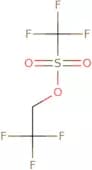
CAS:<p>Versatile small molecule scaffold</p>Formula:C15H18BNO2Purity:Min. 95%Molecular weight:255.12 g/mol2,2,2-Trifluoroethyl triflate
CAS:<p>2,2,2-Trifluoroethyl triflate (TFE) is a gaseous compound that is used as a reagent in organic synthesis. It reacts with nucleophiles to form fluorinated products. The reaction can be observed by spectroscopic analysis and is useful for the synthesis of fluorinated molecules. 2,2,2-Trifluoroethyl triflate has been shown to react with arginine methyl groups to form methylated arginine derivatives. This reaction is an example of a nucleophilic substitution reaction that occurs at an electrophilic carbon atom.</p>Formula:C3H2F6O3SPurity:Min. 95%Color and Shape:Clear LiquidMolecular weight:232.1 g/mol(1R)-1-(1,2,3,4-Tetrahydronaphthalen-1-yl)ethan-1-amine
CAS:<p>Versatile small molecule scaffold</p>Formula:C12H17NPurity:Min. 95%Molecular weight:175.27 g/molTetrahydrofuran-2,5-dicarboxylic acid
CAS:<p>Tetrahydrofuran-2,5-dicarboxylic acid (THDA) is a polycarboxylic acid that is used in the production of polyurethane foams. THDA can be produced by hydrogenating glycerol with acetic anhydride. This reaction involves protonation of the hydroxyl group followed by ion exchange to create the acidic form of THDA. The kinetic and constant parameters are calculated using a computational method that considers 5-hydroxymethylfurfural as an intermediate.</p>Formula:C6H8O5Purity:Min. 95%Color and Shape:White PowderMolecular weight:160.12 g/mol6-Hydroxy-3-oxabicyclo[3.3.1]nonan-9-one
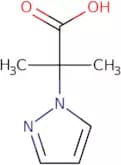
CAS:<p>Versatile small molecule scaffold</p>Formula:C8H12O3Purity:Min. 95%Molecular weight:156.18 g/mol2-Methyl-2-(1H-pyrazol-1-yl)propanoic acid
CAS:<p>Versatile small molecule scaffold</p>Formula:C7H10N2O2Purity:Min. 95%Molecular weight:154.17 g/mol3,6-Difluoroquinoline
CAS:<p>Versatile small molecule scaffold</p>Formula:C9H5F2NPurity:Min. 95%Molecular weight:165.14 g/mol3,8-Difluoro-6-methoxyquinoline
CAS:<p>Versatile small molecule scaffold</p>Formula:C10H7F2NOPurity:Min. 95%Molecular weight:195.16 g/mol2H-1,2,3-Triazole
CAS:<p>2H-1,2,3-Triazole is a drug that belongs to the class of antiretroviral drugs. It has been shown to bind to Toll-like receptor 4 (TLR4) and inhibit HIV replication in vitro. 2H-1,2,3-Triazole is used as part of an active antiretroviral therapy for postprandial blood glucose control and for congestive heart failure. In addition, it inhibits the production of proinflammatory cytokines by binding to toll-like receptor 4 (TLR4) which is expressed on macrophages. 2H-1,2,3-Triazole can also be used as an active analogue for coumarin derivatives such as warfarin and dicoumarol. The conformational properties of this drug are similar to those of coumarin derivatives and it binds to the same site on the enzyme as these drugs do. This binding prevents the formation of an</p>Formula:C2H3N3Purity:Min. 95%Molecular weight:69.07 g/mol3,7-Difluoro-6-methoxyquinoline
CAS:<p>Versatile small molecule scaffold</p>Formula:C10H7F2NOPurity:Min. 95%Molecular weight:195.16 g/mol2,3,5-Trichloropyridine
CAS:<p>2,3,5-Trichloropyridine is a chemical compound that reacts with chlorine and hydroxide to form hydrogen chloride and sodium hydroxide. It is used in the wastewater treatment process as an oxidizing agent for the removal of organic compounds from water. 2,3,5-Trichloropyridine is also used as a chlorinating agent for various purposes such as the production of acrylonitrile or the destruction of hazardous wastes. The reaction products are hydrochloric acid and sodium carbonate. This substance may react with nucleophiles to form more reactive species such as nitronium ions.</p>Formula:C5H2Cl3NPurity:Min. 95%Molecular weight:180.925286-Bromo-2-chloroimidazo[1,2-a]pyridine
CAS:<p>Versatile small molecule scaffold</p>Formula:C7H4BrClN2Purity:Min. 95%Molecular weight:231.48 g/molN-(5-Methylpyridin-2-yl)prop-2-enamide
CAS:<p>Versatile small molecule scaffold</p>Formula:C9H10N2OPurity:Min. 95%Molecular weight:162.19 g/molEthyl[(3-fluoro-4-methoxyphenyl)methyl]amine
CAS:<p>Versatile small molecule scaffold</p>Formula:C10H14FNOPurity:Min. 95%Molecular weight:183.22 g/mol1,2,3,4-Tetrahydro-2,6-naphthyridine
CAS:<p>1,2,3,4-Tetrahydro-2,6-naphthyridine is a metalated naphthyridine. It is an inhibitor of the transporter and reuptake transporter of histamine and serotonin. The compound has been shown to bind to the transporter site of neurotransmitters such as serotonin and histamine. This binding blocks the uptake and release of neurotransmitters from nerve cells, preventing the transmission of nerve impulses.</p>Formula:C8H10N2Purity:Min. 95%Molecular weight:134.18 g/molTripropylphosphine
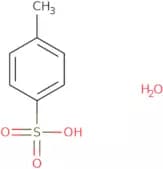
CAS:<p>Tripropylphosphine is a fatty acid that can be synthesized by reacting tripropyl alcohol with phosphorus trichloride. Tripropylphosphine is soluble in organic solvents, and has an optical rotation of +58°. It has been shown to have cancer-inhibiting properties, as well as the ability to inhibit tumor growth and induce apoptosis in cancer cells. This compound may also be used as a growth regulator, since it inhibits the synthesis of certain proteins and enzymes.</p>Formula:C9H21PPurity:Min. 95%Molecular weight:160.24 g/molp-Toluenesulfonic acid monohydrate
CAS:<p>p-Toluenesulfonic acid monohydrate is a white, crystalline solid that is soluble in water. It is used as a catalyst for the synthesis of various organic compounds and pharmaceuticals. p-Toluenesulfonic acid monohydrate has been shown to have an effect on the thermal expansion of certain polymers and to be useful for preparation of medicinal preparations with high uptake. This compound can also be used as a carbon source for the production of various organic compounds.</p>Formula:CH3C6H4SO3H·H2OColor and Shape:PowderMolecular weight:190.22 g/molN-(2,5-Dichlorophenyl)-2-(propylamino)acetamide
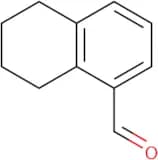
CAS:<p>Versatile small molecule scaffold</p>Formula:C11H14Cl2N2OPurity:Min. 95%Molecular weight:261.14 g/mol5,6,7,8-Tetrahydronaphthalene-1-carbaldehyde
CAS:<p>Please enquire for more information about 5,6,7,8-Tetrahydronaphthalene-1-carbaldehyde including the price, delivery time and more detailed product information at the technical inquiry form on this page</p>Formula:C11H12OPurity:Min. 95%Color and Shape:Clear LiquidMolecular weight:160.21 g/mol1-Methyl-2-(pyrrolidin-2-yl)-1H-pyrrole
CAS:<p>Versatile small molecule scaffold</p>Formula:C9H14N2Purity:Min. 95%Molecular weight:150.22 g/mol2-{[(Dimethyl-1,2-oxazol-4-yl)methyl]sulfanyl}pyridine-3-carboxylic acid
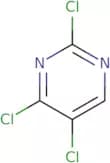
CAS:Controlled Product<p>2-[(Dimethyl-1,2-oxazol-4-yl)methyl]sulfanylpyridine-3-carboxylic acid is an antibody that has been shown to bind to the extracellular domain of the human GABA receptor. The antibody blocks the binding of GABA and its agonist, baclofen, to the receptor, inhibiting their effects on ion channels and neurotransmitter release. This drug may be used as a research tool for studying the function of GABA receptors in cell biology and pharmacology.</p>Formula:C12H12N2O3SPurity:Min. 95%Molecular weight:264.3 g/mol2,4,5-Trichloropyrimidine
CAS:<p>2,4,5-Trichloropyrimidine is a chemical compound that has reactive properties. It can be used in the Suzuki coupling reaction to form new molecules. 2,4,5-Trichloropyrimidine can also be used as a potent inhibitor of epidermal growth factor receptors (EGFRs). It has been shown to inhibit the growth of cancer cells and other autoimmune diseases. 2,4,5-Trichloropyrimidine has shown significant inhibitory activity against kinases. It is selective for EGFRs and does not have any effect on other kinases. This suggests that it may be an effective therapeutic agent for the treatment of certain cancers and autoimmune diseases.</p>Formula:C4HCl3N2Purity:Min. 95%Molecular weight:183.42 g/molN-(2,3-Dimethylphenyl)-2-(piperazin-1-yl)acetamide
CAS:<p>Versatile small molecule scaffold</p>Formula:C14H21N3OPurity:Min. 95%Molecular weight:247.34 g/molN-{[4-(2-Chloroacetyl)phenyl]methyl}-N-methylacetamide
CAS:<p>Versatile small molecule scaffold</p>Formula:C12H14ClNO2Purity:Min. 95%Molecular weight:239.7 g/molrac-(1R,3R)-3-(Dimethylamino)cyclobutane-1-carboxylic acid hydrochloride
CAS:<p>Versatile small molecule scaffold</p>Formula:C7H14ClNO2Purity:Min. 95%Molecular weight:179.6 g/molrac-(1R,3S)-N1,N1-Dimethylcyclopentane-1,3-diamine dihydrochloride
CAS:<p>Versatile small molecule scaffold</p>Formula:C7H18Cl2N2Purity:Min. 95%Molecular weight:201.1 g/mol5H,6H,7H,8H,9H-[1,2,4]Triazolo[4,3-d][1,4]diazepine dihydrochloride
CAS:<p>Versatile small molecule scaffold</p>Formula:C6H12Cl2N4Purity:Min. 95%Molecular weight:211.09 g/mol5-(2-Aminoethyl)-2-pyridinamine dihydrochloride
CAS:<p>Versatile small molecule scaffold</p>Formula:C7H13Cl2N3Purity:Min. 95%Molecular weight:210.1 g/mol(2R,5R)-1-[(tert-Butoxy)carbonyl]-5-phenylpyrrolidine-2-carboxylic acid
CAS:<p>Versatile small molecule scaffold</p>Formula:C16H21NO4Purity:Min. 95%Molecular weight:291.3 g/mol(2E)-3-(1H-1,3-Benzodiazol-2-yl)prop-2-enoic acid hydrochloride
CAS:<p>Versatile small molecule scaffold</p>Formula:C10H9ClN2O2Purity:Min. 95%Molecular weight:224.6 g/molN-[(3,4-Dimethoxythiophen-2-yl)methylidene]hydroxylamine
CAS:<p>Versatile small molecule scaffold</p>Formula:C7H9NO3SPurity:Min. 95%Molecular weight:187.2 g/mol6-[({[(9H-Fluoren-9-yl)methoxy]carbonyl}amino)methyl]naphthalene-2-carboxylic acid
CAS:<p>Versatile small molecule scaffold</p>Formula:C27H21NO4Purity:Min. 95%Molecular weight:423.5 g/mol4-(2-Methoxyethyl)-7-nitro-1,2,3,4-tetrahydroquinoline
CAS:<p>Versatile small molecule scaffold</p>Formula:C12H16N2O3Purity:Min. 95%Molecular weight:236.3 g/mol2-(1,2-Benzoxazol-3-yl)propanedial
CAS:<p>Versatile small molecule scaffold</p>Formula:C10H7NO3Purity:Min. 95%Molecular weight:189.2 g/mol(2R)-1-(Thiophen-3-yl)propan-2-ol
CAS:<p>Versatile small molecule scaffold</p>Formula:C7H10OSPurity:Min. 95%Molecular weight:142.22 g/mol4-Nitro-1,3-benzothiazol-5-amine hydrochloride
CAS:<p>Versatile small molecule scaffold</p>Formula:C7H6ClN3O2SPurity:Min. 95%Molecular weight:231.66 g/mol4-[(tert-butoxy)carbonyl]-1-methylpiperazine-2-carboxylic acid
CAS:<p>Versatile small molecule scaffold</p>Formula:C11H20N2O4Purity:Min. 95%Molecular weight:244.3 g/molrac-(3aR,6aS)-1-Ethyl-hexahydrospiro[furo[3,4-b]pyrrole-3,4'-piperidine]
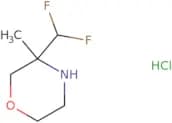
CAS:<p>Versatile small molecule scaffold</p>Formula:C12H22N2OPurity:Min. 95%Molecular weight:210.3 g/mol3-(Difluoromethyl)-3-methylmorpholine hydrochloride
CAS:<p>Versatile small molecule scaffold</p>Formula:C6H12ClF2NOPurity:Min. 95%Molecular weight:187.6 g/mol(3S)-1-(4-Fluorobenzoyl)piperidine-3-carboxylic acid
CAS:<p>Versatile small molecule scaffold</p>Formula:C13H14FNO3Purity:Min. 95%Molecular weight:251.25 g/mol2-Amino-2-(2,3-dihydro-1H-inden-1-yl)ethan-1-ol hydrochloride
CAS:<p>Versatile small molecule scaffold</p>Formula:C11H16ClNOPurity:Min. 95%Molecular weight:213.7 g/mol


![tert-Butyl N-methyl-N-{[(2R)-piperidin-2-yl]methyl}carbamate](/_next/image/?url=https%3A%2Fstatic.cymitquimica.com%2Fproducts%2F3D%2Fthumb-webp%2FBJC76345.webp&w=3840&q=75)

![[4-(2-Methoxyethoxy)oxan-4-yl]methanamine](/_next/image/?url=https%3A%2Fstatic.cymitquimica.com%2Fproducts%2F3D%2Fthumb-webp%2FBJC09327.webp&w=3840&q=75)
![1-[2-(Trifluoromethyl)phenyl]-1H-1,2,3-triazol-4-amine](/_next/image/?url=https%3A%2Fstatic.cymitquimica.com%2Fproducts%2F3D%2Fthumb-webp%2FBJC08729.webp&w=3840&q=75)



![6-Hydroxy-3-oxabicyclo[3.3.1]nonan-9-one](/_next/image/?url=https%3A%2Fstatic.cymitquimica.com%2Fproducts%2F3D%2Fthumb-webp%2FBJB98406.webp&w=3840&q=75)


![6-Bromo-2-chloroimidazo[1,2-a]pyridine](/_next/image/?url=https%3A%2Fstatic.cymitquimica.com%2Fproducts%2F3D%2Fthumb-webp%2FBJB91684.webp&w=3840&q=75)

![Ethyl[(3-fluoro-4-methoxyphenyl)methyl]amine](/_next/image/?url=https%3A%2Fstatic.cymitquimica.com%2Fproducts%2F3D%2Fthumb-webp%2FBJB90383.webp&w=3840&q=75)




![2-{[(Dimethyl-1,2-oxazol-4-yl)methyl]sulfanyl}pyridine-3-carboxylic acid](/_next/image/?url=https%3A%2Fstatic.cymitquimica.com%2Fproducts%2F3D%2Fthumb-webp%2FBJB90345.webp&w=3840&q=75)

![N-{[4-(2-Chloroacetyl)phenyl]methyl}-N-methylacetamide](/_next/image/?url=https%3A%2Fstatic.cymitquimica.com%2Fproducts%2F3D%2Fthumb-webp%2FBJB90339.webp&w=3840&q=75)


![5H,6H,7H,8H,9H-[1,2,4]Triazolo[4,3-d][1,4]diazepine dihydrochloride](/_next/image/?url=https%3A%2Fstatic.cymitquimica.com%2Fproducts%2F3D%2Fthumb-webp%2FFPD91349.webp&w=3840&q=75)

![(2R,5R)-1-[(tert-Butoxy)carbonyl]-5-phenylpyrrolidine-2-carboxylic acid](/_next/image/?url=https%3A%2Fstatic.cymitquimica.com%2Fproducts%2F3D%2Fthumb-webp%2FFPD90101.webp&w=3840&q=75)

![N-[(3,4-Dimethoxythiophen-2-yl)methylidene]hydroxylamine](/_next/image/?url=https%3A%2Fstatic.cymitquimica.com%2Fproducts%2F3D%2Fthumb-webp%2FFPD81682.webp&w=3840&q=75)
![6-[({[(9H-Fluoren-9-yl)methoxy]carbonyl}amino)methyl]naphthalene-2-carboxylic acid](/_next/image/?url=https%3A%2Fstatic.cymitquimica.com%2Fproducts%2F3D%2Fthumb-webp%2FFPD80866.webp&w=3840&q=75)


![4-[(tert-butoxy)carbonyl]-1-methylpiperazine-2-carboxylic acid](/_next/image/?url=https%3A%2Fstatic.cymitquimica.com%2Fproducts%2F3D%2Fthumb-webp%2FBJB88293.webp&w=3840&q=75)
![rac-(3aR,6aS)-1-Ethyl-hexahydrospiro[furo[3,4-b]pyrrole-3,4'-piperidine]](/_next/image/?url=https%3A%2Fstatic.cymitquimica.com%2Fproducts%2F3D%2Fthumb-webp%2FFPD80838.webp&w=3840&q=75)