


Building Blocks
This section contains fundamental products for the synthesis of organic and biological compounds. Building blocks are the essential starting materials used to construct complex molecules through various chemical reactions. They play a critical role in drug discovery, material science, and chemical research. At CymitQuimica, we offer a diverse range of high-quality building blocks to support your innovative research and industrial projects, ensuring you have the essential components for successful synthesis.
Subcategories of "Building Blocks"
- Boronic Acids & Boronic Acid Derivatives(5,756 products)
- Chiral Building Blocks(1,242 products)
- Hydrocarbon Building Blocks(6,095 products)
- Organic Building Blocks(61,038 products)
Found 196817 products of "Building Blocks"
Sort by
Purity (%)
0
100
|
0
|
50
|
90
|
95
|
100
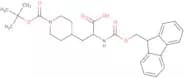
2-{1-[(tert-butoxy)carbonyl]piperidin-4-yl}-2-{[(9H-fluoren-9-ylmethoxy)carbonyl]amino}acetic acid
CAS:<p>Versatile small molecule scaffold</p>Formula:C27H32N2O6Purity:Min. 95%Molecular weight:480.6 g/mol2-N-fmoc-amino-3-(4-N-boc-piperidinyl)propionic acid
CAS:<p>Versatile small molecule scaffold</p>Formula:C28H34N2O6Purity:Min. 95%Molecular weight:494.59 g/molEthyl 2-[2-(4-chlorophenyl)acetamido]acetate
CAS:<p>Versatile small molecule scaffold</p>Formula:C12H14ClNO3Purity:Min. 95%Molecular weight:255.7 g/mol2-Chloro-5-[(4-fluorophenyl)sulfamoyl]benzoic acid
CAS:<p>Versatile small molecule scaffold</p>Formula:C13H9ClFNO4SPurity:Min. 95%Molecular weight:329.73 g/mol3-Imidazo[1,2-a]pyridin-2-yl-phenylamine
CAS:<p>3-Imidazo[1,2-a]pyridin-2-yl-phenylamine is a heterocyclic compound that has been used as a catalyst for the oxidation of catechol to 3,4-dihydroxyphenylacetic acid. It has also been shown to be an effective catalyst for the oxidation of pyridine derivatives to their quinone form. This compound is also able to catalyze the reduction of copper ions by dioxygen in the presence of hydrogen peroxide. The parameters and transition metals that can be used with this catalyst have not yet been determined.</p>Formula:C13H11N3Purity:Min. 95%Molecular weight:209.25 g/molN-(4-Hydroxyphenyl)-3-nitrobenzamide
CAS:<p>Versatile small molecule scaffold</p>Formula:C13H10N2O4Purity:Min. 95%Molecular weight:258.23 g/molα-Phenyl-N-[4-[(2-thiazolylamino)sulfonyl]phenyl]-benzeneacetamide
CAS:<p>Versatile small molecule scaffold</p>Formula:C23H19N3O3S2Purity:Min. 95%Molecular weight:449.55 g/mol3-[(4-Iodophenyl)sulfamoyl]benzoic acid
CAS:<p>Versatile small molecule scaffold</p>Formula:C13H10INO4SPurity:Min. 95%Molecular weight:403.19 g/molD-Myo-inositol 1-monophosphate dipotassium
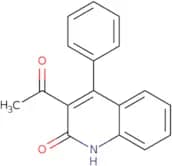
CAS:<p>Please enquire for more information about D-Myo-inositol 1-monophosphate dipotassium including the price, delivery time and more detailed product information at the technical inquiry form on this page</p>Formula:C6H11K2O9PPurity:Min. 95%Molecular weight:336.32 g/mol3-Acetyl-4-phenyl-1H-quinolin-2-one
CAS:<p>3-Acetyl-4-phenyl-1H-quinolin-2-one is a molecule that has been hypothesized to have anti-cancer properties. It is synthesized from paclitaxel and has been shown to be effective in tumor models. The drug is currently being developed as a treatment for cancer, but more research is needed to confirm its efficacy. 3-Acetyl-4-phenyl-1H-quinolin-2-one shows promising results in the prevention of cancer cells from dividing and can be used for the treatment of tumors.</p>Formula:C17H13NO2Purity:Min. 95%Molecular weight:263.29 g/mol[1-(2-Amino-ethyl)-piperidin-4-yl]-dimethyl-amine
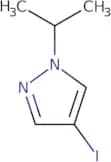
CAS:<p>Versatile small molecule scaffold</p>Formula:C9H21N3Purity:Min. 95%Molecular weight:171.29 g/mol4-Iodo-1-isopropyl-1H-pyrazole
CAS:<p>Versatile small molecule scaffold</p>Formula:C6H9IN2Purity:Min. 95%Molecular weight:236.05 g/mol1-[(3-Bromophenyl)methyl]-1,2,3,4-tetrahydropyrimidine-2,4-dione
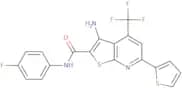
CAS:<p>Versatile small molecule scaffold</p>Formula:C11H9BrN2O2Purity:Min. 95%Molecular weight:281.1 g/molFDI-6
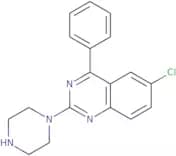
CAS:<p>FDI-6 is a novel anti-cancer prodrug that is activated by the enzyme cytochrome p450. It has been shown to induce apoptotic cell death in hematopoietic cells and cancer cells, as well as inhibit the growth of hepatocellular carcinoma (HCC) cells. FDI-6 induces apoptotic cell death in hematopoietic cells by stimulating the mitochondrial pathway of apoptosis and inhibiting mitochondrial membrane permeability. FDI-6 also inhibits HCC cells by inducing apoptosis and increasing the levels of reactive oxygen species (ROS) in these cancerous cells.<br>FDI-6 has been shown to be effective against chemotherapy resistant cancer cells due to its ability to induce DNA damage. FDI-6 also has a beneficial effect on biochemical markers of metabolic disorders such as hypertriglyceridemia and hypercholesterolemia, suggesting that it may have therapeutic potential for treating these diseases.</p>Formula:C19H11F4N3OS2Purity:Min. 95%Molecular weight:437.43 g/mol6-Chloro-4-phenyl-2-(piperazin-1-yl)quinazoline
CAS:<p>Versatile small molecule scaffold</p>Formula:C18H17ClN4Purity:Min. 95%Molecular weight:324.8 g/mol5-Benzothiazol-2-yl-2-methyl-phenylamine
CAS:<p>Versatile small molecule scaffold</p>Formula:C14H12N2SPurity:Min. 95%Molecular weight:240.32 g/mol4-(1H-1,2,3,4-Tetrazol-1-yl)benzene-1-sulfonamide
CAS:<p>Versatile small molecule scaffold</p>Formula:C7H7N5O2SPurity:Min. 95%Molecular weight:225.23 g/molEthyl 2-(2-nitrobenzenesulfonamido)acetate
CAS:<p>Versatile small molecule scaffold</p>Formula:C10H12N2O6SPurity:Min. 95%Molecular weight:288.28 g/mol1-Bromo-2-chloro-4-ethynylbenzene
CAS:<p>Versatile small molecule scaffold</p>Formula:C8H4BrClPurity:Min. 95%Molecular weight:215.5 g/mol2-{[2-(3-Methylphenoxy)ethyl]sulfanyl}-1H-1,3-benzodiazole
CAS:<p>Versatile small molecule scaffold</p>Formula:C16H16N2OSPurity:Min. 95%Molecular weight:284.4 g/mol2-(Piperidin-1-ylmethyl)-1H-1,3-benzodiazol-6-amine
CAS:<p>Versatile small molecule scaffold</p>Formula:C13H18N4Purity:Min. 95%Molecular weight:230.31 g/mol4-Amino-N-(sec-butyl)benzamide
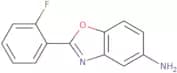
CAS:<p>Versatile small molecule scaffold</p>Formula:C11H16N2OPurity:Min. 95%Molecular weight:192.26 g/mol2-(2-Fluorophenyl)-1,3-benzoxazol-5-amine
CAS:<p>Versatile small molecule scaffold</p>Formula:C13H9FN2OPurity:Min. 95%Molecular weight:228.22 g/mol3-Nitro-1,2,5,6,7,8-hexahydroquinolin-2-one
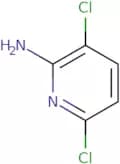
CAS:<p>Versatile small molecule scaffold</p>Formula:C9H10N2O3Purity:Min. 95%Molecular weight:194.19 g/mol3,6-dichloropyridin-2-amine
CAS:<p>Versatile small molecule scaffold</p>Formula:C5H4Cl2N2Purity:Min. 95%Molecular weight:163 g/mol4-(Anilinocarbonyl)-1H-imidazole-5-carboxylic acid
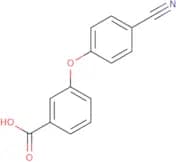
CAS:<p>Versatile small molecule scaffold</p>Formula:C11H9N3O3Purity:Min. 95%Molecular weight:231.21 g/mol3-(4-Cyanophenoxy)benzoic acid
CAS:<p>Versatile small molecule scaffold</p>Formula:C14H9NO3Purity:Min. 95%Molecular weight:239.23 g/molN-[4-(Dimethylamino)benzyl]-n-ethylamine
CAS:<p>Versatile small molecule scaffold</p>Formula:C11H18N2Purity:Min. 95%Molecular weight:178.28 g/mol2-[2-(Trifluoromethyl)phenoxy]ethan-1-ol
CAS:<p>Versatile small molecule scaffold</p>Formula:C9H9F3O2Purity:Min. 95%Molecular weight:206.16 g/mol2-[(2-Ethoxypyridin-3-yl)oxy]ethan-1-ol
CAS:<p>Versatile small molecule scaffold</p>Formula:C9H13NO3Purity:Min. 95%Molecular weight:183.2 g/mol(2E)-3-[4-(Morpholine-4-sulfonyl)phenyl]prop-2-enoic acid
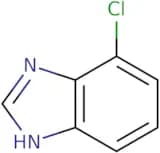
CAS:<p>Versatile small molecule scaffold</p>Formula:C13H15NO5SPurity:Min. 95%Molecular weight:297.33 g/mol4-Chloro-1H-benzimidazole
CAS:<p>4-Chloro-1H-benzimidazole is a synthetic nucleophile that reacts with thioethers to form an ion pair. It can be used as a precursor for the synthesis of captopril, an antihypertensive drug. 4-Chloro-1H-benzimidazole is also known to react with carboxylic acids to form ion pairs and then dehydrate to form electrostatically bound products. The reaction mechanism starts with the nucleophilic attack of a proton on the carbonyl carbon atom in the carboxylic acid, forming an intermediate carbocation which reacts with a chloride ion. This intermediate then collapses and forms two products: one positively charged and one negatively charged. The positively charged product is a chloroformate salt while the negatively charged product is an alcohol.</p>Formula:C7H5ClN2Purity:Min. 95%Molecular weight:152.58 g/mol2-[Methyl(phenyl)carbamoyl]benzoic acid
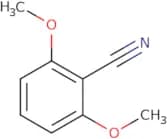
CAS:<p>Versatile small molecule scaffold</p>Formula:C15H13NO3Purity:Min. 95%Molecular weight:255.27 g/mol2,6-Dimethoxybenzonitrile
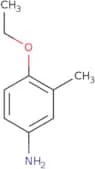
CAS:<p>2,6-Dimethoxybenzonitrile is an organic compound with the formula C8H9NO2. It is a white solid that is soluble in water and polar organic solvents. 2,6-Dimethoxybenzonitrile has three stereoisomers: Z, E and E. The Z form is usually obtained as a mixture of two diastereomers. The other two forms are obtained by reacting with methylamine or acetonitrile respectively. The photodecomposition of 2,6-dimethoxybenzonitrile starts with the generation of nitric oxide (NO) and then formation of quinones such as 9-acetylphenanthrene, which can react with triazolium to generate pyridinium. The reaction mechanism for this process involves bond cleavage followed by methylation reactions at the benzenes and cyanides.</p>Formula:C9H9NO2Purity:Min. 95%Molecular weight:163.17 g/mol4-Ethoxy-3-methylaniline
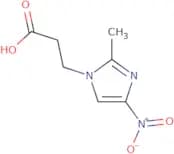
CAS:<p>Versatile small molecule scaffold</p>Formula:C9H13NOPurity:Min. 95%Molecular weight:151.21 g/mol3-(2-Methyl-4-nitro-1H-imidazol-1-yl)propanoic acid
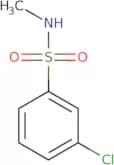
CAS:<p>Versatile small molecule scaffold</p>Formula:C7H9N3O4Purity:Min. 95%Molecular weight:199.16 g/mol3-Chloro-N-methylbenzene-1-sulfonamide
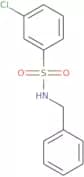
CAS:<p>Versatile small molecule scaffold</p>Formula:C7H8ClNO2SPurity:Min. 95%Molecular weight:205.66 g/molN-Benzyl-3-chlorobenzene-1-sulfonamide
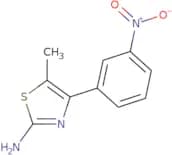
CAS:<p>Versatile small molecule scaffold</p>Formula:C13H12ClNO2SPurity:Min. 95%Molecular weight:281.76 g/mol5-Methyl-4-(3-nitrophenyl)-1,3-thiazol-2-amine
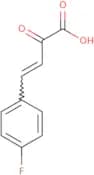
CAS:<p>Versatile small molecule scaffold</p>Formula:C10H9N3O2SPurity:Min. 95%Molecular weight:235.26 g/mol4-(4-Fluorophenyl)-2-oxobut-3-enoic acid
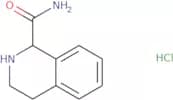
CAS:<p>4-(4-Fluorophenyl)-2-oxobut-3-enoic acid (FPA) is a chemical inhibitor that binds to the enzyme tiglic acid hydrolase, which is involved in the degradation of tiglic acid. It inhibits this enzyme irreversibly and has been shown to be active at low concentrations. FPA has potential as a biomarker for diseases such as cancer and diabetes.</p>Formula:C10H7FO3Purity:Min. 95%Molecular weight:194.16 g/mol1,2,3,4-Tetrahydroisoquinoline-1-carboxamide hydrochloride
CAS:<p>Versatile small molecule scaffold</p>Formula:C10H13ClN2OPurity:Min. 95%Molecular weight:212.67 g/mol2,6-Dimethyl-4-nitroaniline
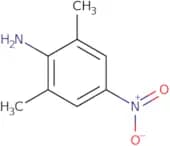
CAS:<p>2,6-Dimethyl-4-nitroaniline (DMN) is a nitrosamine that has been found to be a significant contaminant of drinking water. DMN is regulated as an irritant and a probable human carcinogen. The effects of DMN on the body are not fully understood, but it has been shown to cause damage to the liver and kidney in vivo. DMN may act by interfering with the synthesis of DNA or RNA, which can lead to cell death. The proposed mechanism for this is inhibition of the enzyme ribonucleotide reductase, which converts ribonucleotides into deoxyribonucleotides for DNA synthesis. This mechanism is supported by experiments in rats where DMN was found to inhibit erythrocyte production in vivo.<br>DMN can also be methylated in vivo by S-adenosylmethionine synthetase, yielding 2-methyl-6-dimethylamino-4</p>Formula:C8H10N2O2Purity:Min. 95%Molecular weight:166.18 g/molEthyl 4-aminonicotinate
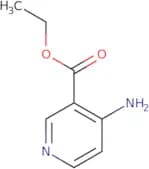
CAS:<p>Ethyl 4-aminonicotinate is a cyclic amine with a chemical formula of C6H11NO2. It has a molecular weight of 117.07 g/mol, and its molecular structure consists of an ethyl group attached to the amino group. The molecule has three resonance peaks in the infrared spectrum at 2,617cm-1 (ν(C=O)), 1,906cm-1 ((C=N)), and 1,723 cm-1 (ν(NH)). In addition to these peaks, the molecule also has two magnetic resonance peaks at 2.24ppm (δ) and 3.38ppm (δ). This compound is soluble in water and can be used as an intermediate in organic synthesis or pharmaceuticals.</p>Formula:C8H10N2O2Purity:Min. 95%Molecular weight:166.18 g/mol2-(4-Propoxyphenyl)ethanimidamide hydrochloride
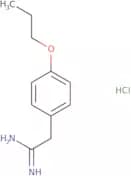
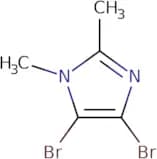
CAS:<p>Versatile small molecule scaffold</p>Formula:C11H17ClN2OPurity:Min. 95%Molecular weight:228.72 g/mol4,5-Dibromo-1,2-dimethyl-1H-imidazole
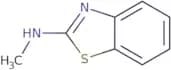
CAS:<p>Versatile small molecule scaffold</p>Formula:C5H6Br2N2Purity:Min. 95%Molecular weight:253.92 g/molN-Methyl-1,3-benzothiazol-2-amine
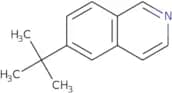
CAS:<p>N-Methyl-1,3-benzothiazol-2-amine is a molecule that belongs to the class of isothiocyanates. It can be synthesized by reacting 2-chlorobenzothiazole with primary amines in the presence of a nonpolar solvent. This method is efficient and can provide high yields for this molecule. N-Methyl-1,3-benzothiazol-2-amine has been shown to inhibit the uptake of pesticides by plants. The mechanism is not well understood but it may involve vibrational interactions with molecules in the plant cell membrane or chemical interactions with other molecules in the plant cell. This molecule also has nitrogen atoms and mass spectrometric techniques have shown that it has an nmr spectrum.</p>Formula:C8H8N2SPurity:Min. 95%Molecular weight:164.23 g/mol6-tert-Butylisoquinoline
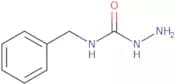
CAS:<p>Versatile small molecule scaffold</p>Formula:C13H15NPurity:Min. 95%Molecular weight:185.26 g/mol3-Amino-1-benzylurea
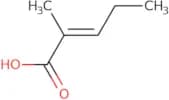
CAS:<p>3-Amino-1-benzylurea is a compound that is used as a reagent in organic chemistry. It is an important starting material for the synthesis of semicarbazides, acetals, and orthoesters. 3-Amino-1-benzylurea can be synthesized from triethyl orthoformate, triethyl orthosilicate, or hexamethyldisilazane. The synthesis proceeds by reacting 3 equivalents of triethyl orthoformate with one equivalent of benzyl chloride to form the corresponding urea. This urea is then hydrolyzed to give the desired product.</p>Formula:C8H11N3OPurity:Min. 95%Molecular weight:165.19 g/mol2-Methyl-2-pentenoic acid
CAS:<p>2-Methyl-2-pentenoic acid (MP) is a synthetic product that is used as a chemical intermediate in the production of pesticides and pharmaceuticals. It can be found in the environment due to its use as an organic solvent, metal surface cleaner, or insecticide. MP has been shown to have mosquito repellent properties and has been used as an additive in some mosquito coils. This compound also has anti-inflammatory effects and can be used as a dietary supplement. The synthesis of MP involves the reaction of cinchonidine with ethyl acetate, which proceeds through an addition reaction mechanism. The reaction rate is dependent on the presence of nucleophiles such as water or methanol, but not alcohols or hydrogen peroxide.</p>Purity:Min. 95%2-Methyl-benzo[b]thiophen-3(2H)-one 1,1-dioxide
CAS:<p>Versatile small molecule scaffold</p>Formula:C9H8O3SPurity:Min. 95%Molecular weight:196.22 g/mol
![2-{1-[(tert-butoxy)carbonyl]piperidin-4-yl}-2-{[(9H-fluoren-9-ylmethoxy)carbonyl]amino}acetic acid](/_next/image/?url=https%3A%2Fstatic.cymitquimica.com%2Fproducts%2F3D%2Fthumb-webp%2FNMA05196.webp&w=3840&q=75)

![Ethyl 2-[2-(4-chlorophenyl)acetamido]acetate](/_next/image/?url=https%3A%2Fstatic.cymitquimica.com%2Fproducts%2F3D%2Fthumb-webp%2FNMA06748.webp&w=3840&q=75)
![2-Chloro-5-[(4-fluorophenyl)sulfamoyl]benzoic acid](/_next/image/?url=https%3A%2Fstatic.cymitquimica.com%2Fproducts%2F3D%2Fthumb-webp%2FNMA22561.webp&w=3840&q=75)
![3-Imidazo[1,2-a]pyridin-2-yl-phenylamine](/_next/image/?url=https%3A%2Fstatic.cymitquimica.com%2Fproducts%2F3D%2Fthumb-webp%2FNMA23171.webp&w=3840&q=75)

![α-Phenyl-N-[4-[(2-thiazolylamino)sulfonyl]phenyl]-benzeneacetamide](/_next/image/?url=https%3A%2Fstatic.cymitquimica.com%2Fproducts%2F3D%2Fthumb-webp%2FNMA25451.webp&w=3840&q=75)
![3-[(4-Iodophenyl)sulfamoyl]benzoic acid](/_next/image/?url=https%3A%2Fstatic.cymitquimica.com%2Fproducts%2F3D%2Fthumb-webp%2FNMA25910.webp&w=3840&q=75)

![[1-(2-Amino-ethyl)-piperidin-4-yl]-dimethyl-amine](/_next/image/?url=https%3A%2Fstatic.cymitquimica.com%2Fproducts%2F3D%2Fthumb-webp%2FNMA34508.webp&w=3840&q=75)
![1-[(3-Bromophenyl)methyl]-1,2,3,4-tetrahydropyrimidine-2,4-dione](/_next/image/?url=https%3A%2Fstatic.cymitquimica.com%2Fproducts%2F3D%2Fthumb-webp%2FNMA37681.webp&w=3840&q=75)


![2-{[2-(3-Methylphenoxy)ethyl]sulfanyl}-1H-1,3-benzodiazole](/_next/image/?url=https%3A%2Fstatic.cymitquimica.com%2Fproducts%2F3D%2Fthumb-webp%2FNMA51810.webp&w=3840&q=75)




![N-[4-(Dimethylamino)benzyl]-n-ethylamine](/_next/image/?url=https%3A%2Fstatic.cymitquimica.com%2Fproducts%2F3D%2Fthumb-webp%2FNMA55299.webp&w=3840&q=75)
![2-[2-(Trifluoromethyl)phenoxy]ethan-1-ol](/_next/image/?url=https%3A%2Fstatic.cymitquimica.com%2Fproducts%2F3D%2Fthumb-webp%2FNMA65535.webp&w=3840&q=75)
![2-[(2-Ethoxypyridin-3-yl)oxy]ethan-1-ol](/_next/image/?url=https%3A%2Fstatic.cymitquimica.com%2Fproducts%2F3D%2Fthumb-webp%2FNMA65794.webp&w=3840&q=75)
![(2E)-3-[4-(Morpholine-4-sulfonyl)phenyl]prop-2-enoic acid](/_next/image/?url=https%3A%2Fstatic.cymitquimica.com%2Fproducts%2F3D%2Fthumb-webp%2FNMA66273.webp&w=3840&q=75)
![2-[Methyl(phenyl)carbamoyl]benzoic acid](/_next/image/?url=https%3A%2Fstatic.cymitquimica.com%2Fproducts%2F3D%2Fthumb-webp%2FRAA93147.webp&w=3840&q=75)
![2-Methyl-benzo[b]thiophen-3(2H)-one 1,1-dioxide](/_next/image/?url=https%3A%2Fstatic.cymitquimica.com%2Fproducts%2F3D%2Fthumb-webp%2FRAA95779.webp&w=3840&q=75)